How Much Does Leak Detection Cost?
By Housey · Last reviewed 11th of May 2026
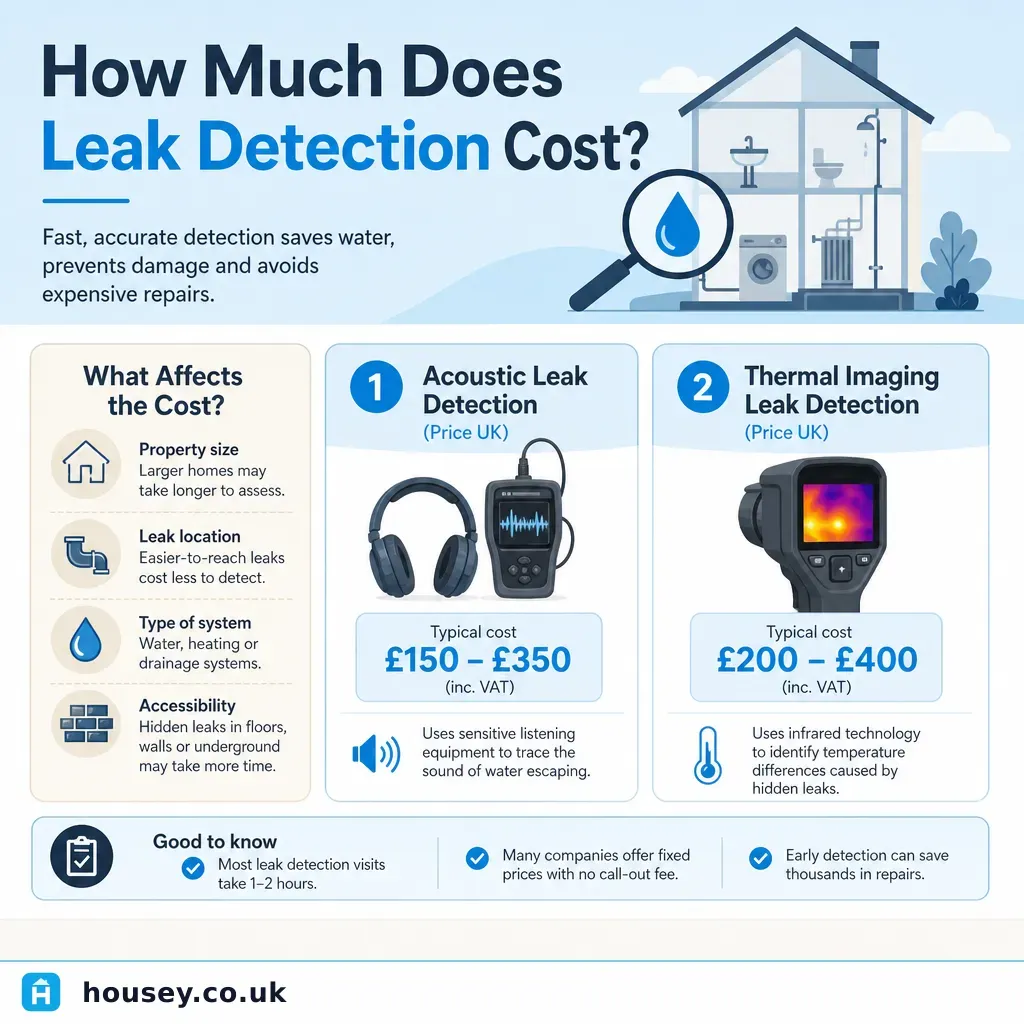
How Much Does Leak Detection Cost?
A suspected hidden water leak is one of the more stressful problems a UK homeowner can face: an unexplained rise in water bills, a damp stain spreading across a ceiling, or an insurer requesting documented evidence of the leak's location before authorising repairs. Understanding which detection method suits your situation, how much it is likely to cost, and what your home insurance may cover helps you act quickly — and avoid compounding the damage while you deliberate.
Key points
- Acoustic leak detection for a residential property typically costs £150–£350; thermal imaging surveys cost £200–£500 (indicative UK costs, last reviewed 2026-05-11).
- CCTV drain surveys — used to identify pipe fractures, root intrusion, and drainage failures — typically cost £100–£300 for a standard residential drain run.
- Many buildings insurance policies include trace and access cover, which reimburses the cost of locating a leak and opening up surfaces to reach it, but not usually the cost of repairing the pipe itself.
- Water companies are responsible for the supply pipe up to your property boundary; leaks between the boundary stopcock and your home are your responsibility.
- Undetected leaks can cause timber decay, mould growth, and structural damage — repair costs escalate significantly the longer a leak goes unaddressed.
What does leak detection cost in the UK?
The cost of locating a leak depends on the method used, property size and age, and how accessible the suspected source is. The table below compares the most widely used residential detection techniques.
Detection method | Typical residential cost | Best for | Limitations |
|---|---|---|---|
Acoustic listening / correlator | £150–£350 | Underground supply pipe leaks; pressurised mains leaks | Less effective in noisy environments or multi-layer pipe systems |
Thermal imaging (infrared) | £200–£500 | Underfloor heating leaks; bathroom leaks hidden behind tiles | Requires temperature differential; may miss small or very slow leaks |
CCTV drain survey | £100–£300 | Drainage pipe cracks, root ingress, collapsed or displaced sections | Only covers accessible pipe runs; may require drain jetting beforehand |
Tracer gas (hydrogen/nitrogen mix) | £250–£500 | Non-pressurised pipes; pool pipework; complex multi-pipe systems | Specialist equipment required; best for very small or hard-to-find leaks |
Dye testing | £100–£250 | Surface water drainage connections and soakaway testing | Limited to visible outfall points |
Moisture / endoscope survey | £150–£350 | Roof spaces, wall cavities, and areas behind cladding or panelling | Invasive access may be required to reach suspect areas |
Indicative UK costs, last reviewed 2026-05-11. Prices vary by region, property size, and contractor. Obtain at least three quotes before committing.
In complex cases — for example, a Victorian terrace with both a pressurised mains supply and original clay drainage — a specialist may recommend combining acoustic and CCTV methods, bringing combined costs to £400–£800 before any repair work begins.
Which leak detection method do you need?
- Choose acoustic detection if your water bill has risen unexpectedly, you can hear running water when all taps are off, or your water meter spins continuously with all appliances switched off.
- Choose thermal imaging if you suspect an underfloor heating circuit is losing pressure, or if a warm patch or discolouration has appeared on a tiled floor or wall surface.
- Choose a CCTV drain survey if you have persistent drain blockages, external damp near drainage runs, ground movement adjacent to drain trenches, or sewage surfacing in the garden.
- Choose tracer gas if acoustic methods have failed to locate the source, or if the suspect pipe system is non-pressurised.
- Commission a damp and timber survey if the moisture source is unclear — the cause may be rising damp, condensation, or a failed damp-proof course rather than a pipe leak.
- Ask a structural engineer if cracking or ground movement accompanies signs of moisture, as a drainage failure can undermine foundations before visible water damage appears indoors.
What affects the price?
Several factors push leak detection costs beyond the typical ranges:
Property size and age. Larger properties with more pipe runs take longer to survey. Victorian and Edwardian homes with original lead supply pipes or clay drain runs present greater complexity than modern properties with plastic pipework.
Access. Pipes beneath concrete ground floors, within party walls, or under permanent hard landscaping require additional investigation time. Confirm whether any making-good — reinstatement of floors, tiles, or plasterwork — is included in the quote or charged separately.
Number of suspected sources. A single, isolated leak is faster to confirm than an intermittent or multi-point loss across a large property.
Call-out timing. Emergency call-outs, particularly outside normal working hours, typically attract a premium of 20–50% above the standard survey rate. Where the situation is not immediately urgent, booking in advance is significantly cheaper.
Location in the UK. London and South East rates tend to run 15–25% higher than the national average for the same service specification.
Trace and access insurance — what it covers
Many standard home insurance policies include trace and access cover as either a standard benefit or an optional add-on. This typically covers:
- The specialist's cost of locating the source of a leak
- The cost of opening up floors, walls, or ceilings to access the leak point
- Reinstatement of the opened structure in some policies (replastering, retiling)
It does not usually cover the repair of the leaking pipe itself, damage caused by the leak (unless a separate escape of water section applies), or leaks from external drainage systems.
Before instructing a specialist, check your policy documents and contact your insurer. Some insurers require you to use their approved contractor panel — instructing your own specialist without checking first may invalidate a trace and access claim. Keep all receipts and request a written report from the detection specialist regardless of who pays.
Red flags: when a leak needs urgent attention
Contact a specialist promptly if you notice any of the following:
- Water meter spinning continuously with all taps and appliances off
- Unexplained increase in your water bill of 20% or more over one or two billing periods
- Persistent damp patch on a ceiling, wall, or floor without a clear external cause
- Structural cracking or ground movement near a drain run or inspection chamber
- Foul smell in a ground-floor room or garden, suggesting a sewer drain breach
- Mould growth on walls or ceilings in rooms not normally prone to condensation
- Soft, spongy, or discoloured floorboards — particularly above an underfloor heating circuit
When to get professional help
Always instruct a qualified leak detection specialist — rather than a general plumber — when the source of moisture cannot be identified visually. For suspected drainage failures, a specialist offering CCTV drain surveys or drainage surveys will provide a recorded video report that can be shared with your insurer and any remediation contractor. Where damp is the primary symptom rather than visible water, a damp and timber survey may be the more appropriate first step, distinguishing a pipe leak from condensation or rising damp before committing to invasive investigation.
How Housey can help
Housey connects you with vetted specialists offering CCTV drain surveys, drainage surveys, and damp and timber surveys across the UK. Describe your situation once, compare quotes from local specialists, and access the right expertise without navigating directories or waiting for callbacks.
Frequently asked questions
Will my home insurance cover the cost of leak detection?
Many policies include trace and access cover, which pays for locating a leak and opening up surfaces to reach it. The scope varies by insurer and policy level. Always check your policy schedule and call your insurer before instructing a specialist — some require an approved contractor, and instructing your own without checking first could invalidate the claim.
How do I know if I have a hidden water leak?
Common signs include a rising water bill with no obvious explanation, a water meter that spins when all appliances are off, unexplained damp patches, persistent mould on walls or ceilings, or the sound of running water behind a wall or under a floor. A leak detection specialist can confirm or rule out a leak using non-invasive equipment in most cases.
How long does a leak detection survey take?
Most residential acoustic or thermal imaging surveys take two to four hours. A CCTV drain survey of a typical terraced house drainage run usually takes one to two hours. Complex or multi-method surveys — for example, where the first method fails to locate the source — may take a full working day.
Who is responsible for a leak in the water supply pipe?
Water companies are responsible for the communication pipe from the water main to your property boundary. Leaks on the supply pipe between the boundary and your internal stopcock are generally your responsibility, though some water companies offer a free first repair. Contact your water company to confirm the exact boundary of responsibility for your property.
Sources and further reading
- Water supply pipes: responsibilities explained — Citizens Advice
- Home insurance and escape of water claims — Association of British Insurers
- WaterSafe — find an approved plumber — WaterSafe
Useful next reads
 Surveys & Inspections
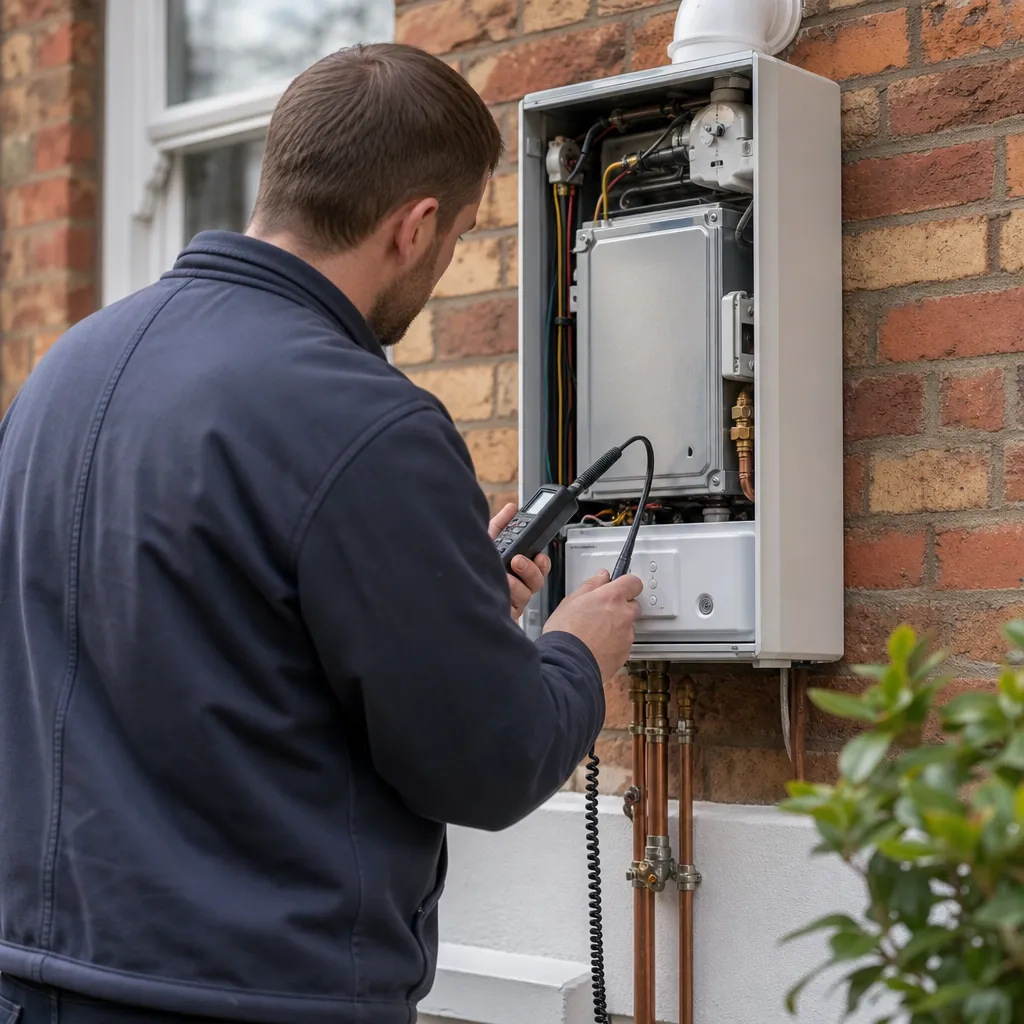
Gas Leak Emergency: Identifying, Reporting, and Safety Response
If you smell gas in your home, leave immediately without touching electrical switches, call the National Gas Emergency Service on 0800 111 999, and do not re-enter until given the all-clear.
 Surveys & Inspections
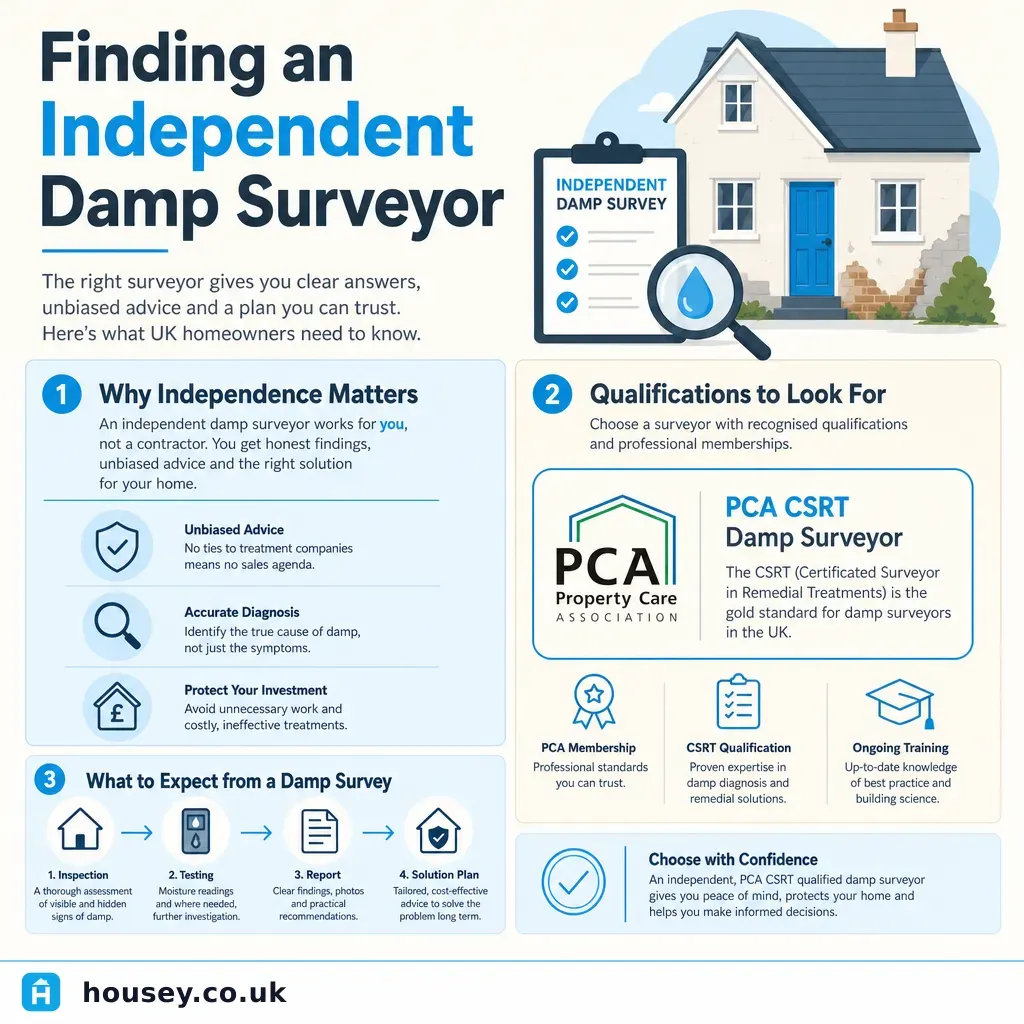
Finding an Independent Damp Surveyor
An independent damp surveyor has no financial tie to remediation contractors, so their diagnosis is less likely to reflect a sales interest.
 Surveys & Inspections
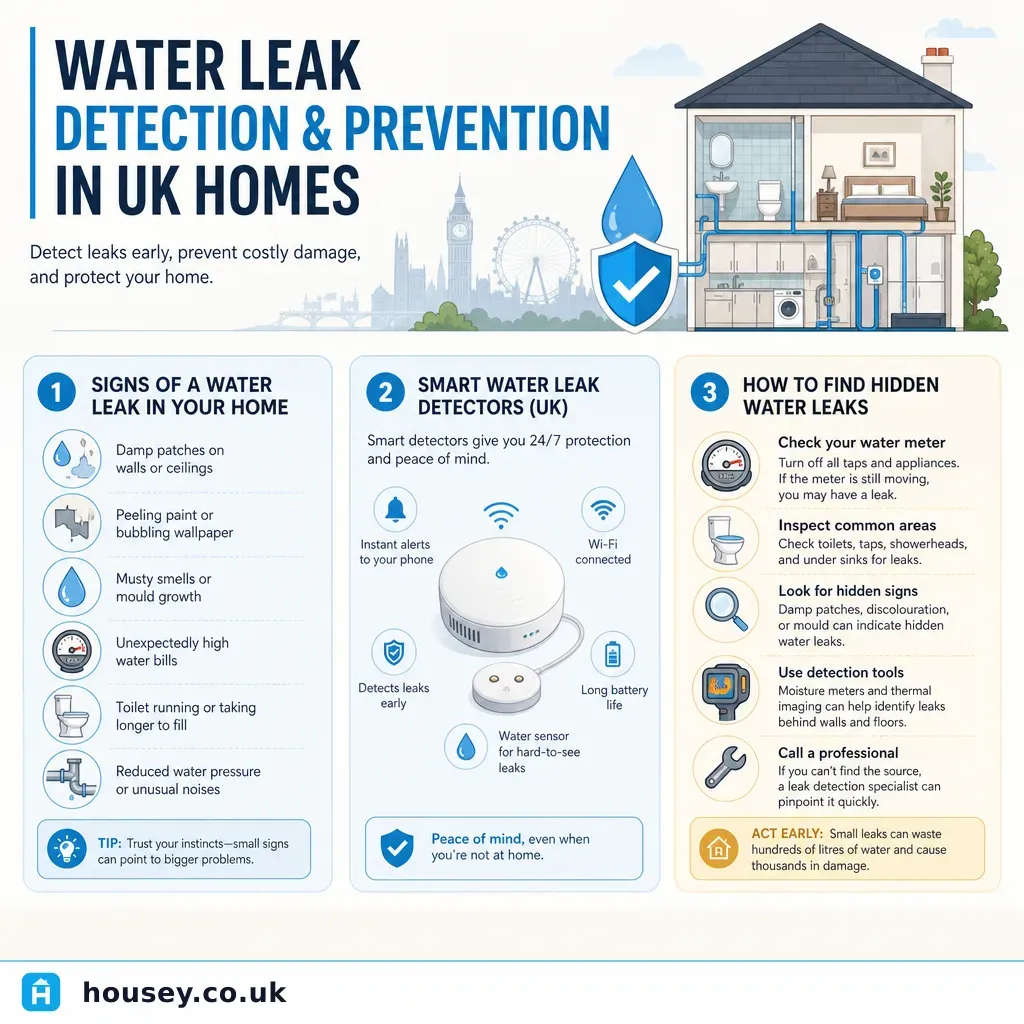
Water Leak Detection and Prevention in UK Homes
Water leaks in UK homes are best caught early through routine visual checks, water meter monitoring, and smart sensors placed under sinks and appliances.
 Surveys & Inspections
CCTV Drain Survey Costs and What to Expect
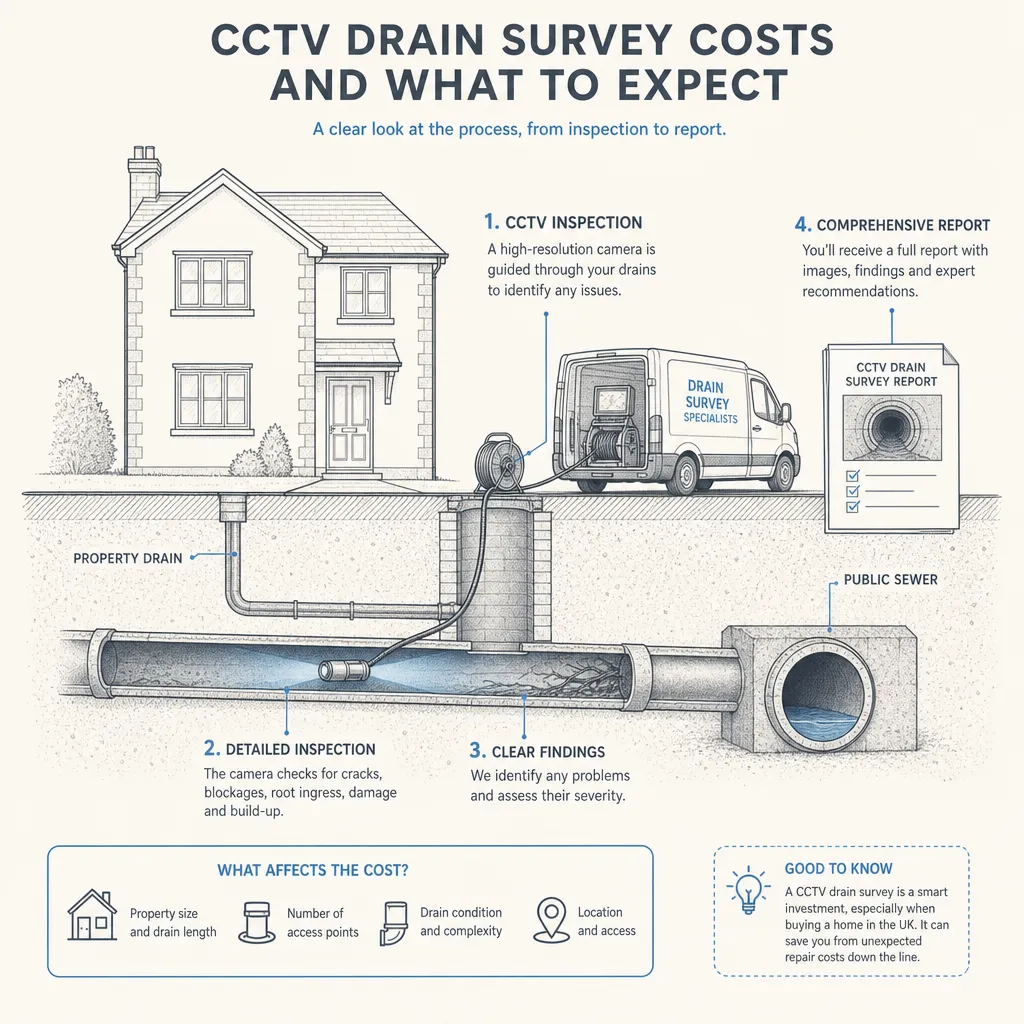
A CCTV drain survey in the UK typically costs between £150 and £400 for a standard residential survey covering one or two drainage runs.
 Surveys & Inspections
Gas Safety Certificate: What Landlords and Homeowners Need
Landlords in England, Scotland, and Wales must arrange a gas safety check every 12 months by a Gas Safe registered engineer under the Gas Safety (Installation and Use) Regulations 1998.