Finding a Good Tradesperson: Selection and Vetting Guide
By Housey · Last reviewed 12th of May 2026
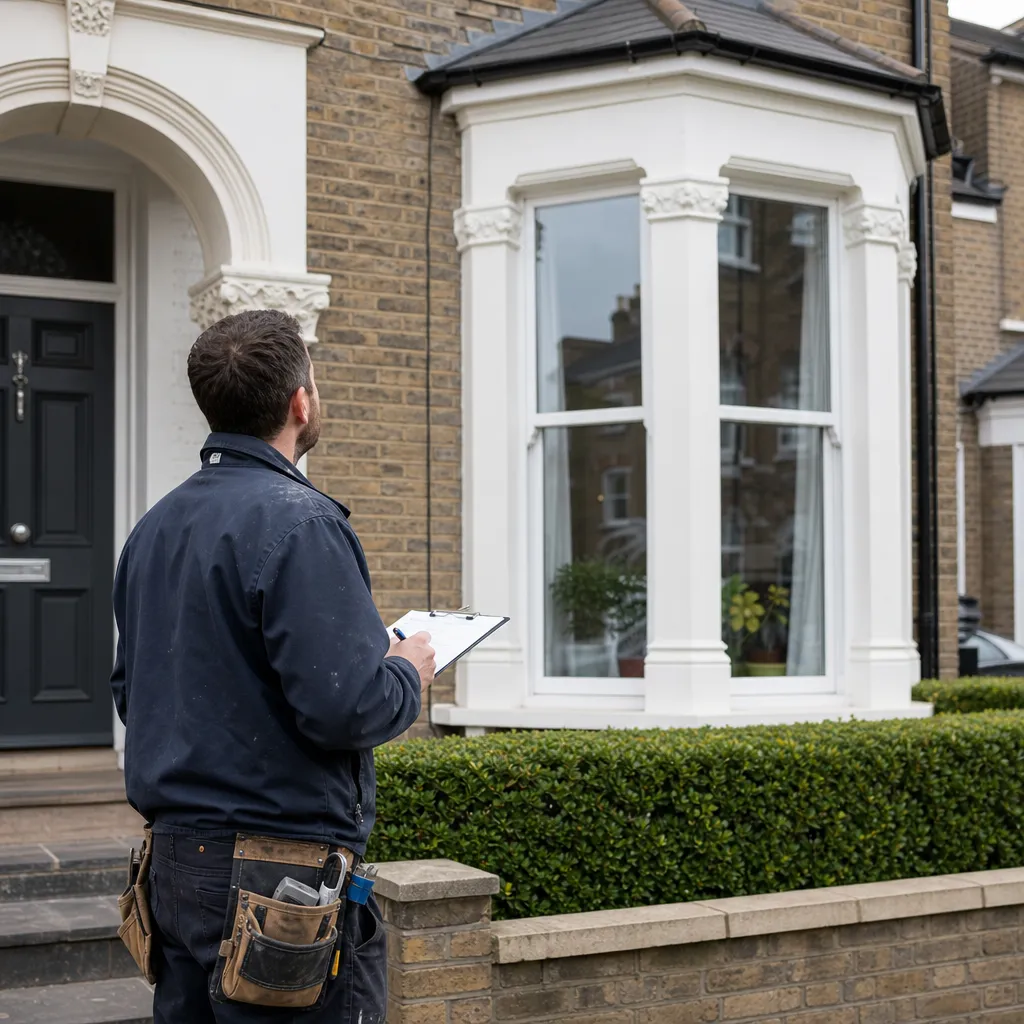
Finding a Good Tradesperson: Selection and Vetting Guide
Most home improvement projects depend on at least one tradesperson — a plumber, electrician, plasterer, joiner, or roofer — and the quality of that appointment often determines whether work is safe, legally compliant, and long-lasting, or the source of expensive problems later. The UK has no universal licensing system for tradespeople, which means the responsibility for vetting falls largely on the homeowner. Knowing which credentials actually matter, and which red flags to look for, makes the process considerably more reliable.
Key points
- Gas work must be carried out by a Gas Safe Register-registered engineer; this is a legal requirement under the Gas Safety (Installation and Use) Regulations 1998, not merely a best-practice recommendation.
- Electrical installation work covered by Part P of the Building Regulations in England must either be carried out by an electrician registered with a Competent Person Scheme (such as NICEIC, NAPIT, or ELECSA) or notified to a local authority Building Inspector for inspection.
- FENSA-registered installers can self-certify that replacement windows and doors comply with Building Regulations; using an unregistered installer requires a separate Building Regulations application and may complicate a future property sale.
- TrustMark is the government-endorsed quality scheme covering the widest range of domestic trades; registered providers are vetted for technical competence, customer service, and trading standards.
- Always obtain at least three written quotes and confirm each covers the same scope — verbal quotes and single-line estimates provide little protection if a dispute arises.
Which accreditation matters for which trade?
Different trades carry different registration requirements. Some are legally mandatory; others are voluntary but meaningful indicators of competence and insurance.
Trade | Mandatory registration | Voluntary or recommended schemes | Notes |
|---|---|---|---|
Gas engineer | Gas Safe Register (legal requirement) | — | Verify the engineer's card at gassaferegister.co.uk; check the specific work types listed on the card |
Electrician (domestic) | Competent Person Scheme for Part P work (NICEIC, NAPIT, ELECSA, etc.) OR Local Authority Building Inspector sign-off | Electrical Safety First, TrustMark | Part P covers most new circuits, consumer units, bathrooms, and outdoor installations |
Window and door installer | FENSA or CERTASS for self-certification of Building Regulations compliance | TrustMark | Without registration, homeowner must submit a separate building control application |
Plumber | No UK-wide mandatory registration | CIPHE, WaterSafe, TrustMark | Gas-related plumbing requires Gas Safe; unvented hot water systems require G3 qualification |
Roofer | None mandatory | National Federation of Roofing Contractors (NFRC), TrustMark | Many insurance-backed guarantees require NFRC membership as a condition |
Plasterer or decorator | None mandatory | TrustMark | No statutory scheme; rely on verified references and examples of comparable work |
Structural or groundworks | None mandatory (work must comply with Building Regulations) | CIOB, NHBC-registered builders | Structural elements require Building Regulations compliance; consider a structural engineer where loadbearing elements are affected |
How to find credible tradespeople
The most reliable starting points are:
- Personal recommendation from someone whose completed work you can inspect — especially for trades with no statutory registration where there is no register to verify.
- Gas Safe Register finder at gassaferegister.co.uk — the only legitimate way to find a legally registered gas engineer in the UK.
- TrustMark — search by postcode and trade for government-endorsed providers across most domestic trades at trustmark.org.uk.
- NICEIC contractor search or NAPIT find a contractor — for registered domestic electricians.
- NFRC member finder at nfrc.co.uk — for roofing contractors with industry-standard insurance and technical training.
- Which? Trusted Traders — independently assessed, including trading standards background checks.
Online platforms such as Checkatrade, Rated People, and MyBuilder can be useful for lower-risk trades, but check that reviews are independently verified, recent (within 12 months), and relate to jobs similar in type and scale to yours.
A practical vetting process
Step 1 — Confirm registration before making contact. Search the relevant register directly — Gas Safe, NICEIC, FENSA, or TrustMark — before inviting anyone to quote. Registrations expire; check the current status, not just whether a logo appears on a website.
Step 2 — Obtain at least three written quotes. Ask each tradesperson to quote in writing for the same specified scope. Beware of quotes that appear cheap because they exclude materials, waste disposal, or making good after the work — for example, patching plaster after chasing electrical cables.
Step 3 — Take up references. Ask for two references from comparable completed projects. Ask specifically how the tradesperson handled unexpected problems, not just whether the project was completed satisfactorily — every project encounters something unforeseen.
Step 4 — Check insurance. Ask for a current public liability insurance certificate. Most tradespeople should carry at least £1 million cover; £2 million or more is preferable for jobs involving structural work, water systems, or higher-risk activities.
Step 5 — Agree scope in writing. Even a brief written record — an email confirming what is included and excluded, materials specified, start date, duration, and payment milestones — is far more useful than a verbal agreement if the relationship deteriorates.
Homeowner checklist before work starts
Red flags to watch for
- Very large upfront deposit requested — a 10–25% deposit for materials on a larger job is normal; 50% or more before any work begins is unusual and exposes you financially.
- Reluctance to provide a written quote or insistence on a verbal agreement and handshake.
- Cash-only payment with no VAT invoice — makes disputes harder to resolve and often indicates unregistered or uninsured work.
- Cannot provide or verify Gas Safe, NICEIC, or FENSA registration — never accept a verbal assurance or a logo on a van as sufficient.
- Pressure to start immediately without time for reference checks or review of a written quote.
- Very low price with vague scope — items excluded from the quote often reappear as extras once work is under way.
- No fixed business address or difficulty locating the company on Companies House.
- Reviews describing unfinished work, price disputes, or failure to return for snagging — even a small number of such reviews warrants caution.
What not to assume
Several common assumptions create avoidable problems for homeowners:
- Do not assume a personal recommendation means the tradesperson is right for your job. A trusted plumber who re-roofed a neighbour's outbuilding is not necessarily experienced in your specific scope. Check references for comparable work.
- Do not assume planning permission and Building Regulations are the same thing. Many improvement works require Building Regulations approval but not planning permission — and vice versa. Check with your local planning authority or building control department before starting any notifiable work.
- Do not assume a certificate will automatically follow. Some unregistered tradespeople complete technically competent work but cannot issue a Part P Electrical Installation Certificate, an Unvented System Certificate (G3), or a FENSA certificate. This creates real problems at the point of sale and may require retrospective building control inspection at your cost.
- Do not assume the cheapest quote represents the best value. The cost of remedying defective work — replastering after poor tiling, rerouting incorrectly run cables, or rectifying a failed waterproofing job — routinely exceeds the original saving made by choosing the lowest tenderer.
When to get professional help
- If you have any concerns about the safety or quality of completed gas or electrical work, arrange an independent Gas Safe inspection or Electrical Installation Condition Report (EICR) without delay.
- If there is visible structural movement — cracks in walls, sloping floors, sticking doors — consult a chartered building surveyor before appointing any tradespeople; the scope of necessary work may need engineering assessment first.
- For larger or multi-trade projects, consider engaging a principal contractor or project manager to coordinate trades rather than appointing each separately, which reduces gaps in responsibility and reduces coordination risk significantly.
How Housey can help
Housey helps UK homeowners connect with vetted extension builders and a range of specialist tradespeople for improvement and build projects. Submit your requirements, compare credentials and quotes from accredited providers, and appoint with confidence.
Frequently asked questions
Do I need to check if my plumber is Gas Safe registered?
Only if they are carrying out gas work. Plumbing water systems does not require Gas Safe registration, but any work on a gas boiler, gas appliances, or gas pipework does — and only Gas Safe registered engineers may legally carry out such work in the UK under the Gas Safety (Installation and Use) Regulations 1998. Always verify registration directly at gassaferegister.co.uk.
What is a Competent Person Scheme?
A Competent Person Scheme allows registered tradespeople to self-certify that their work complies with Building Regulations without a separate local authority inspection. NICEIC, NAPIT, and ELECSA cover electrical work; Gas Safe covers gas installations; FENSA and CERTASS cover replacement windows and doors. The full list of approved schemes is published on GOV.UK.
How do I verify a tradesperson is genuinely Gas Safe registered?
Visit gassaferegister.co.uk and search using the engineer's licence card number. Every registered engineer carries a card with their photo, registration number, expiry date, and the specific types of gas work they are qualified to carry out. Never rely on a logo on a website or van — always check the register directly.
What documentation should a tradesperson provide on completion?
Depending on the work: a Gas Safety Certificate for gas appliances, an Electrical Installation Certificate for new circuits or consumer unit work, a FENSA or CERTASS certificate for replacement windows or doors, and a Building Regulations completion certificate for notifiable structural or plumbing work. Keep all documents safely — they will be required when you sell the property.
Sources and further reading
- Gas Safe Register — find a registered engineer — Gas Safe Register
- GOV.UK — Building Regulations competent person schemes — GOV.UK
- TrustMark — find a tradesperson — TrustMark
- NICEIC — find a contractor — NICEIC
- FENSA — window and door installer register — FENSA
- National Federation of Roofing Contractors — NFRC
- Citizens Advice — getting work done on your home — Citizens Advice
Useful next reads
 Improvement & Build
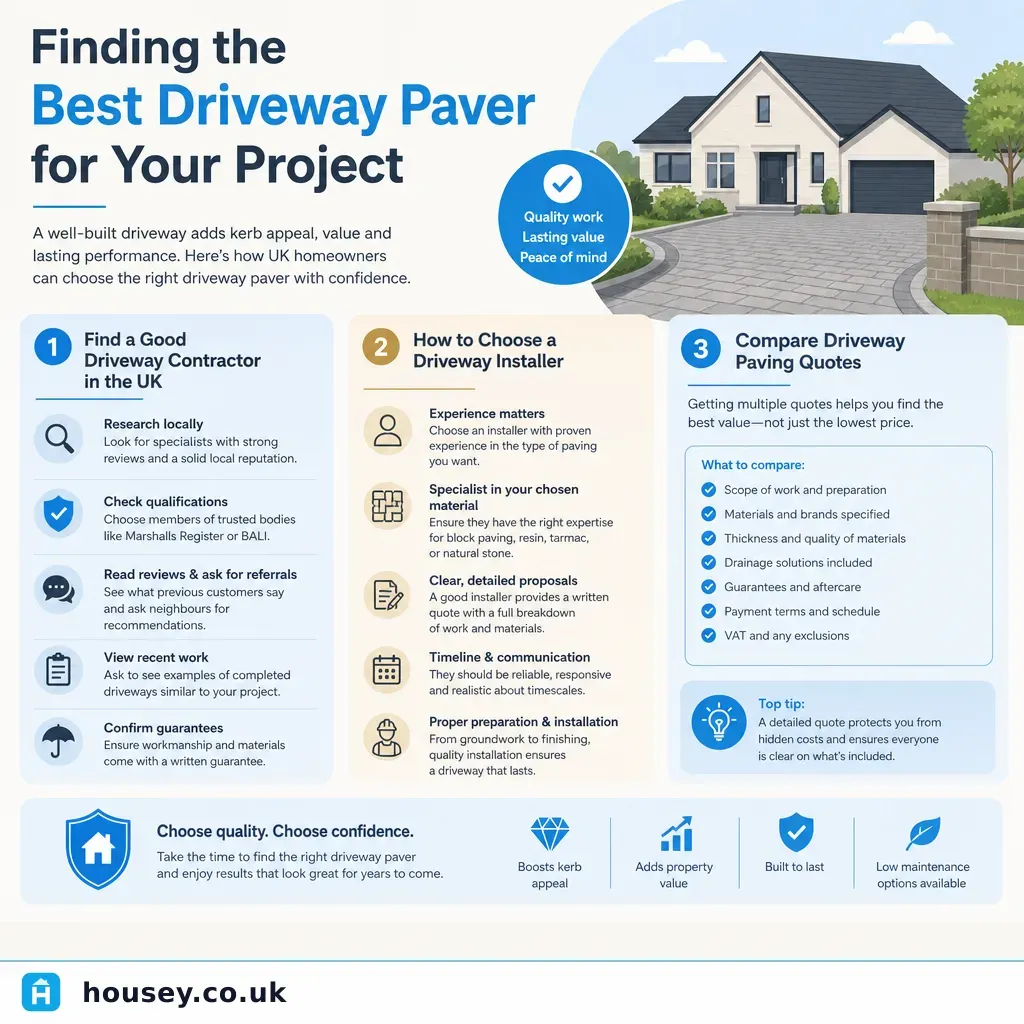
Finding the Best Driveway Paver for Your Project
To find a reliable driveway paver in the UK, get at least three written quotes, check the installer is registered with a trade body such as the National Federation of Builders or Marshalls Approved Installer scheme, ask to see recent local work, and confirm the quote covers drainage, edging, and planning.
 Improvement & Build
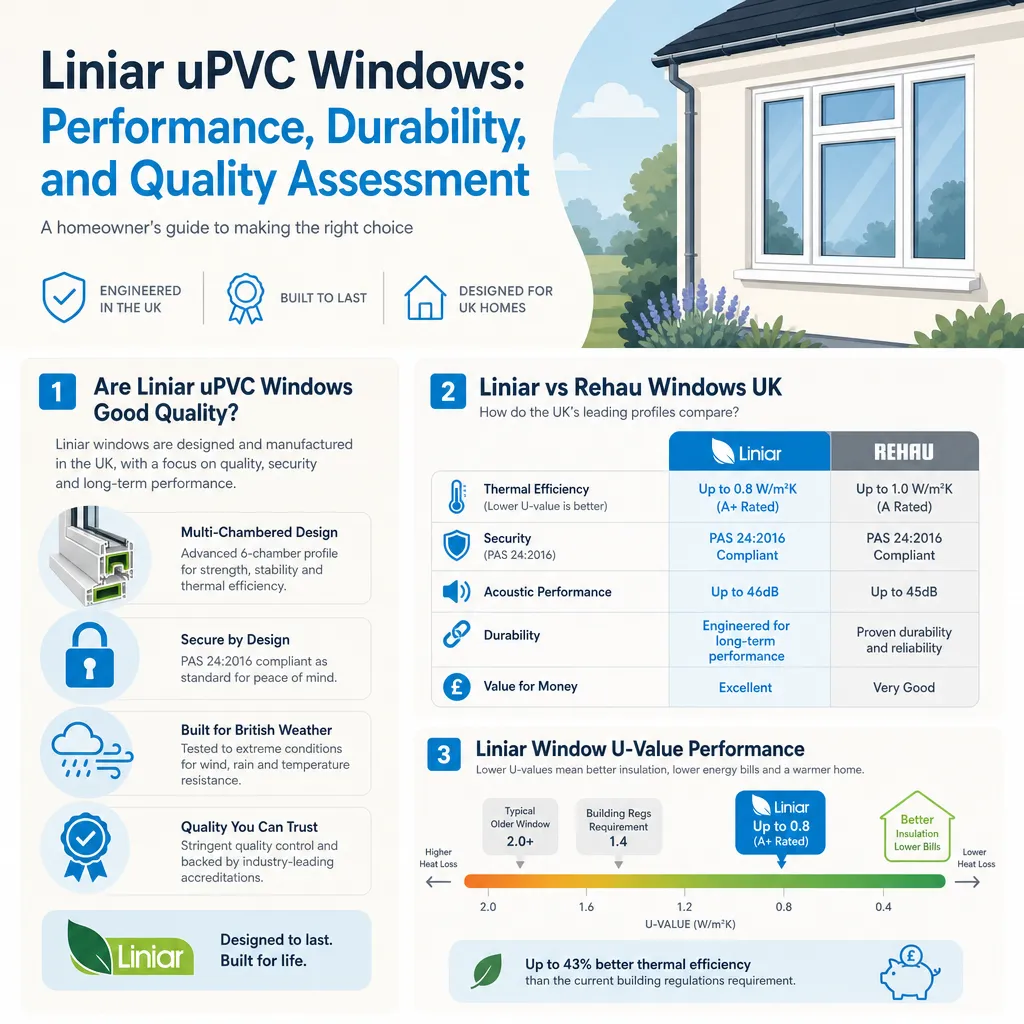
Liniar uPVC Windows: Performance, Durability, and Quality Assessment
Liniar uPVC window profiles are manufactured in the UK using multi-chambered, foamed frames.
 Improvement & Build
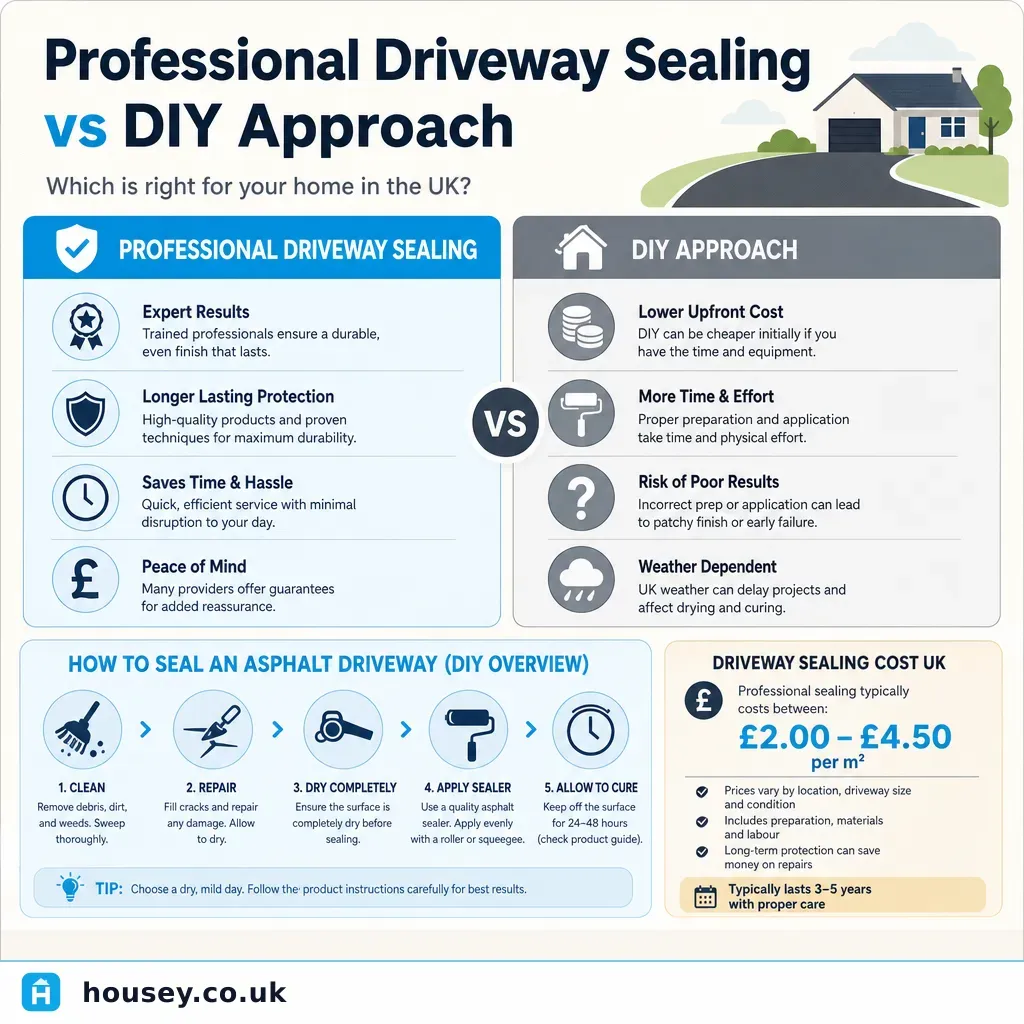
Professional Driveway Sealing vs DIY Approach
Professional driveway sealing offers a more durable, even finish using commercial-grade sealants and specialist equipment, typically costing £150 to £400 for an average drive.
 Improvement & Build
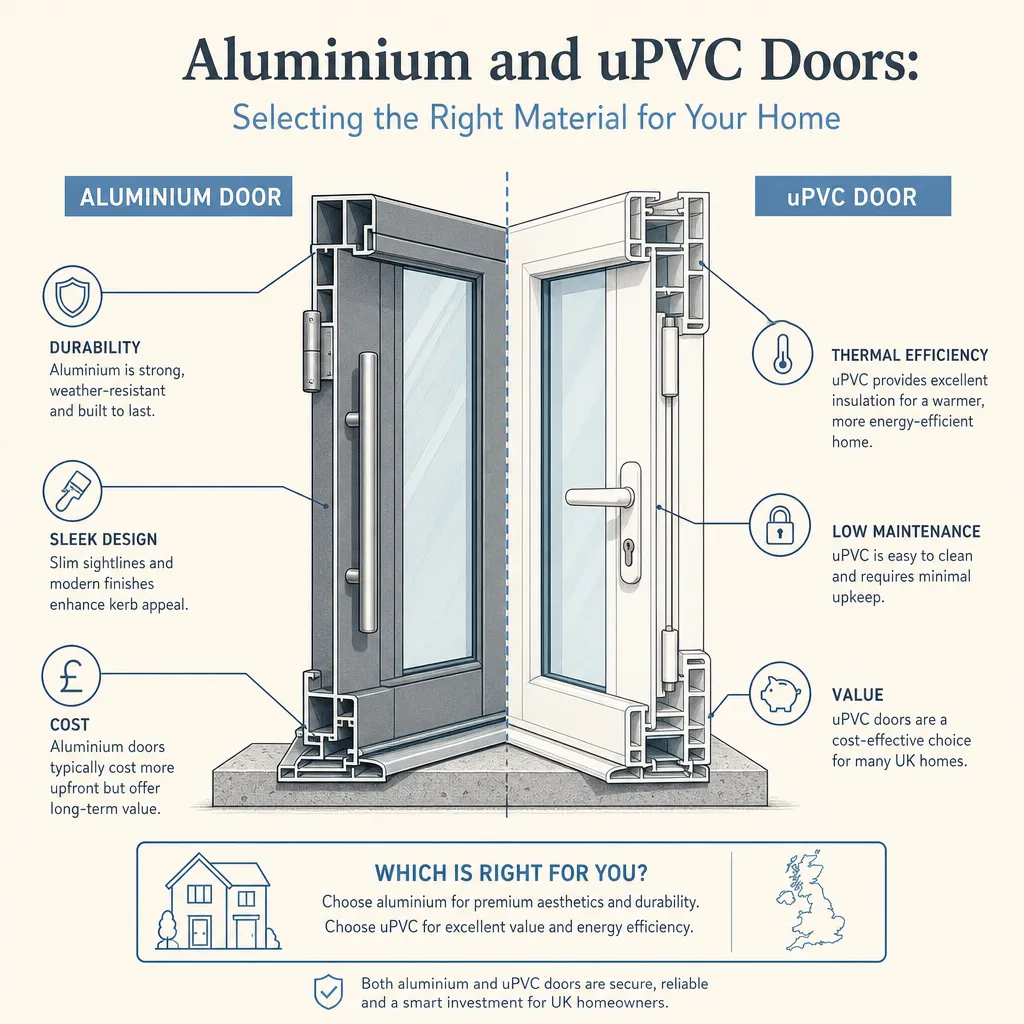
Aluminium and uPVC Doors: Selecting the Right Material for Your Home
uPVC doors are lower-cost and low-maintenance, making them a practical choice for most UK homes.
 Improvement & Build
Cracks in Driveways: What's Normal and When Should You Worry?
Hairline cracks under 1 mm in concrete driveways are usually normal shrinkage and cosmetic.