Fire Ratings in Building Construction: Standards and Testing
By Housey · Last reviewed 24th of May 2026
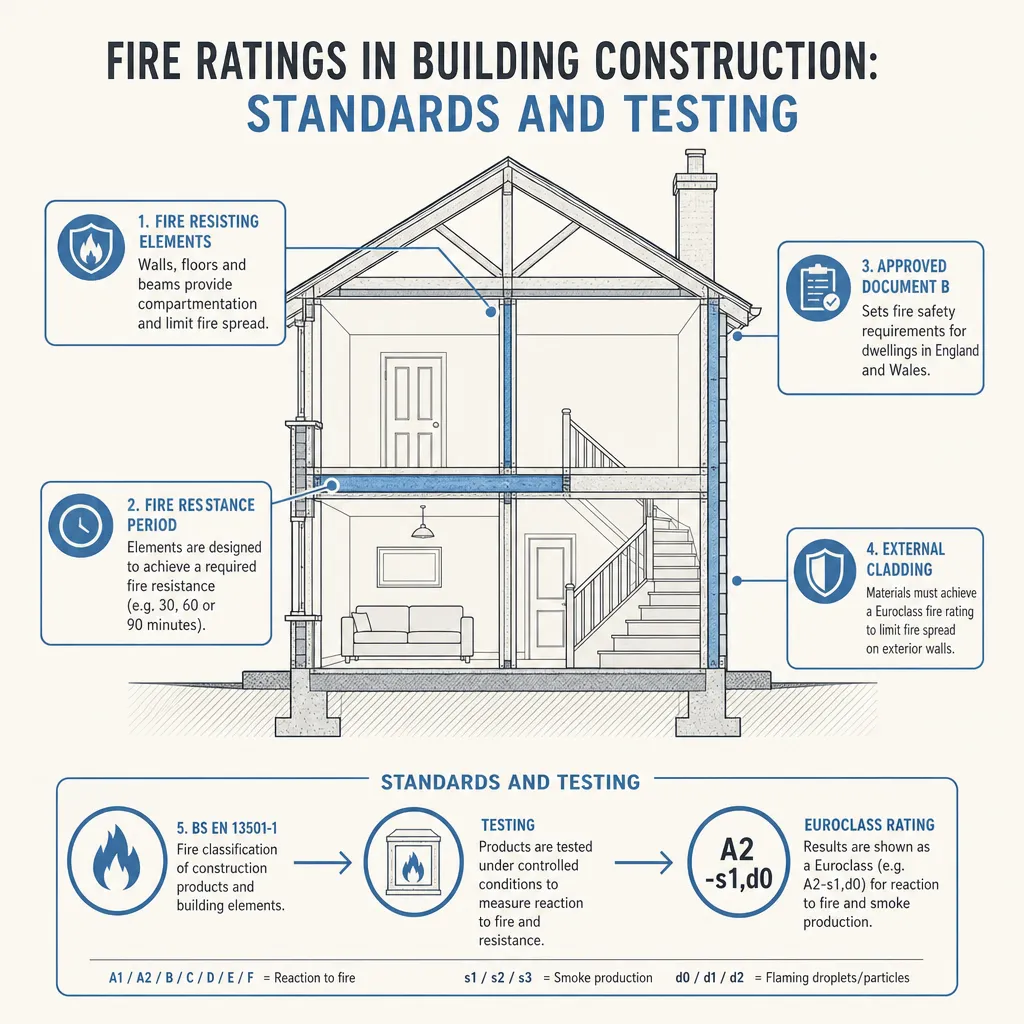
Fire Ratings in Building Construction: Standards and Testing
UK building regulations impose fire resistance requirements on structural and separating elements in almost every construction project — whether you are adding a loft conversion, fitting a new floor, installing cavity-wall insulation, or developing a block of flats. Fire rating is not an aesthetic or commercial judgement; it is a regulatory performance requirement enforced by building control. Getting it wrong can invalidate an insurance policy, fail an inspection, or — in the worst case — cost lives.
Key points
- Building Regulations Approved Document B (Fire Safety) sets minimum fire resistance periods for elements such as floors, walls, columns, and beams — typically 30, 60, 90, or 120 minutes depending on building type, height, and occupancy.
- Fire resistance is assessed against three criteria: load-bearing capacity (R — the element continues to carry load), integrity (E — no flames or hot gases pass through), and insulation (I — the unexposed face stays below a threshold temperature).
- BS EN 13501-2 is the current European classification standard for fire resistance; the older BS 476 Parts 20–23 test results remain acceptable for products already on the market under transitional arrangements.
- Reaction to fire (how readily a material ignites and spreads flame) is a separate classification using the Euroclass system (A1, A2, B, C, D, E, F) — particularly relevant for external cladding, insulation, and wall linings.
- The Building Safety Act 2022 established the Building Safety Regulator (HSE) and introduced mandatory gateway approvals for higher-risk buildings (18 m or more in height, or 7 or more storeys).
What fire resistance ratings mean
A fire resistance rating states how long a structural element or construction can perform its designated function when exposed to a standardised fire test. Ratings are expressed in minutes: 30, 60, 90, 120, or 180 are the common periods.
The three performance criteria are:
Criterion | Code | What it measures |
|---|---|---|
Load-bearing capacity | R | The element continues to carry its design load |
Integrity | E | No cracks, holes, or flame penetration to the unexposed side |
Insulation | I | The unexposed face does not exceed 140 °C average or 180 °C at any point |
A wall classified REI 60 meets all three criteria for 60 minutes. A non-load-bearing partition might only need EI 30 — integrity and insulation for 30 minutes with no load-bearing requirement.
Approved Document B Table A1 (Volume 1, dwellings) specifies minimum periods for each element type. For a typical two-storey house, loadbearing walls, floors, and roofs acting as floors usually require at least 30 minutes. Basements, flats, and taller buildings attract higher requirements.
Testing standards: BS 476 and BS EN 13501
Two test frameworks are in common use in the UK:
Standard | Origin | Current status | Notes |
|---|---|---|---|
BS 476 Parts 20–23 | British Standard | Still valid for existing products | Long-established UK test; many products hold BS 476 certificates |
BS EN 13501-2 | European Standard | Current preferred standard | Harmonised across Europe; required for CE-marked products |
BS EN 1365 series | European | Active | Covers structural elements: columns, beams, load-bearing walls |
Building control in England accepts evidence from either standard. If you are specifying a new product, check whether the manufacturer's certificate references BS 476 or BS EN 13501 — both are acceptable, but they are not directly comparable values. A qualified fire engineer should advise if you need to cross-reference performance data between the two frameworks.
Reaction to fire: Euroclass ratings
Reaction to fire governs how a material behaves when it is the source of combustion, not how it performs in a fully developed fire. The Euroclass system classifies products from A1 (non-combustible: mineral fibre, concrete, masonry) through A2, B, C, D, E, to F (no performance determined).
Subclasses for smoke (s1, s2, s3) and flaming droplets (d0, d1, d2) also apply. A cladding panel rated A2-s1,d0 produces very limited combustion, minimal smoke, and no flaming droplets.
Post-Grenfell changes under Approved Document B (2019 England amendments, 2022 updates) restrict the use of combustible materials in the external walls of:
- Residential buildings 18 m or more in height.
- Hospitals and care homes 18 m or more in height.
- Schools.
For dwellings below 18 m, Euroclass requirements still apply to roof coverings and some wall situations, but restrictions on external wall cladding systems are less prescriptive. Verify current requirements with your building control body or a competent fire engineer.
The Building Safety Act 2022 and higher-risk buildings
For most homeowners extending or converting a single residential property, the Building Safety Act 2022 will not directly change the process. Its main impact is on:
- Higher-risk buildings (HRBs): residential buildings 18 m+ or 7+ storeys now require approval at three gateways from the Building Safety Regulator (operated through HSE) — before design, before construction, and before occupation.
- Accountable persons: owners or management companies of HRBs must register the building and maintain a "golden thread" of building safety information.
- Leaseholder protections: qualifying leaseholders in HRBs have specific protections against remediation costs.
If your project falls within an HRB category, competent professional advice from a fire engineer and a building control professional is essential from the earliest design stage.
Red flags: when fire rating compliance may be at risk
- An extension or conversion uses plasterboard, joists, or insulation without documented fire-resistance test evidence.
- A contractor proposes substituting a specified product with an alternative without a formal equivalence assessment.
- Cavity barriers or fire stopping around service penetrations (pipes, cables, ducting) have not been shown in drawings or agreed with building control.
- Cladding or external wall insulation on any building has been installed without documented Euroclass ratings.
- No building control approval (full plans or building notice) was obtained before work that required one.
Important limitations
The information in this article is general guidance based on Approved Document B (2019/2022 England editions), BS EN 13501, and the Building Safety Act 2022. Fire safety regulations differ between England, Wales, Scotland, and Northern Ireland. Requirements depend on specific building characteristics, occupancy type, construction details, and local building control interpretation.
This article does not constitute professional fire engineering advice and should not be used as a substitute for assessment by a competent fire engineer or building control professional.
When to get professional help
Consult a qualified fire engineer or building control professional if:
- You are designing or altering any element carrying a fire resistance requirement in Approved Document B.
- You are installing cladding, external wall insulation, or a new cavity barrier system.
- You are converting a dwelling into flats or changing the use of a building.
- Your project involves a building 11 m or more in height, or any higher-risk building category.
- You have received a building control notice requiring fire safety remediation.
- You are uncertain whether an existing product certificate is valid and applicable to your specific build-up.
What to ask a qualified professional
Before instructing a fire engineer or building control body:
- Which edition of Approved Document B applies to my project, and does it differ if I am in Wales or Scotland?
- Are the products specified in my drawings supported by current, valid fire test certificates under BS 476 or BS EN 13501?
- Is third-party certification (e.g. BBA, LABC, or Warringtonfire) required for any product in my external wall build-up?
- How will fire stopping and cavity barriers be installed, inspected, and documented during construction?
- Does my project trigger the Building Safety Regulator gateway process?
- Who is the registered building control inspector, and when will they carry out stage inspections?
How Housey can help
If your project requires a fire risk assessment, Housey can connect you with accredited professionals who understand current Approved Document B requirements, post-Grenfell external wall obligations, and the Building Safety Act 2022 gateway process.
Frequently asked questions
What is the difference between fire resistance and reaction to fire?
Fire resistance describes how long a structure or element maintains its load-bearing, integrity, or insulation function when exposed to a fully developed fire. Reaction to fire describes how readily a material ignites and contributes fuel to a fire. Approved Document B uses both: fire resistance for structural elements and separating walls and floors, and reaction to fire (Euroclass) for surface linings and cladding.
Does a loft conversion always need 30 minutes' fire resistance?
In most houses converted to include a loft room, Approved Document B requires upgrading the existing first-floor ceiling to provide at least 30 minutes' fire resistance, and providing a protected escape route to the new floor. The exact requirement depends on house layout and number of storeys. Always check with building control before work begins.
Is BS 476 still accepted in the UK?
Yes. Building control bodies in England, Wales, Scotland, and Northern Ireland accept fire resistance evidence from both BS 476 and BS EN 13501 series tests. Many products on the market still hold BS 476 certificates. Confirm with your building control body that the certificate is acceptable for your specific application.
What is the Building Safety Regulator?
The Building Safety Regulator (BSR), operated through HSE, was created by the Building Safety Act 2022. It oversees safety in higher-risk buildings (18 m+ or 7+ storeys in England) and regulates the building control profession nationally. For most single dwellings, day-to-day interaction will be with a local authority building control body or a registered building control approver.
Sources and further reading
- Approved Document B: Fire Safety (2019, updated 2022) — GOV.UK
- Building Safety Act 2022 — legislation.gov.uk
- Building Safety Regulator — HSE
- Fire safety in new and existing buildings — GOV.UK
- BSI: BS EN 13501-2 Fire classification of construction products — BSI Group
Useful next reads
 Surveys & Inspections
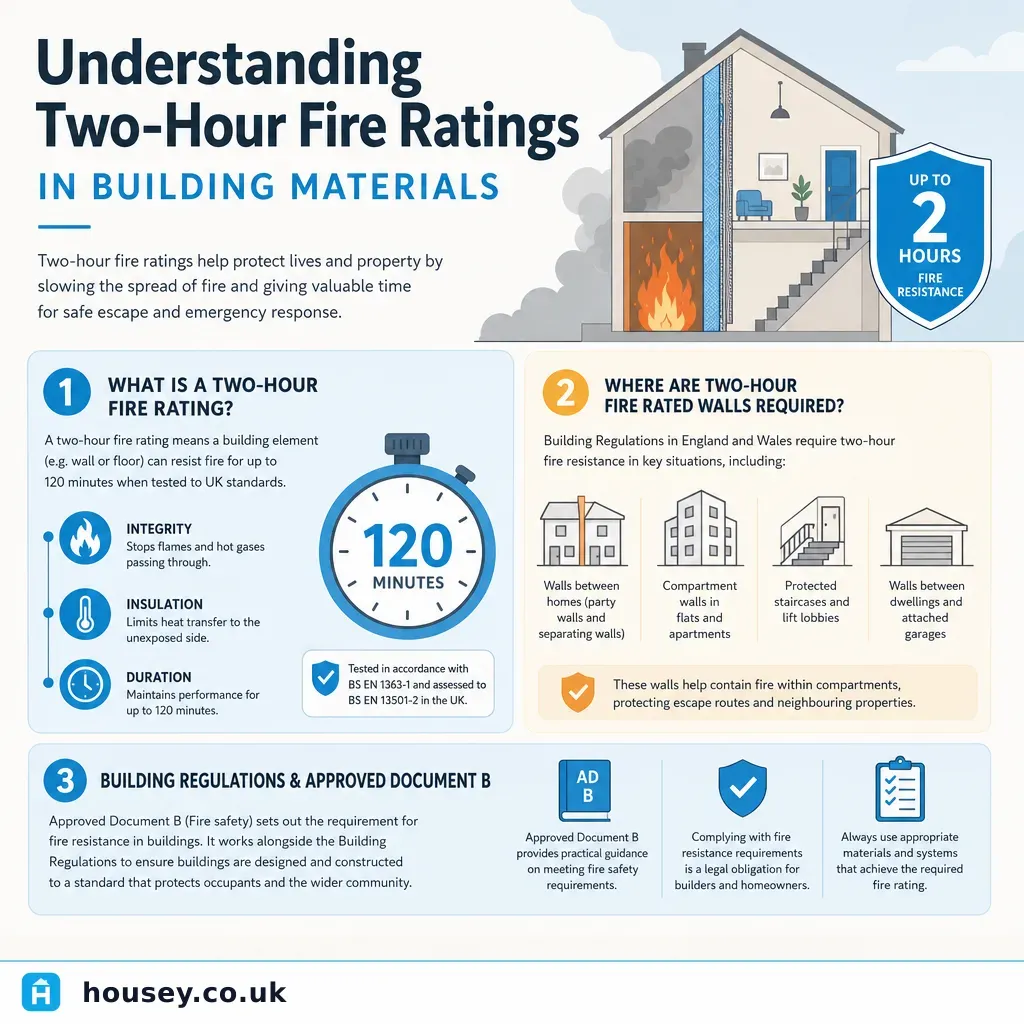
Understanding Two-Hour Fire Ratings in Building Materials
A two-hour fire rating — FR 120 or REI 120 — means a building element maintains loadbearing capacity, resists flame penetration, and limits heat transfer for 120 minutes under standardised test conditions to BS EN 13501-2.
 Surveys & Inspections
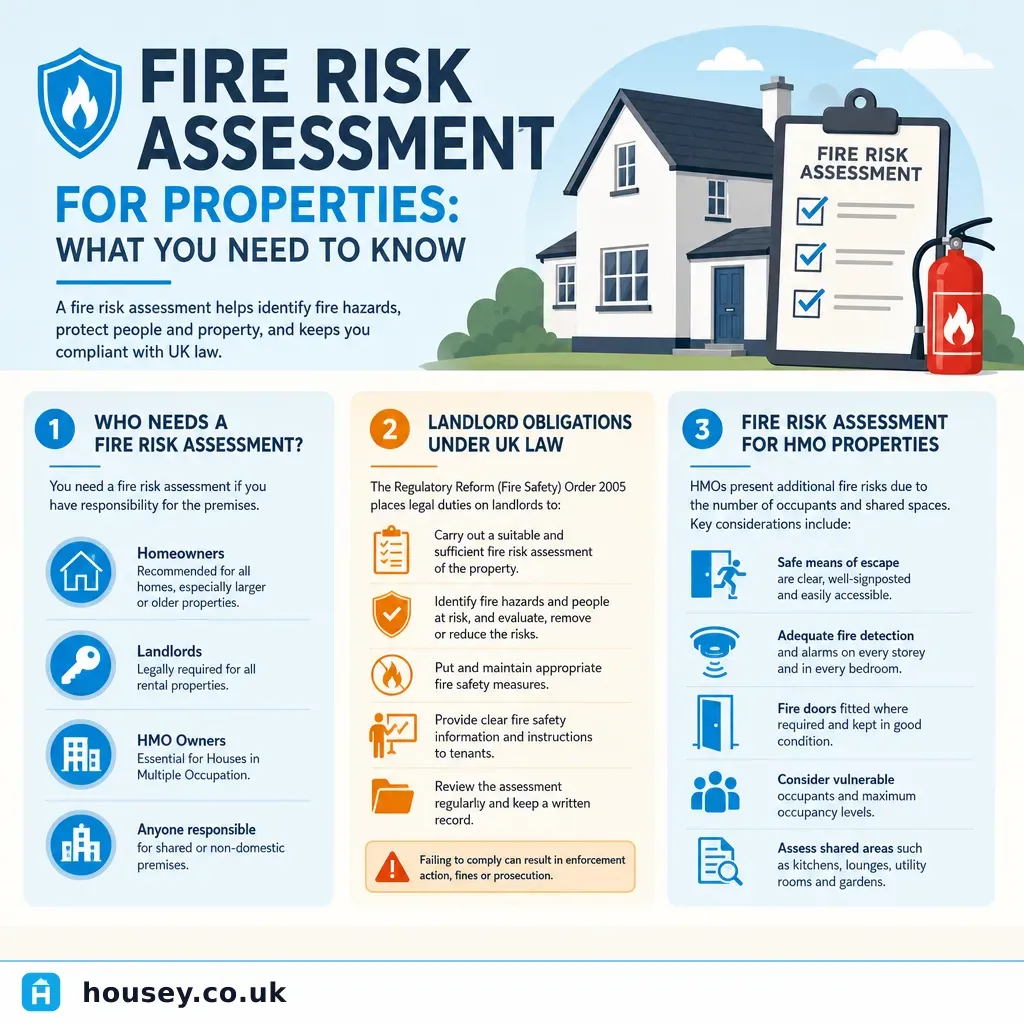
Fire Risk Assessment for Properties: What You Need to Know
Most non-domestic properties in England and Wales require a fire risk assessment under the Regulatory Reform (Fire Safety) Order 2005.
 Surveys & Inspections
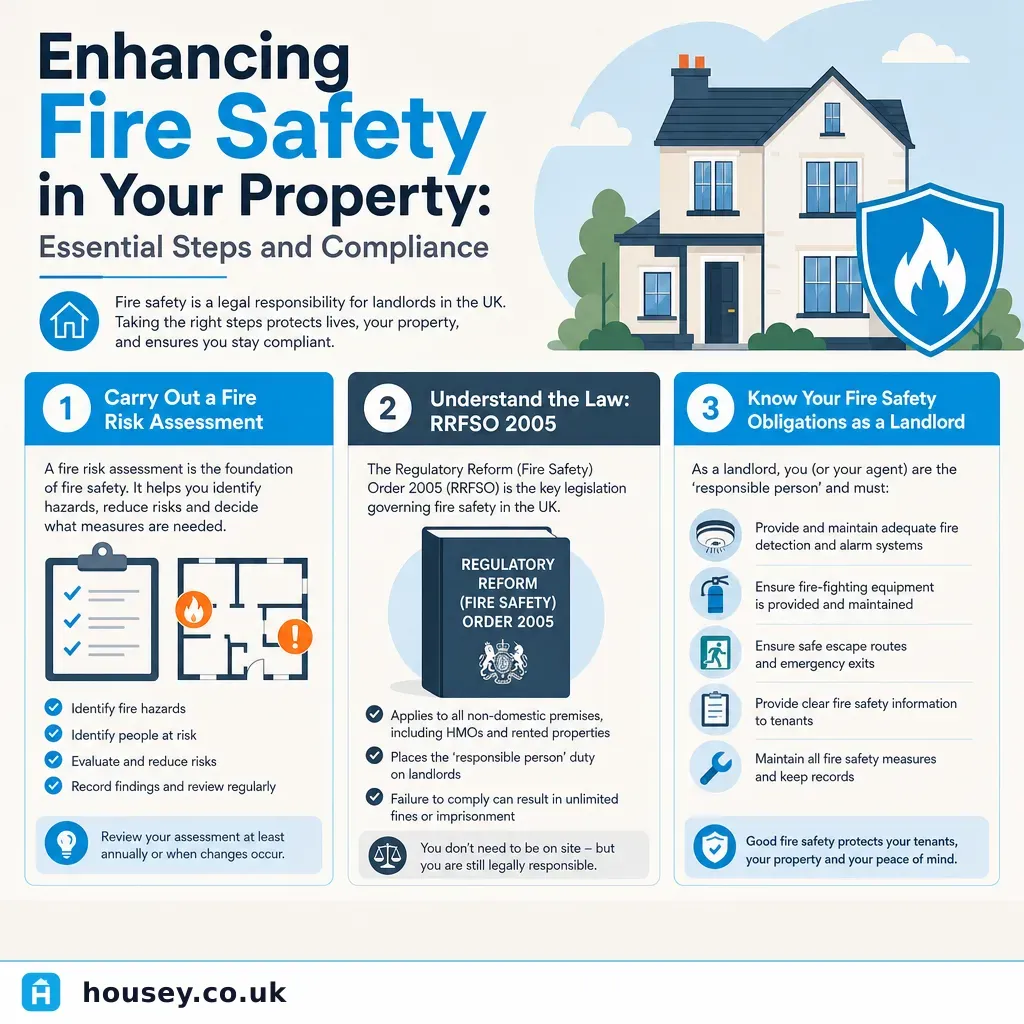
Enhancing Fire Safety in Your Property: Essential Steps and Compliance
Fire safety in UK properties is governed by Building Regulations Approved Document B and, for non-domestic and multi-occupied residential buildings, the Regulatory Reform (Fire Safety) Order 2005.
 Surveys & Inspections
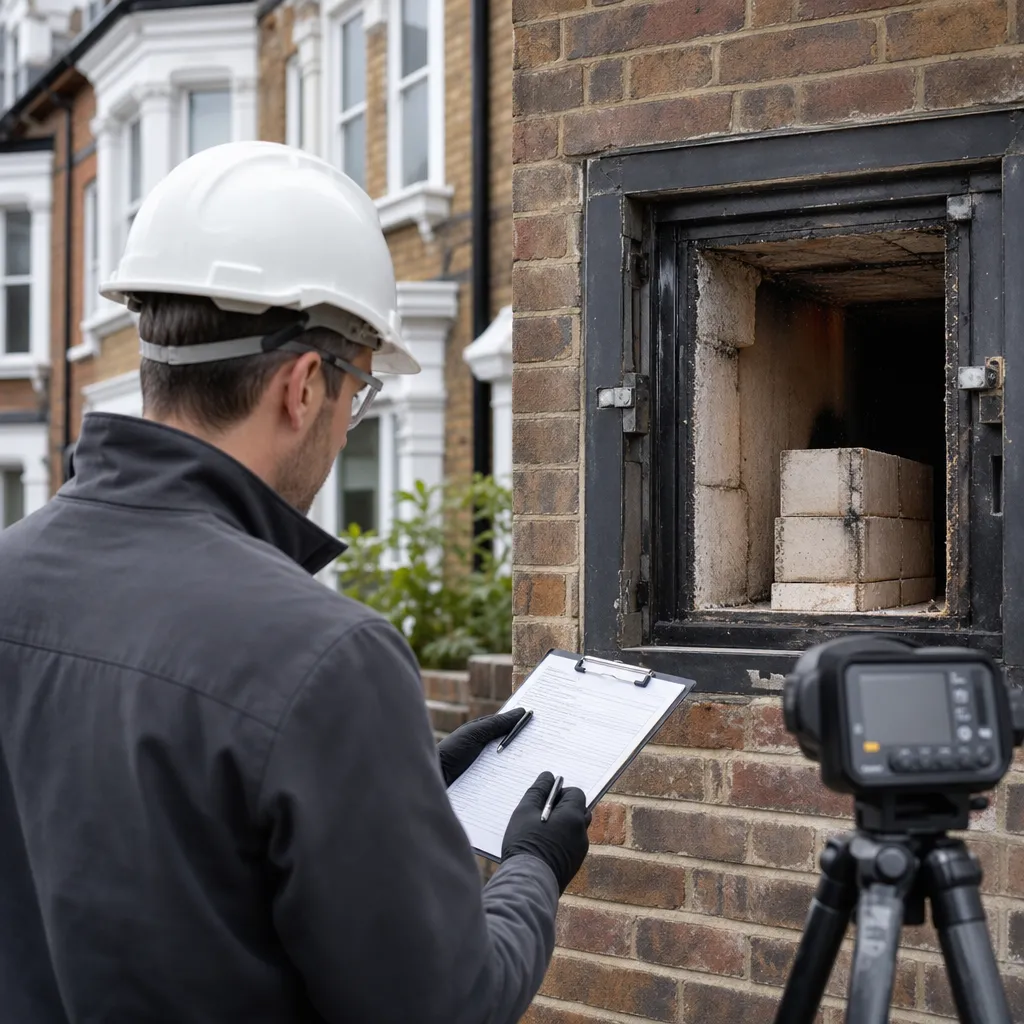
Fire Resistance Testing and Performance Prediction in Building Materials
Fire resistance in UK buildings is rated using BS EN 13501-2 criteria — Loadbearing capacity (R), Integrity (E), and Insulation (I) — measured in minutes.
 Surveys & Inspections
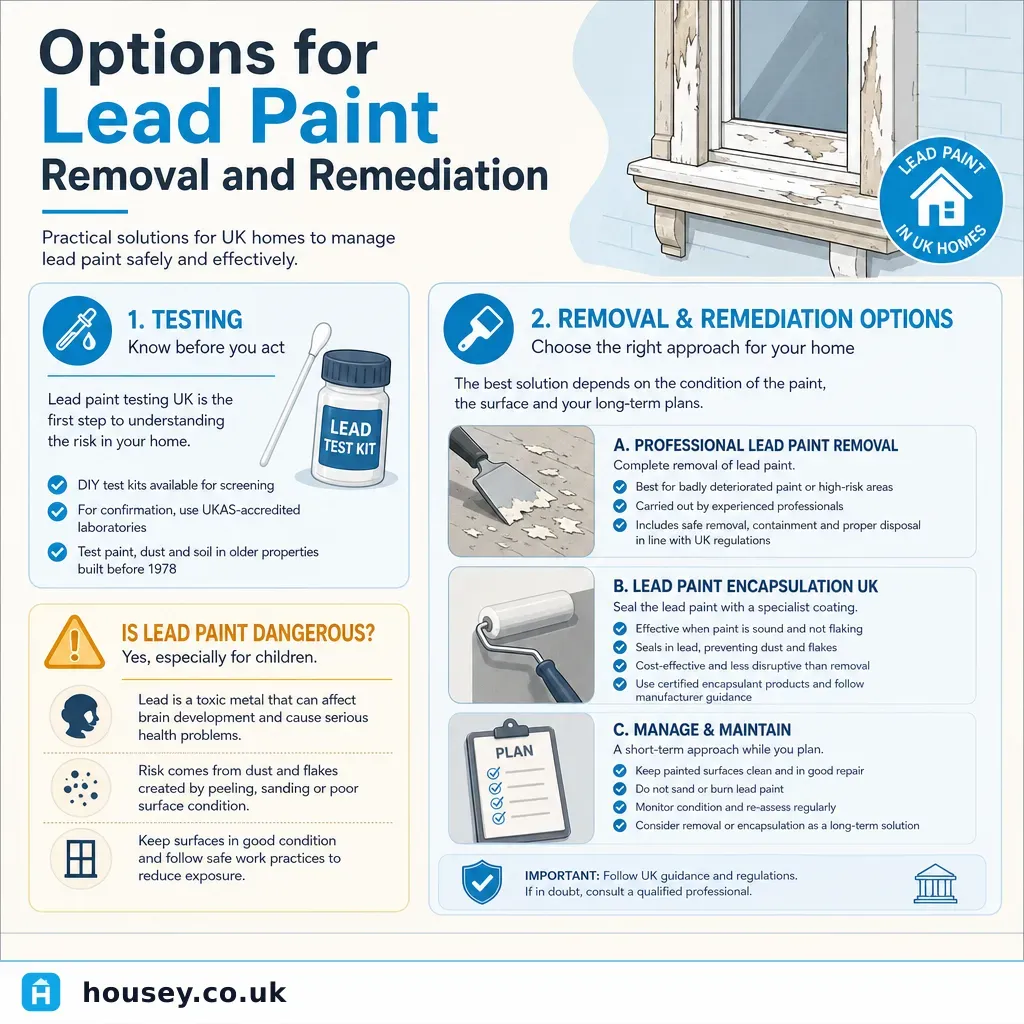
Options for Lead Paint Removal and Remediation
Lead paint in UK homes built before 1960 is common and not automatically hazardous if in good condition.