Understanding Two-Hour Fire Ratings in Building Materials
By Housey · Last reviewed 11th of May 2026
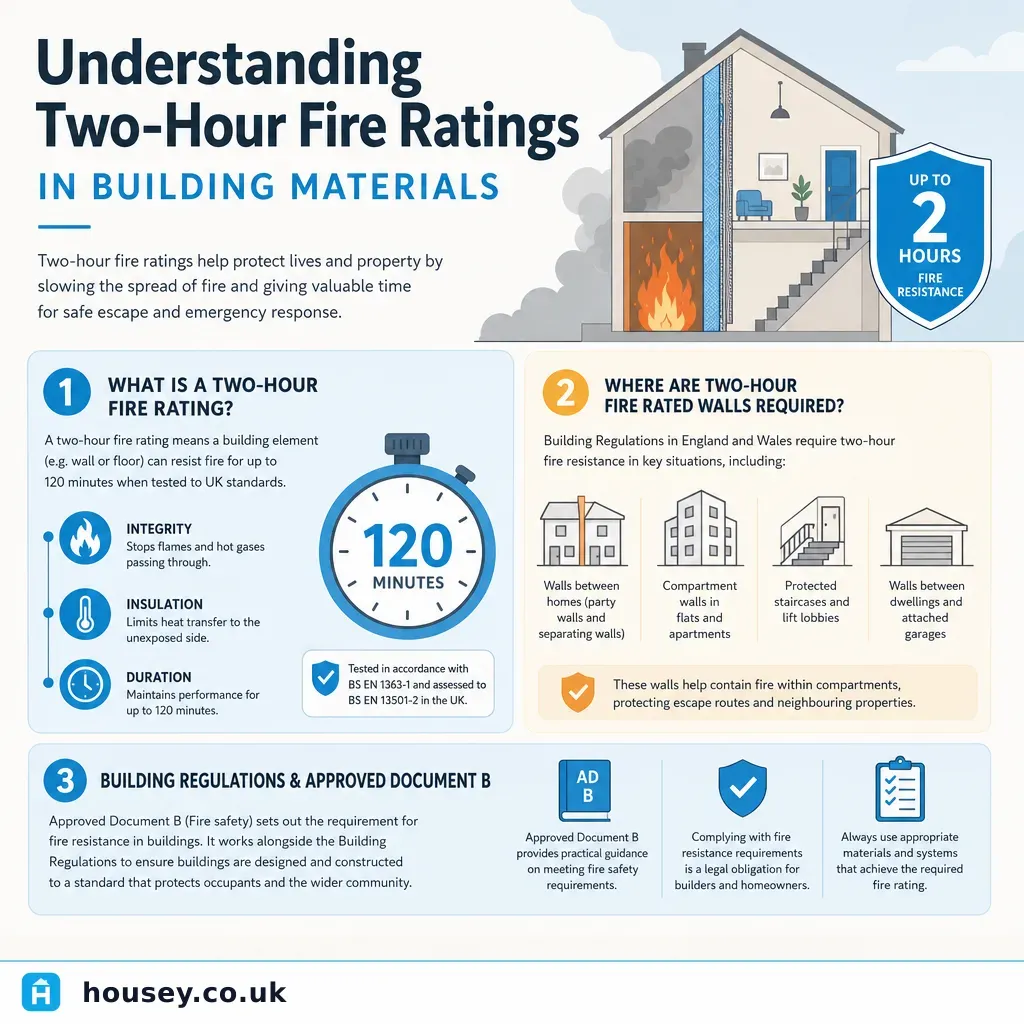
Understanding Two-Hour Fire Ratings in Building Materials
Fire safety requirements in UK Building Regulations specify the performance that structural and separating elements must maintain during a fire — not merely that they are constructed from non-combustible materials. For anyone carrying out building works, converting a property, or seeking to understand a fire risk assessment recommendation, knowing what a two-hour fire rating means, which elements require it, and who can confirm compliance is essential context before specifying materials or instructing contractors.
Key points
- A two-hour fire resistance rating — expressed as FR 120 or REI 120 — means a building element has been tested and shown to maintain loadbearing capacity (R), integrity against flame and hot-gas penetration (E), and insulation limiting heat transfer to the unexposed face (I) for 120 minutes under test conditions to BS EN 13501-2.
- UK Building Regulations Approved Document B (Fire Safety) sets minimum fire resistance periods for elements of structure by purpose group, height, and number of storeys; Volume 1 covers dwellinghouses and Volume 2 covers buildings other than dwellinghouses.
- Two-hour fire resistance periods are not required for most standard two- or three-storey UK dwellinghouses; they are most commonly required for compartment walls and floors in high-rise residential buildings above 18m and certain commercial or industrial structures.
- A 2-hour fire-rated door carries the designation FD120; FD30 and FD60 are more commonly specified in UK dwellings and are not interchangeable with FD120.
- The Building Safety Act 2022 introduced significantly enhanced requirements for higher-risk buildings — residential buildings 18m or taller, or seven or more storeys — including new gateway approvals and the Building Safety Regulator as the building control authority.
What does a fire resistance rating actually measure?
Fire resistance is assessed against three criteria, abbreviated REI after their French-language roots used in the European test standard BS EN 13501-2:
Criterion | Symbol | What it means |
|---|---|---|
Loadbearing capacity | R | The element continues to carry its structural load without collapse |
Integrity | E | The element resists penetration by flames or hot gases |
Insulation | I | The unexposed face does not reach temperatures that would ignite material on the other side |
A full REI 120 rating requires all three criteria to be maintained for 120 minutes. Some elements only need to meet one or two criteria; a non-loadbearing partition may only require EI (integrity and insulation) rather than REI. Tests are conducted to BS EN 1363-1 and classified to BS EN 13501-2.
Critically, the rating is a system performance, not an inherent property of an individual material. The same concrete block will perform differently depending on wall thickness, mortar specification, joint construction, and applied finishes. Only the tested and certified assembly configuration can be said to achieve the stated rating.
When are two-hour fire resistance periods required in UK buildings?
Approved Document B Table B3 (Volume 1) and Tables B4 and B5 (Volume 2) set out minimum fire resistance periods for elements of structure. The required period depends on purpose group, building height, and number of storeys.
For residential buildings, the following provides a broad guide derived from Approved Document B (Volume 1, 2019 edition):
Building situation | Minimum fire resistance period |
|---|---|
Dwellinghouse: no floor above 5m (up to 2 storeys) | 30 minutes for elements of structure |
Dwellinghouse: floor between 5m and 7.5m (3 storeys) | 60 minutes for elements of structure |
Dwellinghouse: floor above 7.5m | 90 minutes for elements of structure |
Purpose-built flats: floor between 5m and 18m | 60 minutes |
Purpose-built flats: floor above 18m (high-rise) | 90–120 minutes |
Compartment walls and floors in buildings above 18m | 120 minutes (REI 120) |
These are indicative figures for guidance only. Your building control body will confirm the exact requirements for your specific building and works. Rules can vary for listed buildings, conversions, mixed-use buildings, and buildings with suppression systems.
Which materials and assemblies achieve two-hour fire resistance?
Concrete
Reinforced concrete is among the most widely used materials for achieving REI 120. Concrete is non-combustible; under fire conditions, surface spalling may occur but adequate cover to reinforcement maintains structural capacity. Required cover depths and minimum section dimensions are set out in BS EN 1992-1-2 (Eurocode 2, Part 1-2: structural fire design).
Masonry
Brick and block masonry can achieve two-hour fire resistance at appropriate thicknesses — typically 100mm solid or 190mm hollow block construction. Performance data is given in BS EN 1996-1-2 (Eurocode 6, Part 1-2).
Protected steel
Unprotected structural steel loses significant strength rapidly in fire. To achieve REI 120, sections must be protected with intumescent paint at a tested and certified dry film thickness, mineral wool or ceramic fibre boards, or concrete or masonry encasement. The protection required depends on the section factor and applied load.
Fire-rated board assemblies
Proprietary board systems — typically calcium silicate, vermiculite, or gypsum-based — are used to line or encase structural elements. These are system-specific; only the tested and certified assembly achieves the stated classification.
Fire doors
FD120 doors are specified at certain compartment boundaries in high-rise buildings. More commonly encountered in UK residential buildings are FD30 and FD60 doors. All fire doors must be installed in strict accordance with their tested specification — hardware, intumescent strips, smoke seals, hinges, and frame construction are all part of the tested assembly and cannot be substituted freely.
Red flags: when to seek specialist advice
The following situations indicate that fire resistance requirements may be more complex than standard guidance covers and that a fire engineer, building control consultant, or fire risk assessor is needed:
- Any works to a building meeting the definition of a higher-risk building under the Building Safety Act 2022 — residential buildings 18m or taller, or seven or more storeys.
- Conversion of a building to residential use, particularly above two storeys.
- Works that breach or alter an existing fire-resisting compartment floor, wall, or door set.
- Penetrations (pipes, cables, ducts) through fire-resisting elements without appropriate fire-stopping and tested seals.
- A fire risk assessment or building control inspection that identifies non-compliant construction or missing compartmentation.
- Replacement of fire doors with non-rated doors in a building where fire separation is required.
- Any works to a hospital, care home, school, or building with vulnerable occupants.
Important limitations
This article provides general information about fire resistance ratings and their context in UK Building Regulations. It is not a fire risk assessment, a structural fire engineering report, or legal advice. Fire resistance requirements are determined on a building-by-building basis and have evolved significantly following the Building Safety Act 2022 and Fire Safety Act 2021. Always verify current requirements with your building control body or a suitably qualified fire engineer before specifying or carrying out works.
When this becomes urgent
Seek professional assessment immediately if:
- You discover that fire-resisting compartmentation has been removed or breached — for example, penetrations through fire walls or floors without fire-stopping.
- A fire risk assessment has identified elements of structure or fire doors as non-compliant.
- You are the responsible person for a building in scope of the Fire Safety Act 2021 and are uncertain of your obligations.
- Fire safety works carried out by a previous owner may not have complied with building regulations at the time.
- A compartment door or fire door is missing, damaged, or has been replaced with a non-rated door in a building requiring fire separation.
What to ask a qualified professional
Before instructing a fire safety specialist or building control consultant:
- Are you registered with a recognised body — IFSM, IFE, or BAFE for fire risk assessors; LABC or a registered building control approver for building control?
- Which elements of structure in this building are required to have fire resistance, and to what period under Approved Document B?
- Is this building classified as a higher-risk building under the Building Safety Act 2022?
- Does the proposed work breach any existing fire-resisting compartmentation, and how will it be reinstated?
- Is the fire-resistant system you are specifying based on a tested and classified assembly to BS EN 13501-2?
- What certification or documentation will be produced to demonstrate compliance at practical completion?
- Does the work require a building regulations application, and to which building control body will it be submitted?
When to get professional help
Fire resistance performance cannot be reliably assessed from visual inspection or material description alone. Instruct a fire engineer, fire risk assessor, or building control consultant if your project involves new or altered elements of structure in buildings requiring fire-rated construction, penetrations through fire-resisting floors or walls, installation or replacement of fire doors, or any works to buildings classified as higher-risk under the Building Safety Act 2022.
How Housey can help
Housey connects you with qualified professionals for fire risk assessments and structural surveys, as well as building control consultants who can advise on compliance requirements before work begins or where remediation may be needed.
Frequently asked questions
What does a 2-hour fire rating mean in practice?
A 2-hour fire rating (FR 120 or REI 120) means the building element has been tested to BS EN 1363-1 and demonstrated that it maintains loadbearing capacity, resists flame and hot-gas penetration, and limits heat transfer on its unexposed face for at least 120 minutes. The rating describes the tested assembly configuration, not a property of the base material in isolation.
Which elements of a UK home require 2-hour fire resistance?
In standard UK dwellinghouses of two or three storeys, two-hour fire resistance is not typically required. Most elements of structure in low-rise houses require 30 to 60 minutes under Approved Document B. Two-hour ratings are most commonly required for compartment walls and floors in high-rise residential buildings above 18m. Consult your building control body for requirements specific to your building and proposed works.
What is the difference between FD60 and FD120 fire doors?
FD60 and FD120 designate fire doors with minimum 60-minute and 120-minute performance respectively. FD30 is the most common requirement in UK dwellings — for instance between flats and common circulation areas. FD60 is typically required in taller residential buildings and some commercial premises. FD120 is a specialist requirement for high-rise applications. All fire doors must be installed strictly to their tested specification to achieve their rated performance.
Who can certify that a building element meets a 2-hour fire rating?
Building control bodies — local authority teams or registered building control approvers — confirm compliance with fire resistance requirements during the building regulations process. A structural or fire engineer can certify that a design meets Approved Document B and the relevant Eurocodes. For higher-risk buildings under the Building Safety Act 2022, the Building Safety Regulator acts as building control authority with specific gateway requirements.
Do I need a fire risk assessment if I am carrying out building works?
A fire risk assessment is a statutory requirement under the Regulatory Reform (Fire Safety) Order 2005 for most non-domestic buildings and the common parts of multi-dwelling residential buildings. Building works affecting fire separation or escape routes do not automatically require a new assessment, but the responsible person must ensure fire safety provisions remain adequate. Building regulations approval and the Fire Safety Order are separate legal obligations — both may apply to the same project.
Sources and further reading
- Approved Document B: Fire Safety — Volume 1 (Dwellinghouses) — GOV.UK
- Approved Document B: Fire Safety — Volume 2 (Buildings other than dwellinghouses) — GOV.UK
- Building Safety Act 2022 guidance — GOV.UK
- Fire Safety Act 2021 — legislation.gov.uk
- BS EN 13501-2: Fire classification of construction products and building elements — BSI (British Standards Institution)
- Fire safety: guidance for premises — Health and Safety Executive
Useful next reads
 Surveys & Inspections
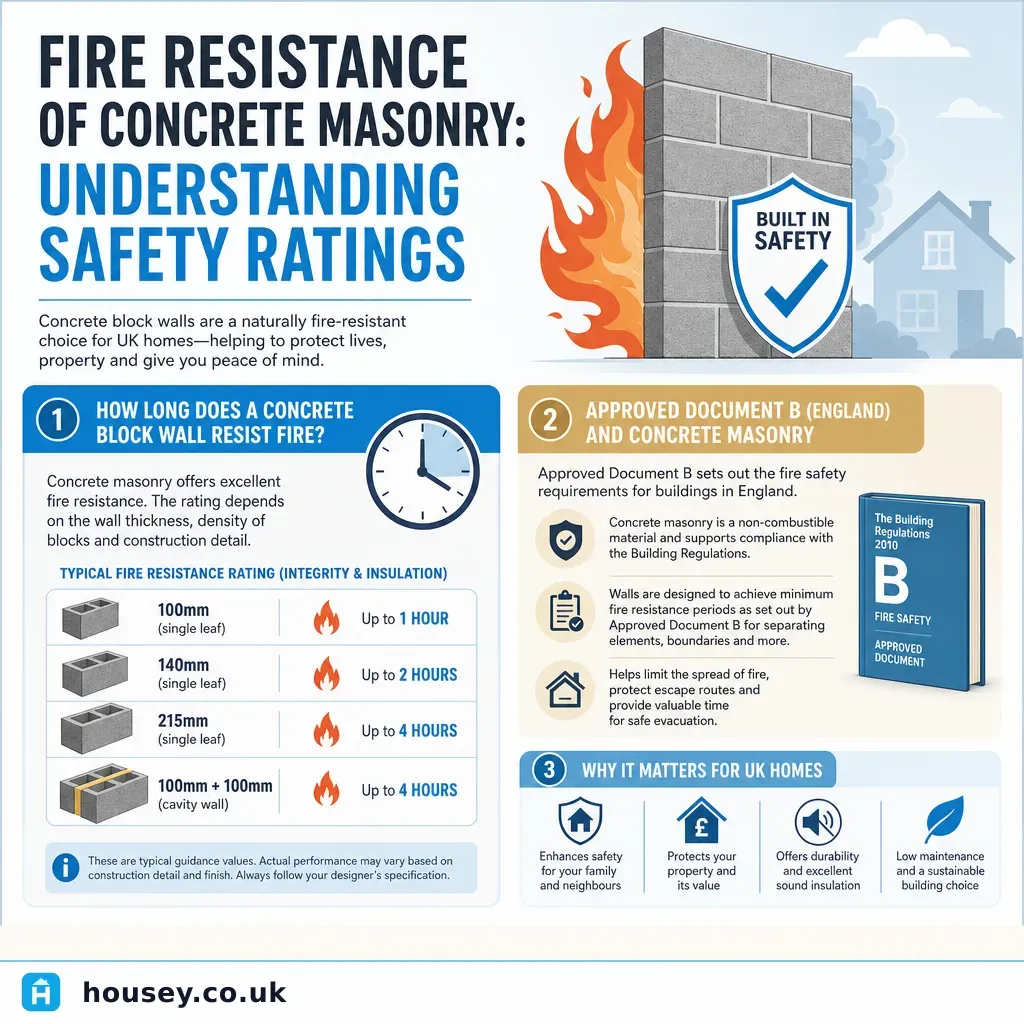
Fire Resistance of Concrete Masonry: Understanding Safety Ratings
Concrete masonry walls typically achieve 60 to 240 minutes of fire resistance depending on thickness, aggregate type, and construction method.
 Surveys & Inspections
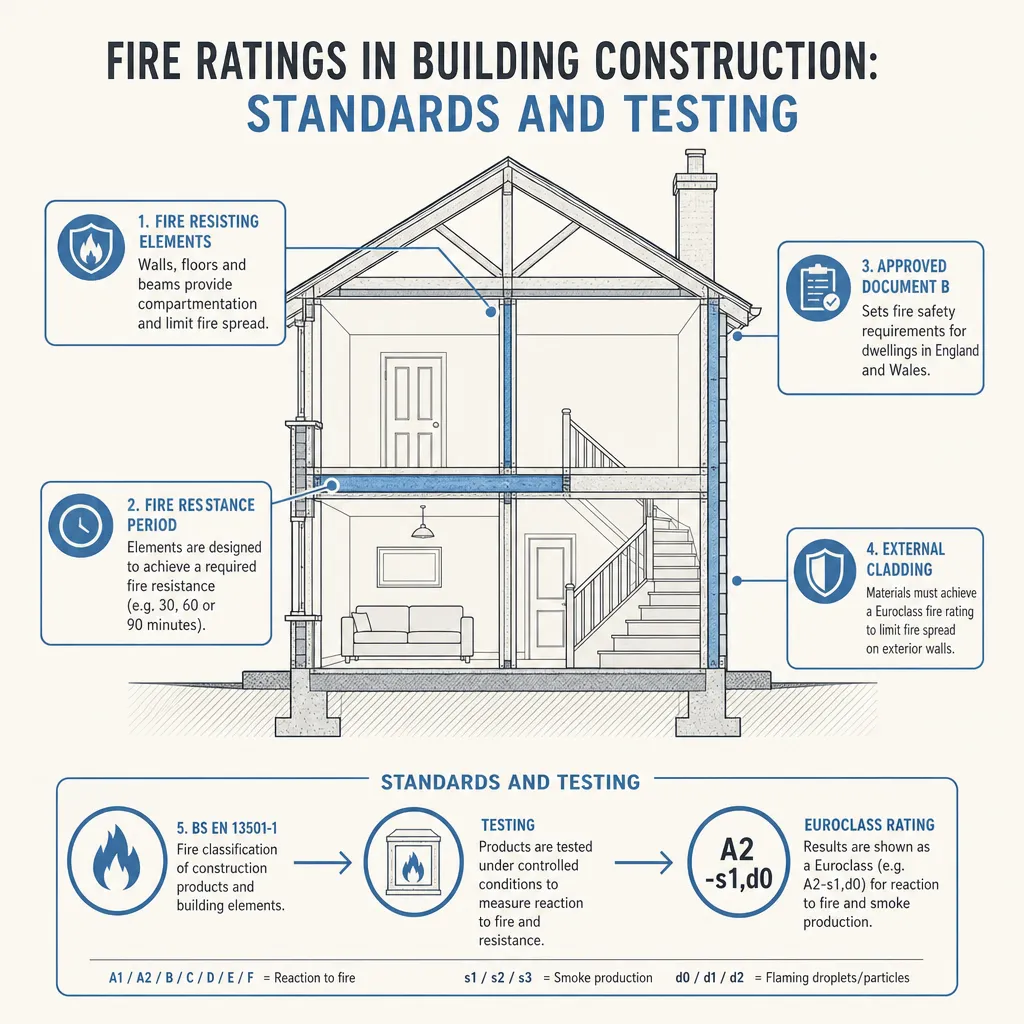
Fire Ratings in Building Construction: Standards and Testing
In UK construction, fire ratings describe how long a structural element or building assembly maintains load-bearing capacity, integrity, and insulation when exposed to a standard fire test — typically 30, 60, 90, or 120 minutes.
 Surveys & Inspections
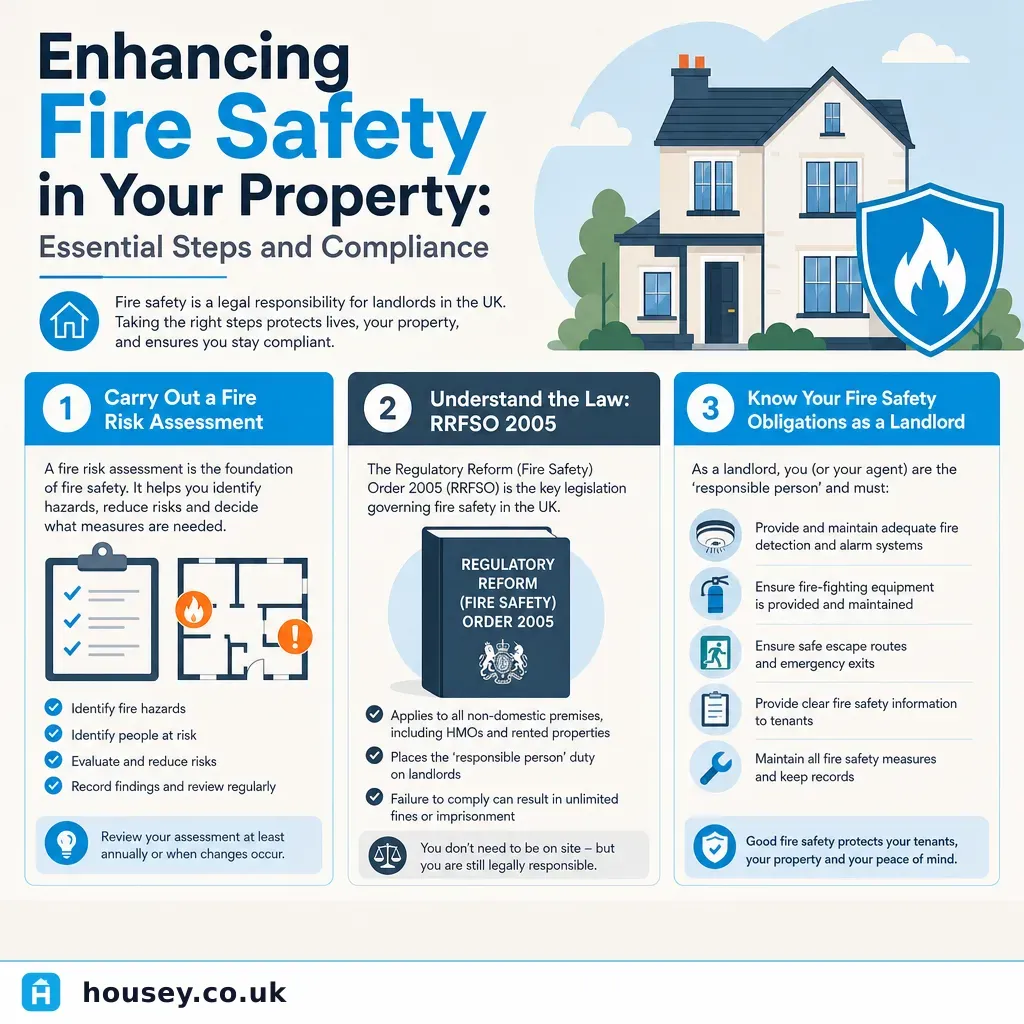
Enhancing Fire Safety in Your Property: Essential Steps and Compliance
Fire safety in UK properties is governed by Building Regulations Approved Document B and, for non-domestic and multi-occupied residential buildings, the Regulatory Reform (Fire Safety) Order 2005.
 Surveys & Inspections
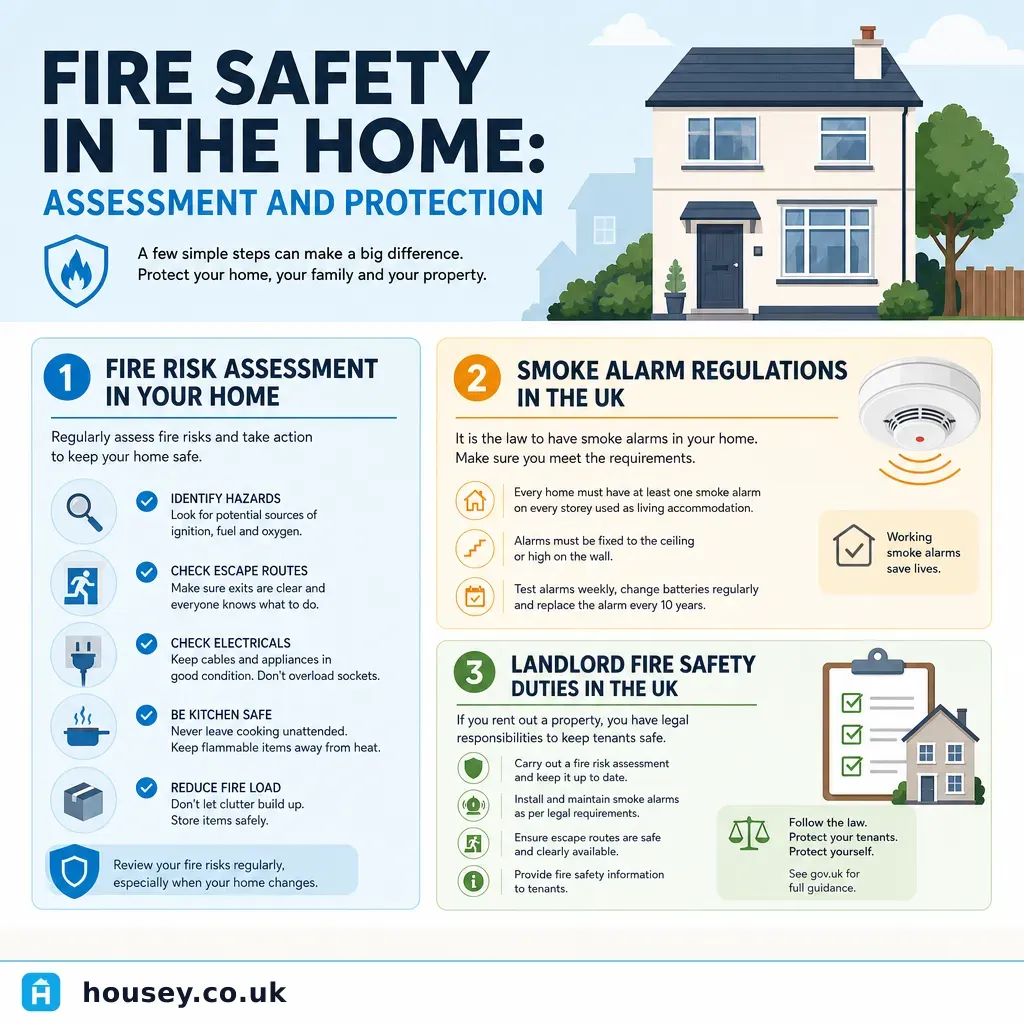
Fire Safety in the Home: Assessment and Protection
Most UK owner-occupied homes are the homeowner's responsibility to make fire-safe, while landlords have a legal duty to carry out fire risk assessments under the Regulatory Reform (Fire Safety) Order 2005.
 Surveys & Inspections
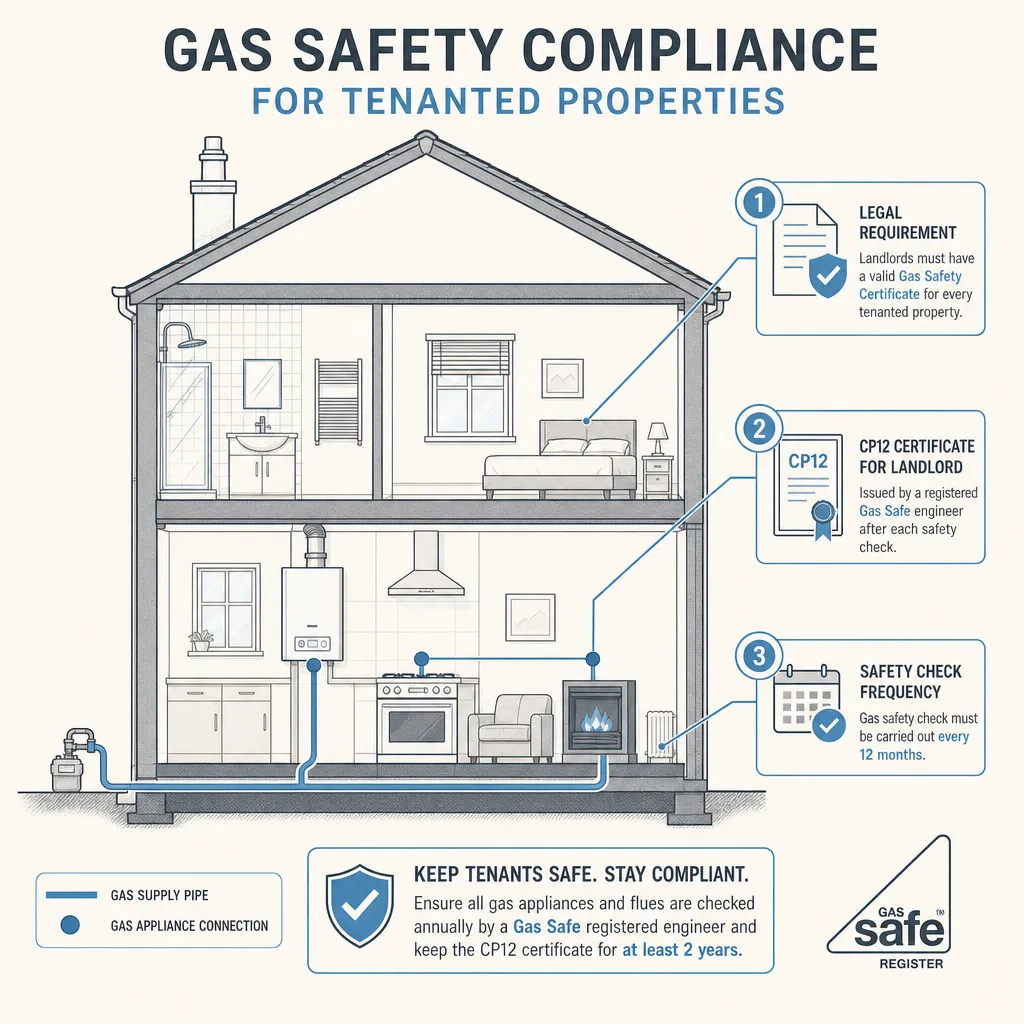
Gas Safety Compliance for Tenanted Properties
UK landlords are legally required to arrange an annual gas safety check by a Gas Safe registered engineer for every tenanted property with a gas appliance.