Fire Risk Assessment for Properties: What You Need to Know
By Housey · Last reviewed 7th of May 2026
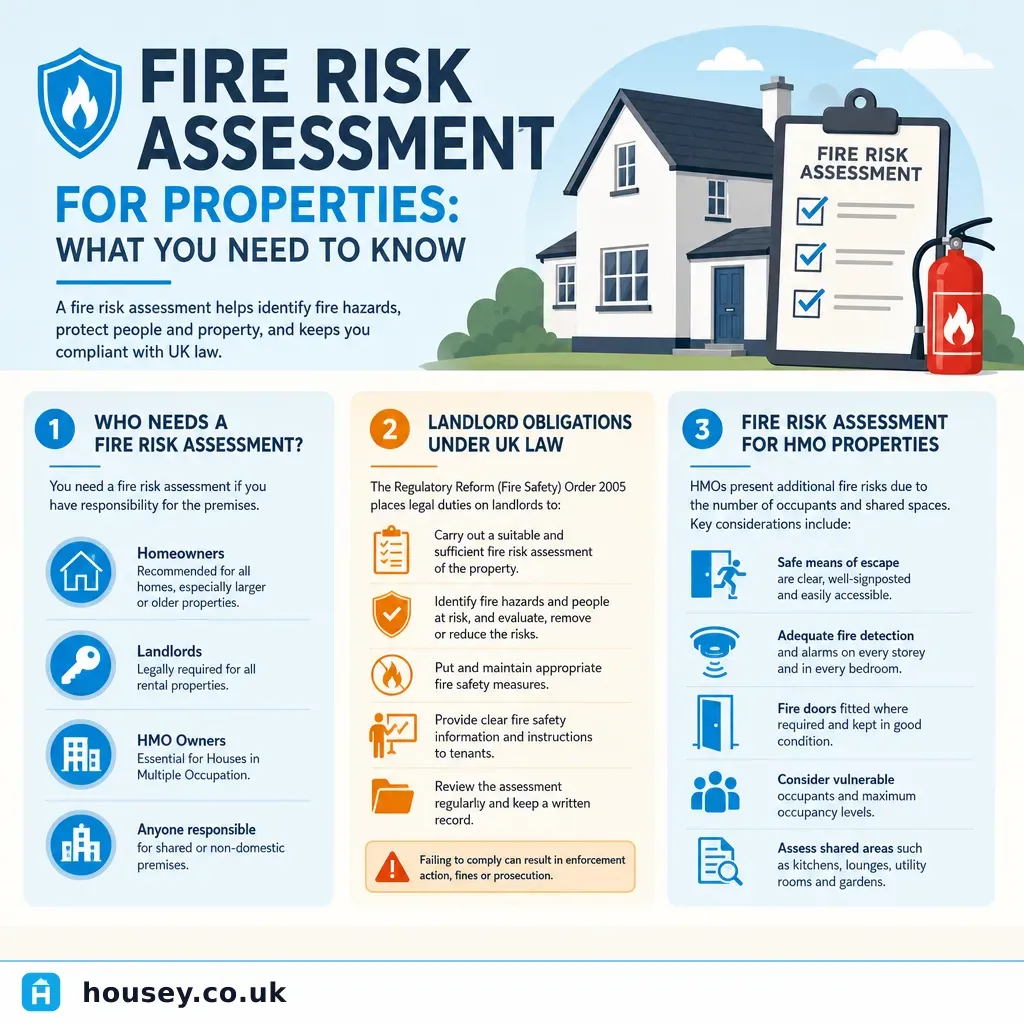
Fire Risk Assessment for Properties: What You Need to Know
Fire risk assessments sit at the intersection of legal duty and practical safety, and the rules around who needs one — and when — are frequently misunderstood by landlords, building managers, and property owners. The Regulatory Reform (Fire Safety) Order 2005 introduced a fundamental shift in UK fire safety law, moving away from fire certificates towards a risk-based framework that places ongoing responsibility firmly with the building's "Responsible Person". Whether you manage an HMO, own a leasehold block, or run a commercial premises, understanding your obligations before something goes wrong is essential.
Key points
- The Regulatory Reform (Fire Safety) Order 2005 (FSO) requires a fire risk assessment for virtually all non-domestic premises in England and Wales, including the common parts of residential buildings.
- The Fire Safety Act 2021 extended Responsible Person duties in multi-occupied residential buildings to cover external walls (including cladding and balconies) and flat entrance doors — not just internal common areas.
- HMOs (houses in multiple occupation) licensed under the Housing Act 2004 require a mandatory fire risk assessment as a condition of their licence.
- There is no fixed national renewal schedule: assessments must be reviewed whenever there is a significant change to the building, its use, its layout, or the nature of its occupants.
- Competency matters: assessors should hold recognised third-party certification such as BAFE SP205 or membership of the Institution of Fire Engineers (IFE) or the Fire Risk Assessment Competency Council (FRACC) framework.
Who legally needs a fire risk assessment?
The FSO applies to almost all premises except single private dwellings occupied only by their owner. In England and Wales, the "Responsible Person" — typically the employer, owner, or managing agent — must ensure a suitable and sufficient fire risk assessment is carried out and that significant findings are recorded in writing when five or more people work on the premises.
For residential properties, the key triggers are set out below.
Property type | Legal requirement | Responsible Person |
|---|---|---|
Licensed HMO (any size under mandatory or additional licensing) | Mandatory assessment | Landlord or licence holder |
Residential block of flats — common areas | Mandatory under FSO; external walls and flat entrance doors under Fire Safety Act 2021 | Building owner or managing agent |
Commercial premises (offices, retail, workshops) | Mandatory | Employer or owner |
Houses converted to flats | Common areas and shared means of escape must be assessed | Freeholder or managing agent |
Serviced accommodation and short-let properties | Treated as non-domestic — assessment required | Owner or manager |
Single owner-occupied domestic dwelling | Not legally required | N/A |
Single private dwellings occupied solely by the owner fall outside the FSO. However, if a private dwelling is rented out, the common areas — staircases, corridors, shared entrances — must be assessed.
What does a fire risk assessment cover?
A competent assessor will examine five key areas, as set out in GOV.UK fire safety guidance for businesses:
- Identify fire hazards — ignition sources, fuel, and oxygen supplies throughout the building.
- Identify people at risk — residents, employees, visitors, and particularly vulnerable individuals such as those with mobility impairments or sensory disabilities.
- Evaluate, remove, reduce, and protect against risk — assess existing fire prevention and protection measures and recommend improvements.
- Record, plan, and train — document significant findings, prepare an emergency plan, and ensure occupants and staff are informed of evacuation procedures.
- Review regularly — agree a schedule for reassessment and identify triggers for earlier review.
The written report will typically include a risk rating (low, medium, high, or critical), a prioritised schedule of recommended actions, and a suggested next review date. Under the FSO, the significant findings must be recorded in writing when five or more people are employed or for licensed premises.
How much does a fire risk assessment cost?
Costs depend on property type, size, complexity, the number of occupants, and the assessor's qualifications and location.
Indicative UK costs, last reviewed 2026-05-07. Quotes vary by location, access, and scope; always obtain at least three itemised quotations.
Property type | Approximate cost range |
|---|---|
Small HMO (up to 6 bedrooms) | £150–£300 |
Large HMO (7 or more bedrooms) | £300–£600 |
Small commercial premises (up to approximately 200 m²) | £200–£400 |
Medium commercial (200–1,000 m²) | £400–£1,000 |
Residential block of flats (up to 20 units) | £400–£800 |
Complex or high-rise residential block | £800–£3,000+ |
Always request an itemised quote and ask whether the fee includes a follow-up review once remedial works have been completed. Assessors with BAFE SP205 accreditation or equivalent third-party certification may charge more, but the additional assurance of verified competency is usually worth the premium.
How often should a fire risk assessment be reviewed?
The FSO does not specify a mandatory annual review cycle. Assessments must be reviewed:
- Following a fire or near-miss event at the property.
- After significant changes to the building's layout, structure, or use.
- When new materials, processes, or hazardous substances are introduced.
- When the number or vulnerability of occupants changes materially — for example, when a new HMO licence category is applied or when a block gains new communal facilities.
- When new information suggests the existing assessment may no longer be valid.
In practice, many managing agents and responsible landlords review annually as a precautionary measure, particularly for HMOs and residential blocks. The London Fire Brigade and other fire and rescue services publish freely available guidance on review triggers on their respective websites.
Red flags: when an assessment may be inadequate
The following signs suggest an existing fire risk assessment may need urgent review or outright replacement:
- The report was completed several years ago with no documented review since significant building works were carried out.
- The assessor holds no identifiable third-party accreditation — no BAFE SP205, no IFE membership, no FRACC-listed scheme.
- The assessment does not address external walls and flat entrance doors in a multi-occupied residential building, as now required since the Fire Safety Act 2021.
- The report contains only generic recommendations with no reference to the specific layout, occupancy, or means of escape in the actual building.
- Recommended actions from a previous assessment have not been completed, and the outstanding items were never re-assessed or formally risk-rated.
- The property has changed use — for example, from offices to residential, or from a standard let to an HMO — without a new or revised assessment being commissioned.
- There is no written emergency evacuation plan accessible to occupants.
Important limitations
This article provides general information about fire risk assessment requirements in England and Wales as at May 2026. Fire safety legislation is complex, and obligations vary by property type, tenure, occupancy level, building height, and local fire authority guidance. Nothing in this article constitutes fire safety advice specific to any individual building.
The Building Safety Act 2022 introduced additional requirements for higher-risk buildings — generally residential buildings of 18 metres or more in height, or seven or more storeys — including mandatory registration with the Building Safety Regulator. If your property may meet that threshold, specialist legal and technical advice is essential.
Rules for Scotland and Northern Ireland differ from those in England and Wales in some respects. Always consult the relevant fire and rescue service, your local authority, or a competent fire risk assessor for advice specific to your circumstances.
What to ask a qualified professional
Before instructing a fire risk assessor, ask:
- What third-party accreditation do you hold? Look for BAFE SP205, IFE membership, or a FRACC-listed scheme.
- How many assessments have you completed for this type and size of property?
- Will the assessment cover external walls and flat entrance doors where required under the Fire Safety Act 2021?
- What format will the written report take, and will it include a prioritised action schedule with time-bound recommendations?
- Do you offer a follow-up visit to review remedial works before confirming risk rating changes?
- Is your professional indemnity insurance current, and to what value?
- Are there any limitations in scope — for example, will you assess plant rooms, roof voids, basement areas, or external escape routes?
When to get professional help
Commission a fire risk assessment without delay if:
- You have recently become the Responsible Person for any non-domestic premises or for the common areas of a residential block.
- Your property is a licensed HMO and you do not have a current, written assessment on file.
- You have carried out significant works, changed the use of any part of the building, or materially increased occupancy since the last review.
- A fire safety inspection or enforcement notice from the fire and rescue service has identified concerns.
- Your building may fall within scope of the Building Safety Act 2022 as a higher-risk building.
Never attempt to remedy serious fire safety deficiencies — blocked escape routes, missing or defective fire doors, disabled alarm systems, or damaged external cladding — without first obtaining professional guidance.
How Housey can help
If you need to commission a fire risk assessment, Housey can connect you with accredited assessors across the UK. Compare quotes and verify credentials through our fire risk assessment service to find a qualified professional suited to your property type and legal obligations.
Frequently asked questions
Does a fire risk assessment expire?
There is no fixed expiry date under UK law. The Regulatory Reform (Fire Safety) Order 2005 requires the assessment to be suitable and sufficient at all times, meaning it must be reviewed whenever circumstances change significantly. Many landlords and managing agents choose to review annually as good practice, particularly for HMOs and residential blocks of flats where occupancy and layout can change.
Do I need a fire risk assessment for a buy-to-let house that is not an HMO?
If the property is let to a single household, it falls outside the Regulatory Reform (Fire Safety) Order 2005 and a formal assessment is not legally required. However, smoke and carbon monoxide alarms are mandatory under the Smoke and Carbon Monoxide Alarm (Amendment) Regulations 2022, and general landlord duties around property safety continue to apply regardless.
Who can carry out a fire risk assessment?
The law requires the assessor to be competent but does not prescribe a specific qualification. In practice, assessors registered under the BAFE SP205 scheme or listed on the Fire Risk Assessment Competency Council (FRACC) framework are widely regarded as the benchmark. The Institution of Fire Engineers (IFE) also maintains a register of qualified practitioners who can be verified before instruction.
What happens if I do not have a valid fire risk assessment?
Local fire and rescue services can issue enforcement notices, prohibition notices preventing use of the premises, and prosecute under the Regulatory Reform (Fire Safety) Order 2005. Penalties can include unlimited fines and up to two years imprisonment in serious cases. Failure to maintain a valid, current assessment may also invalidate your buildings insurance policy.
Does the Fire Safety Act 2021 affect all residential buildings?
The Fire Safety Act 2021 extended the FSO to cover external walls, including cladding, windows, and balconies, and individual flat entrance doors in all multi-occupied residential buildings in England — not only tall or high-risk ones. Managing agents and building owners of any residential block should review existing assessments to confirm this extended scope is included.
Sources and further reading
- Regulatory Reform (Fire Safety) Order 2005 — legislation.gov.uk
- Fire Safety Act 2021 — legislation.gov.uk
- Fire safety in purpose-built blocks of flats — GOV.UK / NFCC
- Fire risk assessments: guidance for businesses — GOV.UK
- BAFE SP205 Life Safety Fire Risk Assessment scheme — BAFE
- Building Safety Act 2022 — legislation.gov.uk
Useful next reads
 Surveys & Inspections
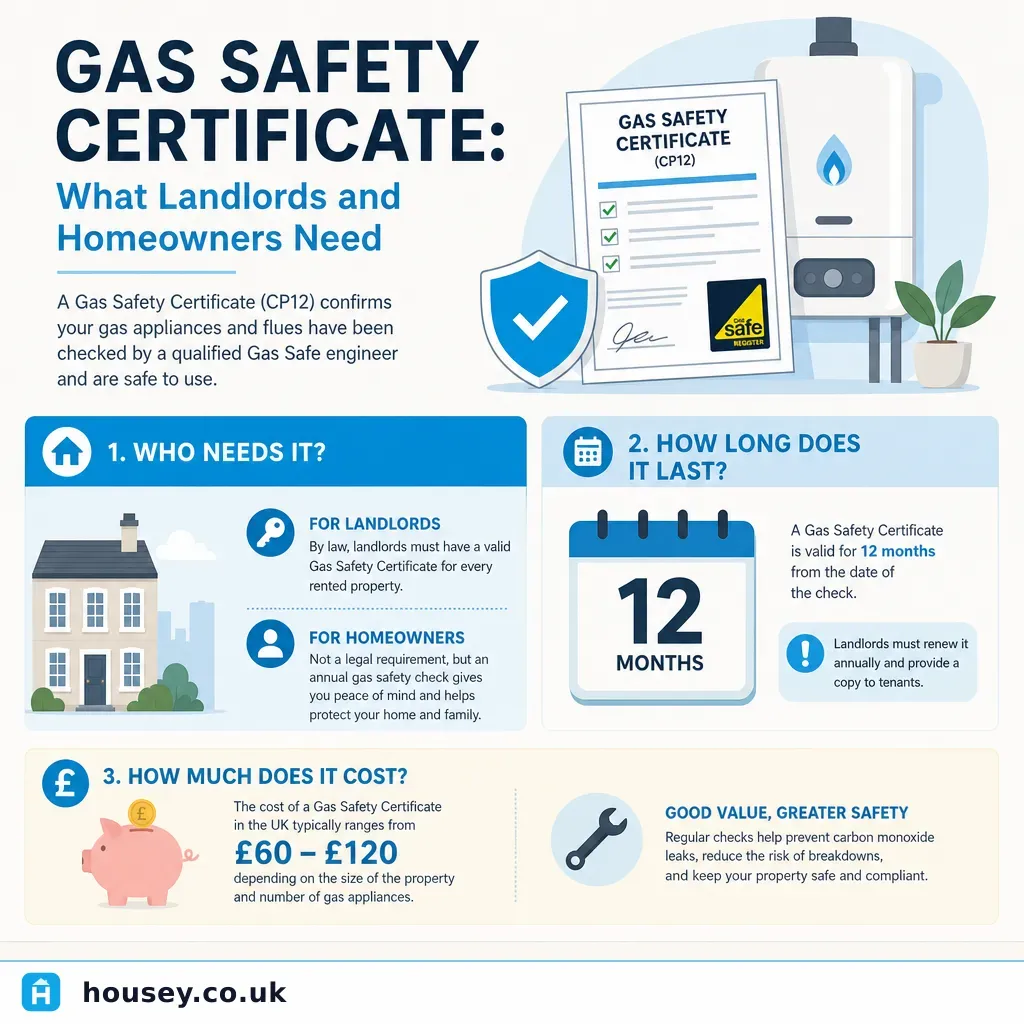
Gas Safety Certificate: What Landlords and Homeowners Need
Landlords in England, Scotland, and Wales must arrange a gas safety check every 12 months by a Gas Safe registered engineer under the Gas Safety (Installation and Use) Regulations 1998.
 Surveys & Inspections
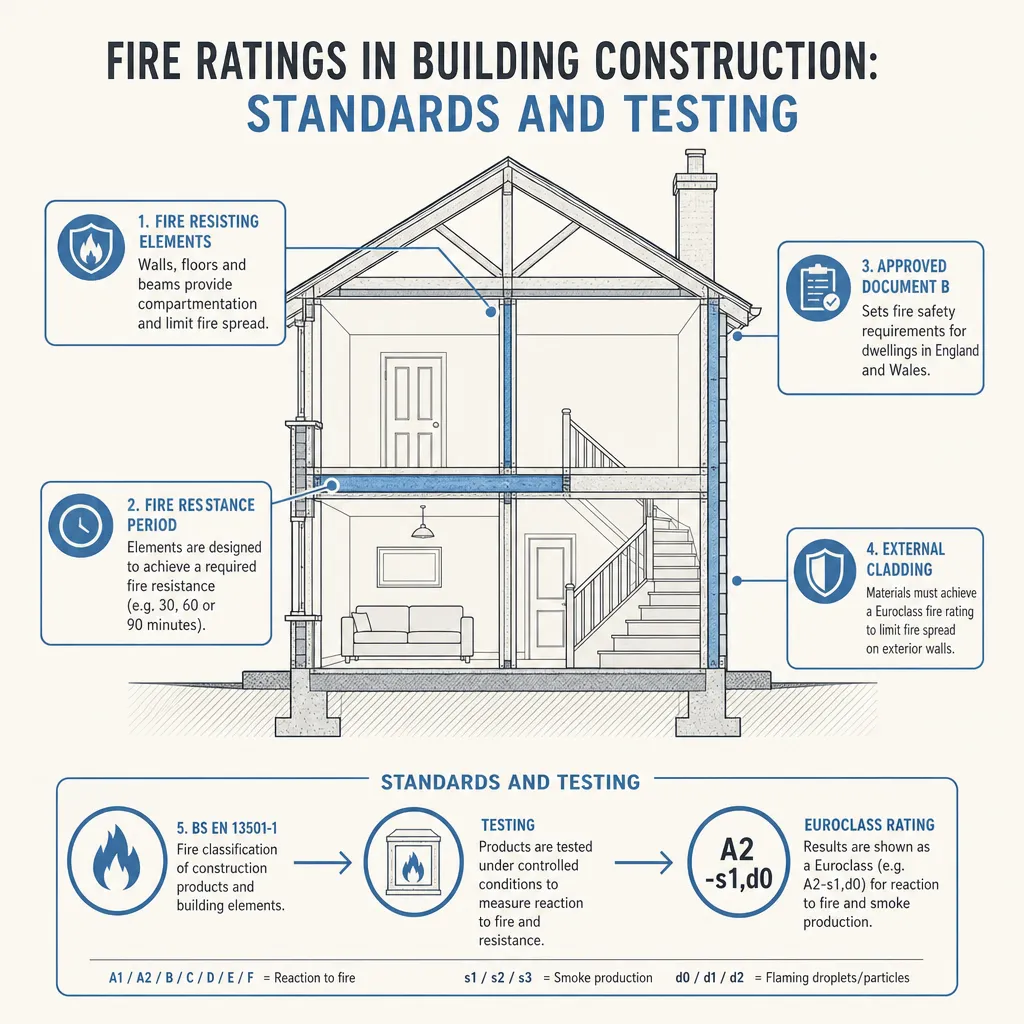
Fire Ratings in Building Construction: Standards and Testing
In UK construction, fire ratings describe how long a structural element or building assembly maintains load-bearing capacity, integrity, and insulation when exposed to a standard fire test — typically 30, 60, 90, or 120 minutes.
 Surveys & Inspections
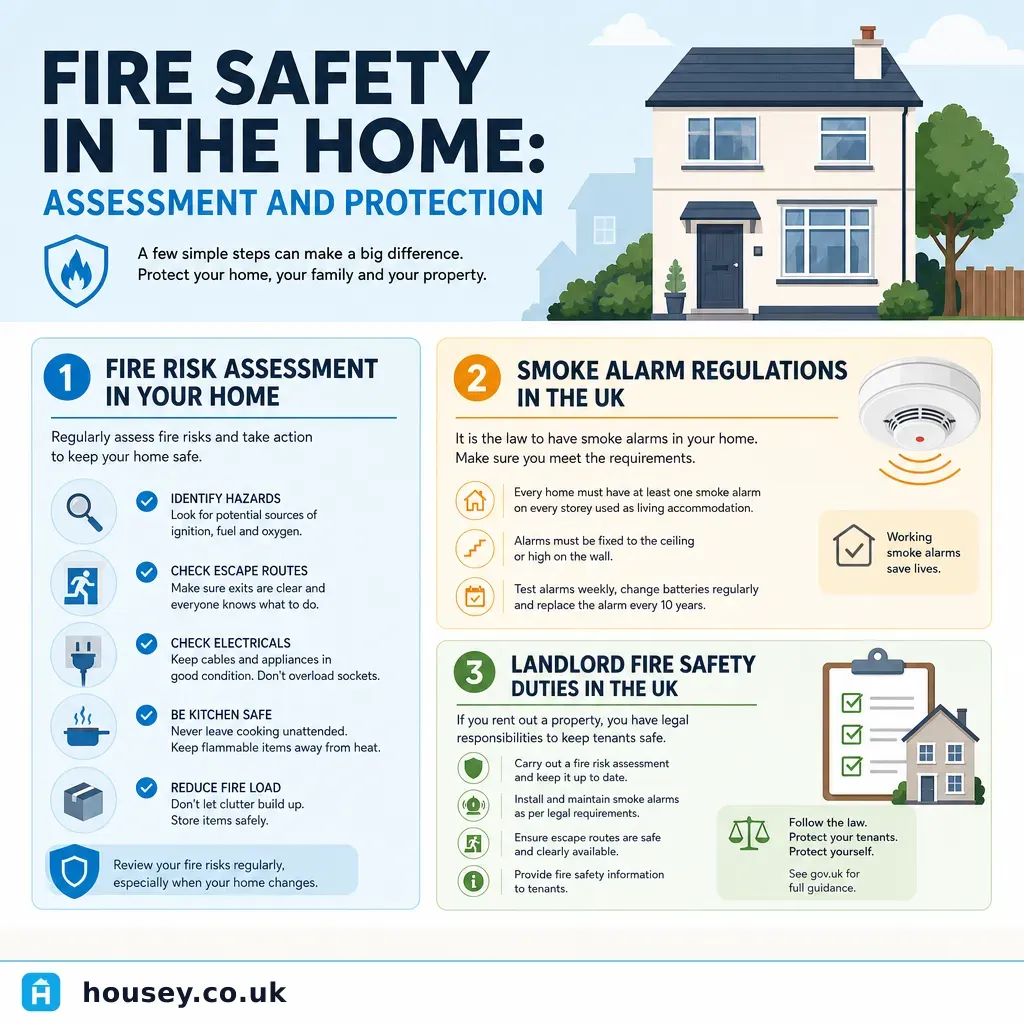
Fire Safety in the Home: Assessment and Protection
Most UK owner-occupied homes are the homeowner's responsibility to make fire-safe, while landlords have a legal duty to carry out fire risk assessments under the Regulatory Reform (Fire Safety) Order 2005.
 Surveys & Inspections
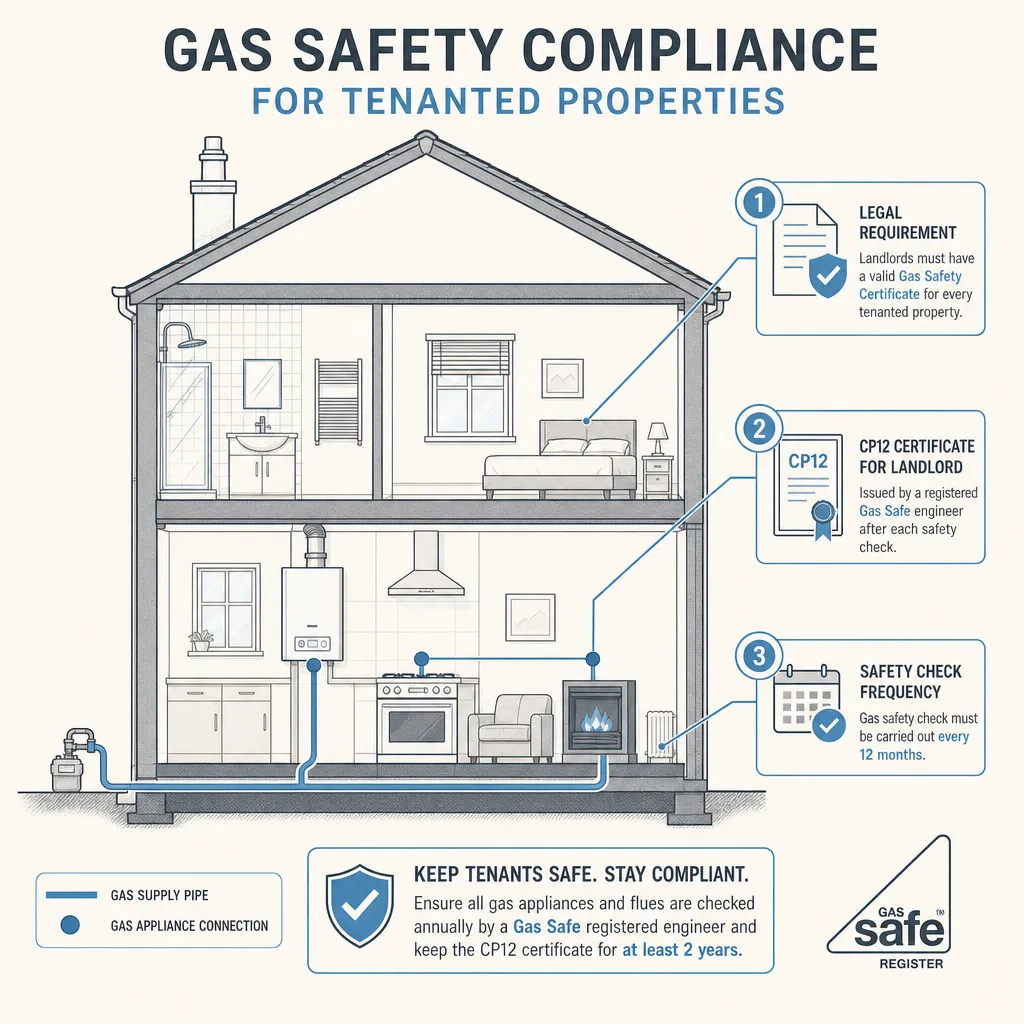
Gas Safety Compliance for Tenanted Properties
UK landlords are legally required to arrange an annual gas safety check by a Gas Safe registered engineer for every tenanted property with a gas appliance.
 Surveys & Inspections
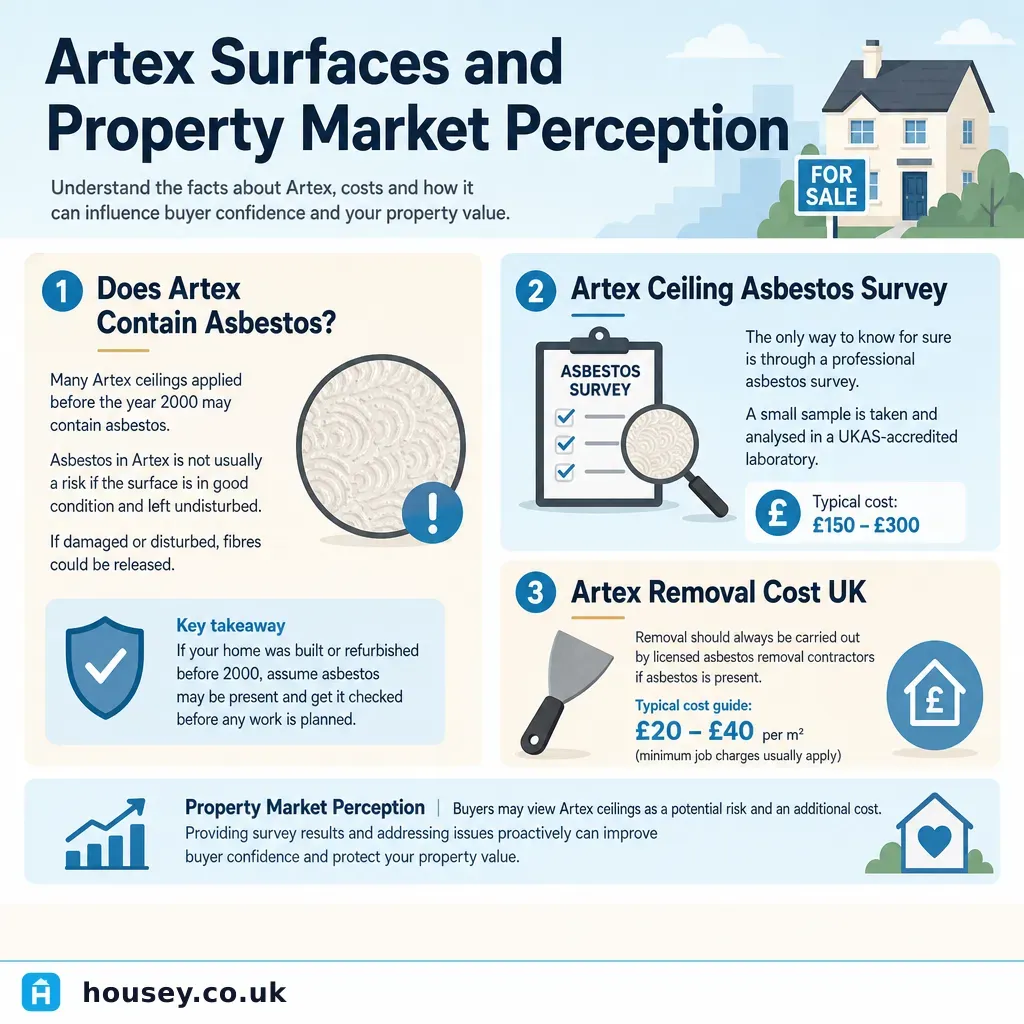
Artex Surfaces and Property Market Perception
Artex applied before 2000 may contain chrysotile asbestos, which is safe when undisturbed but hazardous if sanded or scraped without professional assessment.