Fire Safety in the Home: Assessment and Protection
By Housey · Last reviewed 30th of May 2026
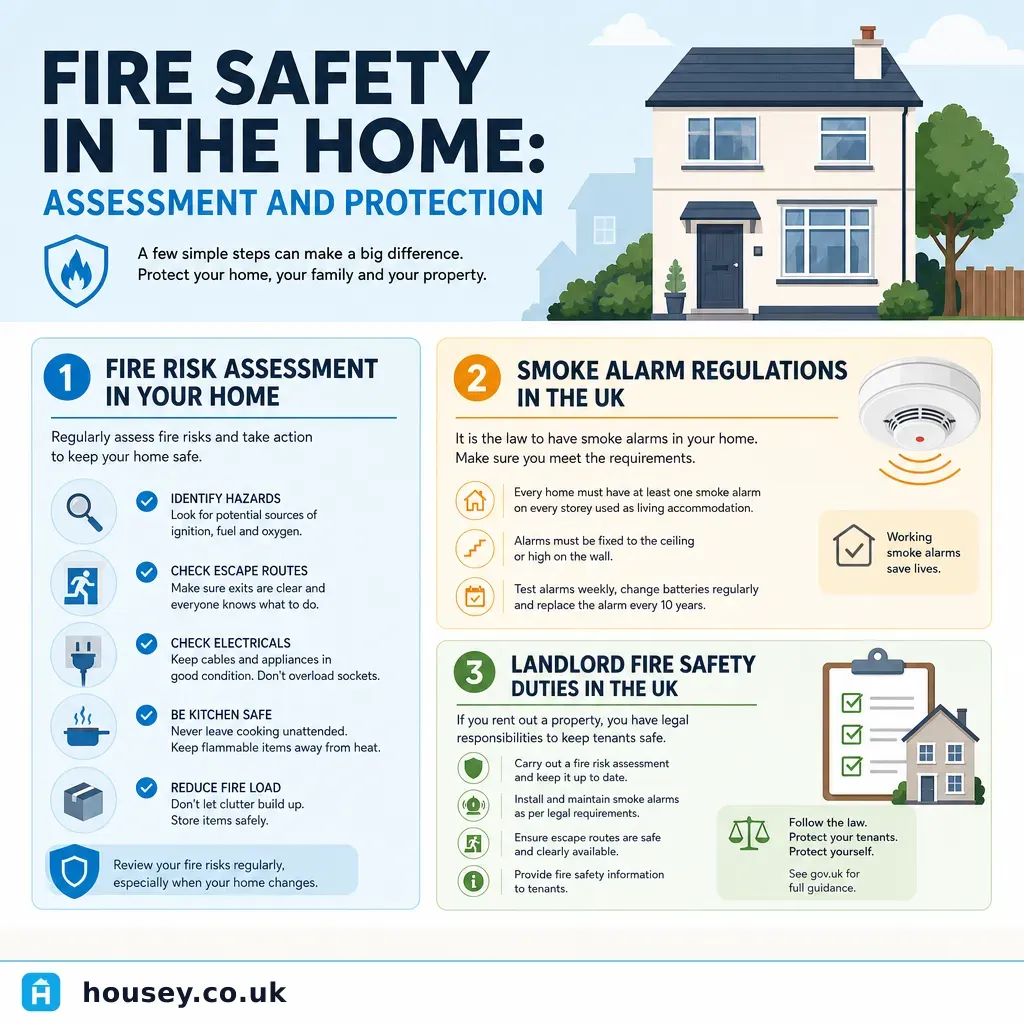
Fire Safety in the Home: Assessment and Protection
Fire safety requirements for UK homes have been significantly reshaped following the Grenfell Tower fire and the subsequent Building Safety Act 2022. The responsibilities for fire safety differ depending on whether you are an owner-occupier, a private landlord, a managing agent, or a leaseholder — and on the type, age, and construction of your building. Understanding what is legally required and what constitutes sound practical protection is important long before an emergency forces the question.
Key points
- Landlords must carry out a fire risk assessment under the Regulatory Reform (Fire Safety) Order 2005 for the common parts of houses in multiple occupation (HMOs) and multi-occupied residential buildings.
- The Smoke and Carbon Monoxide Alarm (Amendment) Regulations 2022 require private landlords in England to fit a smoke alarm on every storey used as living accommodation, and a carbon monoxide alarm in every room containing a fixed combustion appliance — including gas boilers, not only open fires.
- Approved Document B (Fire Safety) governs fire safety in new-build homes and extensions in England and Wales, covering escape routes, fire-resistant construction, and detection systems.
- Interlinked smoke alarms — where triggering one activates all — are required in all new-build homes under Approved Document B (2019 edition, Volume 1) and are strongly recommended by fire services for all existing properties.
- The Building Safety Act 2022 extended fire safety duties to the external fabric of higher-risk residential buildings (18 metres or 7+ storeys), requiring building owners to assess cladding and structure; leaseholders in affected blocks should check whether an EWS1 (External Wall System) assessment has been completed.
What a fire risk assessment covers
A fire risk assessment (FRA) is a structured evaluation of a building to identify fire hazards, evaluate risks to occupants, and determine what safety measures are in place and what further action is required. A professional residential FRA typically examines:
- Ignition sources: electrical installations and faults, gas appliances, cooking equipment, open fires and log-burners, candles, and any designated smoking areas.
- Fuel sources: combustible materials including soft furnishings, stored flammable liquids, loft insulation types, and external wall materials.
- Escape routes: the adequacy and unobstructedness of corridors, stairwells, and final exit doors — including whether doors can be opened from the inside without a key.
- Detection and warning: smoke detectors, heat detectors, and CO alarms — whether they are interlinked, mains-powered, or battery-operated.
- Fire doors and compartmentation: whether fire-resisting doors and construction separate different parts of the building to limit spread.
- Occupant awareness: whether residents know the evacuation procedure and the location of exits.
For HMOs and blocks of flats, the FRA must be documented, acted upon, and reviewed regularly. For single owner-occupied homes, a statutory FRA is not legally required — but the same principles inform good practical protection.
Legal duties by occupancy type
Occupancy type | Statutory FRA required? | Key legislation | Responsible party |
|---|---|---|---|
Owner-occupied house | No | Building Regulations Part B (new builds and extensions) | Homeowner |
Private rented house (single household) | No statutory FRA; smoke and CO alarms required | Smoke and CO Alarm (Amendment) Regs 2022 | Landlord |
Licensed HMO | Yes (common parts) | Housing Act 2004; RR(FS)O 2005 | Landlord |
Block of flats (common parts) | Yes | RR(FS)O 2005; Building Safety Act 2022 | Building owner or responsible person |
Higher-risk residential building (18m+) | Yes, with enhanced obligations | Building Safety Act 2022 | Principal accountable person |
Fire safety checklist for homeowners and landlords
Use this checklist to review the fire safety baseline of your property:
Red flags: when to seek urgent professional advice
The following situations indicate that a general guide is insufficient — obtain professional assessment promptly:
- Cladding uncertainty: If you own a leasehold flat in a block where external cladding was replaced or added after 2000 and no EWS1 assessment has been completed, this requires urgent attention under the Building Safety Act 2022.
- Previous fire damage: Even a contained kitchen fire can compromise compartmentation. Have a professional assess whether fire-stopping and structural elements remain intact.
- Inadequate means of escape: If your sole staircase passes through a kitchen or open-plan living space, or if bedroom windows are the primary means of escape above 4.5 metres from ground level, seek specialist fire safety advice without delay.
- Loft conversion without fire doors: A loft conversion creating a third storey requires a protected escape route. If this was not in place at the time of conversion, it should be assessed and rectified.
- Damaged or wedged-open fire doors: A propped fire door eliminates its compartmentation function entirely — treat this as an immediate defect requiring action.
Important limitations
This article provides general information about residential fire safety in England and Wales as of May 2026. Fire safety legislation and regulatory requirements differ between England, Wales, Scotland, and Northern Ireland. Building type, age, construction method, tenure, and occupancy all affect which rules apply and how they should be implemented.
Nothing in this article constitutes a fire risk assessment, a structural assessment, or legal advice. Where statutory duties apply — particularly for landlords, HMO operators, managing agents, and accountable persons under the Building Safety Act 2022 — you must obtain advice from a competent, qualified fire risk assessor and, where relevant, a solicitor. Do not rely on general guidance to satisfy regulatory obligations.
When this becomes urgent
Seek professional advice without delay if:
- A fire or suspected fire has occurred in the property, even if contained and extinguished.
- A building control officer or fire service inspector has raised a concern or issued a formal notice following an inspection.
- A fire door has been reported as defective or has been removed from a common area.
- External cladding type or condition is unknown and an EWS1 assessment has not been prepared for the building.
- A resident has raised a fire safety concern in writing and no response or remedial action has been taken.
What to ask a qualified professional
Before instructing fire risk assessors or a building control consultant, ask:
- What qualifications and accreditations do they hold? Look for BAFE SP205 certification for third-party-accredited fire risk assessors, or membership of the Institute of Fire Safety Managers (IFSM).
- Do they have specific experience with your property type — HMO, converted flat, listed building, or higher-risk residential building?
- What does their FRA report include? Will it contain a prioritised action plan with timescales, not merely a list of observations?
- If remedial works are recommended, can they advise on a competent contractor, or does a conflict of interest apply?
- Will they check whether any conversion or extension work met Building Regulations fire safety requirements at the time of construction?
- How frequently should the assessment be reviewed? For HMOs and higher-risk buildings, annual review is standard practice; review is also recommended following any significant building alteration.
How Housey can help
Housey connects homeowners, landlords, and managing agents with accredited fire risk assessors across the UK. If your assessment identifies required works to communal areas, fire doors, or building structure, a building control consultant can advise on compliance with Approved Document B and the Building Safety Act 2022.
Frequently asked questions
Are landlords legally required to have a fire risk assessment in England?
Landlords of licensed HMOs and those responsible for the common parts of multi-occupied residential buildings must carry out a fire risk assessment under the Regulatory Reform (Fire Safety) Order 2005, as extended by the Building Safety Act 2022. Private landlords renting a single self-contained house are not required to commission a formal FRA, but must comply with the Smoke and Carbon Monoxide Alarm (Amendment) Regulations 2022 and any applicable HMO licensing conditions.
What smoke alarms are required in a rented home in England?
Under the Smoke and Carbon Monoxide Alarm (Amendment) Regulations 2022, landlords must fit at least one smoke alarm on each storey used as living accommodation, and a carbon monoxide alarm in every room with a fixed combustion appliance, excluding gas cookers. Alarms must be tested and working at the start of each tenancy. Approved Document B requires mains-powered interlinked alarms in new-build homes; interlinked alarms are also strongly recommended in existing properties.
When is a fire door required in a domestic property?
Fire doors are required by Building Regulations between an integral garage and the living area of a house, in loft conversions creating a third storey to protect the escape route, and in HMOs to protect the means of escape from bedrooms to the stairwell. Where a loft conversion was completed under Building Regulations, a completion certificate should confirm that protected escape routes were approved. If no certificate exists, consult a building control consultant to determine what is required.
Sources and further reading
- Fire safety in the home — GOV.UK
- Regulatory Reform (Fire Safety) Order 2005 — legislation.gov.uk
- Building Safety Act 2022 — legislation.gov.uk
- Smoke and Carbon Monoxide Alarm (Amendment) Regulations 2022 — legislation.gov.uk
- Approved Document B – Fire Safety — GOV.UK
- Fire safety advice for the home — London Fire Brigade
Useful next reads
 Surveys & Inspections
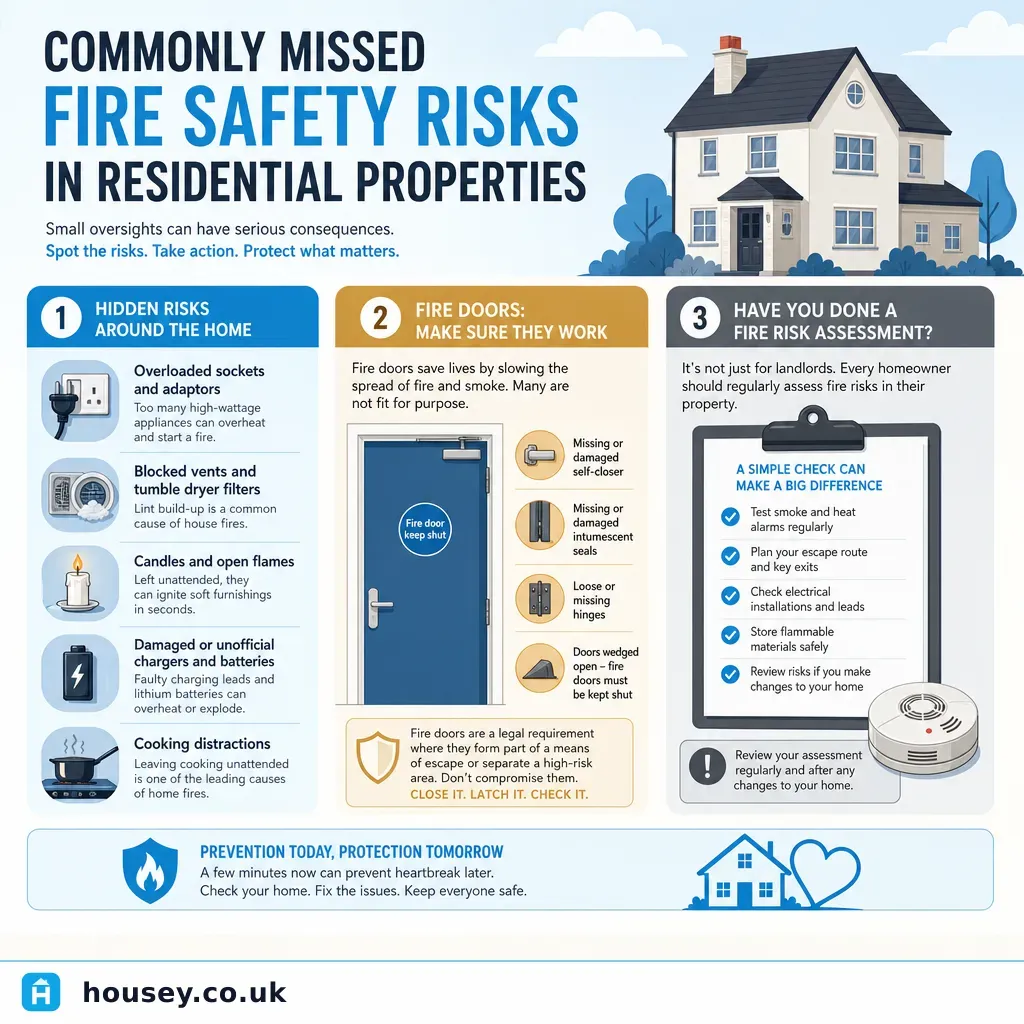
Commonly Missed Fire Safety Risks in Residential Properties
Commonly missed fire safety risks in UK homes include damaged fire doors without intumescent strips, breached compartmentation in roof spaces and floor voids, daisy-chained extension leads, and recessed downlighters without fire-rated covers.
 Surveys & Inspections
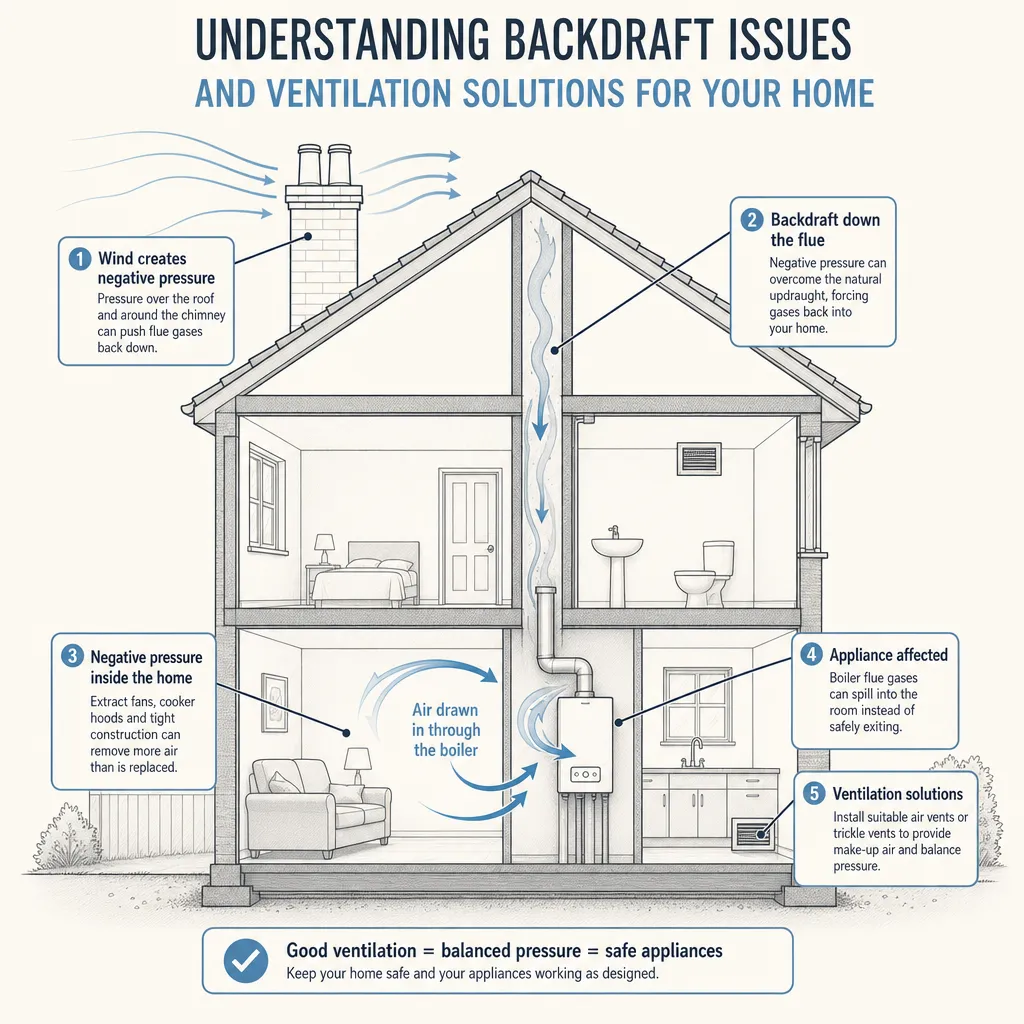
Understanding backdraft issues and ventilation solutions for your home
Backdraft occurs when negative pressure inside a building draws combustion gases back through a flue or chimney instead of expelling them outside.
 Surveys & Inspections
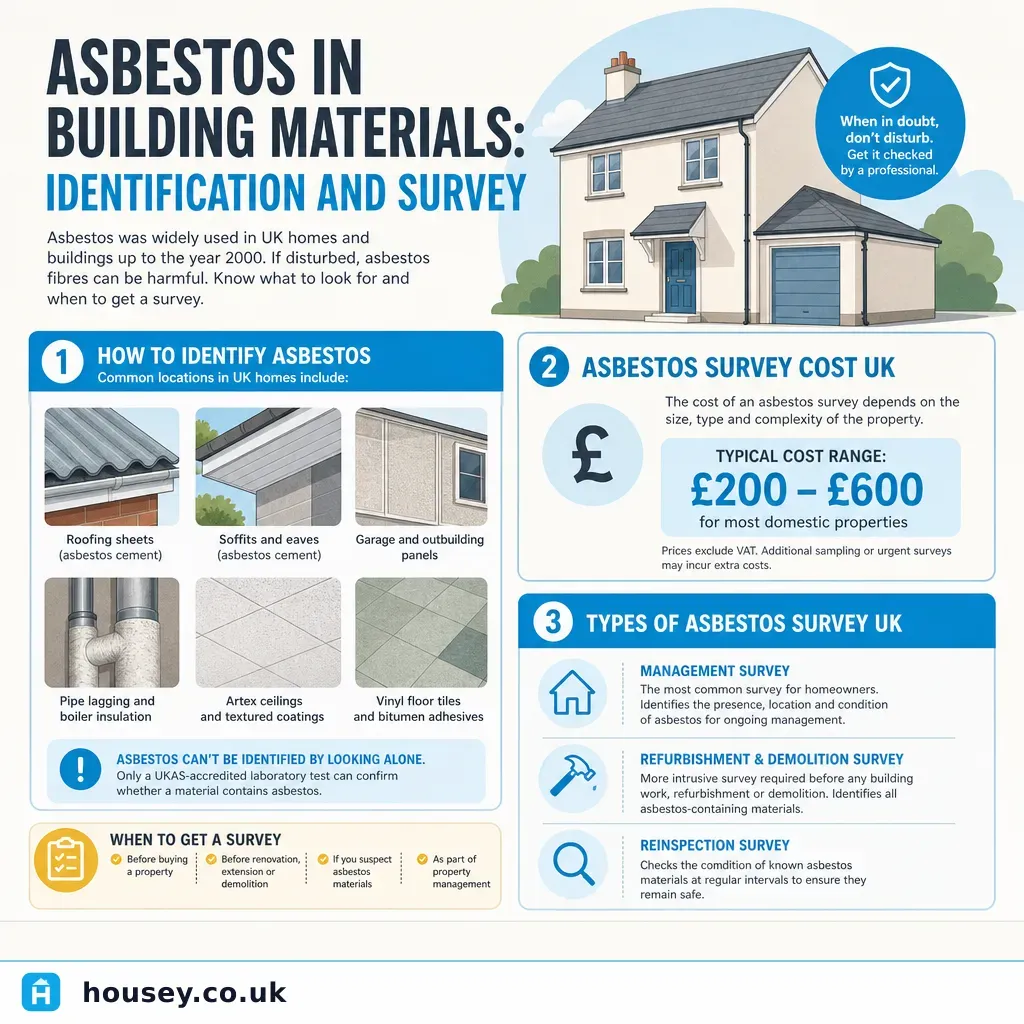
Asbestos in Building Materials: Identification and Survey
Asbestos-containing materials (ACMs) are present in many UK homes built before 2000, including floor tiles, textured coatings such as Artex, roof sheets, pipe lagging, and ceiling tiles.
 Surveys & Inspections
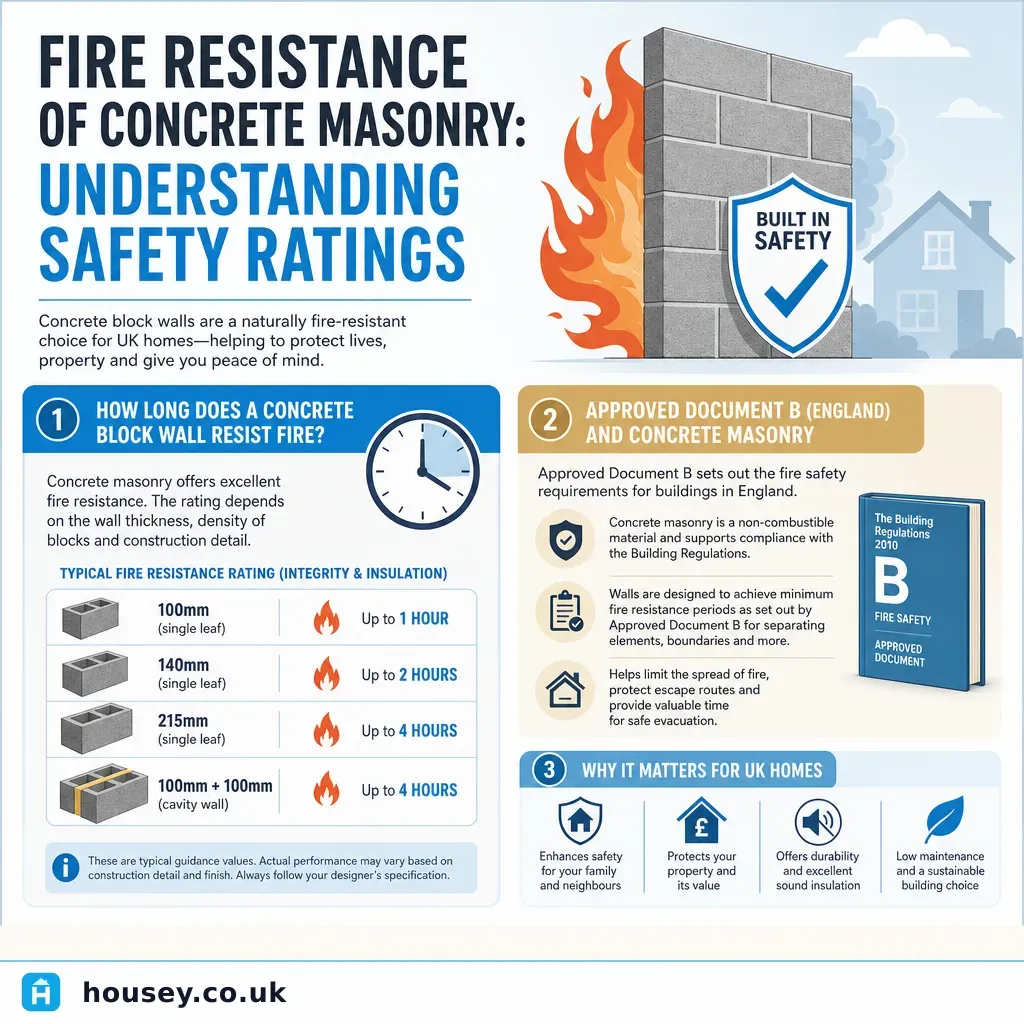
Fire Resistance of Concrete Masonry: Understanding Safety Ratings
Concrete masonry walls typically achieve 60 to 240 minutes of fire resistance depending on thickness, aggregate type, and construction method.
 Surveys & Inspections
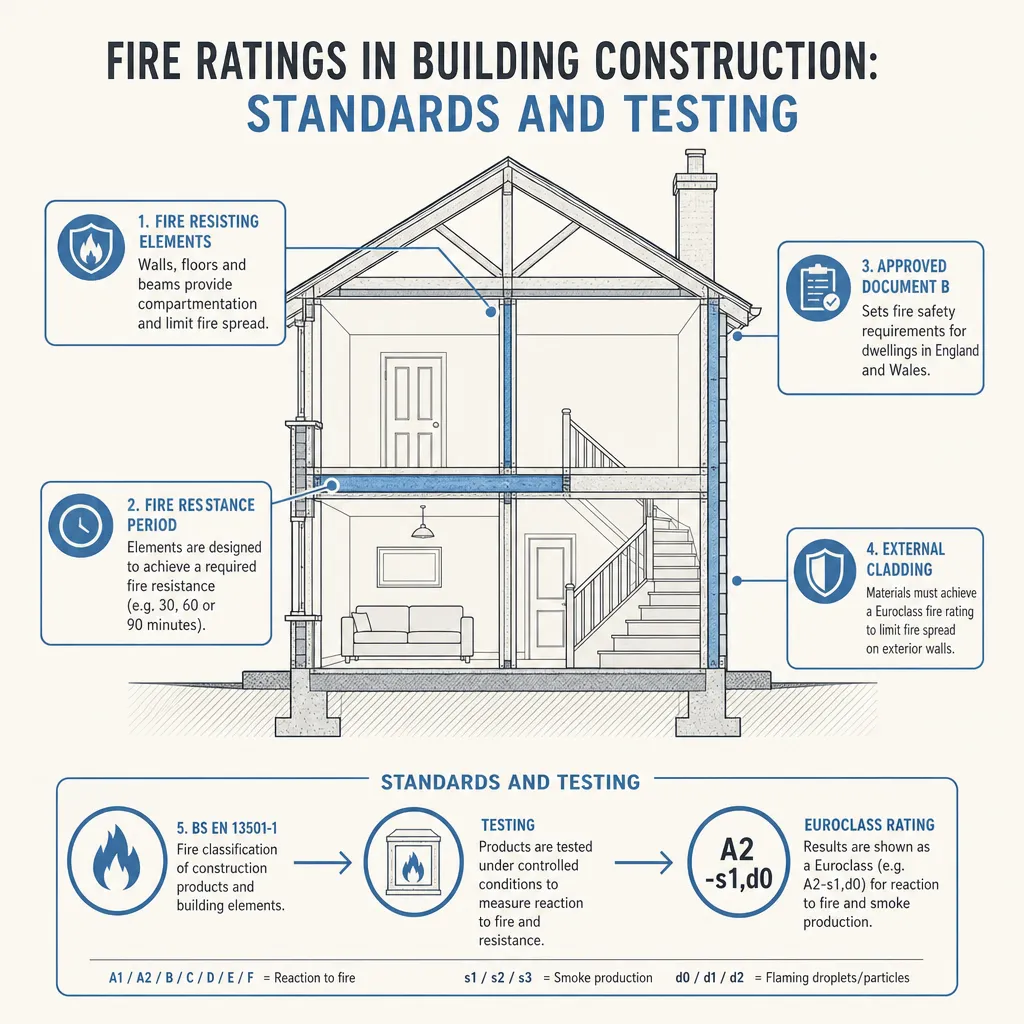
Fire Ratings in Building Construction: Standards and Testing
In UK construction, fire ratings describe how long a structural element or building assembly maintains load-bearing capacity, integrity, and insulation when exposed to a standard fire test — typically 30, 60, 90, or 120 minutes.