Understanding backdraft issues and ventilation solutions for your home
By Housey · Last reviewed 1st of June 2026
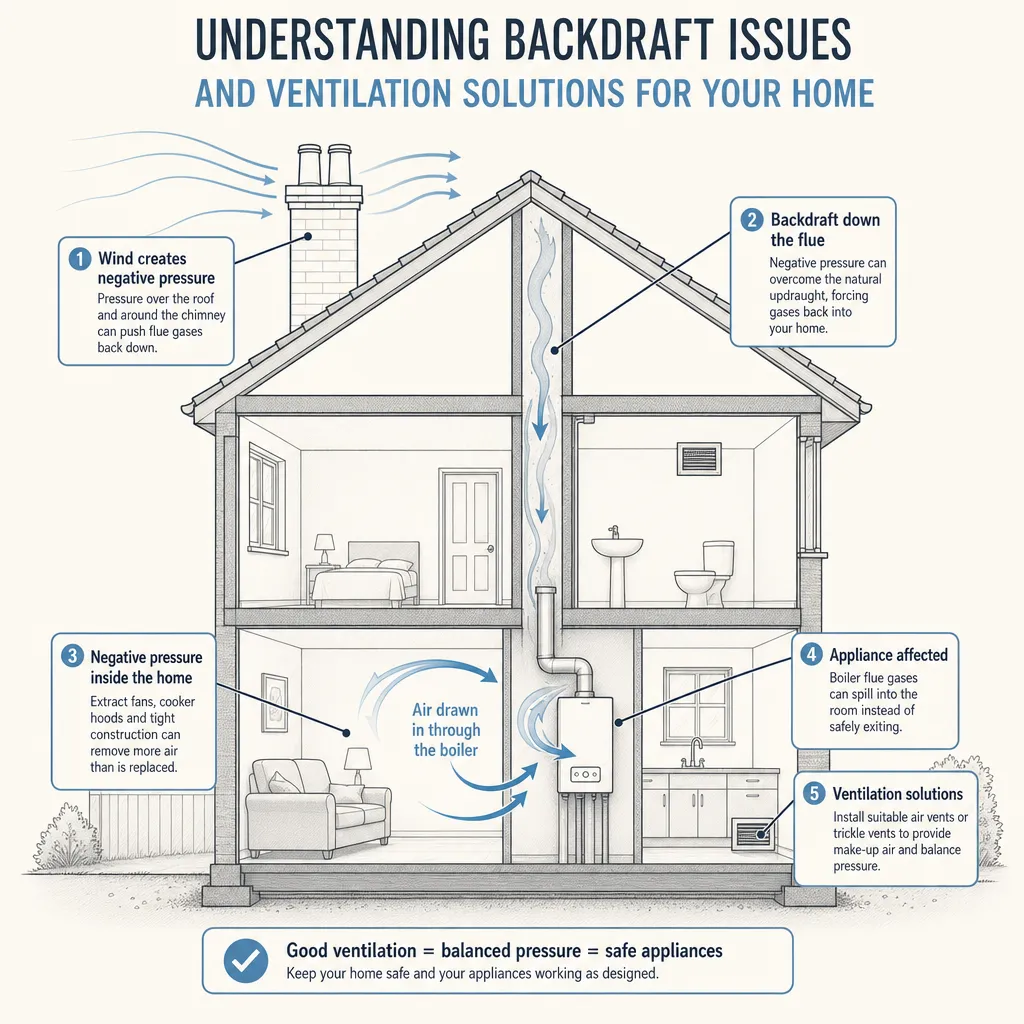
Understanding backdraft issues and ventilation solutions for your home
Backdraft is one of the less visible but more serious ventilation problems in UK homes, most commonly noticed when a fireplace, boiler flue, or kitchen extractor starts drawing air in the wrong direction. It tends to surface after draught-proofing works, window replacements, or the installation of powerful mechanical extraction — changes that alter the air balance of a property without anyone necessarily noticing until there is a smell of combustion gases or a smoky room. Because backdraft is directly linked to carbon monoxide risk, understanding its causes and solutions matters well beyond mere comfort.
Key points
- Backdraft occurs when the pressure inside a building drops below external pressure, reversing the intended direction of airflow through a flue, chimney, or ventilation opening.
- Carbon monoxide (CO) poisoning is the most serious risk from persistent backdraft affecting a gas boiler, oil boiler, or solid fuel appliance — BS EN 50291-compliant CO alarms are a legal requirement in new Scottish homes and strongly recommended by HSE for all UK homes with combustion appliances.
- Approved Document F of the Building Regulations sets out minimum ventilation requirements for dwellings in England; equivalent standards apply in Scotland (Section 3), Wales, and Northern Ireland.
- Trickle vents sealed during draught-proofing, blocked or unlined chimneys, and high-output kitchen extractors (above 60 l/s) are among the most common triggers of negative pressure and backdraft.
- A HETAS-registered engineer should inspect any solid fuel appliance showing signs of backdraft; a Gas Safe registered engineer must inspect any gas appliance showing the same signs.
What causes backdraft in UK homes?
Backdraft is fundamentally a pressure problem. A building needs replacement air — sometimes called make-up air — to match the volume being extracted or vented. When extraction exceeds supply, or when supply routes are blocked, pressure inside the property falls below outside pressure and the path of least resistance may be back down a flue or chimney.
Common triggers
- Sealed trickle vents or airbricks: Draught-proofing windows and doors is beneficial, but sealing background ventilation openings creates negative pressure. Modern windows fitted without trickle vents in an older property are a frequent cause.
- Powerful extractor fans: High-output kitchen extractors can depressurise a room enough to draw combustion gases back from a nearby boiler flue — particularly where no compensating make-up air supply has been provided.
- Blocked or partially blocked chimneys: Bird nests, collapsed liners, or accumulated debris reduce effective flue draw, lowering the threshold at which backdraft occurs.
- Stack effect in tall properties: Warm air rises naturally through multi-storey homes. In cold weather, warm air leaving at upper levels can depressurise lower rooms where combustion appliances are sited.
- Open-plan layouts after renovation: Removing internal walls changes how air moves through a building. An open kitchen-diner can behave very differently from the original enclosed room layout in terms of pressure balance.
Red flags: signs your home may have a backdraft problem
Watch for these warning signs. If you notice more than one, arrange a professional inspection before using any combustion appliance:
- Smell of combustion gases — sulphur, burning, or an unusual sweet smell — near a fireplace, boiler, or flue when heating or extraction is running.
- Smoke entering the room when a fire is lit, rather than drawing cleanly up the chimney.
- CO alarm activating near a combustion appliance — treat as an emergency: ventilate, evacuate, and call the National Gas Emergency Service (0800 111 999) if a gas appliance is involved.
- Soot staining above the fireplace opening or around the boiler flue collar.
- Pilot light extinguishing more frequently than normal on a gas appliance.
- Condensation on flue pipes close to an appliance — may indicate cool gases dwelling rather than exhausting.
- Musty or damp smell from a chimney breast when no fire has been lit — may indicate a blocked or damp flue drawing air inward.
Ventilation solutions: matching the fix to the cause
Root cause | Likely solution | Who to call |
|---|---|---|
Sealed trickle vents or airbricks | Re-open background ventilation; install correctly sized trickle vents per Approved Document F | Ventilation specialist or window installer |
Powerful kitchen extractor without make-up air | Install a make-up air duct or transfer grille; check duct sizing and fan rating | Ventilation specialist |
Blocked or damaged chimney flue | CCTV flue survey; relining or sweeping as required | HETAS-registered sweep or engineer |
Unlined or open chimney | Install a flue liner rated for the appliance; fit a draught cowl | HETAS-registered installer |
Stack effect in multi-storey home | Draught lobby; airtightness strategy review | Ventilation specialist or retrofit coordinator |
Open-plan layout after renovation | Mechanical Ventilation with Heat Recovery (MVHR) assessment; transfer grilles | Ventilation designer or MVHR specialist |
New airtight construction | Whole-house ventilation system (MEV or MVHR) required by Approved Document F | Ventilation specialist; building control sign-off |
Decision guide: what should you do first?
- If a CO alarm has activated: Evacuate, ventilate, and do not re-enter until a Gas Safe or HETAS engineer has cleared the appliance. Call the National Gas Emergency Service on 0800 111 999 if a gas appliance is involved.
- If you smell combustion gases without an alarm: Stop using the appliance immediately and arrange an urgent inspection with a Gas Safe or HETAS engineer.
- If you have smoke entry from a fireplace or solid fuel stove: Arrange a CCTV flue survey and chimney sweep by a HETAS-registered professional before the appliance is used again.
- If you suspect negative pressure from extraction: Commission a ventilation and condensation assessment to diagnose airflow and pressure balance in the property.
- If you have recently draught-proofed or fitted new windows: Check that background ventilation (trickle vents, airbricks) meets the minimum levels required by Approved Document F.
- If your home is newly built or substantially refurbished: Confirm the ventilation strategy complies with Approved Document F; a commissioning record should be available from the builder.
Mechanical ventilation options for persistent problems
Where simple adjustments to background ventilation are insufficient — particularly in well-sealed modern homes or after a deep retrofit — mechanical ventilation systems may be appropriate.
Mechanical Extract Ventilation (MEV): A centralised fan extracts air continuously from wet rooms (kitchen, bathrooms). Simpler and lower-cost than MVHR but does not recover heat. Requires adequate background supply air to avoid creating negative pressure.
Mechanical Ventilation with Heat Recovery (MVHR): Balances supply and extract throughout the dwelling and recovers heat from outgoing air. Prevents negative pressure by design. Required in highly airtight new builds under Approved Document F. Requires airtightness testing to confirm need and commissioning to confirm performance.
Positive Input Ventilation (PIV): A loft-mounted or wall-mounted unit introduces filtered air into the property, maintaining slight positive pressure. Widely used to address condensation and may reduce backdraft risk from low-level pressure differentials — but is not a substitute for correct flue design and should not be relied on where a combustion safety risk has already been identified.
Important limitations
This article provides general information on backdraft causes and ventilation principles. It does not constitute a ventilation design, a flue safety assessment, or professional advice for any specific property. The suitability of any ventilation solution depends on the property's construction, existing systems, appliance types, airtightness level, and occupancy pattern. Regulations differ across England, Scotland, Wales, and Northern Ireland. A qualified professional should assess your property before any works are undertaken.
What to ask a qualified professional
Before instructing a ventilation specialist or combustion appliance engineer, ask:
- What is causing the negative pressure in this property, and where is the replacement air intended to come from?
- Does my current ventilation meet the minimum requirements of Approved Document F (or the equivalent for my part of the UK)?
- Do I need a CCTV flue survey before using my fireplace or solid fuel appliance again?
- Are my trickle vent openings correctly sized for the appliance load and the extraction equipment installed?
- If you install MVHR or MEV, will the system be commissioned and tested, and will I receive a commissioning certificate?
- Is a CO alarm on its own adequate protection, or do I need a linked or mains-powered alarm system?
- Does this work require building control notification?
When to get professional help
Backdraft involving any combustion appliance is a safety issue, not a DIY problem. You should also consider a fire risk assessment where there is evidence of smoke spillage from an open-flued appliance. Arrange a professional inspection if:
- A CO alarm has activated, or you smell combustion gases near any appliance — treat as urgent.
- You notice smoke spillage from a fireplace, wood-burner, range cooker, or Rayburn.
- You have recently had windows replaced, draught-proofing carried out, or an extractor installed and have since noticed any of the red flags listed above.
- An extractor fan has been fitted above a gas hob or open fire without a corresponding make-up air provision.
- You are planning a deep retrofit or airtightness improvement programme and have not yet had a ventilation strategy designed.
How Housey can help
Housey connects UK homeowners with qualified professionals for ventilation and condensation assessments and fire risk assessments. If you suspect backdraft or persistent ventilation problems, use Housey to find local, vetted specialists who can diagnose the issue, recommend the right solution, and carry out any required works safely.
Frequently asked questions
How do I know if my boiler is backdrafting?
Signs include soot marks near the flue outlet, a CO alarm activating, the boiler locking out frequently, or a smell of combustion gases in the room. If you suspect a problem, stop using the boiler and call a Gas Safe registered engineer immediately. Do not re-use the appliance until it has been inspected and declared safe.
Can draught-proofing cause backdraft?
Yes. Sealing gaps and fitting new windows reduces the incidental air supply that combustion appliances rely on. If you are planning draught-proofing works, check that background ventilation — trickle vents and airbricks — is adequate, and that any combustion appliances have sufficient air supply either from the room or via a dedicated intake duct.
Is backdraft the same as downdraught?
They are related but distinct. Downdraught is caused by wind pressure at the chimney top pushing air downward — often resolved with a suitable cowl. Backdraft is caused by negative pressure inside the building actively drawing air down the flue regardless of wind conditions. Both can cause smoke or gas entry but usually require different solutions.
What specification should a CO alarm meet?
CO alarms should conform to BS EN 50291. Install one on every floor of a home with a combustion appliance, ideally within 1–3 metres of the appliance at head height. Battery-only models should be replaced per the manufacturer's schedule — typically every 5–7 years. Hard-wired models with battery backup are recommended for new builds.
Does fitting a new extractor fan require building regulations approval?
Installation of a kitchen or bathroom extractor does not usually require a building regulations application, but ventilation rates must still comply with Approved Document F. Significant changes to ventilation strategy — particularly in new builds or major renovations — may require building control sign-off. Check with your local authority if unsure.
Sources and further reading
- Approved Document F: Ventilation — GOV.UK
- Carbon monoxide: advice for the public — HSE
- HETAS: competent person scheme for solid fuel — HETAS
- Gas Safe Register: find a registered engineer — Gas Safe Register
- Carbon monoxide awareness — CO Be Alarmed — Scottish Government
- National Gas Emergency Service safety guidance — National Gas
Useful next reads
 Surveys & Inspections
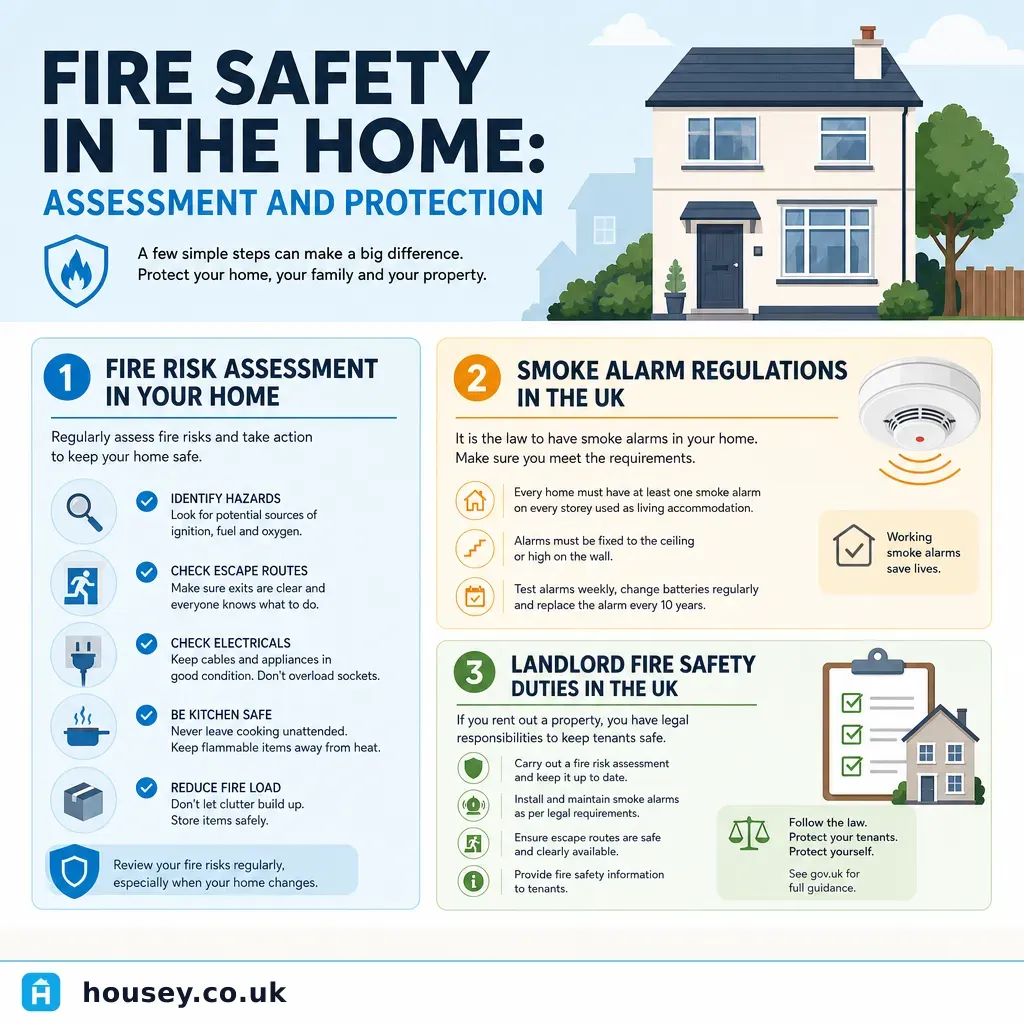
Fire Safety in the Home: Assessment and Protection
Most UK owner-occupied homes are the homeowner's responsibility to make fire-safe, while landlords have a legal duty to carry out fire risk assessments under the Regulatory Reform (Fire Safety) Order 2005.
 Surveys & Inspections
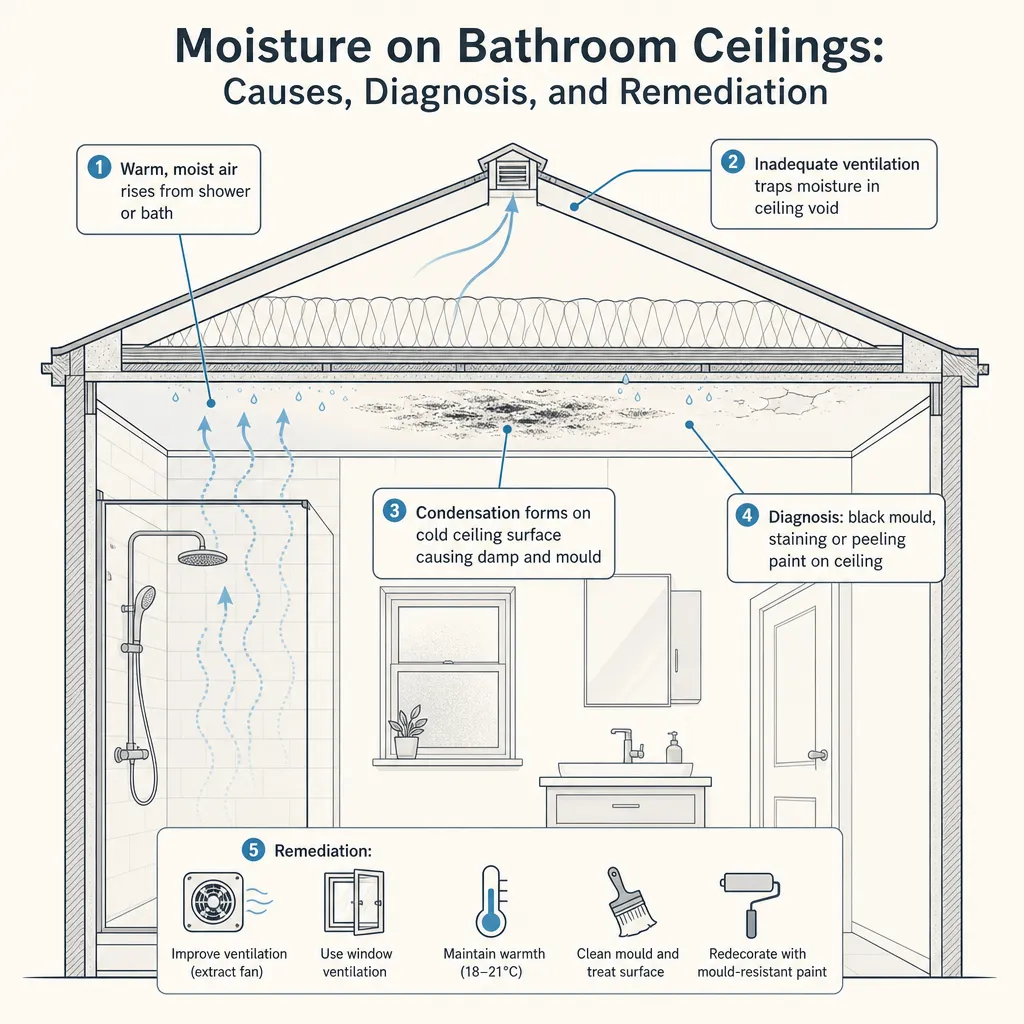
Moisture on Bathroom Ceilings: Causes, Diagnosis, and Remediation
Moisture on a bathroom ceiling is most often caused by condensation from poor ventilation, but can also indicate a leak from above or penetrating damp.
 Surveys & Inspections
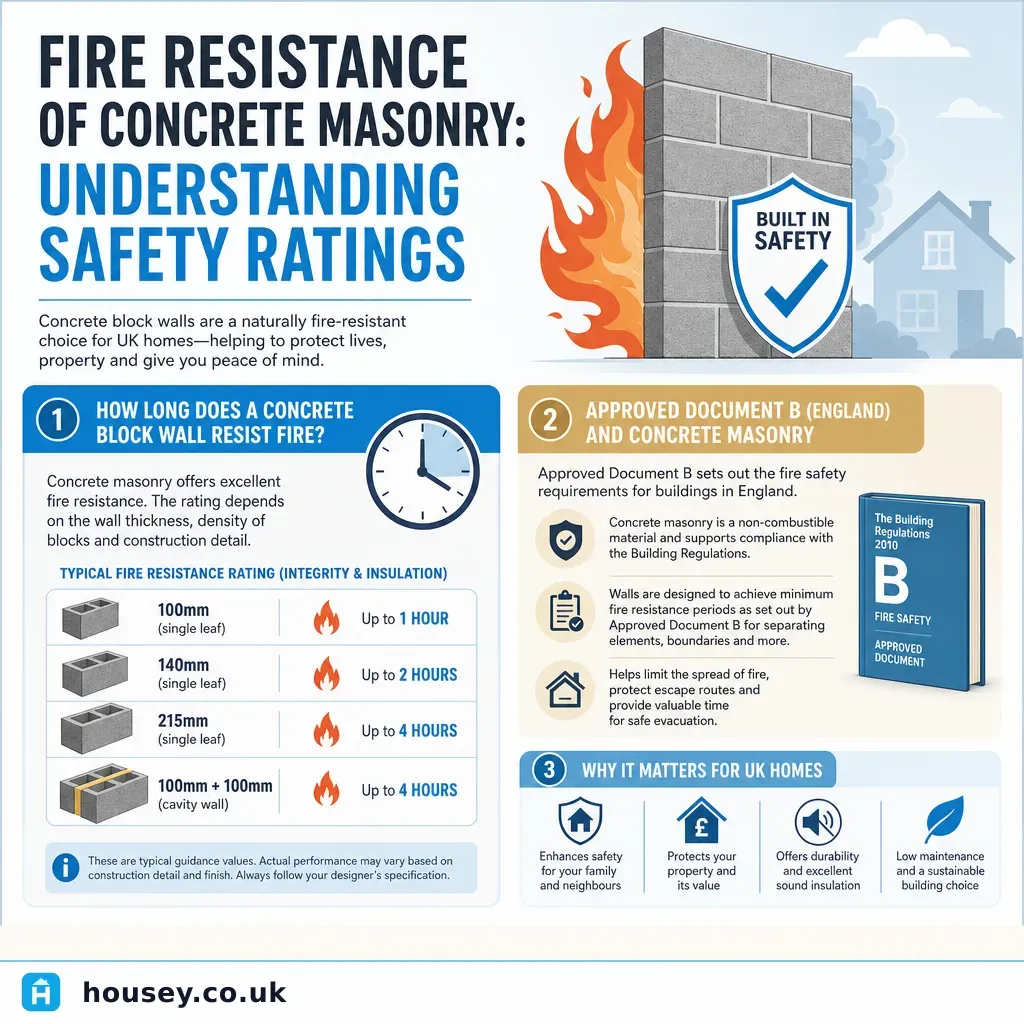
Fire Resistance of Concrete Masonry: Understanding Safety Ratings
Concrete masonry walls typically achieve 60 to 240 minutes of fire resistance depending on thickness, aggregate type, and construction method.
 Surveys & Inspections
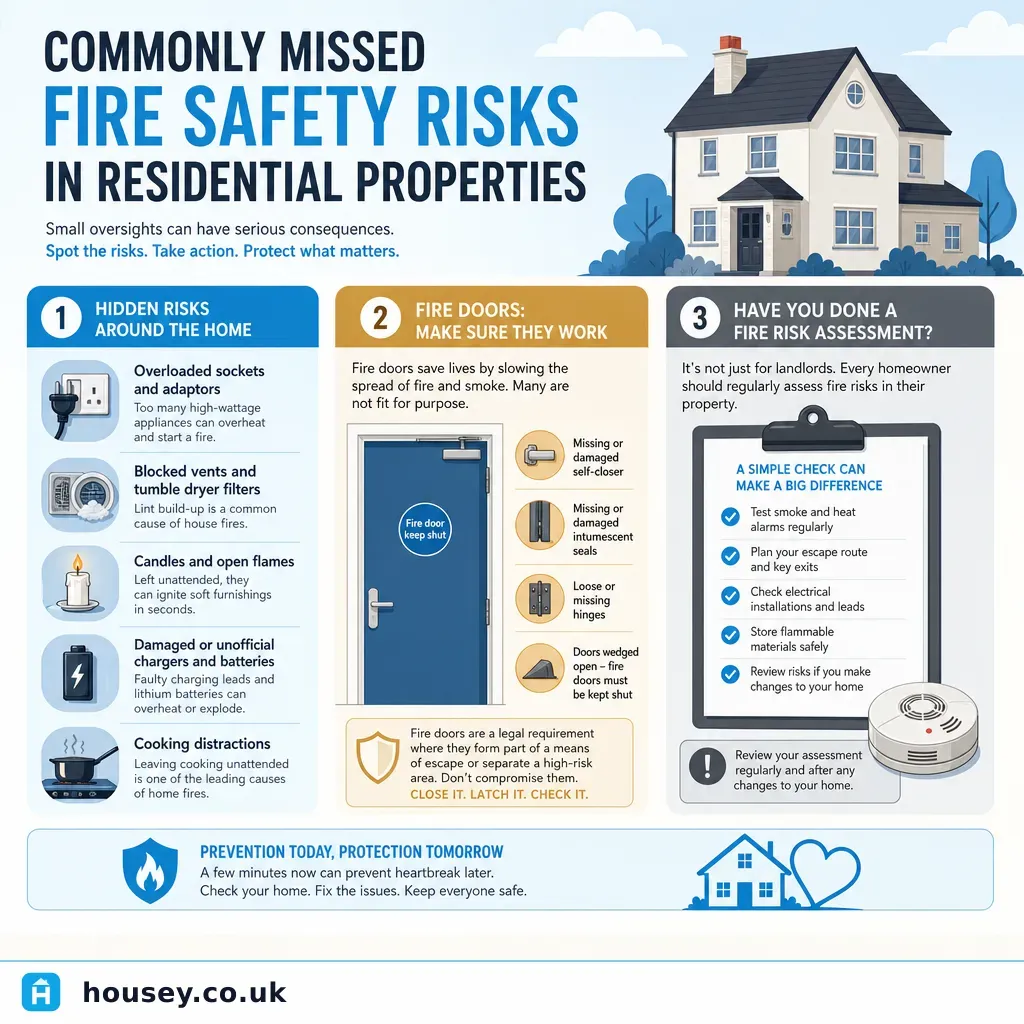
Commonly Missed Fire Safety Risks in Residential Properties
Commonly missed fire safety risks in UK homes include damaged fire doors without intumescent strips, breached compartmentation in roof spaces and floor voids, daisy-chained extension leads, and recessed downlighters without fire-rated covers.
 Surveys & Inspections
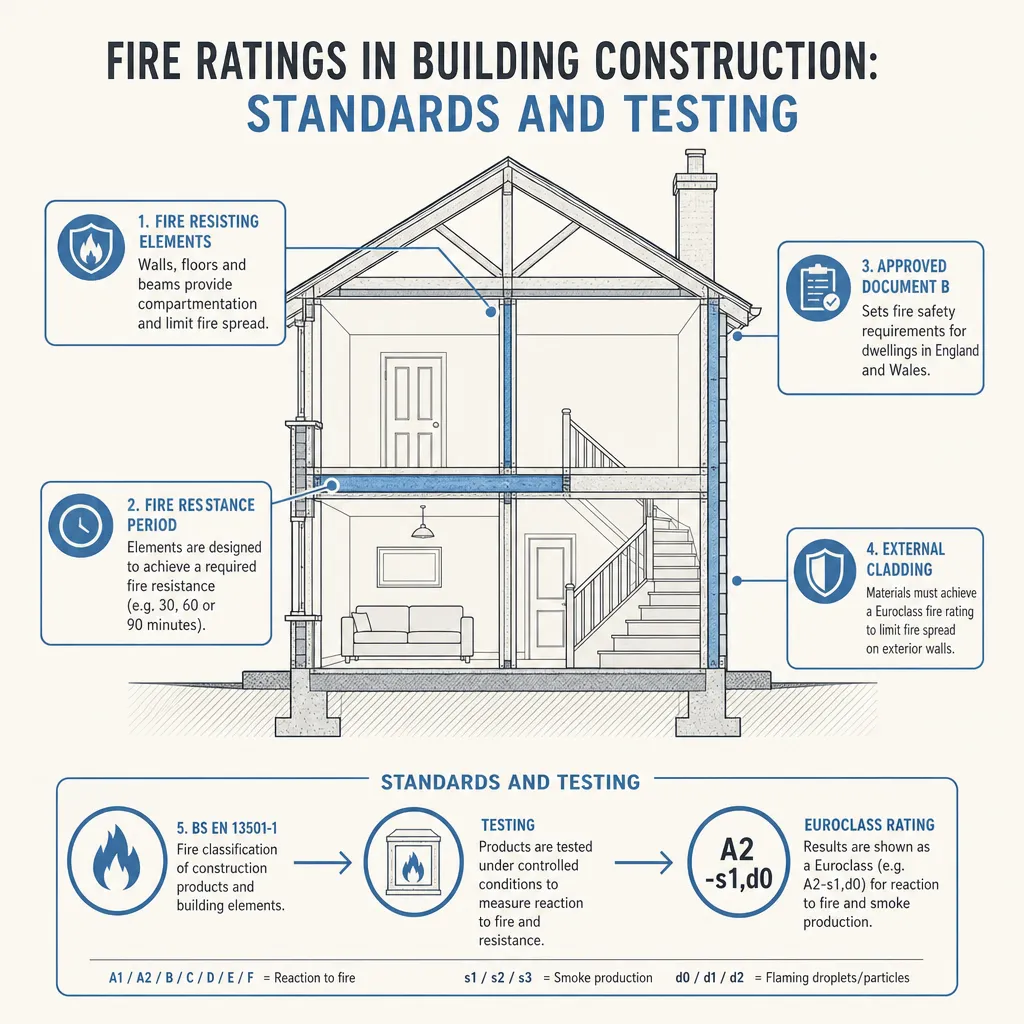
Fire Ratings in Building Construction: Standards and Testing
In UK construction, fire ratings describe how long a structural element or building assembly maintains load-bearing capacity, integrity, and insulation when exposed to a standard fire test — typically 30, 60, 90, or 120 minutes.