Fire Sprinkler Installation and Fire Safety Systems
By Housey · Last reviewed 11th of May 2026
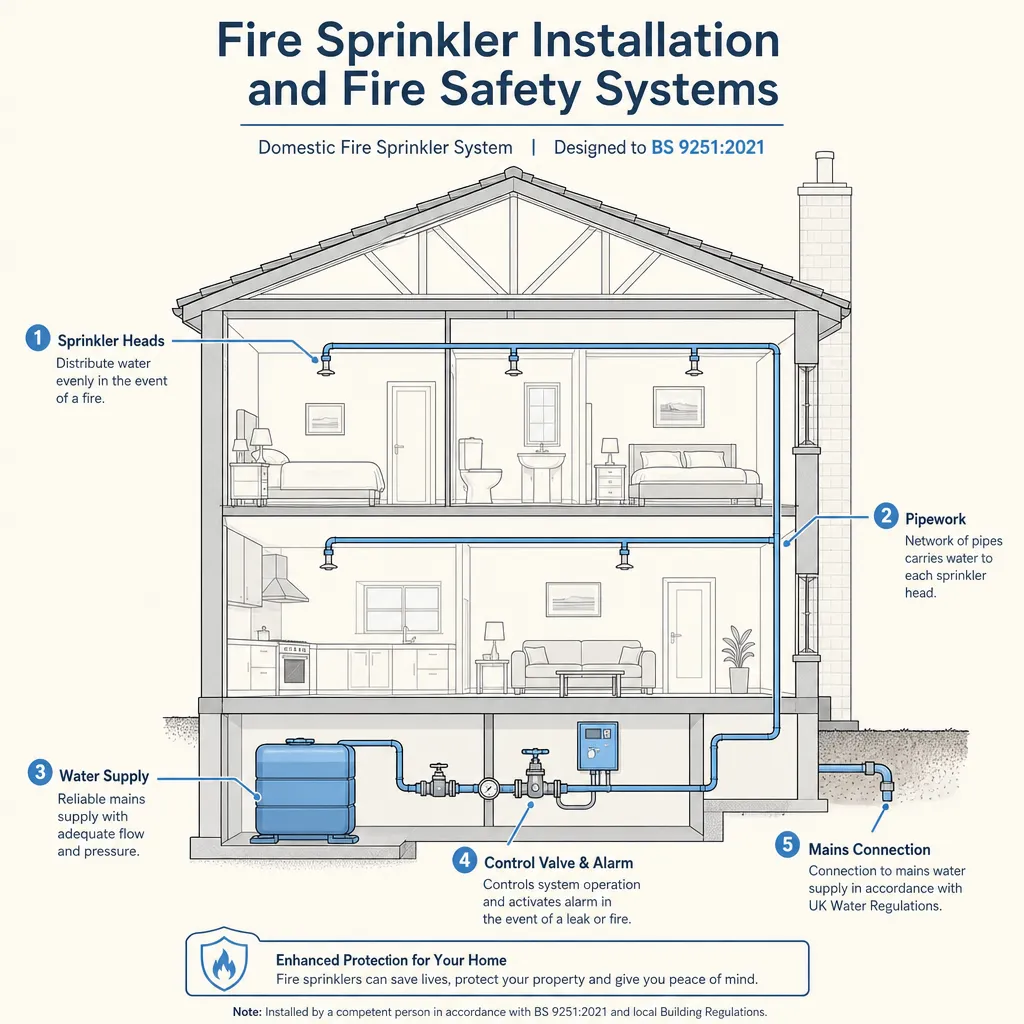
Fire Sprinkler Installation and Fire Safety Systems
Residential fire sprinkler systems are increasingly relevant to UK homeowners, landlords, and developers as building regulations have evolved following major fire safety reviews. Whether you are building a new home, converting a property to flats, or managing an HMO, understanding when sprinklers are legally required, which standard governs their design, and how to commission a compliant installation is essential preparation before any work begins.
Key points
- BS 9251:2021 is the British Standard governing the design and installation of fire suppression systems in residential and domestic buildings throughout the UK.
- Since January 2016, Welsh Building Regulations have required automatic fire suppression systems in all new-build homes; England has no equivalent mandate for standard residential houses.
- Approved Document B (fire safety) requires sprinkler systems in new-build flats where the floor of the highest storey exceeds 11 m above ground level, and in new care homes.
- HMOs (houses in multiple occupation) are subject to fire safety requirements under the Housing Act 2004 and may require sprinklers as a condition of local authority licensing.
- Fire sprinkler systems must be designed, installed, and commissioned by competent contractors; BAFSA (British Automatic Fire Sprinkler Association) maintains a publicly searchable register of accredited installers.
Are fire sprinklers required in your property?
Decision tree — do you need a residential fire sprinkler system?
- New-build home in Wales → Yes, automatic fire suppression is required under the Welsh Building Regulations 2010 (as amended, in force from January 2016).
- New-build home in England → Not required for standard houses; required for new flats where the floor of the highest storey is more than 11 m above ground level.
- HMO requiring a licence → Check with your local housing authority — many require sprinklers as a licensing condition, particularly for larger HMOs with five or more occupants.
- Care home, sheltered housing, or house converted to self-contained flats → Approved Document B applies; consult your local building control body before proceeding.
- Loft conversion on an existing house → Not usually required unless the conversion takes the highest habitable floor above the 11 m threshold; verify with building control.
- Listed building or complex floor layout → A qualified fire engineer should assess the appropriate fire strategy — sprinklers may be accepted as an alternative means of compliance with Approved Document B.
- Voluntary installation for improved home safety → Any residential property can have a system installed to BS 9251:2021 at any time.
Types of residential fire sprinkler systems
System type | Best for | Not ideal for | Water demand | Key considerations |
|---|---|---|---|---|
Wet pipe (mains-fed) | Most domestic homes with adequate mains pressure | Properties with very low mains pressure | Permanent water held in pipes | Simplest and most common residential choice |
Stored water (tank-fed) | Low-pressure or rural properties | Space-constrained homes | Dedicated storage tank and pump required | Regular tank and pump inspection needed |
Combined fire and domestic system (CFDS) | New-builds; minimises pipework runs | Retrofit in older properties | Shared with domestic supply | Cost-effective for new-build; hydraulic pipe sizing is critical |
Watermist system | Smaller spaces; heritage buildings with fabric constraints | Large open-plan areas | Very low — fine water mist | Lower water damage on activation; higher equipment cost |
All four system types must comply with BS 9251:2021 regardless of configuration.
How the installation process works
A residential sprinkler installation typically proceeds through the following stages.
- Initial water supply assessment — The installer surveys the property and measures mains water pressure and flow rate at the incoming supply. If pressure is insufficient, a storage tank and pump may be specified.
- System design — A hydraulic calculation determines pipe sizes, sprinkler head positions, and required water demand. The design must comply with BS 9251:2021.
- Building regulations notification — Installation is notifiable building work in England and Wales. A building control body (BCB) or approved inspector must oversee the work from start to completion certificate.
- Installation — Pipework, concealed sprinkler heads, control valves, and alarm components are fitted. Residential heads are typically flush or concealed for aesthetic reasons.
- Commissioning and testing — Flow tests, pressure verification, and alarm function checks are carried out by the installer before handover.
- Handover documentation — You receive a system logbook, a maintenance schedule, and a BS 9251:2021 compliance certificate.
Maintenance and ongoing responsibilities
A residential sprinkler system requires regular attention to remain effective. BS 9251:2021 sets the following minimum requirements.
- Annual inspection by a competent person — typically the installing contractor or a recognised maintenance company.
- Monthly homeowner checks: inspect heads for physical damage, corrosion, or paint; confirm control valves are in the correct open position; review the system logbook for any outstanding actions.
- Do not paint sprinkler heads. Paint alters the thermal response characteristics of the fusible element and may prevent activation in a fire — this is a documented cause of system failure.
- Notify your insurer. Some home insurers offer premium reductions for properties with compliant sprinkler systems; always disclose the installation on your policy at renewal and on first taking it out.
Important limitations
This article provides general information about residential fire sprinkler systems in the UK. Fire safety regulations are complex and vary by property type, number of occupants, building height, use, tenure, and local licensing conditions. Nothing in this article constitutes fire safety advice for your specific property or situation. Consult a qualified fire engineer, a BAFSA-accredited installer, and your local building control body before making any decisions about fire protection for your home.
When this becomes urgent
Seek qualified professional advice without delay if:
- Your HMO licence is under review and the local housing authority has raised fire safety concerns.
- You are building or converting a property and have not yet addressed fire safety compliance under Approved Document B.
- A fire risk assessment has identified deficiencies in passive or active fire protection in your property.
- Sprinkler heads show signs of corrosion, physical damage, or have been painted over.
- Your system pressure gauge or alarm is indicating an abnormal reading.
- You have received a building notice, improvement notice, or enforcement notice relating to fire safety.
What to ask a qualified professional
Before instructing a fire sprinkler installer or fire engineer, ask the following questions:
- Are you a BAFSA member or equivalent, and can you evidence that your design and installation comply with BS 9251:2021?
- What water supply assessment will you carry out, and what is your recommended solution if mains pressure is insufficient?
- Will the system design be reviewed independently before installation begins?
- How will you notify building control, and who takes responsibility for achieving sign-off?
- What commissioning certificate and logbook documentation will I receive on completion?
- What does the annual maintenance contract include, and what are the ongoing costs over five years?
- Are you covered by professional indemnity and public liability insurance?
- What documentation can you provide for my home insurer to support a premium review?
How Housey can help
Before commissioning a fire sprinkler installation, the appropriate starting point for most homeowners and landlords is a professional fire risk assessment, which identifies the fire hazards specific to your property and informs the most suitable system specification. Housey can connect you with qualified fire risk assessors who can advise on the right protection strategy for your home or HMO before you approach any installer.
Frequently asked questions
Do I legally need fire sprinklers in my existing house in England?
No legal requirement applies to existing standard houses in England purely on the basis of age or size. Requirements arise when you build new, convert, or change the use of a property in a way that triggers building regulations — or when HMO licensing conditions require them. If you manage rented property, check with your local housing authority.
Will a fire sprinkler system flood my home if it activates?
Residential sprinklers are individually activated by heat — only the head nearest the fire opens, not the whole system. A typical residential head discharges around 40–60 litres per minute. Fire service hoses discharge far more water; in most cases, sprinkler activation causes significantly less water damage than fire service attendance following an unchecked fire.
How much does a residential fire sprinkler system cost in the UK?
Indicative UK costs, last reviewed 2026-05-11. For a new-build or major refurbishment where pipework can be incorporated during construction, costs typically range from £1,500–£3,000 for a small house, rising significantly for larger or more complex properties. Retrofit installations are considerably more expensive due to disruption of existing fabric. Obtain at least three quotes from BAFSA-accredited contractors, as costs vary widely by property size, system type, water pressure, and site access.
Who is responsible for maintaining a sprinkler system in a rented property?
Maintenance of fire safety systems in rented and HMO properties is generally the landlord's responsibility. The Regulatory Reform (Fire Safety) Order 2005 applies to the common parts of HMOs. Seek advice from a qualified fire risk assessor or your local housing authority if you are unsure of your specific legal obligations.
Sources and further reading
- Approved Document B — Fire Safety, Volume 1: Dwellinghouses — GOV.UK
- Welsh Building Regulations — fire sprinkler requirements — Welsh Government
- BAFSA — British Automatic Fire Sprinkler Association — BAFSA
- Regulatory Reform (Fire Safety) Order 2005 — legislation.gov.uk
- Housing Act 2004 — HMO licensing — legislation.gov.uk
- BS 9251:2021 — Fire sprinkler systems for domestic and residential occupancies — British Standards Institution
Useful next reads
 Planning & Pre-Build
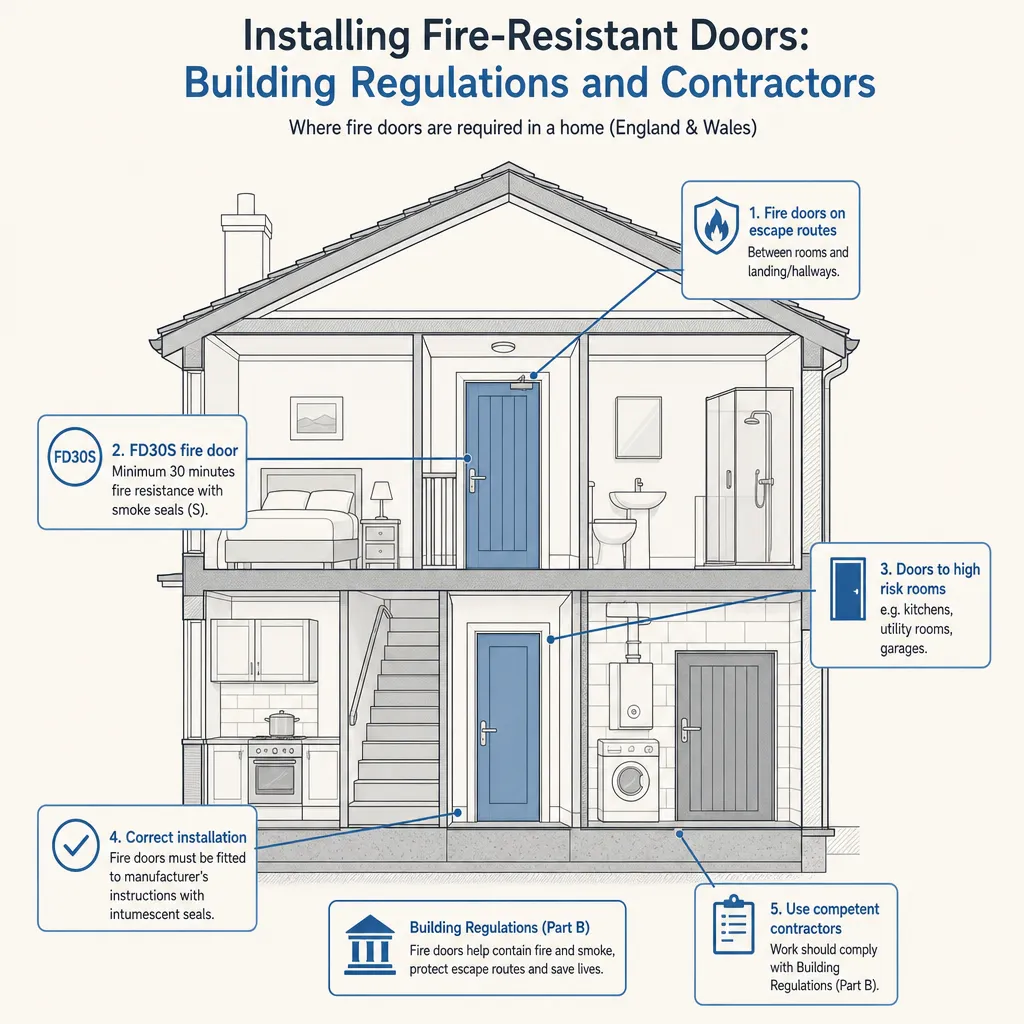
Installing Fire-Resistant Doors: Building Regulations and Contractors
Fire doors are required by Building Regulations in specific locations — including integral garages, properties of three or more storeys, loft conversions, and HMOs.
 Planning & Pre-Build
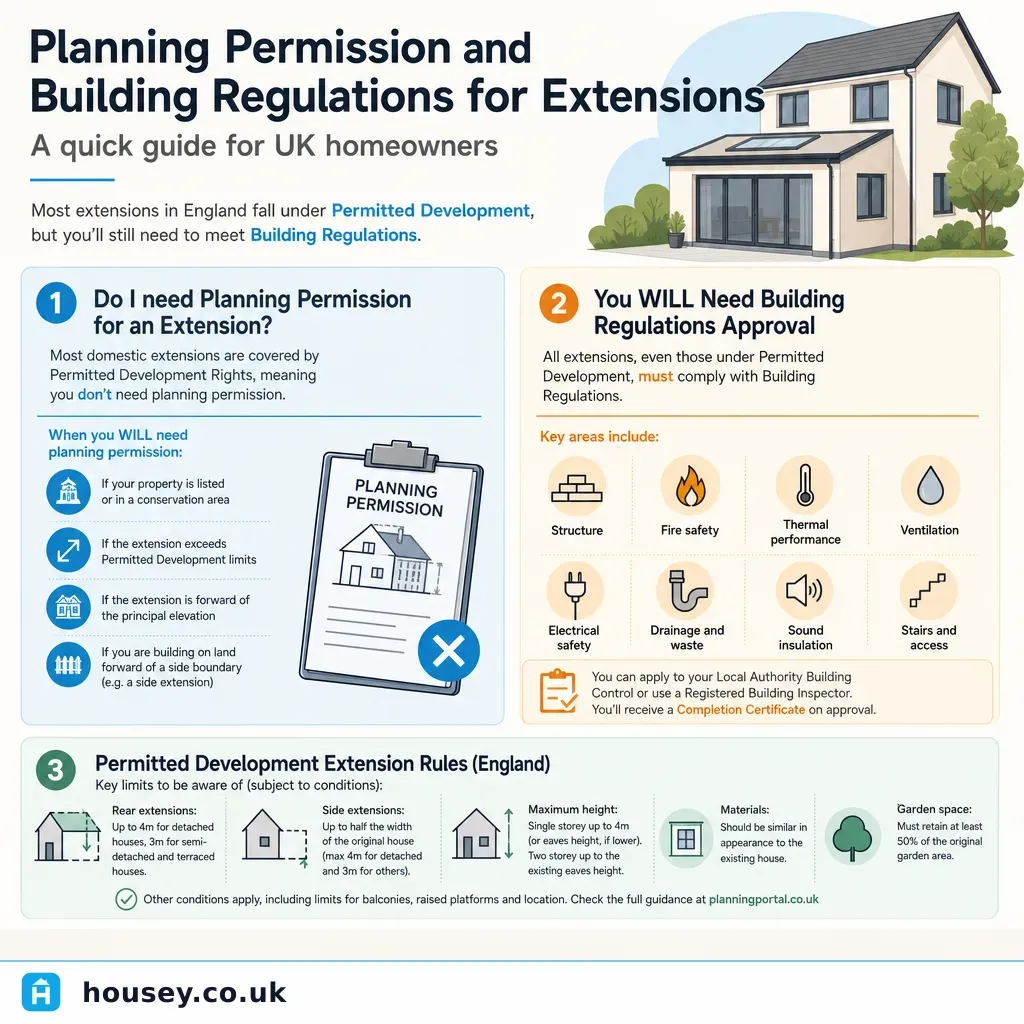
Planning Permission and Building Regulations for Extensions
UK home extensions usually require both planning permission and Building Regulations approval, though most smaller rear extensions qualify as Permitted Development under the GPDO 2015 and need no planning application.
 Planning & Pre-Build
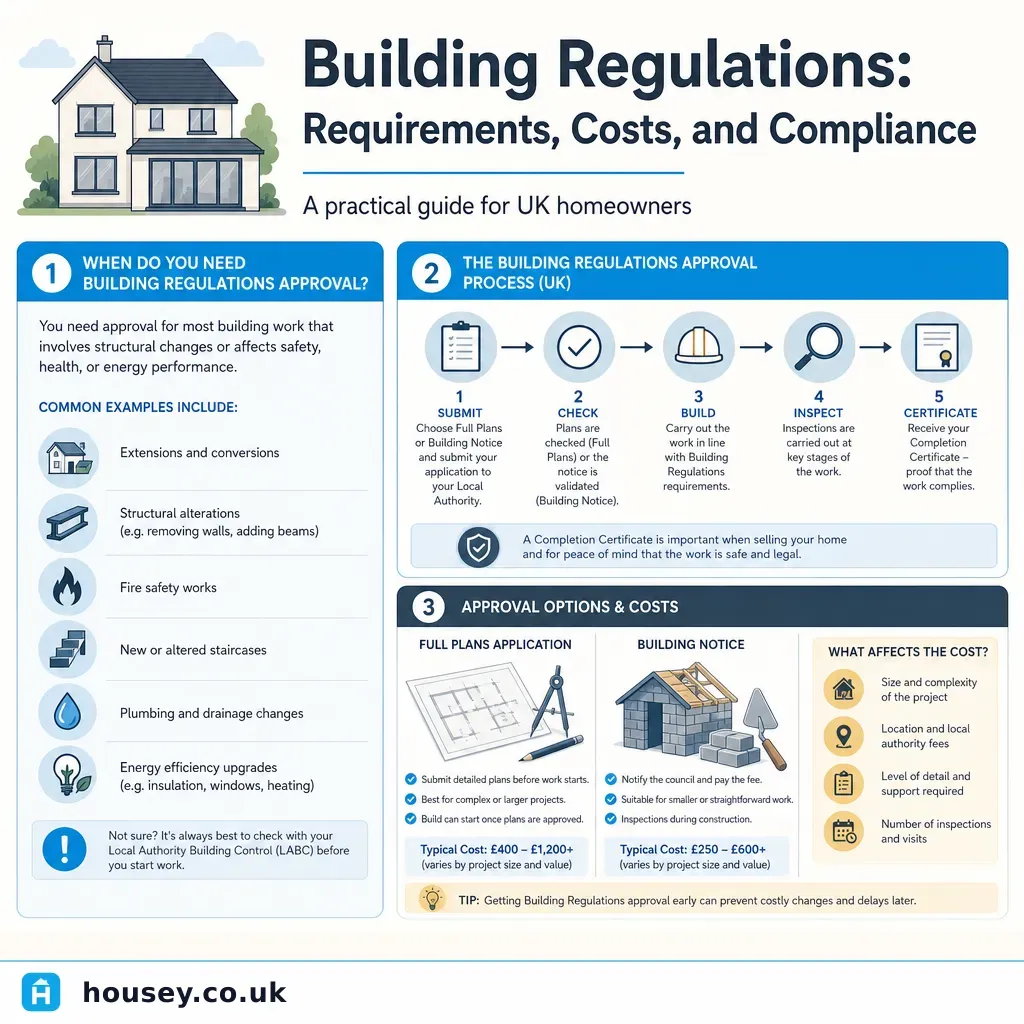
Building Regulations: Requirements, Costs, and Compliance
Building regulations set minimum standards for how construction work is carried out in the UK, covering structural stability, fire safety, energy efficiency, and ventilation.
 Planning & Pre-Build
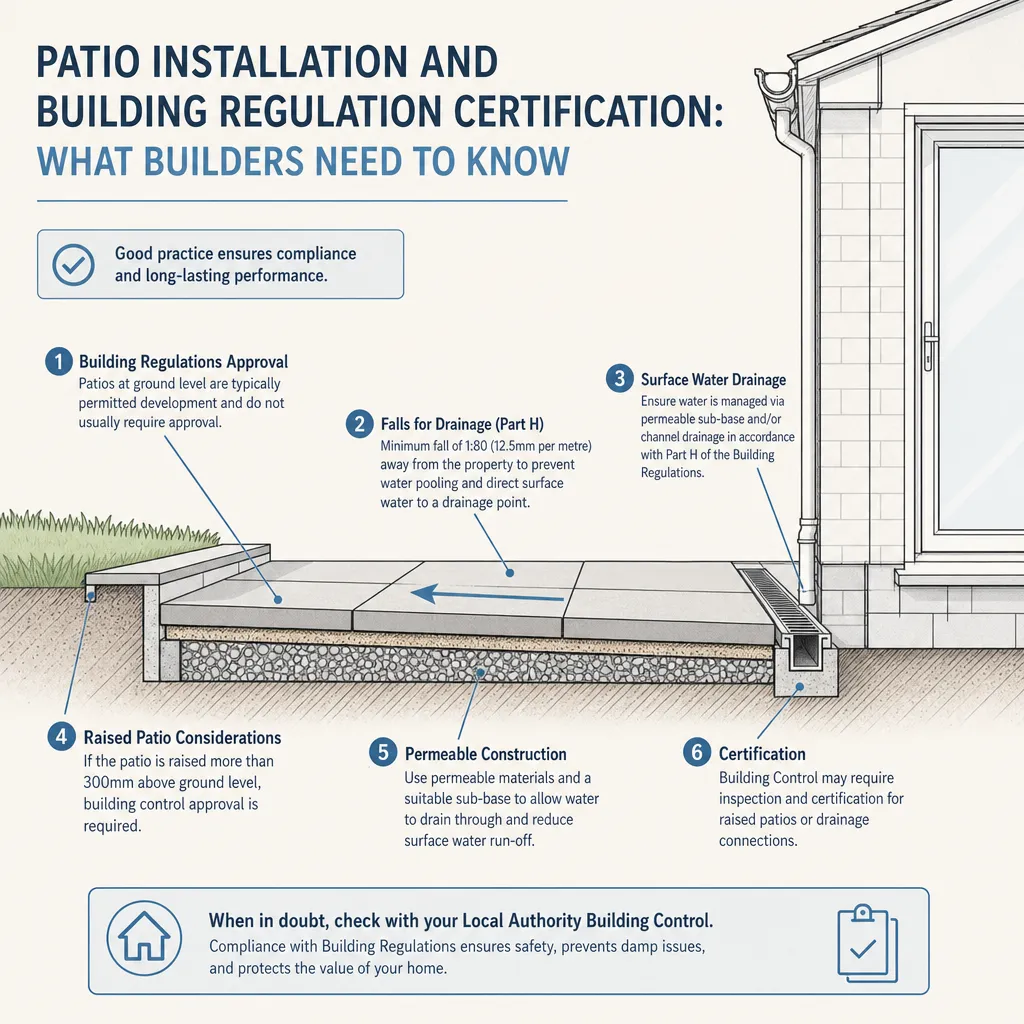
Patio Installation and Building Regulation Certification: What Builders Need to Know
Most ground-level patios in England do not require building regulations approval.
 Planning & Pre-Build
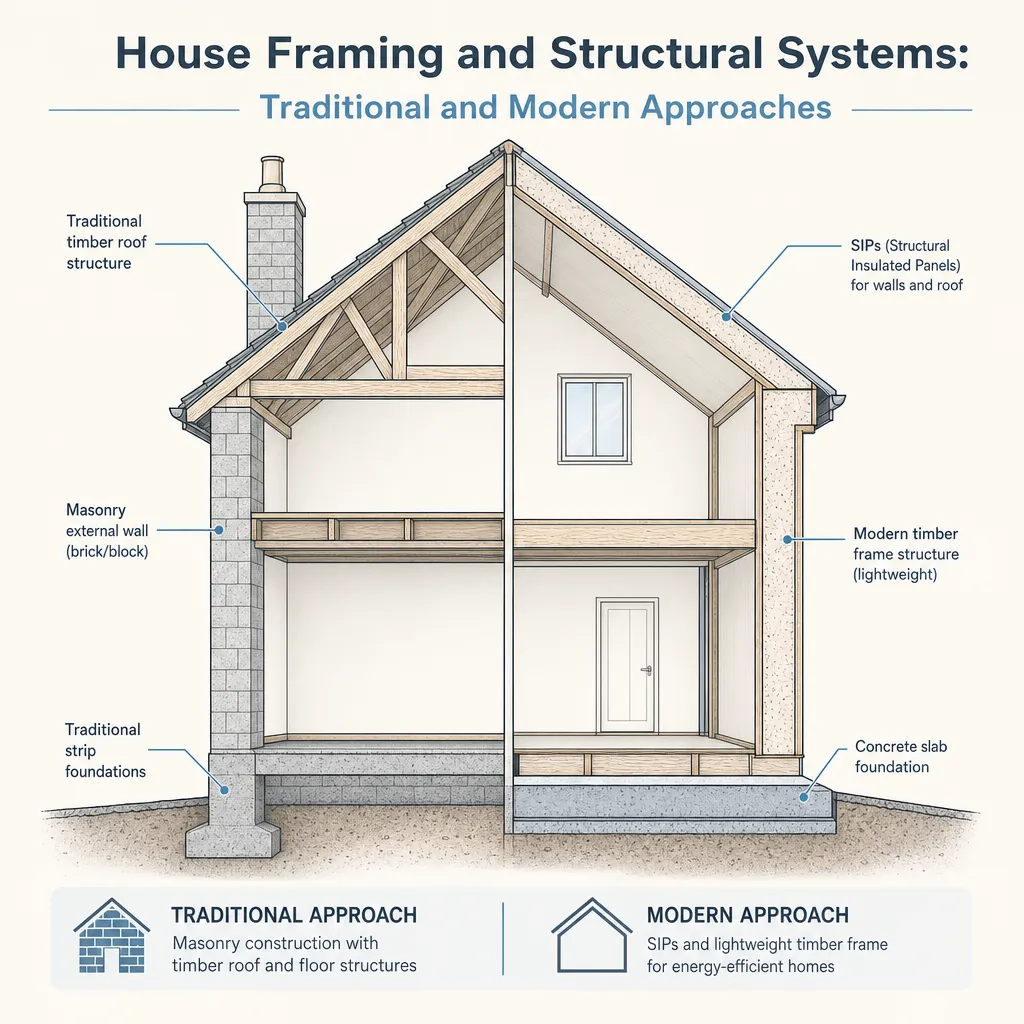
House Framing and Structural Systems: Traditional and Modern Approaches
UK homes are built using four main structural systems: traditional masonry (brick and block), timber frame, structural insulated panels (SIPs), and insulated concrete formwork (ICF).