Fireplace Draught Prevention: Sealing and Efficiency Solutions
By Housey · Last reviewed 24th of May 2026
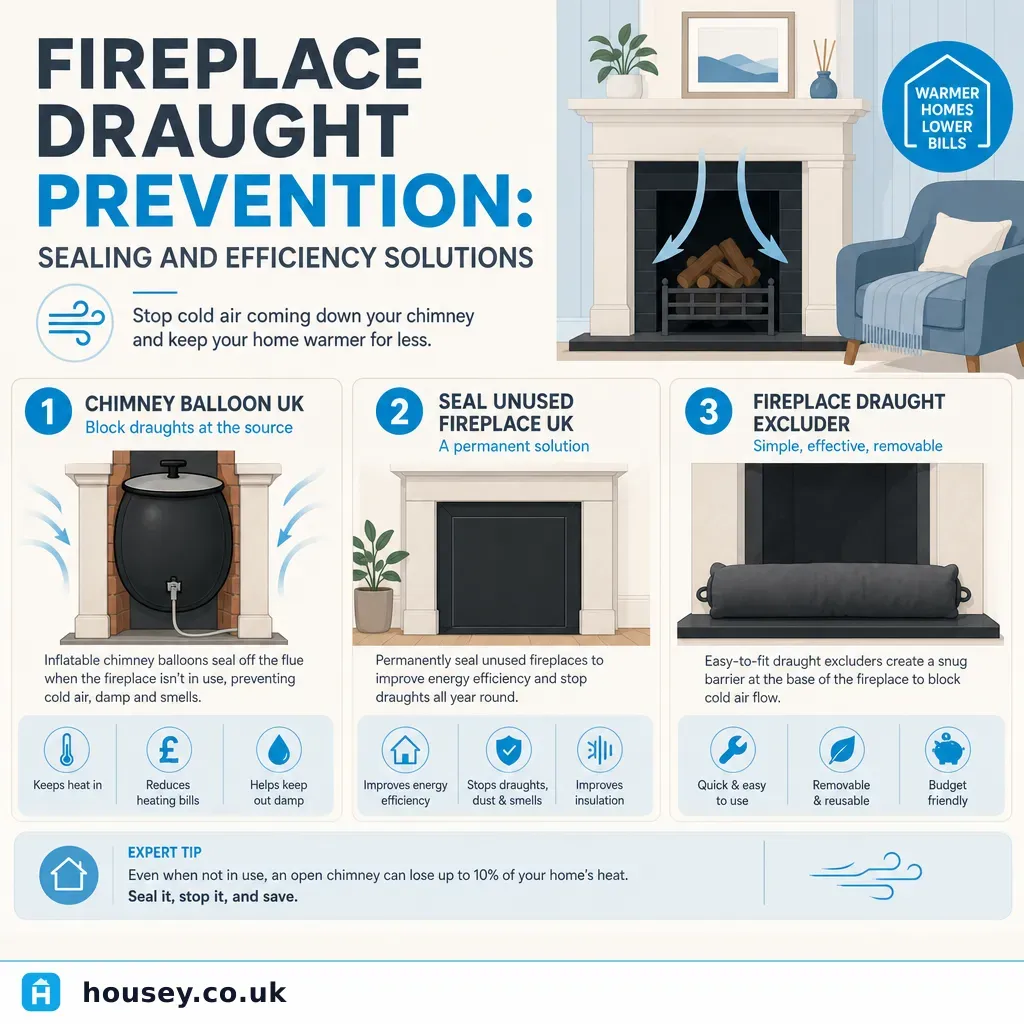
Fireplace Draught Prevention: Sealing and Efficiency Solutions
An unused or poorly sealed fireplace is one of the most common sources of cold air infiltration in UK homes, particularly in Victorian, Edwardian, and interwar properties where original fireplaces have been blocked but the flue above remains open to outside air. The heat loss from an open chimney is steady, year-round, and often undetected until the flue is sealed and the improvement in warmth becomes apparent.
Key points
- Energy Saving Trust estimates that draught-proofing an unused fireplace can save approximately £65–£100 per year on heating costs in a typical UK semi-detached home.
- Chimney balloons — inflatable draught excluders inserted into the flue — cost approximately £15–£30 at DIY retailers and are a reversible, low-cost option for unused open fireplaces.
- Permanently sealing any flue connected to a live gas fire, solid fuel appliance, or boiler flue pipe must only be carried out by a Gas Safe registered or HETAS-registered engineer; incorrect sealing creates a serious carbon monoxide risk.
- Approved Document J (Combustion appliances and fuel storage systems) requires a ventilation opening of at least 6,500 mm² free area in any permanent blocking panel installed across a retained chimney void.
- Rooms with an open fireplace may rely on the chimney for background ventilation; blocking it without an alternative ventilator may conflict with Approved Document F (Ventilation) of the Building Regulations.
Types of draught prevention: which solution is right?
Solution | Best for | Not ideal for | Risk if wrong |
|---|---|---|---|
Chimney balloon | Unused open fireplace — reversible, low cost | Any flue with a live or recently decommissioned appliance | Fire and CO risk if left in place or used on a live flue |
Draught excluder cowl (chimney cap) | Permanent disuse — sealed at top of stack | Flues shared with a boiler or active appliance | CO risk if applied to a live or shared flue |
Board and mineral wool infill | Disused fireplace, decorative surround retained | Any active fireplace | Must include 6,500 mm² vent per Approved Document J |
Register plate with throat restrictor | Solid fuel stove installation; reducing excessive draw | Fireplaces without a suitable flue liner | Must be fitted by a HETAS-registered installer |
Permanent masonry or render seal | Full decommission, chimney breast retained | Any property where future reinstatement is possible | Irreversible without significant works; ventilation vent still required |
Chimney balloons: how they work
A chimney balloon is an inflatable draught excluder made from a laminated film. It is inserted into the flue opening above the fireback, inflated to fill the flue throat, and left in place when the fire is not in use. Key practical points:
- They are available in sizes to fit standard UK chimney throat openings and cost approximately £15–£30.
- They are designed to deflate automatically if a fire is accidentally lit, providing a basic safety margin — but should always be removed and the flue checked before any fire is lit.
- They are not suitable for any flue connected to a live gas fire, gas insert, gas back boiler, or active solid fuel appliance.
- Inspect the balloon annually; chimneys drawing damp air can cause the laminate to deteriorate over time.
Permanently blocking an unused fireplace
If a fireplace is to be permanently blocked with the chimney breast retained, the installation must include:
- A sealed infill panel (board, masonry, or render) across the fireplace opening.
- A ventilation grille of at least 6,500 mm² free area in the infill panel, as required by Approved Document J, to allow air circulation in the chimney void and prevent moisture accumulation.
- Access provision for future inspection where practicable.
If the chimney stack is to be removed at roof level, this is structural work. Removing a chimney breast affects loadbearing elements at each floor and the roof structure, requiring building control approval and a structural engineer's assessment before work begins.
Important limitations
This article provides general information for UK homeowners about fireplace draught prevention options. Fireplaces, flues, and chimney systems involve fire safety, carbon monoxide risk, and ventilation requirements regulated under Building Regulations Approved Document J and the Gas Safety (Installation and Use) Regulations 1998. The correct approach varies by appliance type, flue configuration, and whether any appliance — including a gas fire, back boiler, or condensing boiler — uses or shares the flue. This guidance does not constitute a safety assessment and must not be applied without first confirming the flue status with a qualified professional.
When this becomes urgent
Seek professional advice immediately if:
- You smell gas near a fireplace, gas fire, or chimney breast.
- Anyone in the property experiences symptoms consistent with carbon monoxide exposure: persistent headache, nausea, dizziness, or confusion when a heating appliance is running.
- You are uncertain whether a flue is live — connected to any operating or recently decommissioned gas or solid fuel appliance.
- The chimney breast feels noticeably warm when no fire has been lit, suggesting a possible active or smouldering flue.
- You notice crumbling render inside the firebox, water ingress from the chimney, or structural cracking in the chimney breast or stack.
What to ask a qualified professional
Before instructing any work on a fireplace or chimney:
- Is this flue live — is it connected to any gas fire, solid fuel appliance, back boiler, or boiler flue?
- When was the flue last swept and inspected by a HETAS-registered sweep or engineer?
- Does any gas appliance share this chimney stack or breast?
- If gas work is involved: is the contractor Gas Safe registered, and will they check and test the existing pipework?
- Will the proposed blocking comply with Approved Document J — including the required minimum ventilation vent?
- If the chimney breast is to be removed: has a structural engineer assessed the loadbearing implications at each floor level?
Red flags: when to stop and call a professional
- You can see daylight or falling debris through the fireplace opening, or birds have been entering the flue — the stack needs inspection before any sealing work.
- The chimney breast is noticeably warm to the touch when no fire has been lit recently.
- Soot stains appear on the external face of the chimney breast or around the fireplace opening, indicating past or ongoing flue spillage.
- A previous owner has sealed the fireplace opening but no ventilation vent is visible in the blocking panel.
- A chimney balloon repeatedly deflates unexpectedly — this may indicate flue damage, a crack in the chimney structure, or unusual pressure draw from another appliance.
When to get professional help
Installing a chimney balloon in a confirmed open, disused fireplace with no live appliance connection is a low-risk measure most homeowners can carry out themselves. Professional help is needed for:
- Any fireplace where there is doubt about whether a live appliance is connected.
- Permanent sealing works, which must comply with Approved Document J including ventilation requirements.
- A HETAS-registered chimney sweep for inspection before sealing, particularly if the flue has not been used or swept recently.
- A Gas Safe registered engineer for any work on or near a gas fire, gas flue, or gas supply to the fireplace.
- Any structural works including chimney breast or stack removal.
How Housey can help
Housey connects you with vetted energy-efficiency consultants who can assess heat loss from chimneys and fireplaces, advise on appropriate draught prevention measures, and confirm that proposed works comply with ventilation requirements and fire safety regulations.
Frequently asked questions
Can I permanently seal an unused fireplace myself?
You can board or infill the opening of a disused, open fireplace with no live appliance connection, but the work must include a ventilation vent of at least 6,500 mm² free area as required by Approved Document J. First confirm the flue has no connection to any gas or solid fuel appliance. If there is any doubt — particularly if the property has or had a gas fire — consult a Gas Safe registered engineer before proceeding.
What is a chimney balloon and how does it work?
A chimney balloon is an inflatable draught excluder inserted into the flue above the fireplace throat. When inflated it seals the flue passage and prevents cold air entering the room. It deflates automatically if a fire is accidentally lit. Chimney balloons cost approximately £15–£30 at DIY retailers, suit open disused fireplaces, and must not be used in any flue connected to a live appliance.
Will sealing my fireplace affect ventilation in the room?
Possibly. Chimneys have historically provided background ventilation in older UK homes not fitted with trickle vents in windows. Approved Document F requires adequate background ventilation in habitable rooms. Before sealing, check whether the room has alternative background ventilators. Where the chimney is the only source of background ventilation, a permanent vent should be introduced to maintain adequate indoor air quality.
How much can draught-proofing a fireplace save on energy bills?
Energy Saving Trust estimates savings of approximately £65–£100 per year for a typical UK semi-detached home with one unused fireplace sealed. Actual savings depend on how open the chimney was, the heating system efficiency, and insulation levels elsewhere. The payback period for a chimney balloon at £15–£30 is typically a matter of weeks.
Sources and further reading
- Energy Saving Trust — Draught-proofing — Energy Saving Trust
- GOV.UK — Approved Document J: Combustion appliances and fuel storage systems — GOV.UK
- GOV.UK — Approved Document F: Ventilation — GOV.UK
- Gas Safe Register — Find a registered engineer — Gas Safe Register
- HETAS — Registered engineers and sweeps — HETAS
Useful next reads
 Energy & Retrofit
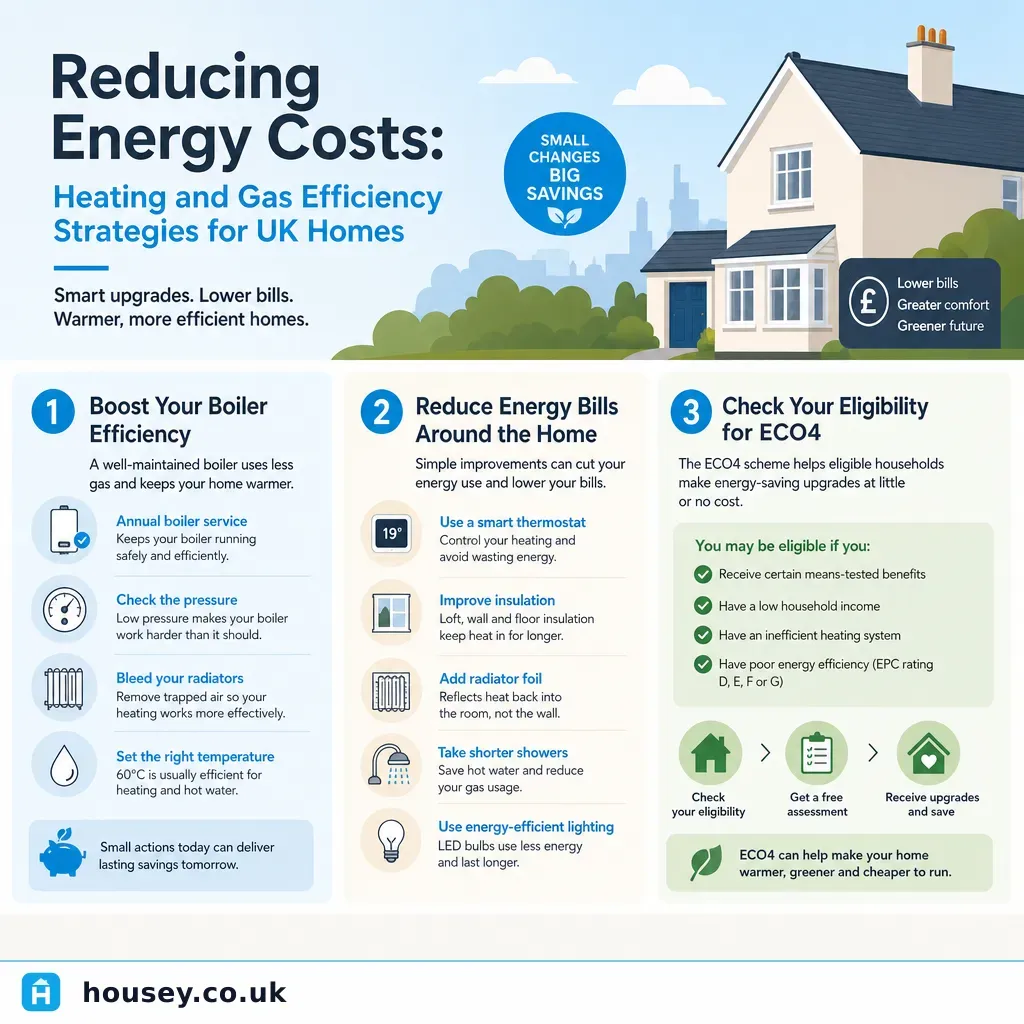
Reducing Energy Costs: Heating and Gas Efficiency Strategies for UK Homes
Most UK households spend around 55–60% of their energy bill on heating.
 Energy & Retrofit
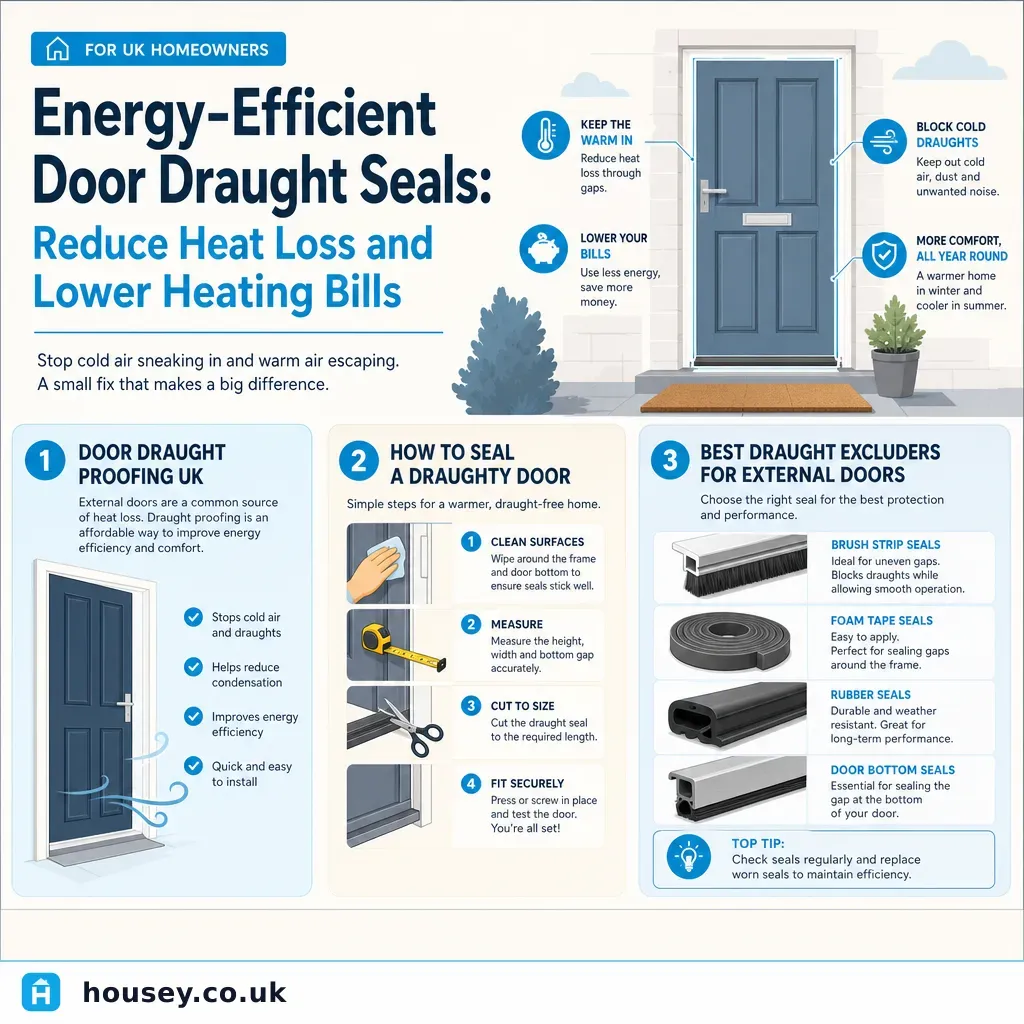
Energy-Efficient Door Draught Seals: Reduce Heat Loss and Lower Heating Bills
Door draught seals — brush strips, compression seals, threshold strips, and letterbox excluders — reduce heat loss through gaps in door frames.
 Energy & Retrofit
Why Your Home Feels Cold and How to Improve Thermal Comfort
A home that feels cold despite adequate heating is usually losing warmth through poorly insulated walls, a draughty roof or floor, single glazing, or a heating system that needs balancing or servicing.
 Energy & Retrofit
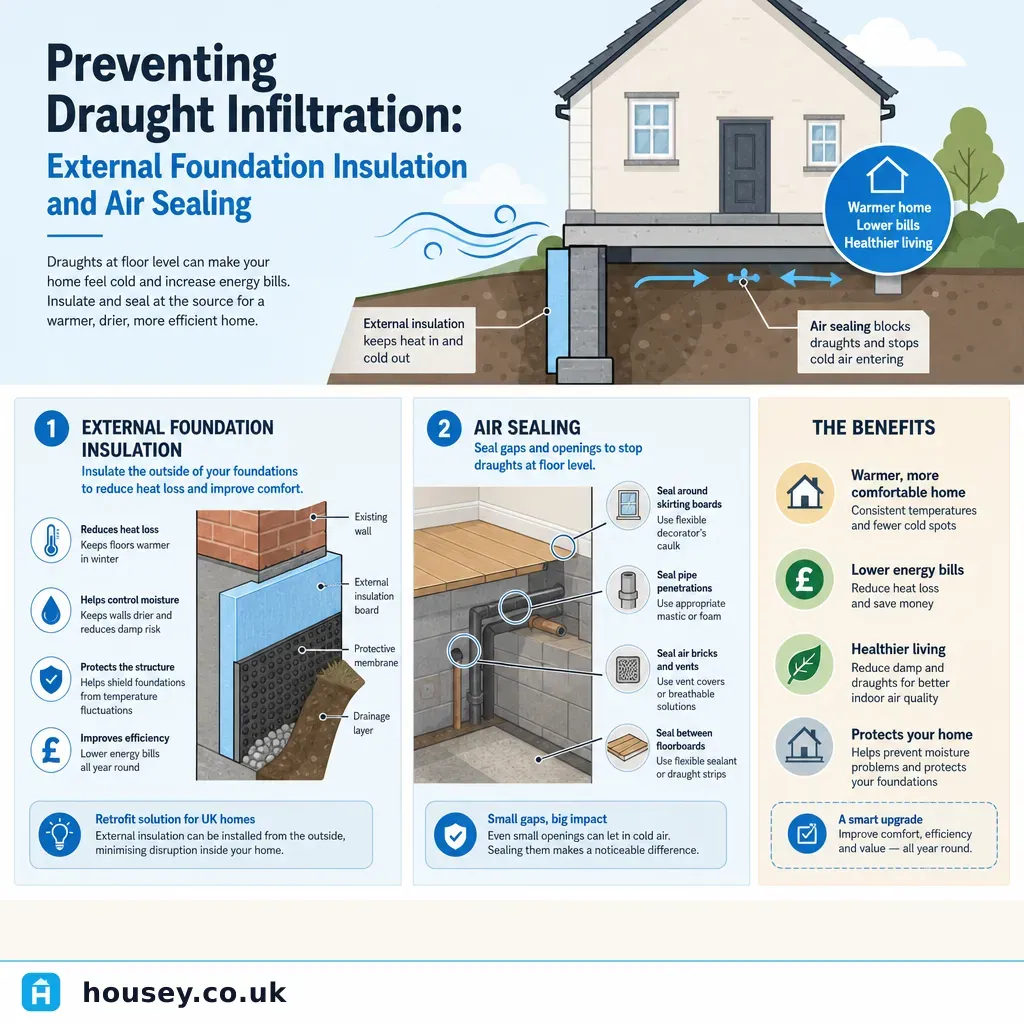
Preventing Draught Infiltration: External Foundation Insulation and Air Sealing
External foundation insulation and air sealing target heat loss and cold draughts at the building's base — particularly common in older UK homes with suspended timber floors or solid masonry.
 Energy & Retrofit
Selecting the Right Insulation for Your Home: Types and Benefits
Most UK homes benefit from loft insulation (270mm mineral wool recommended), cavity wall fill for post-1920 properties, or solid wall insulation — either EWI or IWI — for Victorian and Edwardian homes.