Wood Burning Stove Installation Costs and Chimney Work
By Housey · Last reviewed 7th of May 2026
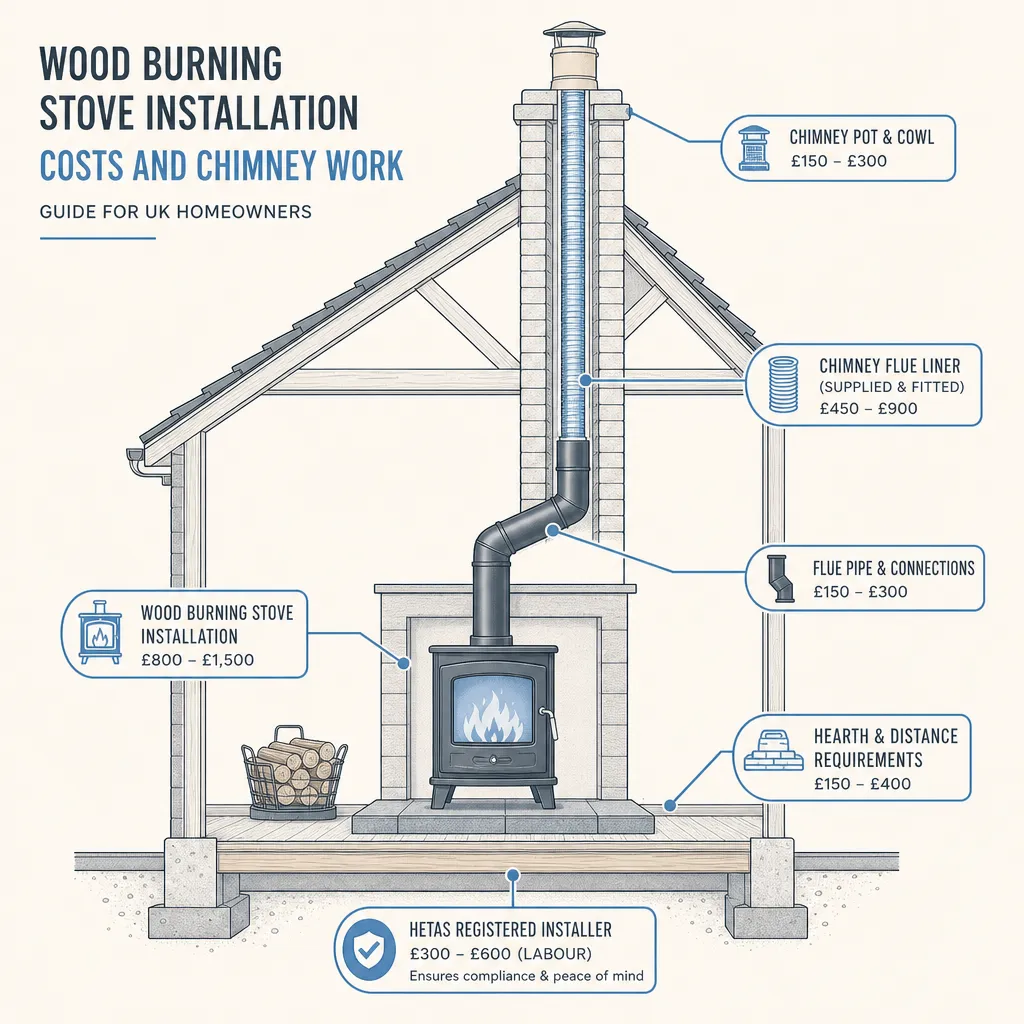
Wood Burning Stove Installation Costs and Chimney Work
Wood burning stoves are a popular choice for UK homeowners wanting supplementary warmth and a focal point in a living room, but installation is considerably more involved than connecting a stove to an existing chimney. Building Regulations notification, chimney assessment, flue lining, hearth preparation, and a legally required carbon monoxide alarm all form part of a compliant installation — and each element affects the final cost. Understanding what is involved before requesting quotes helps you compare like for like and avoid unexpected additions to the bill.
Key points
- Installing a wood burning stove is notifiable building work under Building Regulations Approved Document J (Combustion appliances and fuel storage systems); you must use a HETAS-registered installer who self-certifies the work, or submit a building control application to your local authority.
- HETAS (Heating Equipment Testing and Approval Scheme) is the official body for solid fuel and biomass heating in the UK; a HETAS certificate on completion satisfies the building control requirement and is important for insurance and future conveyancing.
- A flexible stainless steel flue liner — typically 150 mm or 175 mm internal diameter, matched to the stove's flue collar — is almost always required in an existing chimney; unlined chimneys present a fire and carbon monoxide risk.
- Properties in smoke control areas designated under the Clean Air Act 1993 may only use DEFRA-approved (Ecodesign Ready) appliances; check your postcode before purchasing a stove.
- The Smoke and Carbon Monoxide Alarm (Amendment) Regulations 2022 require a CO alarm in every room containing a fixed combustion appliance in England; Scotland has equivalent requirements under the Tolerable Standard.
What does a wood burning stove installation involve?
A complete, compliant installation typically covers several stages and may involve more than one trade:
- Site survey and chimney inspection: checking flue draw, chimney condition, existing hearth dimensions, and whether a liner is required. A chimney sweep carrying out a CCTV or manual inspection before booking an installer is strongly advisable.
- Hearth preparation: Building Regulations Approved Document J requires a non-combustible constructional hearth extending at least 300 mm in front of and 150 mm to each side of the stove door opening.
- Chimney lining: inserting a flexible stainless steel liner (or rigid sections) sized to the stove manufacturer's specification and correctly sealed at both the top and bottom.
- Register plate installation: sealing the chimney throat above the stove with a steel register plate prevents warm air loss and improves draw.
- Stove positioning and connection: bedding the stove on the hearth, connecting the flue outlet to the liner, and making all joints fire-proof.
- Flue terminal: fitting a rain cowl or bird-guard at the chimney pot — work at height on the chimney stack normally requires a qualified roofing contractor or the installer where safe ladder access is sufficient.
- Carbon monoxide alarm: a legally required CO alarm must be fitted in the same room as the appliance before commissioning.
- Commissioning and certification: the HETAS engineer fires the stove, checks draw and clearances, confirms compliance, and issues the HETAS certificate.
How much does a wood burning stove installation cost?
Indicative UK costs, last reviewed 2026-05-07. Costs vary considerably by stove output (kW), chimney height and condition, liner length, and whether roof access or structural works are required. Obtain at least three written quotes before committing.
Cost element | Typical UK range | Notes |
|---|---|---|
Wood burning stove (supply only) | £300–£3,000+ | Output 4–12 kW; DEFRA-approved models required in smoke control areas |
HETAS installation labour | £500–£1,200 | Includes connection, register plate, commissioning, and HETAS certificate |
Flexible flue liner (supply and fit) | £400–£1,200 | 150 mm or 175 mm; price driven by chimney height (typically 6–12 m run) |
Twin-wall flue system (no existing chimney) | £1,000–£3,500 | Requires roof or wall penetration; structural and weatherproofing may be additional |
Chimney stack repair or repointing | £300–£1,500+ | Often identified at survey stage; a roofer is required for scaffold or tower access |
Constructional hearth (new or upgraded) | £200–£800 | Depends on existing slab condition and choice of finish material |
Carbon monoxide alarm (supply and fit) | £20–£80 | Legal requirement under the 2022 regulations |
Typical all-in — existing chimney in good condition | £1,200–£3,500 | Stove, liner, labour, HETAS certificate, CO alarm |
Typical all-in — new twin-wall flue system | £2,500–£6,000+ | Twin-wall flue, structural penetrations, and weatherproofing costs are additional |
Source: HETAS installer trade guidance, Energy Saving Trust published guidance, and UK installer pricing surveys. Regional variation is significant; London and the South East typically sit at the upper end of these ranges.
Do you need planning permission for a wood burning stove?
In most cases, installing a wood burning stove inside an existing chimney does not require planning permission — it is treated as internal works covered by Building Regulations rather than planning. However, there are important exceptions:
- Listed buildings: Listed Building Consent is required for any internal or external alteration that affects the character of a listed building, which can include flue terminals visible on a chimney stack.
- Smoke control areas: no separate planning permission is required because of a smoke control designation, but you must use a DEFRA-approved appliance. Check via the DEFRA smoke control area map or your local council website.
- Flats and leasehold properties: a new external flue through a shared wall or roof requires freeholder consent and possibly a party wall agreement, separate from any Building Regulations process.
Chimney condition checklist
Before any installation, a professional chimney sweep should inspect the flue. Issues that commonly affect cost and programme include:
For chimney repairs requiring roof access — repointing, flaunching, pot replacement, or terminal installation — you will need a qualified roofing contractor.
Decision tree: which installation route applies to you?
- Existing chimney in good condition → HETAS-registered installer fits liner, connects stove, self-certifies. No separate building control application needed.
- Existing chimney needing structural repairs → Chimney sweep and installer for lining; roofer for stack repairs; HETAS engineer for stove connection and certification.
- No chimney — internal twin-wall flue → HETAS-registered installer; possibly also a builder for ceiling and floor penetrations between storeys.
- No chimney — external twin-wall flue through wall or pitched roof → HETAS installer plus roofer; may need structural assessment for the roof penetration point.
- Listed building or conservation area → All of the above plus Listed Building Consent application; consult your local planning authority before purchasing the stove or specifying the flue type.
- Smoke control area → Verify DEFRA-approved stove before purchasing; HETAS installer self-certifies compliance with the Clean Air Act 1993.
- Flat or leasehold property → Confirm freeholder consent and any party wall requirements before instructing any contractor.
Red flags to watch for when getting quotes
- An installer who is not registered with HETAS offering to fit the stove without a building control application — this leaves you without legal sign-off.
- No mention of a chimney inspection or sweep before installation; discovering blockages or structural problems once the stove is in place can be expensive to resolve.
- A quote that omits the flue liner on the assumption your existing chimney is suitable — an unlined chimney is a fire risk that building control inspectors will not accept.
- No CO alarm included in the specification — this is a legal requirement in England and should be in every quotation.
- Vague specification on hearth dimensions — ask for the exact measurements and confirm they meet Approved Document J minimums of 300 mm front projection and 150 mm side clearances.
- Quotes that do not separately itemise supply, labour, liner, and certification, making it impossible to compare contractors fairly.
Important limitations
This article provides general information about wood burning stove installation in England and Wales. Building Regulations, smoke control area designations, and planning rules differ in Scotland (Scottish Building Standards) and Northern Ireland (Building Regulations Northern Ireland). Cost figures are indicative only and are not a substitute for written quotes from HETAS-registered installers. A wood burning stove involves live combustion and carbon monoxide risk: always use a registered installer, never use a new installation without formal certification, and test your CO alarm regularly after fitting.
What to ask a qualified professional
Before instructing a HETAS-registered installer, ask:
- Are you registered with HETAS, and will you self-certify this installation under Approved Document J?
- Have you — or a chimney sweep — inspected the chimney condition, and if not, can you arrange this before the installation date?
- What liner diameter are you specifying, and does it match the stove manufacturer's stated flue collar size?
- Is this property in a smoke control area, and if so, is the stove model I am considering DEFRA-approved?
- Will you supply and fit the carbon monoxide alarm as part of the installation?
- What hearth dimensions are you designing to, and will the finished hearth meet Approved Document J minimum clearances?
- Will you provide a HETAS completion certificate on the day, and does that satisfy the building control sign-off requirement?
- If the chimney stack needs repointing or repairs, will you arrange a roofer, or do I need to source one separately?
When to get professional help
Seek qualified professional advice before proceeding if:
- There is visible cracking, leaning, or movement in the chimney stack — this may indicate structural problems requiring an engineer's assessment before any lining or installation work.
- A chimney sweep's inspection reveals collapsed internal brickwork or an obstruction that cannot be cleared by normal sweeping methods.
- CO alarms trigger during an initial test fire — stop using the stove immediately and arrange an inspection to identify the cause before relighting.
- Smoke enters the room rather than drawing up the flue — poor draw requires an engineer's diagnosis rather than repeated attempts to adjust the appliance.
- The property is a flat and you are unsure about freeholder consent, building structure, or whether a party wall agreement is needed.
How Housey can help
If your stove installation requires chimney stack repairs, flaunching, or a new terminal fitted at height, Housey connects you with vetted roofers who handle rooftop access work alongside your HETAS installer. For larger projects that combine a new fireplace opening, alcove rebuild, or associated structural works, our extension builders can manage the broader build programme and coordinate trades.
Frequently asked questions
Do I need building regulations approval for a wood burning stove in the UK?
Yes. Installing a solid fuel appliance is notifiable work under Building Regulations Approved Document J in England and Wales. You can satisfy this by using a HETAS-registered installer who self-certifies the work, or by applying to your local authority building control before works begin. The HETAS route is simpler and more commonly used for straightforward residential installations.
Can I install a wood burning stove in a smoke control area?
Yes, provided you use a DEFRA-approved (Ecodesign Ready) appliance. Open fires without an approved appliance are not permitted in smoke control areas under the Clean Air Act 1993. Check your postcode on the DEFRA smoke control area map before purchasing a stove. A HETAS-registered installer will confirm compliance for the specific model you have chosen.
Do I legally need a carbon monoxide alarm with a wood burning stove?
Yes, in England. The Smoke and Carbon Monoxide Alarm (Amendment) Regulations 2022 require a CO alarm in any room with a fixed combustion appliance (excluding gas cookers). Scotland has similar requirements under the Tolerable Standard. Your HETAS installer should fit the CO alarm as part of the installation; confirm this is included in the written quotation before work begins.
How long does a wood burning stove installation take?
A straightforward installation into an existing chimney in good condition typically takes one to two days. If chimney lining, hearth works, and a sweep are all required, allow two to three days. Projects involving twin-wall flue systems, scaffolding for chimney repairs, or listed building consents will take longer. Your installer should include a programme of works in their written quotation.
What is a HETAS certificate and why does it matter?
A HETAS certificate confirms that a solid fuel appliance has been installed by a HETAS-registered engineer in compliance with Building Regulations Approved Document J. It functions as the building control completion notice for the installation, which matters for buildings insurance, mortgage lenders, and resale conveyancing. Without it, you may face additional cost and delay when seeking retrospective building control sign-off.
Sources and further reading
- Approved Document J: Combustion appliances and fuel storage systems — GOV.UK / MHCLG
- HETAS: official body for solid fuel and biomass heating — HETAS
- Smoke Control Areas: check your postcode — DEFRA
- Smoke and Carbon Monoxide Alarm (Amendment) Regulations 2022 — legislation.gov.uk
- Clean Air Act 1993 — legislation.gov.uk
- Wood-fuelled heating — Energy Saving Trust
Useful next reads
 Improvement & Build
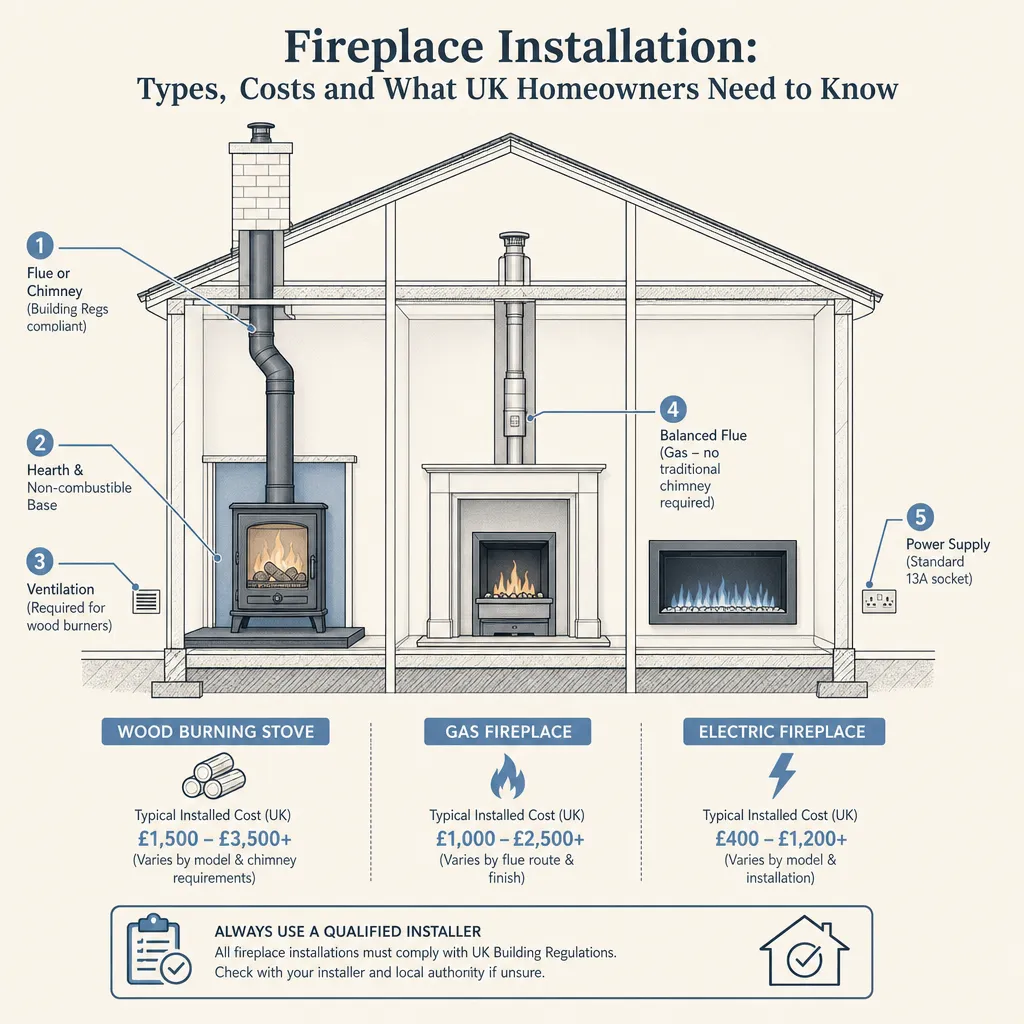
Fireplace Installation: Types, Costs and What UK Homeowners Need to Know
Fireplace installation in the UK is governed by Building Regulations Part J.
 Improvement & Build
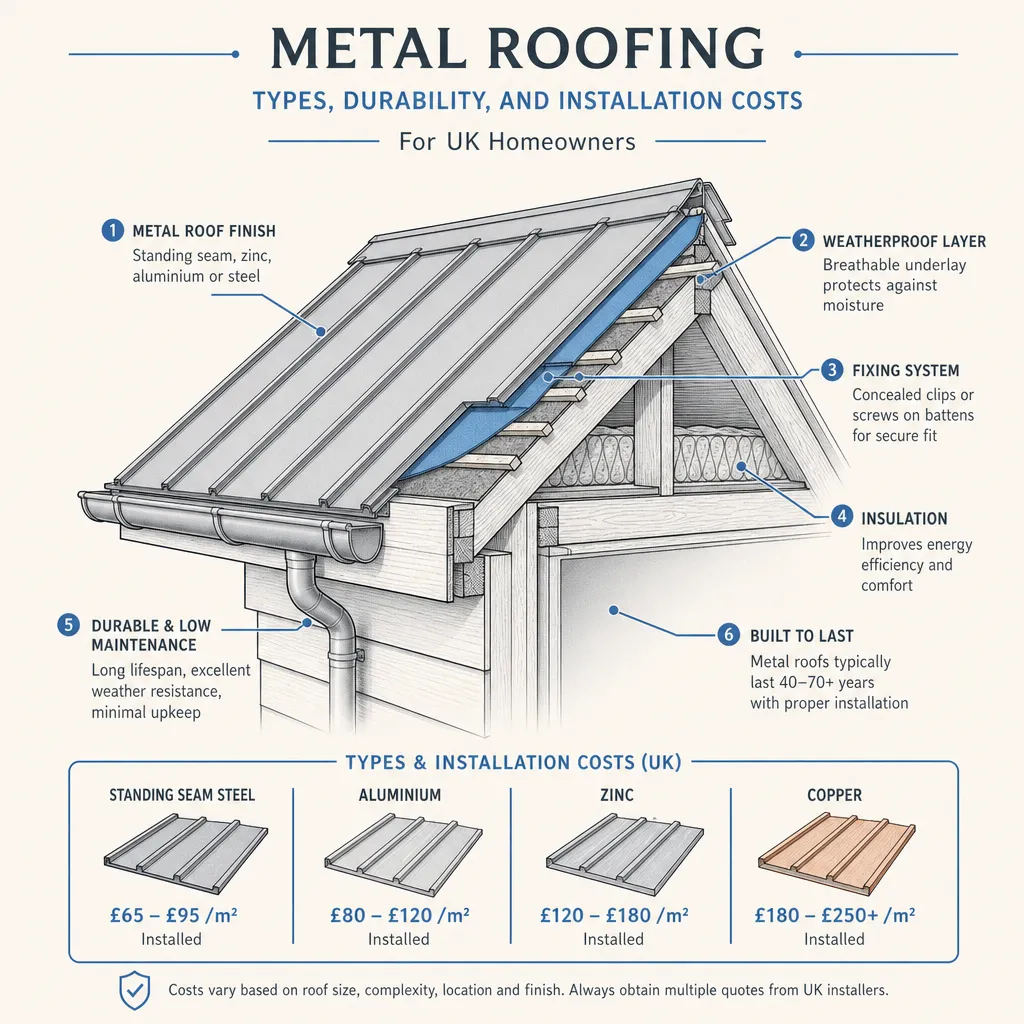
Metal Roofing: Types, Durability, and Installation Costs
Metal roofing in the UK includes standing seam, corrugated sheet, and metal tile systems in steel, aluminium, zinc, or copper.
 Improvement & Build
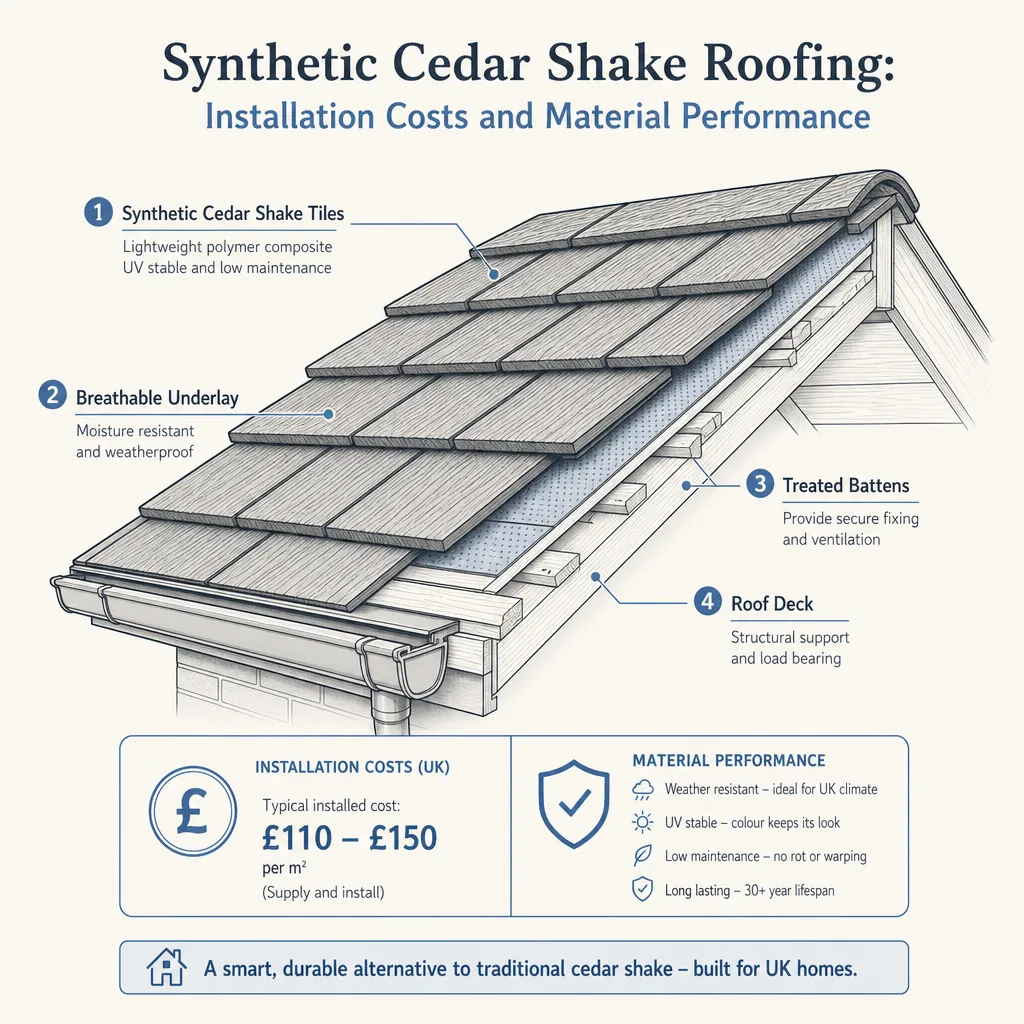
Synthetic Cedar Shake Roofing: Installation Costs and Material Performance
Synthetic cedar shake roofing uses polymer composite, rubber, or fibre-cement tiles to replicate the look of natural cedar wood shingles.
 Improvement & Build
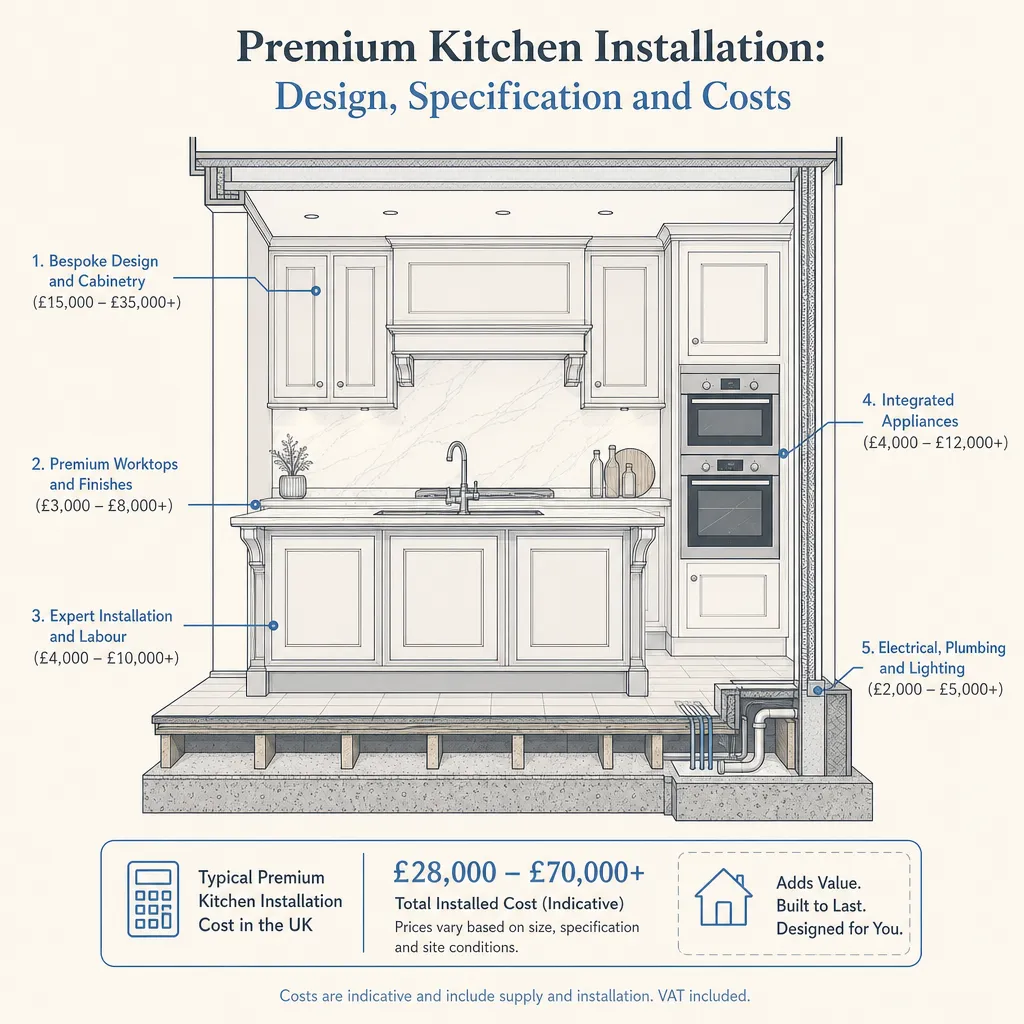
Premium Kitchen Installation: Design, Specification and Costs
A premium kitchen in the UK typically costs £20,000–£80,000 or more installed, depending on cabinetry specification, worktop material, appliance brands, and whether structural changes are needed.
 Improvement & Build
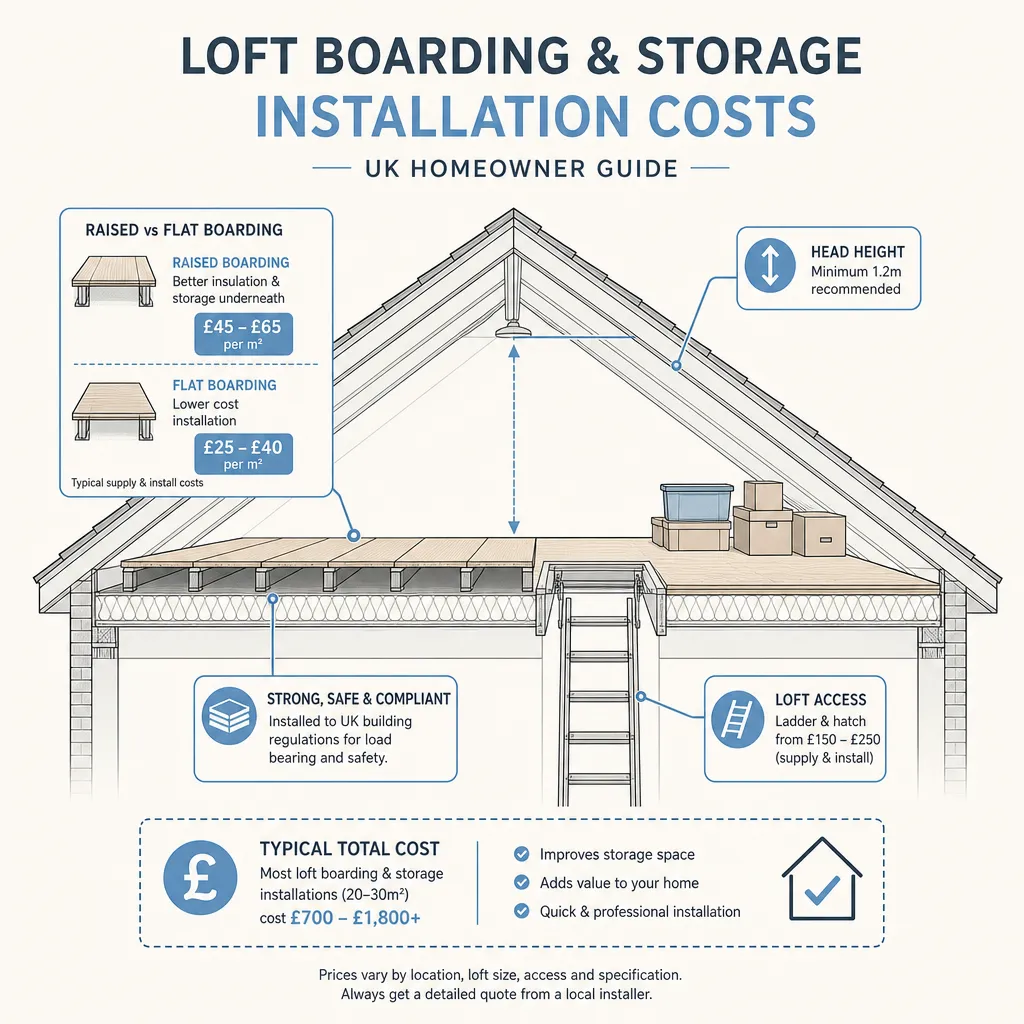
Loft Boarding and Storage Installation Costs
Basic loft boarding for an average semi-detached home costs £500–£1,500; a raised system that preserves insulation runs £800–£2,500.