Fireplace Restoration and Opening-Up Costs
By Housey · Last reviewed 7th of May 2026
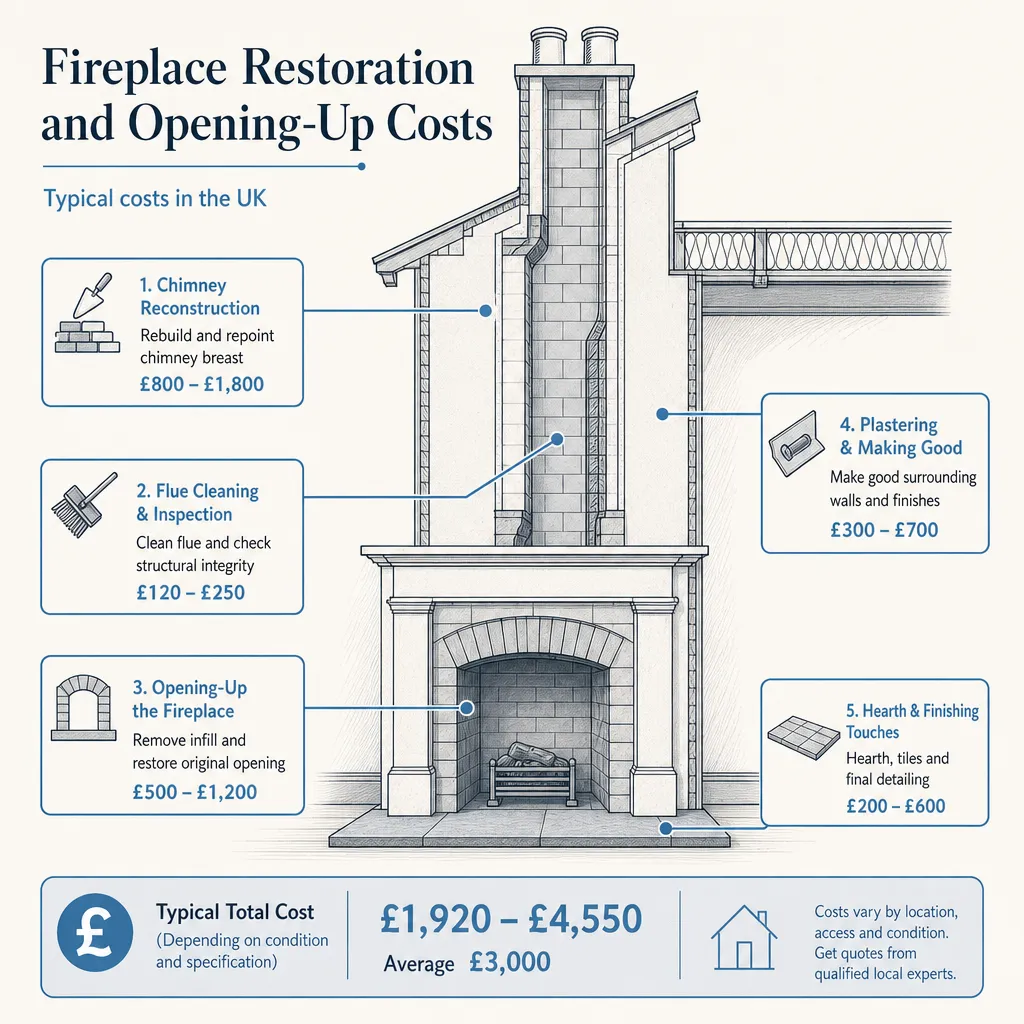
Fireplace Restoration and Opening-Up Costs
Opening up a blocked or sealed fireplace is one of the most rewarding features a UK homeowner can restore, but cost and complexity vary significantly depending on the property's age, the chimney's condition, and whether structural or fire-safety work is also needed. Many older properties — particularly Victorian and Edwardian terraces — had fireplaces blocked during the 1970s and 1980s, leaving flues in unknown condition behind plasterboard or brick panels. Understanding what work is typically involved before instructing a contractor helps you compare quotes meaningfully and avoid unexpected costs mid-project.
Key points
- Opening up a blocked fireplace falls under Building Regulations Approved Document J if any fuel-burning appliance is to be installed — not just the unblocking itself.
- Solid fuel and biomass appliances must be installed by a HETAS-registered engineer; gas fires require a Gas Safe registered engineer.
- A CCTV flue survey before work starts is strongly recommended — compromised flues pose a significant fire and carbon monoxide risk.
- If the chimney breast has been partially removed above — common in 1970s loft conversions — a structural engineer's assessment is needed before work proceeds.
- Pre-1980s properties may contain asbestos in rope seals, insulating boards, or infill panels; a UKAS-accredited asbestos survey is advisable before any disturbance.
What does opening up a fireplace involve?
Scope depends on how the fireplace was sealed:
- Plasterboard or hardboard panel: usually the simplest; the original fireback, hearth, and surround may still be intact behind it.
- Brick or blockwork infill: more involved demolition; the original opening may have been reduced in size.
- Missing surround or hearth: will need to be sourced or remade.
- Absent flue lining: pre-1960s brick flues are often unlined; a stainless-steel liner is frequently required under Approved Document J.
Before committing to any opening-up work, a CCTV flue survey is the most reliable way to assess internal condition. A standard sweep identifies obvious blockages, but a CCTV survey reveals cracked flaunching, deteriorated joints, and debris that would only otherwise emerge during use.
How much does fireplace restoration and opening up cost?
Indicative UK costs, last reviewed 2026-05-07. Always obtain at least three quotes — labour rates vary considerably by region.
Scope of work | Indicative cost range | Notes |
|---|---|---|
Removing an infill panel (basic) | £150–£500 | Labour and disposal; no structural work assumed |
CCTV flue survey | £100–£250 | Recommended before any opening-up work |
Chimney sweep and inspection | £60–£120 | Before first use after opening up |
Flexible stainless-steel flue liner (installed) | £800–£2,000 | Depends on flue height and diameter |
Period cast-iron surround (reclaimed, installed) | £500–£2,500 | Wide variation by pattern and source |
Victorian or Edwardian tiled surround restoration | £400–£1,500 | Cleaning, re-grouting, crack repair |
Full opening-up and restoration (mid-range scope) | £2,000–£5,000 | Includes liner, surround, hearth, and sweep |
Structural lintel replacement or chimney breast remediation | £1,500–£6,000+ | Requires structural engineer assessment |
Indicative UK costs, last reviewed 2026-05-07. Figures are for general guidance only; quotes vary by region, property type, and condition.
The largest single cost variable is flue condition. A compromised or unlined flue can add £800–£2,000 for relining alone. Asbestos-containing materials around the opening will add survey and remediation costs that vary by extent and type.
Building regulations compliance for appliance installation is generally handled through the HETAS or Gas Safe competent person scheme, avoiding the need for a separate building control application — but only when a registered installer carries out the work.
Homeowner checklist: before opening up a fireplace
Red flags: when to pause before proceeding
- The chimney breast appears to have been cut away, or the stack is absent above roof level.
- Visible cracks in the breast or adjacent wall near the opening.
- Damp staining on the breast, the ceiling above, or the flank wall.
- The flue survey reveals collapsed sections or evidence of a previous chimney fire.
- Any material around the opening resembles grey fibrous board, vermiculite, or rope seal with a fibrous texture — potential asbestos indicators.
- The property is listed or in a conservation area and you have not yet checked with the local planning authority.
Important limitations
This article provides general information about fireplace restoration and opening-up costs in the UK. It is not a substitute for a professional survey, structural assessment, or fire-safety inspection of your specific property. Costs, regulatory requirements, and structural risks vary considerably by property age, construction, and intended use. Seek qualified professional advice before starting any work.
What to ask a qualified professional
- Is the chimney breast structurally continuous from ground level to the roof, and has any section been removed above the opening?
- What does the CCTV survey show about flue condition, joint integrity, and cross-sectional area?
- Is the flue lined? If not, is relining required for my intended use under Approved Document J?
- Are there signs of asbestos in the infill, rope seals, or boards around the opening?
- Which elements fall under the HETAS or Gas Safe competent person scheme, and which require a separate building control notification?
- Can you provide a HETAS or Gas Safe certificate on completion?
When to get professional help
Always use a qualified professional for:
- Any structural work on a chimney breast, including assessing whether support has been removed above.
- Flue lining installation, which must meet Part J requirements.
- Any suspected asbestos disturbance — work must comply with the Control of Asbestos Regulations 2012.
- Gas fire installation — always use a Gas Safe registered engineer.
- External alterations on listed buildings or in conservation areas — consult the local planning authority first.
How Housey can help
If your fireplace project forms part of a wider renovation — chimney breast remediation, masonry repair, or room reconfiguration — an experienced building contractor can coordinate the structural, finishing, and compliance elements. You can request quotes from extension builders and renovation contractors through Housey to compare costs and credentials.
Frequently asked questions
Do I need building regulations approval to open up a fireplace?
If you are removing a non-structural infill for decorative use only and not installing an appliance, building regulations may not apply. However, installing a solid fuel, biomass, or gas appliance requires compliance with Approved Document J. Using a HETAS or Gas Safe registered installer allows the work to be self-certified without a separate building control application. Check with your local building control body if you are unsure.
Can I open up a fireplace myself?
Removing a decorative infill panel is relatively straightforward, but the flue condition must be assessed professionally before use. You must not install a fuel-burning appliance yourself unless you hold the relevant competent person registration — HETAS for solid fuel or Gas Safe for gas. Building regulations apply to all appliance installations, whether the contractor is registered or not.
How do I know if my fireplace is safe to use after opening up?
A CCTV flue survey followed by a sweep by a member of the National Association of Chimney Sweeps (NACS) will confirm the flue is clear and structurally sound. Fit a carbon monoxide alarm in any room containing a solid fuel or gas appliance, in line with HSE guidance on carbon monoxide safety.
Is fireplace restoration worth the cost?
Period fireplaces are a desirable feature in UK homes, particularly in Victorian and Edwardian properties, and are generally viewed positively by estate agents. Whether restoration represents good financial value depends on the property and extent of work. Most homeowners restore a fireplace primarily for enjoyment and character rather than as a calculated resale investment.
Does the chimney breast need to be intact for a wood-burning stove?
Yes. A stove must connect to a structurally sound flue with adequate draw. If the breast has been removed above the opening at any level, flue continuity may be compromised. A structural engineer and HETAS surveyor should both assess the arrangement before installation proceeds to ensure safety and compliance with Approved Document J.
Sources and further reading
- Building Regulations Approved Document J: Combustion Appliances and Fuel Storage Systems — GOV.UK
- HETAS: Approved Competent Person Scheme for Solid Fuel and Biomass — HETAS
- Gas Safe Register: Find a Registered Engineer — Gas Safe Register
- HSE: Control of Asbestos Regulations 2012 — Health and Safety Executive
- National Association of Chimney Sweeps — NACS
Useful next reads
 Improvement & Build
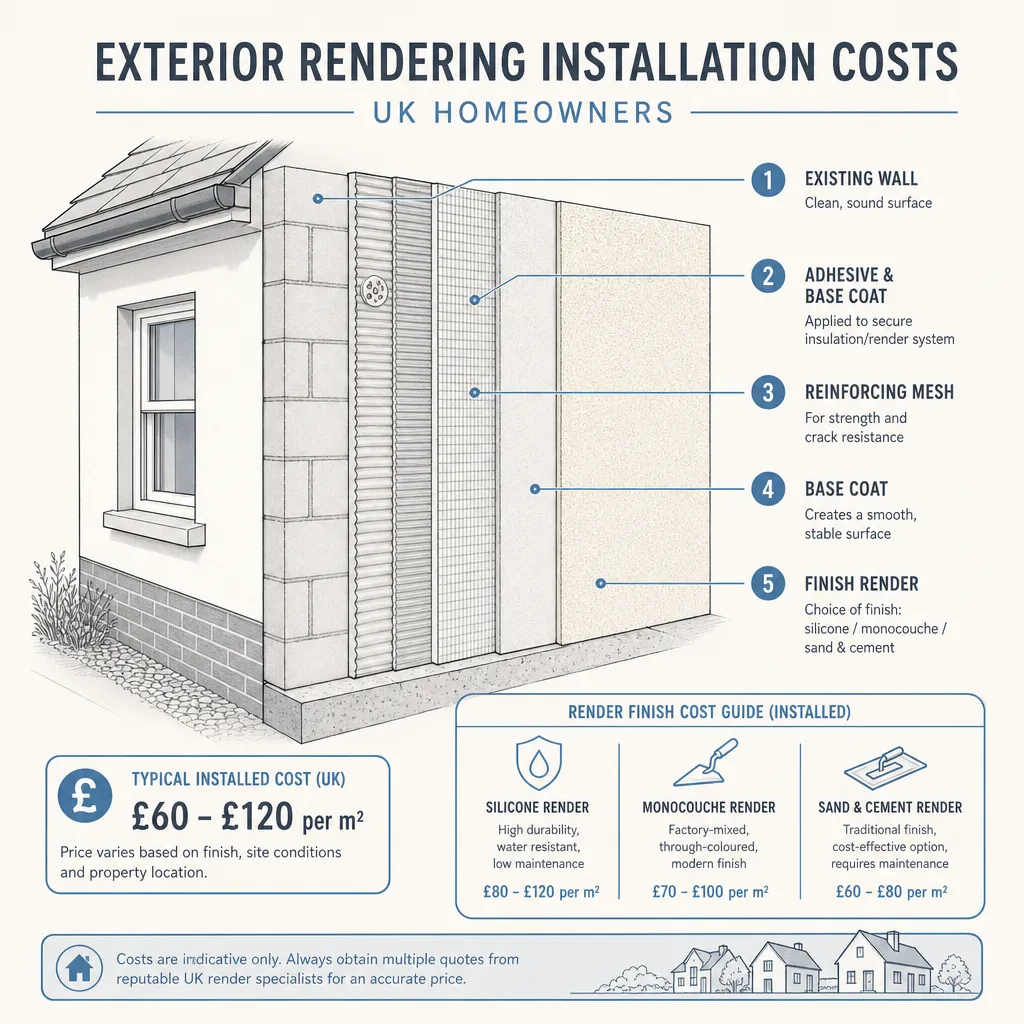
Exterior Rendering Installation Costs
Exterior rendering in the UK typically costs £20–£60 per square metre for standard render systems, or £80–£150 per square metre for External Wall Insulation with a render finish.
 Improvement & Build
Designing an outdoor kitchen for entertaining and garden living
An outdoor kitchen in a UK garden needs a stable, level base — typically a concrete slab or quality paving — with weather-rated materials such as stainless steel grade 316 or frost-rated porcelain.
 Improvement & Build
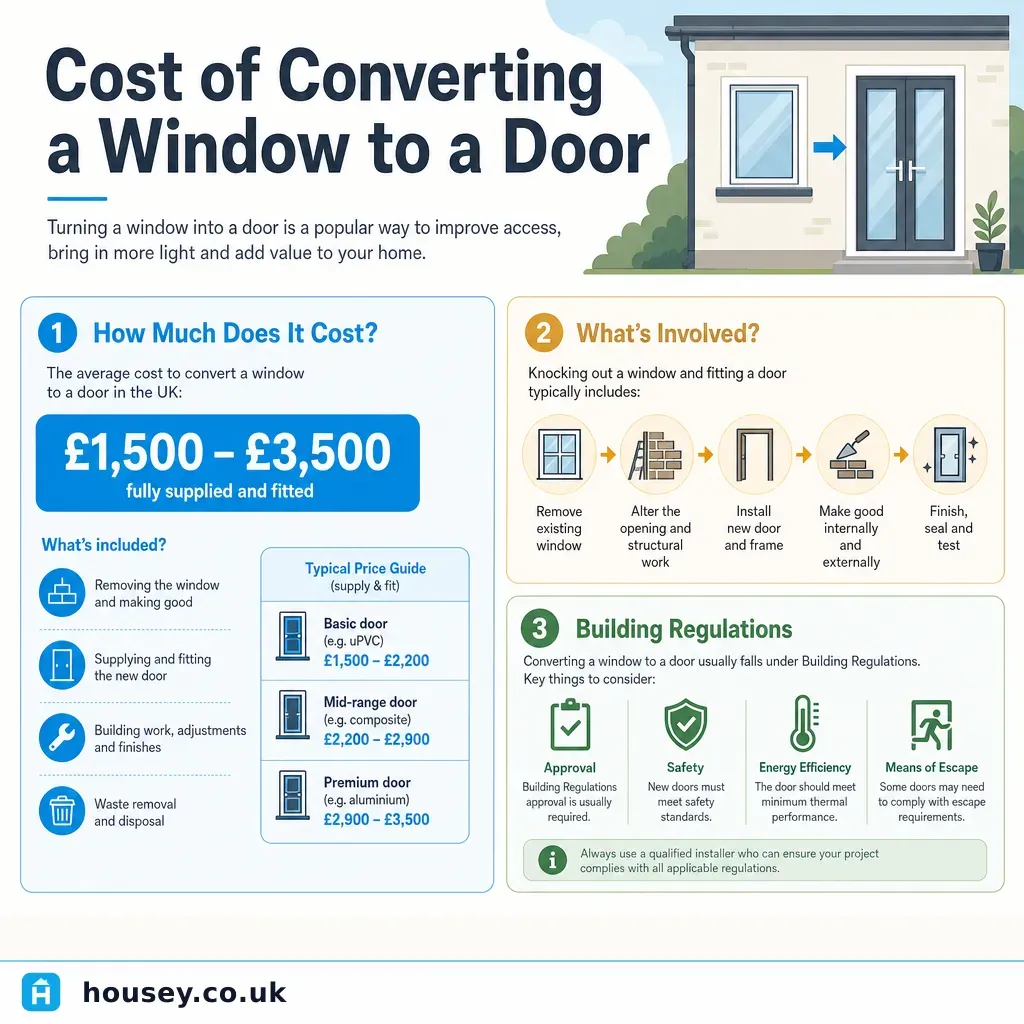
Cost of converting a window to a door
Converting a window to a door in the UK typically costs £1,500–£5,000 or more, depending on wall construction (cavity, solid, or timber frame), the type of door fitted, and whether a new or enlarged lintel is required.
 Improvement & Build
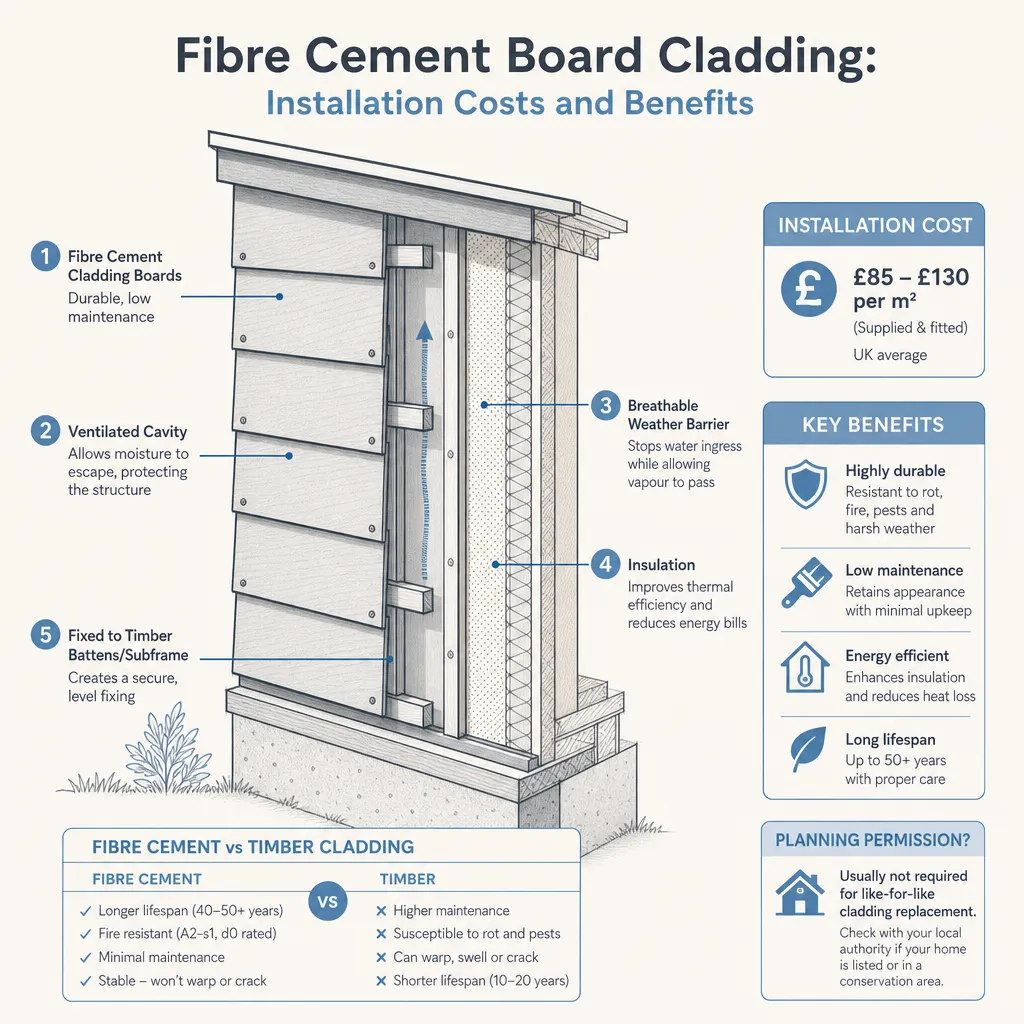
Fibre Cement Board Cladding: Installation Costs and Benefits
Fibre cement board cladding typically costs £80–£180 per m² installed in the UK, including boards, battens, breather membrane, and labour.
 Improvement & Build
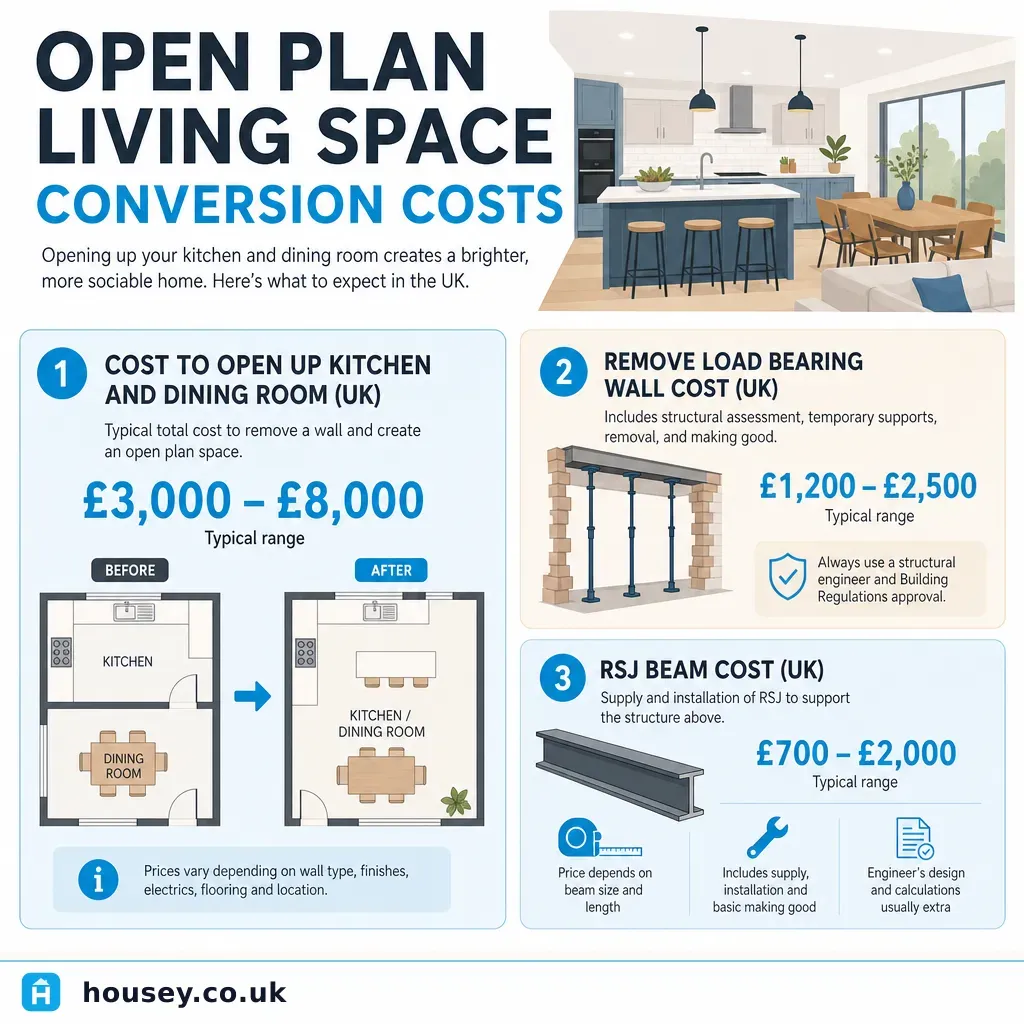
Open Plan Living Space Conversion Costs
Opening up a living space in the UK typically costs £3,000–£15,000+ depending on whether walls are load-bearing, the beam specification required, and the extent of remodelling.