Fireplace Types: Comparing Styles, Efficiency, and Installation Options
By Housey · Last reviewed 17th of May 2026
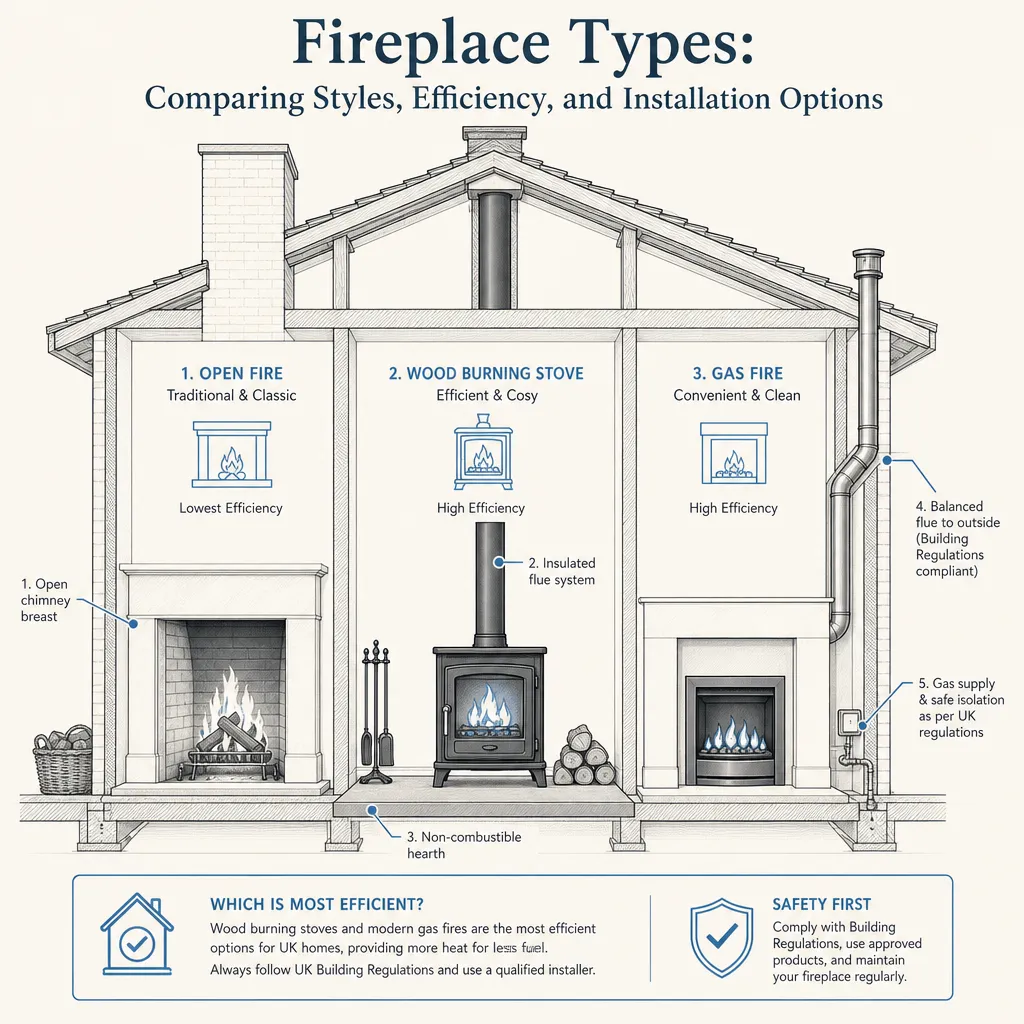
Fireplace Types: Comparing Styles, Efficiency, and Installation Options
Choosing a fireplace is rarely a purely aesthetic decision in a UK home. Whether you are refurbishing a Victorian terrace, adding a focal point to a 1930s semi, or fitting supplementary heating in a newer property, the type of appliance you choose directly affects building compliance, installation cost, running efficiency, and ongoing maintenance obligations. Building Regulations, smoke control area restrictions, and appliance certification requirements all shape which options are practical for your specific situation.
Key points
- Open fires are approximately 25–35% efficient; HETAS-certified wood-burning stoves typically achieve 65–80%+ net efficiency under EN 13240 test conditions.
- Gas fires must be installed by a Gas Safe registered engineer — this is a legal requirement under the Gas Safety (Installation and Use) Regulations 1998, not merely best practice.
- Smoke control areas (designated under the Clean Air Act 1993 and Environment Act 1995) restrict which fuels may be burned; only DEFRA-listed Exempt Appliances or approved fuels are permitted within them.
- Building Regulations Approved Document J (combustion appliances and fuel storage) applies to the installation of any solid-fuel, oil, or gas appliance in England and Wales.
- Ecodesign 2022 regulations set minimum efficiency and particulate emission thresholds for solid fuel-burning appliances sold in the UK from January 2022 onwards.
Comparing fireplace types at a glance
Fireplace type | Typical efficiency | Fuel | Installation complexity | Key compliance requirement |
|---|---|---|---|---|
Open fire (masonry) | 25–35% | Solid fuel or wood | Moderate–high | Building Regs Part J; smoke control area rules |
Wood-burning stove | 65–80%+ | Seasoned wood (≤20% moisture) | Moderate | HETAS notification or building control; Ecodesign 2022 |
Multi-fuel stove | 65–80%+ | Wood, smokeless coal, approved fuels | Moderate | As above; DEFRA-Exempt status needed in smoke control areas |
Gas fire (inset or freestanding) | 70–90%+ (balanced flue) | Natural gas or LPG | Requires Gas Safe engineer | Gas Safe installation; Building Regs Part J |
Electric fire | ~100% at point of use | Electricity | Low | Standard electrical regulations; no flue needed |
Bioethanol fire | Up to 100% (low output) | Bioethanol fuel | Low–moderate | No flue required; ventilation guidance applies |
Efficiency figures are indicative under test conditions. Actual performance varies with installation quality, fuel moisture content, flue condition, and maintenance frequency.
Open fireplaces
An open masonry fireplace remains the most traditional choice in older UK stock. Most Victorian and Edwardian properties were built with them, though many have since been blocked or have deteriorating flue liners. Reopening a blocked fireplace requires a chimney inspection and, usually, a professional sweep and structural assessment before use.
Efficiency is typically between 25% and 35%: most of the combustion energy travels up the chimney rather than heating the room. In a smoke control area, burning ordinary wood or house coal in an open fire is prohibited unless your local authority has specifically exempted the appliance. You can check your postcode status through GOV.UK guidance on smoke control areas or your local council website.
Wood-burning and multi-fuel stoves
HETAS-certified stoves are considerably more efficient than open fires, typically achieving 65–80% net efficiency. Since January 2022, all solid fuel appliances sold in the UK must meet Ecodesign 2022 emission and efficiency requirements — look for the Ecodesign-ready label when purchasing.
A wood-burning stove burns only seasoned or kiln-dried wood with a moisture content of 20% or less by weight, as recommended by the Ready to Burn scheme. Multi-fuel stoves can also burn smokeless coal or DEFRA-approved solid fuels.
Installation typically requires:
- A twin-wall insulated liner fitted inside the existing chimney, or a purpose-built metal chimney system if no flue is present.
- A hearth complying with dimensions in Approved Document J — at least 840mm wide × 840mm deep for most freestanding stoves.
- Clearances to combustible materials as specified in the appliance manufacturer's instructions.
- Notification to your local building control authority, or use of a HETAS-registered engineer who can self-certify under the Competent Persons Scheme.
In a smoke control area, the stove must appear on the DEFRA list of Exempt Appliances and be operated in accordance with its exemption conditions.
Gas fires
Gas fires — whether inset, freestanding, or built into an existing inglenook — offer higher efficiency than open fires and eliminate solid fuel management. Balanced-flue and power-flue models achieve efficiencies of 70–90%+ by drawing combustion air directly from outside the building rather than from the room.
All gas fire installations must be carried out by a Gas Safe registered engineer. Working on gas appliances without appropriate Gas Safe registration is a criminal offence under the Gas Safety (Installation and Use) Regulations 1998. The engineer will issue a Building Regulations compliance certificate on completion.
Fuel options include natural gas (mains supply) and LPG for off-grid properties. Running costs depend on the current gas tariff, appliance output rating, and usage pattern.
Electric fires
Electric fires convert electricity to heat with near-100% efficiency at the point of use. No flue or specialist ventilation is required, making them the simplest option to install — most can be fitted without a formal building control notification, subject to the specific electrical circuit involved.
Electric fires are particularly practical in flats where chimney access is absent, or in rental properties where solid fuel management is impractical. Flame-effect models have improved considerably and can provide a convincing visual focal point without combustion products or ongoing fuel delivery costs.
Running costs per kilowatt-hour are higher than mains gas in most current UK tariff scenarios, though this gap narrows if the home uses heat pump heating or benefits from solar generation.
Bioethanol fires
Bioethanol fires burn denatured alcohol and produce water vapour, CO₂, and heat — no flue is required. They are well suited to new-build homes or conversions without chimneys. Combustion efficiency is high, but heat output per burner is modest (typically 1–3 kW), making bioethanol a supplementary rather than primary heat source.
Adequate ventilation is essential when using a bioethanol fire. Follow the manufacturer's guidance on minimum room volumes and ventilation requirements carefully. Store fuel securely, away from ignition sources and out of reach of children.
Which fireplace type suits your home?
- Choose an open fire if your property has an existing masonry chimney in good condition, traditional aesthetics are a priority, and you are outside a smoke control area.
- Choose a wood-burning stove if you want significantly better efficiency than an open fire, have an existing or suitable chimney, and can reliably source dry wood.
- Choose a multi-fuel stove if you want flexibility to burn smokeless fuel as well as wood — particularly useful in rural areas where approved solid fuels are accessible.
- Choose a gas fire if you have mains gas or LPG, want low-maintenance high-efficiency heating, and prefer to avoid solid fuel handling entirely.
- Choose an electric fire if you have no chimney, live in a flat, or want the simplest possible installation with minimal regulatory requirements.
- Choose a bioethanol fire if you want a real flame effect without any flue provision and supplementary heat output is sufficient for your needs.
- Consult a HETAS or Gas Safe engineer if your chimney condition is unknown, your property is listed, or you are unsure whether your postcode falls in a smoke control area.
What installation typically involves
Installation of any combustion appliance in England and Wales is notifiable work under Building Regulations Part J. There are two compliance routes:
- Competent Person Scheme: use a HETAS-registered installer (solid fuel) or Gas Safe-registered engineer (gas) who self-certifies the work and notifies the local authority on your behalf.
- Building control notification: notify your local authority building control before work begins and arrange an inspection at completion.
A chimney sweep and, for older properties, a flue camera survey are advisable before committing to any solid-fuel or gas appliance installation. Carbon monoxide alarms complying with BS EN 50291 should be fitted near any combustion appliance — this is a legal requirement in rented homes in England and best practice in all properties.
When to get professional help
Always use a Gas Safe registered engineer for gas appliance installation — the law requires it. For solid fuel appliances, a HETAS-registered installer is strongly recommended. Seek additional professional assessment if:
- A chimney inspection reveals cracked liners, blocked sections, or evidence of a previous chimney fire.
- The property is listed or in a conservation area, where additional consent may be required before installation.
- You suspect an existing gas fire or back boiler has not been serviced recently — combustion problems and carbon monoxide risks can develop without obvious symptoms.
- The installation room has limited natural ventilation, which may require a specialist air supply assessment.
Important limitations
This article provides general information about fireplace types available in the UK. Regulations, compliance routes, smoke control area boundaries, chimney requirements, and listed building restrictions vary by property and local authority. The suitability of any appliance depends on the specific condition of your chimney, flue, surrounding construction, and your local rules.
Do not attempt gas appliance work yourself — it is illegal and dangerous without Gas Safe registration. Do not disturb an existing flue or chimney structure without professional assessment. If you have any concern about carbon monoxide safety, ensure working CO alarms are fitted and arrange a Gas Safe engineer's inspection without delay.
What to ask a qualified professional
Before instructing a fireplace or stove installer, ask:
- Are you HETAS-registered (solid fuel) or Gas Safe registered (gas)? May I see your registration card and confirm it is current?
- Will this installation be self-certified under the Competent Persons Scheme, or do I need to notify building control separately?
- Does my postcode fall within a smoke control area? If so, is this appliance on the DEFRA list of Exempt Appliances?
- What is the condition of my existing flue, and will a liner or a new chimney system be required?
- What are the required hearth dimensions and clearances to combustible materials for this appliance?
- Will you supply and fit a carbon monoxide alarm and confirm the smoke detection provision meets current requirements?
- What ongoing servicing and chimney sweeping schedule does this installation require?
How Housey can help
Housey connects UK homeowners with qualified tradespeople for home improvement and heating projects. If you are planning a fireplace or stove installation, we can help you find vetted local installers with the right accreditations — whether you need a HETAS-registered solid fuel engineer or a Gas Safe-registered fitter for a gas fire.
Frequently asked questions
Do I need planning permission to install a fireplace or stove in a UK home?
In most cases, no — installing a stove or fireplace is covered by Building Regulations rather than planning permission, and the Competent Persons Scheme allows registered installers to self-certify. However, if your home is listed or in a conservation area, you may need listed building consent or prior approval. Check with your local planning authority before starting work.
What is the most efficient type of fireplace for a UK home?
Modern HETAS-certified wood-burning and multi-fuel stoves typically achieve the highest efficiency among solid-fuel appliances (65–80%+ under test conditions). Balanced-flue gas fires also achieve 70–90%+. Open fires are the least efficient option, returning only around 25–35% of the fuel's energy into the room rather than up the chimney.
Can I use a wood-burning stove in a smoke control area?
Yes, but only if the appliance appears on the DEFRA list of Exempt Appliances and is operated in accordance with its exemption conditions. Burning unapproved fuels in a smoke control area is a criminal offence under the Clean Air Act 1993. You can check whether your postcode falls in a smoke control area through your local council.
What qualifications should a fireplace installer hold in the UK?
For solid fuel appliances, look for HETAS registration. For gas appliances, the installer must hold Gas Safe registration — always ask for their Gas Safe ID card and verify their registration at GasSafeRegister.co.uk. Any associated electrical work should be carried out by a Part P-competent electrician. Unregistered gas appliance work is illegal.
Sources and further reading
- Building Regulations Approved Document J: combustion appliances and fuel storage — GOV.UK
- HETAS: the official body for biomass and solid fuel heating — HETAS
- Gas Safe Register: find and verify registered engineers — Gas Safe Register
- DEFRA smoke control areas and exempt appliances — DEFRA / GOV.UK
- Ready to Burn: approved dry wood and solid fuel scheme — Wood Heat Association / HETAS
Useful next reads
 Improvement & Build
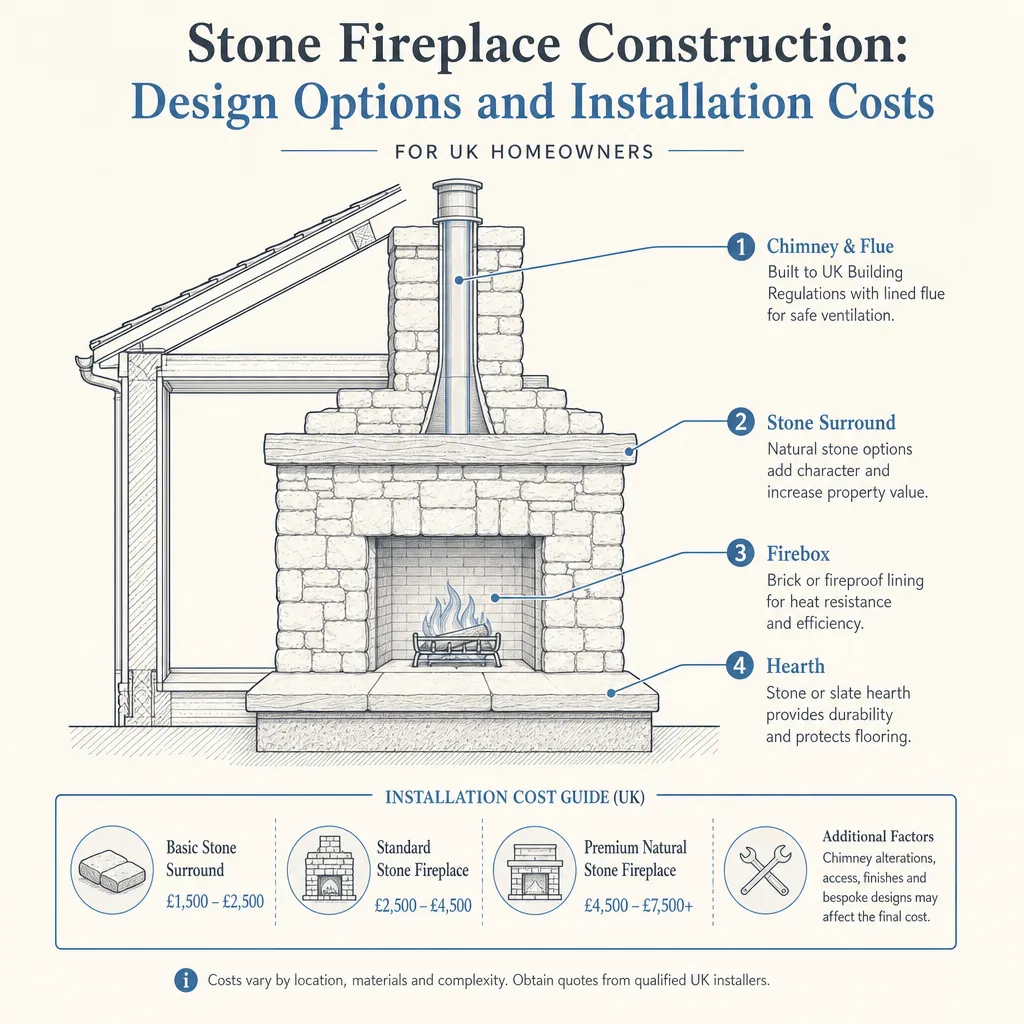
Stone Fireplace Construction: Design Options and Installation Costs
A stone fireplace combines a decorative stone surround with a compliant hearth and flue.
 Improvement & Build
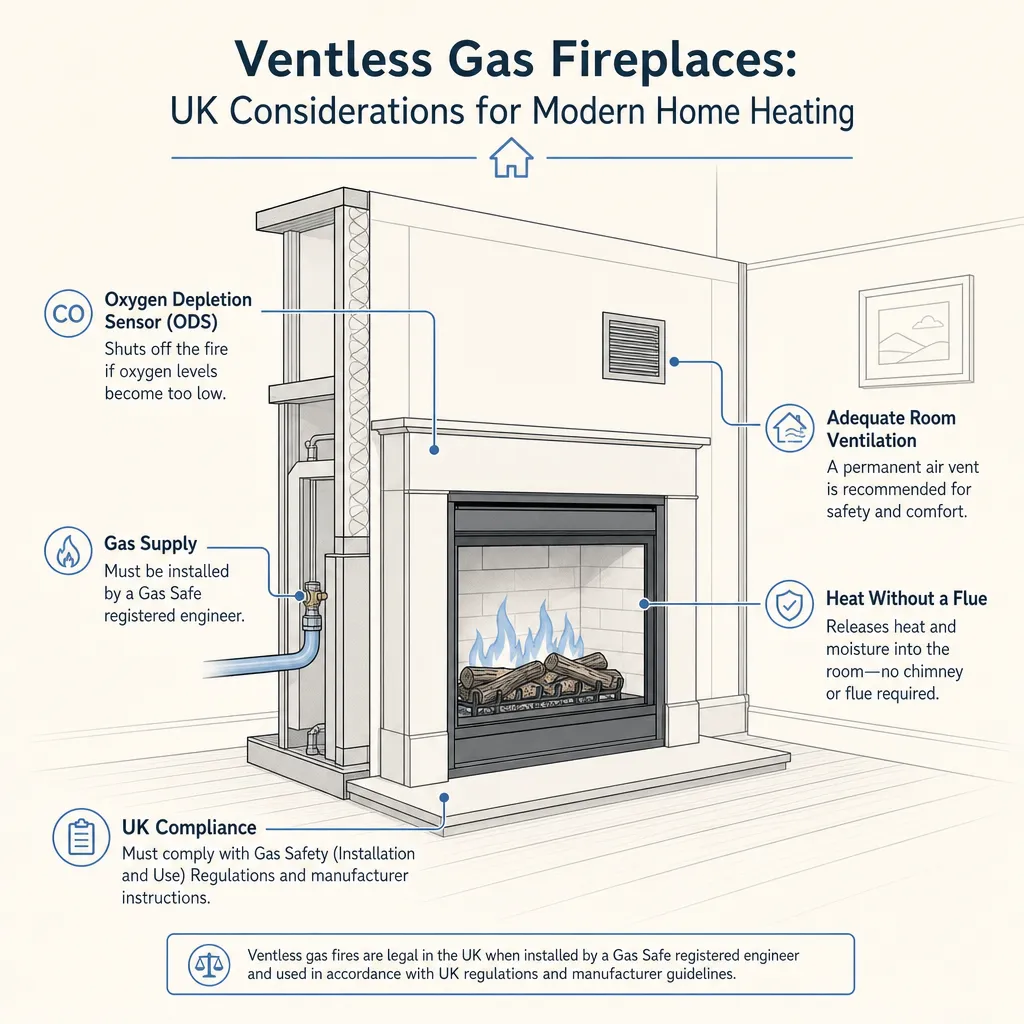
Ventless Gas Fireplaces: UK Considerations for Modern Home Heating
In the UK, ventless gas fires are known as flueless gas fires and are permitted only in specific circumstances under Building Regulations Approved Document J and the Gas Safety Regulations 1998.
 Improvement & Build
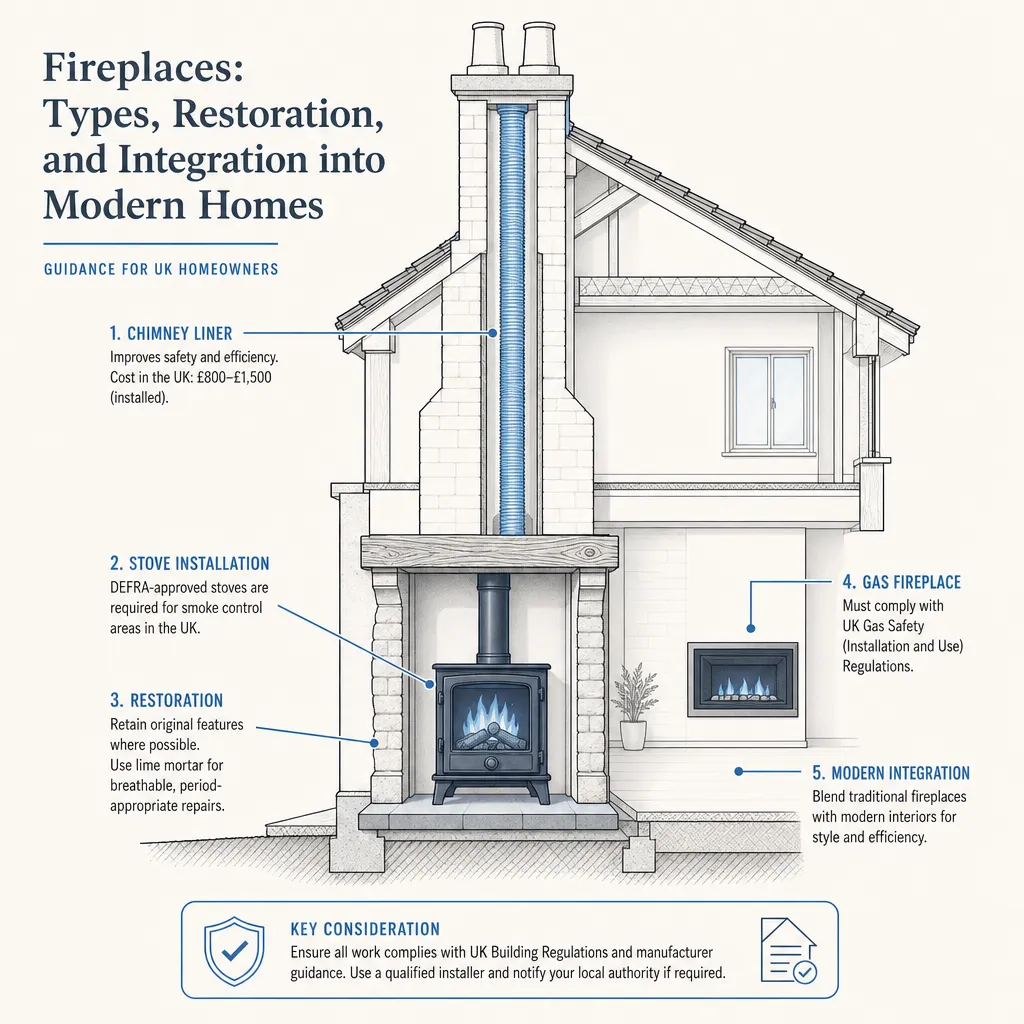
Fireplaces: Types, Restoration, and Integration into Modern Homes
UK fireplaces come in four main types: open fires, wood-burning stoves, gas fires, and electric fires.
 Improvement & Build
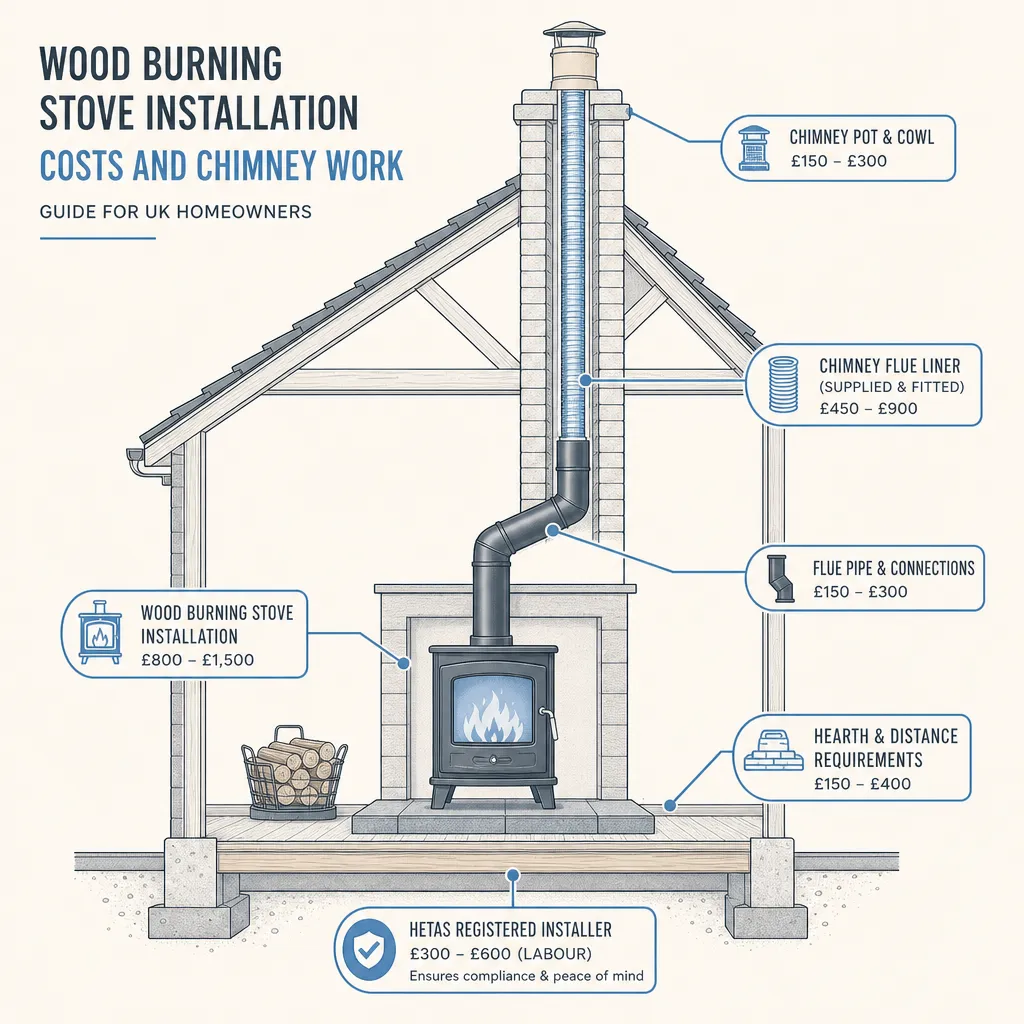
Wood Burning Stove Installation Costs and Chimney Work
Installing a wood burning stove in the UK typically costs £1,200–£3,500 all-in for an existing chimney — covering the stove, flexible liner, installation, and HETAS certificate — or £2,500–£6,000 or more where a new twin-wall flue is required.
 Improvement & Build
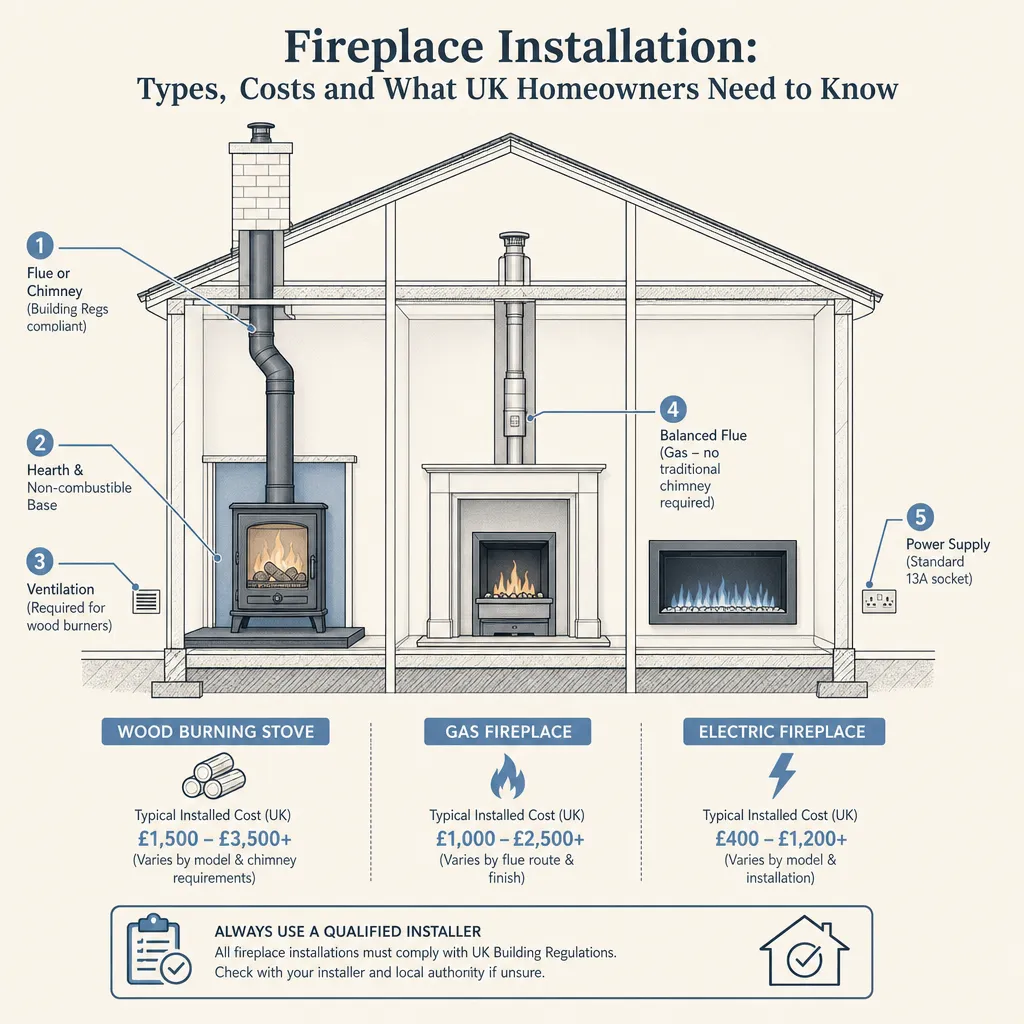
Fireplace Installation: Types, Costs and What UK Homeowners Need to Know
Fireplace installation in the UK is governed by Building Regulations Part J.