Fireplaces: Types, Restoration, and Integration into Modern Homes
By Housey · Last reviewed 19th of May 2026
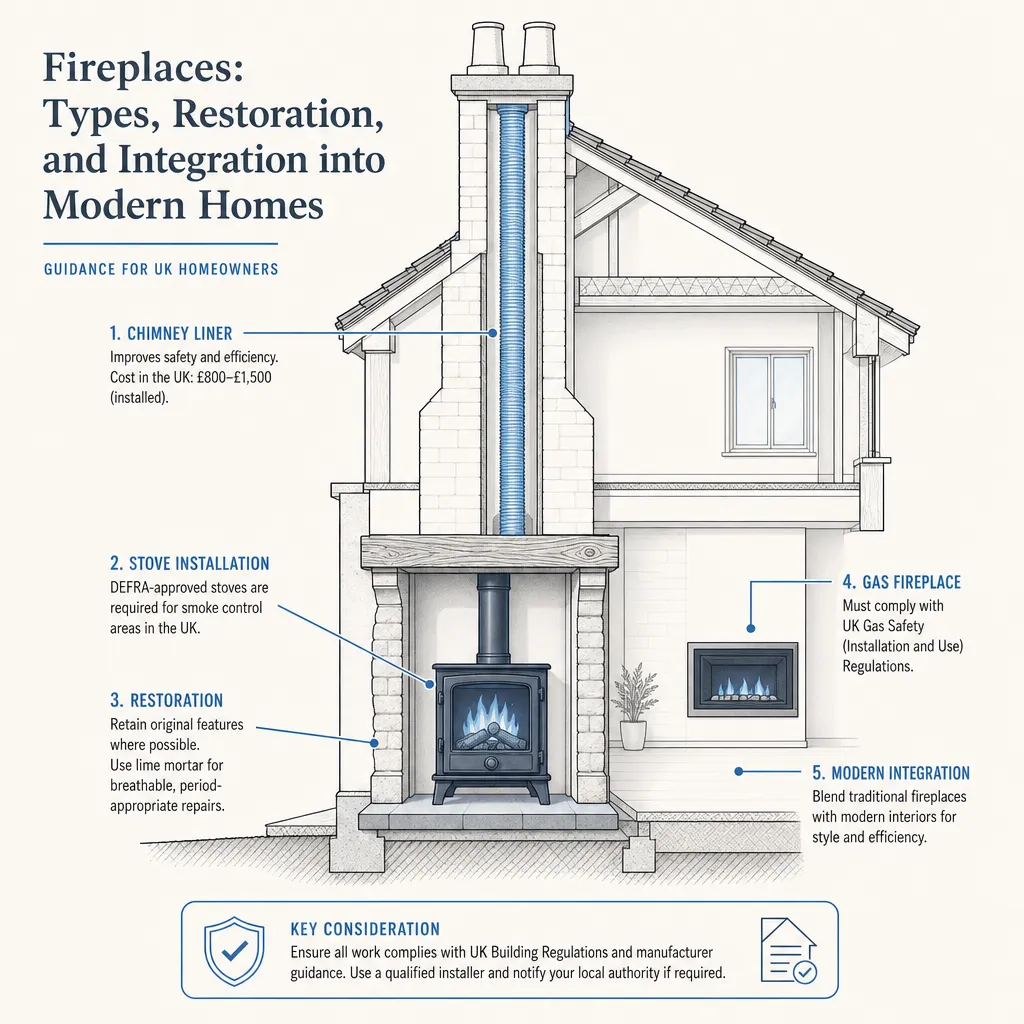
Fireplaces: Types, Restoration, and Integration into Modern Homes
Whether you are restoring a boarded-up Victorian cast-iron surround, considering a wood-burning stove for a 1930s semi, or researching gas fire options for a contemporary extension, the range of fireplace types and their regulatory requirements can feel confusing. The right choice depends on your property's age, chimney condition, local fuel restrictions, and the relevant rules that govern installation — some of which are legal requirements rather than recommendations.
Key points
- Gas fireplace and stove installation must be carried out by a Gas Safe registered engineer under the Gas Safety (Installation and Use) Regulations 1998.
- Solid fuel appliance installation should be completed by a HETAS-registered installer, who can self-certify the work to Building Control under Part J of the Building Regulations.
- Approved Document J (Combustion Appliances and Fuel Storage Systems) sets minimum requirements for hearth dimensions, flue sizes, and air supply for all fuel-burning appliances.
- A carbon monoxide (CO) alarm is legally required in any room containing a solid fuel appliance in England under the Smoke and Carbon Monoxide Alarm (Amendment) Regulations 2022.
- Pre-1965 chimney flues are often unlined and typically require a new stainless-steel liner before any stove installation — without one, combustion gases can permeate the surrounding brickwork.
Types of fireplace available in UK homes
Open fires
Traditional open fires burn solid fuel — wood logs, coal, or smokeless fuel — directly in an open grate. They retain period character and remain popular in rural and semi-rural properties, but are among the least thermally efficient options, typically converting only 20–30% of fuel energy into useful heat.
In a Smoke Control Area — which covers most UK urban areas including Greater London, Birmingham, Manchester, and Leeds — you must burn only authorised fuels or use a DEFRA-exempt appliance. Burning wet wood (moisture content above 20%) has been restricted in England since February 2021 under the Air Quality (Domestic Solid Fuels Standards) Regulations 2020.
Wood-burning and multi-fuel stoves
Enclosed stoves achieve typical efficiencies of 70–85%, making them considerably more effective than an open fire. Multi-fuel stoves accept both wood and smokeless solid fuels; wood-only stoves are not designed for coal or peat. From 2022, only stoves meeting the Ecodesign 2022 standard (tested to EN 13240 or EN 13229) can be sold new in the UK.
Installing a stove into an existing chimney typically requires a chimney survey and sweep; a flexible stainless-steel or twin-wall liner if the original flue is unlined or oversized; a register plate to seal the old fireplace opening; and compliance with minimum hearth dimensions and air supply requirements under Approved Document J.
Gas fires and gas stoves
Gas appliances — inset gas fires, gas log-effect stoves, and decorative fuel-effect fires — must be installed by a Gas Safe registered engineer. This is a legal requirement under the Gas Safety (Installation and Use) Regulations 1998, not a quality recommendation. Gas fires are available in balanced-flue, open-flue, and flueless configurations. Flueless gas fires are subject to strict output limits and require adequate permanent room ventilation; they are generally unsuitable for bedrooms or poorly ventilated spaces.
Electric fires
Electric fires carry no chimney requirement and the fewest regulatory restrictions. Plug-in models are generally permissible for homeowner self-installation. Hardwired electric fire installations should be carried out by a Part P-registered electrician. Running costs per kWh are typically higher than gas, but installation costs and complexity are lower and no flue works are required.
Fireplace types at a glance
Type | Typical efficiency | Key regulatory requirement | Required installer |
|---|---|---|---|
Open fire | 20–30% | Approved Document J; Smoke Control Area rules | HETAS installer or chimney specialist |
Wood-burning / multi-fuel stove | 70–85% | Ecodesign 2022; Part J; CO alarm mandatory | HETAS-registered installer |
Gas fire / gas stove | 75–90% | Gas Safety (Installation and Use) Regulations 1998; Part J | Gas Safe registered engineer |
Flueless gas fire | Up to ~100% | Strict ventilation rules; output limits apply | Gas Safe registered engineer |
Electric fire (plug-in) | 100% (all to heat) | Part P if hardwired | Qualified electrician (Part P) if hardwired |
Restoring a period fireplace
Many UK homes had original fireplaces removed or boarded up during 1960s–1980s renovations. Reinstatement can involve opening the chimney breast, sourcing a period-appropriate surround, replacing hearth materials, and arranging a flue inspection.
Before opening a blocked fireplace:
- Commission a chimney survey — typically a CCTV flue inspection or a structural sweep assessment — to confirm the flue is intact, clear of debris, and not shared unexpectedly with a neighbouring property.
- Inspect the external chimney stack for failed pointing, leaning, or missing flaunching at the pot.
- Confirm the existing hearth meets minimum dimensions under Approved Document J — generally 840 × 840 mm for most solid fuel appliances.
- If the property is listed (Grade I, II*, or II), you will need Listed Building Consent from your local planning authority before any alteration to a fireplace or chimney structure.
Period surrounds — Victorian cast-iron with ceramic tile inserts, Edwardian timber and marble, or stone — are available from architectural salvage yards. In a conservation area, confirm acceptable materials and styles with the local planning authority before purchase.
Integrating a modern stove into an older home
A contemporary Ecodesign stove can be installed into a Victorian or 1930s chimney breast, but the work requires more preparation than many homeowners anticipate.
Homeowner checklist for stove installation:
Chimney maintenance and safety
Even if a fireplace is not in regular use, an open chimney can admit damp, allow nesting birds such as jackdaws, and create unwanted draughts. Options include a chimney cap or bird guard at the pot, an inflatable chimney balloon inserted in the flue, or permanent decommissioning — which must retain ventilation to prevent condensation within the sealed flue void.
Chimney stacks on external walls of terraced and semi-detached homes are a common route for damp penetration. Repointing, flaunching repair, and replacing failed lead flashing where the stack meets the roof slope are the typical remedies. Any work at chimney-pot height should be carried out by a qualified roofer or chimney specialist.
Important limitations
This article provides general information about fireplace types, installation requirements, and restoration approaches as they apply in England. Building regulations and listed building designation requirements differ in Scotland, Wales, and Northern Ireland. Smoke Control Area boundaries are set by individual local authorities and change periodically. Nothing in this article constitutes a gas safety assessment, structural inspection, or legal certificate. A competent professional should assess your specific chimney, appliance choice, and property before any installation work begins.
When this becomes urgent
Seek professional help immediately if:
- A CO alarm sounds — evacuate the building, ventilate by opening doors and windows, and call the National Gas Emergency Service on 0800 111 999 or the emergency services.
- You notice soot staining on the fireplace surround or on adjacent walls, which may indicate flue spillage of combustion gases into the room.
- Structural cracks appear in a chimney breast, or the external stack shows signs of leaning or stepped brickwork cracking.
- Damp patches appear on chimney breast walls after wet weather, suggesting water ingress through the stack.
- A gas appliance produces an abnormal yellow or orange flame, emits an unusual smell, or behaves erratically — switch it off, ventilate, and call a Gas Safe registered engineer.
What to ask a qualified professional
Before commissioning installation or restoration work, ask:
- Is the existing chimney flue lined, and is the liner in serviceable condition?
- Does my address fall within a Smoke Control Area, and is the chosen appliance DEFRA-exempt?
- What flue liner diameter, register plate, and air supply arrangement does this installation require under Approved Document J?
- Will you self-certify to Building Control, and will I receive a HETAS commissioning certificate on completion?
- What hearth modifications, if any, are needed to meet minimum dimension requirements?
- Are there any structural concerns with the chimney breast or stack that should be addressed before installation?
How Housey can help
Housey connects UK homeowners with vetted local tradespeople for fireplace restoration, stove installation, and chimney surveys. Whether you need a HETAS-registered stove installer, a qualified chimney specialist to survey a flue before opening a blocked fireplace, or a Gas Safe engineer for a gas appliance, Housey can match you with experienced professionals in your area.
Frequently asked questions
Do I need planning permission to install a wood-burning stove?
In most cases, no — fitting a stove into an existing chimney is permitted development. However, Building Regulations approval is required, and a HETAS-registered installer can self-certify to Building Control. If your home is listed or in a conservation area, check with your local planning authority before proceeding, as additional consents may apply.
Can I install a gas fire myself?
No. Gas appliance installation is restricted by law to Gas Safe registered engineers under the Gas Safety (Installation and Use) Regulations 1998. Carrying out gas work without registration is a criminal offence and is likely to invalidate home insurance and mortgage conditions.
What does it cost to reline a chimney?
Indicative UK costs, last reviewed 2026-05-19. A flexible stainless-steel liner for a standard single-storey domestic flue typically costs £500–£1,200 installed, depending on flue length, diameter, and access difficulty. Twin-wall insulated liner systems or longer flues cost more. Obtain at least three quotes from HETAS-registered or chimney specialist contractors and ask each to confirm what is included.
How often should I have my chimney swept?
The National Association of Chimney Sweeps recommends at least once a year for wood-burning stoves and open fires in regular use, and twice yearly for heavy users. Annual sweeping is also typically required to maintain stove manufacturer warranties and home insurance coverage for solid fuel appliances.
Are open fires banned in the UK?
No. Open fires remain legal across most of the UK. However, burning wet wood and certain solid fuels is prohibited in Smoke Control Areas, which cover most large urban areas. In designated areas, only authorised smokeless fuels or DEFRA-exempt appliances may be used. Wet wood above 20% moisture content has been restricted in England since February 2021.
Sources and further reading
- Approved Document J: Combustion Appliances and Fuel Storage Systems — GOV.UK / MHCLG
- Gas Safe Register: Find a registered engineer — Gas Safe Register
- HETAS: Approved installer registration — HETAS
- Smoke and Carbon Monoxide Alarm (Amendment) Regulations 2022 — legislation.gov.uk
- Smoke Control Areas: rules for householders — GOV.UK / DEFRA
- Air Quality (Domestic Solid Fuels Standards) Regulations 2020 — legislation.gov.uk
Useful next reads
 Improvement & Build
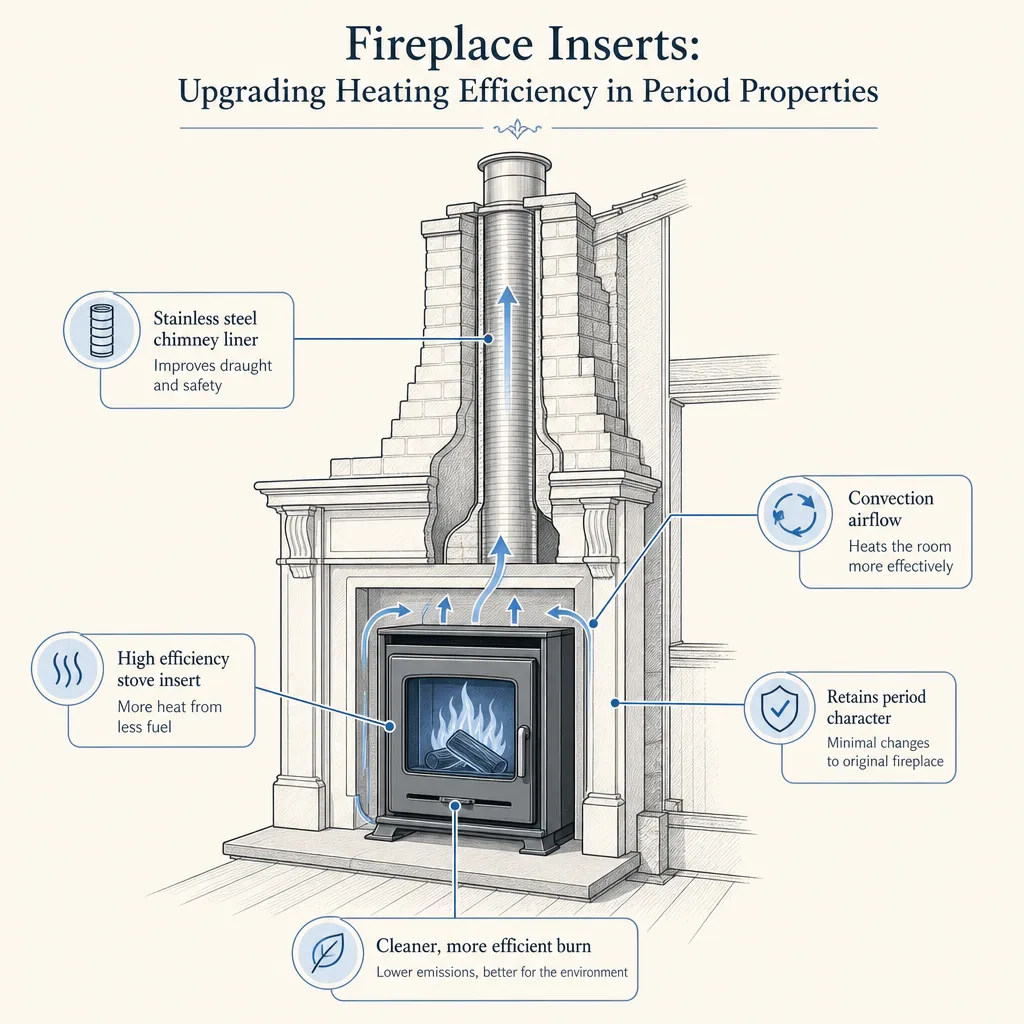
Fireplace Inserts: Upgrading Heating Efficiency in Period Properties
Fireplace inserts in period properties must comply with Building Regulations Approved Document J and, in smoke control areas, use only Defra-exempt appliances.
 Improvement & Build
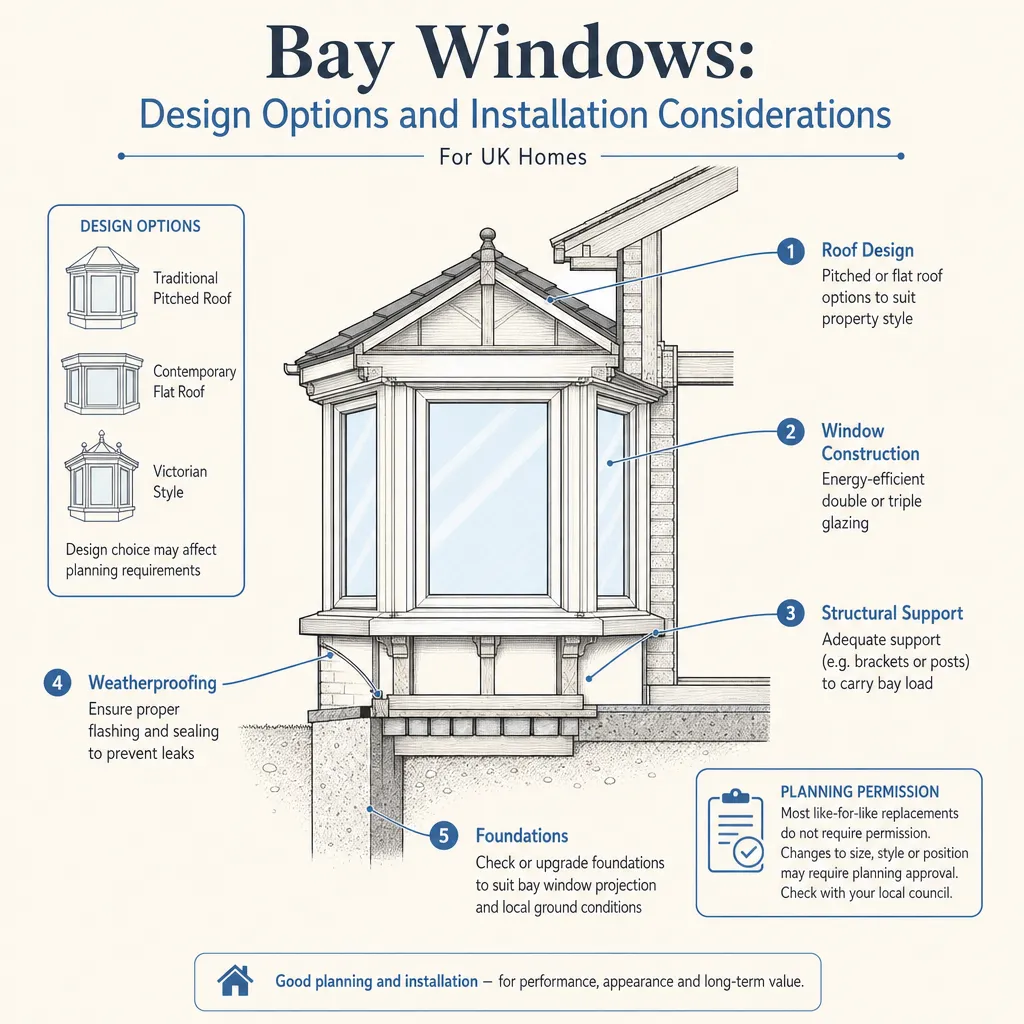
Bay Windows: Design Options and Installation Considerations
Bay windows project beyond the main wall of a house, increasing floor area and natural light.
 Improvement & Build
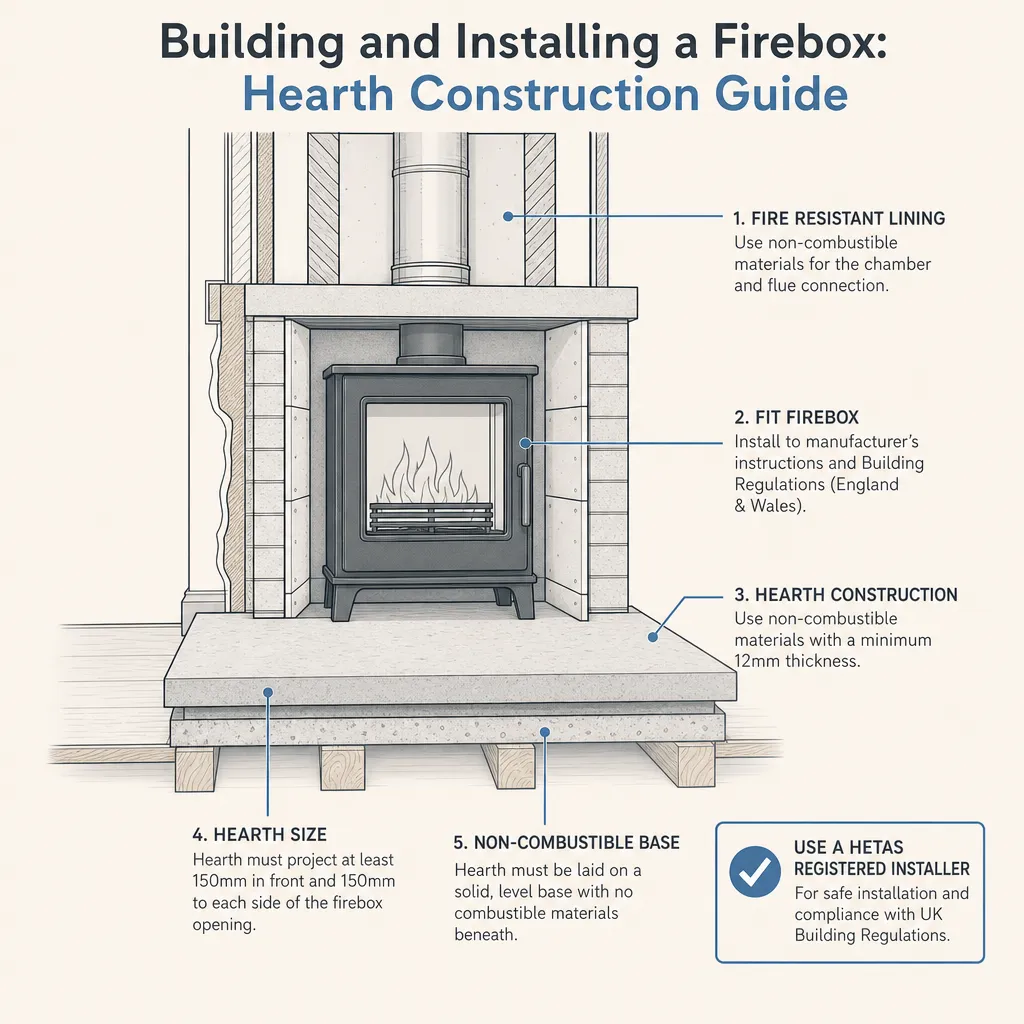
Building and Installing a Firebox: Hearth Construction Guide
In the UK, any new firebox and hearth must comply with Building Regulations Approved Document J, which sets minimum standards including a 125mm non-combustible hearth and 200mm clearance to combustibles.
 Improvement & Build
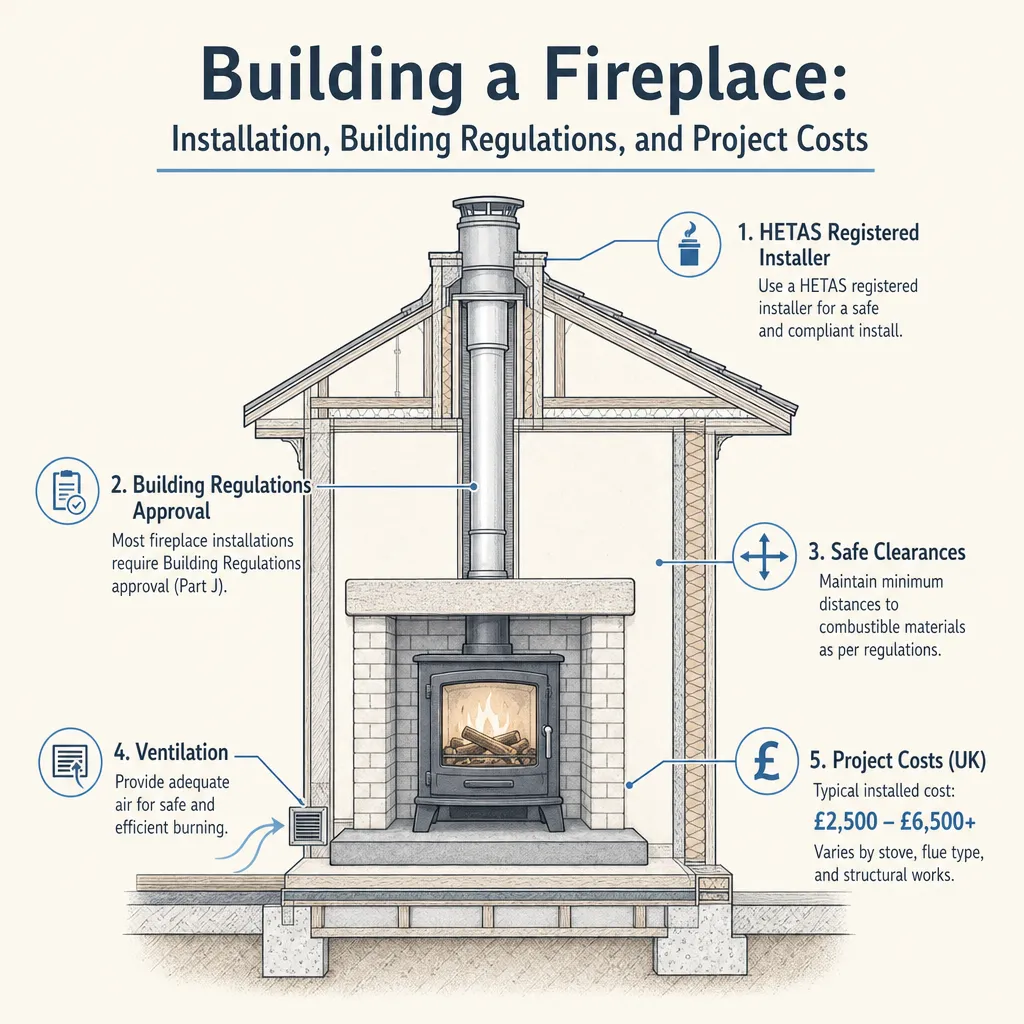
Building a Fireplace: Installation, Building Regulations, and Project Costs
Installing a fireplace or wood-burning stove in a UK home is notifiable work under Building Regulations Part J.
 Improvement & Build
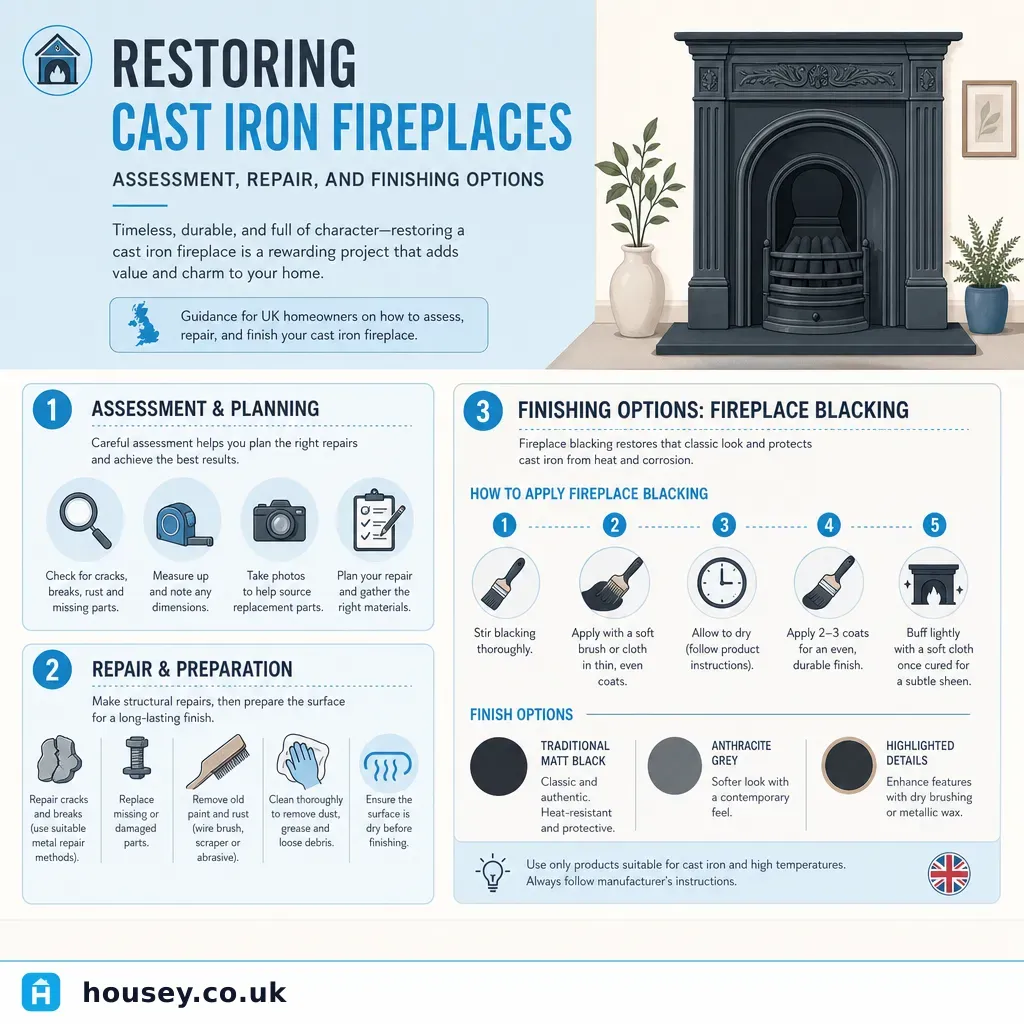
Restoring Cast Iron Fireplaces: Assessment, Repair, and Finishing Options
Restoring a cast iron fireplace involves assessing for cracks, corrosion, and missing components, treating rust, repairing joints and the fireback with fire cement, and applying specialist blacking or heat-resistant paint.