Stone Fireplace Construction: Design Options and Installation Costs
By Housey · Last reviewed 24th of May 2026
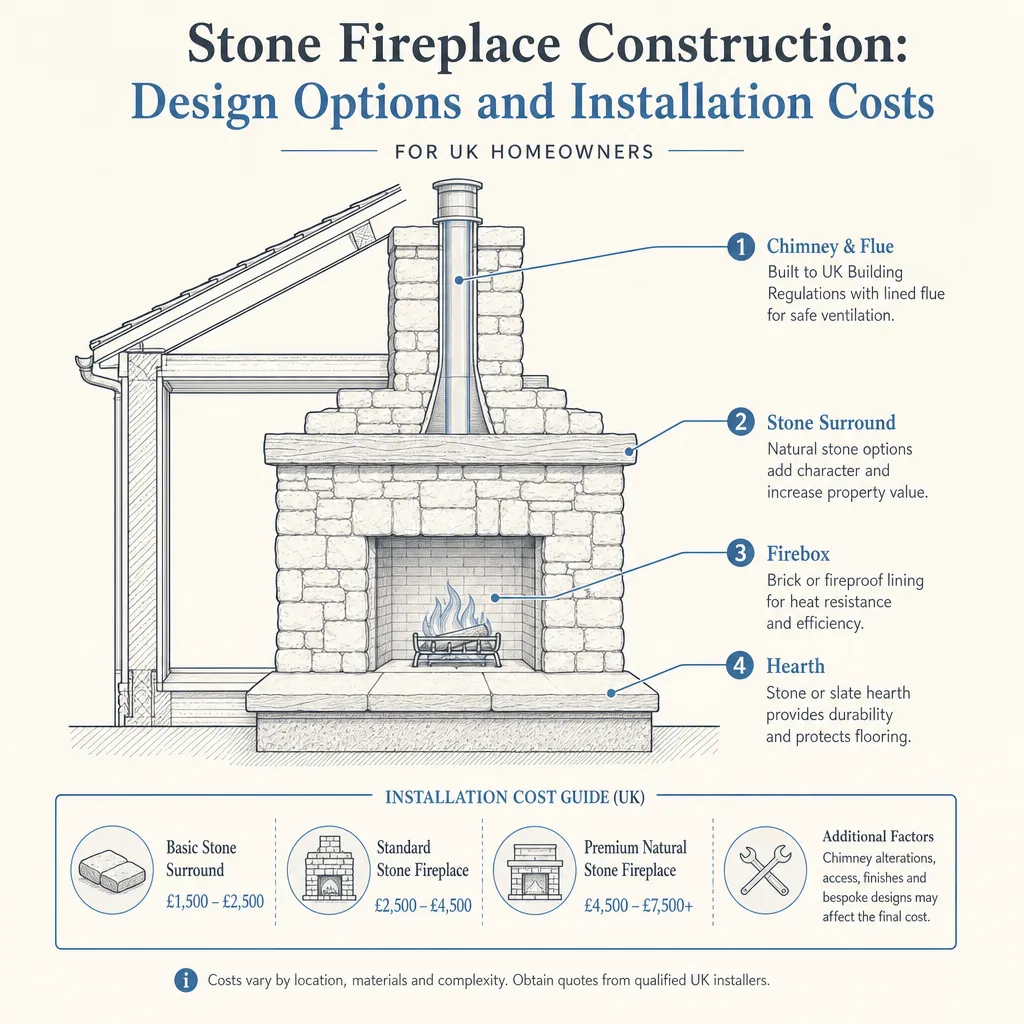
Stone Fireplace Construction: Design Options and Installation Costs
A stone fireplace is one of the more ambitious interior projects a UK homeowner can undertake — combining masonry craftsmanship, fire safety compliance, and a significant design commitment in a single installation. The decision usually arises during a whole-room renovation, when a tired existing surround is being replaced, or when a new flue opening is being formed as part of a larger build. Getting it right requires understanding both the aesthetic choices available and the regulatory framework that governs any new or altered solid-fuel or gas appliance in a UK home.
Key points
- All new and altered fireplaces used with solid fuel or gas appliances must comply with Building Regulations Approved Document J (combustion appliances and fuel storage systems).
- Installation of a gas fire within a stone surround must be carried out by a Gas Safe registered engineer — this is a legal requirement under the Gas Safety (Installation and Use) Regulations 1998.
- A new chimney liner is frequently required when opening an old flue or installing a woodburning stove; an unlined or deteriorating flue is a fire and carbon monoxide risk.
- Indicative UK costs range from approximately £1,500 for a simple surround replacement on a working chimney to £15,000 or more for a bespoke natural stone project with a new structural opening and flue liner.
- A carbon monoxide alarm compliant with BS EN 50291 is required by Building Regulations in any room with a new or replacement solid fuel or gas appliance.
Design options for stone fireplaces
Stone fireplaces divide broadly into the surround (the visible decorative frame) and the functional elements — hearth, firebox or appliance, and flue. Stone type and surround style are where most of the aesthetic and cost decisions lie.
Stone types commonly used in UK homes:
- Natural limestone: Warm, slightly porous, suits period and contemporary interiors. Popular in Victorian and Georgian property renovations.
- Natural sandstone: Earthy tones, textured finish. Often used in rural and cottage-style properties.
- Marble: High-end finish; requires sealing and careful maintenance. Historically associated with formal reception rooms.
- Granite: Very hard and heat-resistant, durable. Often used for hearth slabs rather than surrounds.
- Engineered stone (reconstituted): Cast from stone aggregate and resin. More uniform appearance, lower cost than natural stone.
- Cast stone: Reconstituted limestone or sandstone mix. Can match period property moulding profiles closely.
Surround styles:
- Classical/Georgian: Formal proportions, dentil moulding, pilasters, prominent mantel shelf
- Victorian: Arched opening, decorative corbels, ornate shelf with overmantel
- Arts and Crafts or inglenook: Wide opening, rustic or roughcut stonework, integrated seating areas
- Contemporary: Minimal profile, flush or lightly projected frame, clean horizontal lines
Stone fireplace costs in the UK
Costs vary widely depending on stone type, surround complexity, whether a new opening is being formed, and what appliance is being installed.
Stone surround supply only (indicative, 2026-05-24):
- Reconstituted or cast stone surround: £400–£1,500
- Natural limestone or sandstone surround: £1,000–£4,000+
- Marble surround: £1,500–£6,000+
- Bespoke commissioned natural stone: £3,000–£12,000+
Installation and associated works (indicative, 2026-05-24):
- Fitting a surround to an existing working fireplace: £300–£800
- Forming a new fireplace opening including a structural lintel: £1,500–£4,000
- New stainless steel flexible flue liner: £500–£1,500
- Solid fuel appliance (woodburning or multi-fuel stove): £600–£3,000
- Hearth slab (granite or stone, supply and fit): £300–£1,500
- Building Control notification fee: £200–£600
- Carbon monoxide and smoke alarm installation: £50–£200
Illustrative total cost scenarios:
Scenario | Approximate total cost |
|---|---|
Cast stone surround, existing working chimney, log-effect gas fire (Gas Safe engineer) | £2,000–£5,000 |
Natural limestone surround, new flue liner, multi-fuel stove (HETAS registered installer) | £4,000–£9,000 |
Bespoke natural stone inglenook, new structural opening, wide hearth, woodburning stove | £10,000–£20,000+ |
Indicative UK costs, last reviewed 2026-05-24. Costs exclude redecoration. Obtain at least three itemised quotes.
Regulatory requirements for stone fireplace installation
Installing a fireplace is not a purely decorative project — it involves Building Regulations, and in some cases, a legal requirement for registered installers.
Building Regulations Approved Document J
Any new or altered combustion appliance must comply with Approved Document J. This covers flue size and performance, hearth dimensions and construction, combustible material clearances, ventilation requirements, and carbon monoxide alarm installation. Works must be signed off by a Building Control Officer or carried out by a competent person registered under a relevant scheme.
Gas fires: Gas Safe registration is a legal requirement
Gas fires must be installed by a Gas Safe registered engineer. This is a legal requirement under the Gas Safety (Installation and Use) Regulations 1998. Always check an engineer's Gas Safe registration number at gassaferegister.co.uk before instructing them.
Solid fuel stoves: HETAS registered installers
Solid fuel appliance installation can be self-notified to Building Control, or carried out by a HETAS registered installer who can self-certify the work. A HETAS installer will issue a certificate of compliance — important for buildings insurance and on future property sale.
Flue and chimney
An existing chimney must be swept and inspected before any new appliance is connected. If the flue is unlined, damaged, or of insufficient diameter, a new stainless steel flexible liner is usually required. Smoke tests and flue draught checks should be carried out by the installer before the appliance is commissioned.
Stone fireplace decision guide
- Choose a reconstituted or cast stone surround if you want a period-appropriate look at lower cost, or if matching existing moulding profiles closely is important.
- Choose natural limestone or sandstone if you want warmth, texture, and a material that develops character over time and suits a Victorian terrace or 1930s semi.
- Choose marble if you are restoring a formal Victorian or Georgian reception room with historically appropriate finishes.
- Commission bespoke natural stone if you have an inglenook-scale project, a specific design vision, or a listed property with conservation obligations.
- Ask a structural engineer if forming a new fireplace opening in an existing wall, particularly where the wall or chimney breast may be load-bearing — a structural lintel assessment is essential.
- Check with your local planning authority if the property is listed; listed building consent may be required for any alteration to a fireplace, chimney, or chimney breast, regardless of whether planning permission is otherwise needed.
Important limitations
The information in this article is general guidance only. Fire safety regulations, flue specifications, hearth dimensions, ventilation requirements, and structural considerations all vary by property type, appliance, fuel type, and local conditions. A qualified competent person should assess your specific installation before any work begins. This article does not constitute engineering, fire safety, or legal advice. Rules can change — always verify requirements with the relevant regulatory body or a registered installer at the time of your project.
What to ask a qualified professional
Before instructing a builder, stonemason, or appliance installer:
- Are you registered with HETAS (solid fuel) or Gas Safe (gas), and can you self-certify the work under the Building Regulations competent person scheme?
- Will you notify Building Control, or do I need to do this separately?
- Has the existing chimney been swept and inspected, and what did the flue survey reveal?
- Is a new flue liner required, and what specification and diameter will be used?
- What hearth dimensions are required for this appliance, and is the existing hearth suitable or does it need to be rebuilt?
- What clearances to combustible materials are required for this stove or fire?
- Will you supply a HETAS or Gas Safe completion certificate after installation?
- Should I notify my buildings insurer before work begins, and will the installation affect my policy?
When to get professional help
The following situations require professional input before any work proceeds:
- Any gas appliance installation — a Gas Safe registered engineer is legally required; do not instruct an unregistered individual regardless of cost
- Suspected structural implications of forming or altering a fireplace opening — consult a structural engineer before any masonry is removed
- Properties with listed building status — listed building consent may be required; contact your local planning authority before instructing any contractor
- Any concerns about existing flue condition, chimney stack stability, or evidence of cracking, stepped mortar joints, or persistent damp in the chimney breast — have these assessed before connecting any appliance
- Where an existing chimney breast has been removed at a lower floor — structural support at upper levels may be absent and must be assessed before any works proceed
How Housey can help
For the structural and masonry elements of a stone fireplace project — including forming new openings, hearth construction, lintel installation, and stone surround fitting — an experienced extension builder can coordinate the building works and ensure the project meets Building Regulations requirements. Housey helps you find local builders with the right skills for fireplace and masonry projects.
Frequently asked questions
Do I need planning permission to install a stone fireplace in the UK?
In most cases, internal fireplace installation does not require planning permission. However, if the work involves visible alterations to a chimney stack and the property is listed or in a conservation area, you may need listed building consent or conservation area consent. Always confirm with your local planning authority in these cases.
Can I install a wood-burning stove without an existing chimney?
Yes. A twin-wall insulated flue system can be installed through the ceiling and roof where no chimney exists. The flue must terminate at the correct height above the roof and comply with Approved Document J clearances. This type of installation typically costs £1,000–£3,000 more than using an existing chimney.
Does a stone fireplace add value to a UK home?
A well-executed stone fireplace — particularly in a period property — is generally regarded as a desirable feature and may add perceived value. The impact depends on installation quality, property type, and local market. A non-compliant or poorly installed fireplace could be a liability rather than an asset on resale.
How long does stone fireplace installation take?
A like-for-like surround replacement on an existing working fireplace typically takes one to three days. Forming a new fireplace opening, installing a flue liner, and fitting an appliance alongside the stone surround can take one to two weeks, depending on complexity and the time required for mortar to dry.
Sources and further reading
- Building Regulations Approved Document J: Combustion appliances and fuel storage systems — GOV.UK
- Gas Safe Register: your legal responsibilities — Gas Safe Register
- HETAS: competent person scheme for solid fuel — HETAS
- Historic England: listed buildings guidance — Historic England
Useful next reads
 Improvement & Build
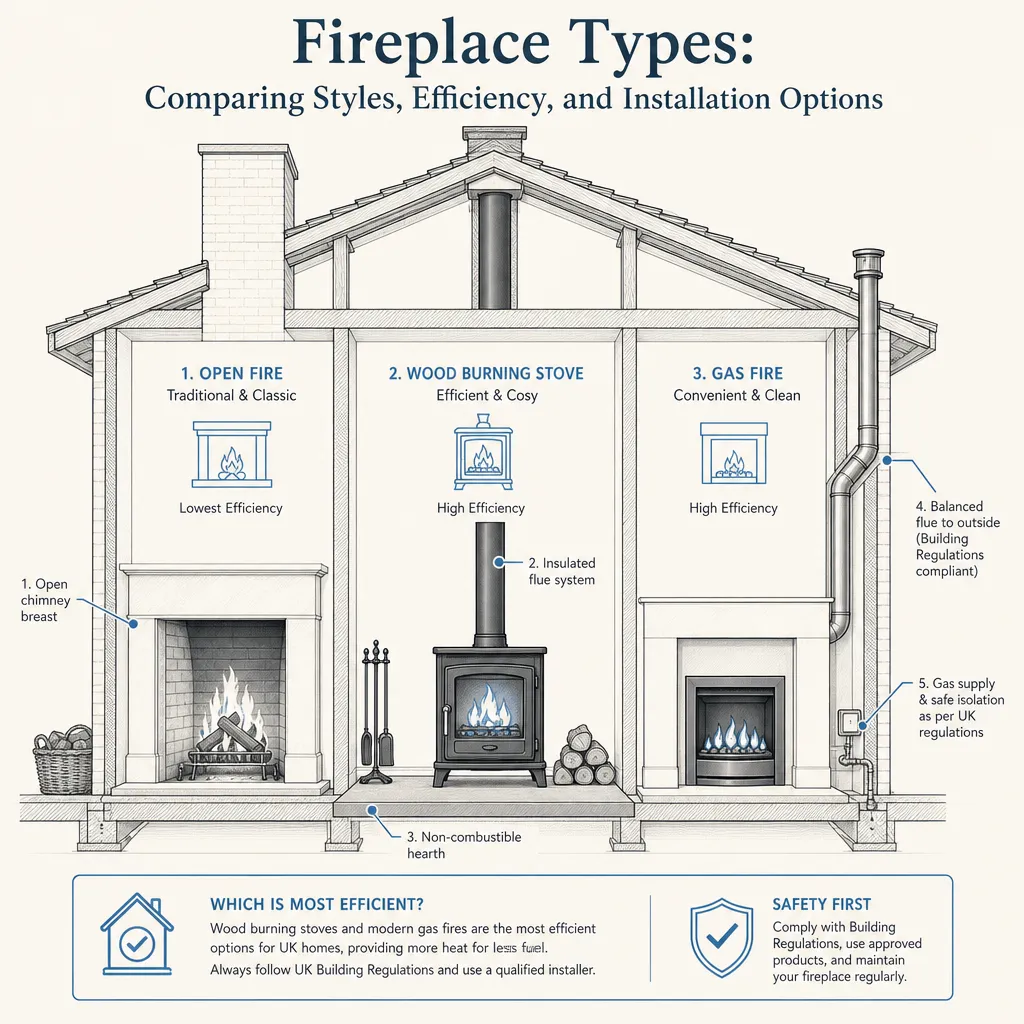
Fireplace Types: Comparing Styles, Efficiency, and Installation Options
UK homeowners can choose from open fires, wood-burning stoves, multi-fuel stoves, gas fires, electric fires, and bioethanol fireplaces.
 Improvement & Build
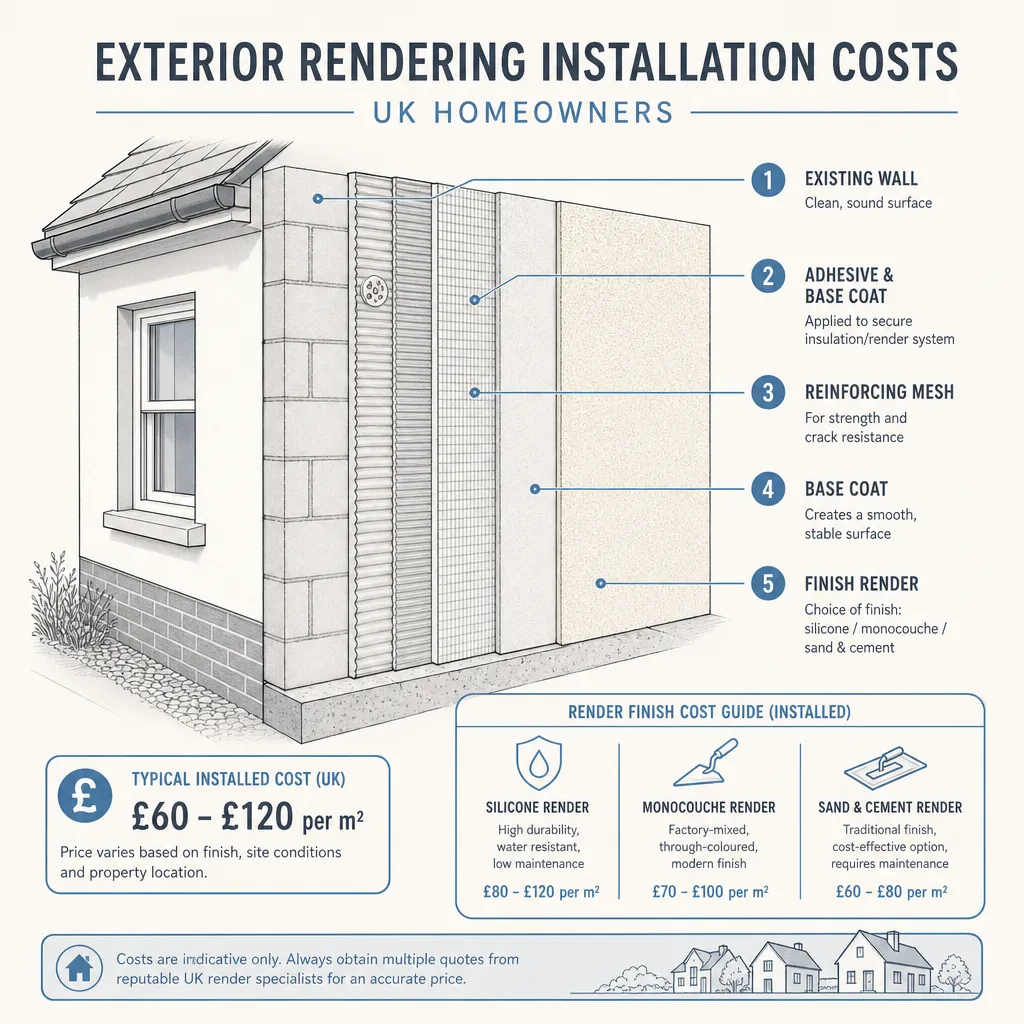
Exterior Rendering Installation Costs
Exterior rendering in the UK typically costs £20–£60 per square metre for standard render systems, or £80–£150 per square metre for External Wall Insulation with a render finish.
 Improvement & Build
Designing an outdoor kitchen for entertaining and garden living
An outdoor kitchen in a UK garden needs a stable, level base — typically a concrete slab or quality paving — with weather-rated materials such as stainless steel grade 316 or frost-rated porcelain.
 Improvement & Build
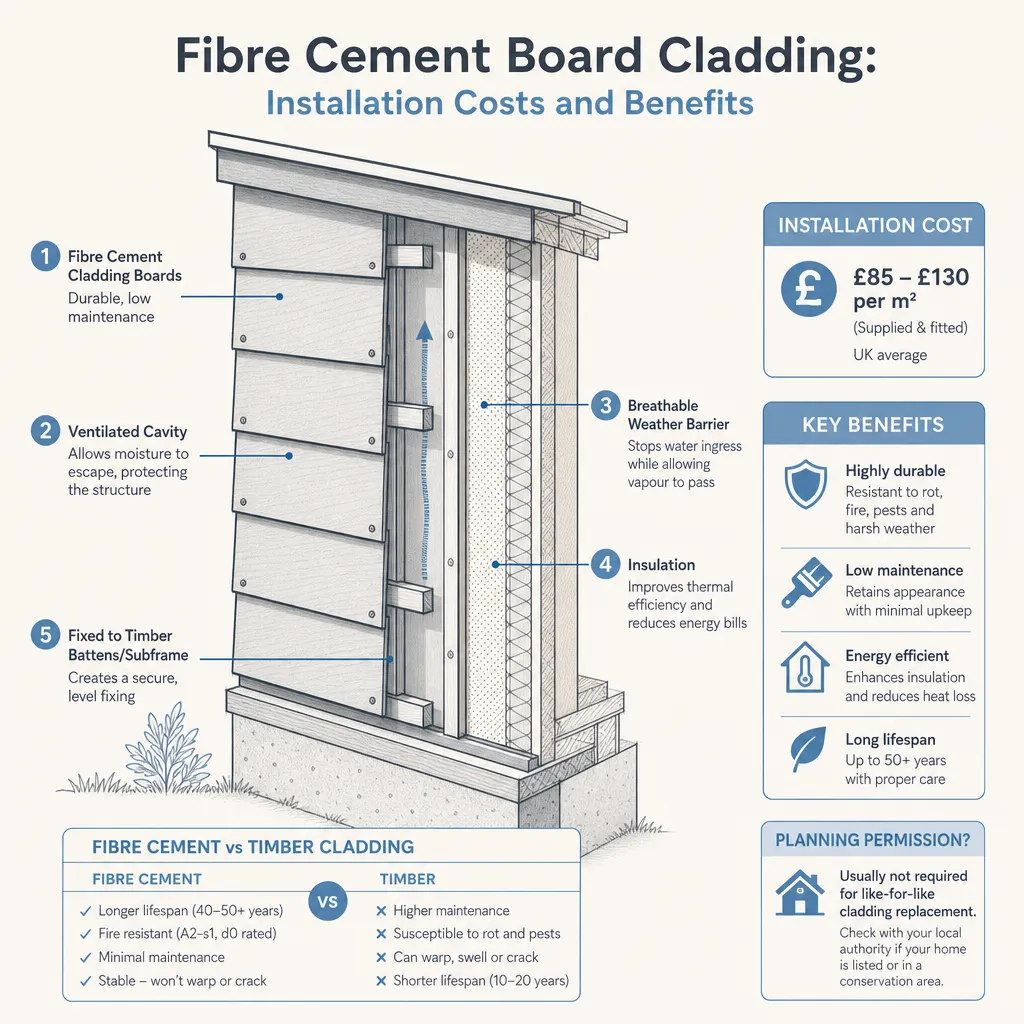
Fibre Cement Board Cladding: Installation Costs and Benefits
Fibre cement board cladding typically costs £80–£180 per m² installed in the UK, including boards, battens, breather membrane, and labour.
 Improvement & Build
Transforming an Unattractive Property: Renovation and Improvement Guide
Transforming an unattractive UK property usually starts with surface-level improvements — render, windows, doors, and front landscaping — before tackling structural changes like extensions.