Restoring Cast Iron Fireplaces: Assessment, Repair, and Finishing Options
By Housey · Last reviewed 18th of May 2026
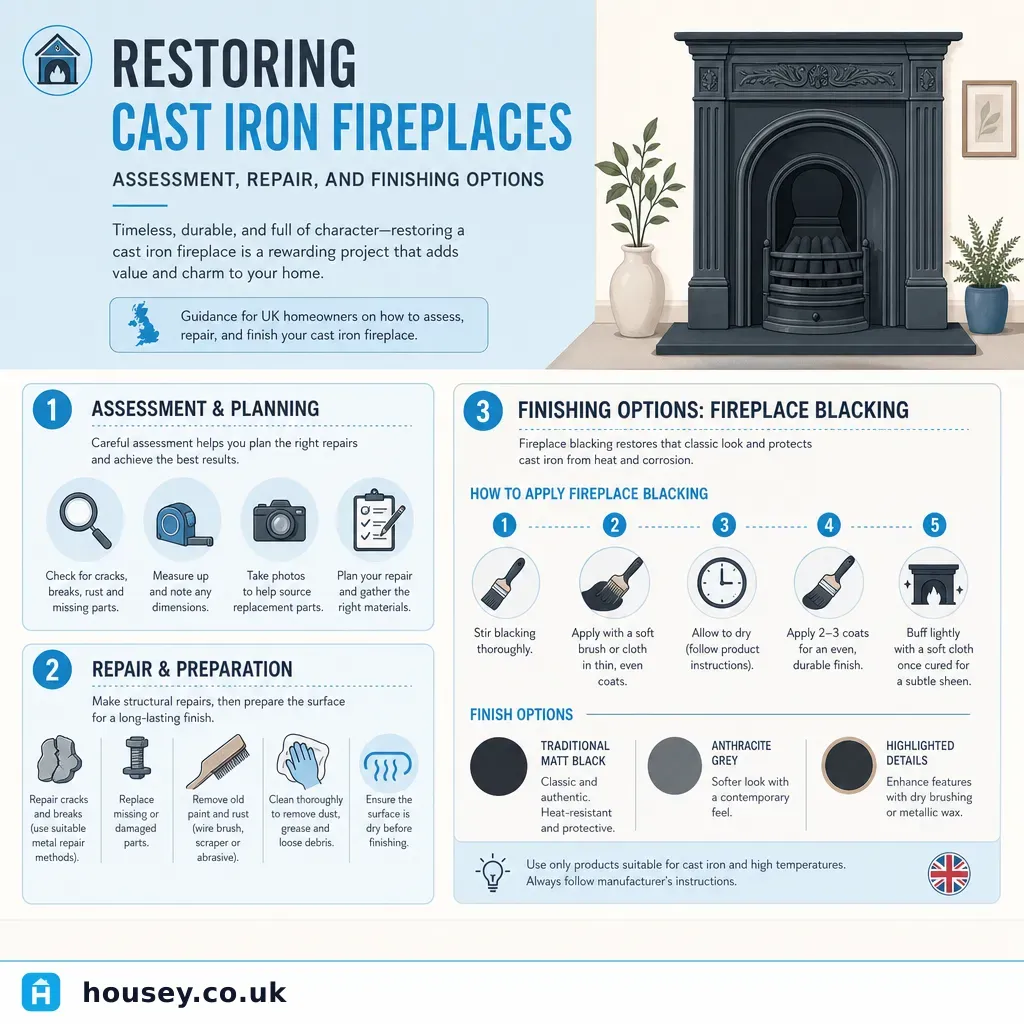
Restoring Cast Iron Fireplaces: Assessment, Repair, and Finishing Options
Victorian and Edwardian cast iron fireplaces are among the most characteristic features of UK period housing — and among the most frequently removed, boxed in, or neglected during twentieth-century renovation. Bringing one back into use or simply restoring its decorative appearance requires careful assessment to establish what is cosmetic, what needs repair, and crucially what demands qualified professional involvement before the fireplace is made operational.
Key points
- Building Regulations Approved Document J covers combustion appliances and applies to any reinstated open fire; HETAS-registered installers can self-certify the work, or building control must be formally notified.
- The Gas Safety (Installation and Use) Regulations 1998 require that any gas fire installation, gas connection, or gas flue work is carried out by a Gas Safe registered engineer — this is a legal requirement, not a recommendation.
- Cracks passing through the full thickness of a cast iron casting render that component unsafe for use with a live fire; fire cement is not an appropriate structural repair for through-cracks in firebacks, grates, or structural surrounds.
- The Chimney Safety Trust and HETAS recommend annual sweeping for wood-burning fires and at minimum every other year for solid fuel — this applies to restored fireplaces as much as to established ones.
- In a listed building or conservation area, replacement cast iron components may need to match the original pattern; check with your local planning authority or Historic England before substituting non-period castings.
Assessing a cast iron fireplace before restoration
A systematic assessment before work begins determines whether the project is straightforward cosmetic work or whether professional remediation is required.
Red flags: conditions requiring professional assessment before proceeding
- Through-cracks in the fireback, grate, or structural castings that are visible on both faces of the metal
- The fireback is bowed, displaced, or has sections missing
- The throat plate or register plate is absent, heavily corroded, or misaligned
- The flue has been sealed with rubble, expanding foam, or cement — a chimney sweep must clear and inspect before any fire is lit
- Evidence of a previous chimney fire: heavy tar deposits inside the flue, distorted or heat-damaged metal, cracking in the chimney breast masonry
- The surrounding masonry shows fresh movement or cracking at the fireplace opening
- The fire opening has been altered in dimensions — check compliance with Approved Document J throat-opening requirements before reinstating for use
Repair options for common cast iron problems
Issue | DIY-suitable? | Recommended approach | Professional needed? |
|---|---|---|---|
Surface rust and pitting | Yes | Wire brush, phosphoric acid-based rust converter, prime and finish | No, for decorative restoration only |
Loose or cracked fire cement at joints | Yes (decorative) | Rake out, clean, repoint with fire cement rated to 1,250°C+ | Yes, if fireplace will be used for burning |
Missing decorative castings (tiles, dog grate, hood) | Partial | Source period-correct replacement from architectural salvage or specialist foundry | Consult restorer for structural components |
Through-crack in fireback | No | Replace the fireback — widely available and relatively affordable from period fireplace suppliers | Yes — patch repair is not safe for a live fire |
Through-crack in structural surround | No | Seek a cast iron restoration specialist or architectural ironmonger | Yes |
Seized or corroded register plate | Partial | Penetrating oil and careful mechanical release; check flue above is clear | Yes, if structural condition of throat area is uncertain |
Damaged original decorative tiles | Partial | Specialist tile restorer for valuable originals; period-compatible replacements otherwise | Consult ceramic conservator in listed building contexts |
Finishing options compared
Once cast iron is clean, rust-treated, and structurally sound, the finishing approach depends on whether the fireplace is decorative or operational.
Finish | Best for | Heat resistance | Durability | Key notes |
|---|---|---|---|---|
Traditional grate polish / blacking (graphite or wax-based) | Decorative surrounds, non-operational fireplaces, ornamental grates | Decorative zones only | Moderate — reapply annually | Classic satin-black appearance; not suitable near flame zones |
Heat-resistant stove paint (spray or brush) | Grates, fire baskets, fire cheeks in active use | Up to 600°C depending on product | Good | Available in satin black; apply in well-ventilated conditions |
High-temperature enamel paint | Register plates, flue components, high-heat structural areas | Up to 1,000°C depending on specification | Excellent | More specialist; available from stove and fireplace suppliers |
Bare treated metal (rust converter only) | Non-visible or non-decorative components | N/A | Moderate | Practical for hidden structural parts |
If the fireplace will be used for burning
Cosmetic restoration is generally straightforward; making a fireplace operational for burning solid fuel or installing a gas fire insert involves legal and safety requirements that go beyond DIY scope.
For reinstated open fires burning solid fuel:
- The installation falls under Approved Document J to the Building Regulations; notify building control or use a HETAS-registered installer who can self-certify the works.
- A qualified chimney sweep (preferably registered with the National Association of Chimney Sweeps or the Guild of Master Chimney Sweeps) must inspect and sweep the flue before first use.
- Older unlined or clay-pot flues may need a stainless steel flue liner to meet current standards — a HETAS installer can advise.
- The hearth must comply with Approved Document J dimensions and materials requirements.
For any gas fire insert:
- All work must be carried out by a Gas Safe registered engineer — this includes any pipework, connection, and commissioning.
- Verify the engineer's registration at gassaferegister.co.uk before instructing them.
Important limitations
This article provides general guidance on cast iron fireplace restoration for UK homeowners. It does not constitute professional safety, engineering, or legal advice. Requirements for combustion appliances, flue safety, gas installation, and building regulations can vary by property type, local authority, and applicable standards. Rules and regulations may change after the date of this article. Always consult a qualified professional — a HETAS-registered installer, Gas Safe registered engineer, RICS surveyor, or structural engineer — before making any non-operational fireplace operational.
When this becomes urgent
Stop relying on general guidance and seek professional help immediately if:
- The chimney breast shows fresh cracking, staining, or movement around the fireplace opening
- You can smell gas near the fireplace at any time
- There is evidence of a previous chimney fire — heavy tar deposits, distorted metal, or fire-damaged plaster on the breast
- The flue or chimney has not been inspected for more than 12 months and the fireplace is in active use
- You discover asbestos-containing rope seals or millboard in or around the fireplace opening — do not disturb the material and arrange a UKAS-accredited asbestos survey
What to ask a qualified professional
Before instructing a chimney sweep, HETAS installer, or Gas Safe engineer:
- Are you registered with HETAS / Gas Safe / NACS / Guild of Master Chimney Sweeps? (Request the registration number and verify it independently)
- What does your inspection cover — fireback, throat, register plate, flue liner, and chimney pot condition?
- Will you issue a written certificate or report after the sweep or inspection?
- Does this installation require building regulations notification, and will you self-certify it?
- What are the Approved Document J requirements for the hearth and throat opening in this configuration?
- If a flue liner is required, what specification do you recommend and why?
- For listed buildings: have you previously worked with conservation officers on period fireplace reinstatement?
When to get professional help
Pure cosmetic restoration — cleaning, rust treatment, and applying blacking or heat-resistant paint to a decorative non-operational fireplace — is within reach of a careful DIYer. Seek a qualified professional when:
- The fireplace will be used for burning (solid fuel or gas) — building regulations and safety standards apply
- Through-cracks are present in any structural casting — replacement, not repair, is the correct approach
- The flue has been sealed, blocked, or not swept for a significant period
- The chimney breast shows structural movement or cracking
- Any gas components are involved, however minor
- The property is listed and replacement castings may require consent
How Housey can help
Housey helps UK homeowners connect with vetted local professionals for renovation and restoration projects. If you are reinstating a cast iron fireplace as part of a broader improvement programme, use Housey to find and compare qualified tradespeople who can ensure the work meets Building Regulations and is carried out to the right standard.
Frequently asked questions
Do I need a Gas Safe engineer if I'm reinstating a gas fire in a cast iron surround?
Yes. Any work involving gas connections, gas fire installation, or gas flue connections must be carried out by a Gas Safe registered engineer. It is illegal under the Gas Safety (Installation and Use) Regulations 1998 for unregistered individuals to carry out gas work in UK homes. Always verify the engineer's Gas Safe registration number at gassaferegister.co.uk before instructing them.
Can I reuse a Victorian cast iron fireplace that has been blocked up for decades?
Possibly, but not without professional inspection first. Blocked chimneys accumulate debris, nesting materials, and condensate residue, and flue liners may have deteriorated. A HETAS-registered chimney sweep should inspect and sweep the flue before any fire is lit, and the fireback, throat plate, and register plate should be checked for cracks or structural failure.
What is fireplace blacking and how is it applied?
Fireplace blacking is a traditional wax or graphite-based compound providing a satin-black finish and some corrosion protection on cast iron. Clean the metal thoroughly, apply a thin even coat with a brush or cloth, work it into the surface, and buff to a low sheen. It is for decorative use only and must not be applied to areas in direct contact with flames.
Do I need building regulations approval to reinstate an open fire?
Yes. Making a previously blocked or sealed fireplace operational typically requires notification under Approved Document J to Building Regulations. In practice, use a HETAS-registered installer who can self-certify the installation, or notify your local building control authority directly. Decorative-only restoration — where the flue remains sealed — does not trigger this requirement.
How do I know if cracks in the cast iron are serious?
Surface rust lines and minor surface marks are common on old cast iron and are usually cosmetic. Cracks that pass through the full thickness of a casting — visible on both faces — compromise structural integrity. The casting should be replaced rather than patched with fire cement. A specialist period fireplace restorer or architectural ironmonger can assess whether a cracked component is salvageable.
Sources and further reading
- Building Regulations Approved Document J: Combustion appliances and fuel storage systems — GOV.UK
- HETAS: Find a registered installer — HETAS
- Gas Safe Register: Check a business — Gas Safe Register
- Gas Safety (Installation and Use) Regulations 1998 — legislation.gov.uk
- The Chimney Safety Trust: Advice for homeowners — The Chimney Safety Trust
Useful next reads
 Improvement & Build
Removing Wallpaper Adhesive Residue Before Redecorating
After stripping wallpaper, a thin layer of dried paste or adhesive often remains on the wall surface.
 Improvement & Build
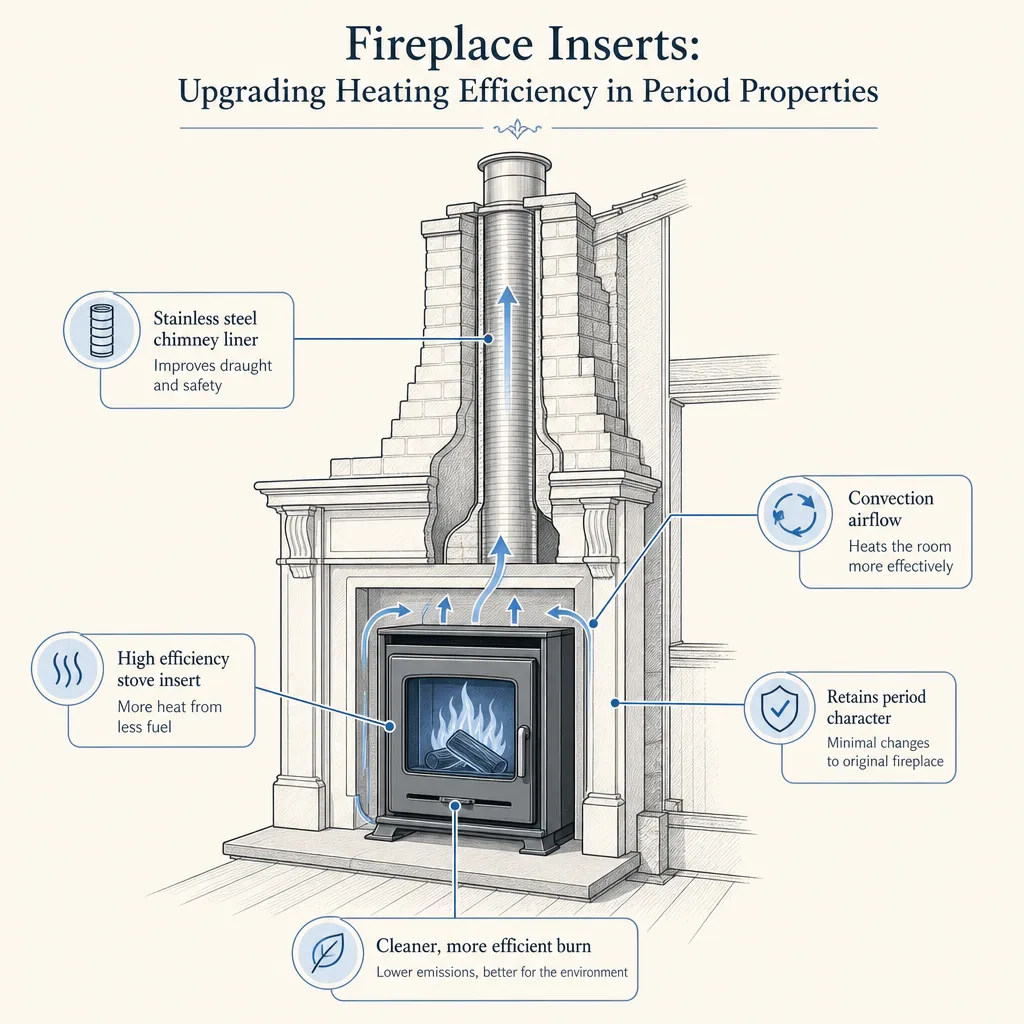
Fireplace Inserts: Upgrading Heating Efficiency in Period Properties
Fireplace inserts in period properties must comply with Building Regulations Approved Document J and, in smoke control areas, use only Defra-exempt appliances.
 Improvement & Build
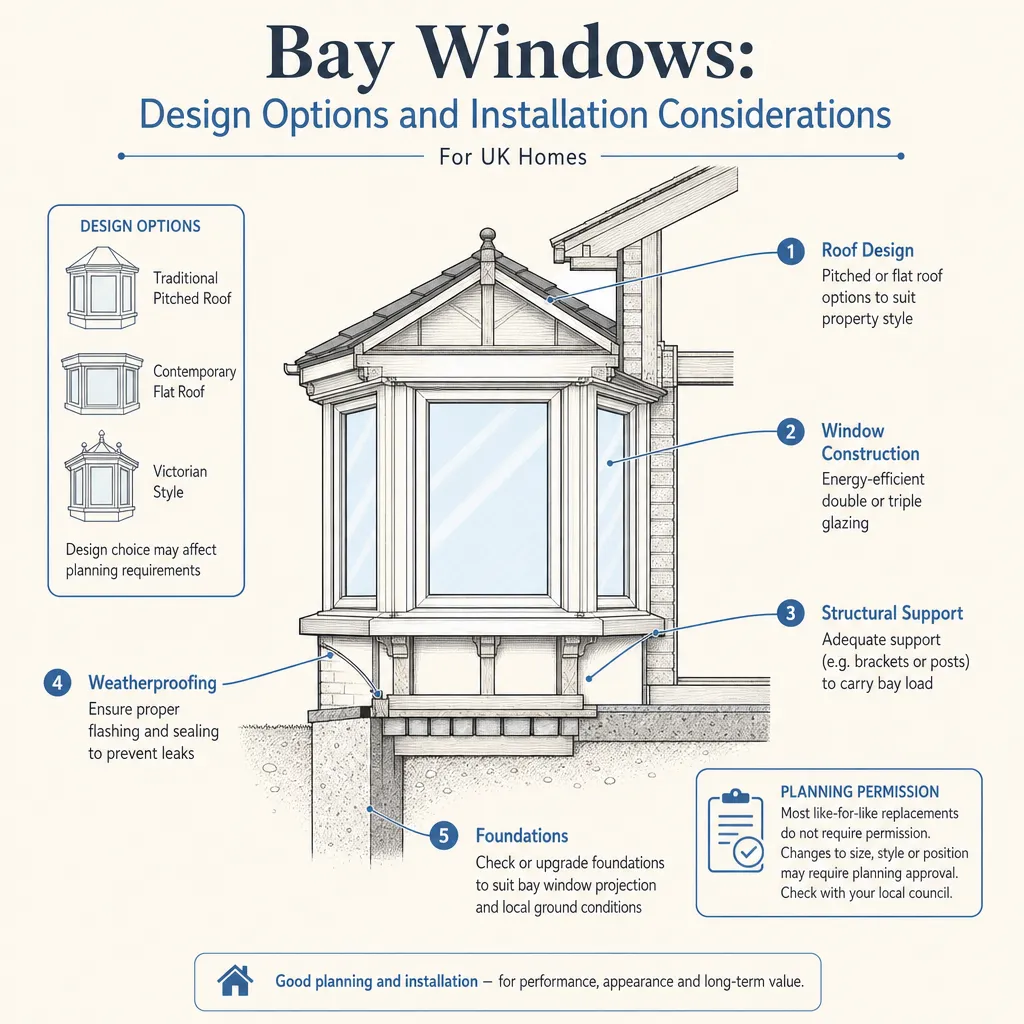
Bay Windows: Design Options and Installation Considerations
Bay windows project beyond the main wall of a house, increasing floor area and natural light.
 Improvement & Build
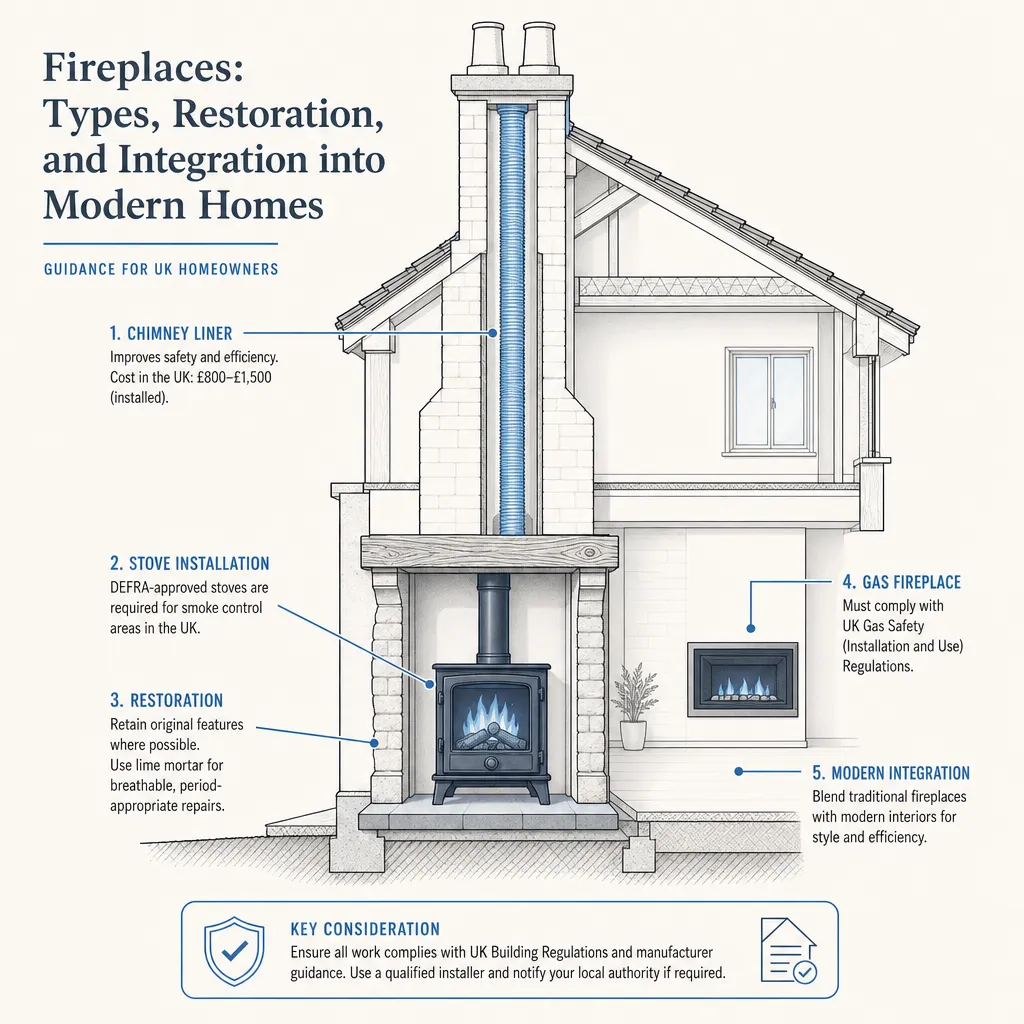
Fireplaces: Types, Restoration, and Integration into Modern Homes
UK fireplaces come in four main types: open fires, wood-burning stoves, gas fires, and electric fires.
 Improvement & Build
Restoring Historic Front Doors: Repair, Refinishing, and Authenticity Considerations
Historic front doors in good structural condition are almost always worth repairing rather than replacing.