First and Second Fix Electrical Work Explained
By Housey · Last reviewed 11th of May 2026
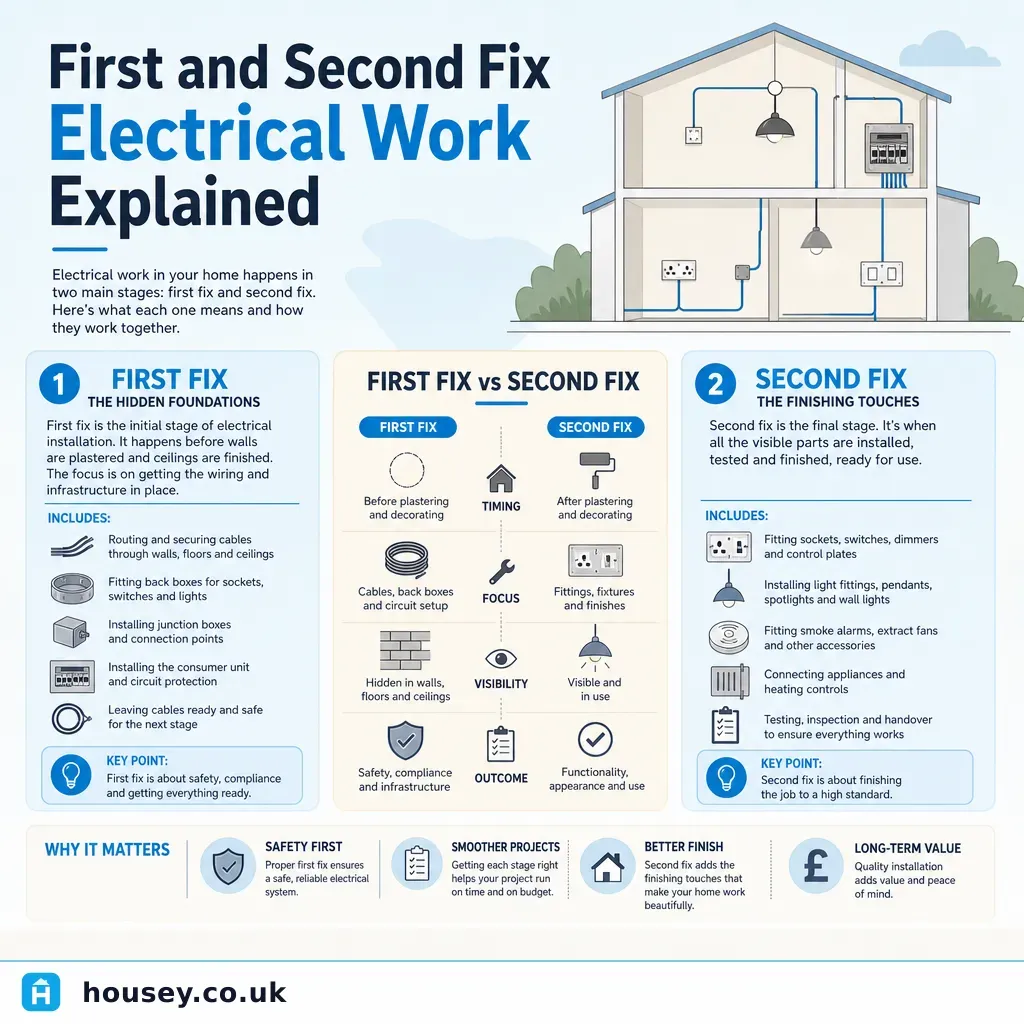
First and Second Fix Electrical Work Explained
When planning a renovation, loft conversion, or new build in the UK, the terms first fix and second fix will come up quickly in conversations with your electrician or main contractor. Understanding what each phase covers — and when it happens in the build sequence — helps you coordinate trades, budget accurately, and avoid costly delays caused by work being done out of order or positions being changed after plastering.
Key points
- First fix covers all electrical work installed before plastering: cables, back boxes, and conduit, typically run while walls are open or studded.
- Second fix covers everything installed after plastering and decoration: sockets, switches, light fittings, the consumer unit, and all final connections and testing.
- Part P of the Building Regulations (England and Wales) requires that most notifiable domestic electrical work is either carried out by a registered competent person under a government-approved scheme (such as NICEIC or NAPIT) or inspected and approved by building control.
- An Electrical Installation Condition Report (EICR) is a separate, periodic inspection of an existing installation — it is not a completion document for new first or second fix work.
- The Part P compliance certificate issued at second fix sign-off is a legal document: keep it with your property deeds, as it will be requested during any future sale or remortgage.
What happens during first fix electrical work
First fix is all the hidden electrical infrastructure installed while walls, ceilings, and floors are open or before plastering begins. During this phase, your electrician will:
- Run cable routes from the proposed consumer unit position to each outlet, light, switch, and socket location throughout the property.
- Install back boxes — the metal or plastic enclosures into which sockets and switches will later clip — set flush into the wall surface.
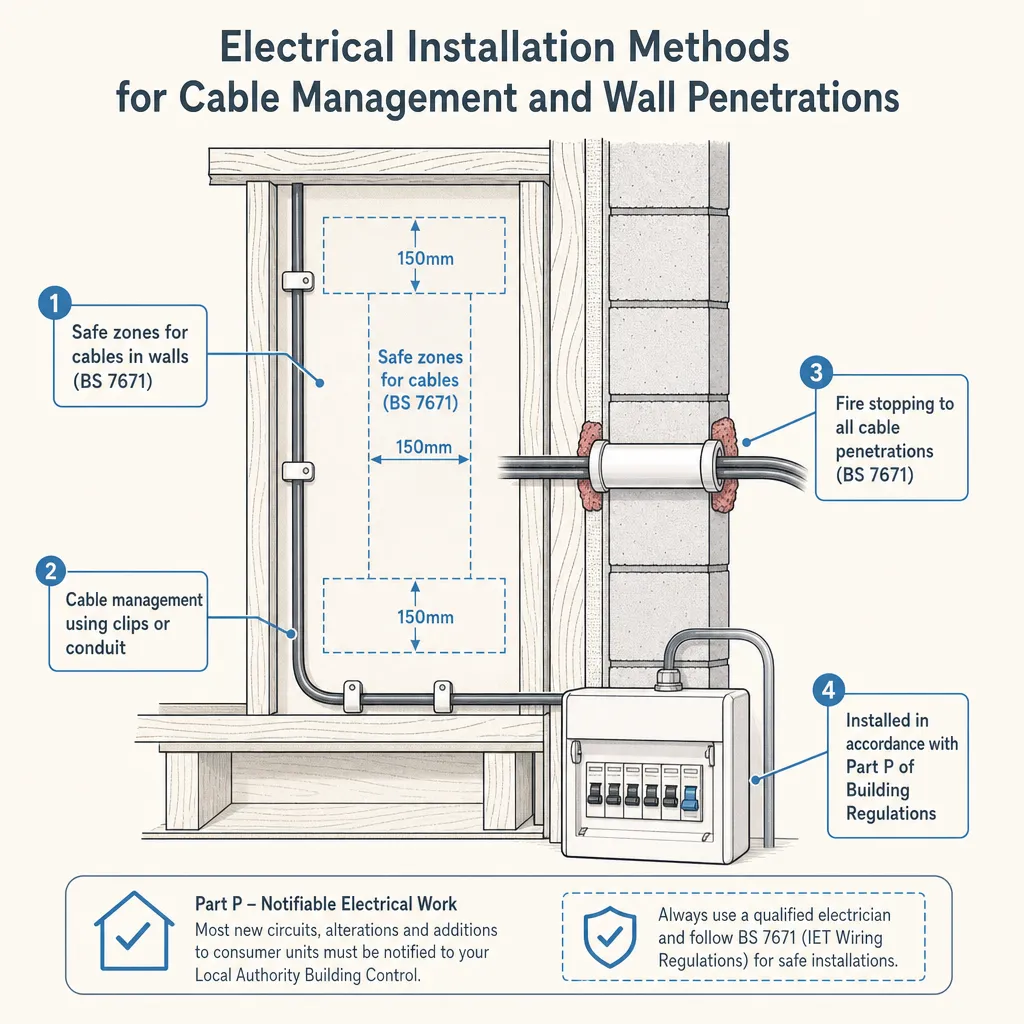
- Position conduit or cable clips to protect and route cables where required, such as in solid floors or within the defined safe zones in walls set out by BS 7671 (the IET Wiring Regulations, 18th edition).
- Leave cable tails in temporary protective covers, ready for the second fix stage.
- Plan for future circuits: EV charger supply wiring, electric shower, cooker circuit, and outdoor supplies are far more cost-effective to include at first fix than to add retrospectively.
First fix typically takes place after structural work (stud walls, joists) is complete but before the plasterer arrives. Timing is critical — re-opening plastered walls to alter cable routes or move back boxes is expensive and disruptive.
What happens during second fix electrical work
Second fix takes place after plastering is complete and, ideally, after the first coat of decoration. The electrician returns to:
- Fit sockets, switches, and light fittings to the prepared back boxes and cable tails.
- Install and connect the consumer unit (fuse board), including all circuit breakers, RCDs, and RCBOs as required by BS 7671.
- Commission the installation, test each circuit, and produce test certificates.
- Submit a completion notification to the relevant body — either the competent person scheme or building control — satisfying Part P requirements and triggering the issue of a compliance certificate.
Second fix is the point at which the installation becomes functional and legally compliant documentation is generated.
First fix vs second fix: comparison
Aspect | First fix | Second fix |
|---|---|---|
When it happens | Before plastering | After plastering and first-coat decoration |
What is installed | Cables, back boxes, conduit, positioning work | Sockets, switches, light fittings, consumer unit, final connections |
State of walls | Open, studded, or chased | Plastered and partly decorated |
Trades working alongside | Plumbers (also doing first fix), structural joiners | Joiners (second fix), decorators |
Regulatory sign-off | Not yet — testing and notification at second fix | Yes — test certificates and Part P compliance certificate issued |
Visible to homeowner | Mostly concealed behind plaster | Everything seen and used in the finished home |
Homeowner checklist: what to confirm before each stage
Before first fix begins:
Before second fix begins:
Who can carry out first and second fix electrical work?
In England and Wales, domestic electrical work is governed by Part P of the Building Regulations 2010. Most new circuits, consumer unit replacements, and work in special locations — kitchens, bathrooms, and outdoors — are notifiable, meaning they must either be:
- Carried out by a registered competent person under a government-approved scheme such as NICEIC, NAPIT, or ELECSA. These electricians self-certify and issue the homeowner with a compliance certificate directly.
- Carried out by any electrician, but subsequently inspected and approved by a building control officer before the work is signed off.
Option 1 is the most common route for domestic renovation work. Always ask which competent person scheme your electrician is registered with, and request evidence of registration, before work commences.
In Scotland, electrical requirements are governed by the Building (Scotland) Regulations 2004, which differ from Part P.
When to get professional help
Domestic electrical installation — including new circuits, consumer unit work, and work in kitchens, bathrooms, or outdoors — is not suitable for DIY. Always use a qualified, NICEIC- or NAPIT-registered electrician. Consider seeking additional professional input if:
- You are purchasing a property and are unsure whether existing electrical work was properly notified and certificated — an Electrical Installation Condition Report (EICR) can assess the installation's condition and flag uncertified work.
- Your renovation involves both electrical work and wider changes requiring building control sign-off, in which case building regulations drawings may be needed to demonstrate overall compliance.
- You suspect cables were routed outside the required safe zones, or back boxes have become loose or misaligned after plastering.
How Housey can help
Housey connects homeowners with NICEIC- and NAPIT-registered electricians for first and second fix work across the UK. For completed installations — particularly before a sale, remortgage, or tenancy change — an Electrical Installation Condition Report (EICR) confirms whether the installation meets current standards and identifies any work carried out without proper certification.
Frequently asked questions
When should socket and light positions be decided — before or during first fix?
Positions should be finalised before first fix begins. Once cables are run and back boxes are fixed into plaster, relocating them means re-opening walls — adding cost and delay. Your electrician, builder, and any interior designer should agree a full layout, including AV, data, or smart home wiring, before the electrician is on site.
How long after first fix before the electrician can return for second fix?
The main constraint is plastering. Traditional sand and cement plaster typically needs four to six weeks to dry before decoration, and second fix should follow the first coat of paint to protect faceplates from splatter. Dry-lining (plasterboard with skim) dries much faster. Your electrician and plasterer should agree a programme at the start of the project.
What certificate should I receive after second fix electrical work?
If the work is notifiable under Part P, your registered competent person electrician should issue a Building Regulations Compliance Certificate via their scheme (NICEIC, NAPIT, or similar). If building control was used instead, they issue the certificate. Keep this document with your property records — solicitors and mortgage lenders will request it during any future sale or remortgage.
Is an EICR the same as the Part P completion certificate?
No. An Electrical Installation Condition Report (EICR) is a periodic inspection of an existing installation — typically required every ten years for owner-occupied homes or on each tenancy change for rentals. The Part P completion certificate is issued when new notifiable work is certified compliant at the time of installation. Both documents are important but serve entirely different purposes.
Sources and further reading
- Approved Document P: electrical safety — GOV.UK
- IET Wiring Regulations (BS 7671) — IET
- NICEIC competent person scheme — NICEIC
- Electrical safety in the home — Electrical Safety First
Useful next reads
 Surveys & Inspections
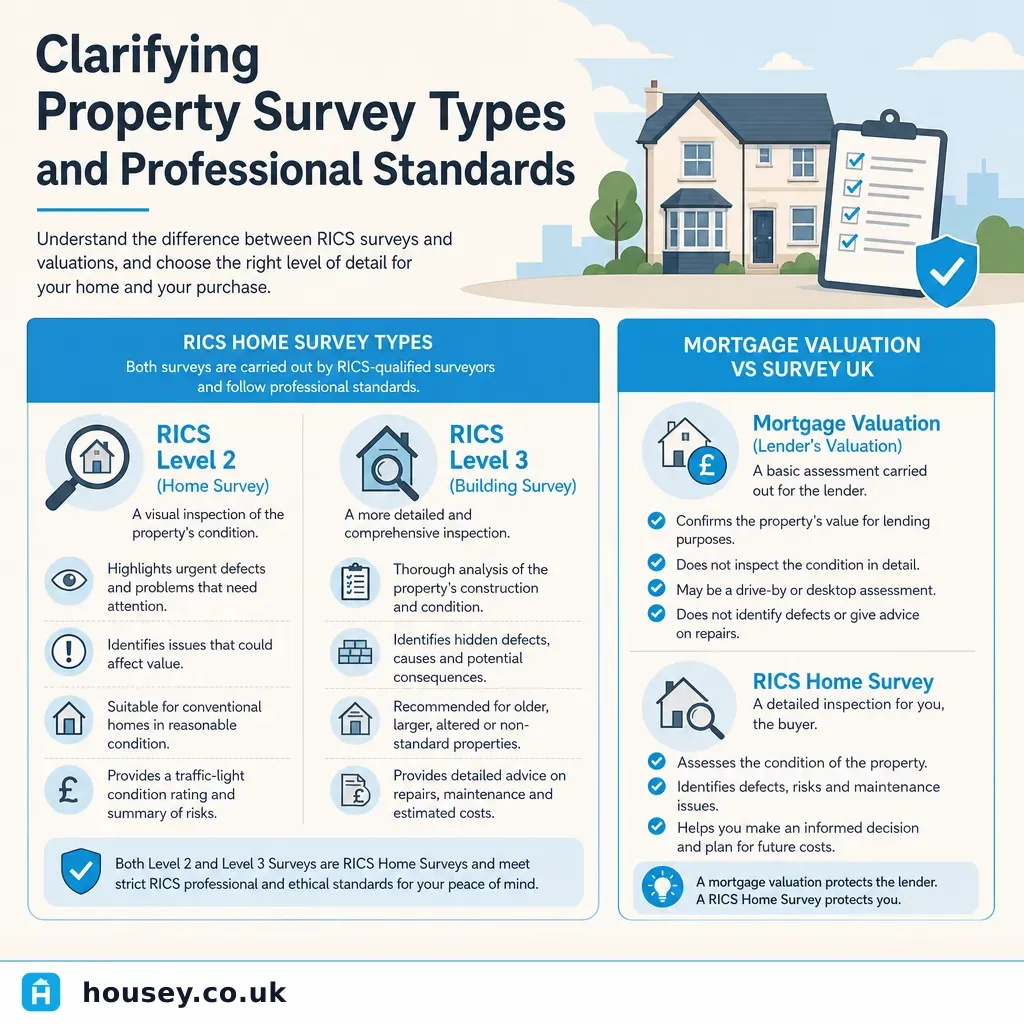
Clarifying Property Survey Types and Professional Standards
RICS Home Surveys come in three levels: Level 1 (condition ratings only), Level 2 (detailed visual inspection and defect advice), and Level 3 (comprehensive building survey for older or complex properties).
 Surveys & Inspections
Electrical installation methods for cable management and wall penetrations
Cables concealed in walls must follow safe-zone routes or be protected by earthed metallic conduit under BS 7671 Regulation 522.
 Surveys & Inspections
Why Property Boundaries Matter: Surveying and Dispute Prevention
Property boundaries in England and Wales are recorded as general boundaries by HM Land Registry — not precise measurements.
 Surveys & Inspections
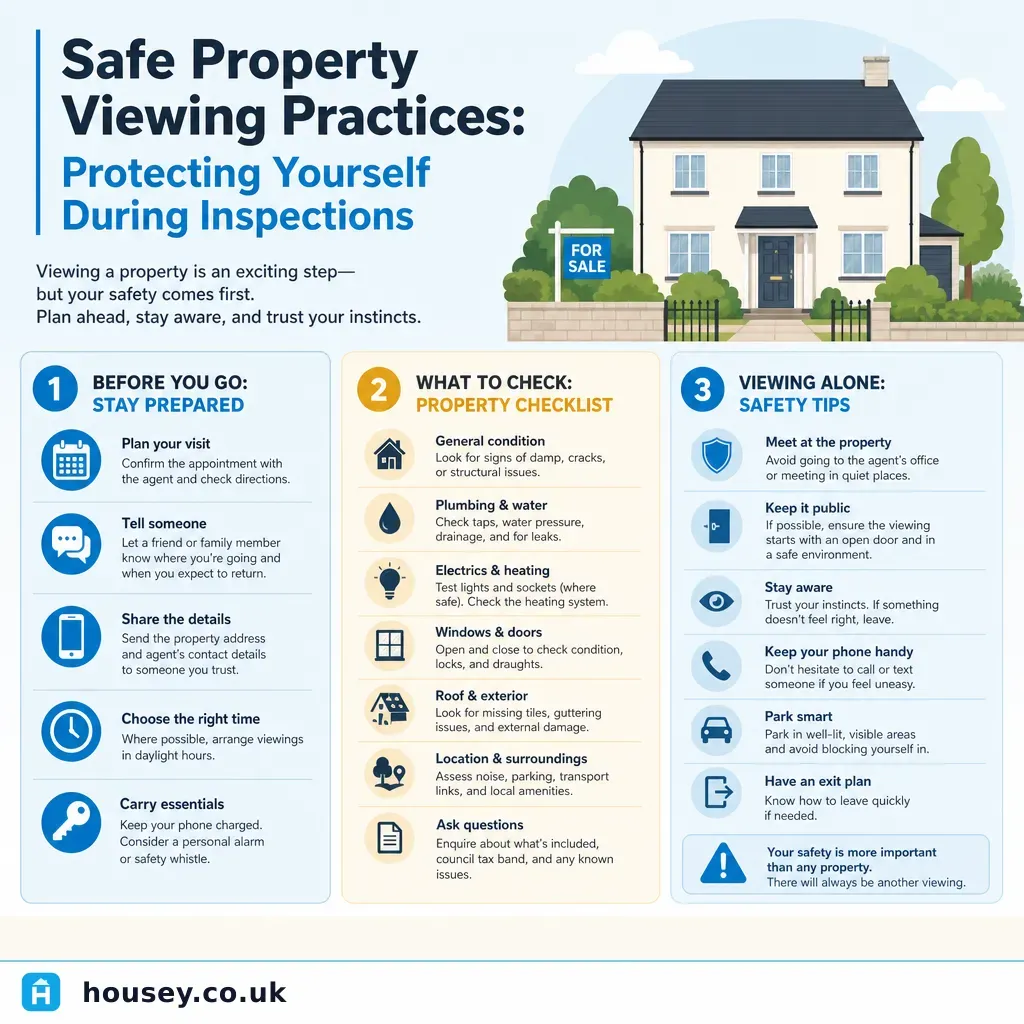
Safe Property Viewing Practices: Protecting Yourself During Inspections
When viewing a property in the UK, always tell someone where you are going and share the full address before you leave.
 Surveys & Inspections
Sewage Backup Cleanup: Emergency Response and Restoration
A sewage backup should be treated as a Category 3 contamination event.