First Projects to Tackle After Moving into a New Property
By Housey · Last reviewed 1st of June 2026
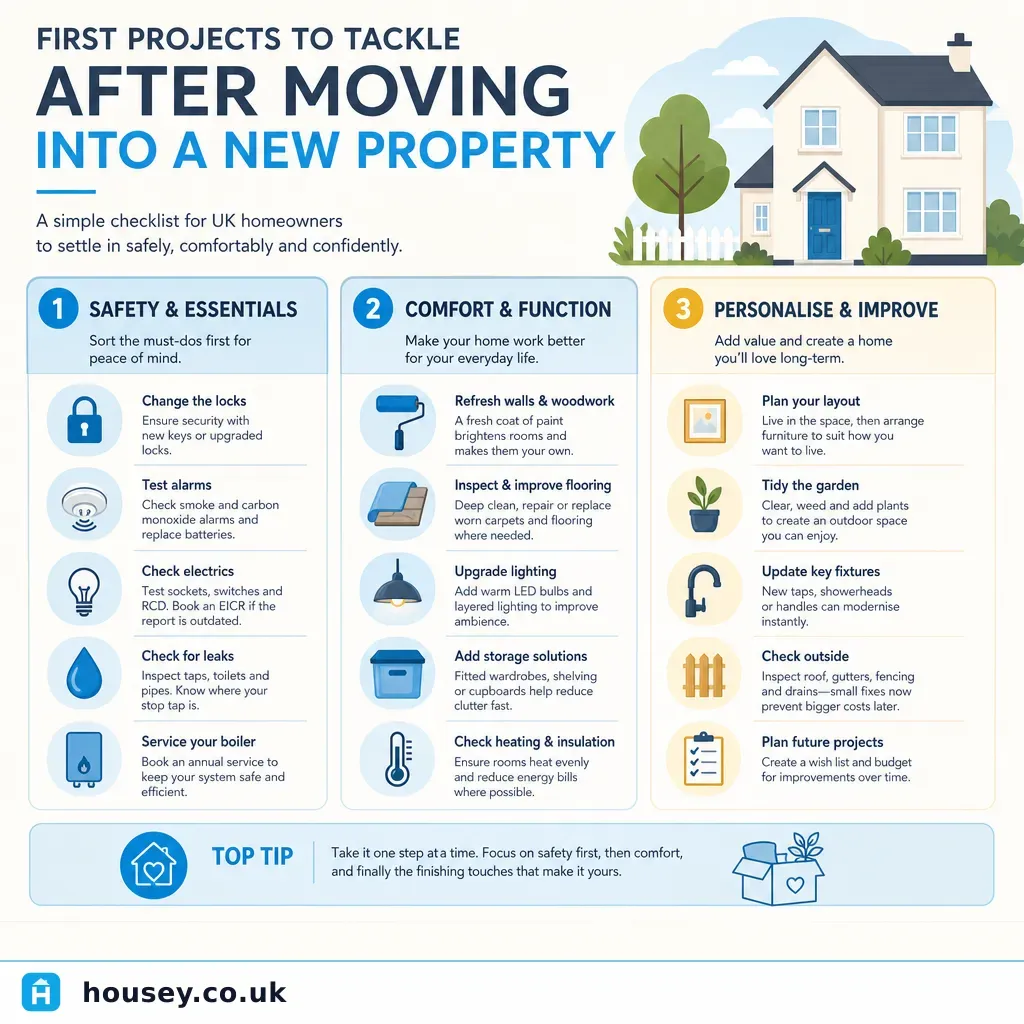
First Projects to Tackle After Moving into a New Property
The moment you pick up the keys to a new home, the clock starts on dozens of small decisions that will determine how comfortable and safe that property becomes. Whether you have just completed on a 1930s semi in Sheffield or a purpose-built flat in Manchester, the first few weeks of ownership matter disproportionately — problems caught early are far cheaper and less disruptive to address. Every element of the property, from its locks and alarms to its services and structure, is now your legal and financial responsibility.
Key points
- Under the Smoke and Carbon Monoxide Alarm (Amendment) Regulations 2022, smoke alarms are required on every storey and carbon monoxide alarms in any room with a solid-fuel appliance; owner-occupiers should meet this standard from day one.
- Changing all external locks is essential immediately on moving in: the previous owner, estate agents, tradespeople, and neighbours may all hold copies of the existing keys.
- You must take meter readings for gas, electricity, and water on the day of completion to avoid being billed for the previous owner's consumption.
- The location of your stopcock, consumer unit (fuse box), and gas emergency control valve must be known before an emergency, not during one.
- A Gas Safe registered engineer should service any boiler with no recent service history before you rely on it through winter.
Security: change the locks immediately
A newly completed property may have had its keys held by estate agents, the seller's family, cleaners, tradespeople, and previous owners. There is no reliable way to know how many copies exist. Fitting new cylinders to all external doors is typically a straightforward task that can be completed on moving day. British Standard 3621 (BS 3621) lock cylinders are the standard specified by most home insurers; check your policy wording before purchasing replacements.
Do not overlook garage side doors, outbuilding padlocks, and any communal entry fobs or keypads. For leasehold flats, the building's communal entry system is usually managed by the freeholder or managing agent — contact them to register and enquire about access code resets.
Safety: alarms, gas, and electrical checks
Test every smoke alarm and carbon monoxide detector in the property on moving day. Alarms more than ten years old should be replaced regardless of whether they activate when tested, as sensor sensitivity degrades over time. GOV.UK guidance on smoke and carbon monoxide alarms covers the minimum requirements under the Smoke and Carbon Monoxide Alarm (Amendment) Regulations 2022.
If the property has a gas boiler, log burner, or open fireplace, request the boiler service record from the seller's solicitor before completion. A boiler with no service history — or one not serviced within the previous twelve months — should be assessed by a Gas Safe registered engineer before you rely on it through winter. Gas appliances must never be serviced or repaired by anyone not on the Gas Safe Register.
If the property's wiring appears old, has cloth-covered cables, or the consumer unit contains old rewirable fuses rather than modern circuit breakers, consider booking an Electrical Installation Condition Report (EICR) promptly. Most home insurers now ask about electrical inspection dates.
Utilities: readings, registration, and broadband
Take photographs of every meter — gas, electricity, and water — on your completion day. Submit the readings to your chosen suppliers immediately to prevent billing disputes.
Notify the following on or immediately after moving day:
- Your chosen energy supplier (or accept the incumbent supplier temporarily and switch later)
- Your local water company — use the Water UK postcode checker to identify yours
- Your local council, for council tax registration, as liability begins from the completion date
- Royal Mail, to redirect post from your previous address
- Your bank, HMRC (if self-employed), GP, dentist, and the DVLA for your driving licence and vehicle registration
Broadband lead times vary significantly. Full-fibre (FTTP) connections in many areas require four to eight weeks for installation; rural postcodes can take longer. Order before your moving date where possible.
Finding the essentials before an emergency
Homeowner essentials checklist
Every adult in the household should know where these are before they are needed:
- Stopcock (internal water isolation valve) — usually under the kitchen sink, below the stairs, or in a utility room; turning this off cuts the mains water supply to the property
- Gas emergency control valve — typically next to the meter, in a hall cupboard, under the stairs, or in an external meter box; turns off the gas supply to the property
- Consumer unit (fuse box) — often in the hall, under the stairs, or in a utility room; locate the main switch and identify which circuit breaker controls which circuit
- Loft hatch — useful both for storage access and to inspect the roof structure, insulation depth, and any signs of water ingress from above
- External drain inspection chambers — know where they are before a blockage makes locating them urgent
Photograph or note these locations and share them with every adult in the household on moving day.
Which projects to tackle first: a practical decision framework
Not every project needs to happen in week one. Use this framework to prioritise:
Do immediately (week 1):
- Change external lock cylinders and test all window locks
- Test smoke and CO alarms; replace any more than ten years old
- Take meter readings for gas, electricity, and water
- Locate stopcock, consumer unit, and gas emergency control valve
- Request boiler service documentation; book a Gas Safe engineer if no record exists
Within the first month:
- Book a Gas Safe engineer for a boiler service if overdue
- Arrange an EICR if the property has older wiring or no recent electrical inspection record
- Check loft insulation depth — the Energy Saving Trust recommends 270mm of mineral wool
- Identify any damp patches after rain; note them but do not assume cause without professional assessment
Plan before committing budget:
- Major cosmetic works — kitchen replacement, bathroom renovation, full redecoration
- Any structural alteration — always confirm whether planning permission or building control sign-off is required before starting
Worked UK property scenario
Sarah buys a 1960s semi-detached in Coventry. On moving day she photographs all meters, locates the stopcock under the kitchen sink, and has the front and back door cylinders replaced with BS 3621 locks. The survey noted no boiler service record, so she books a Gas Safe engineer for the following week. On inspecting the consumer unit she finds old rewirable fuses; her insurer flags this, so she arranges an EICR. Structural and cosmetic works — a new kitchen and redecoration — are planned for later in the year, once she has observed the property through different seasons and assessed any damp or roof issues.
When to get professional help
Most first-month tasks are observational and administrative, but call a qualified professional if you notice:
- Rising or penetrating damp — tide marks, efflorescence (white salt deposits on brickwork), or peeling plaster at low wall levels
- Cracks wider than 5mm, or stepped diagonal cracks through external brickwork
- A boiler that short-cycles, makes unusual noises, or displays a yellow rather than blue pilot flame
- Any smell of gas — evacuate immediately and call the National Gas Emergency number: 0800 111 999
- Wiring with cloth-covered or rubber-insulated cables, or a consumer unit with rewirable fuse carriers
- Roof defects visible from outside — missing, slipped, or cracked tiles
Do not attempt DIY repairs to gas appliances, the consumer unit, or any structural element without professional assessment.
How Housey can help
Housey connects UK homeowners with vetted local professionals — from Gas Safe registered engineers for boiler services to NICEIC-accredited electricians for EICRs. Once you have settled in and identified your priorities, submit a job request and compare quotes from qualified tradespeople in your area.
Frequently asked questions
Do I need an EICR when I buy a house?
There is no legal requirement for owner-occupiers to obtain an Electrical Installation Condition Report, though landlords in England must provide one every five years. However, an EICR provides peace of mind, may satisfy your insurer, and is particularly advisable if the property has older wiring or no record of a recent inspection. Electricians generally recommend one every ten years for owner-occupied homes, or when moving into an unfamiliar property.
Can I change the locks on a leasehold flat?
You can usually replace the cylinder of your own flat's front door, but check your lease first. Most leases permit occupants to change internal locks. Communal entry systems — keypads, video entry, fobs — are managed by the freeholder or managing agent, and changes to those require their approval before proceeding.
What if the previous owner left no boiler service record?
Request service history through your solicitor during conveyancing. If none exists by completion, arrange for a Gas Safe registered engineer to carry out a service and safety inspection before relying on the boiler for heating. Do not attempt to assess or adjust a gas appliance yourself.
Should I redecorate before or after moving in furniture?
Decorating before furniture arrives is usually faster and produces a cleaner result. However, living in the property for a few weeks helps you understand natural light levels, identify damp patches after rain, and avoid repainting surfaces that may need remedial work first. For significant projects, plan around the season — damp patches are most visible after autumn and winter rainfall.
Sources and further reading
- Smoke and Carbon Monoxide Alarm (Amendment) Regulations 2022 — GOV.UK
- Gas Safe Register: find a registered engineer — Gas Safe Register
- Loft insulation guidance — Energy Saving Trust
- Electrical safety guidance for homeowners — Electrical Safety First
- Find your water supplier — Water UK
Useful next reads
 Improvement & Build
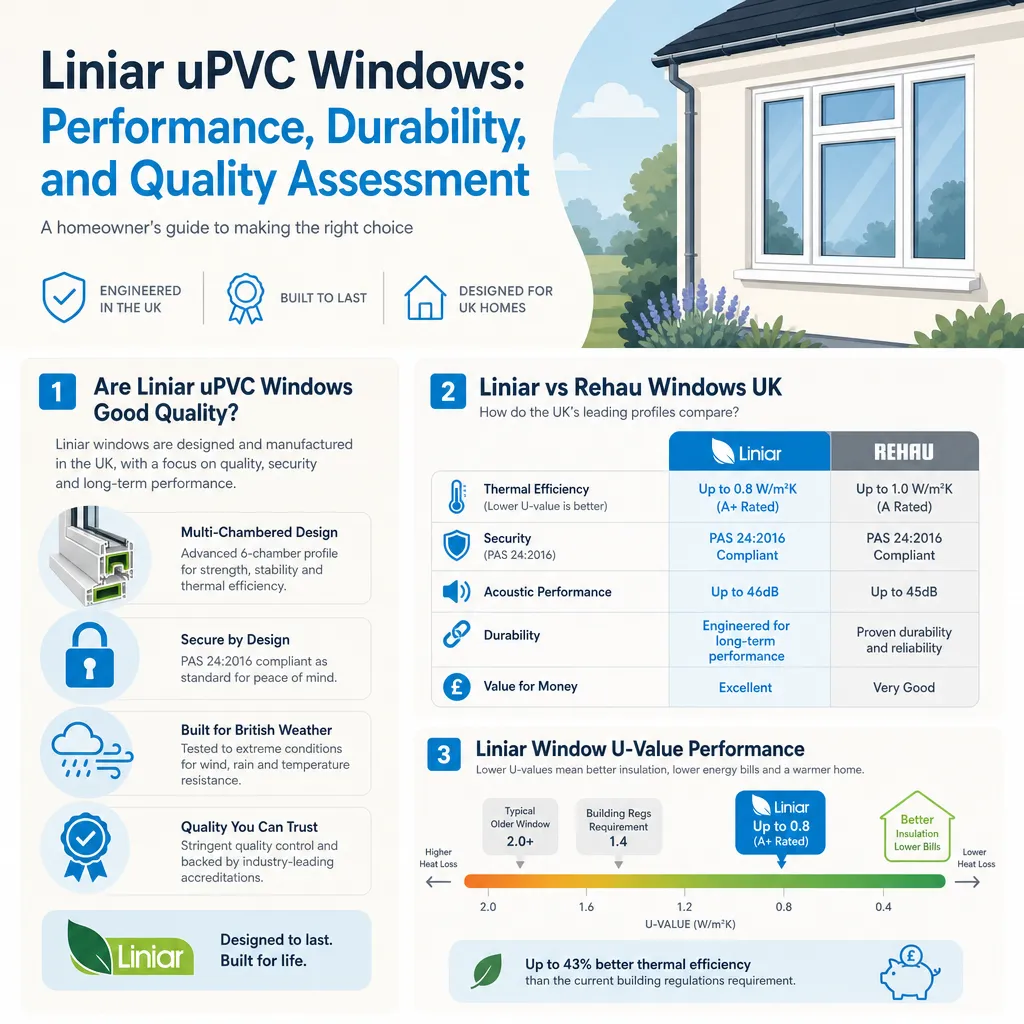
Liniar uPVC Windows: Performance, Durability, and Quality Assessment
Liniar uPVC window profiles are manufactured in the UK using multi-chambered, foamed frames.
 Improvement & Build
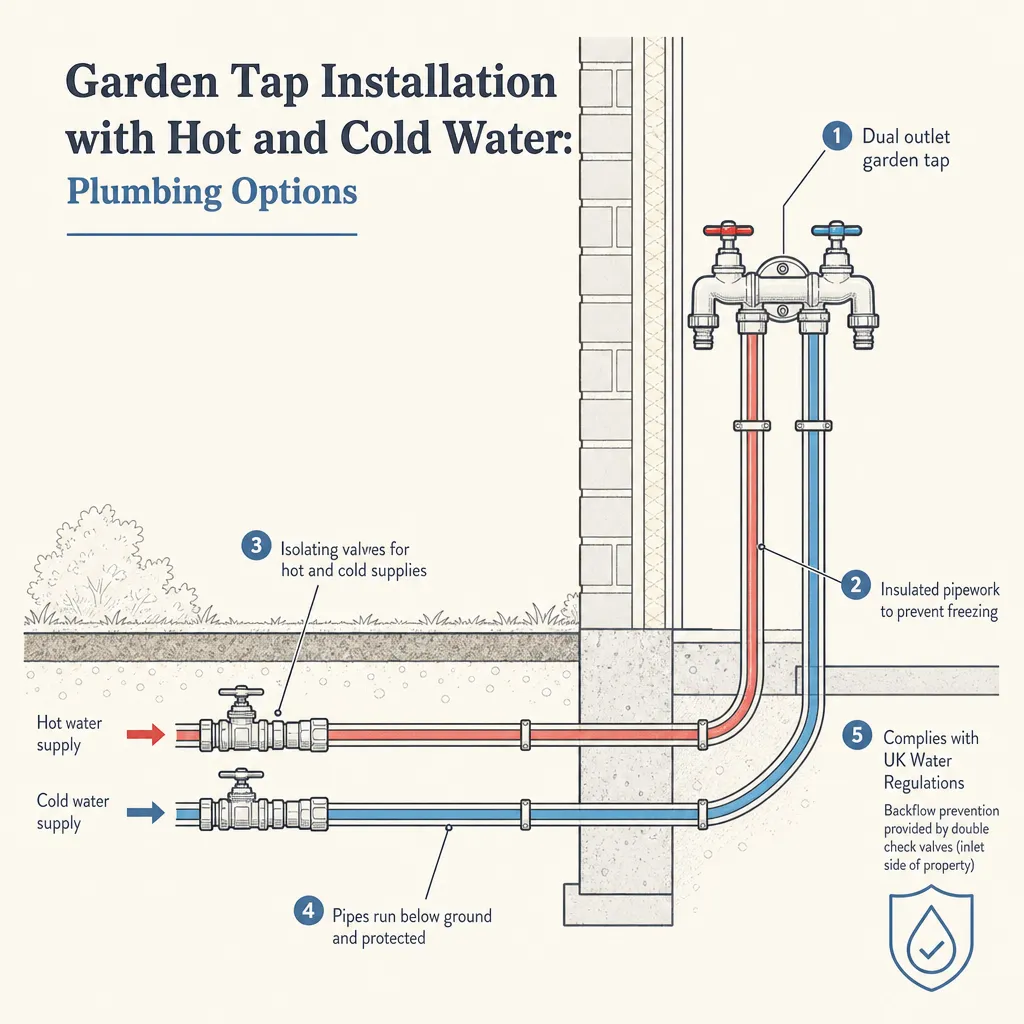
Garden Tap Installation with Hot and Cold Water: Plumbing Options
Adding a cold garden tap is a common DIY project, but routing hot water outdoors requires a plumber to connect to your domestic hot water system and comply with the Water Supply (Water Fittings) Regulations 1999.
 Improvement & Build
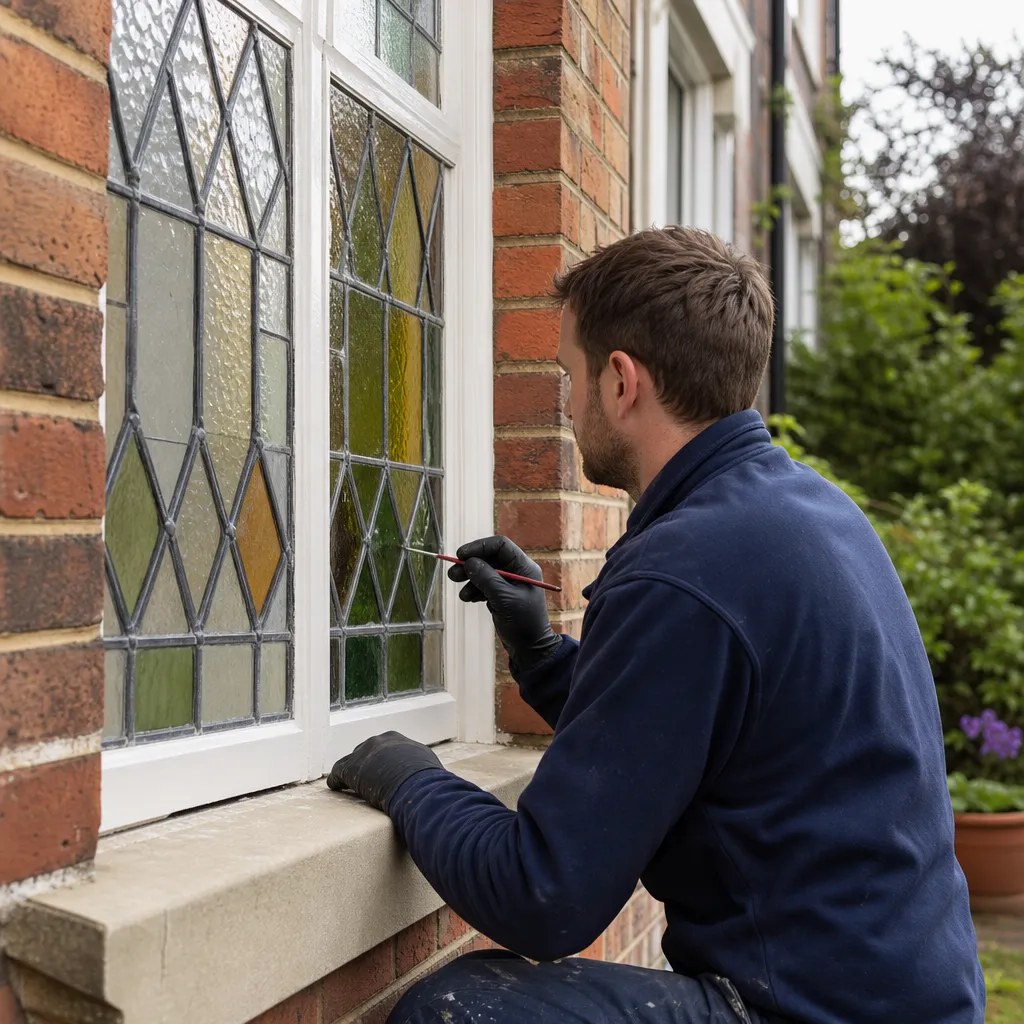
Sealing and Maintaining Historic Leaded Glass Windows: Preservation and Performance
Leaded glass windows are maintained using traditional linseed oil cement — not silicone or modern sealants, which prevent natural movement in the lead came.
 Improvement & Build
Greenhouse Construction: Glass Versus Polycarbonate Materials
Glass transmits around 90% of available light and lasts indefinitely if unbroken, but insulates poorly and shatters into sharp fragments.
 Improvement & Build
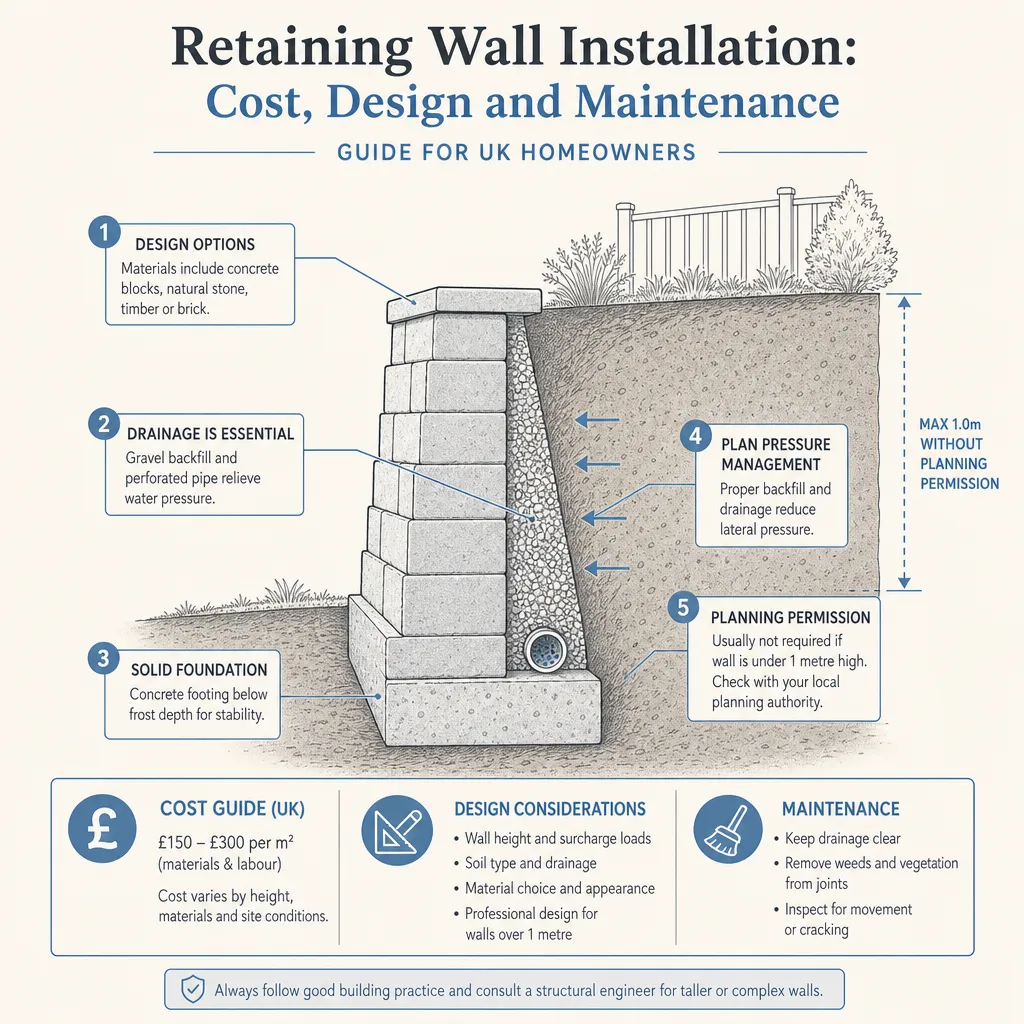
Retaining Wall Installation: Cost, Design and Maintenance
A retaining wall holds back soil on a sloped or banked site.