Getting a Valuation Survey Before Selling Your Property
By Housey · Last reviewed 1st of June 2026
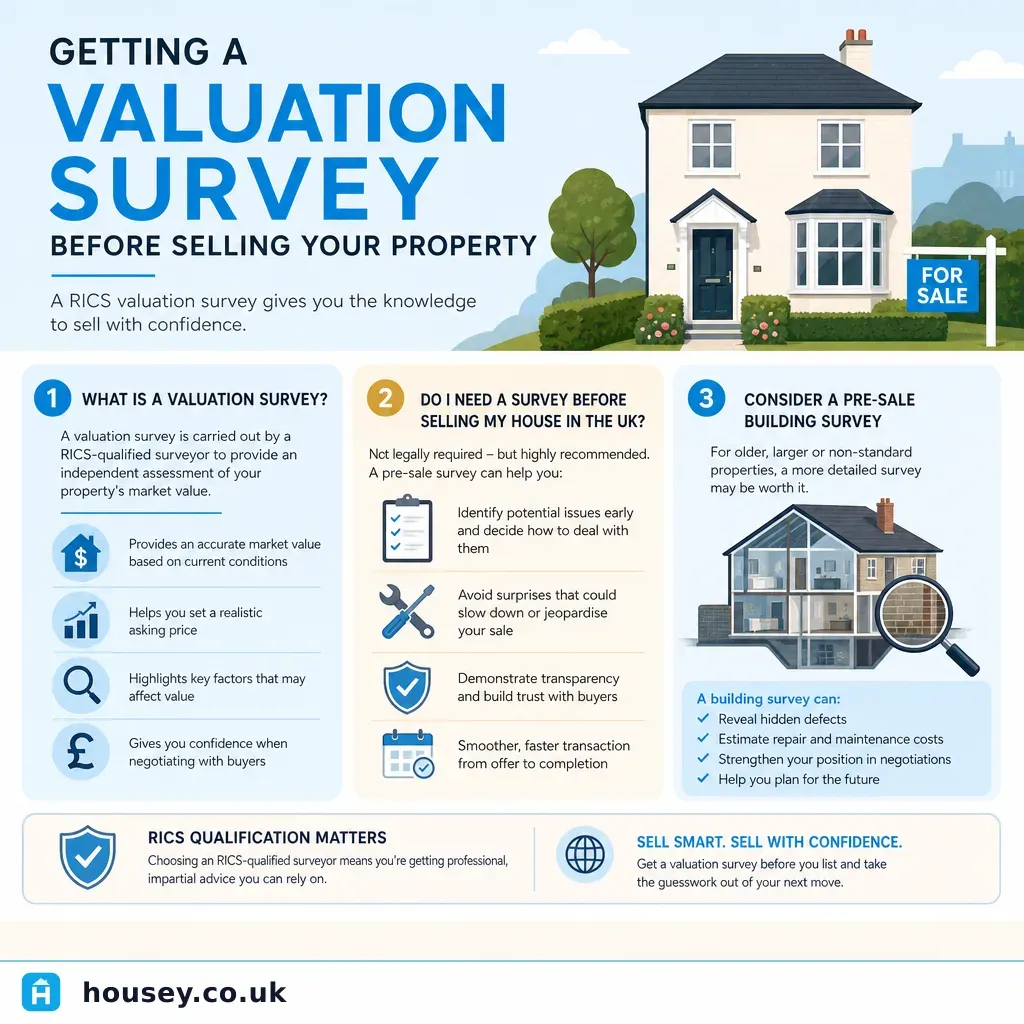
Getting a Valuation Survey Before Selling Your Property
Many sellers commission a free estate agent appraisal and assume that is sufficient — but a formal valuation or pre-sale survey can reveal condition issues, help justify the asking price, and reduce the risk of a buyer's survey triggering a late price renegotiation. This question most often arises in the weeks before a property is listed, when sellers are weighing up how to prepare, price, and present their home to the market.
Key points
- An estate agent valuation is a market appraisal, not a formal survey — it carries no professional liability and cannot be used for mortgage, insurance, or legal purposes.
- A RICS Red Book valuation (formally a Valuation Report under RICS Valuation — Global Standards) is the only residential valuation product with mandatory RICS oversight and enforceable professional standards.
- If you suspect significant defects, a pre-sale RICS Level 3 Building Survey can identify issues before a buyer's surveyor does — giving you the chance to address them or price them in before going to market.
- Reinstatement Cost Assessments (RCAs), used for buildings insurance purposes, are a separate product from market valuations — sellers may need both if the insured sum has not been reviewed recently.
- Under the Consumer Protection from Unfair Trading Regulations 2008, sellers generally must not conceal or misrepresent material defects — commissioning a pre-sale survey raises disclosure considerations you should discuss with your solicitor.
Important limitations
This article provides general information only. Property valuations and condition assessments are influenced by tenure, construction type, local market conditions, planning history, and a wide range of factors specific to individual properties. No article can substitute for a formal assessment by a qualified professional. Rules and circumstances vary by property and location. Always consult a RICS-registered valuer or chartered surveyor for advice specific to your situation.
What types of valuation or survey are relevant before selling?
Before marketing a property, sellers may encounter several different types of assessment. Understanding which you need — and which are optional — helps avoid unnecessary cost and confusion.
Comparison table: pre-sale assessment types
Assessment type | Purpose | Who provides it | Formally regulated | Indicative cost range |
|---|---|---|---|---|
Estate agent market appraisal | Guide asking price | Estate agent | No (TPO/PRS redress only) | Usually free |
RICS Red Book valuation | Formal market value for legal or financial use | RICS Registered Valuer | Yes (RICS regulated) | £300–£600+ |
RICS Level 2 Home Survey | Condition report — conventional properties | RICS-qualified surveyor | Yes (RICS regulated) | £400–£700+ |
RICS Level 3 Building Survey | Full structural survey — older or unusual properties | RICS-qualified surveyor | Yes (RICS regulated) | £600–£1,500+ |
Reinstatement Cost Assessment (RCA) | Rebuilding cost for insurance purposes | Chartered surveyor | Yes (RICS regulated) | £250–£500+ |
Indicative UK costs, last reviewed 2026-06-01. Costs vary by property size, location, tenure, and complexity.
Do I need a survey before I sell?
There is no legal requirement for a seller to commission any survey or formal valuation before marketing a property in England or Wales. However, there are situations where it is strongly worth considering.
A pre-sale survey may be particularly useful when:
- The property is older (pre-1919 construction) and you have not had a structural survey during your ownership
- You are aware of defects — damp, cracked render, roof issues — and want to understand their extent before pricing
- You want to reduce the risk of a buyer's survey triggering a significant renegotiation after an offer has been accepted
- You need a formal valuation for probate, divorce proceedings, or shared ownership staircasing
A pre-sale survey is less likely to be needed when:
- The property is a modern flat or recently built home in good condition
- You have recently completed building works with building control sign-off
- A solicitor is already resolving title or planning issues that affect value
Decision tree: which pre-sale assessment do I need?
- Choose a RICS Red Book valuation if you need a formal market value for legal or financial purposes — probate, divorce, shared ownership, or Help to Buy redemption.
- Choose a RICS Level 2 Home Survey if you want a condition overview of a conventional post-1919 property in apparent reasonable condition.
- Choose a RICS Level 3 Building Survey if the property is pre-1919, has unusual construction, visible defects, or has been significantly altered.
- Ask a chartered surveyor whether a targeted defect report is more appropriate if you have one specific concern — damp, subsidence, or roof failure.
- Arrange a Reinstatement Cost Assessment if your buildings insurance sum insured has not been reviewed in the past five years.
- Check with your solicitor before instructing any pre-sale survey — once you have condition information, you may have disclosure obligations under the Consumer Protection from Unfair Trading Regulations 2008.
How pre-sale findings affect negotiations
If a buyer commissions a survey after an offer is accepted and a defect is found, they may request a price reduction or ask for works to be completed before exchange. Having your own pre-sale survey means you can decide in advance whether to repair defects, adjust the asking price, or disclose and stand firm — rather than reacting under time pressure once an offer is on the table.
Once you have a pre-sale survey, you are generally expected to disclose material defects to prospective buyers under the Consumer Protection from Unfair Trading Regulations 2008. Speak to your solicitor about your disclosure obligations before instructing any pre-sale assessment.
When this becomes urgent
Seek professional advice immediately if:
- You suspect significant structural defects — movement, subsidence, or major damp — that could materially affect value or buyer safety
- A buyer has already withdrawn or requested a price reduction following their survey and you need an independent assessment
- You are completing legal documents that reference property value or condition and you have not had a formal assessment
- The property involves complex tenure — short leasehold, shared ownership, or a listed building — where valuation requires specialist expertise
What to ask a qualified professional
Before instructing a RICS valuer or surveyor for a pre-sale assessment, ask:
- Are you RICS registered, and will the report comply with current RICS Valuation — Global Standards?
- For a valuation: will this be a RICS Red Book valuation, and for what specific purpose is it valid?
- For a survey: what level of survey do you recommend for this property, and why?
- What will the report include, and over what timeframe will it be delivered?
- What access to the property will you need — loft, sub-floor void, outbuildings?
- What happens if you identify a significant defect — will you recommend further specialist reports?
- Is VAT included in the quoted fee, and are there any disbursements?
When to get professional help
Always use a RICS-registered valuer or chartered surveyor for any formal valuation or structural assessment — never rely solely on an estate agent appraisal for legal, financial, or insurance purposes. Seek professional help without delay if:
- You suspect subsidence, structural movement, significant damp, or roof failure
- The property has complex tenure — short leasehold, listed building, shared ownership
- A formal valuation is required for legal proceedings or financial decisions
- You are unsure about planning compliance, building regulations sign-off, or title issues that may affect value
How Housey can help
Housey connects sellers with qualified professionals for valuation surveys, RICS Home Surveys, and insurance valuations. Get quotes from regulated professionals in your area to understand your property's condition and value before you go to market.
Frequently asked questions
Is a free estate agent valuation reliable enough before selling?
A free estate agent appraisal is useful for gauging asking price, but it is not regulated and carries no professional liability. Estate agents have a commercial interest in winning your instruction, which can influence their guidance. For a formal, impartial assessment valid for legal or financial purposes, you need a RICS Registered Valuer — not an estate agent appraisal.
How much does a RICS valuation cost in the UK?
Indicative UK costs for a RICS Red Book residential valuation range from approximately £300 to £600 for a standard property, rising to £800 or more for larger, complex, or unusual homes. Costs vary by location, property type, and the purpose of the valuation. Always confirm what is included in the scope and whether VAT is charged on top (Indicative UK costs, last reviewed 2026-06-01).
Can I use a pre-sale survey to speed up conveyancing?
A pre-sale survey does not replace a buyer's survey or form part of the legal conveyancing pack. However, having condition information available can help answer questions raised by buyers' solicitors and surveyors after an offer is accepted, potentially reducing delays. Some buyers take comfort from a seller's pre-sale report, though many will commission their own survey regardless.
Do I need a separate reinstatement cost assessment for insurance?
A market valuation and a Reinstatement Cost Assessment (RCA) are different products. An RCA calculates the rebuilding cost for insurance purposes and bears no direct relationship to market value. If your buildings insurance sum insured has not been reviewed in several years, an RCA from a qualified surveyor is worth arranging — significant under-insurance can cause problems in the event of a claim.
Sources and further reading
- RICS guidance on residential valuations — RICS
- Consumer Protection from Unfair Trading Regulations 2008 — legislation.gov.uk
- The Property Ombudsman — consumer rights when selling — The Property Ombudsman
- Estate Agents Act 1979 — legislation.gov.uk
- HM Land Registry — property ownership and title — HM Land Registry
Useful next reads
 Surveys & Inspections
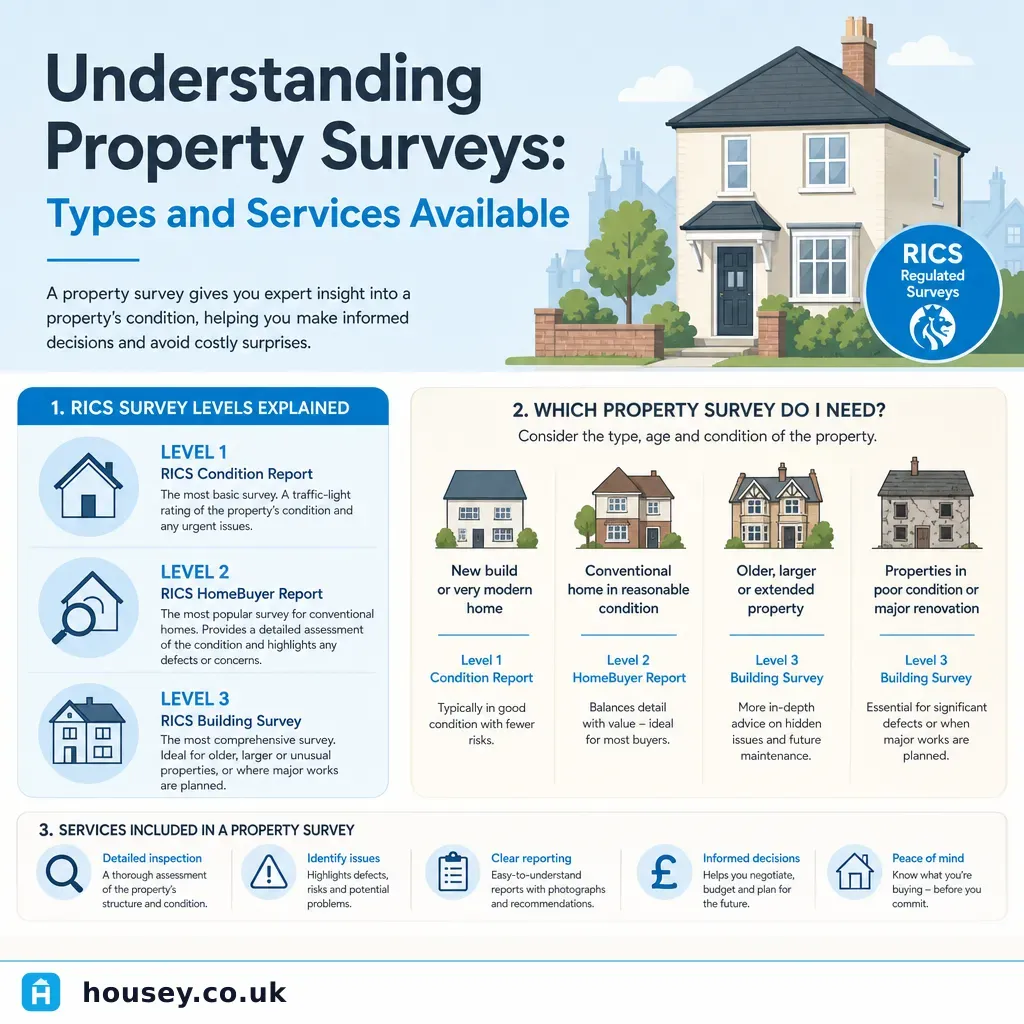
Understanding Property Surveys: Types and Services Available
UK property surveys follow three RICS-defined levels: Level 1 (Condition Report), Level 2 (Home Survey), and Level 3 (Building Survey).
 Surveys & Inspections
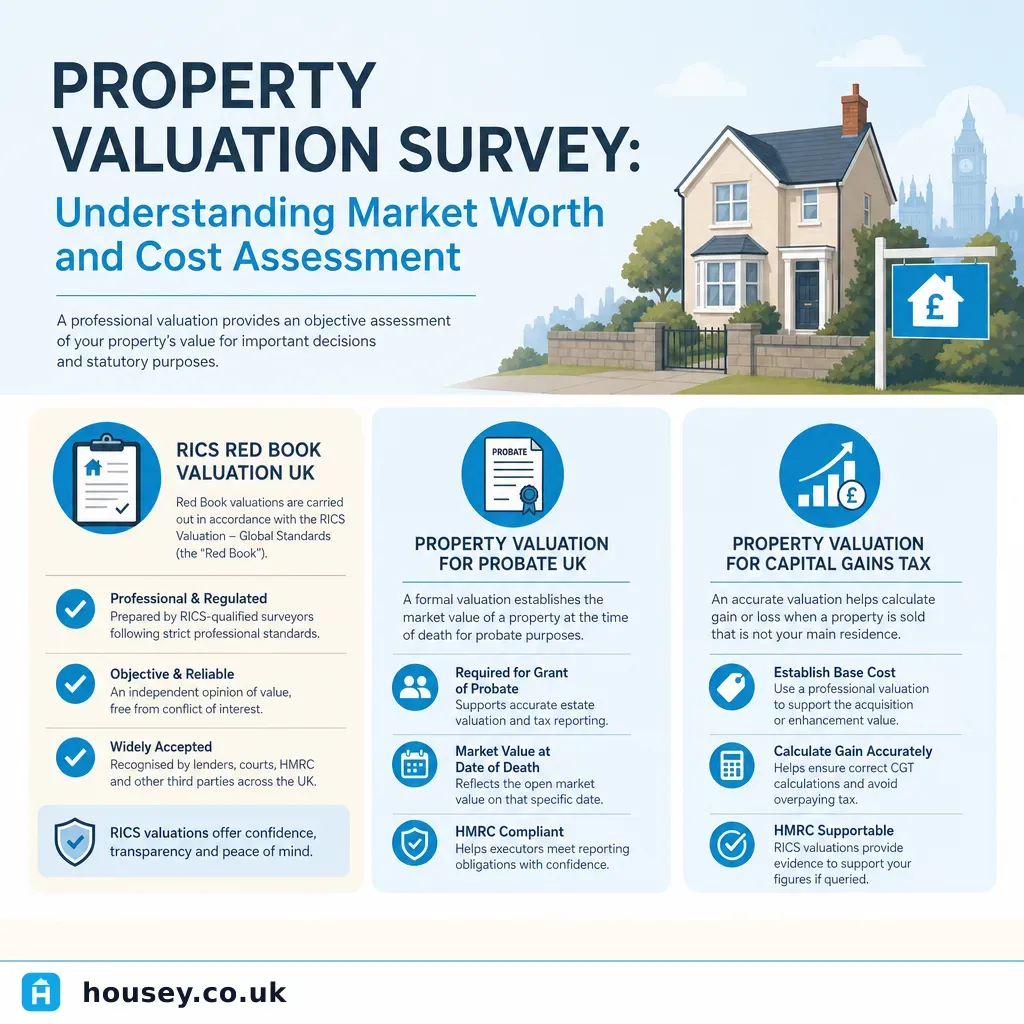
Property Valuation Survey: Understanding Market Worth and Cost Assessment
A property valuation survey establishes a property's market value at a specific date.
 Surveys & Inspections
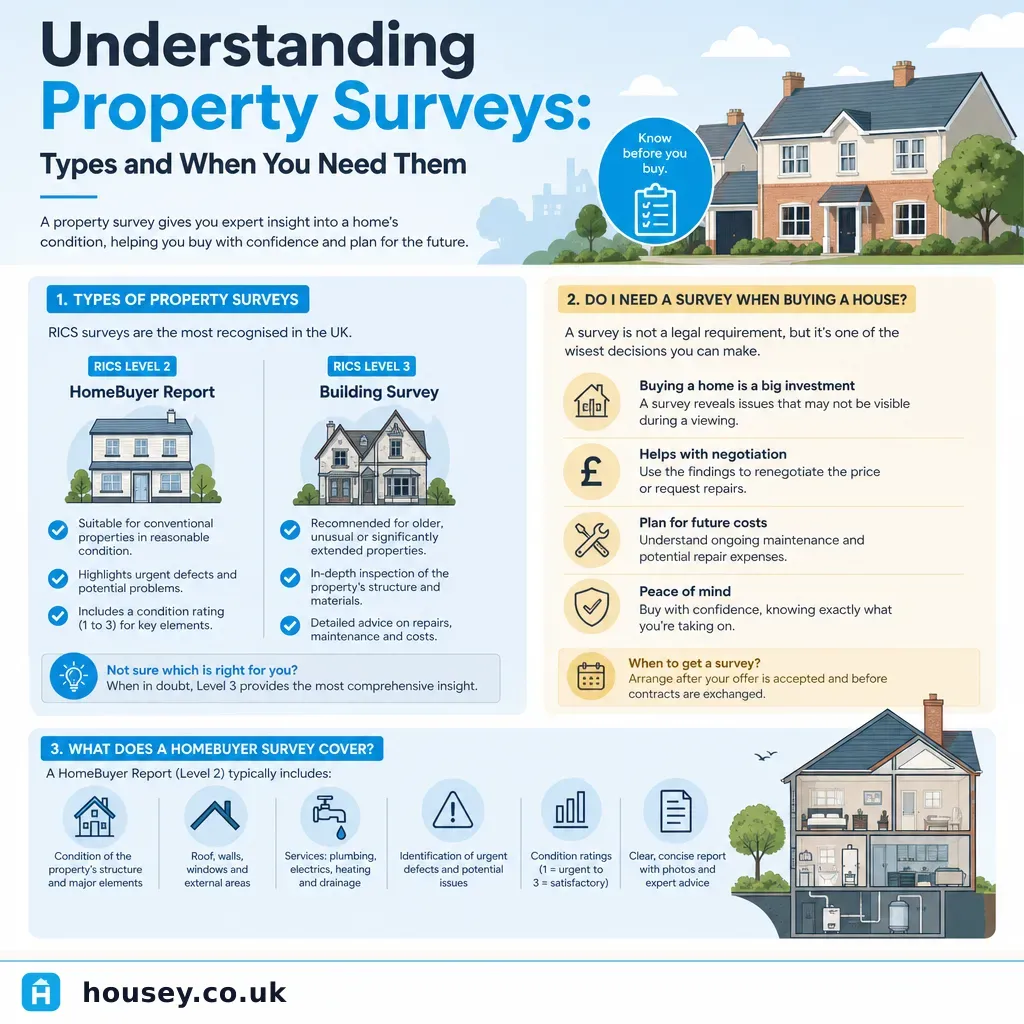
Understanding Property Surveys: Types and When You Need Them
The three main RICS survey types are the Level 1 Condition Report (for standard properties in good condition), the Level 2 Home Survey (conventional homes in reasonable condition), and the Level 3 Building Survey (older, unusual, or defective properties).
 Surveys & Inspections
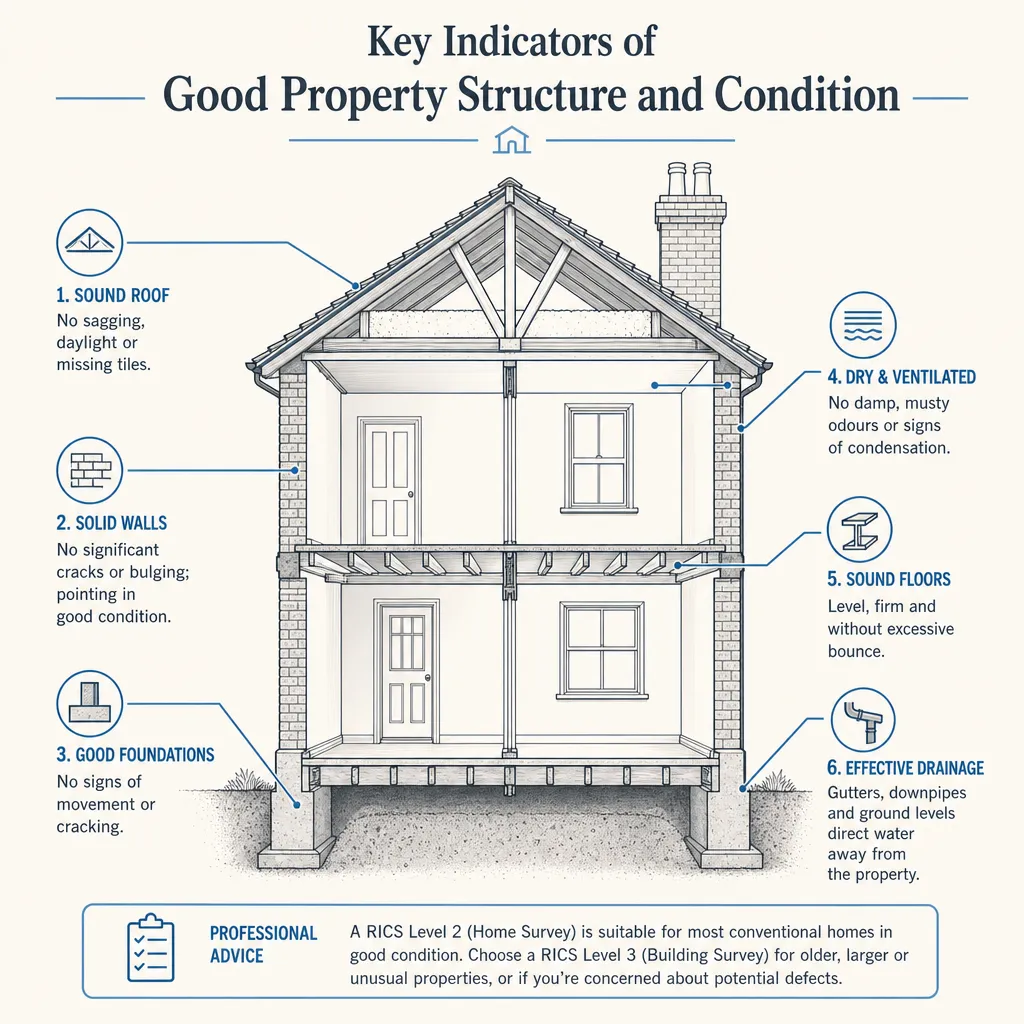
Key Indicators of Good Property Structure and Condition
Good property structure is indicated by plumb walls, level floors, crack-free masonry at corners and above openings, an intact roof covering, and dry internal surfaces.
 Surveys & Inspections
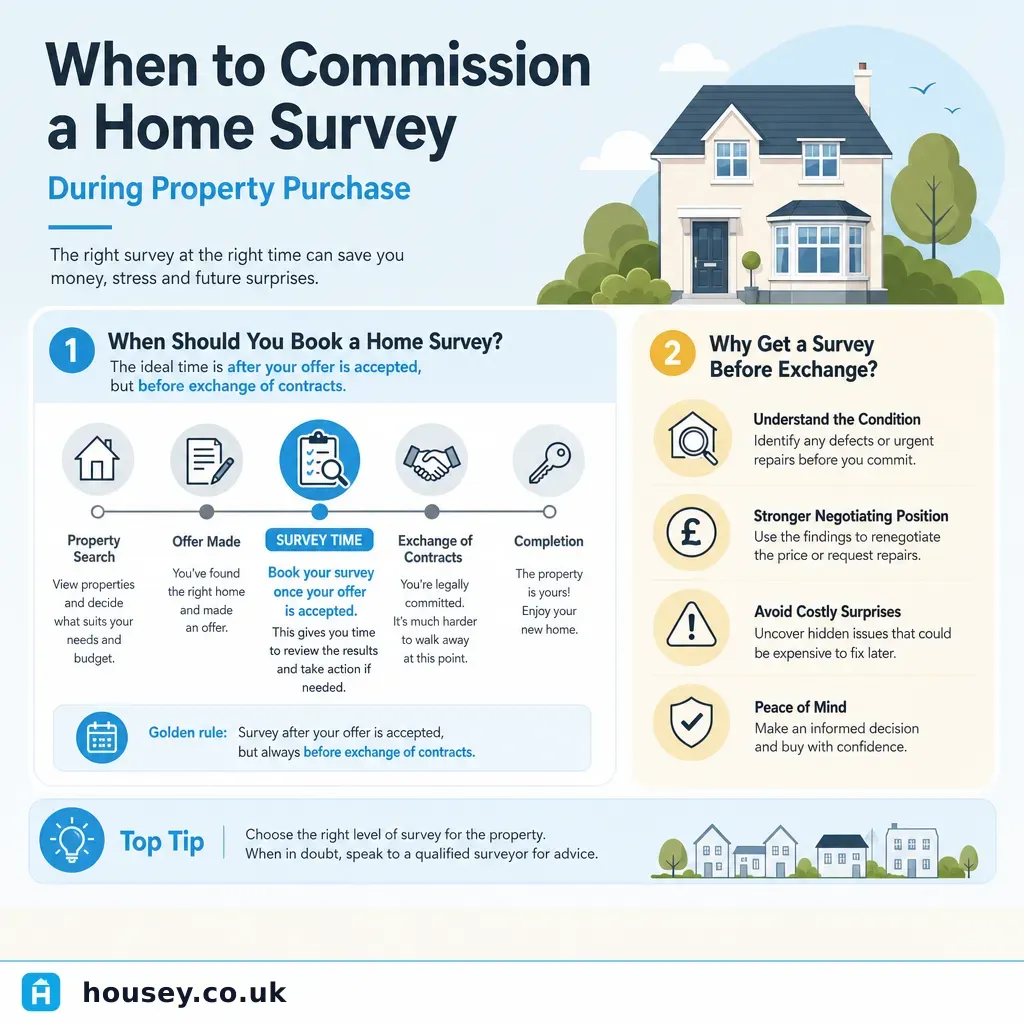
When to Commission a Home Survey During Property Purchase
Commission a home survey after your offer is accepted and before exchange of contracts.