Structural Building Survey Costs
By Housey · Last reviewed 11th of May 2026
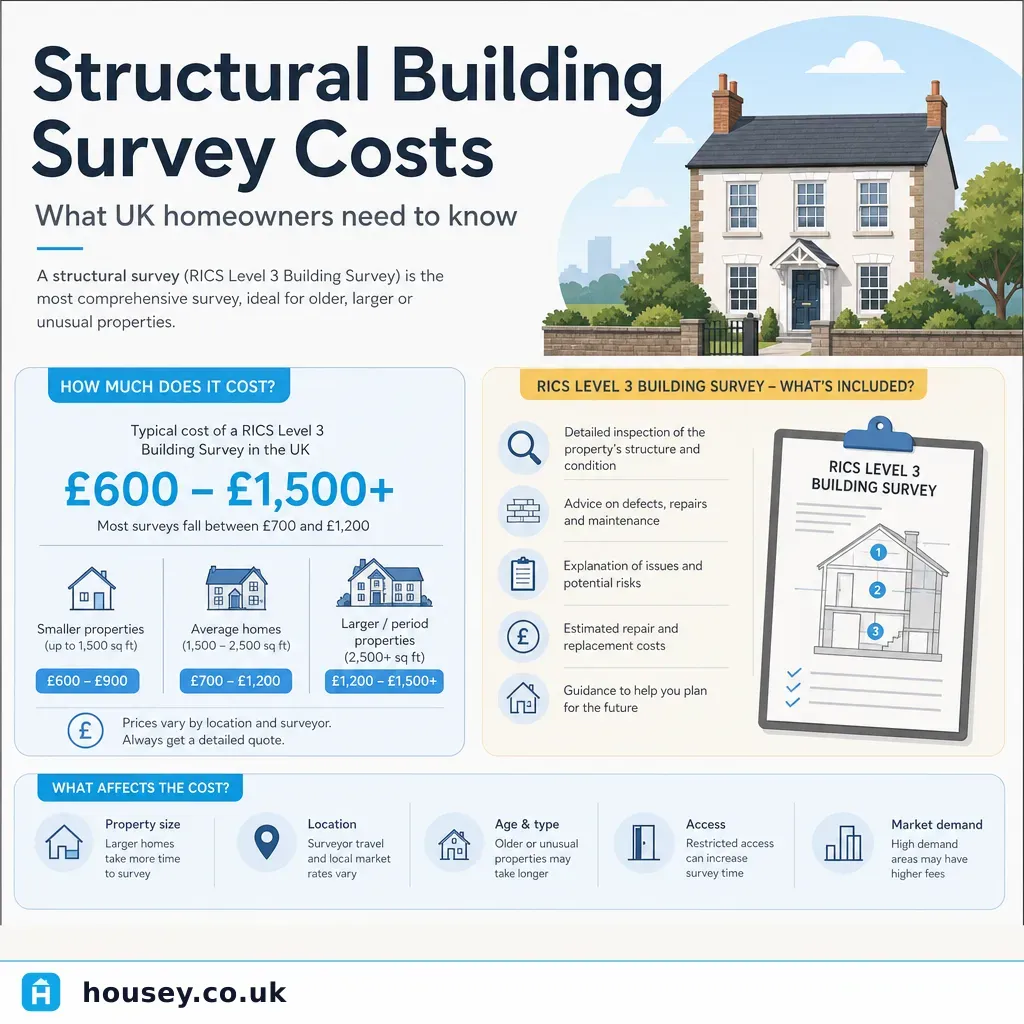
Structural Building Survey Costs
The question of which survey to commission—and what it will cost—usually arises at the point of offer acceptance, when a buyer, lender, or solicitor wants greater certainty about the property's structural condition before exchange. Older homes in particular—Victorian terraces, Edwardian semis, and inter-war housing of any type—frequently conceal defects that a standard mortgage valuation will not identify. Choosing the right inspection and understanding realistic fees can prevent expensive post-completion surprises and, in some cases, avoid purchasing a property with serious underlying problems altogether.
Key points
- A RICS Level 3 Building Survey—the most comprehensive RICS residential inspection—typically costs £500–£1,500 in the UK, depending on property size, age, construction type, and location. (Indicative UK costs, last reviewed 2026-05-11.)
- A structural engineer's specific defect report—used for isolated concerns such as cracking, subsidence, or roof spread—typically costs £300–£800; complex investigations may exceed this. (Indicative UK costs, last reviewed 2026-05-11.)
- RICS Level 3 surveys must be carried out by a RICS-registered surveyor; structural calculations require a Chartered Member of the Institution of Structural Engineers (MIStructE) or equivalent.
- A structural survey does not typically include drainage inspection, asbestos testing, or electrical and gas checks—each requires a separate specialist report.
- A lender's mortgage valuation is not a structural survey and is conducted primarily for the lender's protection, not the buyer's.
What does a structural building survey include?
A RICS Level 3 Building Survey—often called a 'full structural survey' in everyday usage—is the most detailed residential inspection RICS provides. It covers:
- Visual inspection of all accessible structural elements: walls, floors, roof structure, foundations (so far as visible), lintels, and chimney stacks.
- Assessment of damp, timber defects (rot, woodworm), and visible drainage condition.
- Review of extensions and alterations, and whether they appear to have been constructed correctly.
- A condition rating for each element: Condition 1 (no repair needed), Condition 2 (repairs needed), or Condition 3 (urgent attention required).
- A prioritised list of maintenance and repair recommendations.
The survey does not typically include intrusive investigation, floorboard lifting, or testing of services (gas, electrical, CCTV drainage). Where a surveyor identifies suspected subsidence or significant cracking, they may recommend a follow-on structural engineer's report.
Comparing your options: RICS levels and structural engineer reports
Option | Best for | Not ideal for | Typical cost (UK, 2026) | Main risk if wrong choice |
|---|---|---|---|---|
RICS Level 2 Home Survey | Conventional post-war homes in reasonable condition | Older, altered, or visibly defective properties | £400–£900 | Missing hidden defects in older or non-standard fabric |
RICS Level 3 Building Survey | Pre-1919, large, unusual, listed, or defective properties | Brand-new or recently renovated homes under NHBC warranty | £500–£1,500 | Overpaying for detail not needed on a sound modern home |
Structural engineer defect report | Specific concern: cracking, subsidence, roof spread, lintel failure | General condition check before purchase | £300–£800+ | Not getting a holistic overview of the property's condition |
Structural engineer monitoring report | Tracking progression of an identified crack over time | First-stage diagnosis of an unknown structural problem | £150–£400 | Conflating ongoing monitoring with initial diagnosis |
Indicative UK costs, last reviewed 2026-05-11. Fees vary by region, property size, and access conditions.
What drives the cost of a structural survey?
Several factors push fees up or down:
Property size: Surveyors typically price by floor area. A two-bedroom flat costs considerably less than a five-bedroom detached house.
Age and construction type: Pre-1919 solid-wall properties, properties with cellars, or those with non-standard construction—timber frame, concrete panels, steel frame—take longer to inspect and attract a higher fee.
Location: London and the South East consistently command higher professional fees than the North of England, Wales, or Northern Ireland for equivalent properties.
Access: Restricted loft hatches, blocked sub-floor voids, overgrown externals, and outbuildings extend inspection time and may increase the fee.
Complexity: Extensions lacking building regulations approval, significant cracking, visible damp, or suspected alterations to load-bearing elements require more investigation time.
Worked UK property scenario
Scenario: A buyer is purchasing a 1906 Victorian end-of-terrace in Leeds. The estate agent's particulars mention recently replastered walls in a rear addition. The buyer's solicitor flags that no building regulations certificate exists for what appears to be a 1980s single-storey extension. >A RICS Level 3 survey is commissioned (£780). The surveyor notes Condition 3 damp penetration at the rear addition and recommends a specialist damp and timber report (£350) and a drainage survey (£250). Combined pre-exchange spend: £1,380. The reports confirm remediation costs of £8,000–£12,000—information the buyer uses to renegotiate the purchase price downward by £9,500 before exchange.
Which survey should you choose?
- Choose a RICS Level 2 if the property is a conventional post-war home in visibly good condition with no obvious alterations.
- Choose a RICS Level 3 if the property is pre-1919, has had significant alterations, shows visible defects (cracking, damp, sagging ceilings or floors), or is a listed building.
- Instruct a structural engineer if your surveyor has already flagged a specific concern—cracking, subsidence, roof spread, or a suspected removed load-bearing wall—requiring engineering diagnosis or calculations.
- Check with your mortgage lender whether they require a specific survey or report type before proceeding with a mortgage offer.
What to ask before accepting a quote
- Is the surveyor RICS-registered, and at what membership grade?
- Does the fee cover the full property, including outbuildings, loft space, and cellars?
- What access will be required, and what happens if access is restricted on the day?
- Will the report use RICS condition ratings (1, 2, 3) for each element?
- Are follow-on specialist reports identified before or only after the inspection?
- Is VAT included in the quoted fee?
- How long will the written report take to arrive after the inspection date?
- What complaint and redress procedure applies if you are dissatisfied with the survey?
Red flags that mean you should commission a structural survey
The following conditions strongly suggest a RICS Level 3 survey is needed as a minimum, and may indicate a structural engineer's report will also be required:
- Stepped or diagonal cracking running through brickwork or external render.
- Visible bowing or leaning of walls, visible from the pavement.
- Doors or windows sticking without an obvious seasonal explanation.
- A crack in an external wall wider than 5 mm.
- Previous subsidence noted in the seller's property information form or insurance history.
- Significant sagging of the roof ridge, visible from the street.
- Absence of building regulations approval for extensions, loft conversions, or internal alterations.
- Evidence of previous underpinning or ground stabilisation.
- Property situated on known shrinkable clay soils, such as London clay or the East Midlands clays.
When to get professional help
For any of the red flags listed above, commission a RICS Level 3 survey before exchange—not after. If a crack is widening, a wall appears to be moving, or a lender has flagged a structural concern and withheld a mortgage offer, instruct a chartered structural engineer directly rather than waiting for a general survey first. Do not use this article as a substitute for professional assessment.
Important limitations
The cost ranges and guidance in this article are general information only. Structural conditions vary significantly by property age, construction type, ground conditions, local environment, and maintenance history. A written survey report relates only to the property inspected, the areas that were accessible, and the conditions present on the day of inspection. This article does not constitute structural, legal, or financial advice. Always read the full scope and limitations of any survey report you commission before exchange of contracts.
When this becomes urgent
Seek professional inspection immediately if:
- A crack is actively widening, stepping through brickwork courses, or exceeds 5 mm in width.
- A wall is visibly leaning, bulging, or bowing outward.
- Ground-floor floors feel noticeably soft, springy, or show visible deflection when walked upon.
- A ceiling or roof structure shows signs of sagging or imminent failure.
- A lender's surveyor has flagged a structural concern and declined to confirm a mortgage offer pending further investigation.
- You notice any sudden change in the condition of an existing crack or structural element between visits to the property.
What to ask a qualified professional
Before instructing a surveyor or structural engineer:
- Are you RICS-registered (for building surveyors) or a Chartered Member of the Institution of Structural Engineers (MIStructE)?
- Have you inspected similar property types and construction periods in this area before?
- Will you produce a written report with RICS condition ratings, or is this a verbal consultation only?
- Do you carry professional indemnity insurance, and for what minimum level of cover?
- If you identify a concern requiring follow-on investigation, will you recommend the appropriate type of specialist?
How Housey can help
If you need to commission a structural building survey before purchase or ahead of a major renovation, Housey connects you with RICS-registered surveyors covering your postcode area. View available professionals and compare credentials through our structural surveys service.
Frequently asked questions
Is a structural survey the same as a RICS Level 3 Building Survey?
In everyday usage, 'structural survey' usually refers to a RICS Level 3 Building Survey—the most comprehensive residential inspection RICS offers. A structural engineer's report is a different product: it diagnoses a specific engineering concern rather than providing a broad condition overview. If you are unsure which you need, speak to a RICS-registered surveyor first before committing.
Do I need a structural engineer or a RICS surveyor for a pre-purchase inspection?
For most pre-purchase inspections, a RICS Level 3 Building Survey is the right starting point. If the surveyor identifies a specific concern—subsidence, cracking, or a suspected removed load-bearing wall—they will typically recommend a structural engineer's follow-on report. You generally do not need both from the outset unless the property has a known structural history.
Can I use the survey report to renegotiate the purchase price?
Yes. A RICS Level 3 report identifying significant defects is commonly used by buyers to renegotiate the agreed price or request that sellers remedy specific issues before exchange. Your solicitor can advise on the practical process. Surveyors do not usually provide repair cost estimates, but can recommend the type of specialist contractor needed.
Does a structural survey check damp?
A RICS Level 3 survey notes visible evidence of damp and assigns a condition rating. It does not replace a specialist damp and timber report, which uses invasive moisture testing. Where damp is suspected, the Level 3 surveyor will usually recommend a separate specialist report as a follow-on step before exchange.
How long does a structural building survey take?
A RICS Level 3 inspection typically takes 2–4 hours on site for an average-sized house, longer for large or complex properties. The written report is usually delivered within 3–7 working days of the inspection, though some firms offer faster turnarounds for an additional fee.
Sources and further reading
- RICS Home Survey Standard — RICS
- Find a structural engineer — Institution of Structural Engineers
- Getting a survey when buying a home — Citizens Advice
- Building regulations approval — GOV.UK
Useful next reads
 Surveys & Inspections
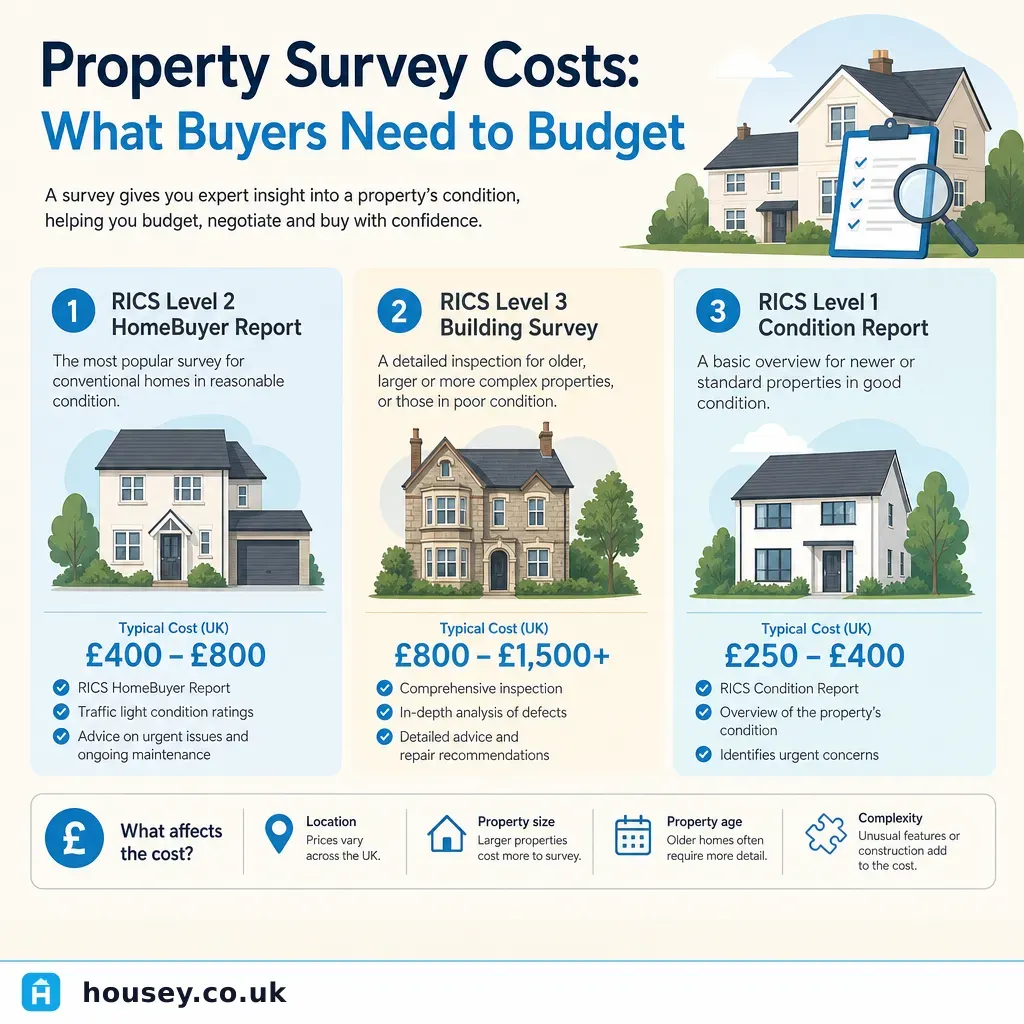
Property Survey Costs: What Buyers Need to Budget
A RICS Level 1 survey typically costs £300–£500, a Level 2 Home Survey £400–£900, and a Level 3 Building Survey £600–£1,500 or more.
 Surveys & Inspections
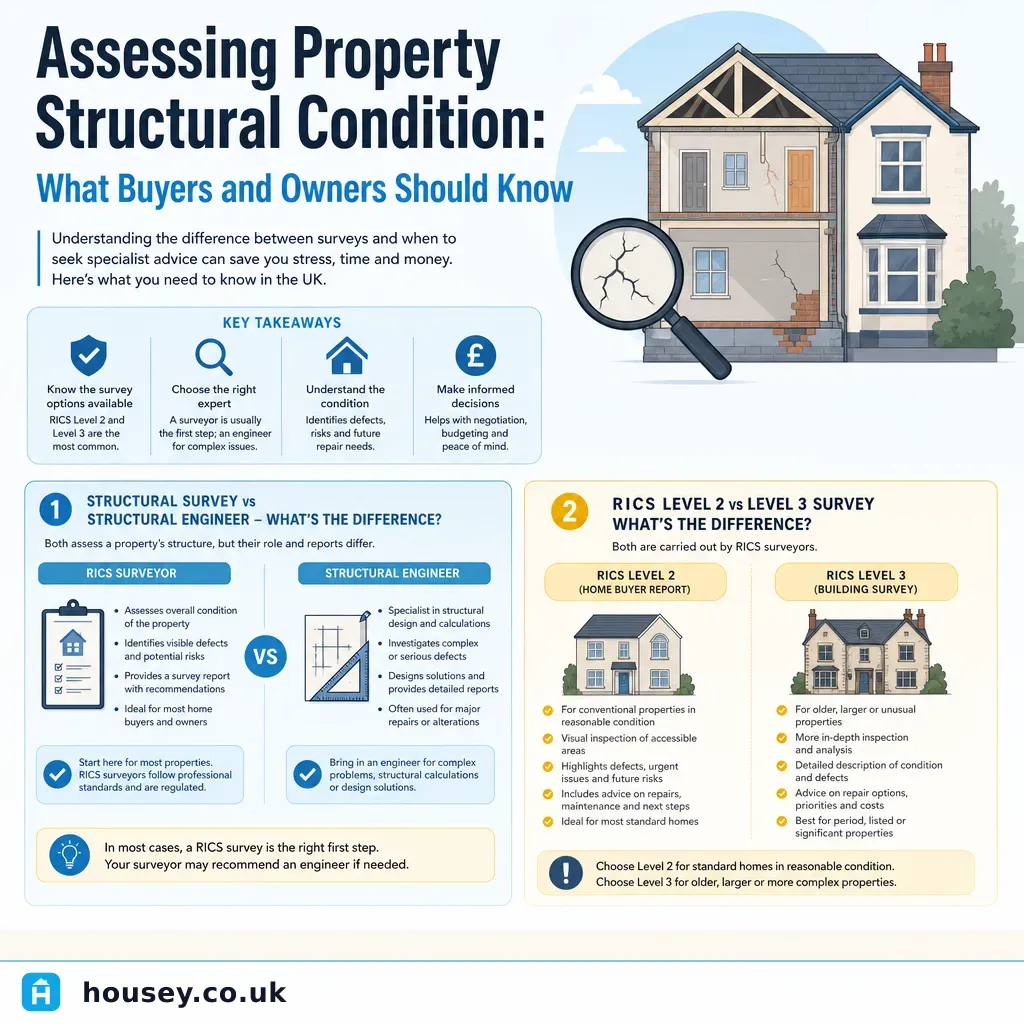
Assessing Property Structural Condition: What Buyers and Owners Should Know
A RICS Level 2 Home Survey suits conventional post-war properties in reasonable condition.
 Surveys & Inspections
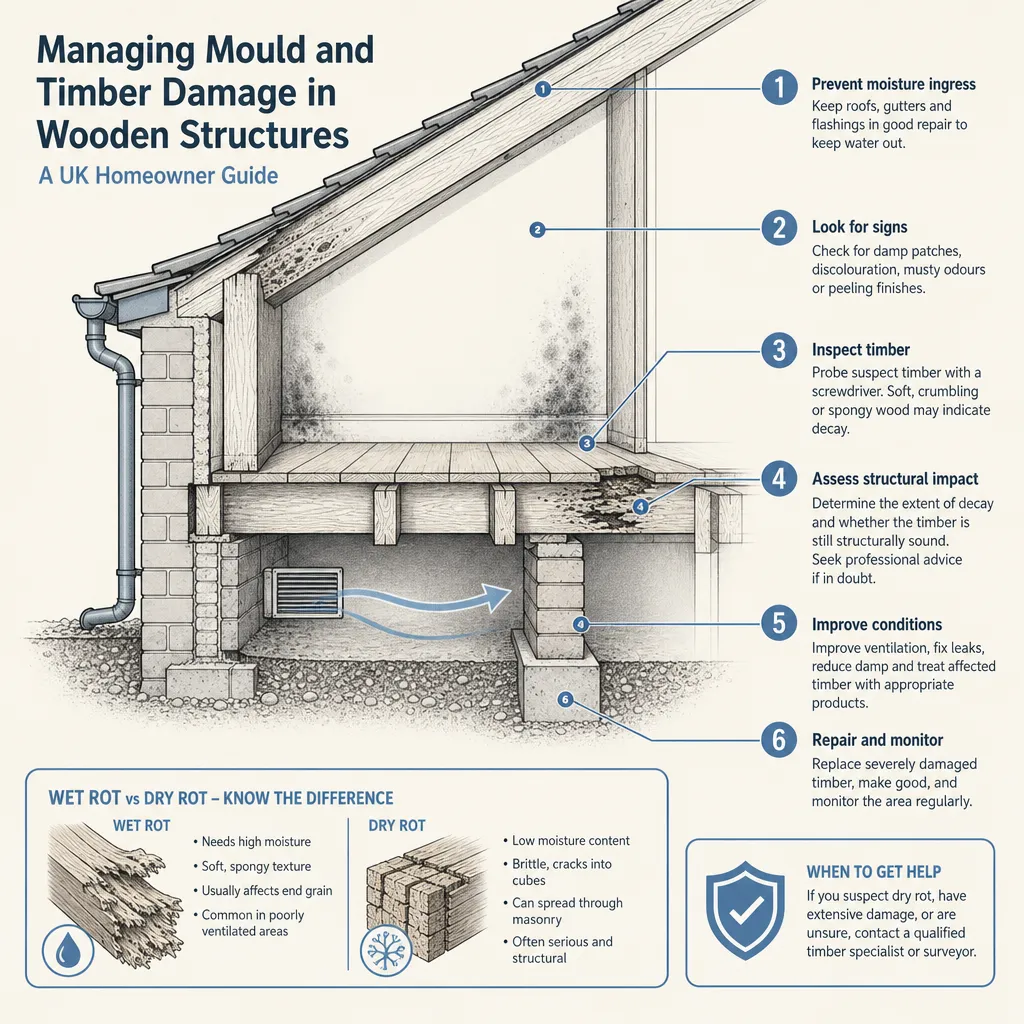
Managing Mould and Timber Damage in Wooden Structures
Mould and timber decay in wooden structures are usually symptoms of excess moisture rather than standalone problems.
 Surveys & Inspections
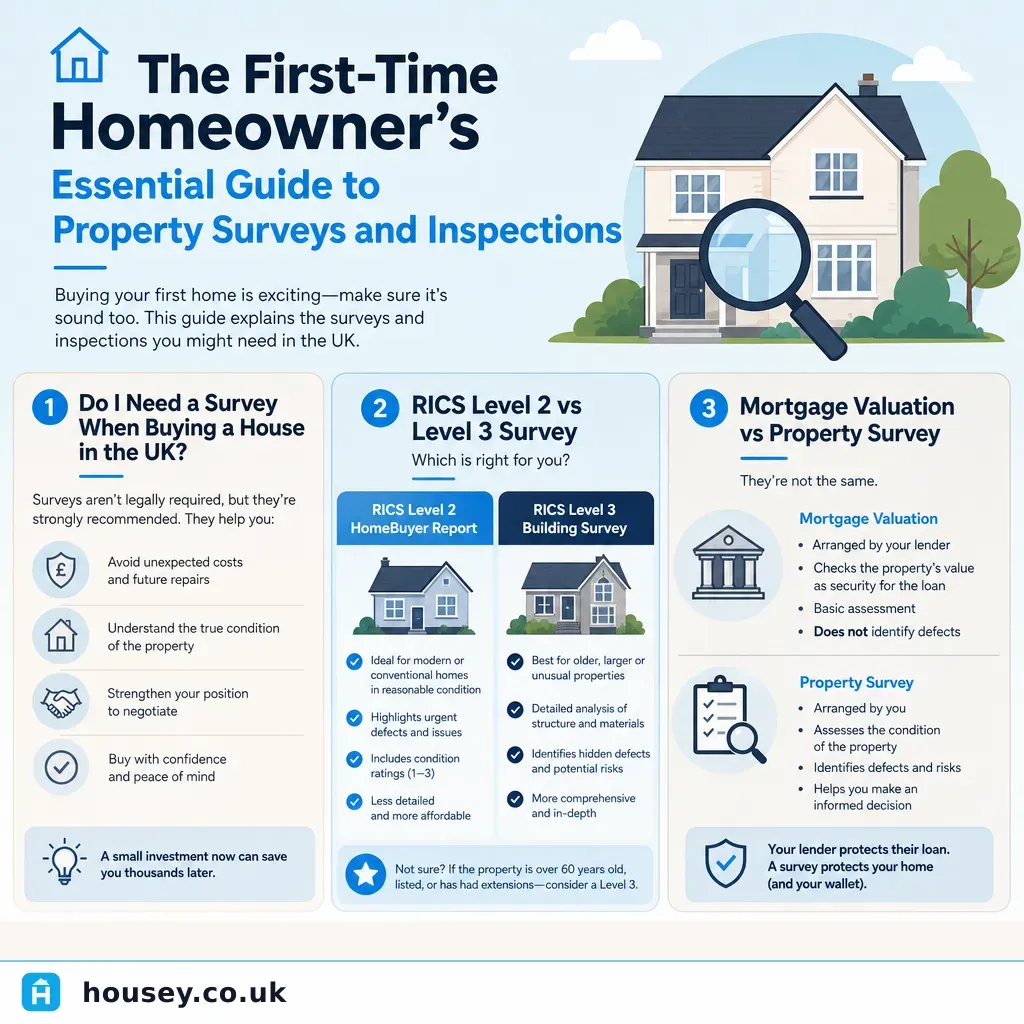
The First-Time Homeowner's Essential Guide to Property Surveys and Inspections
First-time buyers in the UK need more than the mortgage valuation — that report protects the lender, not you.
 Surveys & Inspections
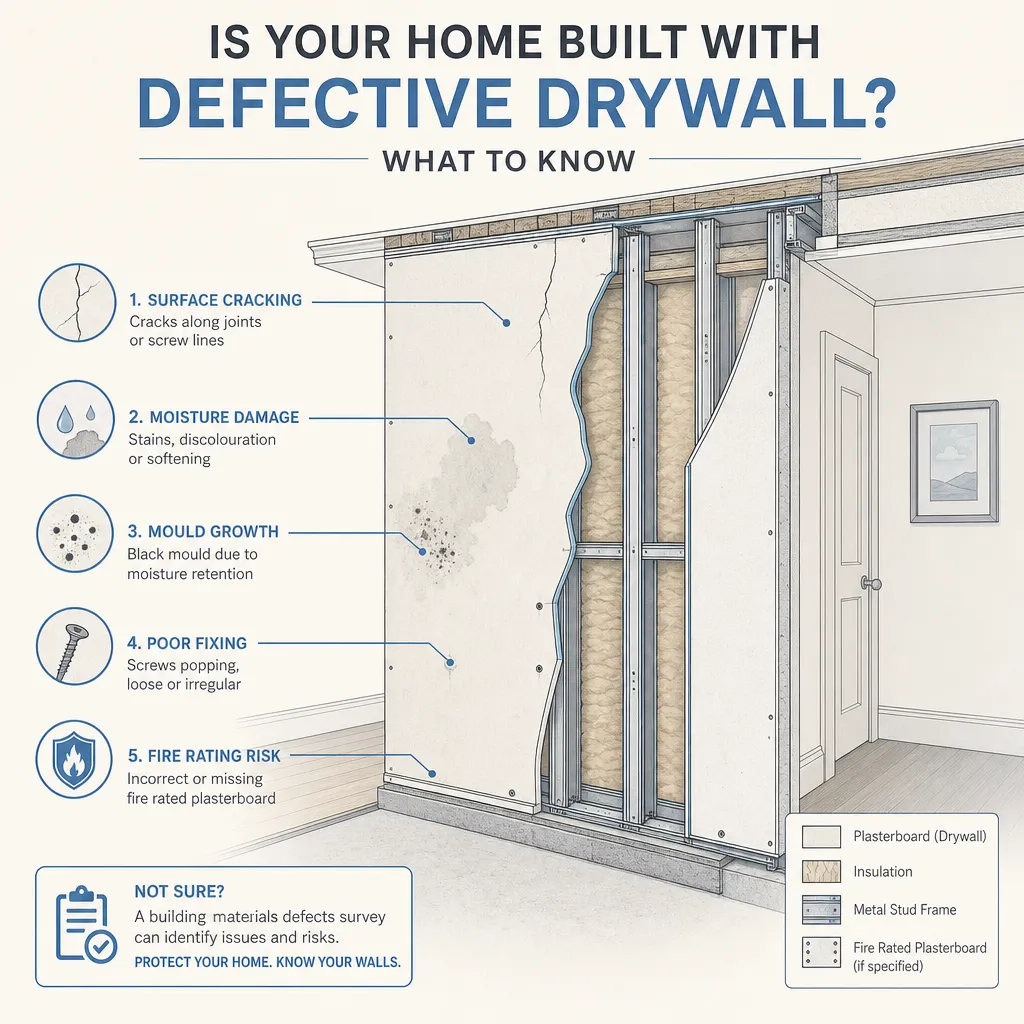
Is Your Home Built with Defective Drywall? What to Know
Contaminated Chinese drywall — as seen in US homes built 2001 to 2009 — is not a documented widespread problem in UK properties, where plasterboard is manufactured primarily to European standards.