Timber Pest Damage Assessment and Repair
By Housey · Last reviewed 9th of May 2026
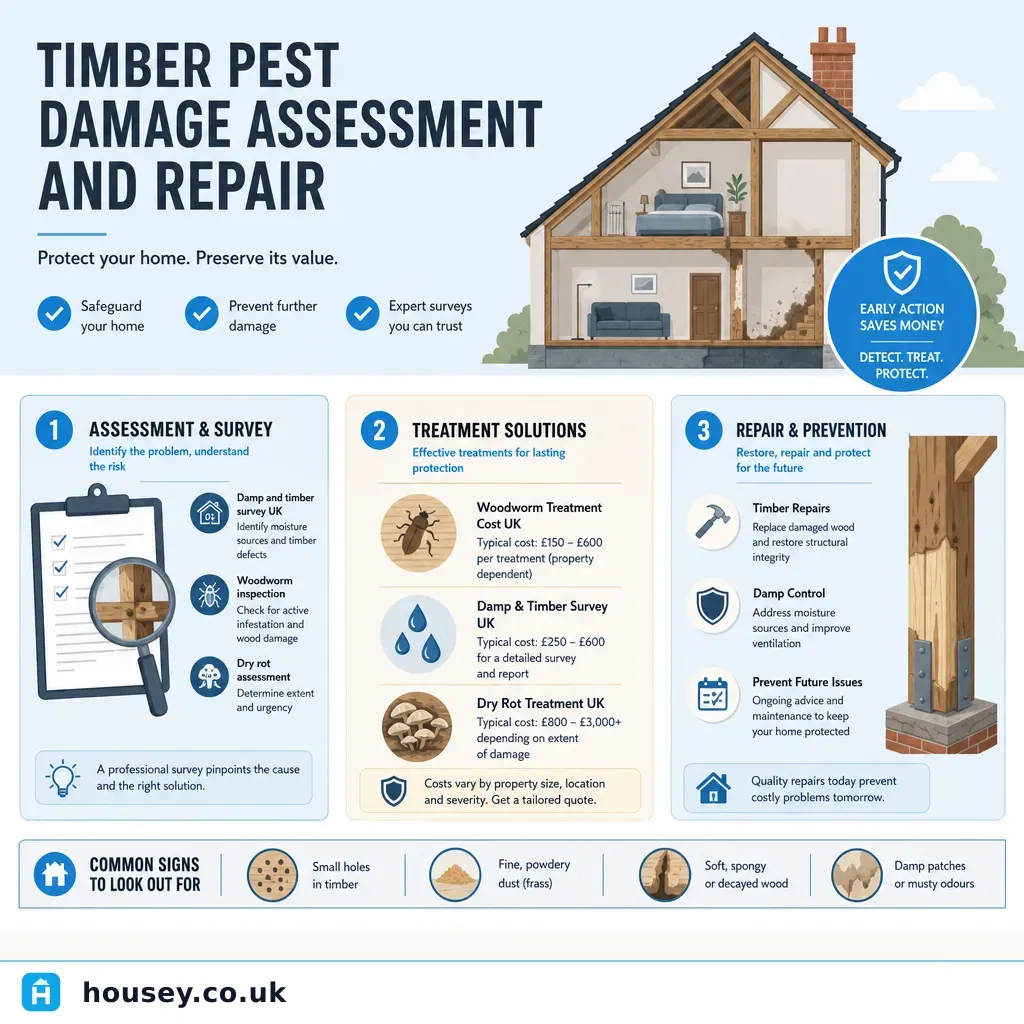
Timber Pest Damage Assessment and Repair
Timber pest damage in UK homes is most commonly caused by wood-boring insects — woodworm being the most familiar — alongside fungal decay including dry rot and wet rot. Discovering flight holes in a floor joist, a powdery dust beneath old floorboards, or crumbling wood in a roof space raises urgent questions about the extent of the damage, whether the structure is at risk, and what a competent repair will involve. Understanding what type of pest or decay is present, how far it has spread, and which timbers are affected determines the scale of the remediation work and which professionals need to be involved.
Key points
- The most common timber pest in UK homes is the Common Furniture Beetle (Anobium punctatum), whose larvae create the flight holes associated with woodworm; most infestations in non-structural timbers pose limited structural risk.
- Death Watch Beetle (Xestobium rufovillosum) attacks old hardwood timbers in pre-Victorian buildings and can cause serious structural damage if left undetected over many years.
- House Longhorn Beetle (Hylotrupes bajulus) is a notifiable pest concentrated in parts of Surrey, Hampshire, and Berkshire that can severely weaken softwood roof timbers; Building Regulations Approved Document A contains provisions for treatment in affected postcode areas.
- Dry rot (Serpula lacrymans) is a fungal organism — not an insect pest — but is assessed alongside timber pests because it causes the most extensive structural timber damage of any decay organism in UK buildings and can spread through masonry.
- A damp and timber survey by a Property Care Association (PCA)-accredited specialist is the standard first step for assessment; where load-bearing timbers are affected, a structural engineer's input is also required.
Common timber pests in UK buildings
Common Furniture Beetle (woodworm)
The Common Furniture Beetle is the most widespread timber pest in UK buildings. The beetle lays eggs in cracks in bare, untreated timber; larvae bore through the wood for two to five years before emerging as adults through the characteristic small round flight holes (approximately 1–2 mm diameter). Active infestations are identified by fresh, cream-coloured, powdery bore dust (frass) beneath or around the holes. Old, inactive infestations leave darkened, empty holes with no frass present.
Structural risk from woodworm alone is usually low unless the infestation is severe and long-standing in a load-bearing member. Sapwood is most vulnerable; the dense heartwood of hardwood timbers is more resistant to attack.
Death Watch Beetle
The Death Watch Beetle attacks the heartwood of old oak and other hardwoods — typically found in pre-Victorian properties, churches, and historic timber-frame buildings. Its flight holes are larger (approximately 3 mm, oval rather than round). Severe, long-running infestations can cause significant weakening of structural timbers and are taken particularly seriously in listed buildings. A tapping or clicking sound heard in late spring is a recognised sign of adult beetle activity.
House Longhorn Beetle
The House Longhorn Beetle is a notifiable pest affecting mainly softwood roof timbers. Its range in England is concentrated in parts of Surrey, Hampshire, and Berkshire. Larvae are large and create substantial oval tunnels that severely weaken rafters and purlins over time. Building Regulations Approved Document A contains provisions for treatment requirements in affected postcode areas. If purchasing a home in a potentially affected area, confirm that any survey specifically addresses this pest.
Wood-boring weevils
Wood-boring weevils are found in timber that is already damp or affected by fungal decay. They are typically a secondary infestation, indicating that a moisture problem exists and should be resolved first rather than treating the weevils alone.
Dry rot and wet rot
Dry rot (Serpula lacrymans) breaks down the cellulose in timber, leaving a characteristic cuboid cracking pattern. Uniquely among UK decay organisms, it can spread its mycelium through masonry and non-timber materials, allowing decay to travel well beyond the original damp area. It is the most serious form of timber decay in UK buildings.
Wet rot affects timber that remains persistently damp but is typically more localised than dry rot. It commonly affects external joinery, window sills, ground-floor timbers, and soffits in properties with poor sub-floor ventilation. Addressing the moisture source is essential before any treatment is effective.
What does a timber pest assessment involve?
A damp and timber survey carried out by a PCA-accredited specialist typically includes:
- Inspection of accessible structural and non-structural timbers — floor joists, rafters, purlins, wall plates, lintels, studwork, and staircase timbers.
- Calibrated moisture meter readings on timber and adjacent masonry to identify elevated moisture levels.
- Identification of pest species from flight-hole morphology, frass characteristics, and — where visible — larvae or adults.
- Assessment of whether any infestation is active or historic.
- Identification of the moisture source driving any fungal decay.
- A written report with findings, a specification for treatment and repair, and guidance for obtaining remediation quotes.
Type of damage | Typical assessment professional | May also require |
|---|---|---|
Active or historic woodworm, non-structural timbers | PCA-accredited damp and timber specialist | No further input if non-structural members only |
Death Watch Beetle in structural timbers | PCA specialist | Structural engineer; Historic England if listed building |
House Longhorn Beetle in affected postcode | PCA specialist | Structural engineer; building control notification |
Active dry rot | PCA specialist | Structural engineer if floor joists or roof timbers compromised |
Wet rot in external joinery | Specialist contractor or carpenter | Moisture investigation by roofer, plumber, or surveyor |
Multiple pest and decay issues across the property | PCA specialist for full survey | Structural engineer for critical load-bearing members |
Repair approaches
Treatment of active insect infestations
For most woodworm infestations, treatment involves applying a permethrin-based or boron-based insecticide to bare timber surfaces using low-pressure spray or brush application. Inaccessible timbers in roof spaces and floor voids are treated via spray access points. Treatment provided by PCA-accredited contractors is typically guaranteed for 20 to 30 years, subject to conditions.
Death Watch Beetle and House Longhorn Beetle in structural timbers may require targeted injection treatment in addition to surface application. A structural engineer should confirm whether affected members also need reinforcement or replacement.
Dry rot remediation
Dry rot remediation is a more invasive process than treating an insect infestation. Standard approaches include:
- Identifying and eliminating the moisture source before any other remediation work begins.
- Removing all visibly affected timber, cutting back to sound wood plus a safety margin.
- Sterilising affected masonry with fungicide to kill mycelium in the wall structure.
- Replacing structural timbers with pre-treated softwood or, where a structural upgrade is needed, engineered timber sections.
- Improving ventilation to reduce the risk of recurrence.
Because dry rot mycelium can spread through walls, adjacent areas often need to be opened up to establish the full extent of the outbreak. Remediation costs can escalate beyond initial estimates for this reason, and a thorough initial assessment is important before accepting a quote.
Structural timber repair
Where load-bearing timbers are damaged, options include:
- Splice repair: cutting out the damaged section and splicing in new pre-treated timber using gang-nail plates or bolted connections.
- Resin consolidation: injecting epoxy resin into a partially damaged member, sometimes combined with stainless steel rods for reinforcement. Common in conservation work where replacing original timber is undesirable or subject to consent conditions.
- Full replacement: removing and replacing the entire member. Most straightforward for non-historic properties.
Structural repairs to load-bearing timbers should be designed or reviewed by a structural engineer. In listed buildings, the repair approach should be agreed with the local planning authority before work begins.
Red flags that mean act quickly
Act promptly if you observe any of the following:
- Fresh, cream-coloured frass alongside soft, spongy, or crumbling timber in a floor joist or roof rafter — this may indicate significant structural weakening requiring urgent assessment.
- Visible white or grey mycelium (fungal strands), rust-red spore dust, or a strong mushroom-like smell — characteristic signs of active dry rot.
- Springy or noticeably bouncing floorboards — may indicate joists affected by fungal decay or heavy beetle damage.
- Timber that a screwdriver sinks into with little resistance — a basic probe test indicating serious decay or infestation.
- Crack patterns in wall plaster close to a timber lintel or beam — may indicate a structural timber has been weakened and is deflecting.
- The property is in a House Longhorn Beetle risk postcode and no specialist survey has ever been carried out.
Important limitations
This article provides general background information on common UK timber pests and decay organisms. It is not a substitute for a site inspection by a qualified specialist. The significance of any damage varies greatly depending on the pest species, timber type, structural role of the affected member, moisture levels, building age, and construction method.
Rules concerning notifiable pests, listed building consent for specific repair methods, and building control requirements can vary by property and location. Always instruct a PCA-accredited damp and timber specialist, and involve a chartered structural engineer where load-bearing timbers are affected. Do not attempt to treat suspected dry rot outbreaks without first identifying and eliminating the moisture source.
What to ask a qualified professional
Before instructing a damp and timber specialist, ask:
- Are you accredited by the Property Care Association (PCA), and can you provide current evidence of your accreditation?
- Which areas of the property will you inspect, and are there areas that cannot be accessed that would limit the scope of the assessment?
- Will your report include a treatment and repair specification, or are works quoted separately after the survey?
- Do you offer a guarantee for treatment, and is that guarantee backed by an insurance-backed warranty?
- If structural timbers are found to be affected, will you recommend a structural engineer, or does your service cover structural assessment?
- Is VAT included in any quoted remediation cost?
- For dry rot: how will you establish and address the moisture source before recommending remediation works?
- For listed buildings: do you have experience working on listed properties, and do you understand the consent requirements for different repair methods?
When to get professional help
Any suspected active infestation or fungal decay should be assessed by a qualified professional rather than treated on the basis of a DIY diagnosis alone. This is especially important when:
- Floor or roof timbers are involved.
- The property was built before 1919 and retains original timber frames, floor joists, or roof timbers.
- Signs of dry rot — mycelium, cuboid cracking, spore dust — are visible anywhere in the building.
- You are purchasing a property and a survey has flagged timber concerns.
- The property is listed or within a conservation area.
How Housey can help
Housey can help you request quotes from damp and timber survey specialists who carry out PCA-standard assessments and produce written reports with treatment and repair specifications — giving you a clear basis for comparing remediation quotes.
Frequently asked questions
How do I know if woodworm is active or old?
Active woodworm produces fresh, cream-coloured, powdery frass beneath or around the flight holes, and the holes themselves may appear sharp-edged and bright inside. Old infestations have darkened holes and dry, compressed, or absent frass. A damp and timber specialist can confirm whether an infestation is active during a site inspection and advise on whether treatment is necessary.
Is woodworm dangerous to the structure of my home?
In most cases, Common Furniture Beetle (woodworm) in non-structural timbers poses limited structural risk. If the infestation is severe and long-standing in a load-bearing joist or rafter — particularly in an older property — it can weaken the member over time. A specialist should assess any infestation in structural timbers, and a structural engineer should be involved where the extent of damage is uncertain.
Does home insurance cover timber pest damage?
Most standard UK home insurance policies do not cover gradual timber pest damage or fungal decay, as these are classed as maintenance issues rather than sudden or unforeseen events. Check your policy wording carefully. Specialist policies for older or historic properties may differ, but coverage for gradual deterioration is uncommon. Always read the exclusions before assuming a claim will be accepted.
How much does a damp and timber survey cost?
Indicative costs for a damp and timber survey range from approximately £200 to £500 for a standard residential property, depending on size and scope (Indicative UK costs, last reviewed 2026-05-09; prices vary by region and firm). Remediation costs are entirely separate and depend on the nature and extent of any damage found during the inspection.
What is the difference between dry rot and wet rot?
Dry rot (Serpula lacrymans) is the more serious: it can spread its mycelium through masonry and requires more extensive remediation, including treatment of surrounding wall areas. Wet rot is typically localised to persistently damp timber and does not travel through masonry. Both types require identifying and eliminating the moisture source before any treatment or repair will be effective long term.
Sources and further reading
- Find a PCA-accredited specialist — Property Care Association
- Timber: pests and decay in historic buildings — Historic England
- Building Regulations Approved Documents — GOV.UK
Useful next reads
 Surveys & Inspections
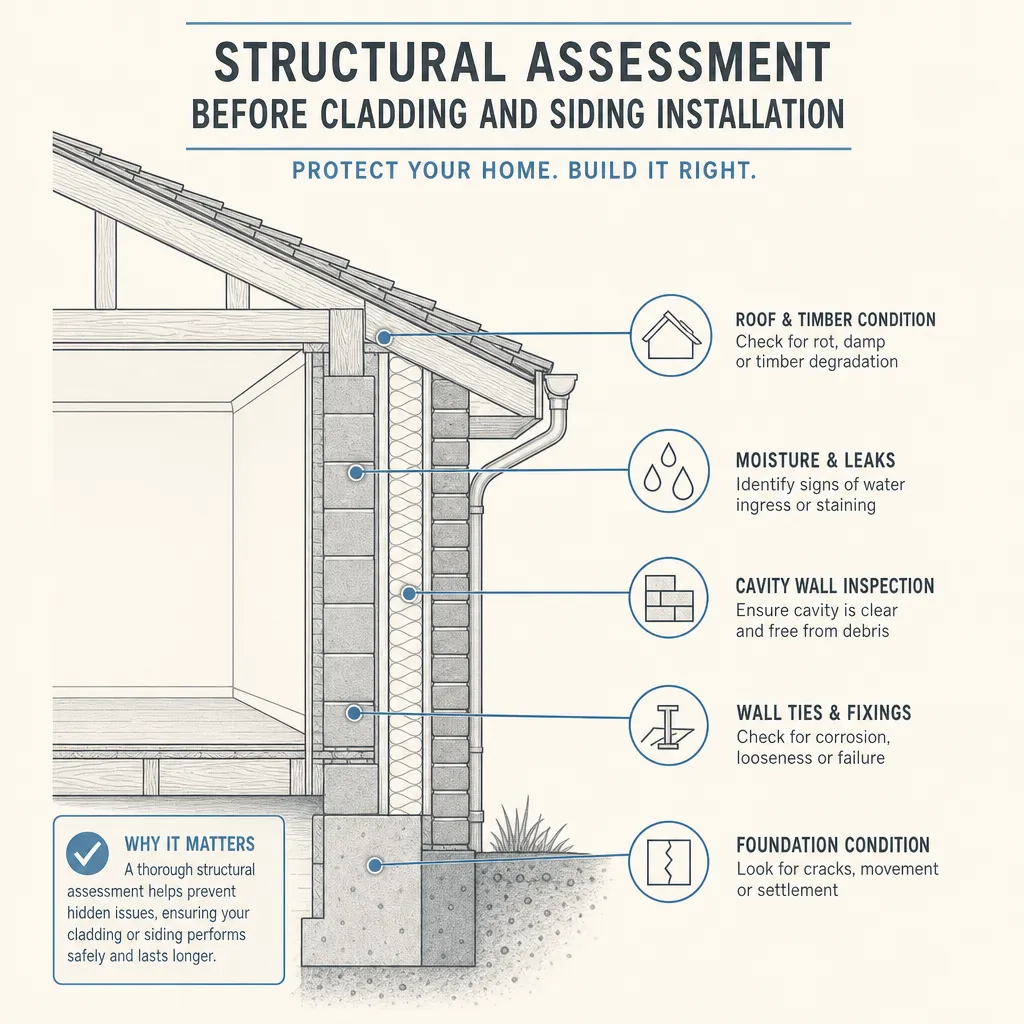
Structural Assessment Before Cladding and Siding Installation
Before installing external cladding or siding, a structural or specific defect assessment is needed to identify hidden timber decay, damp penetration, cavity wall defects, and any load-bearing implications.
 Surveys & Inspections
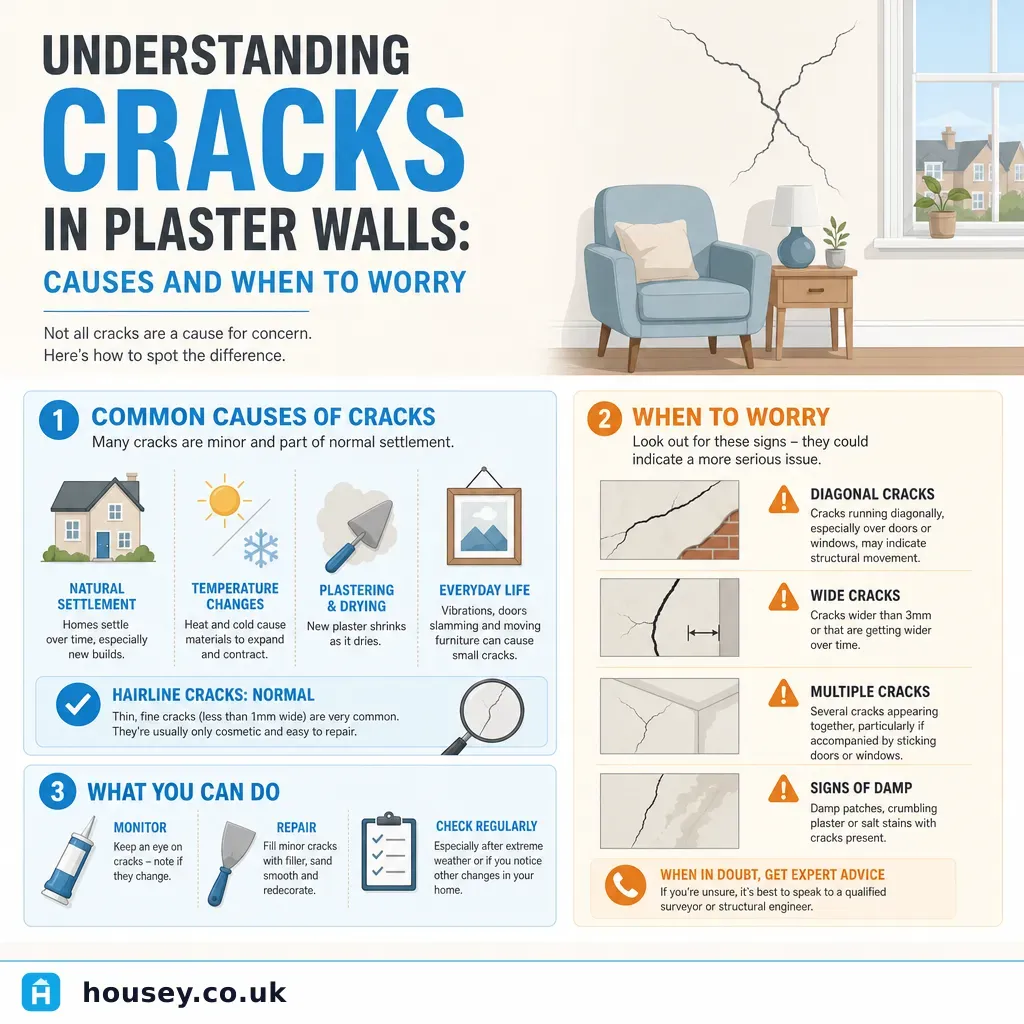
Understanding Cracks in Plaster Walls: Causes and When to Worry
Most hairline plaster cracks are cosmetic, caused by seasonal shrinkage or minor settlement.
 Surveys & Inspections
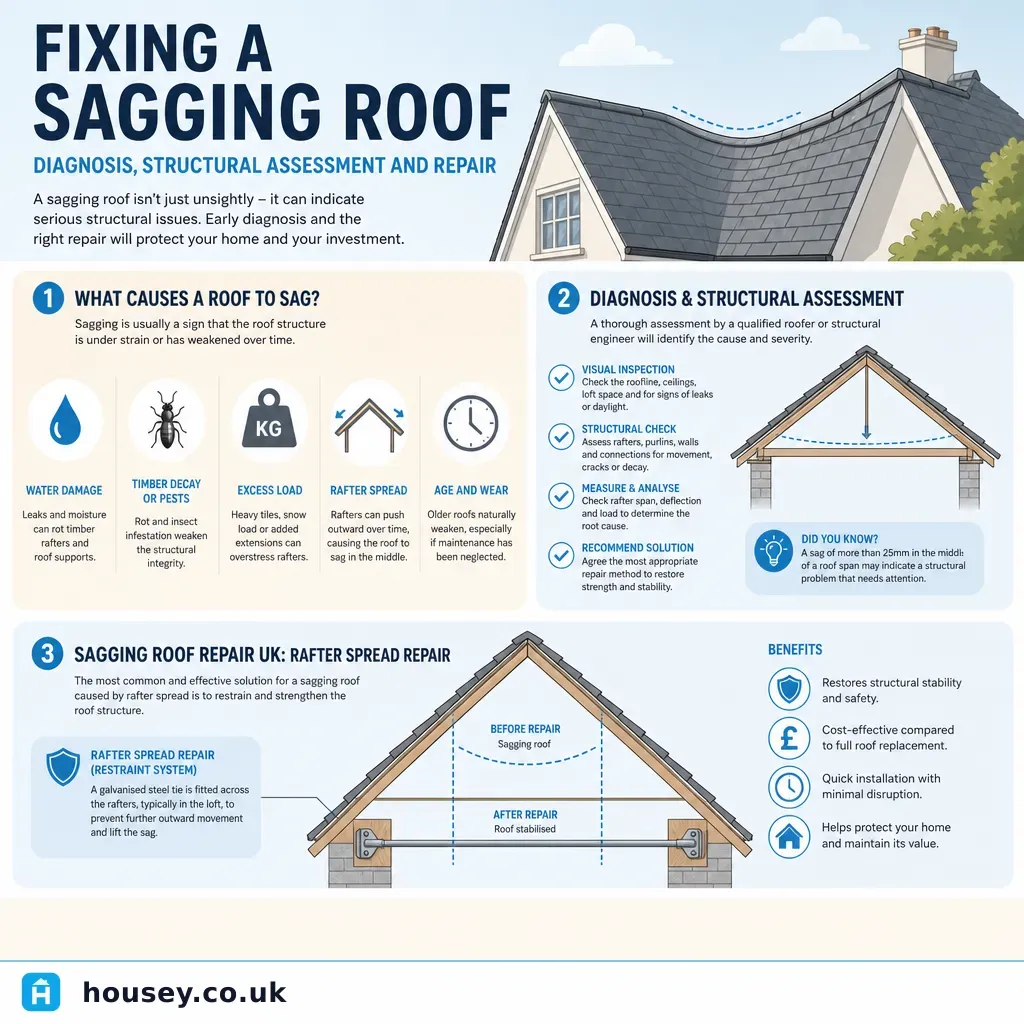
Fixing a Sagging Roof: Diagnosis, Structural Assessment and Repair
A sagging roof usually points to failed or overloaded roof timbers, rafter spread, or a compromised ridge board.
 Surveys & Inspections
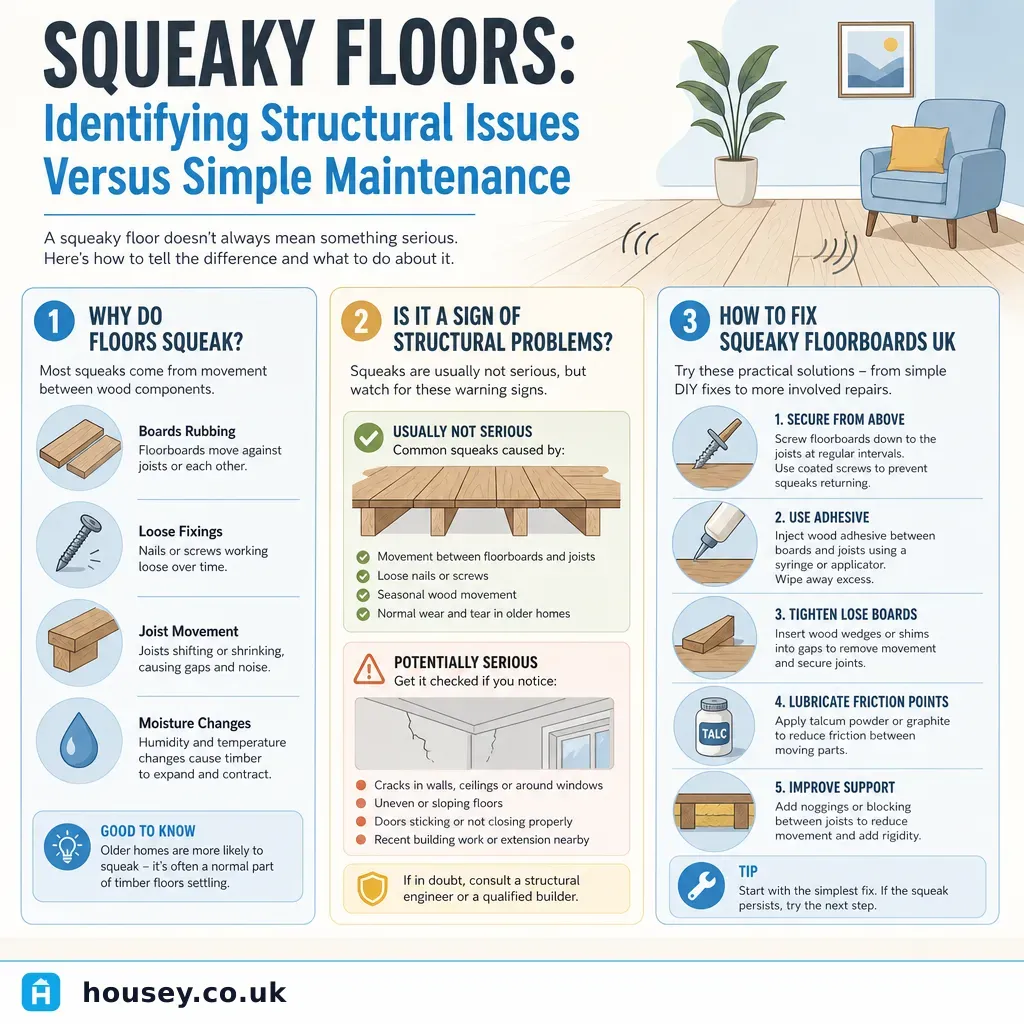
Squeaky Floors: Identifying Structural Issues Versus Simple Maintenance
Most squeaky floors in UK homes are caused by floorboards rubbing against each other or against fixings as they expand and contract — a maintenance issue rather than a structural one.
 Surveys & Inspections
Understanding Property Surveys: Types and When You Need Them
The three main RICS survey types are the Level 1 Condition Report (for standard properties in good condition), the Level 2 Home Survey (conventional homes in reasonable condition), and the Level 3 Building Survey (older, unusual, or defective properties).