Fixing a Wet Garage Floor: Moisture Problems and Solutions
By Housey · Last reviewed 25th of May 2026
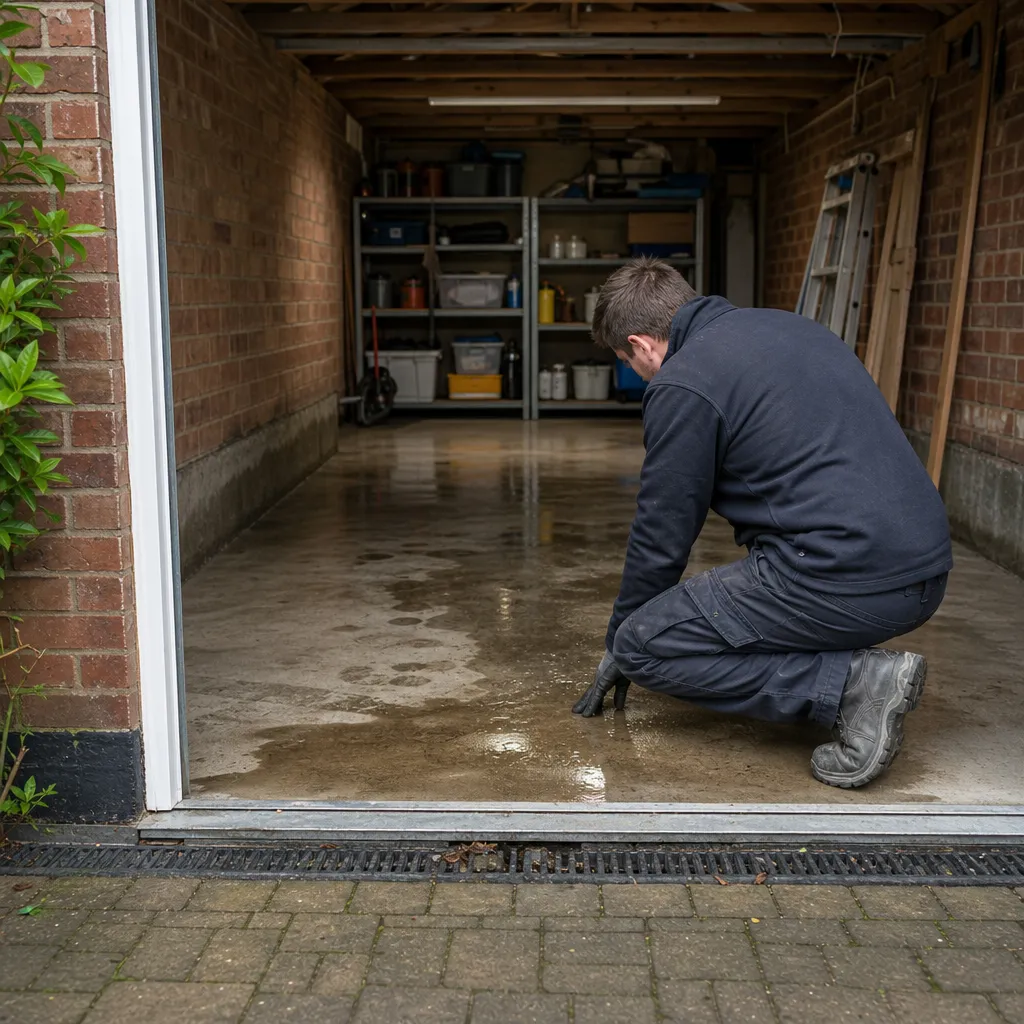
Fixing a Wet Garage Floor: Moisture Problems and Solutions
A persistently wet or damp garage floor is one of the more common maintenance problems in UK homes, and it is often misdiagnosed — leading homeowners to spend money on treatments that address the wrong cause. Condensation, rising damp through an unprotected concrete slab, and lateral groundwater ingress all produce a visibly wet floor, but each requires a different approach. The distinction matters most when a garage is being considered for conversion, where damp in the floor slab becomes a building control compliance issue under Building Regulations Part C.
Key points
- The three main causes — condensation, rising damp, and groundwater ingress — look similar but require different treatments; the polythene sheet test (taped to the floor for 48 hours) reliably distinguishes condensation from rising damp.
- Condensation is the most common cause of a wet-seeming garage floor and typically occurs in autumn and spring when warm humid air meets a cold uninsulated concrete slab.
- A concrete garage floor without a damp-proof membrane (DPM) is standard in UK homes built before the mid-1970s; rising damp through an unprotected slab cannot be resolved by surface sealants alone under significant moisture pressure.
- Building Regulations Approved Document C and BS 8102:2009 require a designed waterproofing strategy for any garage floor being converted to habitable use.
- External ground sloping towards the garage is one of the cheapest and most overlooked causes of lateral ingress — regrading to a minimum 1:40 fall away from the building often resolves the problem without specialist treatment.
Diagnosing the cause: decision tree
Getting the right diagnosis before committing to treatment is the most important step. Applying the wrong fix wastes money and often masks the problem temporarily.
Step 1: When does the floor get wet?
- Wet mainly after heavy rain or prolonged wet weather, especially near walls or at the floor edge → suspect lateral ingress or groundwater
- Wet during cold snaps, in autumn/spring, or after a car has been washed inside → more likely condensation
- Wet persistently regardless of weather or season → suspect rising damp through the slab
Step 2: Conduct the polythene sheet test
Tape a 500mm × 500mm square of 1000-gauge polythene firmly to the dry floor surface and seal all four edges with tape. Leave undisturbed for 48 hours.
- Moisture on the underside (between polythene and concrete) → moisture rising from below → rising damp or groundwater
- Moisture on the top surface (between polythene and air) → moisture condensing from above → condensation
- Moisture on both surfaces → combined problem — address both causes
Step 3: Inspect the walls
- Damp patches at wall base, tide marks, or white salt efflorescence on blockwork → rising damp or lateral ingress
- General sweating on walls and floor simultaneously on cold mornings → condensation
- Isolated wet patches at expansion joints or at the floor-to-wall junction → groundwater ingress through joints
Cause 1: Condensation
Condensation is the most frequently misdiagnosed cause. UK garage floors are typically uninsulated concrete slabs in contact with the ground — in autumn and spring, warm humid air meets the cold surface and moisture condenses, producing the same effect as a cold glass on a warm day.
Solutions (in order of cost and effectiveness):
- Improve cross-ventilation: fit airbricks or louvre vents low and high in opposite walls. Good cross-ventilation prevents humid air stagnating against the cold slab.
- Reduce internal humidity sources: avoid washing cars inside, do not store wet items, and check that any hot pipes in the garage are not adding moisture to the air.
- Insulate the floor: a floating screed incorporating 75mm PIR rigid foam insulation raises the floor surface temperature above the dew point — the most effective long-term solution, though it raises the finished floor level by approximately 100–125mm.
- Dehumidifier: a plug-in dehumidifier can manage symptoms but is not a structural remedy and incurs ongoing running costs.
Cause 2: Rising damp through the slab
Where a concrete slab has no DPM, or the membrane has degraded, moisture migrates upward through the concrete by capillary action. This is common in garages attached to UK properties built before the mid-1970s.
Solutions:
- Epoxy resin floor coating: a two-pack epoxy system applied to a clean, dry surface creates a vapour-resistant layer. Suitable for mild rising damp; adhesion can fail if moisture pressure is high or the surface is not adequately dry at the time of application.
- Cementitious tanking slurry: a multi-coat waterproof render applied to the floor and turned up the walls. Slows rising damp but can delaminate under high moisture pressure, especially if the slab is moving.
- New DPM and screed: the most reliable and permanent solution — the existing surface is broken up, a 1200-gauge polythene DPM is installed with laps turned up the walls, and a new 75mm sand/cement screed is laid on top. This is the approach required under Building Regulations when converting a garage to habitable space.
- Drainage channel and sump pump: where a high water table creates significant groundwater pressure, a perimeter drainage channel draining to a sump and pump manages water rather than attempting to block it — the Type C waterproofing approach described in BS 8102:2009.
Cause 3: Lateral ingress and groundwater
Water entering horizontally through walls, at floor-to-wall joints, or rising from a high water table needs different treatment from standard rising damp.
Common contributing factors:
- External ground sloping towards the garage, channelling surface water against the wall base
- Blocked or failed gulleys and downpipe connections directing roof water onto the external wall
- Cracked or open expansion joints at the floor perimeter
- Failed external waterproofing on a garage that is partly below external ground level
Solutions:
- Regrade external ground: regrading to fall away from the building at a minimum 1:40 gradient is often the cheapest and most durable fix, and should be the first step before investing in internal treatments.
- Clear surface drainage: unblock gulleys, fix leaking downpipes, and direct roof water away from the wall base.
- Polyurethane injection grouting: cracks and joints in the slab or wall can be injected with expanding PU resin to seal entry points.
- External waterproofing: where the garage sits partly below ground, a bituminous or crystalline waterproof coating on the external wall face (requiring excavation) is the most effective long-term solution.
Comparison: remedial options at a glance
Cause | Treatment | Indicative cost range (UK, 2026) | Expected durability |
|---|---|---|---|
Condensation | Cross-ventilation improvement | £150–£400 | Long-term |
Condensation | Floor insulation and screed | £1,500–£3,500 (single garage) | 20+ years |
Mild rising damp | Epoxy floor coating | £400–£900 | 5–10 years |
Moderate rising damp | Cementitious tanking slurry | £600–£1,500 | 5–15 years (variable) |
Significant rising damp | New DPM and screed | £1,500–£4,000 | 25+ years |
Lateral ingress via joints | PU injection grouting | £300–£800 per joint run | 10–20 years |
High water table | Perimeter drain and sump pump | £2,000–£6,000+ | Long-term if maintained |
Indicative UK costs, last reviewed 2026-05-25. Prices vary significantly by extent of remediation, access, and regional labour rates. Obtain at least two written quotes.
Red flags: when the problem is more serious
Most wet garage floors are nuisance problems that a competent contractor can remediate. However, the following signs indicate a more complex issue requiring professional assessment before any treatment is attempted:
- Cracks in the slab that are widening, especially accompanied by cracking in the walls or sticking garage doors — may indicate ground movement rather than a simple moisture issue.
- Standing water pooling on the floor surface after rain in areas near rivers or on low-lying ground — may indicate a water table problem beyond standard remediation.
- Ongoing efflorescence and surface spalling of the concrete slab — suggests persistent high moisture pressure rather than simple condensation.
- Planned garage conversion — damp must be fully resolved and a compliant waterproofing strategy evidenced before building control sign-off.
- Mould or timber rot in wall plates, door frames, or stored timber — indicates sustained elevated moisture levels requiring formal investigation.
When to get professional help
Condensation-related wetness and minor surface damp can often be resolved with ventilation improvements and surface coatings. Seek a professional assessment if:
- The polythene test confirms moisture is rising from below, or the cause is unclear after testing.
- A treatment has already been applied and has failed, or the problem has recurred.
- The garage is being converted to habitable use — a designed waterproofing strategy is required for building control.
- Cracks in the slab or signs of structural movement are present alongside the damp.
How Housey can help
Persistent garage damp is worth diagnosing professionally before committing to remediation. Housey can connect you with specialists offering damp and timber surveys who can confirm the moisture source and type, and with vetted damp proofing specialists who can carry out appropriate remediation. Getting the diagnosis right first avoids spending money on treatments that will not last.
Frequently asked questions
Why does my garage floor get wet when it rains, even though there is no visible crack?
Moisture can enter through micro-cracks or porous concrete that is not visible, through the joint between the floor slab and the wall, or through the wall itself below external ground level. It can also be condensation triggered by the rise in humidity that accompanies rainfall. The polythene sheet test confirms whether moisture is rising from below or condensing from above — this determines the correct remedy.
Can I just paint the garage floor to stop the dampness?
A floor paint or basic sealant may mask condensation or very mild surface damp temporarily, but it will not stop rising damp under meaningful moisture pressure — the coating is likely to blister and delaminate within months. For persistent damp, an accurate diagnosis followed by the appropriate structural treatment is more cost-effective than repeated surface applications.
Is a wet garage floor a problem if I want to convert the garage?
Yes. Building Regulations Approved Document C requires that floors in habitable rooms resist moisture from the ground. A garage conversion requires a properly installed DPM and, where rising damp is present, a remediation strategy accepted by building control. A new DPM and screed are typically included in the conversion specification as standard.
How do I stop condensation on my garage floor without insulating it?
Improving cross-ventilation is the most effective non-insulation measure — fitting airbricks or louvre vents on opposite walls and reducing internal humidity sources such as wet storage and car washing can substantially reduce condensation. A dehumidifier helps manage residual humidity but is not a substitute for addressing the underlying ventilation deficiency.
Sources and further reading
- Building Regulations Approved Document C — Site preparation and resistance to moisture — GOV.UK
- BS 8102:2009 — Code of Practice for Protection of Below Ground Structures Against Water — British Standards Institution
- Property Care Association — guidance on diagnosing and treating damp — Property Care Association
- Energy Saving Trust — floor insulation guidance — Energy Saving Trust
Useful next reads
 Surveys & Inspections
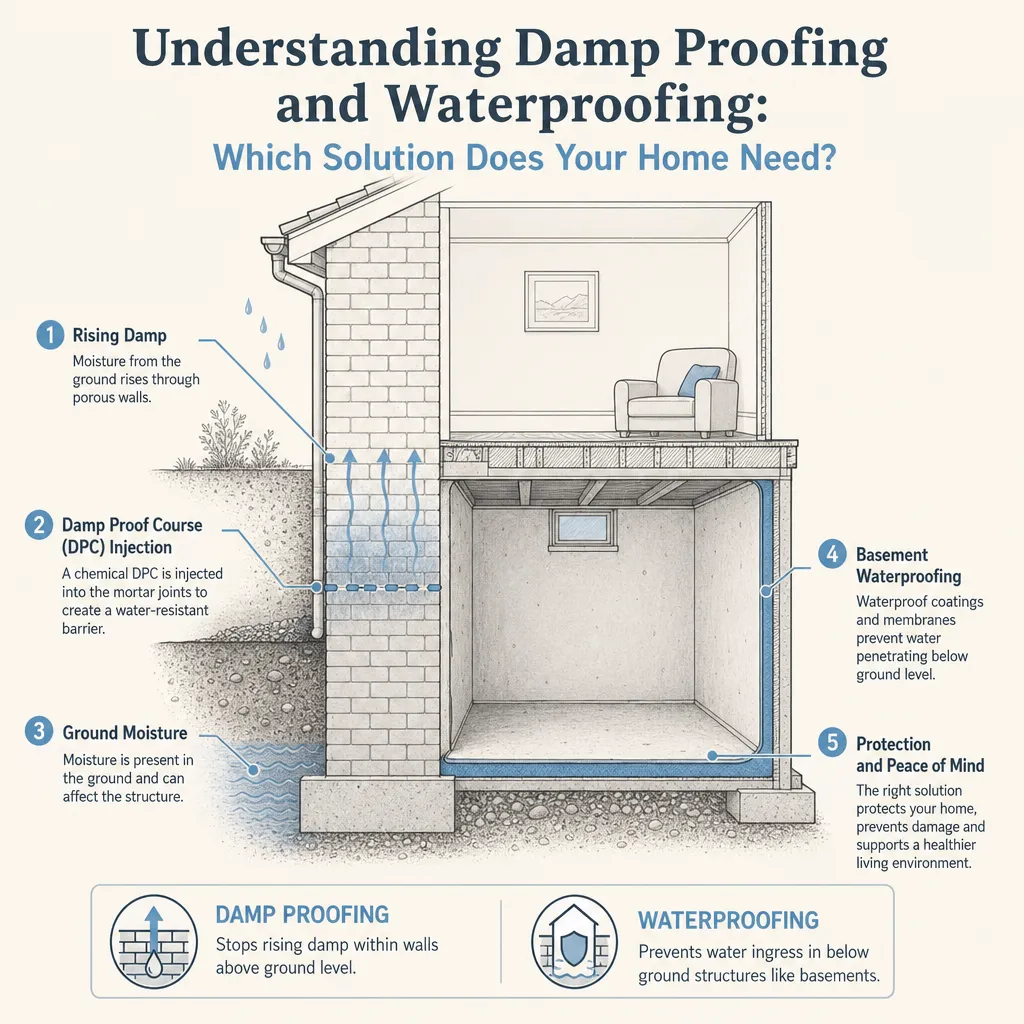
Understanding Damp Proofing and Waterproofing: Which Solution Does Your Home Need?
Damp proofing controls moisture movement through above-ground walls, while waterproofing excludes groundwater from below-ground structures.
 Surveys & Inspections
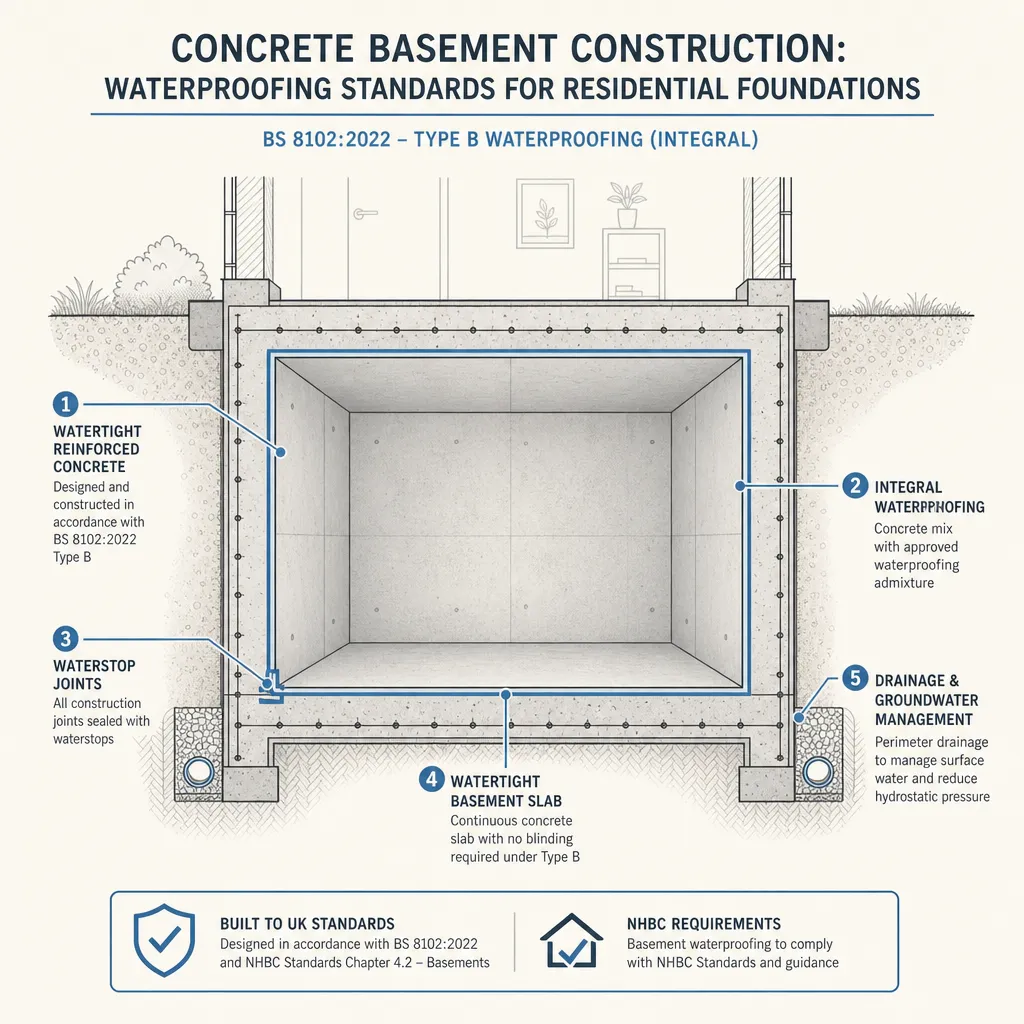
Concrete Basement Construction: Waterproofing Standards for Residential Foundations
Concrete basement waterproofing in the UK must comply with BS 8102:2022 and Building Regulations Part C.
 Surveys & Inspections
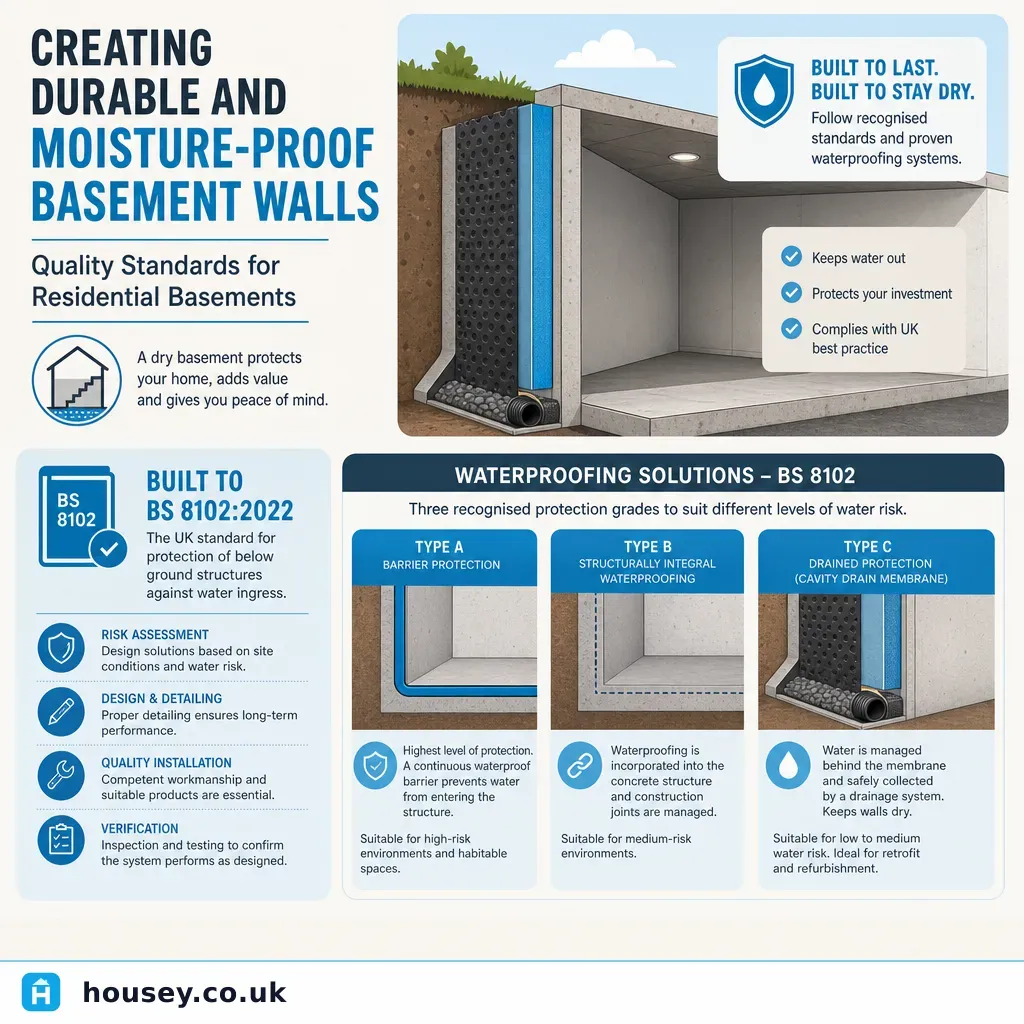
Creating Durable and Moisture-Proof Basement Walls: Quality Standards for Residential Basements
Basement waterproofing in UK homes must meet BS 8102:2022 requirements.
 Surveys & Inspections
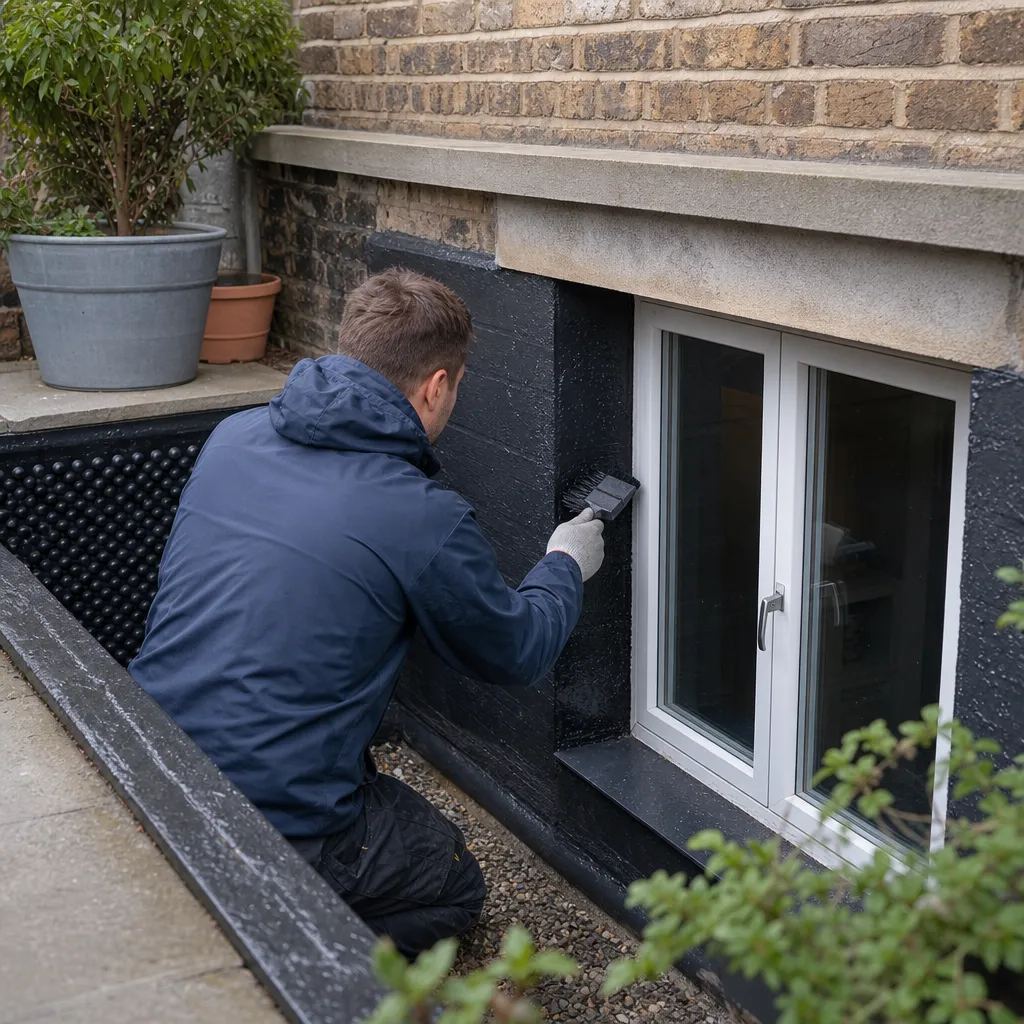
Securing Dry Basements: How to Prevent Moisture Intrusion
Preventing basement moisture starts with identifying the source: penetrating damp, rising damp, and condensation each need different fixes.
 Surveys & Inspections
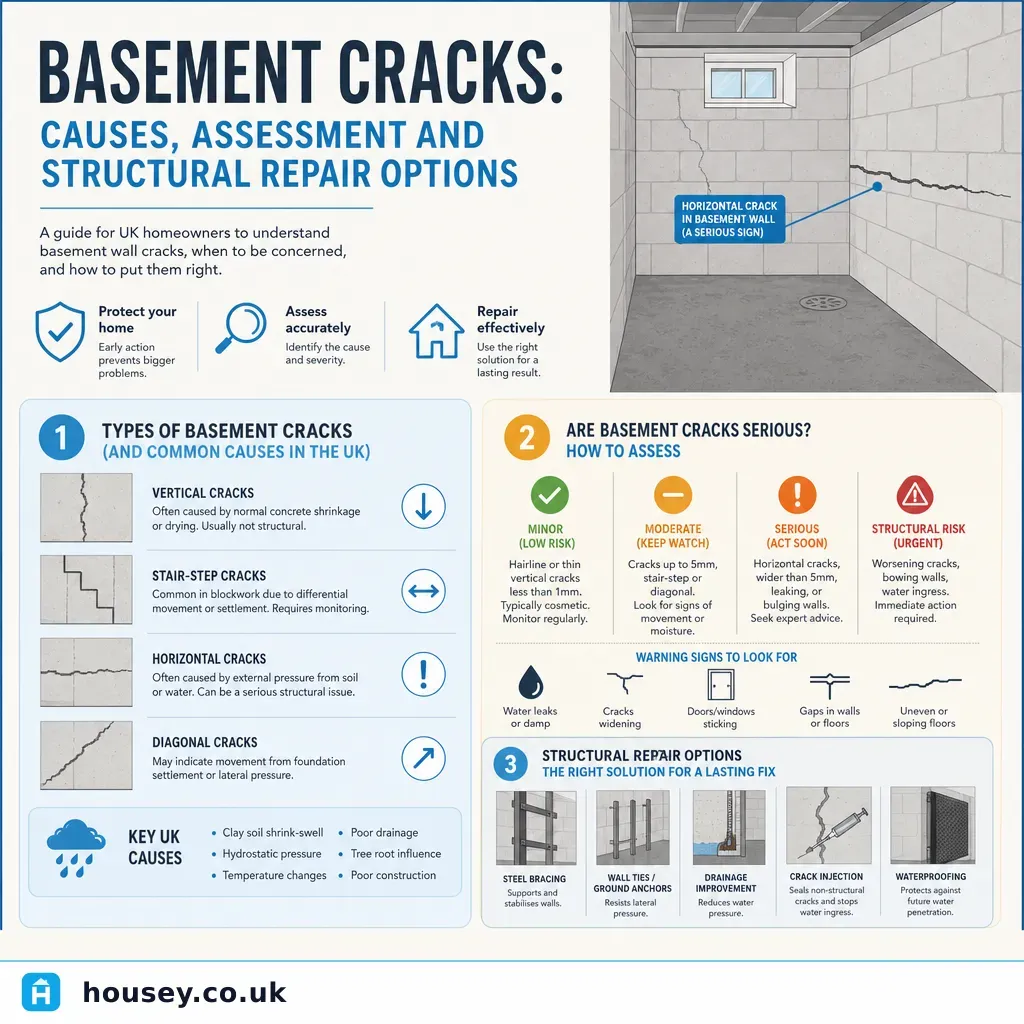
Basement Cracks: Causes, Assessment and Structural Repair Options
Basement cracks fall into three broad categories: hairline shrinkage cracks (usually minor), diagonal settlement cracks (moderate to serious depending on width and pattern), and horizontal cracks in block or concrete walls (serious — indicating lateral soil pressure).