Fixing Window Leaks from Rain: Causes, Diagnosis, and Solutions
By Housey · Last reviewed 12th of May 2026
Fixing Window Leaks from Rain: Causes, Diagnosis, and Solutions
A window that lets in rain can cause persistent plaster damage, mould growth, and timber rot if left unaddressed. The problem is common across UK homes of all ages — from Victorian sash windows whose linseed oil putty has long since cracked away, to uPVC double-glazed units where the perimeter sealant has quietly failed after years of thermal movement. Getting the repair right depends entirely on identifying where the water is actually entering, which is often not where it first appears inside the property.
Key points
- Exterior silicone or mastic sealant between the window frame and surrounding masonry typically lasts 10–15 years before cracking, shrinking, or detaching; this is the most common cause of rain ingress around windows in UK homes.
- Water appearing at the windowsill or bottom of the frame often originates from a failure point at the head or jamb and has tracked downward — always trace the leak back to its source before attempting any repair.
- Failed or missing weatherstripping (the rubber, foam, or brush seal between the sash and frame) allows wind-driven rain to pass directly through a closed window.
- Condensation running down the inside face of the glass, or mould appearing when it has not rained, is an internal condensation problem — not a rain leak — and requires different remedies.
- Any replacement window unit installed in England and Wales must comply with Building Regulations Approved Document L and requires a FENSA or CERTASS certificate unless a separate local authority building control application is made.
Diagnosing where the leak is coming from
Effective diagnosis always comes before repair. Water entering near a window can originate from several points, and sealing the wrong location wastes money while leaving the real problem unresolved.
Leak diagnosis decision tree
- Water appears on the inside face of the glass and the weather has been dry? → Internal condensation, not a rain leak. Improve room ventilation.
- Water appears only at the bottom of the window during or after rain? → Check the sealant along the head and jambs first — water may be tracking down from a higher failure point.
- Water appears at a corner of the frame? → Check weatherstripping and corner mastic joints; these are common failure points on both uPVC and timber windows.
- Water appears on the wall above the window or drips from the ceiling near the window? → The source is likely the roof, guttering, or lintel — not the window itself. Inspect roofline and rainwater goods before touching the window.
- Water comes in only during strong, driven rain with the window closed? → Check weatherstripping and whether the sash compresses fully against the frame when locked.
- The frame is visibly pulling away from the masonry? → Failed perimeter sealant. The joint needs to be raked out and resealed with exterior-grade silicone.
- Persistent fogging or misting between the panes of a double-glazed unit? → The sealed unit has failed; the glazing unit itself needs replacing, not just the perimeter sealant.
Common causes and how to address them
1. Failed perimeter sealant
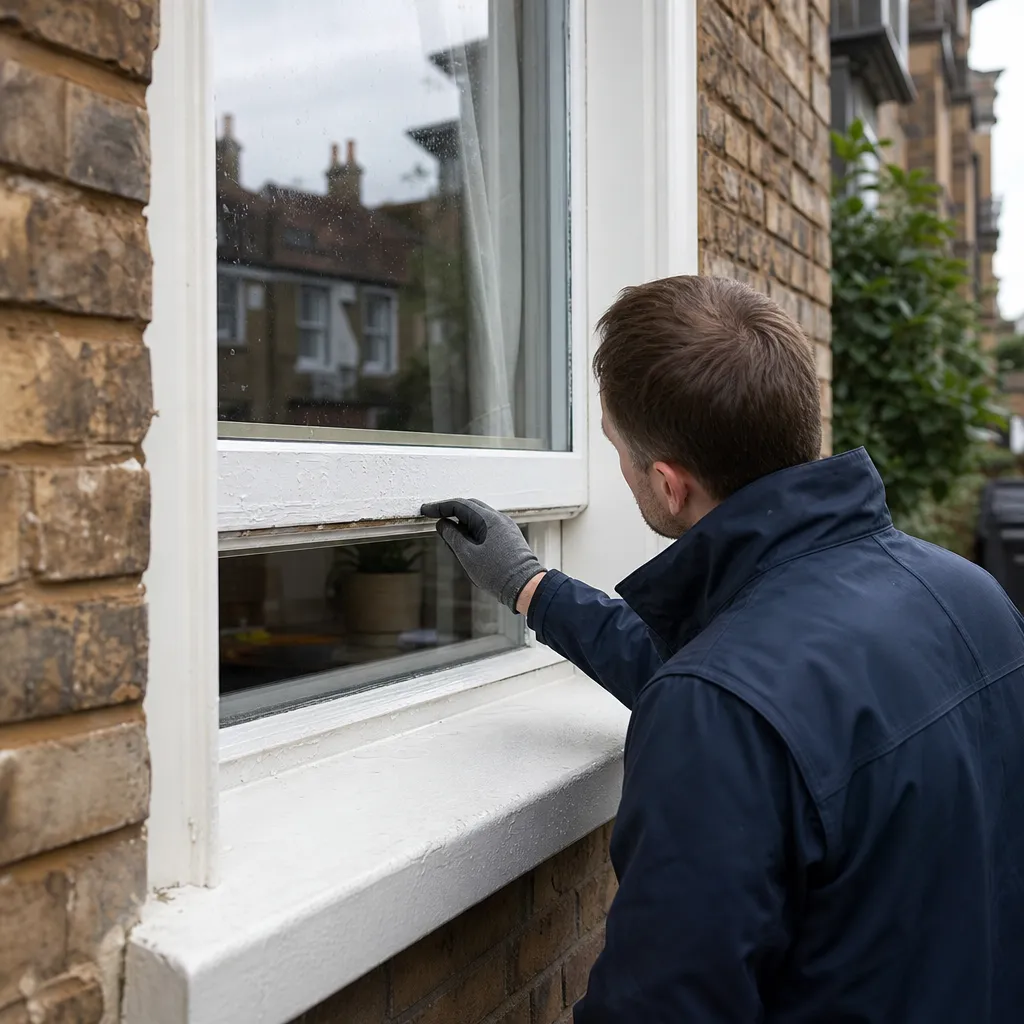
Cracked, shrunken, or missing sealant between the window frame and surrounding masonry is the most common entry point for rain. Even a gap of 1–2 mm is sufficient for water to track through during heavy or wind-driven rain, particularly on exposed elevations.
Remedy: Remove all the old sealant completely using a sealant remover tool or sharp blade. Clean the joint thoroughly and allow it to dry. Fill any deep gaps with a foam backer rod before applying a new bead of exterior-grade silicone or polyurethane sealant. This is generally achievable by a competent DIYer on accessible ground-floor windows.
2. Perished or missing weatherstripping
The compression gasket or brush pile seal inside the frame prevents rain from passing through a closed sash during wind-driven conditions. On uPVC windows this is typically a rubber compression gasket; on timber sashes it may be brush pile or rubber strip.
Remedy: Replacement weatherstripping is available from window manufacturers and builders' merchants. On uPVC frames, the gasket usually clips or presses into a groove and can often be replaced without specialist tools. On older timber sashes, a joiner with experience in heritage windows can advise on appropriate materials.
3. Failed sealed glazing unit
The hermetically sealed gap in a double- or triple-glazed unit can fail when the edge seal deteriorates, allowing moisture to enter between the panes. This appears as persistent fogging that does not clear with changes in temperature. It is a separate issue from rain ingress through the frame but can occur alongside one.
Remedy: The failed unit must be removed and a replacement sealed unit installed. This is work for a FENSA- or CERTASS-registered window installer, particularly if the glass is held in place with glazing beads that must be carefully removed and refitted.
4. Cracked or missing putty on timber-framed windows
On older timber windows, glass is often bedded in linseed oil putty. Putty cracks and falls away over time, allowing water to track behind the glass and into the reveal. This is a particularly common maintenance issue on pre-1970s UK homes.
Remedy: Rake out cracked putty, prime bare timber, and rebed the glass in exterior-quality window putty or flexible glazing sealant. This is a periodic maintenance task and is generally DIY-accessible on accessible elevations.
5. Lintel, mortar, or pointing failure above the window
Water appearing on the wall immediately above the window, or dripping from the lintel itself, usually indicates a masonry problem rather than a window failure. Failed pointing around a steel or concrete lintel, or cracked render above the opening, are common causes in UK brick-built homes.
Remedy: This is not a window repair — it requires a builder or bricklayer to re-point, replace the lintel, or repair the render. Applying window sealant alone will not resolve this.
6. Absent or blocked cavity tray
In cavity wall construction, a cavity tray above the window opening channels water from within the cavity to weep holes in the external leaf. If the tray is absent, damaged, or the weep holes are blocked, water can appear inside at window level even when the window and its sealant appear intact.
Remedy: Cavity tray failure is a more significant repair requiring investigation by a builder or damp specialist. Do not attempt a DIY fix without professional diagnosis; incorrect remediation can worsen the problem.
What not to assume
- Do not assume the leak originates where water appears. Water travels by capillary action and gravity; the entry point can be 300 mm or more from where it becomes visible inside.
- Do not apply new sealant over old, failing sealant. The old material must be removed completely first, or the new bead will fail quickly.
- Do not confuse a failed glazing unit (fogging between panes) with rain ingress through the frame. They are different problems requiring different solutions.
- Do not assume older timber windows necessarily need replacing. Many can be repaired cost-effectively by a specialist joiner, often for significantly less than full replacement.
Red flags — when to call a professional
Some window leaks are routine maintenance repairs; others point to more serious problems that need specialist investigation:
- Water is running down an internal wall — this suggests possible cavity tray failure, lintel deterioration, or extensive pointing failure; a builder or damp specialist should investigate.
- The window frame is visibly rotten, cracked, or structurally compromised — repair sealant will not hold for long; a window replacement assessment is needed.
- Mould is spreading on walls, ceilings, or nearby surfaces — ongoing moisture ingress requires professional diagnosis, not just surface treatment.
- The leak only appears in certain wind directions or during particularly heavy rain — intermittent leaks can be difficult to trace; a professional water test may be needed.
- The property is a listed building — repair and replacement options may be restricted by listed building consent requirements; consult your local planning authority before any work.
When to get professional help
Re-sealing and weatherstripping work on accessible ground-floor windows is generally within the capability of a competent DIYer. Call a professional if:
- You cannot identify the leak source after careful diagnosis.
- The window frame is structurally compromised or extensively rotted.
- Water is appearing on the wall or ceiling rather than just around the frame itself.
- The property is leasehold and external repairs are the landlord's or freeholder's responsibility.
- You need a window unit or frame replaced — this requires a FENSA- or CERTASS-registered installer under Building Regulations.
How Housey can help
Housey connects UK homeowners with experienced window and door installers who can assess leaking windows, carry out repairs, and replace frames or sealed units to Building Regulations standard. If your leak may be coming from the roofline, guttering, or masonry above the window, our network of roofers can investigate rain-related water ingress from above. Use Housey to compare up to four quotes before committing to any work.
Frequently asked questions
How do I tell if water is coming through the window or from above?
Watch whether water tracks down the outside wall before appearing inside, drips from the lintel, or appears only at a specific part of the frame. If it appears on the wall above the window or drips from the ceiling, the source is more likely to be the roofline, guttering, or masonry. A builder or specialist can carry out a water test to confirm the entry point.
Can I re-seal a window myself?
Yes, for accessible ground-floor windows with a clearly failed perimeter sealant joint. Remove all the old sealant completely, clean and dry the joint, fill deep gaps with foam backer rod, and apply exterior-grade silicone. For windows above ground level, on listed buildings, or where the frame itself is damaged, use a professional installer.
How long should window sealant last?
Exterior silicone sealant on a window frame typically lasts 10–15 years before it begins to crack or shrink. Cheaper sealants and those on exposed, north-facing elevations may fail sooner. Checking sealant joints as part of routine home maintenance and addressing small gaps promptly prevents water damage to reveals, lintels, and internal plaster.
When should I replace rather than repair a leaking window?
Repair is usually appropriate for sealant failure, perished weatherstripping, or repairable timber frames. Replacement makes more sense when the frame is structurally compromised, the glazing unit has failed repeatedly, or the window no longer locks or seals correctly. Any replacement unit must comply with Building Regulations Part L and should be installed by a FENSA- or CERTASS-registered company.
Sources and further reading
- Building Regulations: Approved Document L (Conservation of Fuel and Power) — GOV.UK
- FENSA: Competent Person Scheme for windows and doors — FENSA
- CERTASS: Competent Person Scheme for glazing installation — CERTASS
- Windows and doors: energy efficiency and repair — Energy Saving Trust
- Housing repairs guidance — Citizens Advice
Useful next reads
 Improvement & Build
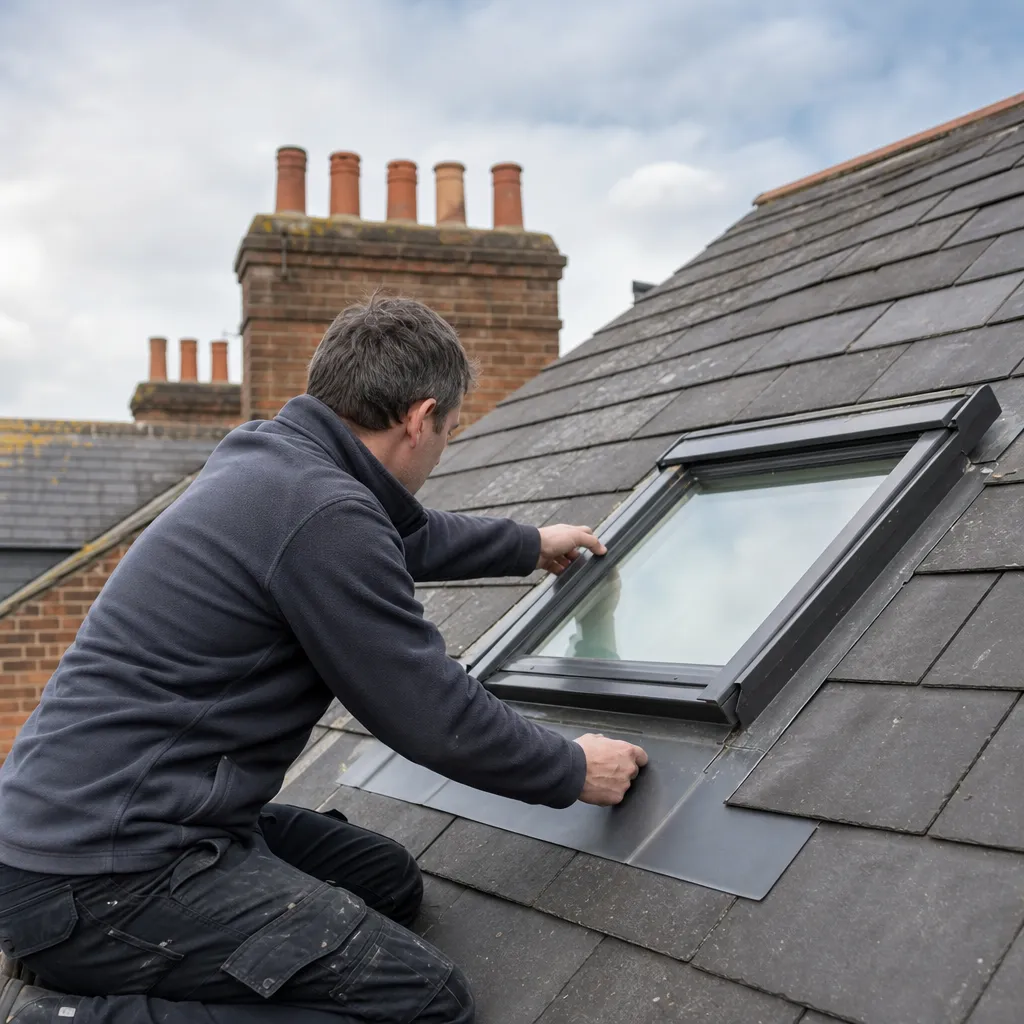
Fixing Velux Window Leaks: Causes and Repair Solutions
Velux window leaks most commonly occur at the flashing — the metal collar sealing the window to the roof — or at the weather seal around the opening sash.
 Improvement & Build
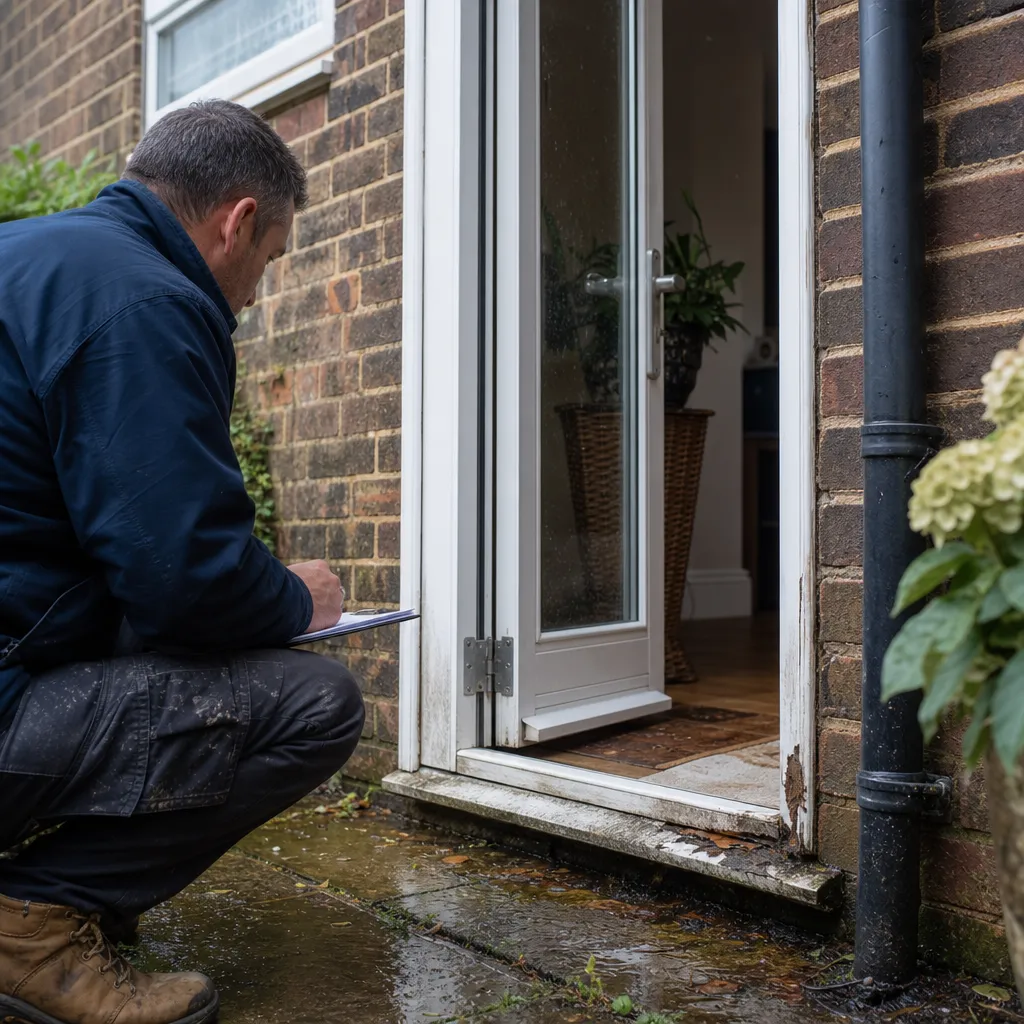
Fixing Leaking Back Doors and Water Ingress
Most leaking back doors in UK homes fail at one of three points: the threshold or door sill joint, the frame-to-masonry mastic seal, or the door weatherstrip.
 Improvement & Build
What To Do About Leaking Windows: Finding The Right Contractor
Leaking windows in UK homes are usually caused by failed seals, cracked frames, or damaged flashing.
 Improvement & Build
Protecting Your Property from Winter Frost and Freeze Damage
Protecting your home from winter frost damage mainly involves insulating exposed pipes, lagging outdoor taps, maintaining a minimum indoor temperature in unoccupied properties, and clearing drains before cold spells.
 Improvement & Build
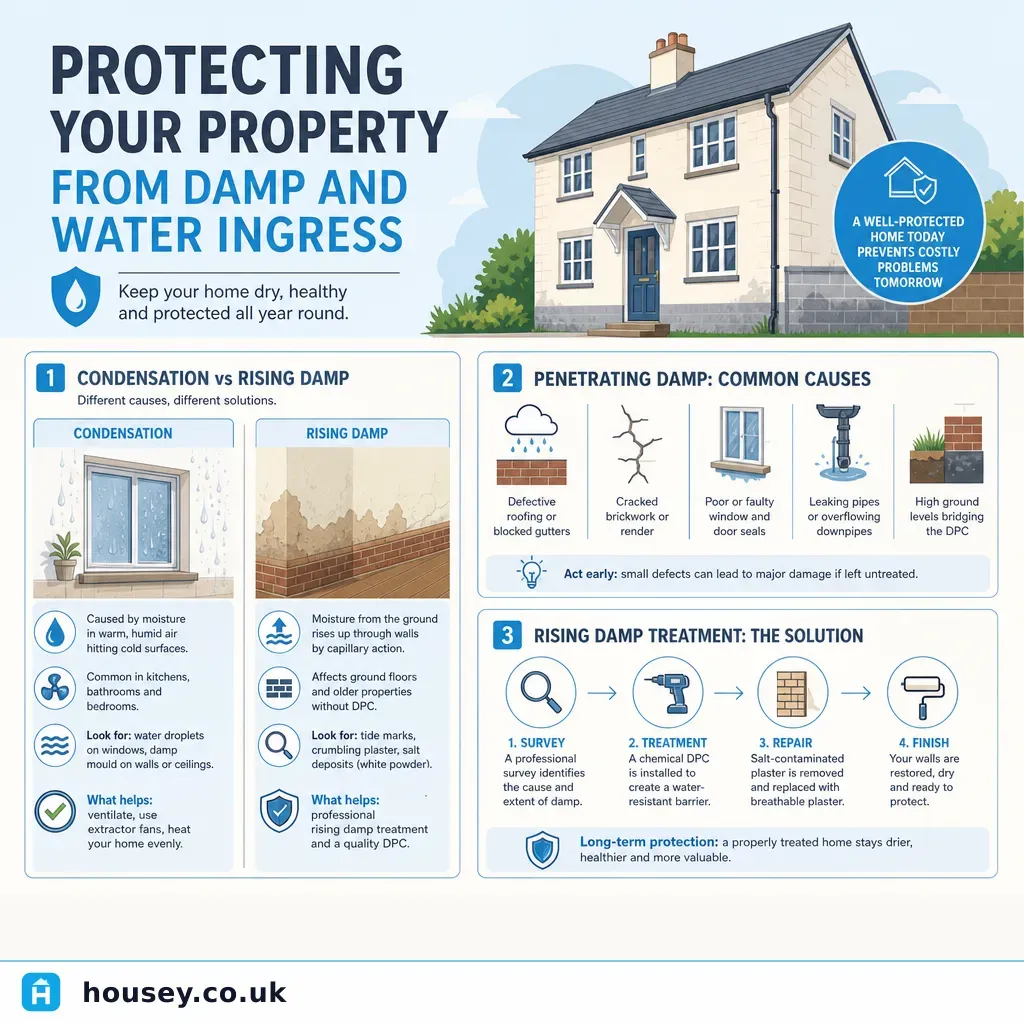
Protecting Your Property from Damp and Water Ingress
Damp in UK homes usually falls into three categories: rising damp (groundwater drawn up through walls), penetrating damp (rain or groundwater entering through the building envelope), and condensation (moisture from warm internal air meeting a cold surface).