Flat Roof Leaks: Identification, Diagnosis, and Repair
By Housey · Last reviewed 11th of May 2026
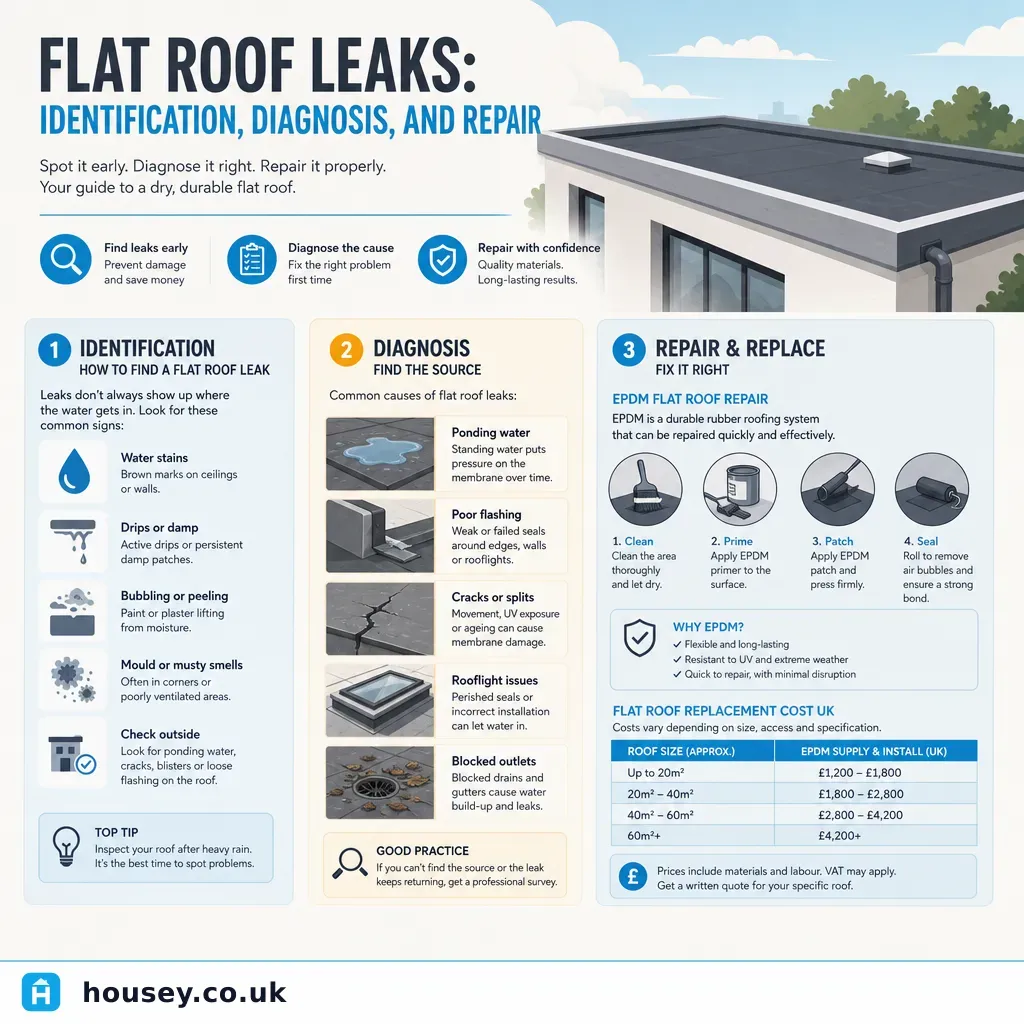
Flat Roof Leaks: Identification, Diagnosis, and Repair
A leaking flat roof is one of the more common problems reported by UK homeowners, particularly those with properties from the 1960s to the 1990s where the original bitumen felt covering is approaching or beyond its expected service life. Flat roofs cover extensions, garages, and some purpose-built homes, and their relatively shallow fall — typically a minimum of 1:80 under BS 6229:2018 — makes them more susceptible to ponding, UV degradation, and membrane failure than pitched alternatives. Correctly identifying the source of a leak before committing to any repair is essential, and often more difficult than it first appears.
Key points
- Flat roof waterproofing systems include built-up felt (BUR), modified bitumen (torch-on felt), single-ply membranes (EPDM, TPO, PVC), and liquid-applied coatings such as GRP fibreglass and polyurethane; each system has different repair requirements and life expectancy.
- Water ingress on a flat roof rarely enters directly above the visible damp patch inside — it typically travels along the roof deck or joists before appearing at a lower point.
- Full flat roof replacement is notifiable building work under Building Regulations (Approved Document C and Part L in England); minor like-for-like patch repairs generally do not require approval.
- GRP fibreglass flat roofs typically carry a 20–25 year manufacturer guarantee; original mineral felt installed in the 1960s–1980s has an expected lifespan of 10–15 years and may be well past it.
- A specialist roof survey or specific defect survey can distinguish between localised membrane failure suitable for repair and widespread substrate deterioration requiring full replacement.
How to identify the source of a flat roof leak
Because water tracks horizontally before entering the building, locating the true source of a flat roof leak requires systematic investigation rather than patching directly above the damp patch.
Step 1 — Internal check (safe; from inside the property)
Inspect the ceiling, loft space, or underside of the flat roof structure from below. Note where water staining, damp plaster, or active drips are occurring and photograph the locations with measurements from known reference points.
Step 2 — External perimeter check (ground-level visual)
Look for:
- Upstand failures — where the membrane meets the wall, parapet, or door threshold
- Flashing cracks or gaps around rooflights, pipes, and penetrations
- Ponding water — low areas where water sits for more than 48 hours after rainfall
- Visible cracks, blisters, or splits in the membrane surface
- Blocked or damaged outlets and gutters that cause water to back up onto the roof deck
Step 3 — Professional investigation
A roofer or surveyor may use controlled water testing (hose testing from specific points), moisture meters, or infrared thermal imaging to locate trapped moisture in the roof deck without destructive investigation. Thermal imaging is particularly effective at identifying wet insulation beneath single-ply membranes.
Flat roof waterproofing systems: a comparison
Indicative UK costs, last reviewed 2026-05-11. Replacement costs per square metre vary significantly by roof area, access, substrate condition, and specification. Always obtain at least three written quotes.
System | Typical lifespan | Best for | Common failure mode | Indicative replacement cost per m² |
|---|---|---|---|---|
Built-up felt (BUR, 3-layer) | 10–15 years | Budget repairs on older roofs | UV degradation, lap joint failure | £40–£70 |
Torch-on modified bitumen | 15–25 years | Extensions, garages | Upstand failures, blistering | £50–£90 |
EPDM rubber (single-ply) | 25–50 years | All flat roof types | Punctures, seam adhesive failure | £60–£110 |
GRP fibreglass | 20–25 years (guaranteed) | Domestic extensions, garages | Edge trim delamination, cracking at penetrations | £70–£120 |
Liquid-applied polyurethane | 20–25 years | Complex shapes, retrofit over existing membrane | Application errors in cold or damp conditions | £60–£100 |
Green roof build-up | 40+ years (waterproof layer) | Biodiversity gain, thermal improvement | Drainage failure, root penetration at seams | £100–£200+ |
Repair or replace? A decision guide
- Choose targeted repair if: the leak source is clearly identified, the membrane is less than 15 years old, the failure is localised (a single upstand, blister, or pipe collar), the substrate shows no moisture damage, and less than 20% of the roof area is affected.
- Consider overlay or recover if: the existing membrane is approaching end of life but the deck is structurally sound and dry, and the existing system is compatible with overlay without exceeding current Building Regulations thickness limits.
- Choose full replacement if: the membrane is at or beyond its expected lifespan, the substrate shows rot or saturation, moisture meters identify wet insulation across a significant area, or multiple previous repairs have failed to resolve the problem.
- Instruct a specific defect survey if: the leak source cannot be identified from ground-level inspection, there is uncertainty about substrate condition, you are purchasing a property with a flat roof of unknown age, or previous repair attempts have not resolved the issue.
Red flags: signs a flat roof is at end of life
These conditions suggest repair is unlikely to be cost-effective and a full replacement assessment is warranted:
- Widespread blistering across the membrane surface — blisters indicate moisture trapped beneath the membrane, typically from installation in damp conditions or from rising moisture through the deck
- Alligatoring (surface cracking in a pattern resembling reptile skin) on bitumen felt — a characteristic of advanced UV degradation
- Soft or sunken areas identified by a roofer inspecting the roof — may indicate rotten decking below the membrane
- Multiple previous patches that have not resolved recurring leaks in the same areas
- Age — a mineral felt roof over 20 years old or a torch-on felt roof over 25 years old that has not been replaced is statistically likely to need renewal
- Persistent ponding lasting more than 48 hours after rainfall — standing water accelerates membrane degradation and may indicate falls have been lost due to substrate compression
Flat roof repairs and Building Regulations
Minor like-for-like repairs — patching, upstand re-bonding, and pipe collar replacement — generally do not require Building Regulations approval.
However, full replacement of a flat roof covering is a material alteration and is notifiable in England and Wales. This triggers compliance with:
- Approved Document C (resistance to moisture) — the replacement system must adequately resist water penetration
- Approved Document L (conservation of fuel and power) — the replacement roof must meet current minimum thermal performance standards
You will need to inform your local Building Control body or use an Approved Inspector. Failure to obtain a completion certificate for notifiable works can cause difficulties when selling the property, as solicitors will request evidence of compliance or an indemnity insurance policy. Building regulations differ in Scotland and Northern Ireland — verify with the relevant authority if the property is not in England or Wales.
When to get professional help
Contact a qualified roofer or commission a specific defect survey if:
- Water is actively entering the building after rainfall.
- You cannot identify the source of the leak from safe ground-level inspection.
- Damp patches are growing or appearing in new locations after a repair.
- You are purchasing a property and the flat roof age, material, or condition is uncertain.
- Previous repairs have not resolved the problem within two to three rainfall events.
- The flat roof covers a living area or bedroom where sustained damp creates mould or structural risks.
A temporary bucket or absorbent material under an active drip is a sensible containment measure while you arrange urgent professional attention — it is not a repair.
How Housey can help
Housey connects you with vetted roofers for flat roof repairs and replacement, and with specialists who carry out roof surveys and specific defect surveys — providing an independent written assessment of roof condition and a basis for comparing contractor quotes with confidence.
Frequently asked questions
How much does it cost to repair a flat roof leak in the UK?
Indicative UK costs, last reviewed 2026-05-11. A minor localised repair such as patching a blister or re-bonding an upstand typically costs £150–£500 depending on access and the extent of work. Replacing a small extension flat roof (15–20 m²) in GRP or EPDM typically ranges from £1,500 to £3,500. Larger roofs and premium systems cost considerably more. Always obtain at least three written, itemised quotes.
Can a flat roof be repaired in winter?
Some systems — particularly liquid-applied coatings and EPDM adhesive — require a minimum application temperature of around 5°C in dry, rising conditions. Torch-on bitumen can generally be applied year-round in suitable weather, though cold conditions affect adhesive and lap performance. Ask your contractor what conditions their proposed system requires and whether they offer a workmanship guarantee covering post-installation performance.
What is the difference between a warm roof and a cold roof?
A warm roof places insulation above the structural deck so the deck stays near internal temperature, reducing condensation risk. A cold roof has insulation below the deck and requires cross-ventilation to manage interstitial condensation. Current Building Regulations guidance favours warm roof construction for replacement work. If replacing an old cold roof, discuss the upgrade with your contractor and Building Control.
Does home insurance cover a flat roof leak?
Most standard home insurance policies cover sudden damage caused by storm or impact but typically exclude gradual deterioration, maintenance failure, and wear-and-tear. Check your policy wording carefully, as some insurers impose conditions on properties with flat roofs over 20 years old. It is worth notifying your insurer of any significant renewal work carried out.
Sources and further reading
- Approved Document C: site preparation and resistance to contaminants and moisture — GOV.UK
- Approved Document L: conservation of fuel and power — GOV.UK
- BS 6229:2018 Flat roofs with continuously supported flexible waterproof coverings — BSI Group
- Single Ply Roofing Association: guidance on flat roof systems — SPRA
- Roof alterations and permitted development — Planning Portal
- Find a RICS surveyor — RICS
Useful next reads
 Surveys & Inspections
Repairing Slate Roof Tiles: Methods and Materials
Slipped or cracked slate tiles are usually repaired using a lead tingle or hook-and-nail method.
 Surveys & Inspections
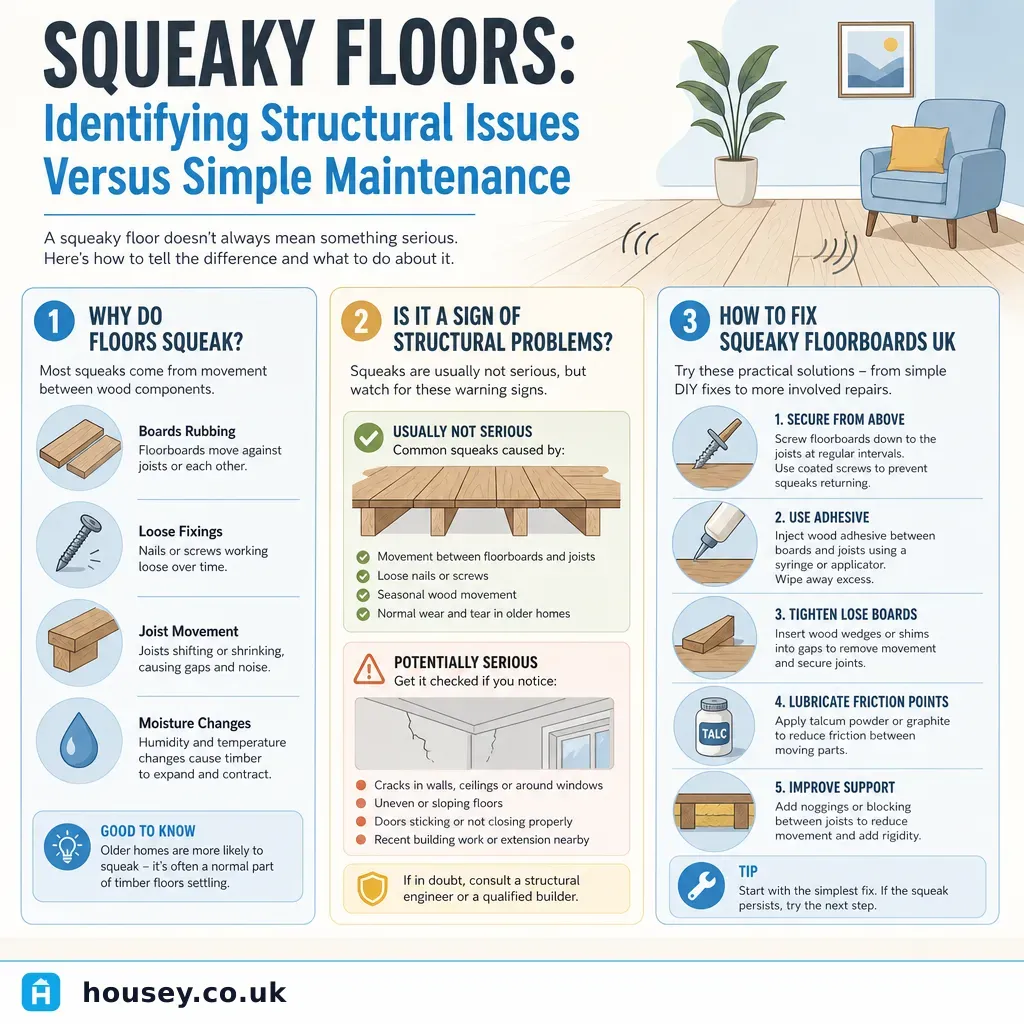
Squeaky Floors: Identifying Structural Issues Versus Simple Maintenance
Most squeaky floors in UK homes are caused by floorboards rubbing against each other or against fixings as they expand and contract — a maintenance issue rather than a structural one.
 Surveys & Inspections
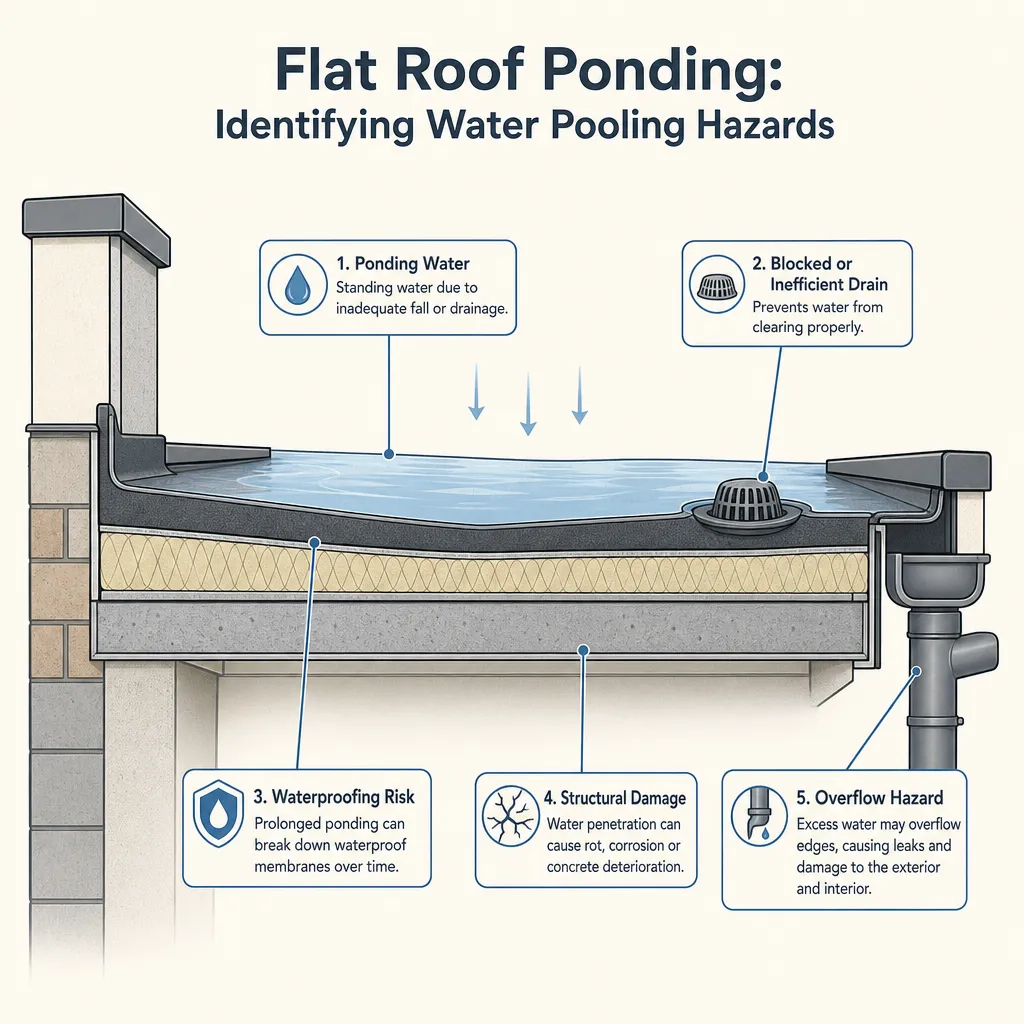
Flat Roof Ponding: Identifying Water Pooling Hazards
Flat roof ponding lasting more than 24–48 hours after rainfall warrants investigation.
 Surveys & Inspections
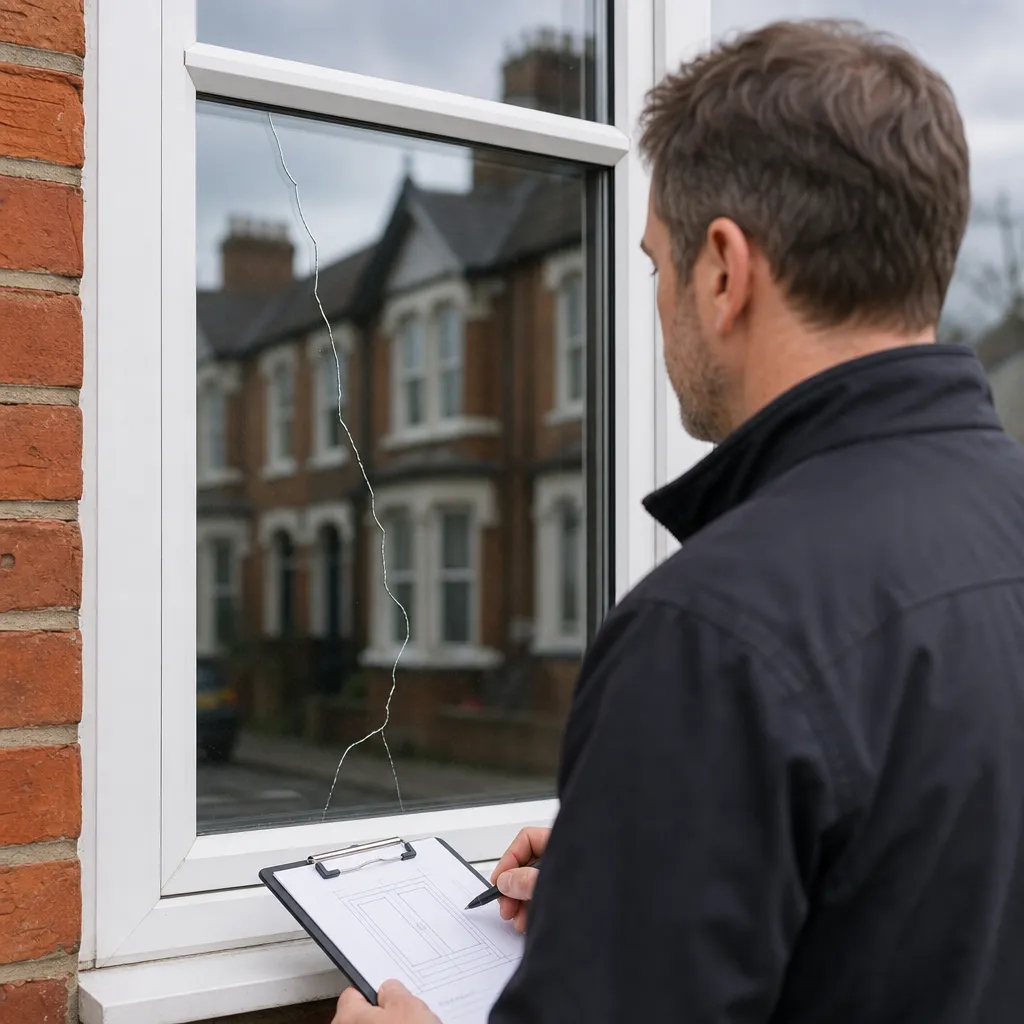
Understanding thermal stress cracks in windows
Thermal stress cracks occur when one part of a glass pane heats or cools faster than another, creating internal tension that the glass cannot absorb.
 Surveys & Inspections
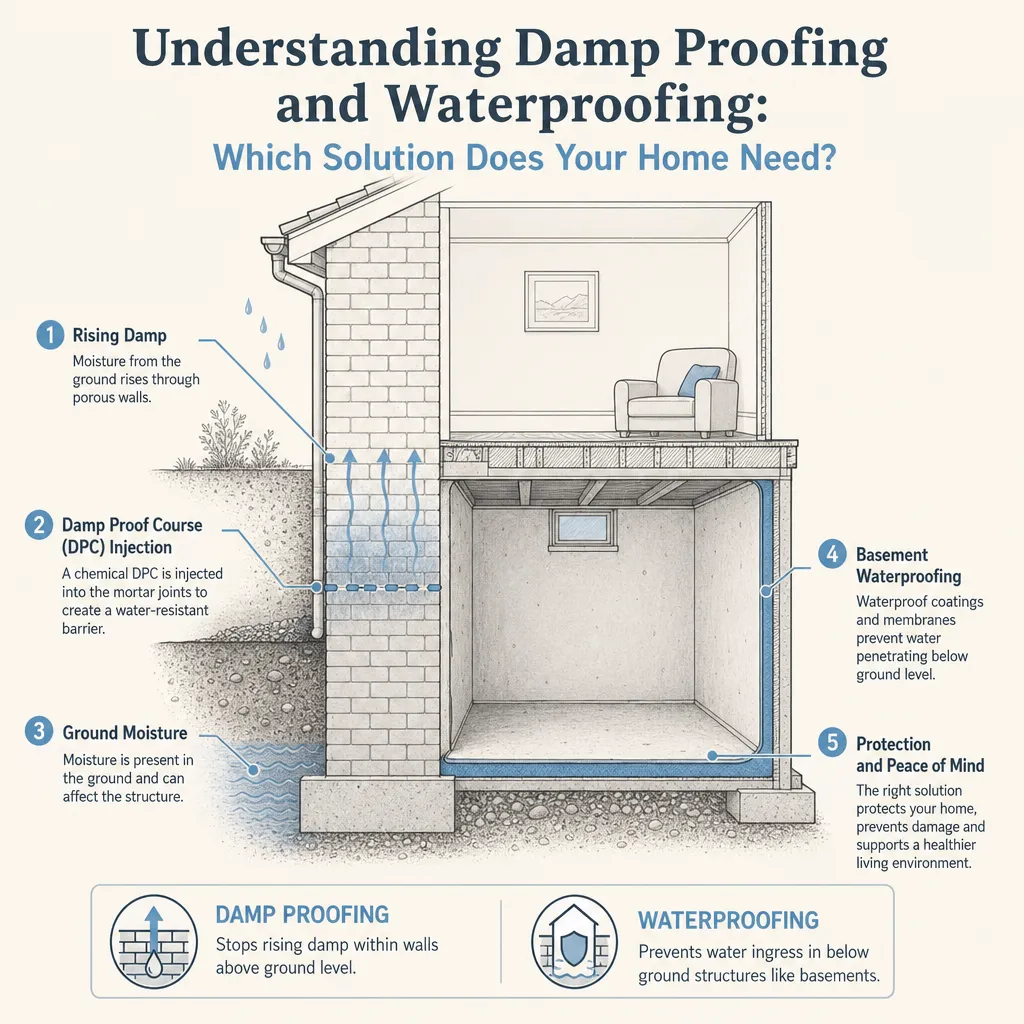
Understanding Damp Proofing and Waterproofing: Which Solution Does Your Home Need?
Damp proofing controls moisture movement through above-ground walls, while waterproofing excludes groundwater from below-ground structures.