Understanding thermal stress cracks in windows
By Housey · Last reviewed 19th of May 2026
Understanding thermal stress cracks in windows
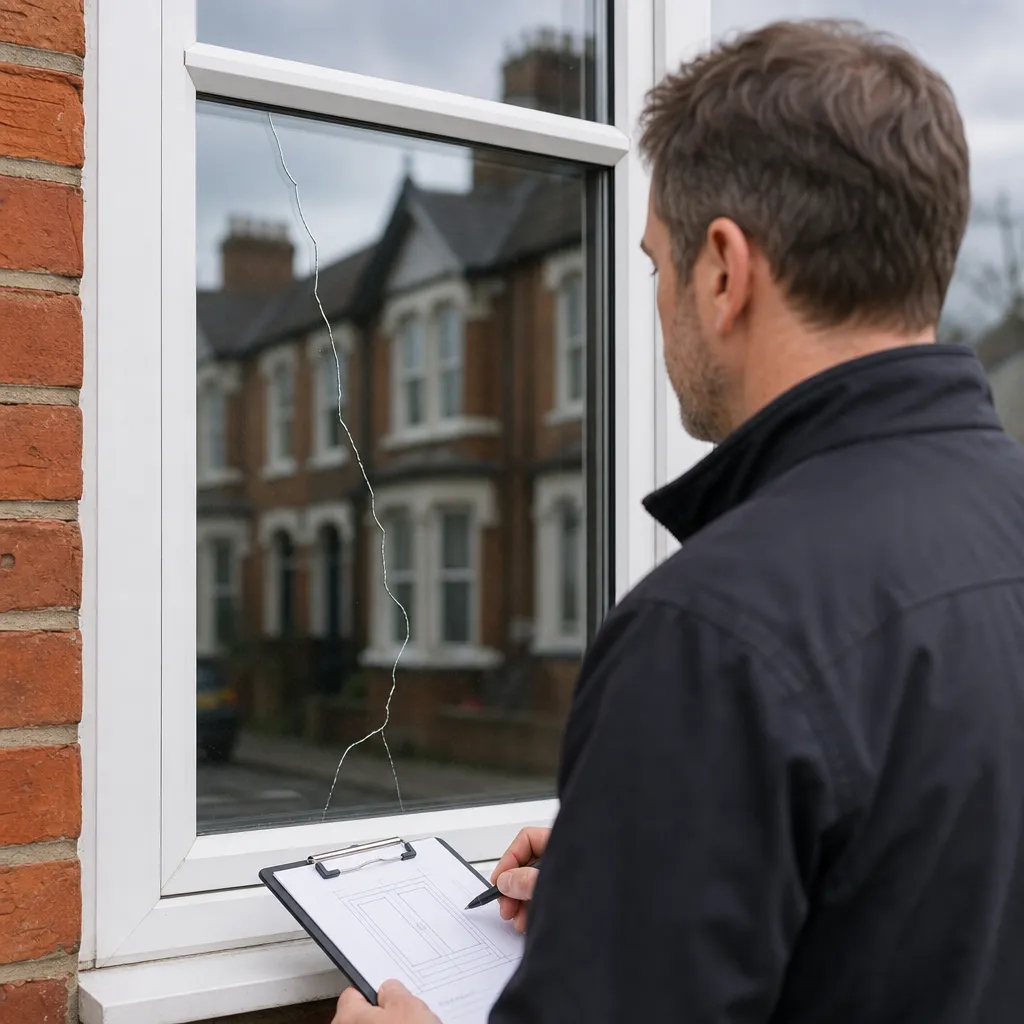
Discovering a crack in a window pane is unsettling, but not every crack signals vandalism or an impact. Thermal stress fractures are among the most common glass defects found in UK residential buildings, and they are frequently misdiagnosed — leading to insurance disputes, unnecessary full window replacements, or missed warranty claims. Understanding what causes them, how to recognise them, and what to do next helps homeowners and buyers avoid wasted expense and take the right remedial step.
Key points
- Thermal stress cracks arise when differential heating or cooling creates internal tension that exceeds the glass's tensile strength, almost always initiating at the glass edge rather than at a visible central point.
- They typically originate near a corner of the pane, run at approximately 90 degrees to the frame, and curve gently as they travel across the glass surface.
- There is no point of impact: no star fracture, no white powdery spall, and no concentric ring pattern — these features distinguish a thermal crack from an impact crack.
- Modern low-emissivity (low-E) coated glass and panes in south- or west-facing elevations are at higher risk because coatings absorb more infrared radiation than standard float glass.
- A thermally cracked double-glazed unit (DGU) no longer provides its rated thermal or acoustic performance and should be replaced.
What causes thermal stress cracks?
Glass is a poor conductor of heat. When one part of a pane — typically the edge sitting in the frame rebate — remains cool while the exposed central area heats rapidly in sunlight, the glass expands unevenly. The stress concentration at the edge exceeds the tensile strength of the glass and a crack initiates.
Common contributing factors include:
- Solar gain on south- and west-facing elevations, particularly on large panes in properties with slim modern frames that offer minimal edge shading.
- Low-E or solar-control coatings that absorb infrared radiation, raising the central surface temperature above what standard float glass would reach.
- Frame shading: a deep rebate, draught-sealing tape, or a blocked trickle vent can keep the glass edge cold while the centre heats rapidly.
- Nearby heat sources: radiators positioned directly below a window, or underfloor heating circuits running close to a glazed door, can create thermal stress from the interior side.
- Adhesive solar films fitted by the homeowner — some films increase solar absorption and can raise the risk of cracking, particularly on sealed units not designed for film application.
- Blinds or plantation shutters pressed directly against the glass — these trap heat in a localised band against the pane surface.
How to identify a thermal stress crack vs other crack types
Crack type | Origin point | Pattern | Surface feel at origin | Typical cause |
|---|---|---|---|---|
Thermal stress | Glass edge or corner | Curves gently, runs roughly perpendicular to frame | Smooth, clean break | Temperature differential |
Impact (stone, ball, tool) | Centre or visible contact point | Star or radial fracture, concentric rings | Rough, powdery white spall | Physical blow |
Subsidence or frame movement | Any; often corner | Diagonal, may follow frame direction | Smooth | Building or frame movement |
Spontaneous toughened glass failure | Typically centre | Spider-web fragmentation into small cubes | Granular fragments | Nickel sulphide inclusion or edge damage |
Installation or weld-bead damage | Glass edge | Short, sharp crack from rebate | Smooth | Damage during manufacture or fitting |
Red flags that suggest something more serious
Isolated thermal cracks are usually a straightforward glazing matter, but the following signs warrant further investigation:
- Multiple windows cracking across the property in a short period — this may indicate building movement, frame settlement, or a batch manufacturing defect rather than simple solar gain.
- The crack grows visibly over time — photograph it with a dated reference object; thermal cracks may propagate slowly but should eventually stabilise, whereas movement-related cracks may continue widening.
- The frame itself is visibly distorted or racked — this can point to structural movement rather than a thermal glazing issue.
- Step cracks in brickwork alongside or above the window — masonry cracking alongside glass cracking is a red flag for ground movement or lintel failure.
- Cracking in safety glazing (toughened or laminated glass in doors or low-level panels) — there may be building regulations implications and the glass may need replacing promptly.
If any of these are present, consider arranging a specific defect survey to establish whether the cracking is isolated or part of a wider building defect.
Is a thermally cracked pane safe?
A cracked pane is not immediately dangerous in most residential applications, provided the glass has not shattered or fallen, the glass type is standard float or laminated rather than toughened (which fragments unpredictably on failure), and there is no immediate risk of the crack spreading to full breakage.
That said, treat a cracked pane as a temporary situation. In high-traffic areas, near children, or in safety-glazing locations required by Building Regulations Approved Document N, early replacement is prudent.
What to do when you find a thermal stress crack
- Photograph the crack close up, including the edge where it originates. Record the date.
- Check whether the window is within its guarantee or installation warranty — most replacement glazing and new-build windows come with a 10-year guarantee; cracking caused by a manufacturing or installation fault may be covered.
- Contact your home insurer — thermal cracking from solar gain is not always covered, but it is worth checking your policy's glass or accidental damage section before arranging repairs.
- Review whether blinds, radiators, or furniture are positioned against the glass — adjusting these may prevent recurrence after replacement.
- Arrange replacement of the sealed unit — a glazier or window and door installer can usually replace just the double-glazed unit without replacing the surrounding frame, keeping costs down.
Which professional do I need?
Situation | Professional to contact |
|---|---|
Single cracked pane, cause is clear | Glazier or window and door installer to replace the DGU |
Crack alongside frame distortion or masonry cracking | Chartered surveyor (RICS Level 2 or Level 3 survey) |
Crack in a new-build or recently installed window | Developer, NHBC warranty provider, or installer under guarantee |
Multiple cracks across the property | Arrange a specific defect survey |
Listed building or conservation area property | Consult your local planning authority before replacing the pane |
When to get professional help
Most isolated thermal cracks can be resolved through a straightforward sealed-unit replacement. Seek professional assessment if the crack is accompanied by frame distortion, nearby masonry cracking, or a pattern of multiple failures across the property — these may indicate a structural or ground-movement issue that sits well outside the scope of a glazing repair.
How Housey can help
Housey can connect you with experienced window and door installers who can assess the cracked unit, confirm the likely cause, and arrange sealed-unit replacement. If the cracking appears to be part of a wider defect pattern, Housey's specific defect survey service can arrange a targeted inspection by a qualified professional.
Frequently asked questions
Is a thermal stress crack covered by my home insurance?
It depends on your policy. Most standard home insurance policies cover sudden accidental damage but may exclude gradual deterioration or thermal stress fracture caused by solar gain. Check your policy's glass or accidental damage section carefully, and contact your insurer before arranging replacement, as they may require an assessment before agreeing to a claim.
How can I tell the difference between a thermal crack and an impact crack?
Look for the origin point. An impact crack starts at a central or visible contact point with a star, radial fracture, or powdery white spall. A thermal crack starts at the glass edge — often hidden in the frame rebate — runs roughly perpendicular to the frame, and curves as it travels across the pane. There is no star pattern or impact point on a thermal crack.
Can a thermally cracked double-glazed unit still insulate my home?
No, not effectively. Once the sealed unit is compromised — either by the crack creating a pathway for moisture or by eventual seal failure — the argon or dry-air fill disperses and the unit loses a significant proportion of its thermal performance. Condensation between the panes often follows as the unit continues to deteriorate.
What can I do to prevent thermal stress cracks in the future?
Keep radiators and underfloor heating circuits clear of direct glass contact. Avoid fitting adhesive solar films without checking with the glass manufacturer, as some films increase solar absorption and raise the thermal stress risk. Use blinds that sit away from the glass rather than directly against it. For large south-facing panes, discuss heat-strengthened glass options with your installer.
Sources and further reading
- GGF technical guidance on glass and glazing — Glass and Glazing Federation (GGF)
- RICS home survey standards and defect guidance — RICS
- Citizens Advice: home insurance and accidental damage — Citizens Advice
- HSE: glazing in buildings (INDG73) — Health and Safety Executive (HSE)
Useful next reads
 Surveys & Inspections
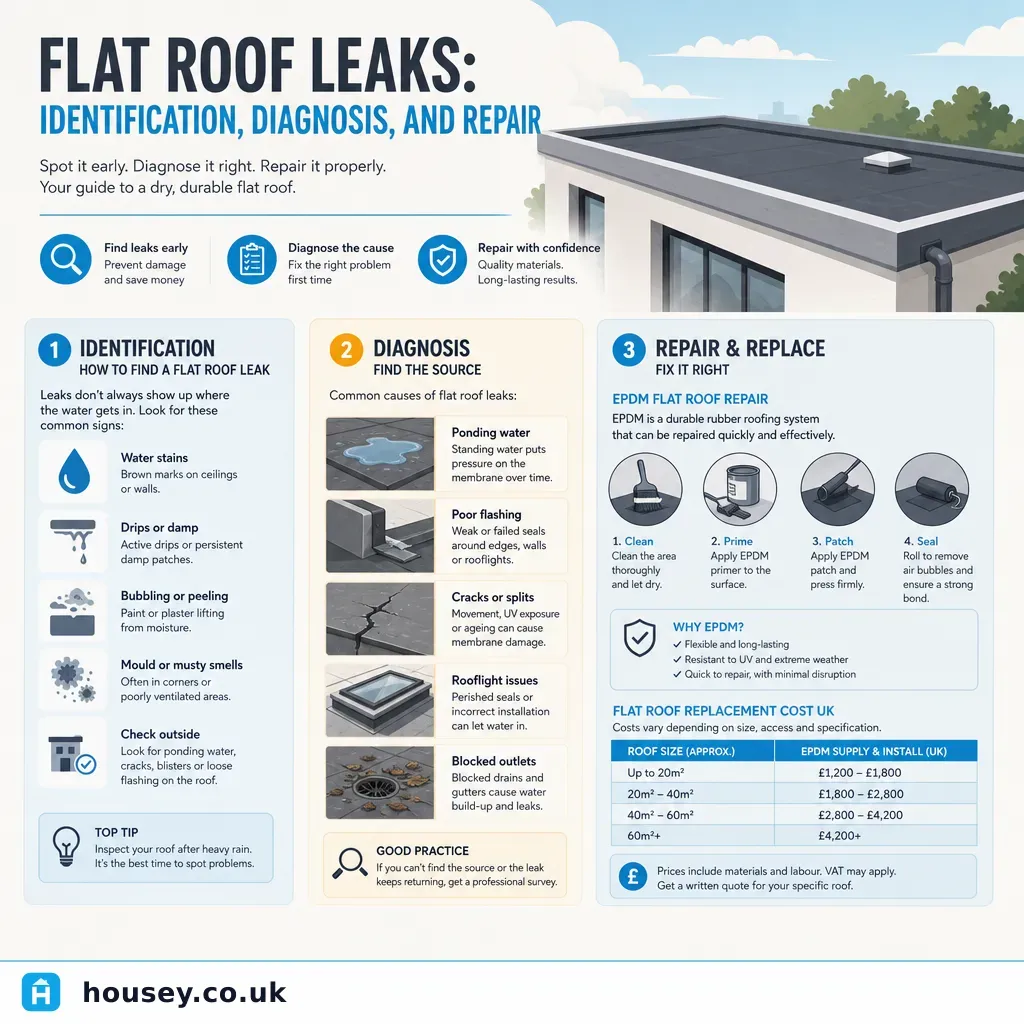
Flat Roof Leaks: Identification, Diagnosis, and Repair
A flat roof leak rarely enters directly above the visible damp patch — water typically tracks along the roof deck before it appears inside.
 Surveys & Inspections
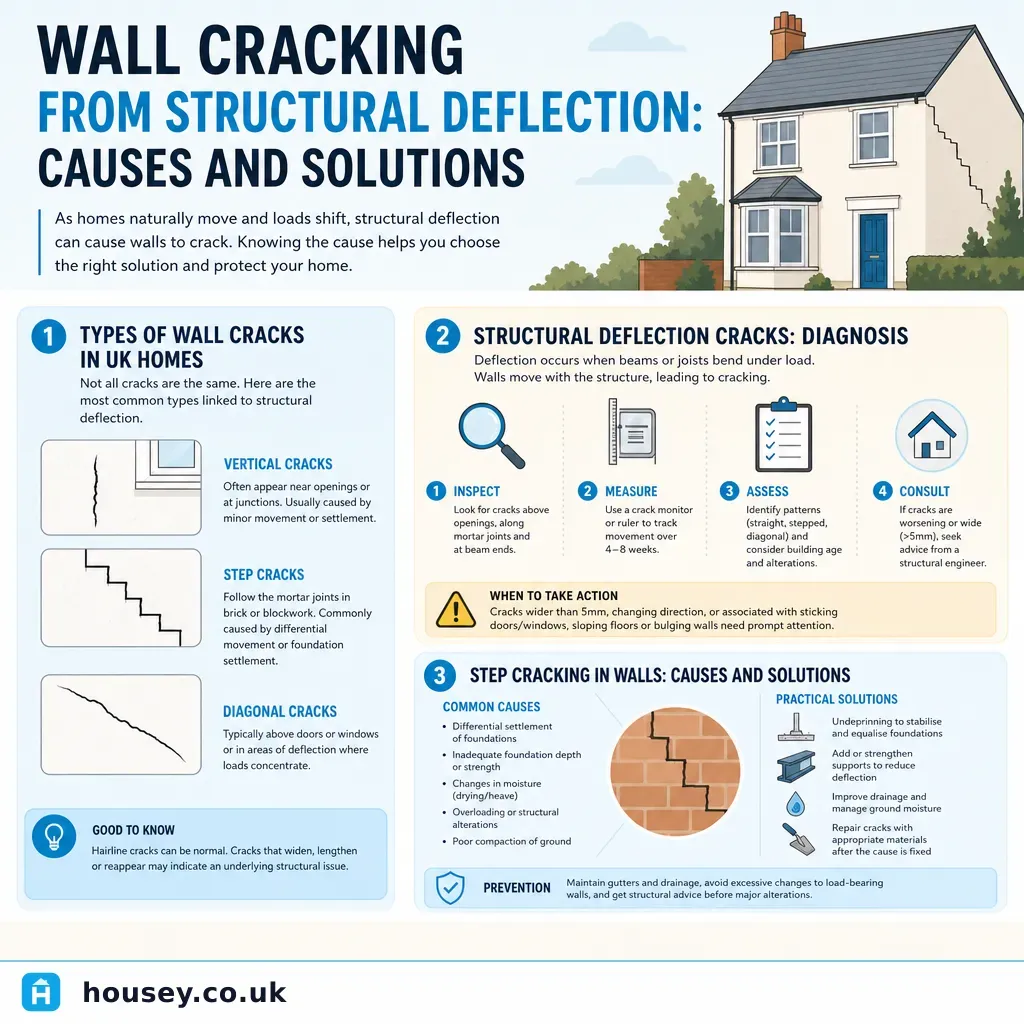
Wall Cracking from Structural Deflection: Causes and Solutions
Structural deflection occurs when a beam, floor, or lintel sags under load, transferring stress into surrounding masonry and causing characteristic cracks.
 Surveys & Inspections
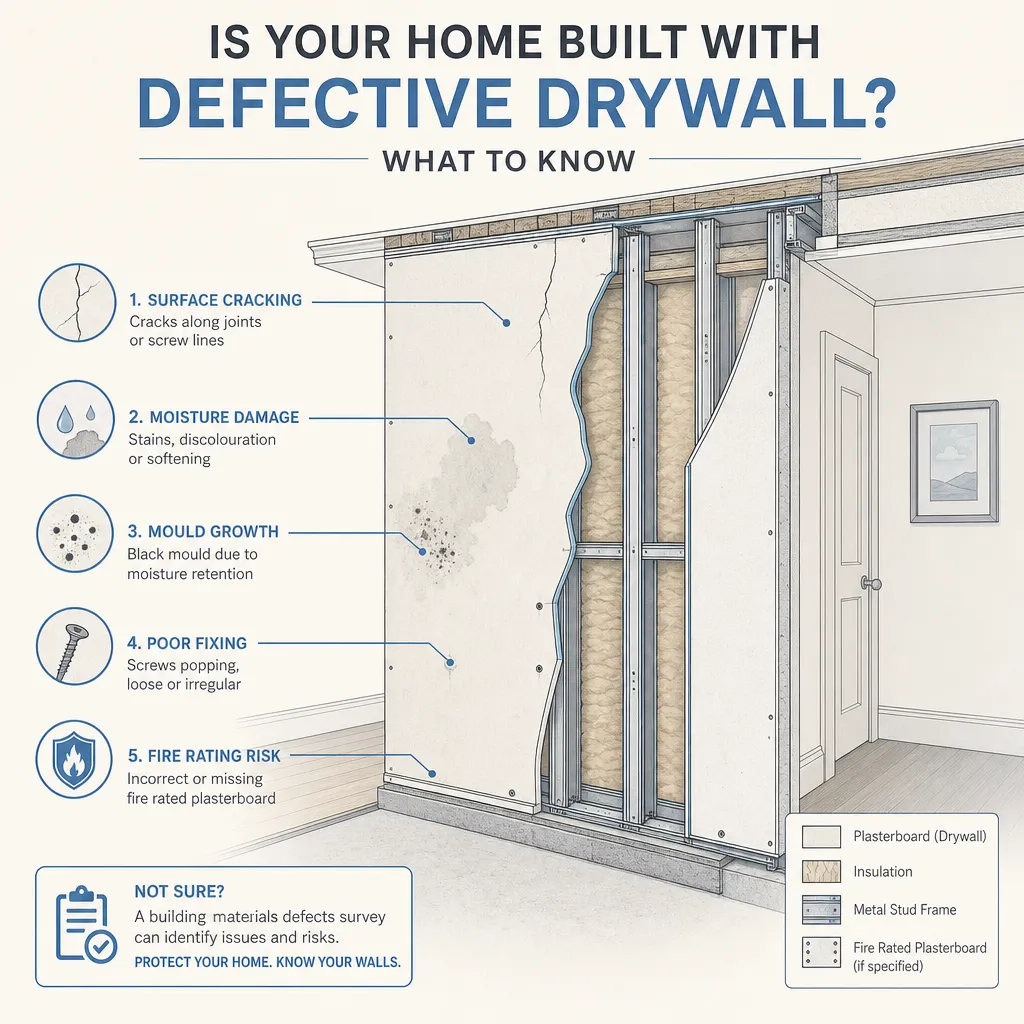
Is Your Home Built with Defective Drywall? What to Know
Contaminated Chinese drywall — as seen in US homes built 2001 to 2009 — is not a documented widespread problem in UK properties, where plasterboard is manufactured primarily to European standards.
 Surveys & Inspections
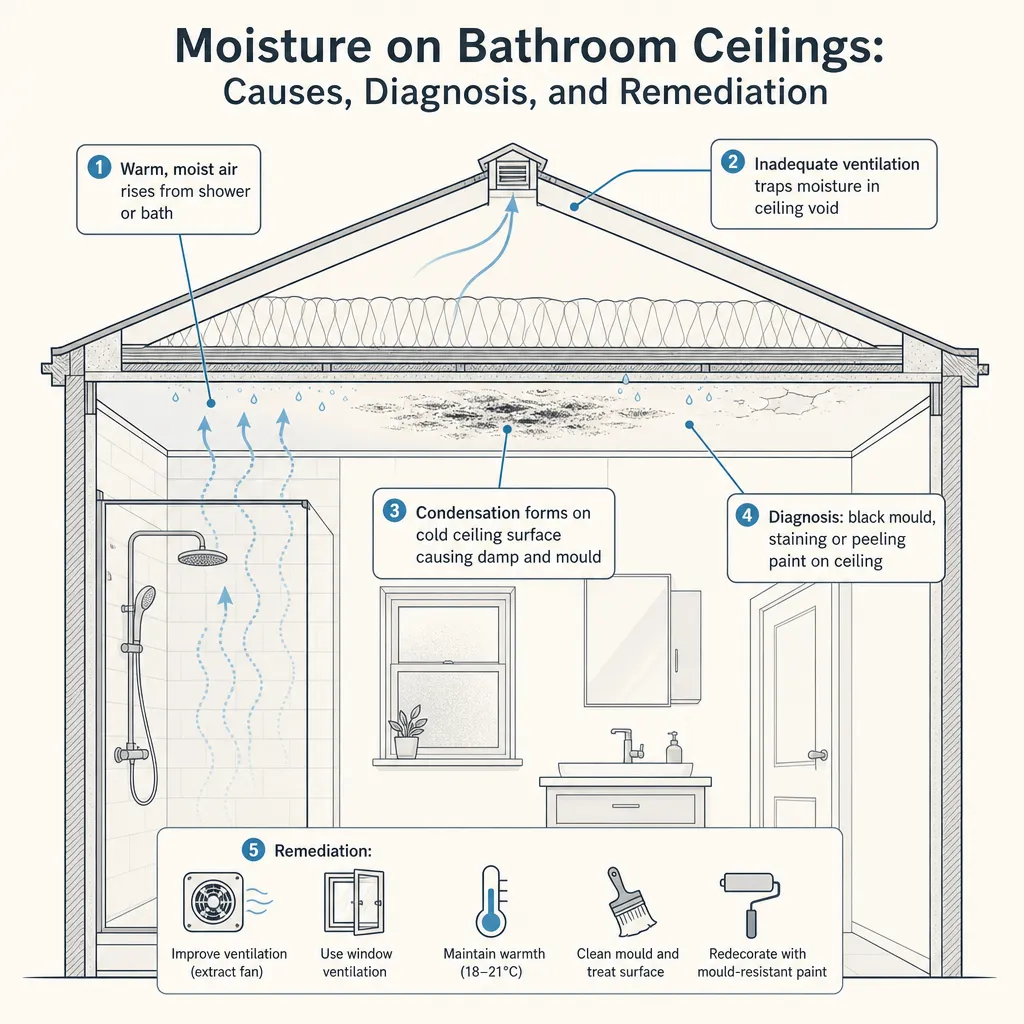
Moisture on Bathroom Ceilings: Causes, Diagnosis, and Remediation
Moisture on a bathroom ceiling is most often caused by condensation from poor ventilation, but can also indicate a leak from above or penetrating damp.
 Surveys & Inspections
Structural Building Survey Costs
A RICS Level 3 Building Survey typically costs £500–£1,500 in the UK, depending on property size, age, and location.