Repairing Slate Roof Tiles: Methods and Materials
By Housey · Last reviewed 11th of May 2026
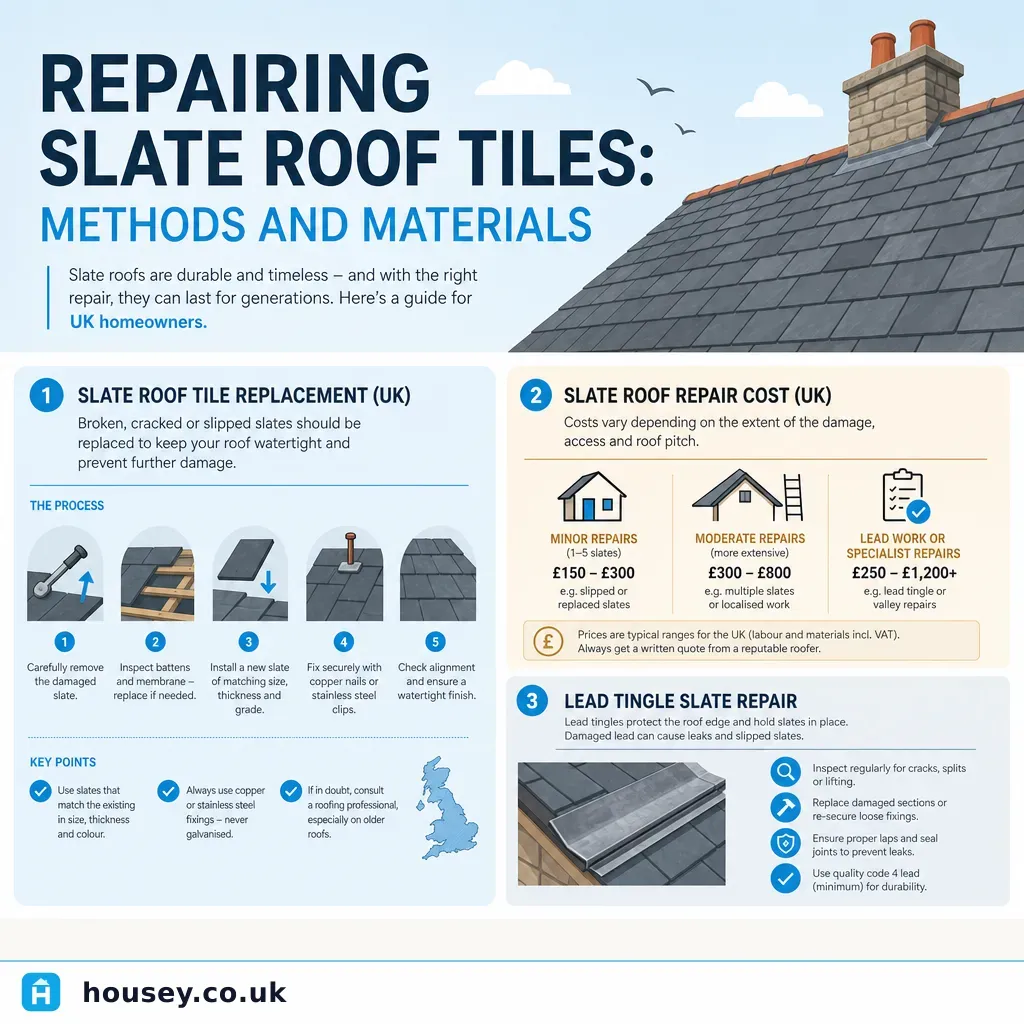
Repairing Slate Roof Tiles: Methods and Materials
Slate roofing is one of the most durable systems found on UK homes, particularly on Victorian and Edwardian terraces, stone cottages in Wales and Scotland, and older properties across the North of England. When slates begin to slip, crack, or delaminate, the decision between a targeted repair and a full re-slate can carry significant financial implications. Understanding the available methods, the materials involved, and when a professional inspection is warranted helps homeowners act quickly and avoid escalating water ingress damage.
Key points
- Natural Welsh slate (graded to BS EN 12326) can last 80–150 years; early failure signs — sandy residue in gutters, delaminating surfaces — typically appear after 60–80 years on older quarries.
- Single slipped or broken slates are usually re-fixed using a lead tingle or hook-and-nail method, not adhesives or expanding foam, which are temporary measures unsuitable for long-term repairs.
- Like-for-like slate repairs generally do not require Building Regulations approval, but conservation areas and listed buildings may require planning consent before any roof materials are changed.
- Roofs built between approximately 1960 and the mid-1980s may include asbestos-cement slates, which often appear uniform grey; do not disturb these without professional assessment.
- A RICS building survey or specialist roof survey can determine whether the proportion of failing slates makes spot repairs cost-effective or whether a full re-slate represents better long-term value.
What causes slate tiles to fail?
Natural slate rarely fails uniformly. The most common causes of deterioration are:
Nail sickness — iron or steel nails corrode over time, causing slates to slip from the batten without the slate itself being cracked. The slate often appears intact on the ground. This is the most common failure mode on pre-1950s roofs and cannot be reliably identified from ground level alone.
Delamination — water penetrates the laminar structure of softer slates, causing layers to separate. You may notice powder or flakes accumulating in the gutters.
Physical damage — impact from falling branches, hailstone strikes, or foot traffic during maintenance work.
Mortar failure — ridge tiles and hip tiles are bedded in mortar, which cracks and shrinks over time. Failed mortar allows water ingress and can cause ridge tiles to become dislodged in high winds.
Flashing failure — lead flashings around chimneys, skylights, and valleys are often the first point of failure even when slates are sound. Cracked, lifted, or split flashings account for a significant proportion of reported roof leaks on older properties.
Repair methods compared
Indicative UK costs, last reviewed 2026-05-11. Figures are broad guidance only; costs vary by region, access difficulty, scaffolding requirements, and slate type. Always obtain at least three written quotes.
Method | Best for | Not ideal for | Indicative cost | Notes |
|---|---|---|---|---|
Lead tingle re-fixing | Single slipped slate with intact body | Multiple widespread slippages | £80–£200 per slate | Standard method; long-lasting if the slate is undamaged |
Hook-and-nail re-fixing | Slates with sound nail holes | Slates with cracked body or corners | £80–£200 per slate | May require partial batten exposure |
Full slate replacement | Broken, delaminating, or missing tiles | Widespread failure where re-slate is more economic | £150–£400+ per slate | Matching slate is critical in conservation areas |
Mortar re-bedding (ridges/hips) | Loose or cracked ridge and hip mortar | Active water ingress through slate bodies | £300–£800 per section | Often combined with flexi-pointing for longevity |
Full re-slate | 25–30%+ slates failing or nail sickness widespread | Isolated patches of damage on an otherwise sound roof | £5,000–£25,000+ | Cost depends on roof area, pitch, scaffolding, and batten condition |
Matching slate: why material choice matters
For most UK repairs, achieving a like-for-like material match is straightforward in principle but sometimes difficult in practice.
Welsh slate (particularly from the Penrhyn, Dinorwic, and Ffestiniog quarries) is the standard for properties in Wales and much of England. Reclaimed Welsh slate is widely available and preferred for conservation area and listed building work.
Spanish slate (Cupa, Galician quarries) is commonly used for re-slate work due to cost and availability. It is generally acceptable for modern re-slating but may not be permitted as a like-for-like replacement on listed buildings or in conservation areas. Always check with your local planning authority before ordering materials.
Synthetic slates (fibre-cement or polymer) offer a cost-effective option but have a different appearance and weathering profile. They may not gain planning consent where natural slate is specified, particularly in designated areas.
When sourcing reclaimed slate, confirm that thickness, size, and grade match the existing roof. Mismatched slates can cause wind uplift problems and a visual discrepancy that planning authorities may require you to correct.
Homeowner inspection checklist (ground-level only)
Use binoculars or a zoom camera lens for this assessment. Never access the roof yourself — roofwork above 2 m requires appropriate fall-arrest equipment and training, and is not a task for homeowners without specialist skills.
If you tick two or more of these boxes, arrange a professional roof inspection before the next significant rainfall.
Red flags: when repairs may not be enough
Some conditions suggest that isolated repairs will not address the underlying problem:
- More than 25–30% of slates are cracked, slipped, or delaminated — at this proportion, cumulative repair costs typically approach or exceed the cost of a full re-slate.
- Nail sickness across large sections — once nails corrode extensively, slates will continue to slip even after individual fixes, because the underlying fixing medium has failed throughout.
- Rotten or missing roof battens — individual slate replacement cannot address decay in the batten layer; a full strip and re-slate is usually required.
- Deteriorated underlay — on older roofs, the sarking felt (if present) may have degraded; a re-slate is the opportunity to install a modern breathable membrane.
- Recurring damp in the same location despite previous repairs — this suggests the true leak source has not been correctly identified and a more thorough investigation is needed.
In these situations, a roof survey from a qualified specialist can provide a condition report and an evidence-based recommendation.
When to get professional help
All slate roof repair and replacement work should be carried out by a qualified roofer with appropriate public liability insurance and, for work at height, the correct safety equipment. Seek professional assessment promptly if:
- You have active water ingress after rainfall.
- Slates have fallen or shifted following a storm.
- You are buying or selling a property and the roof condition is uncertain.
- The property is listed or in a conservation area and you need planning guidance before changing materials.
- You suspect the slates may be asbestos-cement — do not disturb or handle them without specialist guidance.
A RICS Level 3 Building Survey or specialist roof survey will typically identify the extent of slate failure, batten and underlay condition, flashing integrity, and whether further investigation is warranted.
How Housey can help
If you need a professional opinion before deciding between repairs and a full re-slate, Housey connects you with qualified specialists who carry out roof surveys and produce written condition reports, and with vetted qualified roofers who can provide comparable written quotes for the work required.
Frequently asked questions
How long does a natural slate roof last in the UK?
A well-quarried Welsh or Cornish slate roof can last 80–150 years with periodic maintenance. The battens, underlay, and flashings typically need attention before the slates themselves fail. Spanish slate, commonly used on modern re-slates, has a quoted lifespan of 50–75 years, though performance varies by quarry and installation quality.
Do I need planning permission to repair my slate roof?
Like-for-like repairs using the same material and colour generally do not require planning permission under permitted development rights. However, if your property is in a conservation area or is listed, any change to roofing materials — including switching from Welsh to Spanish slate — may require prior approval. Always check with your local planning authority before starting work.
Can I use sealant or expanding foam on a cracked slate?
Sealants and expanding foam are sometimes applied as emergency measures but are not accepted as permanent repairs by most roofing professionals. They can mask the extent of water ingress and make subsequent repairs more difficult. A roofing contractor can advise whether a temporary patch is appropriate while scaffolding is being arranged.
How do I know if my roof has asbestos slates rather than natural slate?
Asbestos-cement slates were used on some UK properties from roughly the 1950s to the mid-1980s. They often appear uniform grey and may seem more brittle than natural slate. If you are uncertain, arrange an inspection or material testing by a competent person before any works begin. Do not break, drill, or disturb the slates without professional guidance.
Sources and further reading
- Building Regulations: approved documents — GOV.UK
- Repair of traditional roofs — Historic England
- Working at height: the law — Health and Safety Executive
- Roof alterations and permitted development — Planning Portal
- BS EN 12326: Slate and stone products for discontinuous roofing — BSI Group
Useful next reads
 Surveys & Inspections
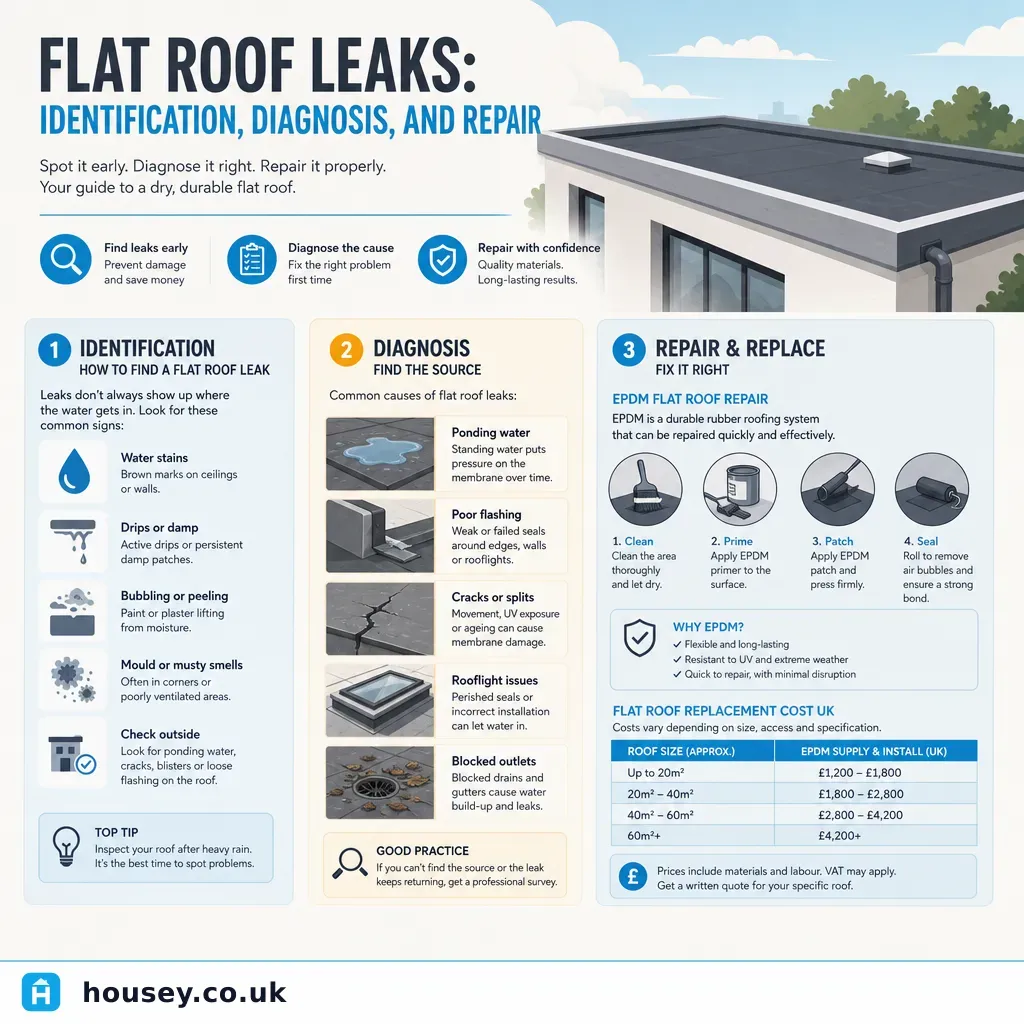
Flat Roof Leaks: Identification, Diagnosis, and Repair
A flat roof leak rarely enters directly above the visible damp patch — water typically tracks along the roof deck before it appears inside.
 Surveys & Inspections
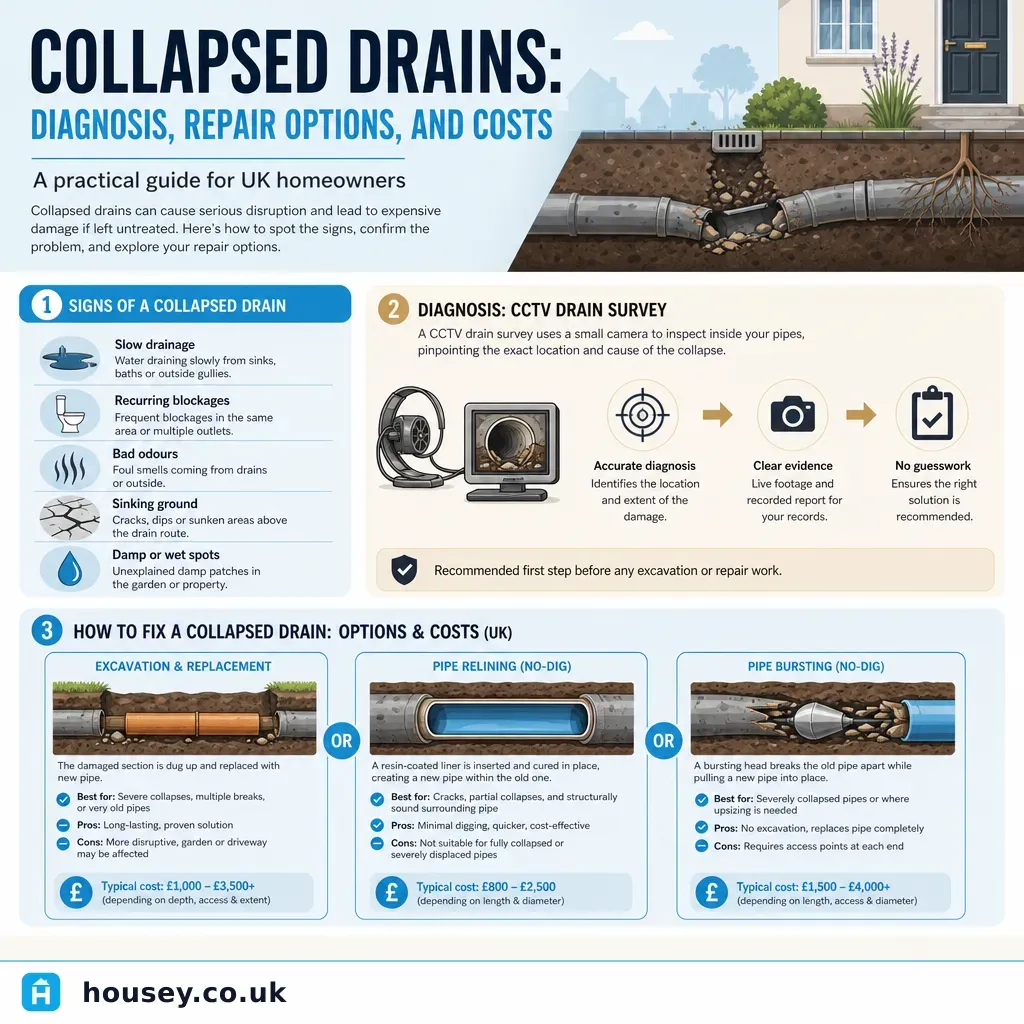
Collapsed Drains: Diagnosis, Repair Options, and Costs
A collapsed drain is a structural pipe failure that cannot be fixed by jetting alone.
 Surveys & Inspections
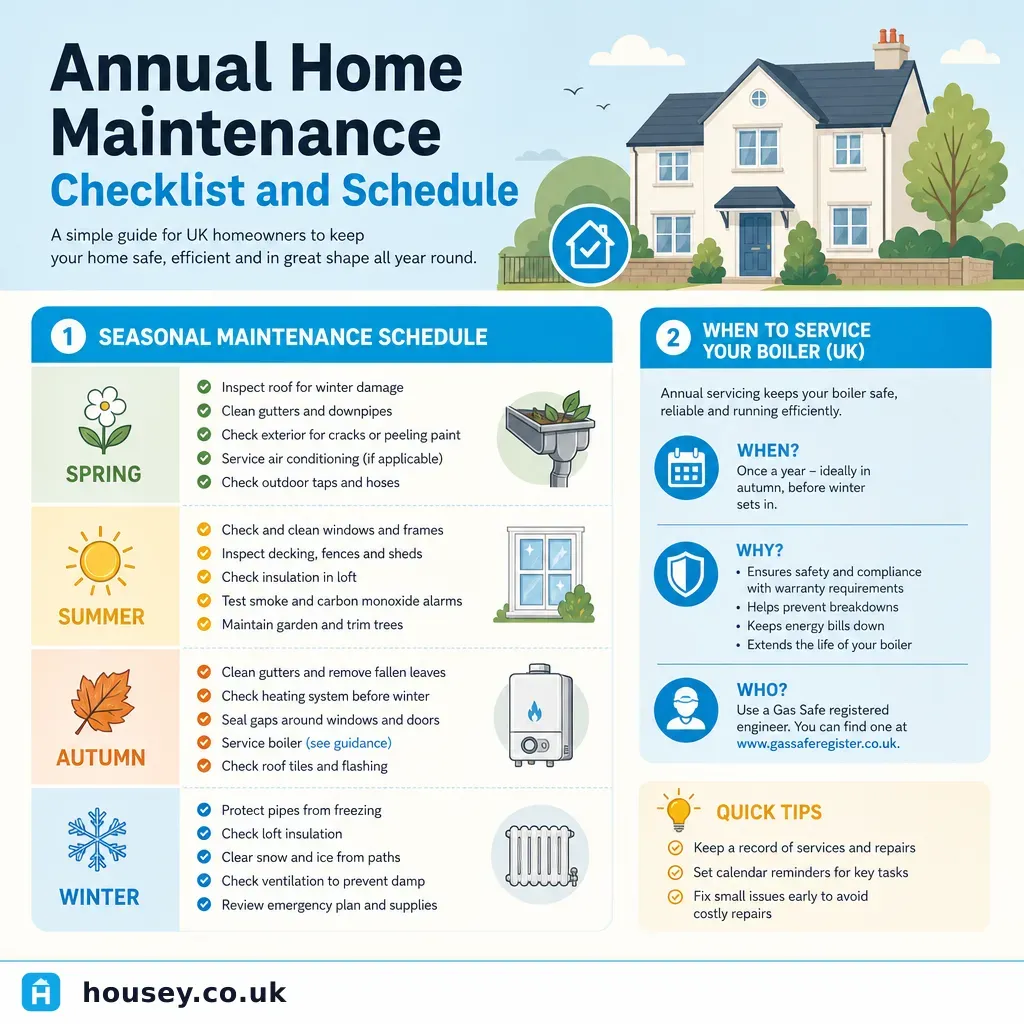
Annual Home Maintenance Checklist and Schedule
A structured annual maintenance schedule helps UK homeowners catch small problems before they become costly repairs.
 Surveys & Inspections
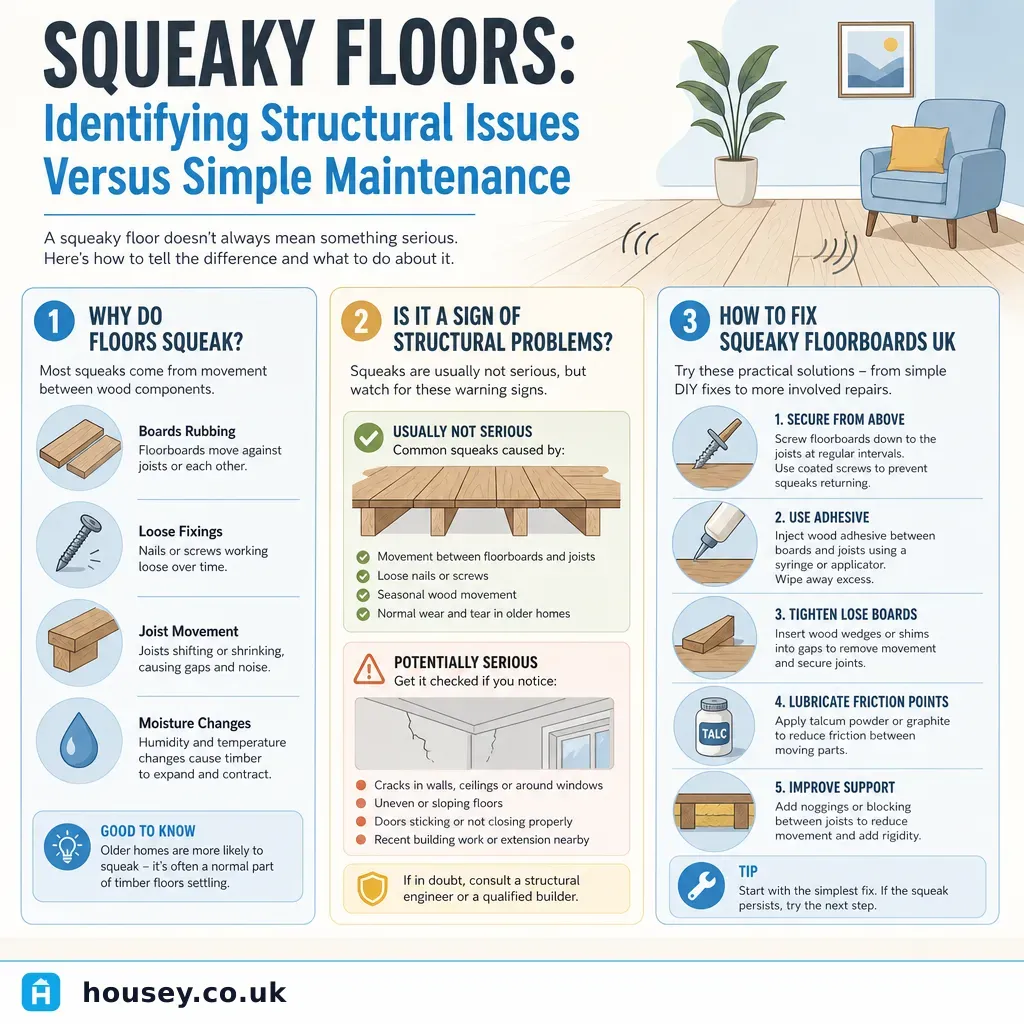
Squeaky Floors: Identifying Structural Issues Versus Simple Maintenance
Most squeaky floors in UK homes are caused by floorboards rubbing against each other or against fixings as they expand and contract — a maintenance issue rather than a structural one.
 Surveys & Inspections
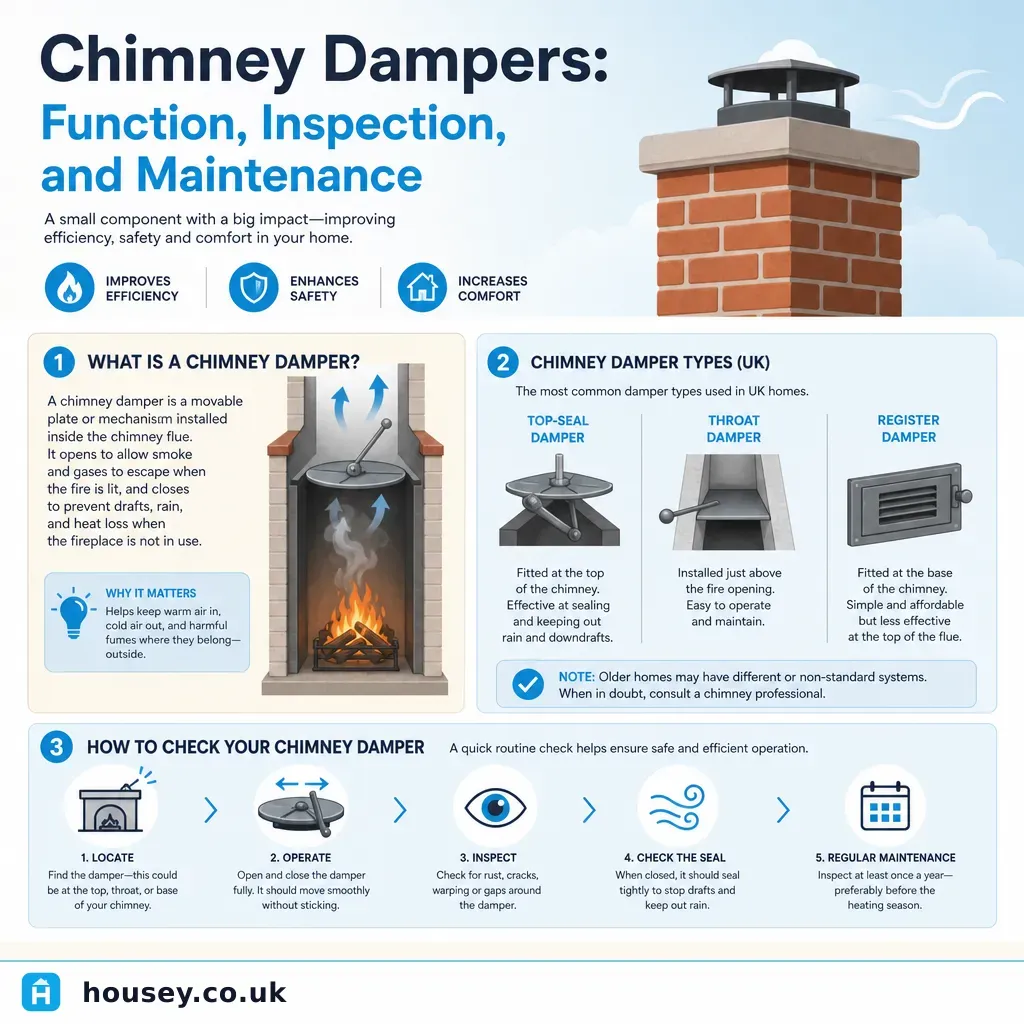
Chimney Dampers: Function, Inspection, and Maintenance
A chimney damper is a movable plate or valve in the flue that controls airflow when the fire is lit and seals the chimney when it is not.