Comparing Flat and Pitched Roofing: Costs, Durability and Maintenance
By Housey · Last reviewed 7th of May 2026
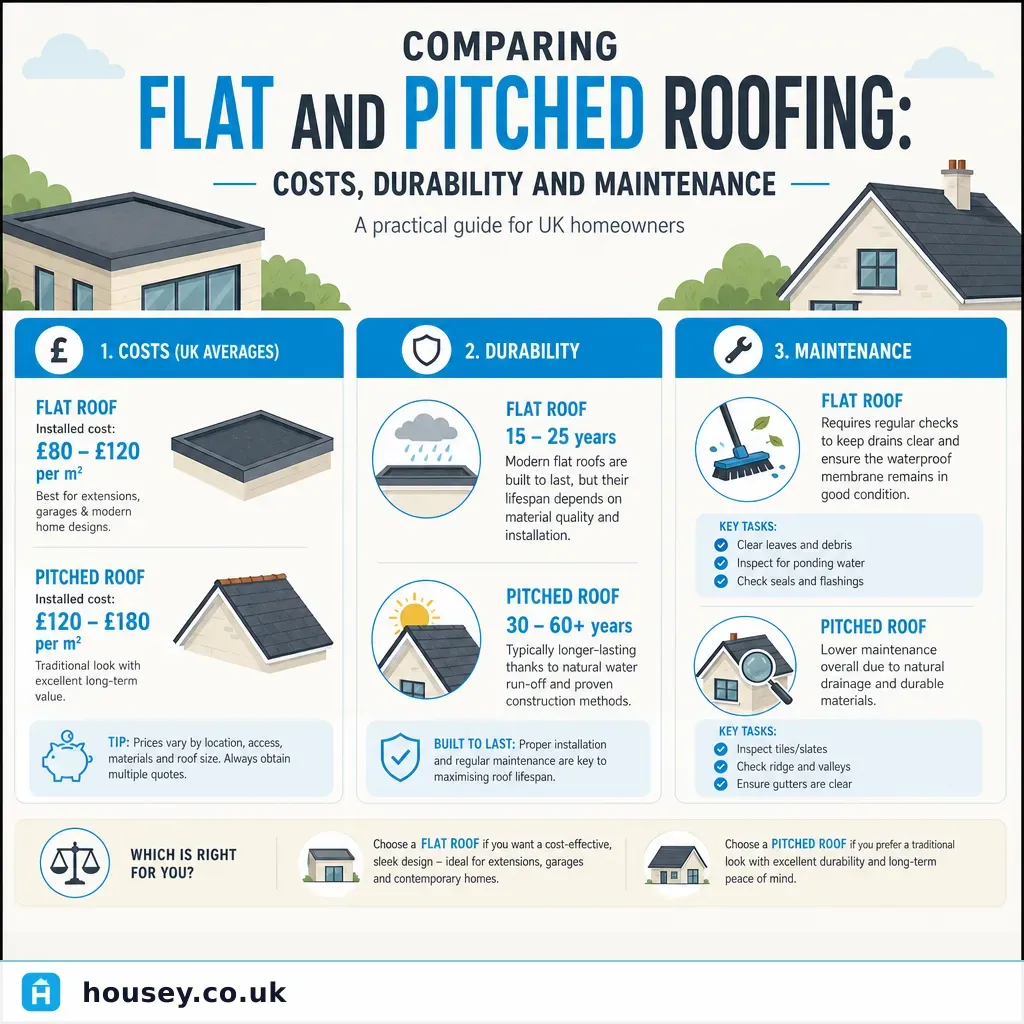
Comparing Flat and Pitched Roofing: Costs, Durability and Maintenance
Choosing between a flat and pitched roof is one of the most consequential decisions in any new build, extension, or major roof replacement project. The choice affects upfront costs, long-term maintenance demands, insulation performance, and the visual character of a property. For UK homeowners, the decision is also shaped by local planning rules, conservation area requirements, structural constraints, and the specific performance expectations of the materials involved — making it worth understanding both options in detail before committing to either.
Key points
- Modern EPDM (rubber) and GRP (fibreglass) flat roofs can last 25–50 years when correctly installed; standard concrete interlocking tile pitched roofs typically last 40–60 years, and natural slate 80–100 years or more.
- Building Regulations Part A (Structure), Part C (Resistance to Moisture), and Part L (Energy Efficiency) all apply to new or replacement roofs — a U-value of 0.18 W/m²K or better is required for flat roofs, and 0.16 W/m²K for pitched roofs under current Approved Document L for England.
- Like-for-like roof replacements generally fall within permitted development rights, but increasing overall roof height or significantly changing the roofline will usually require planning permission.
- Flat roof costs per m² are typically 15–30% lower than pitched for initial installation, but higher maintenance frequency can reduce that lifetime cost advantage.
- VAT at 20% applies to most roofing work on domestic properties; certain energy-saving insulation elements may qualify for 0% VAT under the Energy Saving Materials relief — confirm with your contractor or HMRC.
Flat vs pitched roofing: key differences at a glance
Feature | Flat roof | Pitched roof |
|---|---|---|
Typical lifespan | 15–50 years (material-dependent) | 40–100+ years (material-dependent) |
Approximate installation cost (per m²) | £60–£120 | £80–£180 |
Maintenance frequency | Higher — annual checks recommended | Lower — inspect every 2–5 years |
Weather performance in the UK | Adequate when well-detailed; pooling risk if poorly laid or drained | Generally superior in the UK's wet climate |
Planning risk | Low for like-for-like; higher if changing height | Usually permitted development for like-for-like replacement |
Insulation approach | Warm roof, cold roof, or inverted roof | Between-rafter, over-rafter, or cold loft insulation |
Typical UK applications | Extensions, outbuildings, garages, dormers, contemporary new builds | Most UK house types — Victorian, Edwardian, inter-war, post-war, and modern |
Structural self-weight | Lower | Higher (tiles, battens, rafters, purlins) |
Indicative UK costs, last reviewed 2026-05-07. Costs vary significantly by material choice, property location, access difficulty, and contractor. Obtain at least three quotes.
Flat roofing: costs, materials, and typical uses
Modern flat roofing systems are considerably more reliable than the three-layer felt systems common on 1960s–1980s extensions. The three dominant systems for residential work are:
- EPDM (ethylene propylene diene monomer): a synthetic rubber membrane. Typical lifespan 25–50 years; relatively straightforward to repair; low maintenance. Often the preferred specification for domestic extensions and garage roofs.
- GRP (glass reinforced plastic, or fibreglass): a rigid, seamless system with a lifespan of 30–50 years. Performs well at flashings and around penetrations; more susceptible to cracking in very cold or thermally stressed conditions if not correctly detailed.
- TPO and PVC single-ply membranes: common in commercial settings and increasingly used residentially. Lifespan typically 20–35 years; good UV resistance and weldable joints reduce leak risk.
Traditional felt (bitumen) systems are still available but are generally less favoured for new residential work, with lifespans of 10–20 years for a standard 3-layer installation.
A flat roof extension of around 20 m² might cost approximately £1,800–£3,000 for EPDM or GRP installation, including rigid insulation board to current Building Regulations standards — though prices vary materially by region and specification (indicative UK costs, last reviewed 2026-05-07).
Flat roofs perform reliably in the UK climate when:
- Falls (drainage gradients) are correctly designed — a minimum of 1:80, with 1:40 recommended by most manufacturers.
- Upstands, flashings, and outlets are detailed to prevent water ingress at junctions.
- Warm roof construction is used, with insulation above the structural deck to prevent interstitial condensation.
Pitched roofing: costs, materials, and typical uses
Pitched roofs are the default form on the overwhelming majority of UK housing stock — from Victorian terraces and Edwardian semis to 1930s bungalows, post-war estates, and modern housebuilder properties. Pitch angles and tile types vary by region and, in many areas, by local planning policy.
Common materials include:
- Concrete interlocking tiles: economical and durable (40–60 years). The most common choice for mainstream residential re-roofing across England.
- Clay plain tiles: traditional appearance, long lifespan (60–100 years); typically required in conservation areas and alongside or near listed buildings.
- Natural slate: high quality with a lifespan of 80–100 years or more; heavier than tile, requiring structural checks before use as a replacement material.
- Fibre cement slates: a lower-cost alternative to natural slate with a typical lifespan of 30–50 years.
- Metal standing seam (zinc, copper, or aluminium): contemporary aesthetic; lifespan of 40–100 years depending on the metal; higher initial cost but very low maintenance.
Replacement of a standard 80 m² pitched roof with concrete interlocking tiles typically costs £6,000–£12,000, including scaffolding, breathable underlay, battens, and ridge work (indicative UK costs, last reviewed 2026-05-07; costs vary by region, material, and access).
Durability and maintenance: what to plan for
Flat roofs
Regular inspection — at minimum annually and after any severe weather event — is important for flat roofs. Key maintenance tasks include:
- Clearing debris from outlets, gutters, and drainage channels.
- Checking flashings and upstands for lifting, cracking, or loss of adhesion.
- Looking for surface blistering, ponding water, or moss and algae accumulation.
- Inspecting joints, seams, and penetrations such as soil vent pipes and rooflights.
Minor repairs on EPDM or GRP are generally low cost if caught early. Neglected flat roofs commonly fail at junctions and upstands, causing water ingress that is difficult to trace and expensive to remedy once it reaches ceiling joists or insulation.
Pitched roofs
Pitched roofs in good condition require less routine maintenance, but periodic inspection is still worthwhile every two to five years. Key tasks include:
- Replacing cracked, slipped, or missing tiles or slates promptly to prevent underfelt deterioration.
- Re-pointing or replacing mortar on ridges and hips, particularly on older properties where lime mortars have weathered.
- Checking lead flashings around chimney stacks, abutments, and valleys for cracking or lifting.
- Clearing valleys and gutters of moss, debris, and organic growth.
A RICS Level 2 or Level 3 Home Survey will include a roof inspection as standard and is particularly worthwhile when purchasing a property with an ageing pitched roof or one with visible defects.
Which roof type should you choose?
Use this decision guide to narrow down your options before engaging a contractor:
- Choose a flat roof if you are building a single-storey extension, garage conversion, or outbuilding where maximising internal headroom is important and a pitched roof would conflict with adjacent windows or planning height restrictions.
- Choose a pitched roof if your project is a significant extension to a traditionally styled property, if your local planning authority or conservation area designation requires a pitched form, or if you want the lowest long-term maintenance commitment.
- Choose a flat roof with rooflights if you want a modern, light-filled extension aesthetic and you are prepared to invest in quality materials, correct drainage design, and professional installation.
- Consider a hybrid design (pitched roof with a flat section) if your extension geometry — an L-shape or wraparound, for example — makes a single roof form impractical.
- Ask a structural engineer before converting an existing flat roof to a pitched one, because the change in load distribution and the addition of rafters, purlins, and tiles can affect the wall plate, party walls, and load-bearing structure below.
- Check with your local planning authority before starting work if the proposed roof height, pitch, or material differs from the existing property or its neighbours — especially in conservation areas, Article 4 direction zones, or on or near a listed building.
Worked example: flat-to-pitched conversion on a 1970s semi
A homeowner in Coventry with a 1970s semi-detached house considers converting a flat-roofed rear extension (approximately 24 m²) to a pitched roof to match the main dwelling and improve its appearance.
- Planning: The new pitched roof would raise the ridge height by around 1.2 m. Because the extension is attached to the dwelling and the increase exceeds 0.15 m above the highest part of the original roof, permitted development Class A conditions are unlikely to be met in full. The homeowner submits a pre-application enquiry to the local planning authority and is advised that a householder planning application is needed.
- Structural assessment: A structural engineer checks that the existing cavity brick walls and their foundations can carry the additional dead load of rafters, battens, and concrete interlocking tiles — an increase of roughly 50–70 kg/m² over the original felt roof.
- Building regulations: A full plans application is submitted to building control. The new roof must comply with Part A (structure), Part C (moisture), and Part L — the current target U-value for a new pitched roof in England is 0.16 W/m²K under Approved Document L.
- Indicative cost: Planning application fee (householder, England): £258 as at 2026. Structural engineer fee: approximately £400–£800. Roofing works including scaffolding, rafters, underlay, concrete tiles, and ridge: approximately £5,500–£9,000. Total project cost: approximately £6,500–£12,000 depending on specification and contractor (indicative UK costs, last reviewed 2026-05-07; quotes vary).
When to get professional help
Always engage a qualified, insured roofing contractor for any replacement or significant repair work. Specific triggers for professional involvement beyond a roofer include:
- Structural engineer: before converting from flat to pitched, adding large rooflights, or if any existing roof structure shows signs of sagging, deflection, rot, or beetle damage to timbers.
- Planning consultant or architect: if the proposed roof changes height, pitch, or material in a way that may require planning permission, or if the property is listed or in a conservation area.
- RICS surveyor: if you are buying a property with an ageing flat roof or a pitched roof with visible slippage, staining, or structural concerns — a RICS Level 3 survey is advisable for older or altered properties.
Red flags requiring prompt professional attention:
- Water staining on ceilings, in roof voids, or on internal wall surfaces near the roofline.
- Visible sagging or deflection in any part of the roof plane or ridge line.
- Multiple slipped or missing tiles or slates, particularly around valleys, hips, or flashings.
- Blistering, cracking, or visible seam failures on a flat roof membrane.
- Any suspected damage to structural timbers from wet rot, dry rot, or woodboring beetle activity.
How Housey can help
Whether you need to replace a flat roof membrane on an extension or want a structural assessment before converting from flat to pitched, Housey can help you find and compare qualified professionals. Request quotes from vetted local roofers across the UK, or get expert advice through our structural engineering service before committing to a significant roof project.
Frequently asked questions
How long does a flat roof last compared to a pitched roof?
A modern EPDM or GRP flat roof, correctly installed and maintained, typically lasts 25–50 years. A concrete tile pitched roof generally lasts 40–60 years, and natural slate can exceed 80–100 years. Traditional felt flat roofs from the 1970s and 1980s have a much shorter effective lifespan of 10–20 years and are frequently at or past the end of their serviceable life.
Does a flat roof replacement need planning permission?
A like-for-like flat roof replacement on a domestic property generally falls within permitted development in England and does not require planning permission. However, adding a flat roof where none existed, raising roof height, or working on a listed building or property in a conservation area will usually require permission. Always check with your local planning authority before starting work.
Is a flat roof cheaper than a pitched roof?
Flat roofs typically cost 15–30% less per m² to install than a comparable pitched roof. However, higher maintenance requirements and shorter lifespans for some flat roof materials mean that lifetime costs can be broadly comparable. Total cost of ownership should account for material lifespan, maintenance frequency, and the cost of periodic professional inspection over the building's life.
What insulation does a flat roof need under current Building Regulations?
Under Building Regulations Approved Document L for England, new or replacement flat roofs must achieve a U-value of 0.18 W/m²K or better. A warm roof construction — where insulation sits above the structural deck — is generally preferred over a cold roof because it reduces condensation risk within the roof build-up and is easier to achieve in both new and existing construction.
Can I convert my flat roof extension to a pitched roof?
In many cases yes, but you will typically need building regulations approval for structural and thermal compliance, and you may need planning permission if the new roof increases the building's height. A structural engineer should confirm that existing walls can carry the additional load of rafters, battens, and tiles before work begins. Pre-application advice from your local planning authority is advisable.
Sources and further reading
Useful next reads
 Improvement & Build
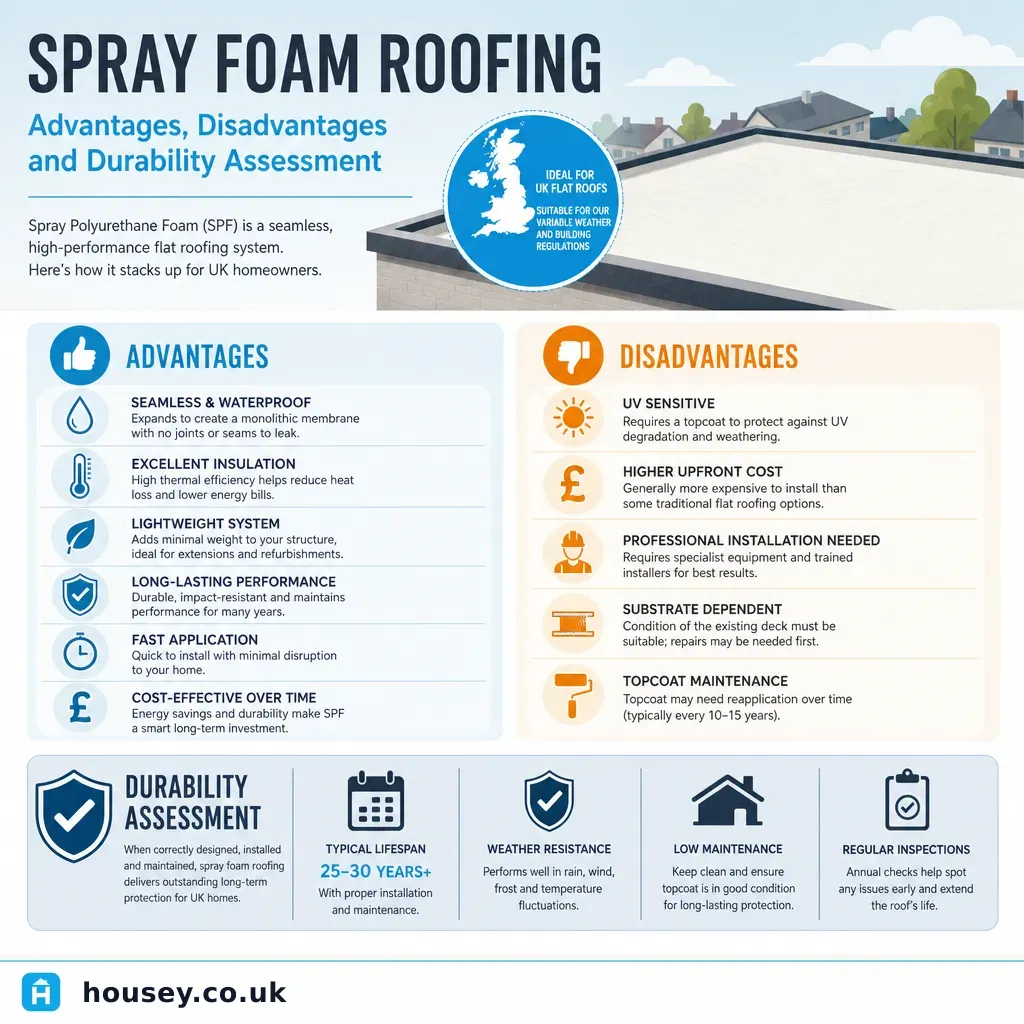
Spray foam roofing: advantages, disadvantages and durability assessment
Spray foam roofing creates a seamless, fully adhered waterproof membrane with built-in insulation that can extend the life of a flat roof by 20 to 30 years when correctly topcoated and maintained.
 Improvement & Build
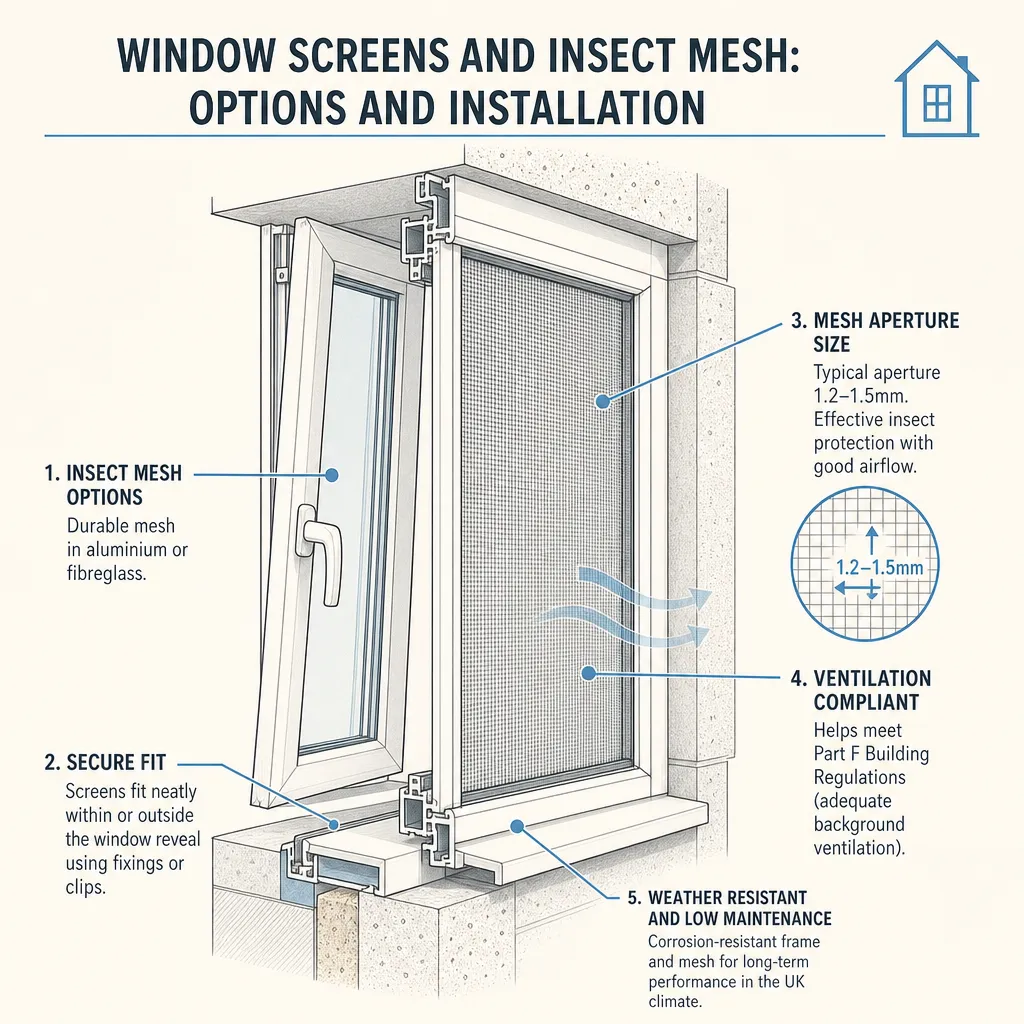
Window Screens and Insect Mesh: Options and Installation
UK window screens fall into four main types: fixed frame, roller retractable, pleated folding, and magnetic snap-fit.
 Improvement & Build
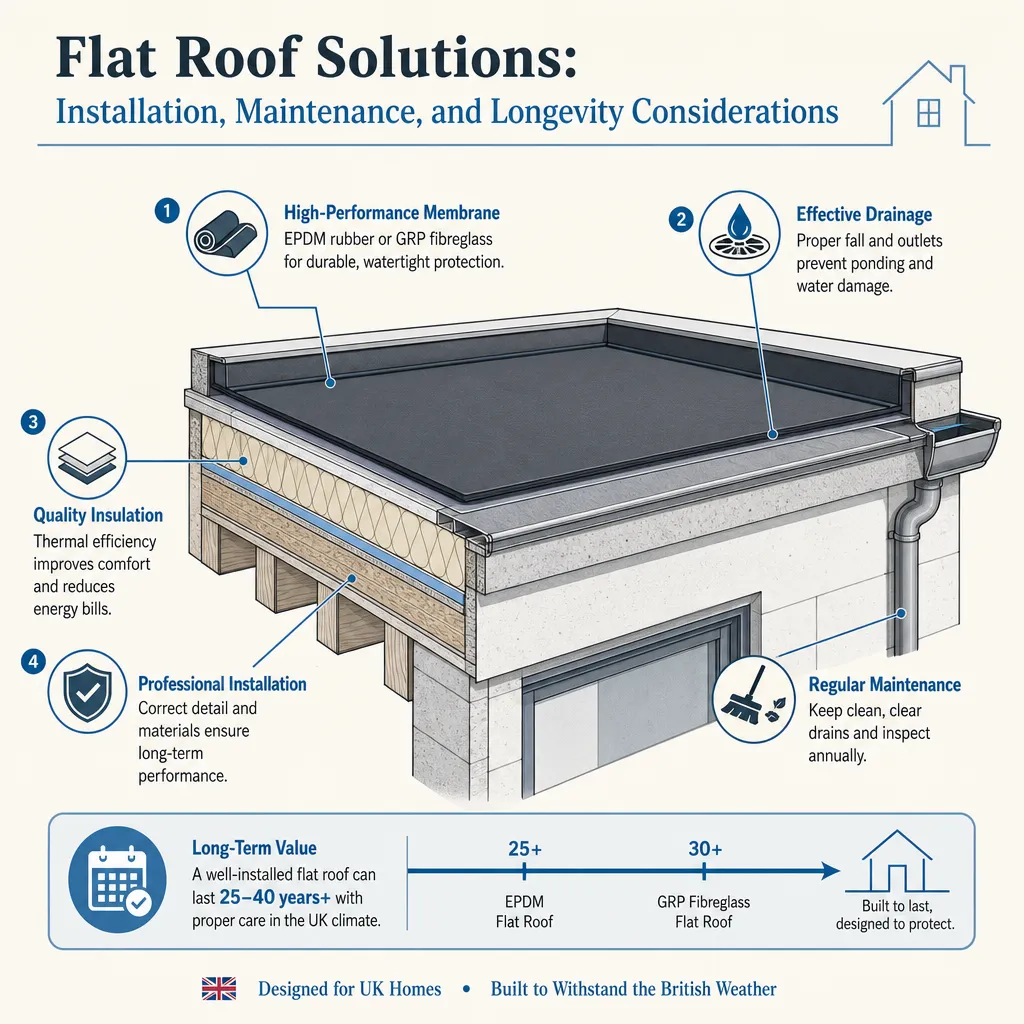
Flat Roof Solutions: Installation, Maintenance, and Longevity Considerations
Flat roofs use several waterproofing systems — EPDM rubber, GRP fibreglass, liquid-applied coatings, modified bitumen felt, lead, and zinc — each with different lifespans and installation requirements.
 Improvement & Build
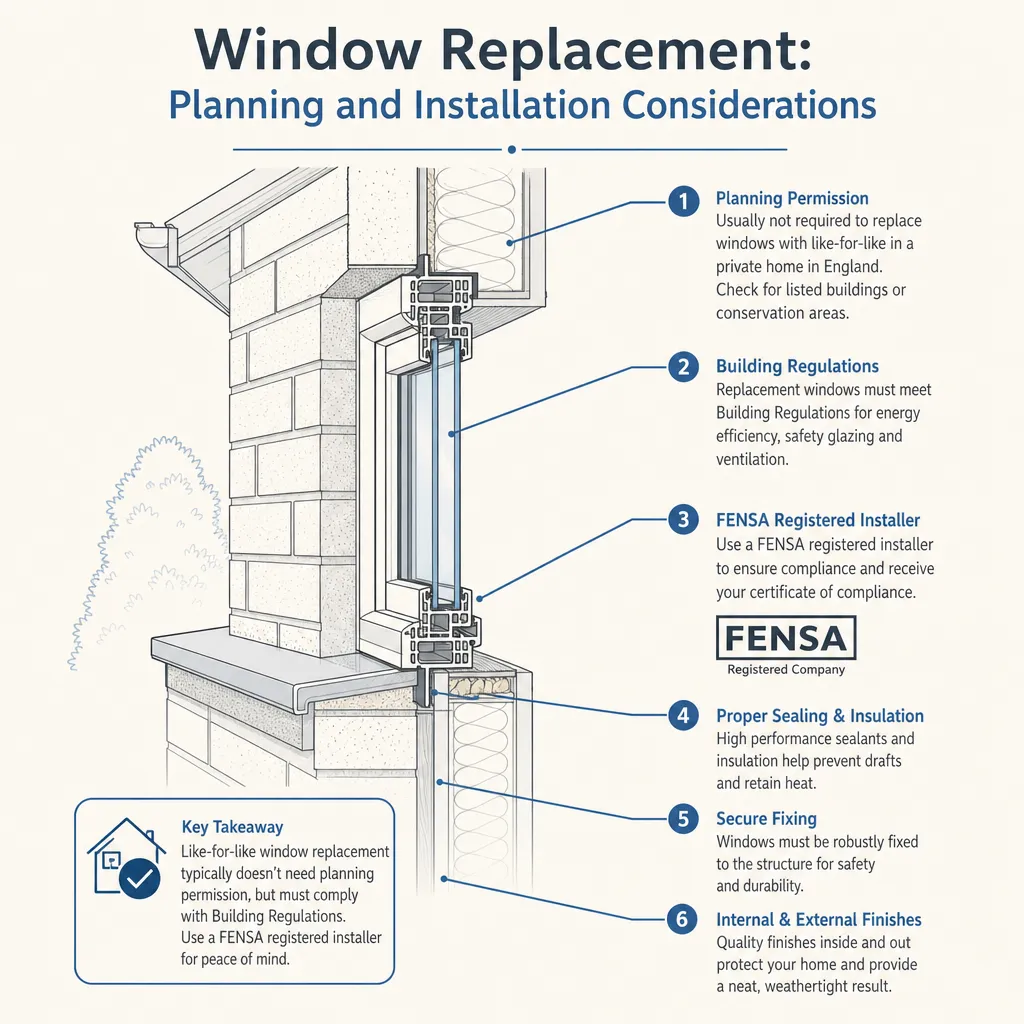
Window Replacement: Planning and Installation Considerations
Most window replacements in England fall under permitted development and do not need planning permission, though listed buildings, flats, and conservation areas are exceptions.
 Improvement & Build
Window Tinting and Solar Control Films for Residential Properties
Solar control window films reject 40–80% of total solar energy and block 99% of UV radiation, reducing overheating and fading without replacing glazing.