Spray foam roofing: advantages, disadvantages and durability assessment
By Housey · Last reviewed 12th of May 2026
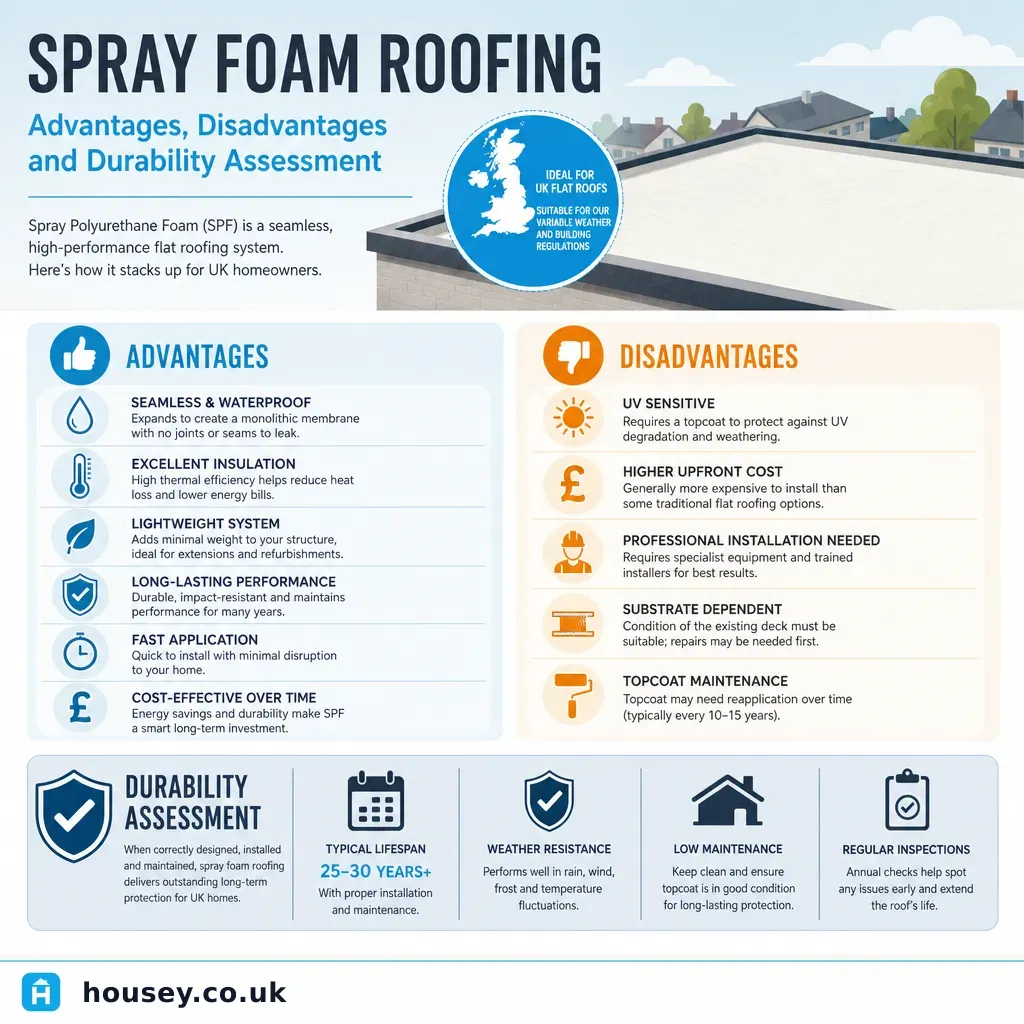
Spray foam roofing: advantages, disadvantages and durability assessment
Flat roofs are common on UK extensions, garages, bay windows, and many 1960s–1980s properties, and keeping them watertight is a perennial maintenance challenge. Spray polyurethane foam (SPF) roofing has gained attention as an alternative to traditional felt, GRP, and EPDM membranes — offering a seamless finish with combined waterproofing and insulation in a single application. Before commissioning this system, it is worth understanding both its genuine technical benefits and the practical limitations that apply in a UK domestic context.
Key points
- Spray polyurethane foam roofing must be finished with a UV-resistant topcoat (typically polyurea or an elastomeric coating) — the foam itself degrades rapidly when exposed to ultraviolet light without this protection.
- A correctly specified and installed SPF roofing system can achieve a service life of 20–30 years; the topcoat typically requires reapplication every 10–15 years.
- SPF roofing requires a structurally sound, dry substrate — it should not be applied to roofs with active leaks, waterlogged insulation, or deteriorated decking without remediation first.
- Unlike built-up felt or EPDM sheet systems, SPF is difficult to inspect beneath once applied, which can complicate defect diagnosis if water ingress occurs later.
- SPF roofing installed for thermal improvement purposes may be subject to Building Regulations Part L notification requirements — check with your local building control body before work begins.
What is spray foam roofing?
Spray polyurethane foam (SPF) roofing involves applying a two-component liquid polyurethane system to a prepared flat roof deck using specialist heated spray equipment. The polyol resin and isocyanate components react on contact, expanding rapidly into a rigid closed-cell foam. A UV-resistant protective topcoat is then applied to the cured foam surface.
The result is a seamless, fully adhered layer that acts as both a thermal insulator and — once topcoated — a waterproof membrane. SPF roofing is well-established in commercial construction and is increasingly offered for domestic flat roofs, extensions, and garages across the UK.
This application is distinct from spray foam applied inside a building to roof rafters or within a loft space, which carries different technical and financial considerations, including significant mortgage implications.
Advantages of spray foam roofing
Seamless waterproofing. Unlike sheet membranes, SPF leaves no seams, laps, or joints — the most common sites of water ingress on flat roofs. A continuous layer conforms to upstands, penetrations, and irregular geometry without complex detailing at every junction.
Improved thermal performance. The foam layer adds insulation directly to the roof deck. Closed-cell SPF has a lambda value of approximately 0.022–0.028 W/mK — superior per centimetre to mineral wool board of equivalent thickness, and capable of meeting Building Regulations Part L U-value targets for flat roof refurbishment at practical thicknesses.
Lightweight. SPF is significantly lighter than built-up felt systems or ballasted gravel finishes over waterproof membranes, placing less load on the roof structure.
Application over existing surfaces. In many cases, SPF can be applied directly over sound existing felt, GRP, or EPDM, avoiding the cost and disruption of a full strip. The existing surface must be clean, dry, and structurally intact.
Fast installation. A typical domestic extension or garage roof can be sprayed and topcoated within one to two days, reducing disruption compared with a full membrane replacement.
Self-flashing. SPF can be sprayed up and around parapets, upstands, and pipe penetrations in a single continuous application, reducing the number of separate flashing details that need to be sealed and maintained.
Disadvantages of spray foam roofing
Topcoat maintenance is non-negotiable. The foam has poor UV resistance. Without a well-maintained topcoat, the foam surface degrades within a few years. Topcoats require periodic inspection and typically reapplication every 10–15 years — factor this into whole-life cost assessments before committing to this system.
Difficult to inspect beneath. Once SPF is applied and cured, the substrate and deck are concealed. If a defect develops in the underlying structure, investigation is invasive and disruptive.
Substrate condition is critical. SPF must not be applied to a wet, contaminated, or structurally compromised deck. Any existing saturation, rot, or delamination must be remediated first. If the substrate fails after application, the SPF system is likely to fail with it.
Not easily reversible. Removing SPF roofing requires mechanical cutting and abrasion, generating considerable waste and potentially damaging the deck beneath.
Installer quality varies significantly. SPF application is highly sensitive to temperature, humidity, mixing ratios, and application technique. Poor installation leads to delamination, uneven thickness, or adhesion failure. Choose contractors with verifiable project experience and, where possible, manufacturer accreditation.
Future penetrations require careful management. Any new rooflight, vent, or cable penetration must be carefully detailed to maintain the waterproof layer, typically by a specialist contractor familiar with the original system.
Durability: what to expect
A well-specified SPF roofing system, correctly installed on a sound substrate and topcoated with a quality elastomeric or polyurea finish, can reasonably be expected to provide:
- 20–30 years overall service life
- 10–15 years between topcoat reapplications
- Foam layer stability over the full service life if protected from UV exposure and physical impact
These figures depend on the specific products used, local weather exposure, and the maintenance regime followed. Some manufacturers offer warranties of 25 years or more for systems installed by their approved contractors, covering both the foam and topcoat.
SPF roofing versus alternative flat roof systems
System | Typical lifespan | Seams or joints | Topcoat reapplication | Relative installed cost* |
|---|---|---|---|---|
Spray polyurethane foam (SPF) | 20–30 years | None | Every 10–15 years | Medium–high |
GRP (fibreglass) | 20–30 years | Minimal (laps) | Occasional inspection | Medium–high |
EPDM rubber membrane | 20–40 years | At overlaps | Minimal | Medium |
Torch-on felt (3-layer) | 15–25 years | None | Minimal | Lower–medium |
Liquid applied waterproofing | 10–25 years | None | Topcoat refresh | Medium |
*Indicative relative cost only. Obtain quotes from specialist contractors for site-specific pricing. Last reviewed 2026-05-12.
Red flags when considering spray foam roofing
- A contractor who does not physically inspect and probe the existing substrate and decking before quoting.
- No UV-protective topcoat specified as part of the installed system.
- Quotes that do not identify the foam type, lambda value, or topcoat product and manufacturer.
- Any suggestion that SPF can be applied over an active leak without first identifying and repairing the source.
- A contractor unable to provide product data sheets, a manufacturer warranty, or references for comparable domestic installations.
- No discussion of building control notification where works involve improving the roof's thermal performance.
When to get professional help
Obtain a professional roof condition survey before committing to any SPF application if:
- The existing roof deck shows signs of deflection, rot, or ponding water
- There is persistent internal damp or staining below the roof area
- The roof covers a heated living space and insulation improvement is part of the works
- The building is listed or in a conservation area — alterations to the roof covering may require additional consents beyond permitted development
An experienced specialist flat roof contractor can carry out a thorough condition assessment and confirm whether SPF is the most appropriate system for your specific roof before any commitment is made.
How Housey can help
Housey connects you with vetted specialist flat roof contractors experienced in spray polyurethane foam and other flat roof systems. Request quotes from multiple specialists, compare their experience and manufacturer accreditations, and review warranty terms before work begins.
Frequently asked questions
How long does spray foam roofing last on a UK flat roof?
A well-installed SPF system with a quality UV-protective topcoat can last 20–30 years. The foam itself is durable when protected from ultraviolet light, but the topcoat — which is the primary weathering surface — typically needs reapplying every 10–15 years. Actual lifespan depends on product quality, installation standard, topcoat maintenance, and local weather exposure.
Can spray foam roofing be applied over existing felt?
In many cases, yes — provided the existing felt is firmly adhered, structurally sound, and dry. If the existing membrane is blistered, saturated, or lifting, it generally needs stripping and the deck assessing before SPF application. A reputable contractor should carry out a condition assessment and probe for moisture before any quote is finalised.
Does spray foam roofing require planning permission?
Replacing a flat roof covering with a like-for-like material typically falls within permitted development for most dwellings. However, if works alter the roof appearance, involve a listed building, or the property is in a conservation area, check with your local planning authority first. Building Regulations approval may also be required where the works improve the roof's thermal performance.
How do I maintain a spray foam roof?
Keep drains and outlets clear of debris and inspect the topcoat annually for cracking, chalking, or lifting. Address any damage promptly to prevent UV exposure to the foam beneath. Schedule a professional topcoat condition assessment every five to seven years and plan for recoating when weathering is significant or as recommended by the system manufacturer.
Sources and further reading
Useful next reads
 Improvement & Build
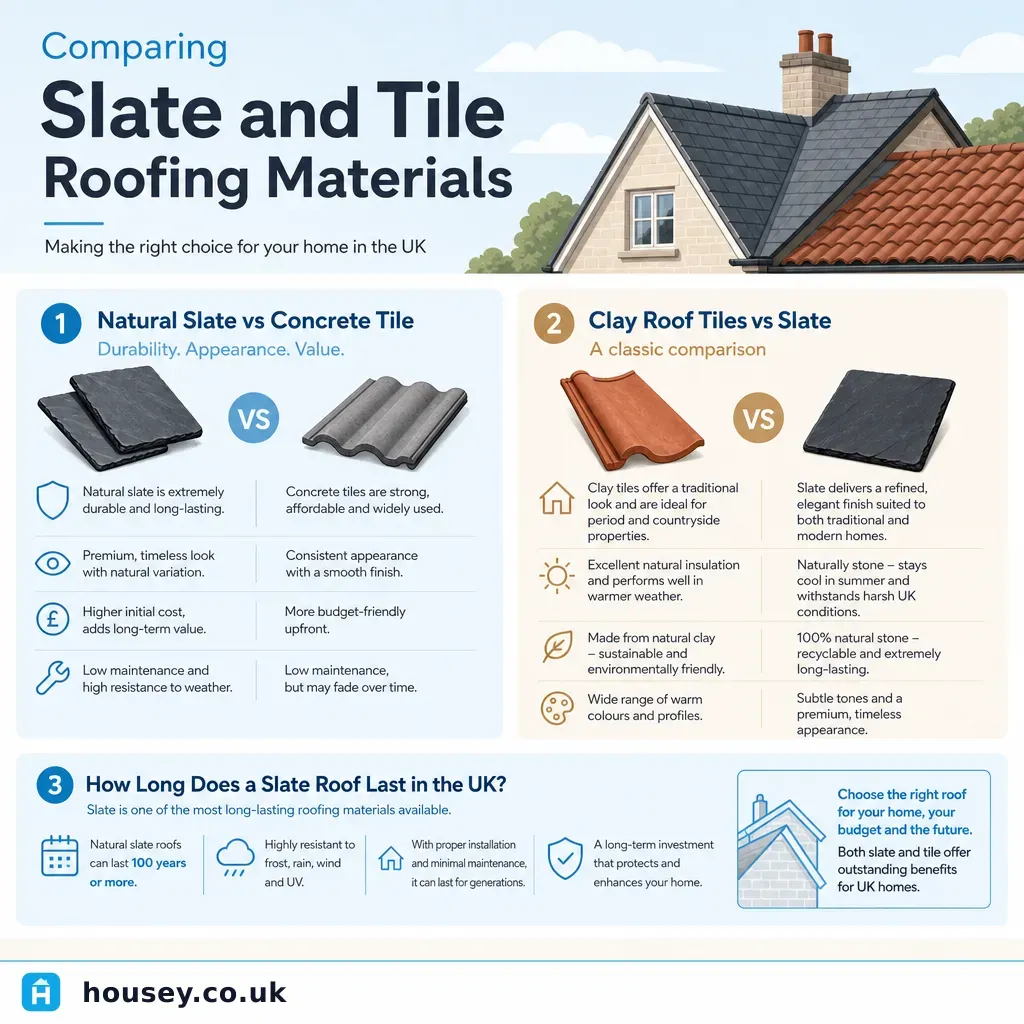
Comparing Slate and Tile Roofing Materials
Natural slate typically lasts 80–150 years and suits period and listed UK properties, while clay tiles offer 60–100 years and remain historically appropriate for Victorian and Edwardian stock.
 Improvement & Build
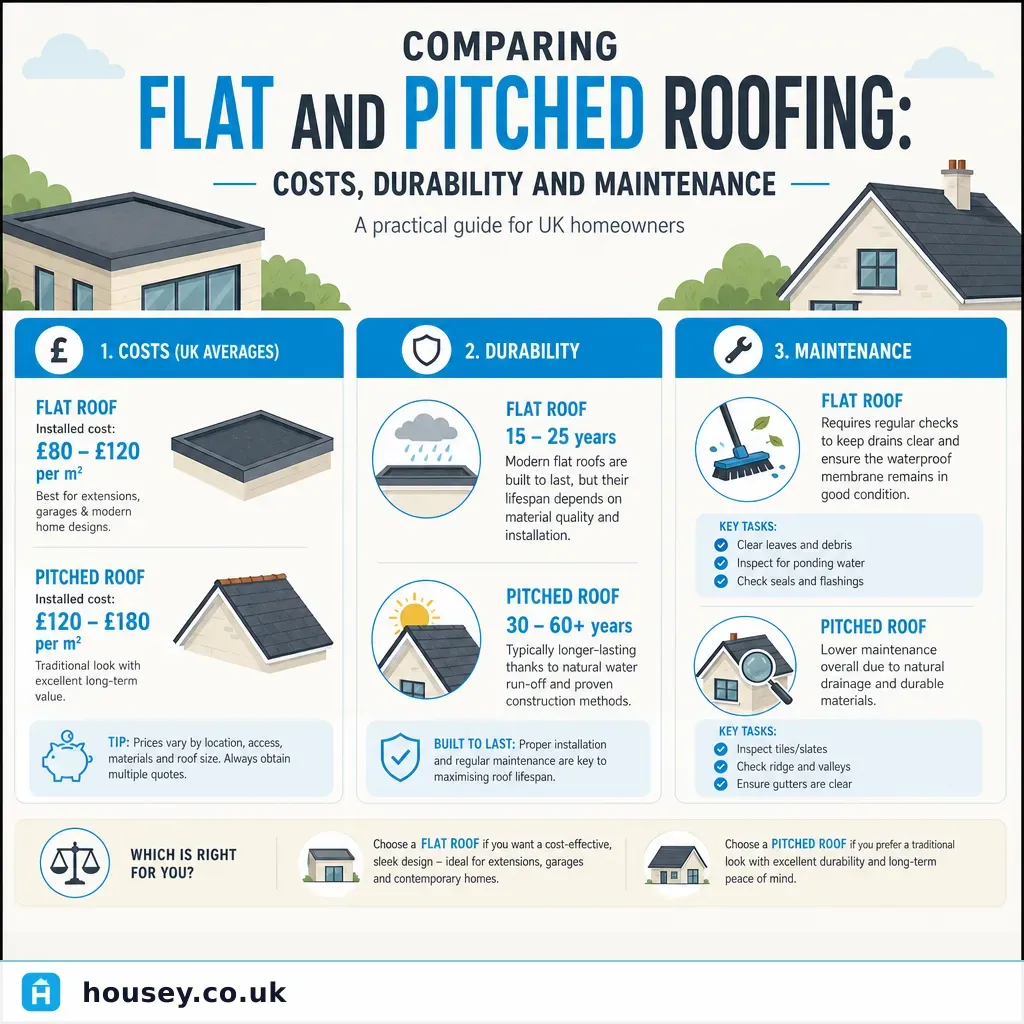
Comparing Flat and Pitched Roofing: Costs, Durability and Maintenance
Flat roofs typically cost less to install per square metre but require more maintenance and have a shorter lifespan than pitched roofs.
 Improvement & Build
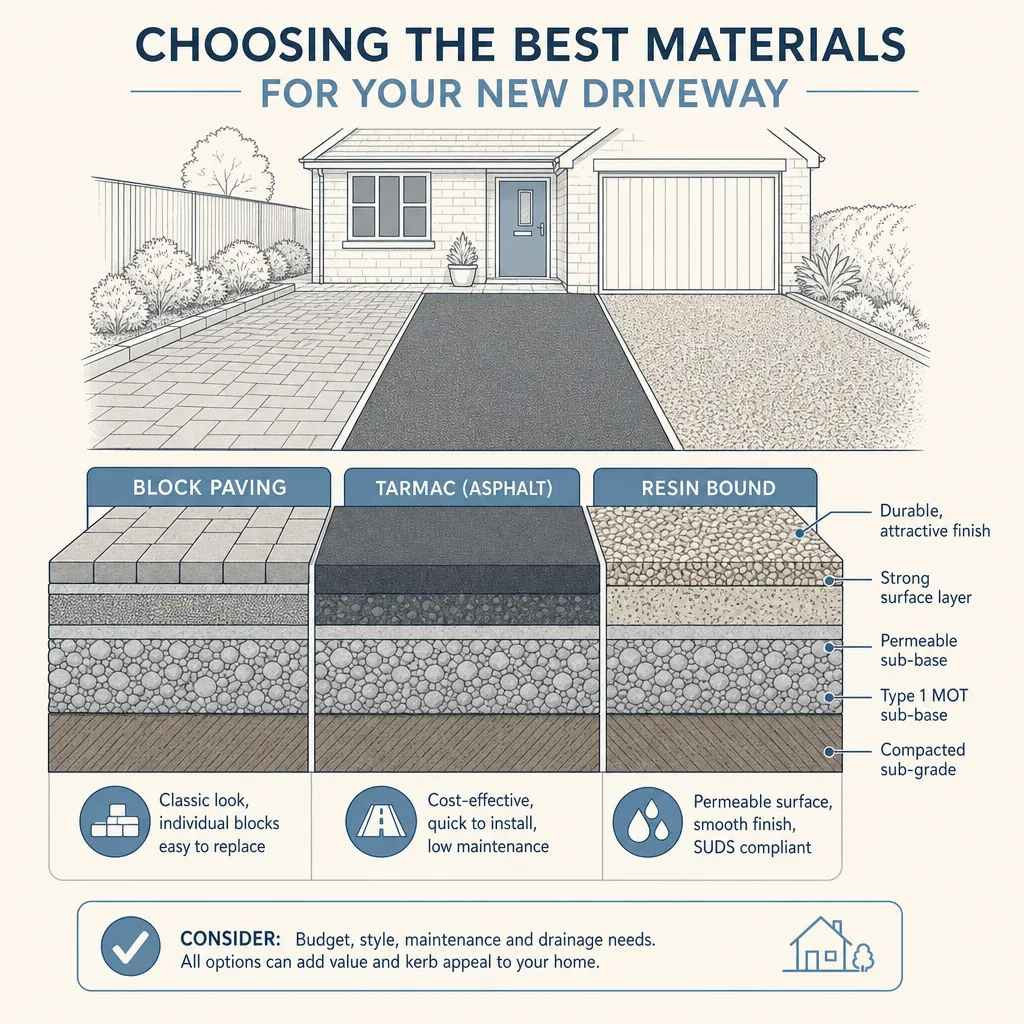
Choosing the best materials for your new driveway
The most common driveway materials in the UK are tarmac, block paving, resin-bound surfacing, concrete, and gravel.
 Improvement & Build
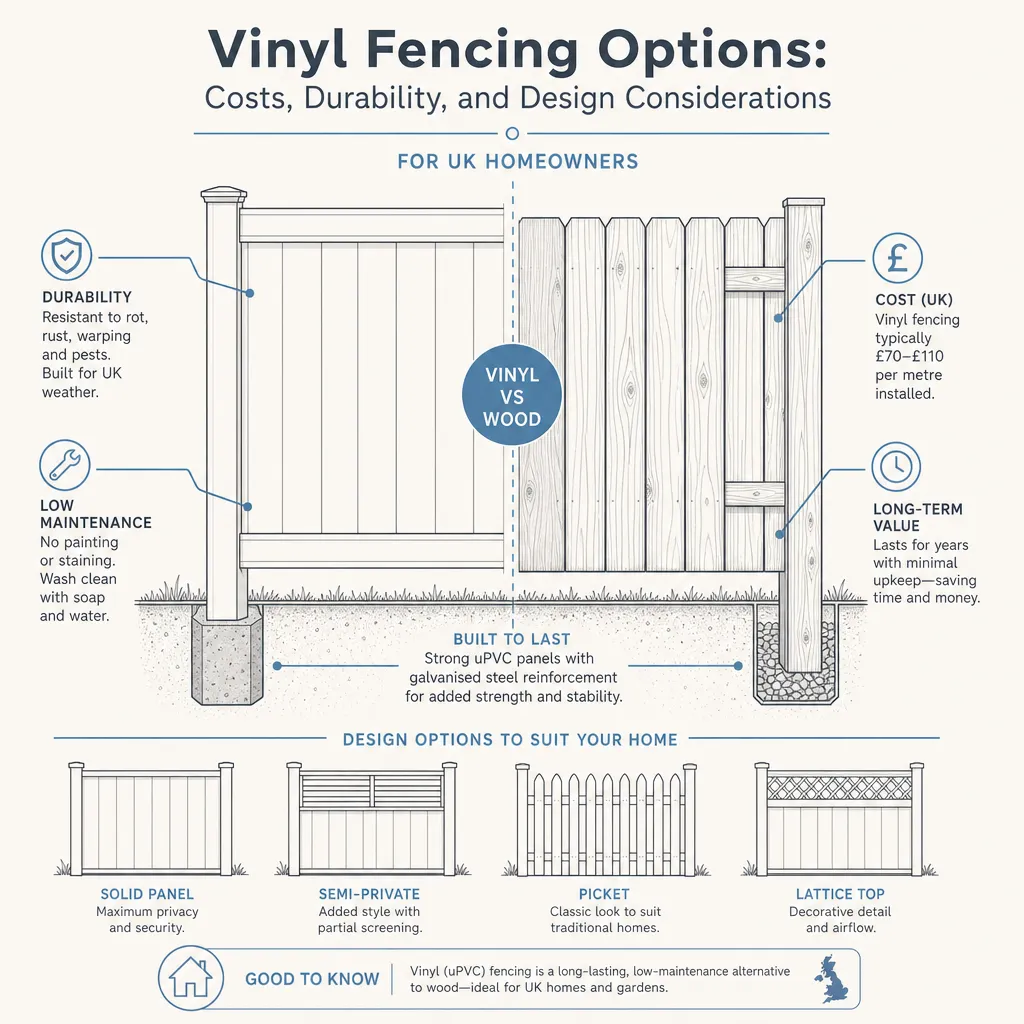
Vinyl Fencing Options: Costs, Durability, and Design Considerations
PVC (vinyl) fencing in the UK typically costs £100–£300 per linear metre installed and lasts 20–30 years with minimal maintenance.
 Improvement & Build
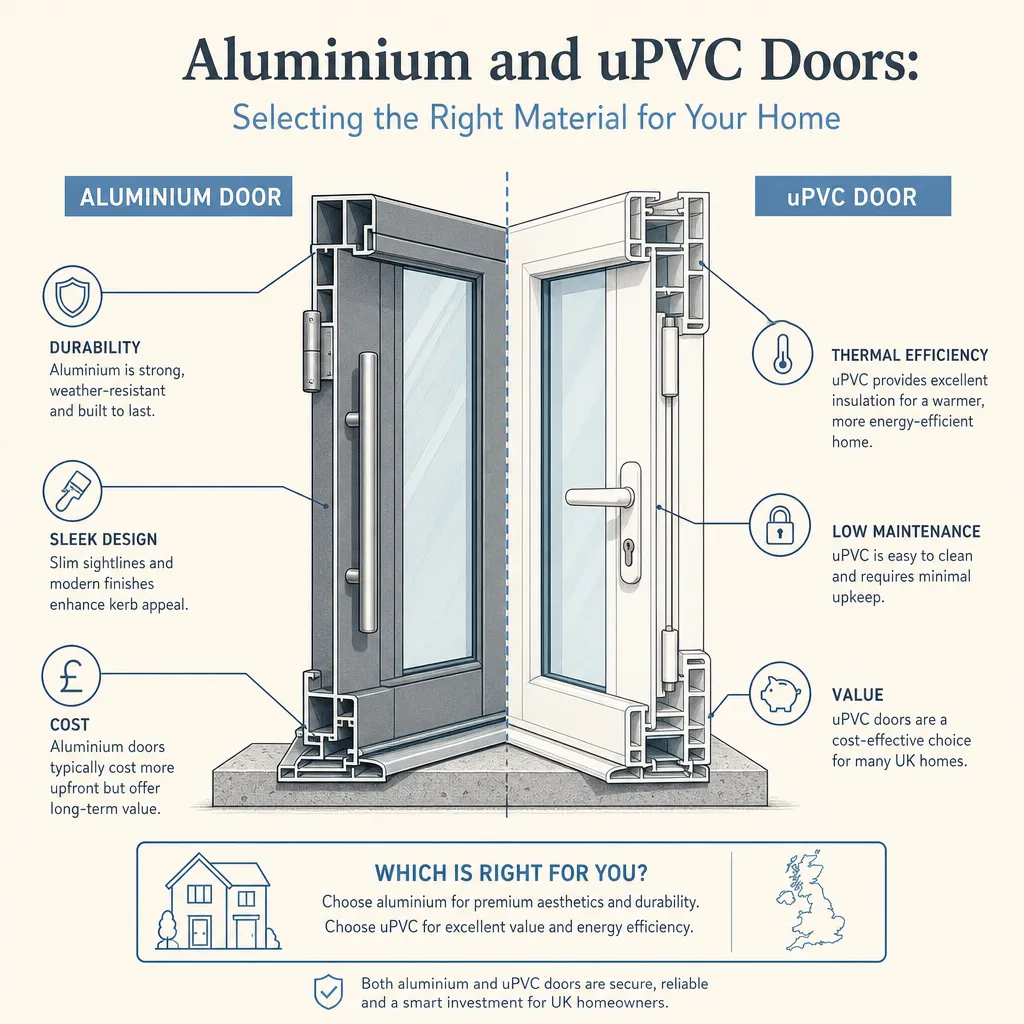
Aluminium and uPVC Doors: Selecting the Right Material for Your Home
uPVC doors are lower-cost and low-maintenance, making them a practical choice for most UK homes.