Installing Floor-to-Ceiling Steel Balustrades: Design and Building Regulations
By Housey · Last reviewed 3rd of May 2026
Installing Floor-to-Ceiling Steel Balustrades: Design and Building Regulations
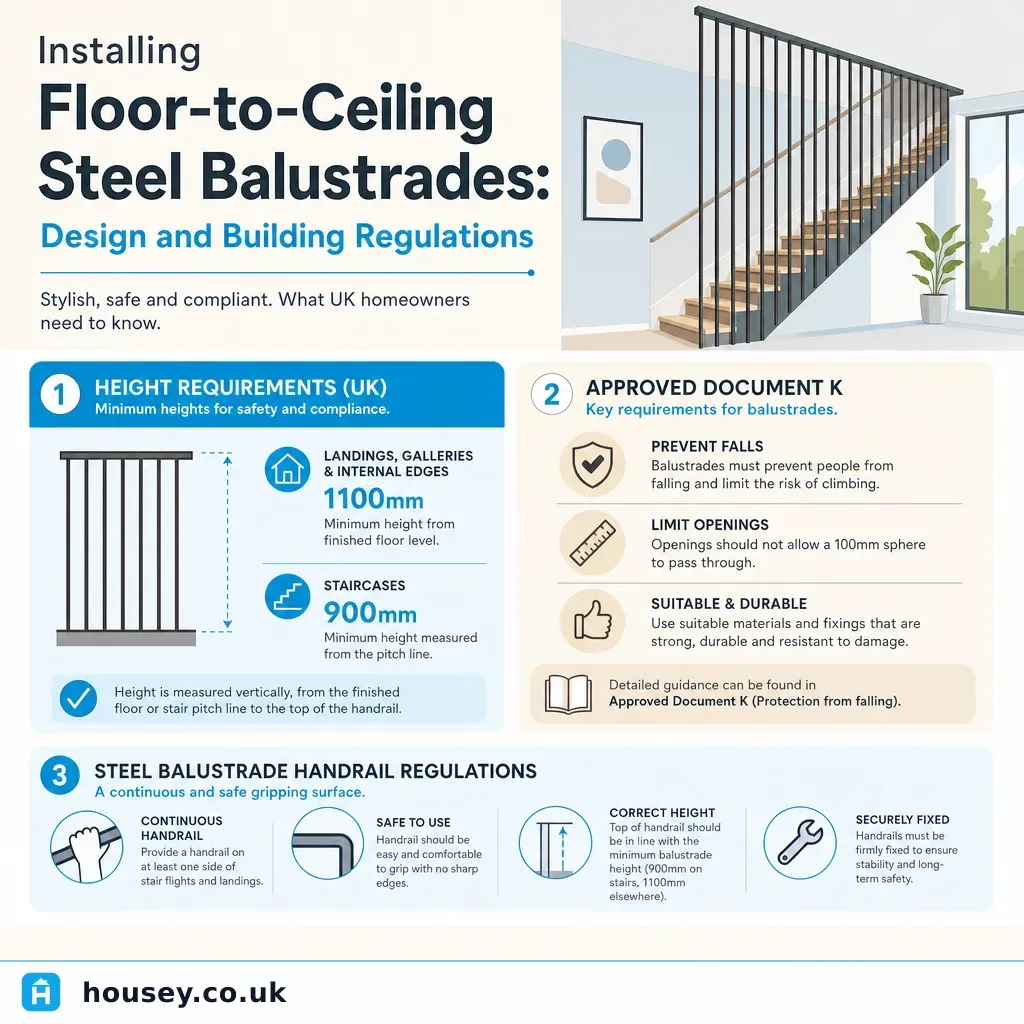
Floor-to-ceiling steel balustrades — frames that run from floor level to a ceiling or upper-floor soffit — are increasingly popular in UK homes, particularly in open-plan extensions, loft conversions, and staircase refurbishments where they protect against falls while preserving light. Even the most carefully considered design must satisfy Approved Document K, and where structural fixings are involved, building control notification is typically required before work begins.
Key points
- Approved Document K (Protection from falling, collision and impact) requires barriers alongside stairs to be at least 900mm high and 1,100mm high alongside floors, balconies, and accessible roofs.
- Infill openings must not allow a 100mm sphere to pass through — the rule that prevents child entrapment and limits climbability.
- Domestic balustrades must resist a horizontal uniformly distributed load (UDL) of 0.74 kN/m and a concentrated point load of 1.0 kN (Approved Document K, Table 4).
- Where installation involves a structural alteration — opening a floor void, removing a structural wall, modifying a staircase opening — building control notification is required.
- Steel fixings into concrete slabs or timber joists must be designed or reviewed by a structural engineer if the load capacity of the supporting element is not already known from existing drawings.
What Approved Document K requires
Approved Document K (England, 2013 edition with 2016 amendments) is the primary compliance reference. Scotland uses the Technical Handbook; Wales and Northern Ireland have their own Approved Documents. Requirements are broadly similar but are not identical — check the correct document for your location.
Minimum barrier heights:
Location | Minimum height |
|---|---|
Beside stair, ramp, or fixed ladder (from pitch line) | 900mm |
Landing adjacent to stairs | 900mm |
Floor, mezzanine, balcony, or accessible roof | 1,100mm |
External or Juliet balcony | 1,100mm |
Infill and openings: No gap in the balustrade should allow a 100mm sphere to pass through. This applies to baluster spacing, infill panels, and the gap between the bottom rail and the floor. Glass infill must be toughened or laminated safety glass to BS EN 12543, with a permanent marking confirming the specification.
Structural loading: Approved Document K Table 4 specifies a horizontal UDL of 0.74 kN/m and a 1.0 kN concentrated point load for domestic dwellings. Infill panels should also be checked against a 0.5 kN/m² face load. All of these loads must be safely transferred through fixings into the supporting structure.
Design considerations for floor-to-ceiling steel
Floor-to-ceiling frames distribute horizontal loads between the top and bottom fixing points. Both ends must engage a structural element — not just a plasterboard ceiling or a flimsy subfloor surface. Key considerations:
- Top fixings: A concrete soffit or structural steel beam provides a reliable fixing substrate. A plasterboard ceiling below roof joists requires a detail that transfers load to the actual structural element — typically a threaded rod or bracket reaching a joist or beam.
- Bottom fixings: Chemical anchors into a concrete slab behave differently from lag bolts into timber joists. Timber-floor installations may need noggings or blocking between joists to spread the load without splitting the timber.
- Thermal movement: Steel expands and contracts in spaces with large temperature variation, particularly glazed extensions. Slotted fixing plates at one end can accommodate movement without distorting the frame or cracking the plaster.
- Fire strategy: In a loft conversion with a protected escape route or a property with fire compartmentation requirements, confirm that the balustrade position does not compromise the fire strategy.
Comparing balustrade infill options
Infill type | Appearance | Key compliance point | Main risk |
|---|---|---|---|
Vertical steel rods | Industrial/contemporary | Spacing must be 100mm or less | Gap may exceed 100mm at curved sections |
Horizontal steel cables | Minimal, coastal aesthetic | Sag under load can increase gap size | Requires periodic re-tensioning |
Toughened glass panels | Open, transparent | BS EN 12543; permanent marking required | Thermal cracking on frameless glass in direct sun |
Mild steel flat bar (horizontal) | Traditional or cottage | Creates climbable surface — avoid where children present | Acts as a ladder; risk increases with wider bar spacing |
Perforated steel sheet | Contemporary | Hole diameter must not exceed 100mm | Heavier than rod infill; higher fixing loads |
When building control approval is required
A formal building control application or Competent Person Scheme notification is required when:
- The balustrade is part of a structural alteration (new floor void, removed structural wall, new or widened staircase opening).
- The property is an HMO, flat conversion, or covered by an existing building control application.
- Regulated concurrent works — electrical, heating, drainage — are being carried out at the same time.
A straightforward like-for-like balustrade replacement in an existing single-family dwelling may not require a formal application, but must still comply with Approved Document K. Confirm the position with your local authority building control (LABC) body or an Approved Inspector before starting work.
What to ask before instructing a fabricator or installer
- Are you familiar with Approved Document K requirements for this specific location — stair versus upper floor versus balcony?
- Can you provide load calculations confirming that fixings meet 0.74 kN/m UDL and 1.0 kN point load requirements?
- Has a structural engineer reviewed the fixing detail where the capacity of the supporting element is uncertain?
- How does the proposed infill satisfy the 100mm sphere rule, particularly at any curved or transitional sections?
- What steel specification, surface finish, and coating are you proposing, and what is the expected maintenance interval?
- What Building Regulations compliance route applies — full application, Competent Person notification, or none required?
- Will as-built drawings be provided on completion of the installation?
Important limitations
This article provides general guidance based on Approved Document K for England. Scotland, Wales, and Northern Ireland have their own Building Regulations documents with similar but not identical requirements. The appropriate approach for any specific project depends on building use, structural configuration, and whether other notifiable works are being carried out simultaneously. A structural engineer or building control professional should review the fixing design for any floor-to-ceiling installation where the load capacity of the supporting structure is not established by existing calculations or drawings.
What to ask a qualified professional
- Does this installation require a full building control application, a Competent Person notification, or is no application needed for my specific scope of work?
- What structural calculations are required to justify the fixing arrangement, and who should produce them?
- Does the balustrade position affect fire compartmentation — particularly in a loft conversion or an HMO?
- If glazed infill panels are proposed, what thickness, interlayer, and edge-support specification is appropriate for this span and loading scenario?
- For a listed building, does this work require listed building consent in addition to any building control requirements?
When to get professional help
Seek professional input before fabrication begins if any of these apply:
- The balustrade spans more than 3 metres between intermediate posts.
- You are fixing into a concrete floor slab or structural beam and do not have drawings confirming its capacity.
- The installation is in an HMO, block of flats, or any commercial space where additional fire or structural regulations apply.
- You are removing or modifying a structural element to create the staircase or floor opening.
- Horizontal cable or bar infill is proposed in a home where children are regularly present.
How Housey can help
A building control consultant can advise on the correct compliance route and review the design before fabrication begins, avoiding costly late changes. If the balustrade forms part of a wider refurbishment or extension project, an architectural technologist can incorporate the balustrade specification into technical drawings and coordinate building control sign-off alongside the broader works.
Frequently asked questions
Do I need planning permission to install steel balustrades inside my home?
In most cases, internal works do not require planning permission. If your property is listed, internal alterations including new metalwork may require listed building consent. External balustrades visible from a public highway in a conservation area may also require planning permission. Check with your local planning authority if either applies to your property.
What is the minimum height for a staircase balustrade in the UK?
Under Approved Document K for England, the minimum height alongside a stair is 900mm measured from the pitch line of the stair nosings. On landings and floor-level drops the minimum is 1,100mm. Scotland uses the Technical Handbook; Wales and Northern Ireland have their own Approved Documents — requirements are similar but verify the correct document for your location.
Can I have horizontal cables or bars in my balustrade?
You can, but Approved Document K and BS 5395-1 advise against horizontal members that form a climbable surface, particularly where children are present. Horizontal cable systems also need periodic re-tensioning to prevent gaps exceeding 100mm under load. Discuss the design with your installer and local building control officer before fabrication begins.
How thick does the steel need to be for a domestic balustrade?
There is no single prescribed thickness. Section size depends on span, fixing arrangement, and the loads in Approved Document K — 0.74 kN/m UDL and 1.0 kN point load. A structural engineer or experienced fabricator should confirm sizing by calculation. As a rough guide, 50x10mm flat bar or 40mm CHS tube is common for vertical posts at 100mm centres, but this must be verified for each installation.
Will building control inspect a steel balustrade?
If the balustrade is part of a notifiable building control application, an officer will inspect at an agreed stage. For a like-for-like replacement in an existing dwelling without structural alteration, no formal inspection may be required — but the installation must still comply with Approved Document K. Your local authority building control body can confirm whether notification is needed.
Sources and further reading
Useful next reads
 Planning & Pre-Build
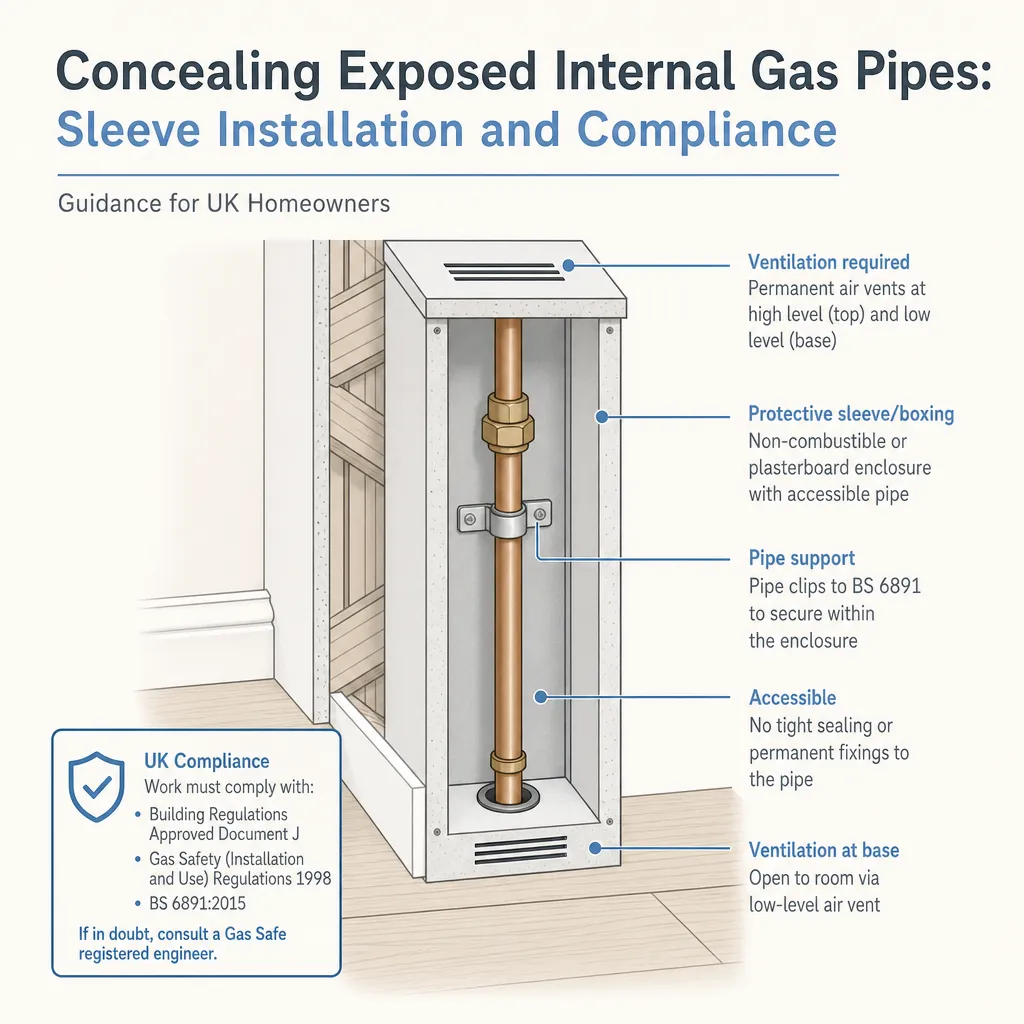
Concealing Exposed Internal Gas Pipes: Sleeve Installation and Compliance
Exposed internal gas pipes can be concealed using ventilated boxed casings or correctly sleeved chases, but only under the supervision of a Gas Safe registered engineer following the Gas Safety (Installation and Use) Regulations 1998.
 Planning & Pre-Build
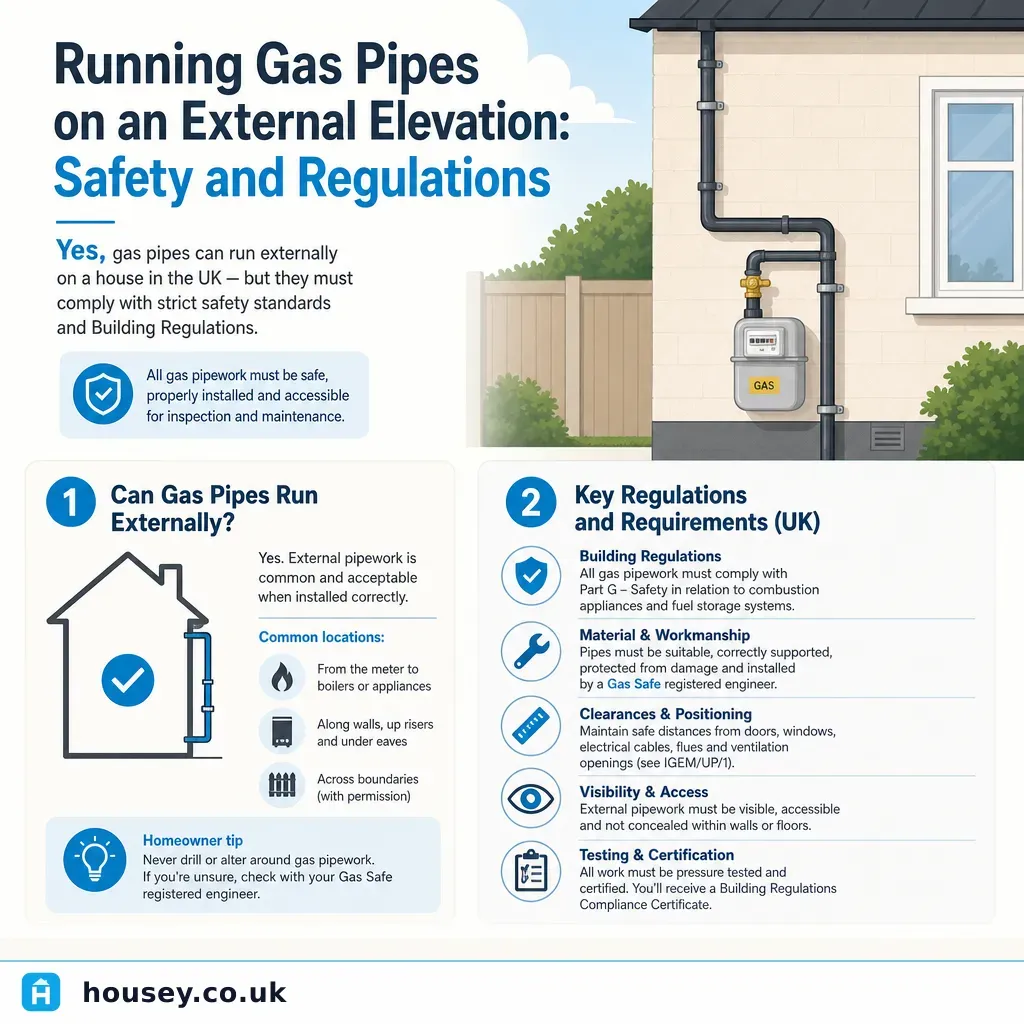
Running Gas Pipes on an External Elevation: Safety and Regulations
External gas pipework is permitted on UK property elevations and is often the preferred route when internal runs are impractical.
 Planning & Pre-Build
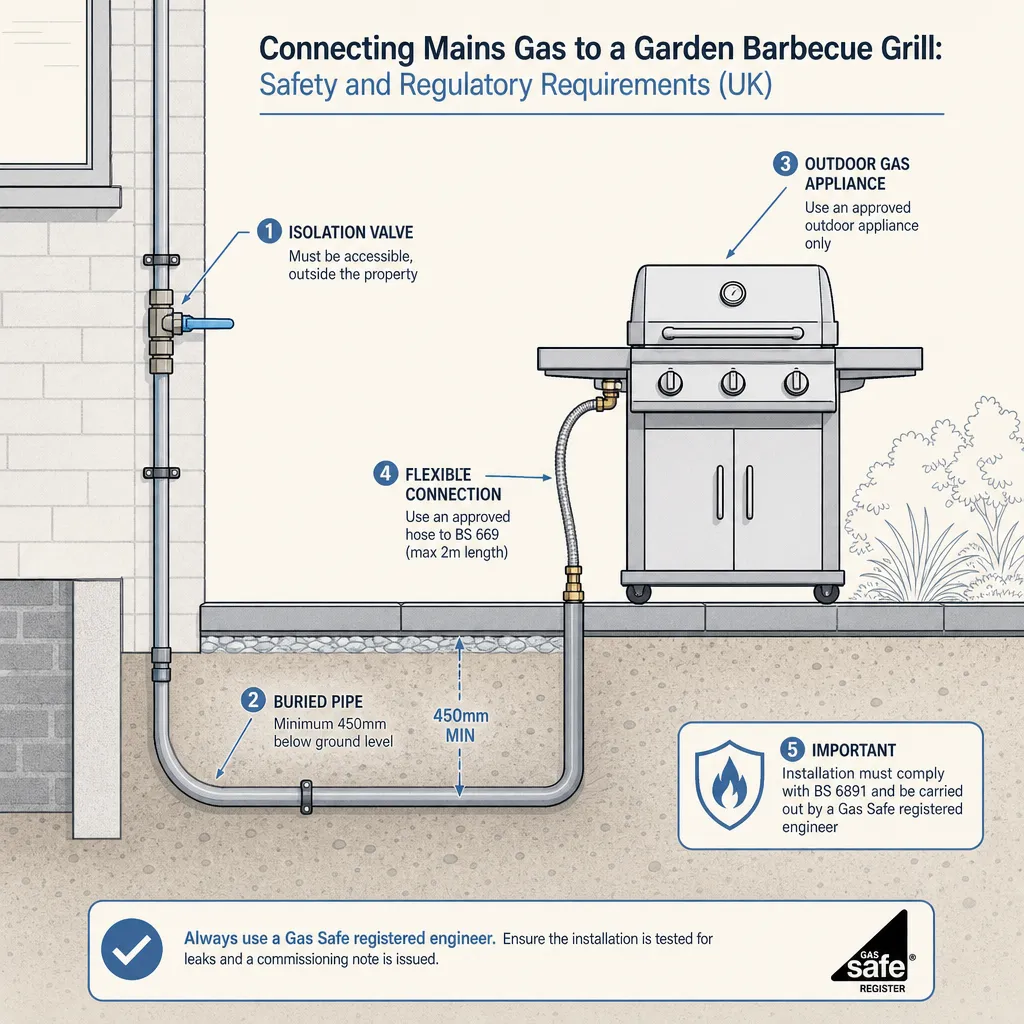
Connecting Mains Gas to a Garden Barbecue Grill: Safety and Regulatory Requirements
Connecting mains gas to a garden barbecue requires a Gas Safe registered engineer and must comply with the Gas Safety (Installation and Use) Regulations 1998.
 Planning & Pre-Build
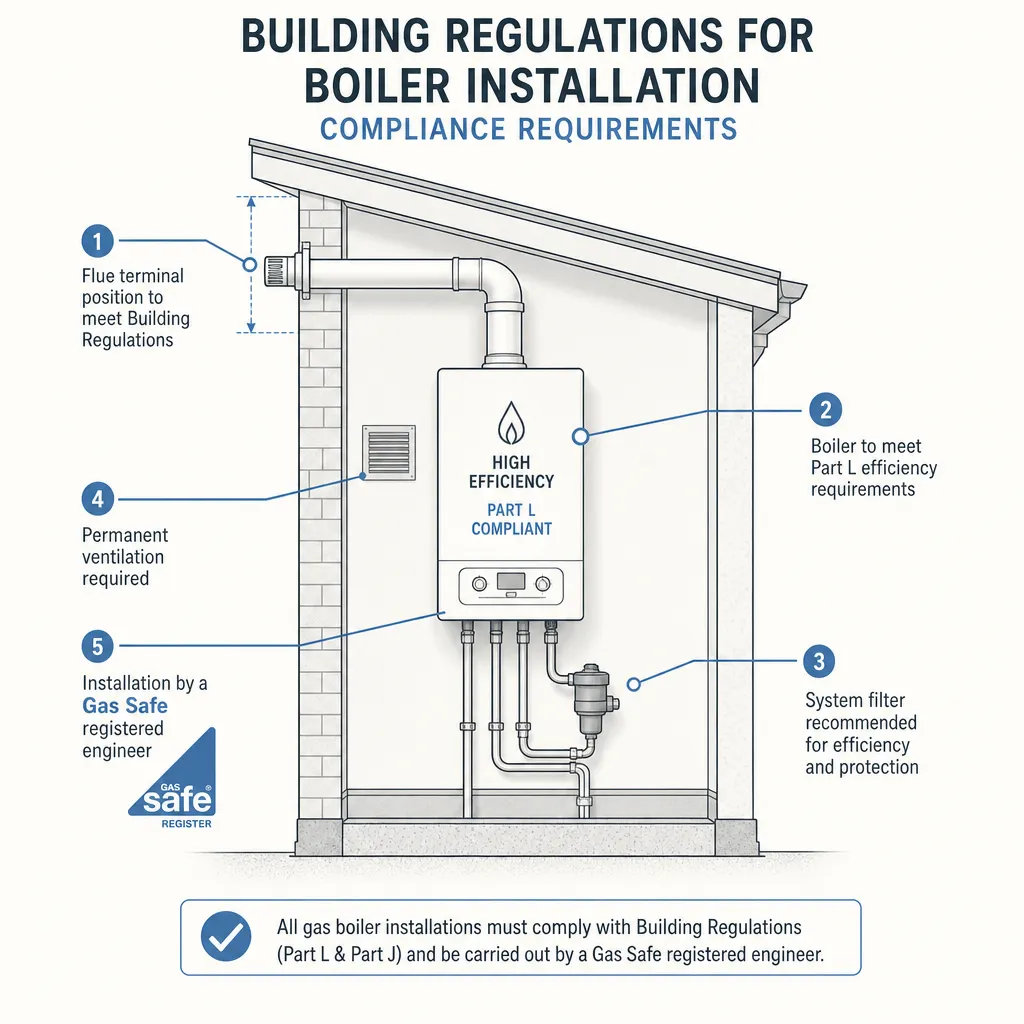
Building regulations for boiler installation: compliance requirements
Boiler installation is regulated under the Gas Safety (Installation and Use) Regulations 1998 and Building Regulations Parts J and L.
 Planning & Pre-Build
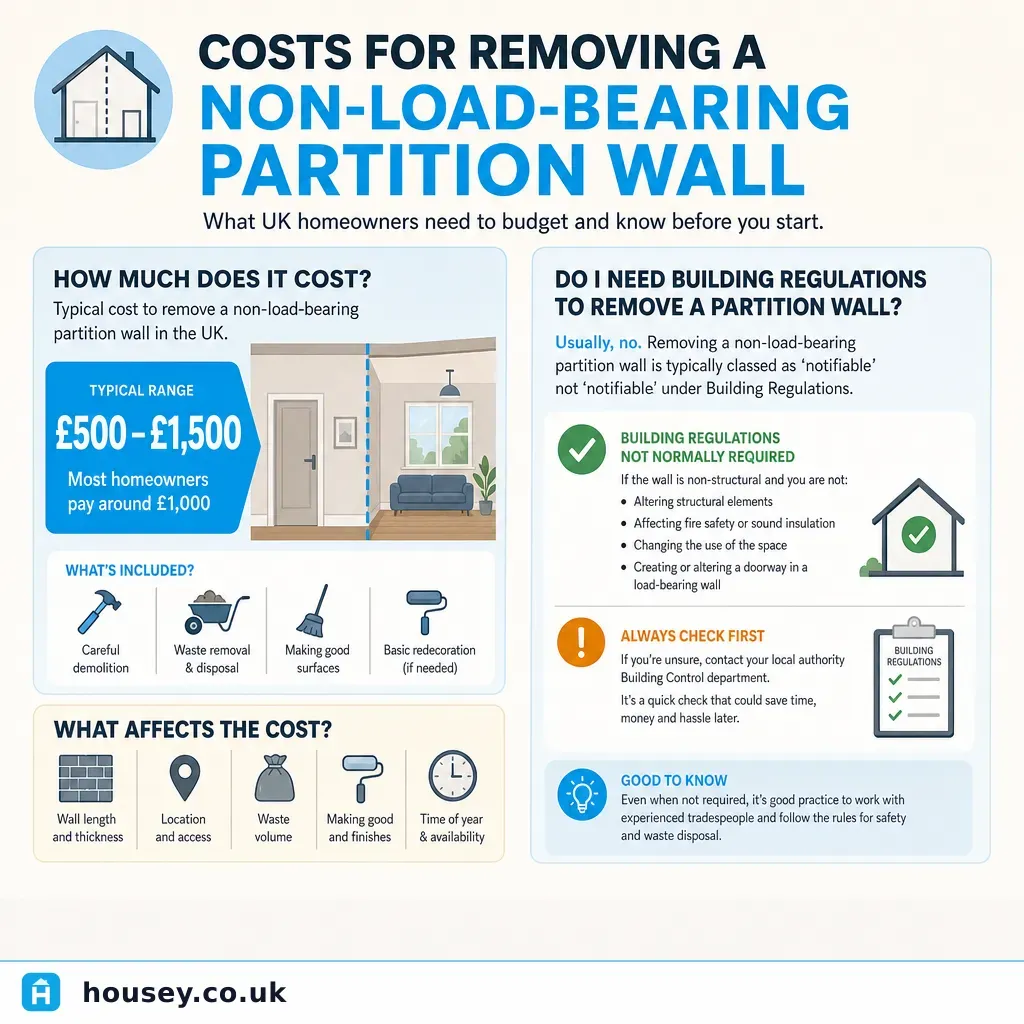
Costs for removing a non-load-bearing partition wall
Removing a non-load-bearing partition wall in a UK home typically costs £300–£1,500 in labour, plus £200–£600 or more for replastering and making good.