Running Gas Pipes on an External Elevation: Safety and Regulations
By Housey · Last reviewed 4th of May 2026
Running Gas Pipes on an External Elevation: Safety and Regulations
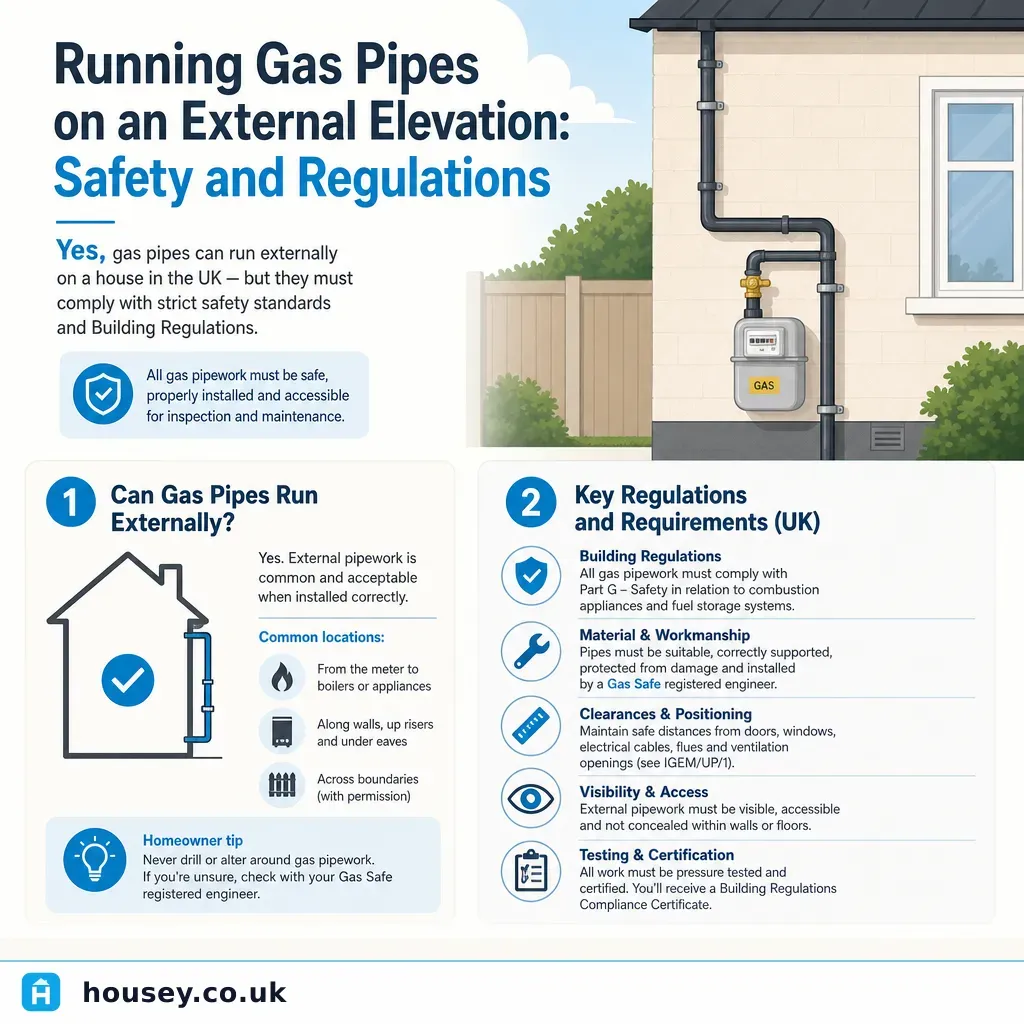
Extensions, boiler relocations, and gas meter moves sometimes require the supply pipework to be routed along the outside of a building. This is more common than many homeowners expect — particularly in older or solid-wall properties where internal routes through floors, ceilings, or party walls would be disruptive or impractical. External routing is a legitimate and recognised approach in UK residential gas installation, but it is subject to specific safety and regulatory requirements that must be understood before any work is planned or instructed.
Key points
- All external gas pipework must be installed and certified by a Gas Safe Register-registered engineer; this is a legal requirement under the Gas Safety (Installation and Use) Regulations 1998 with no exceptions.
- IGEM/UP/2 technical guidance from the Institution of Gas Engineers and Managers sets requirements for pipe material, support spacing, corrosion protection, and mechanical protection on external runs.
- Gas pipes within 750mm of finished ground level in accessible locations require additional mechanical protection — typically a steel conduit or impact sleeve — to guard against accidental damage.
- Listed buildings and properties in conservation areas may require consent before external pipework is fixed to the elevation; check with your local planning authority before proceeding.
- Any external gas pipe penetrating the building envelope must be sleeved through the wall, with the penetration sealed against both gas ingress and moisture.
Can gas pipes legally run on an external elevation?
Yes, in most cases. External routing of gas supply pipes is a recognised approach in UK residential gas installation and is not prohibited by the Gas Safety (Installation and Use) Regulations 1998 or by the associated IGEM technical guidance. In many situations — particularly where internal routes would require disruption to existing structure, insulation, or party walls — external routing is the preferred option from both a practical and an inspection-access perspective.
However, permitted does not mean unrestricted. External gas pipework is subject to specific requirements covering:
- Pipe material and jointing method
- Support spacing and fixing method
- Corrosion protection and coating
- Mechanical protection at vulnerable heights
- Weatherproofing at wall penetrations
- Clearance distances from windows, doors, ventilation grilles, flues, and electrical installations
Only a Gas Safe registered engineer can design, install, and certify this work. Engaging anyone else for gas pipework — regardless of their general building trade competence — is unlawful.
What the regulations require for external gas pipes
Requirement | Detail |
|---|---|
Installer registration | Gas Safe Register — mandatory under the Gas Safety (Installation and Use) Regulations 1998, no exceptions |
Pipe material | Typically coated steel or copper in appropriate gauges; corrugated stainless steel tubing (CSST) has specific installation restrictions and requires specialist assessment |
Corrosion protection | Yellow ochre sleeving, bituminous coating, or cathodic protection depending on exposure conditions |
Mechanical protection | Steel conduit or impact sleeve required below 750mm from finished ground level |
Support spacing | Typically every 1–2 metres depending on pipe diameter and material type |
Clearance from openings | Minimum distances from windows, doors, air bricks, flues, and electrical equipment — specified in Gas Safe Technical Bulletin TB008 |
Wall penetration | Sleeved through the wall with appropriate sealant to prevent gas ingress to the building fabric |
Pressure testing | Required on completion before reinstatement of gas supply |
What about appearance and planning permission?
External gas pipes are conventionally sleeved in yellow (the standard identification colour for gas services in the UK). This can be a concern for homeowners on prominent elevations, particularly where the property is in a conservation area or is listed.
Planning permission is not normally required for gas pipework installation, as permitted development rights cover most minor service installations on residential properties. However:
- Listed buildings may require listed building consent for works that affect the external character of the building, including external fixings and pipework.
- Conservation areas have tighter controls on the external appearance of buildings — check with your local planning authority before fixing prominent pipework to any elevation visible from a public highway.
- Leasehold properties and shared exteriors — some management companies and landlords have covenants restricting external modifications; review your lease or speak to the freeholder before instructing work.
Always confirm your specific planning constraints before assuming permitted development applies.
Common installation scenarios
New boiler in a kitchen extension: If the new boiler position requires extending the gas supply and there is no practical internal route, an external riser up the rear elevation is a common approach. The Gas Safe engineer assesses the route, specifies the required mechanical protection, and confirms the wall penetration detail.
Meter relocation to an external meter box: Gas meters are often relocated to external boxes, a process coordinated via the gas transporter (typically Cadent or a regional equivalent). The service pipe from the meter box into the property will typically run externally for a short section before entering through a sleeved penetration.
Garage conversion with a new gas connection: A garage being converted to habitable space sometimes requires a new gas supply. Running the supply externally from the existing meter position along the garage wall — before entering through a sleeved penetration — is often the simplest compliant approach.
Important limitations
This article is general information only and does not constitute engineering or gas safety advice. Gas installation work is a notifiable activity that must be carried out solely by Gas Safe registered engineers. Pipework specification, mechanical protection requirements, and clearance distances are technical and property-specific. Do not attempt to design, modify, or carry out gas pipework installation yourself under any circumstances. Penalties for non-compliant gas work include invalidated home insurance, inability to sell the property, and serious risk of fire, explosion, and carbon monoxide poisoning. If you suspect existing external gas pipework is damaged, unsupported, or incorrectly installed, contact a Gas Safe registered engineer and your gas supplier immediately.
What to ask a qualified professional
Before instructing a Gas Safe registered engineer for external gas pipework, ask:
- Can you confirm your Gas Safe Register number and the specific categories of work you are registered to carry out?
- What pipe material and routing do you recommend for this elevation, and what are your reasons?
- Will the pipework be visible once complete? What colour or finish will it have, and can it be overpainted after certification?
- What mechanical protection is required at ground level, and how will this be finished to minimise visual impact?
- How will the pipe penetrate the wall, and how will the penetration be sleeved and sealed against gas and moisture ingress?
- Will you issue a gas safety certificate on completion, and will this be registered on the Gas Safe database?
- Does this installation need to be notified to the gas transporter (for example, Cadent) or to building control?
- How long will the gas supply need to be isolated, and what notice do I need to give?
Red flags to watch for
- Any tradesperson proposing gas pipework who cannot provide a current Gas Safe Register number — verify registration at gassaferegister.co.uk before agreeing to any work.
- An installer who does not mention pressure testing as part of the completion process.
- Pipework left unsupported at intervals greater than specified, unsleeved at ground level, or with no visible corrosion protection applied.
- No gas safety certificate offered on completion — this is a required document and should be provided as a matter of course.
- Wall penetrations without a proper sleeve and sealant, leaving gaps in the building fabric.
- A significantly lower quote than others received, with no specification of pipe material, fixing method, or protection detail.
When to get professional help
All external gas pipework — without exception — requires a Gas Safe registered engineer. This is not a task for a general builder, a handyperson, or a heating engineer whose Gas Safe registration does not cover pipework installation. If you are planning an extension, a boiler relocation, or a meter move, contact a Gas Safe engineer at the design stage so the pipework route is specified correctly before building work begins.
Contact building control or your local planning authority if:
- The property is listed or sits in a conservation area.
- The gas pipe penetration affects a structural element of the building envelope, such as a loadbearing wall or a beam.
- You are unsure whether associated works — such as forming a new opening in a wall — require separate consent under Building Regulations.
For projects where gas pipework intersects with notifiable building work, Housey can connect you with experienced building control consultants who can advise on regulatory requirements and help coordinate the wider project.
How Housey can help
For extensions, conversions, or compliance sign-off where external gas pipework is part of the wider build, Housey can connect you with experienced building control consultants who understand how gas installation requirements interact with Building Regulations notifications and site coordination.
Frequently asked questions
Do external gas pipes need to be yellow?
Gas pipes are conventionally identified in yellow or ochre as required for identification under IGEM guidance. Once installed and certified, external steel pipework is sometimes painted over in a colour matching the building — this should be agreed with the Gas Safe engineer beforehand, as accessibility for inspection must be maintained and not all coatings are suitable for gas pipework.
Who is responsible for external gas pipes — the homeowner or the gas network?
The service pipe from the street to the meter is the responsibility of the gas transporter (such as Cadent). Pipework on the customer side of the meter — including any external runs — is the homeowner's responsibility to maintain. When selling a property with external gas pipework, the installation gas safety certificate should be made available for the buyer's solicitor.
Can external gas pipes be boxed in or concealed?
Concealing gas pipes is generally discouraged unless a specific approved system — such as a ventilated duct with inspection access — is used. Fully boxing external pipework without ventilation or access is non-compliant under IGEM guidance. Always seek Gas Safe engineer advice before concealing any gas pipe, and confirm with your buildings insurer that the arrangement is acceptable.
How long does external gas pipework installation typically take?
A straightforward external run of 3–6 metres typically takes half a day to a full day, including pressure testing. More complex installations involving meter moves or multiple wall penetrations may take longer. The gas supply will need to be isolated during the work — your engineer should advise on the likely isolation period before work begins.
Sources and further reading
- Gas Safety (Installation and Use) Regulations 1998 — legislation.gov.uk
- Gas Safe Register: Check a business or engineer — Gas Safe Register
- HSE: Domestic gas safety — Health and Safety Executive
- Building Regulations Approved Document J: Combustion Appliances and Fuel Storage Systems — GOV.UK
- IGEM: Technical standards for gas installations — Institution of Gas Engineers and Managers
Useful next reads
 Planning & Pre-Build
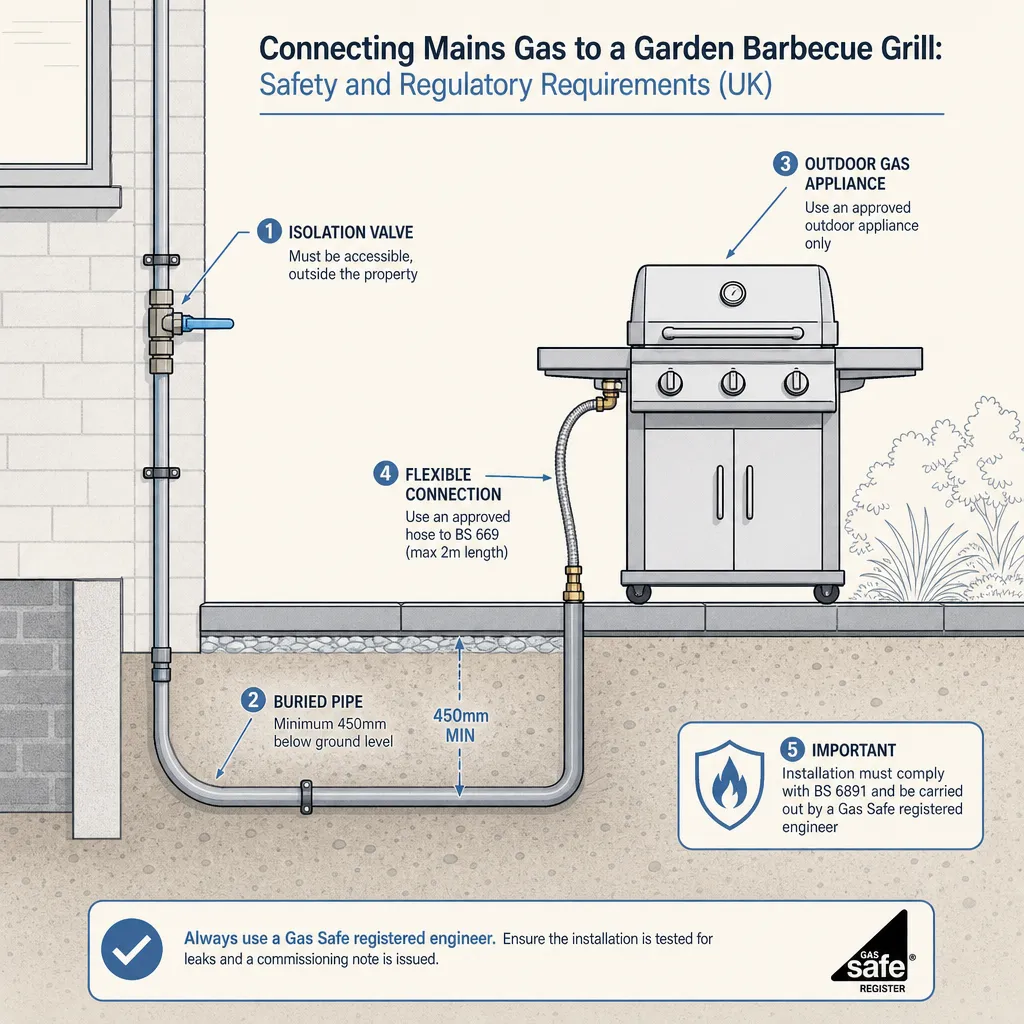
Connecting Mains Gas to a Garden Barbecue Grill: Safety and Regulatory Requirements
Connecting mains gas to a garden barbecue requires a Gas Safe registered engineer and must comply with the Gas Safety (Installation and Use) Regulations 1998.
 Planning & Pre-Build
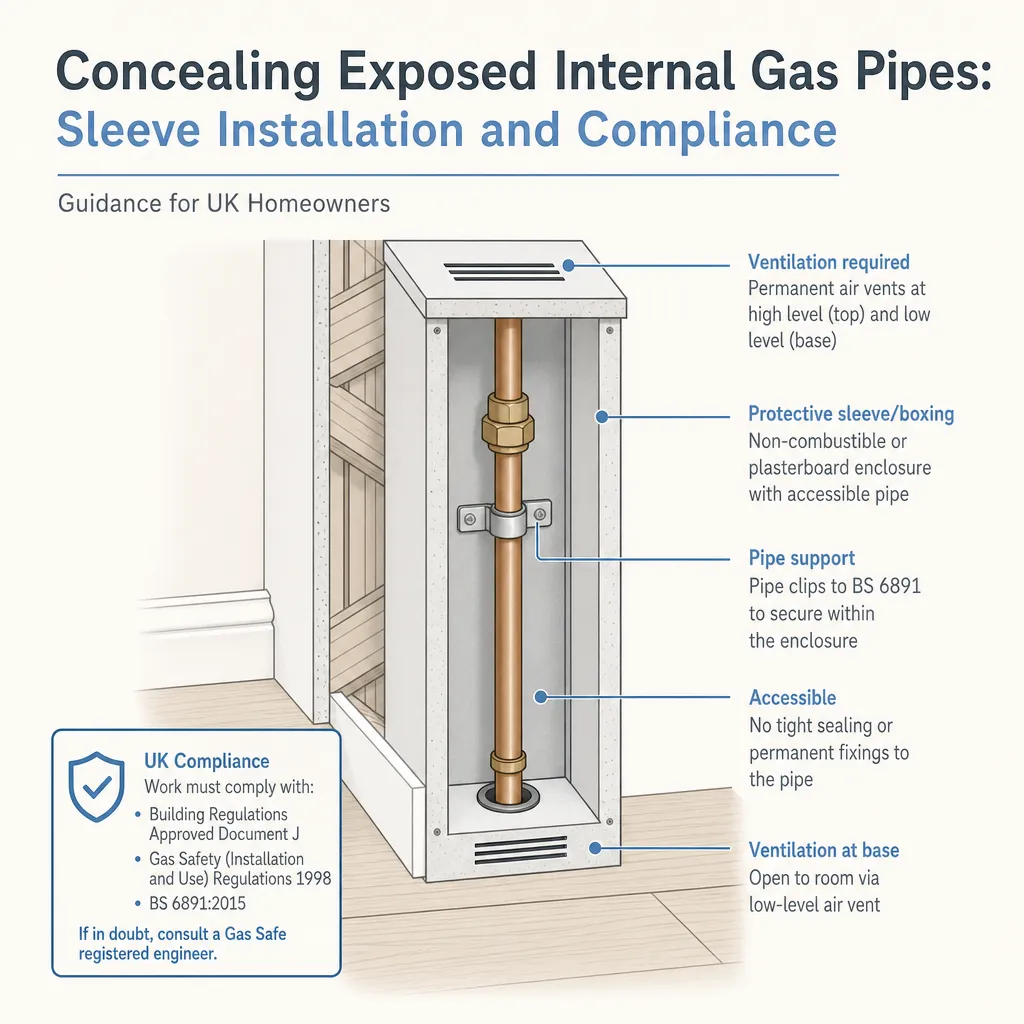
Concealing Exposed Internal Gas Pipes: Sleeve Installation and Compliance
Exposed internal gas pipes can be concealed using ventilated boxed casings or correctly sleeved chases, but only under the supervision of a Gas Safe registered engineer following the Gas Safety (Installation and Use) Regulations 1998.
 Planning & Pre-Build
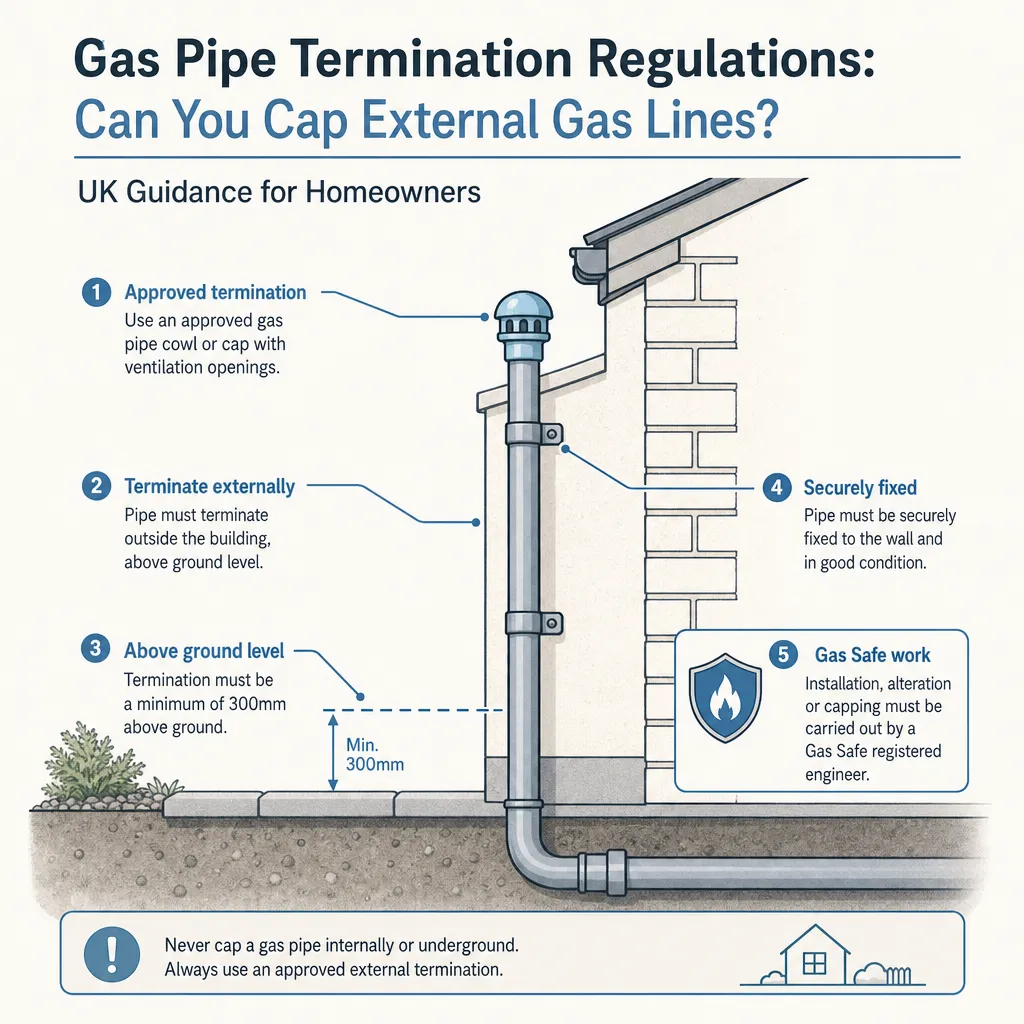
Gas Pipe Termination Regulations: Can You Cap External Gas Lines?
Only a Gas Safe registered engineer can legally cap external gas pipes in the UK under the Gas Safety (Installation and Use) Regulations 1998.
 Planning & Pre-Build
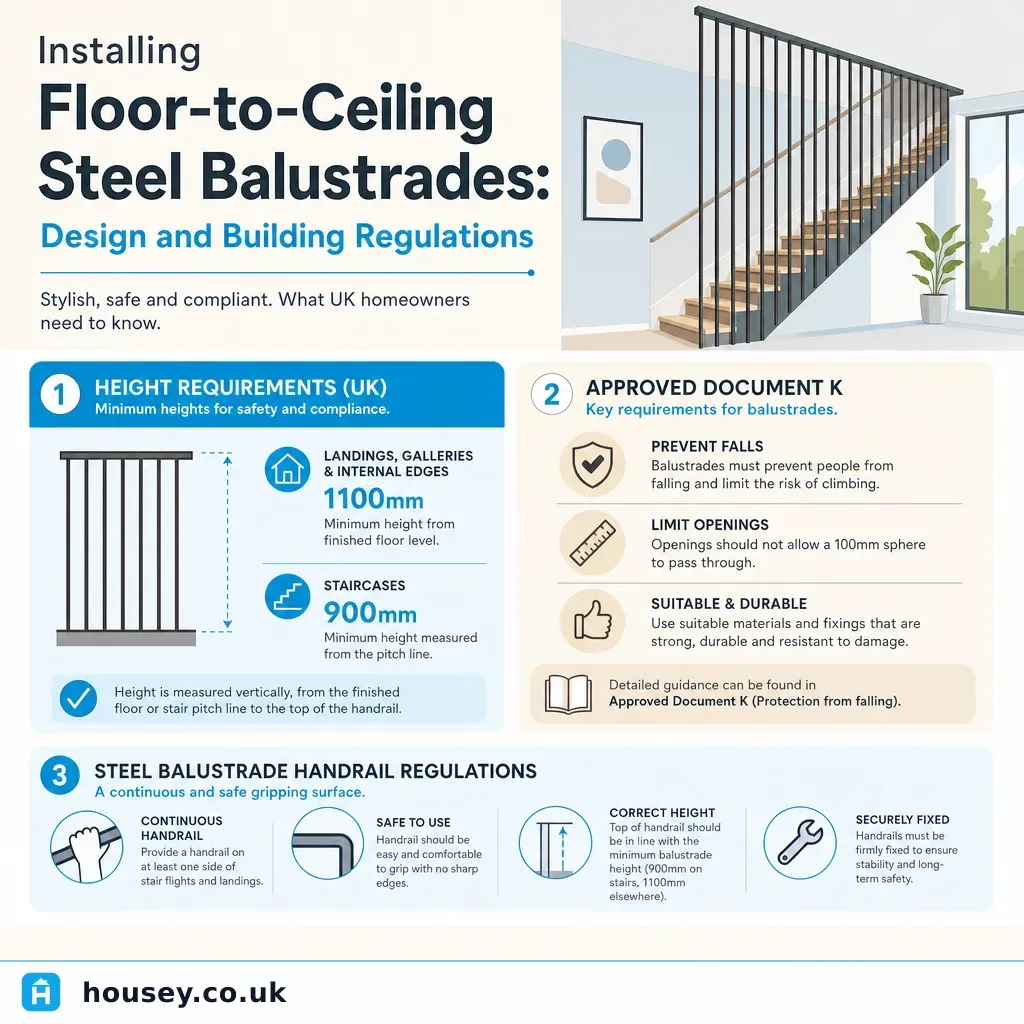
Installing Floor-to-Ceiling Steel Balustrades: Design and Building Regulations
Floor-to-ceiling steel balustrades must comply with Approved Document K, requiring a minimum height of 900mm alongside stairs and 1,100mm at floors and balconies.
 Planning & Pre-Build
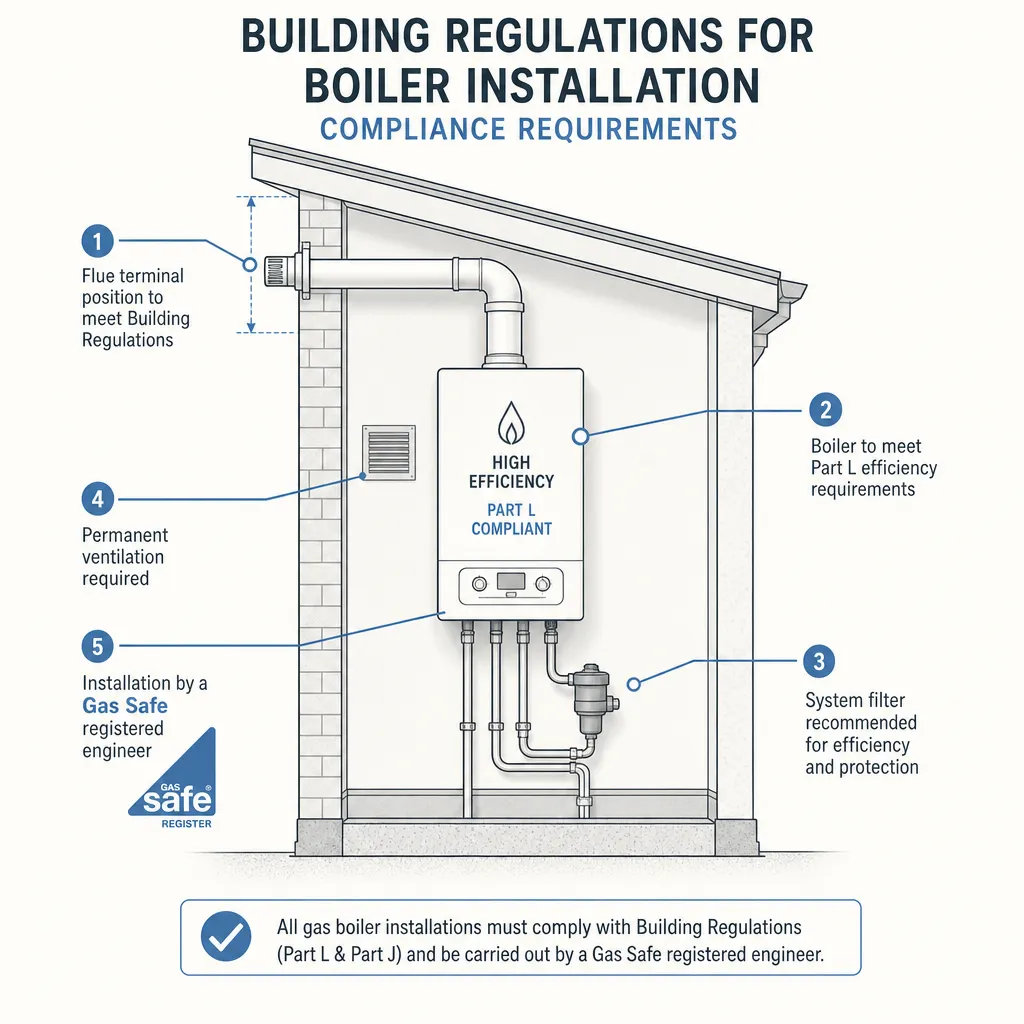
Building regulations for boiler installation: compliance requirements
Boiler installation is regulated under the Gas Safety (Installation and Use) Regulations 1998 and Building Regulations Parts J and L.