Upgrading to Energy-Saving Window and Glazing Systems
By Housey · Last reviewed 11th of May 2026
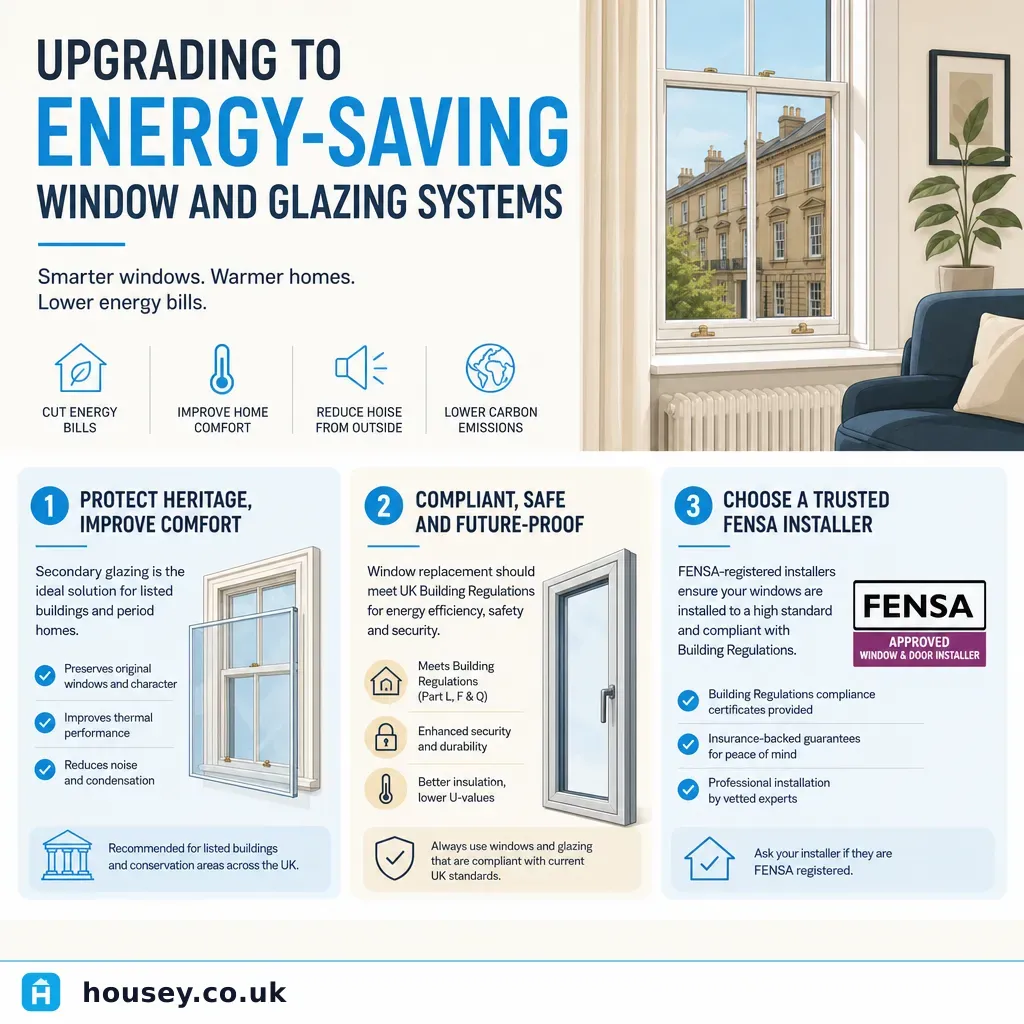
Upgrading to Energy-Saving Window and Glazing Systems
Replacing or upgrading windows is one of the most impactful home improvement decisions a UK homeowner can make for energy performance, yet a poor specification can lock in mediocre thermal performance for 20 or 30 years. Understanding the range of glazing technologies available, their respective strengths, and the Building Regulations requirements that apply across England, Scotland, Wales, and Northern Ireland helps you choose the right product for your property — whether it is a 1990s estate house, a Victorian sash terrace, or a listed cottage where original windows must be preserved.
Key points
- Replacement windows in England must achieve a minimum whole-window U-value of 1.6 W/m²K or Window Energy Rating (WER) Band C — the whole-window figure includes the frame and spacer, not just the centre-pane glass alone.
- The British Fenestration Rating Council (BFRC) certifies WER ratings from Band G to Band A++; look for the BFRC blue energy label on the specific product being quoted, not on a generic product range.
- Secondary glazing — fitting an inner frame inside the existing window reveal without removing the original — is often required for listed buildings and properties in conservation areas, and does not require FENSA certification.
- Vacuum glazing achieves U-values of 0.4–0.7 W/m²K in units as thin as 6–8 mm, making it a viable option for original sash windows where frame depth is limited.
- Building Regulations in England require trickle vents in most replacement windows to maintain background ventilation — installers should not omit them without a building control assessment.
Understanding the glazing options available in the UK
Double glazing
Double-glazed sealed units with low-emissivity (low-e) glass and argon gas fill are the standard for most UK replacement windows, achieving whole-window U-values of 1.2–1.6 W/m²K with a good frame. They are widely available, compliant with Building Regulations across the UK (minimum thresholds vary slightly between nations), and cost-effective for most retrofit projects. Warm-edge spacer bars — replacing aluminium with foam or stainless-steel separators between panes — improve performance further by reducing heat loss at the glass perimeter and lowering condensation risk.
Triple glazing
Triple-glazed units add a third pane, typically achieving whole-window U-values of 0.8–1.2 W/m²K. The thermal improvement over quality double glazing is real but relatively modest in a UK context, where heating-season temperatures are mild compared with Scandinavia or central Europe. Triple glazing adds weight (lintels and frames must be checked), reduces solar gain (relevant in south-facing rooms during winter), and costs approximately 20–40% more than equivalent double glazing. It is most justified in new builds, Passivhaus projects, or whole-house retrofits where walls, roofs, and floors are also highly insulated.
Secondary glazing
Secondary glazing adds an inner frame — typically aluminium or uPVC, with single or double glazing — inside the existing window reveal, without removing the original window. The combined system typically achieves U-values of 1.5–2.0 W/m²K and delivers excellent acoustic performance alongside the thermal improvement. It is the most practical option for listed buildings, sash windows in conservation areas, and properties where the external appearance cannot be altered. Because the original window is retained, secondary glazing does not require FENSA certification, though Part L performance requirements still apply.
Vacuum glazing
Vacuum glazing replaces the gas-filled cavity with a near-vacuum maintained by microscopic spacer pillars, allowing slim units of 6–8 mm total thickness. Whole-unit U-values of 0.4–0.7 W/m²K are achievable — better than most triple glazing — in a profile that fits within traditional timber sash window frames. Products command a significant price premium and are available from specialist suppliers. They are increasingly specified for heritage properties where standard double glazing is either too deep for the existing frame rebate or visually inappropriate under planning conditions.
Glazing options compared
Option | Typical whole-window U-value | Best for | Conservation area use? | Relative cost |
|---|---|---|---|---|
Double glazing (low-e, argon) | 1.2–1.6 W/m²K | Most UK retrofit projects | Usually, if matching style | Baseline |
Triple glazing | 0.8–1.2 W/m²K | New builds, Passivhaus, high-insulation retrofits | Usually | +20–40% vs double |
Secondary glazing | 1.5–2.0 W/m²K (combined) | Listed buildings, sash windows, acoustic priority | Yes — often preferred | Varies widely |
Vacuum glazing | 0.4–0.7 W/m²K | Heritage windows needing slim profiles | Often | High — specialist product |
Indicative figures. U-values depend on frame type, spacer, gas fill, and installation quality. Costs vary significantly by property, supplier, and region. Indicative UK costs, last reviewed 2026-05-11.
Which glazing upgrade is right for your property?
- Choose standard double glazing if your property is a conventional UK home (1930s semi, 1990s estate, post-war terrace) with no planning restrictions and currently has single-glazed or failed sealed units.
- Consider triple glazing if you are undertaking a major renovation or new build extension and the frame specifications and lintels can accommodate the additional weight.
- Use secondary glazing if your property is listed, in a conservation area, or has original sash windows you want to retain — this avoids planning complications while significantly reducing heat loss.
- Explore vacuum glazing if you have original period frames that cannot accommodate standard double glazing depth and secondary glazing is aesthetically unsuitable or impractical.
- Ask your local planning authority or a conservation officer before ordering any products if you are unsure whether your property carries listing or conservation area designation.
What to check before instructing an installer
Before accepting a quote:
Common mistakes when upgrading glazing
Assuming "A-rated glass" means the whole window is A-rated. The WER and U-value of a complete window include the frame, spacer bar, and installation quality — a high-performing glass unit in a poor frame will underperform significantly. Always ask for the whole-window certified figure, not the centre-pane glass specification.
Replacing windows before insulating walls. In a solid-wall property, walls account for up to 45% of total heat loss. Fitting new windows in a poorly insulated solid-wall home means spending on the less impactful measure first. An energy consultant can advise on the right sequence before you commit.
Removing trickle vents. Modern sealed windows substantially reduce background ventilation. Building Regulations require trickle vents in replacement windows specifically to compensate for this. Removing or blocking them can cause condensation, damp, and poor indoor air quality — do not allow installers to omit them unless building control has specifically signed off an alternative ventilation strategy.
Choosing an unregistered installer on price alone. Non-compliance with Building Regulations can affect your home insurance, complicate a future property sale, and in the worst case require the windows to be removed and replaced at your cost.
When to get professional help
Consider seeking independent professional advice before proceeding with glazing upgrades if:
- Your property is listed or in a conservation area — speak to a conservation officer or specialist architect before ordering any products.
- You have persistent condensation, damp patches, or mould near existing windows — new glazing will not resolve an underlying moisture problem and may worsen it if ventilation is also reduced.
- You plan to install a heat pump alongside or after the window upgrade — glazing works should be coordinated with a whole-house heat loss assessment so the heating system is correctly sized.
- You want to understand how the upgrade will affect your EPC rating before committing — an energy-efficiency consultant can model the improvement for your specific property.
How Housey can help
Housey connects you with FENSA-registered window and door installers across the UK, and energy-efficiency consultants who can advise on which glazing system will deliver the best performance improvement for your specific property and circumstances.
Frequently asked questions
Do I need building control approval for replacement windows?
You need either separate building control approval or a compliance certificate from a FENSA or CERTASS registered installer. Most professional glazing installers self-certify under one of these Competent Person schemes. If your installer is not registered, apply for building control approval before work starts — obtaining retrospective approval is more difficult and costly than securing it upfront.
Can I replace windows in a conservation area?
Permitted development rights for window replacement are often restricted in conservation areas. You may need planning permission and the local planning authority may require you to maintain the original window style, materials, and proportions, or to use secondary glazing rather than full replacement. Always check with your local planning authority before placing any order.
How much will new windows improve my EPC rating?
The improvement depends on your current windows and the overall thermal profile of your home. Replacing single glazing with compliant double glazing typically improves EPC score meaningfully and may move a borderline property up one band, but precise results vary. An EPC assessor or energy consultant can model the likely improvement for your specific property before you commit.
What is a trickle vent and should I accept windows without one?
A trickle vent is a small controllable slot in the window frame providing background ventilation when the window is closed. Building Regulations in England require trickle vents in most replacement windows to compensate for reduced air permeability of modern sealed units. Agreeing to windows without them risks condensation, damp, and air quality problems, and may mean the installation does not comply with Part F of the Building Regulations.
Sources and further reading
- Approved Document L: Conservation of Fuel and Power — GOV.UK
- FENSA homeowner information — FENSA
- British Fenestration Rating Council — BFRC
- Windows and doors advice — Energy Saving Trust
- Windows in historic buildings guidance — Historic England
Useful next reads
 Improvement & Build
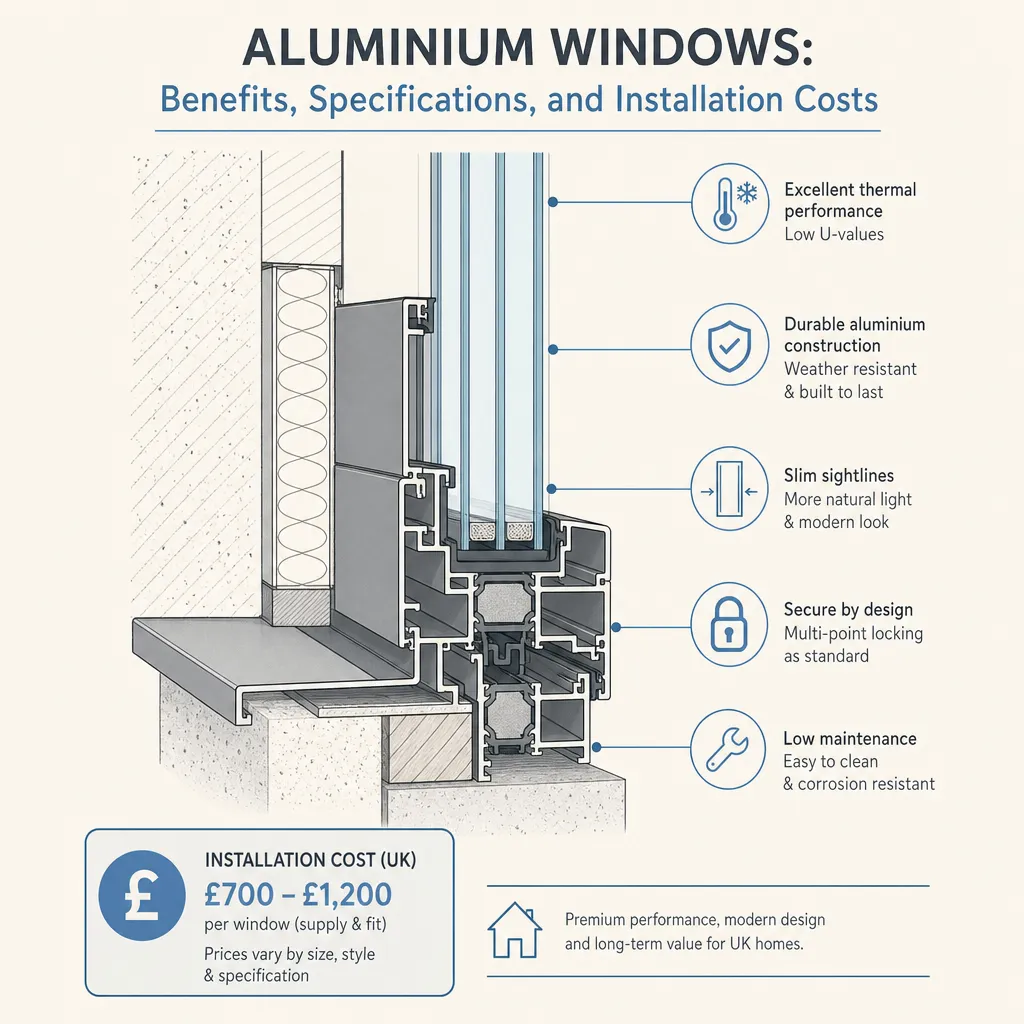
Aluminium Windows: Benefits, Specifications, and Installation Costs
Aluminium windows typically cost £600–£1,800 per window installed in the UK, depending on size and specification.
 Improvement & Build
Custom Glass Solutions: Windows, Doors, and Glazing Services
Replacement windows and doors in England and Wales must comply with Building Regulations Approved Document L (2022), requiring a whole-window U-value of 1.
 Improvement & Build
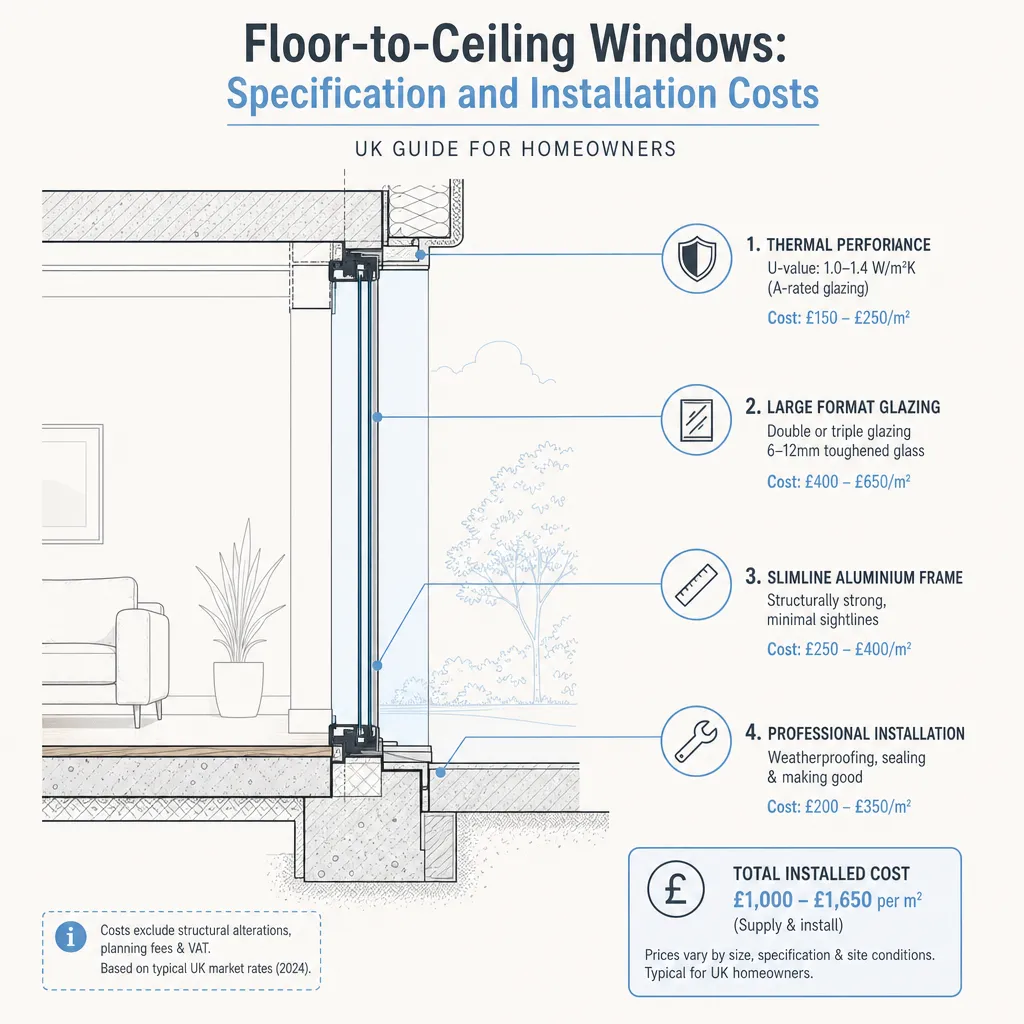
Floor-to-Ceiling Windows: Specification and Installation Costs
Floor-to-ceiling windows in the UK typically cost £1,800–£6,500 per unit installed, depending on glazing type, frame material, and whether structural alterations are needed.
 Improvement & Build
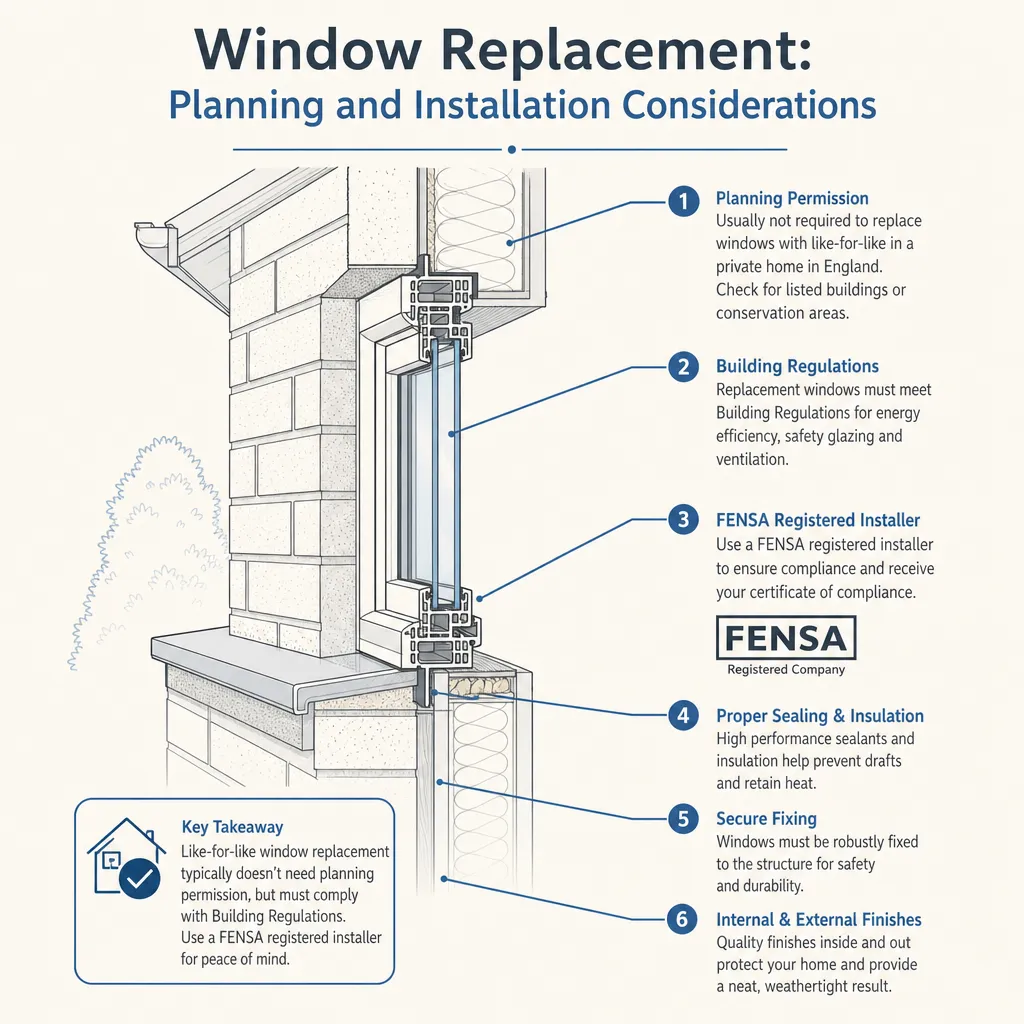
Window Replacement: Planning and Installation Considerations
Most window replacements in England fall under permitted development and do not need planning permission, though listed buildings, flats, and conservation areas are exceptions.
 Improvement & Build
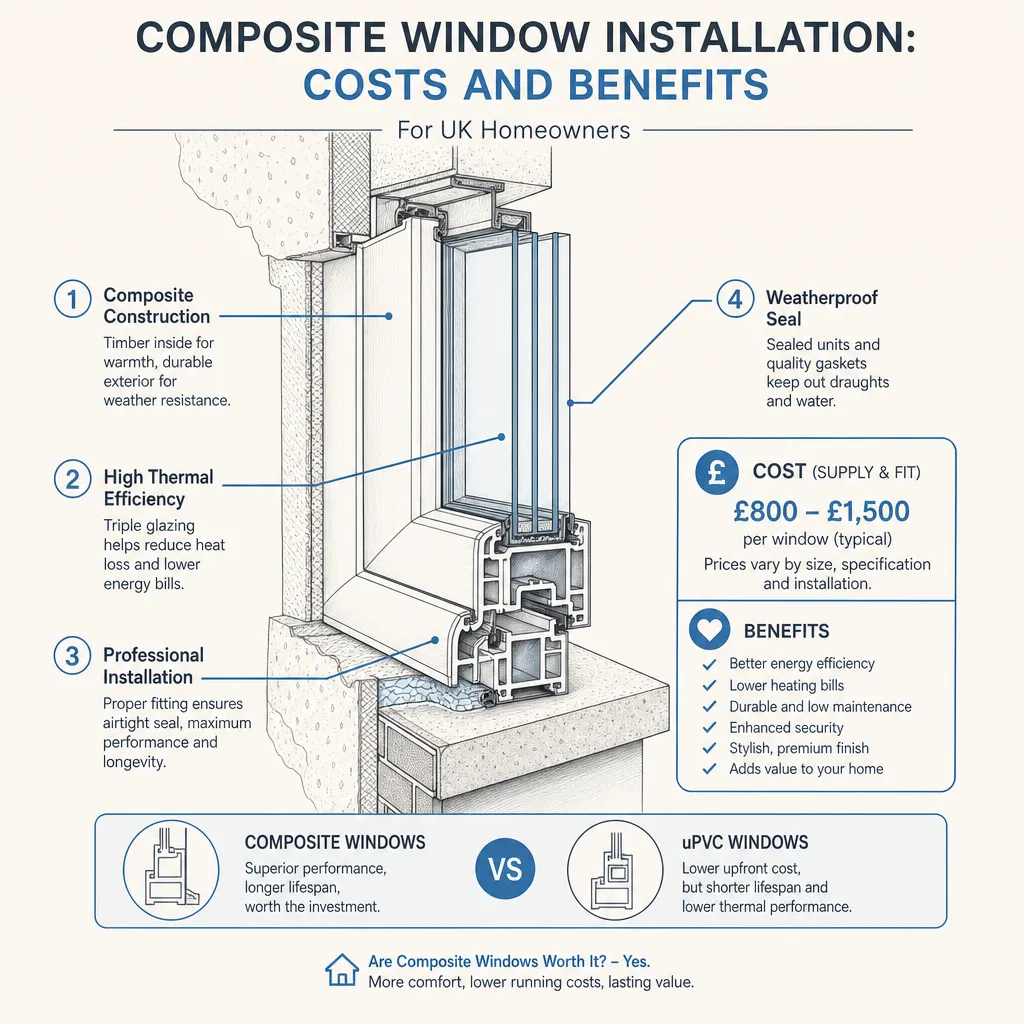
Composite Window Installation: Costs and Benefits
Composite windows combine two or more frame materials — typically a timber or aluminium core with a uPVC or aluminium outer casing — for better thermal performance and durability than standard uPVC.