Foundation Repair: Understanding Costs and Solutions
By Housey · Last reviewed 7th of May 2026
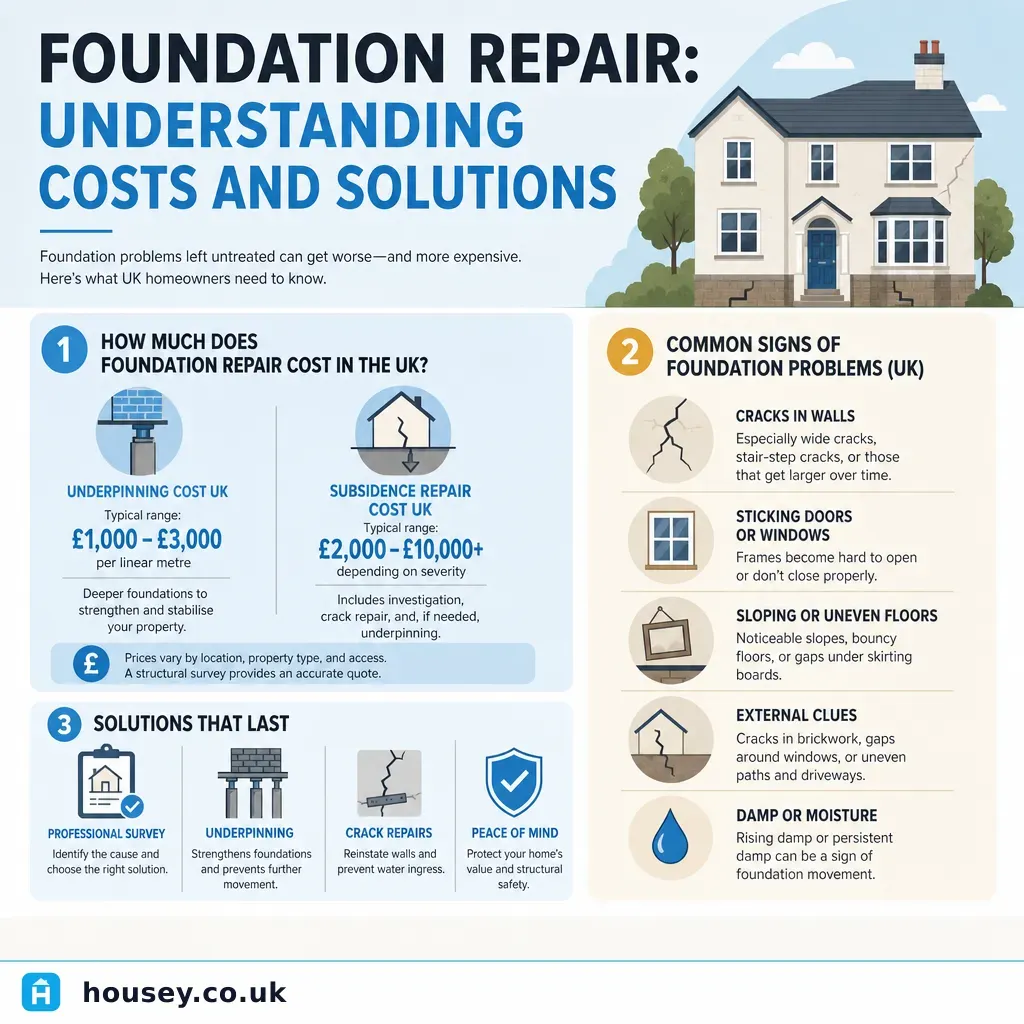
Foundation Repair: Understanding Costs and Solutions
Foundation problems are among the most concerning issues a UK homeowner can face, arising during a pre-purchase RICS Level 3 survey, after an unusually dry summer in clay soil areas, following removal of a large nearby tree, or when cracks begin widening progressively around windows and doors. Understanding what you are dealing with — and the order in which to act — matters enormously, because the wrong response can worsen the problem, invalidate a buildings insurance claim, or fund an expensive repair that does not address the underlying cause.
Key points
- Foundation problems in UK homes are most commonly caused by clay soil shrinkage (subsidence), often linked to trees or vegetation within 10–25 metres of the property.
- A structural engineer's assessment is the necessary starting point — insurers typically require one before accepting a subsidence claim, and no repair method should be chosen without first identifying the cause.
- Ground investigation (soil sampling and testing) is usually required before a repair can be designed, particularly for underpinning or piling.
- Building Regulations approval is required for underpinning and most structural foundation repairs in England and Wales — building control sign-off is not optional.
- Notify your buildings insurer promptly if you suspect subsidence — commissioning private repair work before notification may affect your ability to claim.
What causes foundation problems in UK homes?
Foundation failure in UK residential buildings has several distinct causes, each requiring a different investigation and repair approach:
- Clay shrinkage subsidence: the most common cause in southern and eastern England. Shrinkable clay soils contract during dry periods and swell when wet, causing differential settlement. Trees and large shrubs within 10–25 metres extract moisture from the soil, accelerating shrinkage. Victorian and Edwardian properties are particularly vulnerable, often having shallow strip foundations of only 450–600 mm depth.
- Heave: the reverse of subsidence — soil expands after nearby trees are removed and moisture levels recover. Heave can develop slowly over years and is difficult to diagnose without monitoring.
- Drainage failure: leaking drains beneath or near foundations wash out fine soil particles (a process called piping), progressively undermining bearing capacity.
- Inadequate original construction: many UK homes built before modern building regulations (pre-1965, and sometimes later) have foundations too shallow or too lightly constructed for current ground conditions.
- Mining subsidence: in former mining areas — parts of South Wales, Yorkshire, County Durham, Nottinghamshire, and the Midlands — legacy workings can cause differential settlement unrelated to soil type or vegetation.
Red flags: signs of foundation movement
Not all cracks indicate foundation failure, but the following signs warrant professional assessment without delay:
- Diagonal cracks wider than 3 mm, particularly stepped through brickwork or mortar joints.
- Cracks wider at the top than the bottom, suggesting downward movement in part of the structure.
- Sticking doors and windows, particularly when progressive and not attributable to seasonal timber movement.
- Gaps opening between a ceiling and an internal wall, or between a chimney breast and the adjoining wall.
- Sloping or uneven floors in ground-floor rooms of properties on clay soils.
- Cracks that appear to be actively widening — mark the ends with a pencil and date them, or fit proprietary crack monitors, to track progression.
If any of these are present, do not begin repair or remediation without professional structural assessment first.
Foundation repair methods
Method | Best for | Not ideal for | Approximate cost | Who designs it |
|---|---|---|---|---|
Crack injection or repointing | Cosmetic repair once movement has fully stabilised | Active or progressive movement | £500–£3,000 | Cause must be identified first |
Drainage improvement | Foundation problems caused by leaking drains | Clay shrinkage without a drainage component | £1,000–£5,000 | Drainage contractor; structural engineer for design |
Mass concrete underpinning | Extending shallow foundations; accessible sites | Deep required depths; high groundwater | £10,000–£30,000+ | Structural engineer (mandatory) |
Mini-pile underpinning | Deeper foundation; restricted access | Shallow repairs; contaminated ground | £15,000–£50,000+ | Structural engineer and geotechnical specialist |
Resin injection | Clay shrinkage stabilisation; loose material | Severe structural failure; peat or organic soils | £5,000–£20,000+ | Specialist contractor with structural oversight |
Helical piles | Lightweight structures; soft ground | Heavy loads; contaminated sites | £8,000–£25,000+ | Structural engineer |
Tree removal and root barrier | Tree-related clay subsidence (heave risk managed) | Where heave after removal is the greater risk | £500–£5,000 (arborist) | Arborist; structural engineer for monitoring |
Indicative UK costs, last reviewed 2026-05-07. Costs vary significantly by location, required depth, access, ground conditions, and contractor. Obtain multiple quotes.
The investigation and repair process
Foundation repair in the UK typically follows a defined sequence:
- Structural survey: a chartered structural engineer or RICS Level 3 surveyor inspects the property, documents cracks, reviews the building's history, and advises on likely causes and further investigation needs.
- Ground investigation: trial pits, boreholes, or window sampling characterise the soil profile, identify shrinkable clay, determine existing foundation depth, and assess groundwater. Usually required before an underpinning design can be produced.
- Root mapping and CCTV drain survey: where trees or drainage failure are implicated, targeted investigation locates the source precisely.
- Monitoring period: for active subsidence, insurers and engineers commonly require 6–12 months of monitoring to confirm movement has stabilised before committing to a repair design.
- Repair design and building regulations submission: the structural engineer produces drawings and specifications submitted to building control for approval before works begin.
- Specialist repair works: a contractor carries out the approved repair under building control inspection; a completion certificate is issued on satisfactory completion.
Indicative investigation and repair costs
Indicative UK costs, last reviewed 2026-05-07.
Stage | Typical cost range |
|---|---|
Structural engineer initial assessment and report | £500–£1,500 |
Ground investigation (trial pits or boreholes) | £1,500–£5,000 |
CCTV drainage survey | £200–£600 |
Crack monitoring (6–12 months, periodic engineer visits) | £500–£1,500 |
Building Regulations application fee | £200–£800 |
Repair works (see method table above) | £5,000–£50,000+ |
Buildings insurance covering subsidence often meets investigation and repair costs after an excess — commonly £1,000–£2,500. Always notify your insurer before commissioning private structural works.
Important limitations
This article is general information only. Foundation problems in UK homes vary significantly by property age, construction type, soil conditions, drainage, and local geology — including areas recorded by the Coal Authority as having historic mine workings. The guidance here cannot substitute for a site-specific assessment by a chartered structural engineer or RICS-registered surveyor. Planning, building control, and insurance requirements vary by location and individual policy. If you suspect a foundation problem, seek professional advice before taking any action — particularly before instructing a contractor, removing trees near a cracked building, or making any structural alterations.
What to ask a qualified professional
Before instructing a structural engineer or specialist contractor for foundation investigation or repair, ask:
- What do you believe is the most likely cause of the movement, and what further investigation do you recommend before selecting a repair method?
- Are you a chartered member of IStructE, ICE, or RICS?
- Will your fee include a structural report, engineering drawings, and a building regulations submission?
- Have you worked in this area, with this soil type, and at a similar foundation depth before?
- What monitoring approach do you recommend, and what signs would confirm the movement has stabilised?
- Do you advise that I notify my buildings insurer before proceeding?
- What effect, if any, will the proposed repair have on my ability to sell or remortgage the property?
- Does the specialist contractor provide an insurance-backed guarantee (IBG) on their repair work?
When to get professional help
Contact a chartered structural engineer or commission a RICS Level 3 survey as soon as possible if:
- Diagonal cracks wider than 3 mm are stepping through brickwork, particularly if they appear to be widening.
- Doors or windows have begun sticking progressively without a clear cause.
- A pre-purchase survey has flagged suspected subsidence or foundation movement.
- Your insurer has requested an engineer's report before accepting a subsidence claim.
- You are buying or selling a property with a declared history of subsidence or structural repair.
- You are planning works near a boundary where excavation could affect a neighbour's foundations.
Do not begin any structural repair — including underpinning, ground injection, or tree removal adjacent to a cracked building — without an engineer's assessment and building control approval in place.
How Housey can help
Housey connects UK homeowners with qualified professionals across the foundation investigation and repair process. Request quotes from structural engineers for an initial assessment and repair design, find geotechnical and soil investigation specialists to characterise ground conditions, or commission a structural survey if you are purchasing a property with a known or suspected foundation history.
Frequently asked questions
Does buildings insurance cover foundation repair?
Most standard UK buildings insurance policies include subsidence cover, subject to an excess — commonly £1,000–£2,500. Cover varies: some policies exclude subsidence in areas with recorded mine workings, and some impose extended exclusion periods for properties with a history of claims. Always notify your insurer before commissioning private structural work, as proceeding without notification may affect your ability to claim.
How long does foundation repair take in the UK?
Timeline depends on the method and whether a monitoring period is required. A resin injection on a stable, identified problem may be completed in a few days. Mass concrete underpinning of a terraced house typically takes several weeks. Where a 6–12 month monitoring period is needed to confirm stabilisation, the total programme from initial survey to repair completion can take 12–24 months.
Can I sell a house with a history of subsidence?
Yes, but you must disclose it. Properties with resolved subsidence — repairs certified by building control and an insurance-backed guarantee in place — are mortgageable and saleable, though lenders and buyers will request documentation. Properties with active or unresolved movement are significantly harder to sell or remortgage. Buyers should commission a RICS Level 3 survey for any property with a declared subsidence history.
What is underpinning and when is it needed?
Underpinning extends existing foundations to greater depth, reaching more stable soil. It is needed when foundations are too shallow for the ground conditions, when soil has been destabilised by drainage failure, tree roots, or nearby excavation, or when structural loads have increased. Mass concrete underpinning is the traditional method; mini-piles and resin injection are alternatives where access is restricted or deeper stable strata are required.
Sources and further reading
- Approved Document A: Structure — HM Government
- RICS: Surveying and valuation guidance — Royal Institution of Chartered Surveyors
- Institution of Structural Engineers — IStructE
- Association of British Insurers: Home insurance guidance — ABI
- BRE Group: Building performance research — BRE Group
Useful next reads
 Surveys & Inspections
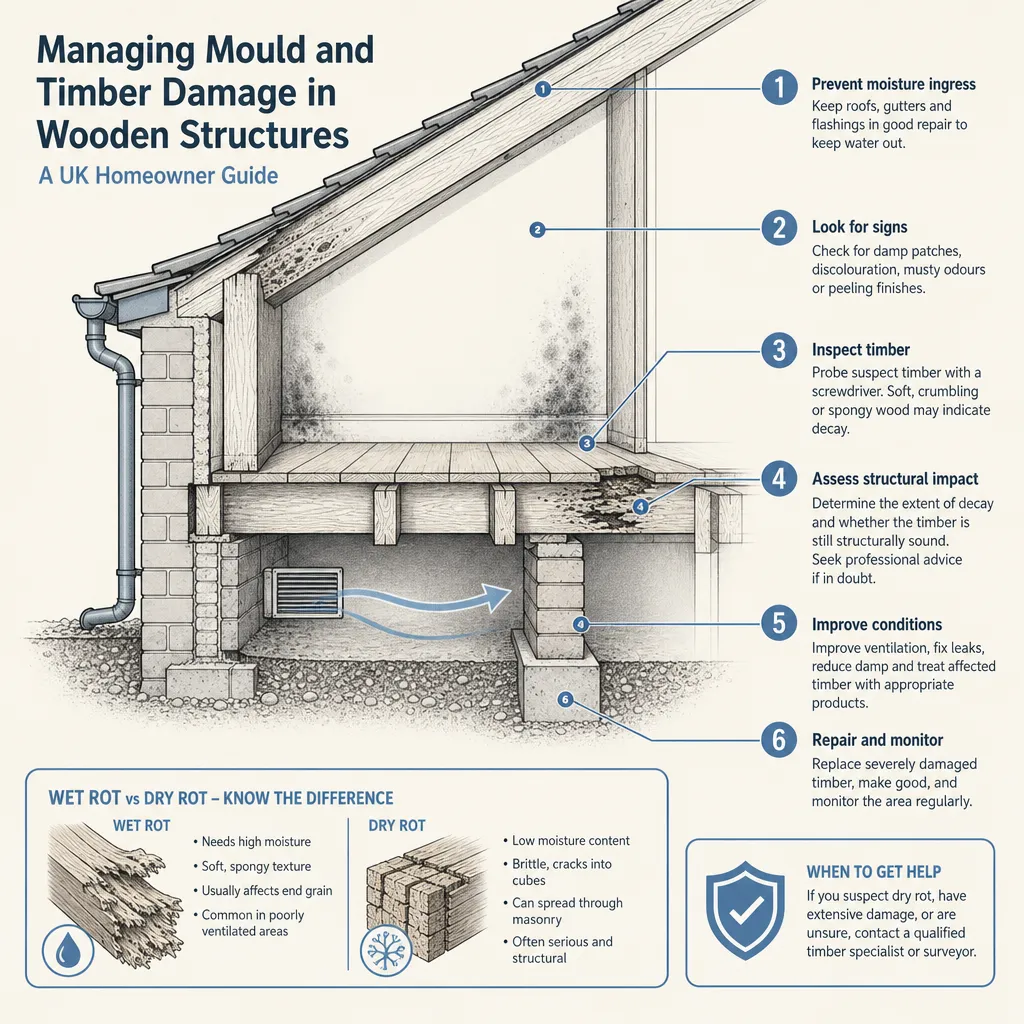
Managing Mould and Timber Damage in Wooden Structures
Mould and timber decay in wooden structures are usually symptoms of excess moisture rather than standalone problems.
 Surveys & Inspections
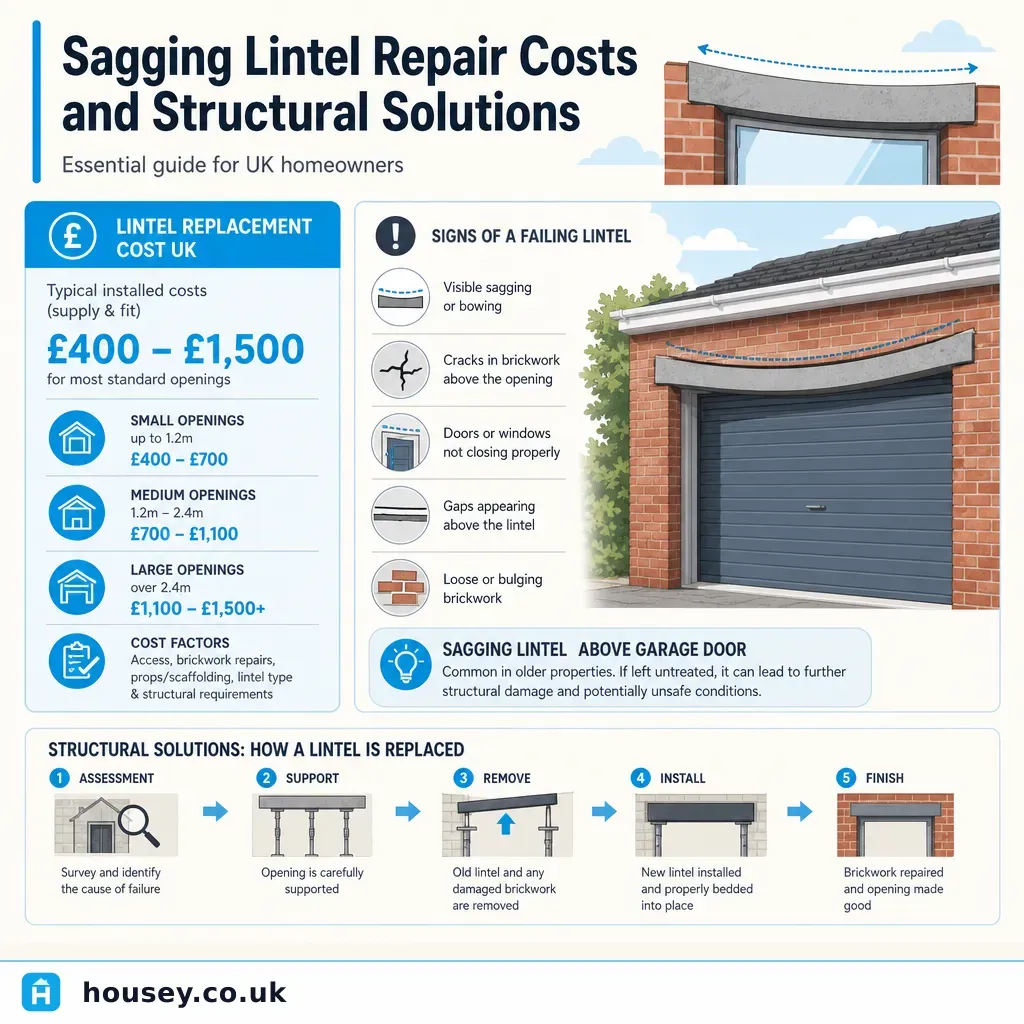
Sagging Lintel Repair Costs and Structural Solutions
A sagging lintel is a structural defect requiring prompt professional assessment.
 Surveys & Inspections
Structural Building Survey Costs
A RICS Level 3 Building Survey typically costs £500–£1,500 in the UK, depending on property size, age, and location.
 Surveys & Inspections
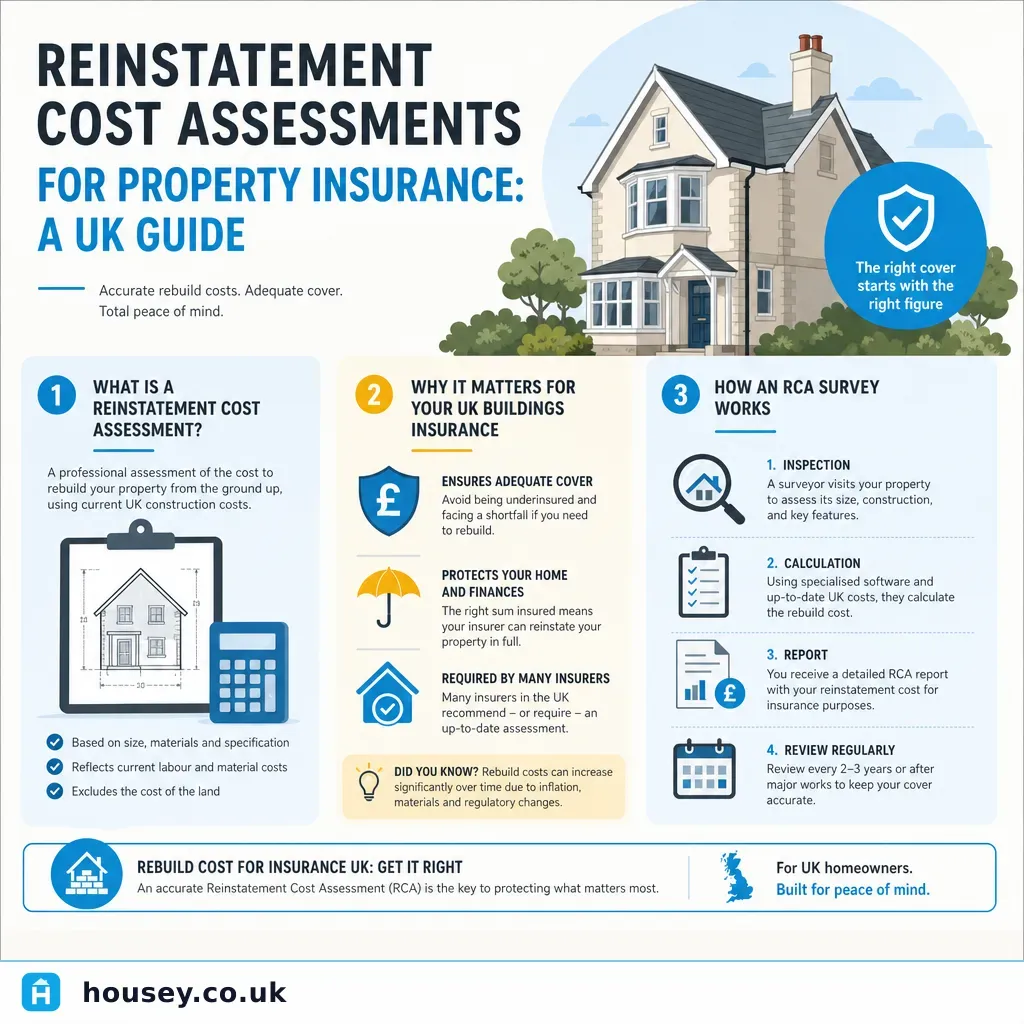
Reinstatement Cost Assessments for Property Insurance: A UK Guide
A reinstatement cost assessment (RCA) estimates what it would cost to completely rebuild your property if it were destroyed.
 Surveys & Inspections
Why Insurance Valuations Matter: What Insurers Assess in Property Inspections
An insurance valuation establishes the reinstatement cost of your property — what it would cost to demolish and rebuild it — not its market value.