Reinstatement Cost Assessments for Property Insurance: A UK Guide
By Housey · Last reviewed 10th of May 2026
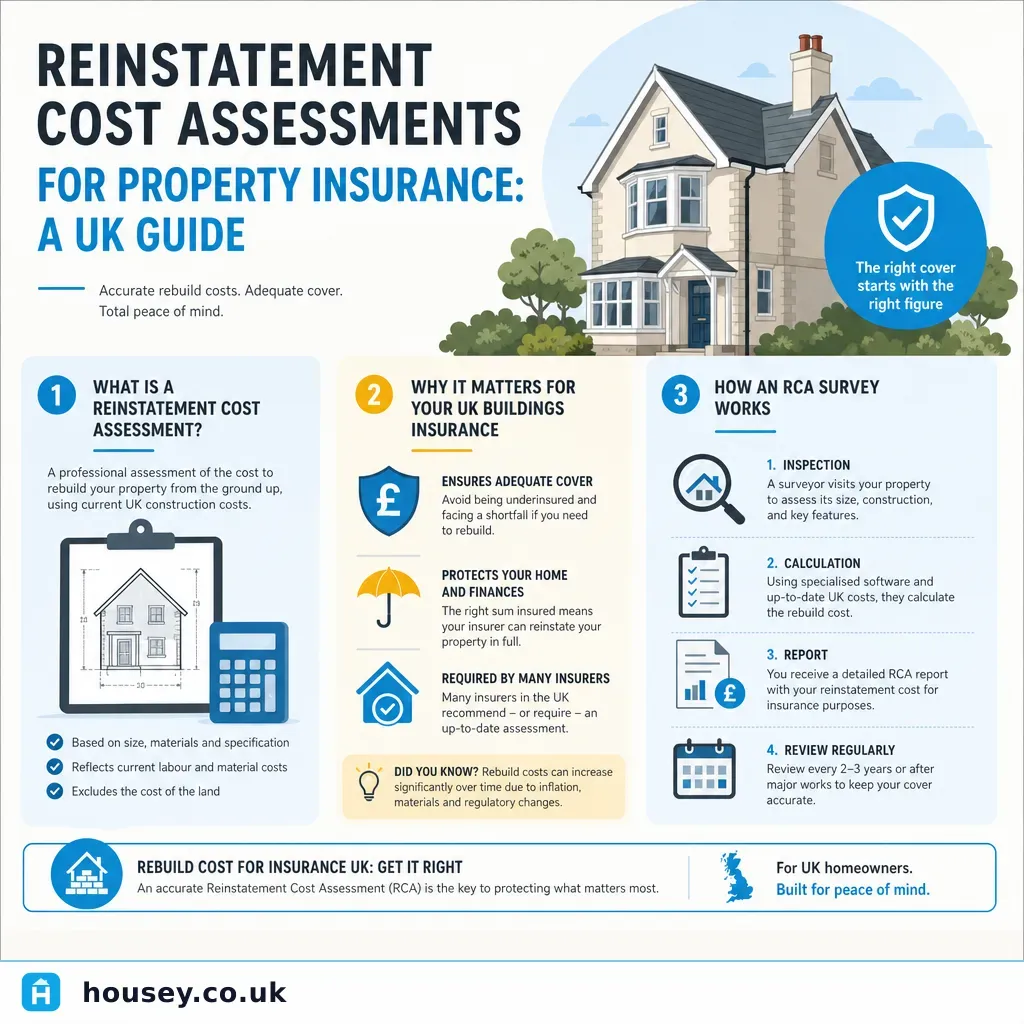
Reinstatement Cost Assessments for Property Insurance: A UK Guide
When you take out buildings insurance, the sum insured must reflect what it costs to rebuild your home — not what it would sell for on the open market. Many UK homeowners get this figure wrong, leaving themselves exposed to a significant shortfall under the policy's average clause if a major loss ever occurs.
Key points
- A reinstatement cost assessment (RCA) estimates the full cost of rebuilding a property to its current specification, including demolition, professional fees, and VAT — it is not the same as market value.
- RICS recommends reviewing an RCA every 3–5 years, or sooner following significant alterations, an extension, or a period of high construction cost inflation.
- Under-insurance is a serious risk: if the sum insured falls below the true reinstatement cost, insurers may apply the average clause and pay only a proportionate share of any claim.
- Reinstatement cost is often lower than market value for standard modern homes but can be substantially higher for listed buildings, thatched properties, or high-specification homes.
- An RCA should be carried out by a RICS-accredited surveyor working to the current RICS Reinstatement Cost Assessment of Buildings guidance note.
What is a reinstatement cost assessment?
An RCA is a professional estimate of the cost of completely rebuilding a property from the ground up following total loss — typically from fire, flood, explosion, or structural collapse. It covers demolition and site clearance, professional fees (architect, structural engineer, building control, project manager), and the full cost of rebuilding to the same size, layout, and specification, including VAT at the applicable rate.
It does not include land value, which is unaffected by building loss. This is why reinstatement cost and market value are often very different figures.
Reinstatement cost vs market value: key differences
Factor | Reinstatement cost (RCA) | Market value |
|---|---|---|
What it measures | Cost to rebuild the property | Open-market sale price |
Includes land? | No | Yes |
Includes location premium? | No | Yes |
Used for | Buildings insurance sum insured | Mortgage valuations, sale, SDLT |
Carried out by | RICS-accredited RCA surveyor | RICS-registered Red Book valuer |
Review frequency | Every 3–5 years | At sale or remortgage |
Risk if wrong | Under- or over-insurance; claims shortfall | Incorrect offer at purchase |
When do you need a formal RCA?
Most buildings insurance policies include index-linking, adjusting the sum insured annually in line with the BCIS rebuild cost index. For straightforward properties this offers reasonable protection, but a formal RCA is advisable if:
- The property is listed or in a conservation area
- It has non-standard construction: timber frame, thatched roof, concrete panel, or steel frame
- It has been extended, converted, or significantly altered since the last assessment
- The insurer's index-linked figure seems implausible for the property's size or specification
- The existing RCA is more than 5 years old
- You are purchasing a property and want to verify the sum insured before exchange
Red flags: signs your sum insured may be wrong
- The sum insured matches the purchase price. Market value and reinstatement cost are different figures. Using the sale price as the insured sum is one of the most common under-insurance errors in UK residential property.
- The figure has never been professionally assessed. Insurer online calculators cannot reliably account for unusual construction, listed status, or high specification.
- The property has been extended or altered. Any change in floor area or specification warrants a review.
- The property is listed or in a conservation area. Rebuilding to like-for-like standard requires specialist materials, craft skills, and heritage consent — all of which add significantly to cost beyond standard build rates.
- The assessment is more than 5 years old. Construction costs have risen substantially since 2019; an older figure may represent material under-insurance today.
What does an RCA involve?
A qualified surveyor carries out an on-site inspection, measuring the property and recording its construction type, specification, condition, and any unusual features. They prepare a written assessment using current BCIS cost data, setting out the recommended sum insured, the basis of assessment, and any assumptions made. A site visit typically takes 1–3 hours for a standard home; the report is usually issued within 5–10 working days.
What to ask before instructing an RCA surveyor
- Are you RICS-accredited and experienced in residential reinstatement cost assessments?
- Will you carry out the inspection personally?
- Does your fee include VAT, and what deliverable will I receive?
- Is the assessment based on a physical inspection or desk-based only?
- How current is the BCIS cost data you use?
- If my property is listed or has non-standard construction, do you have specific experience with that type?
- How long is the assessment valid for, and when will you advise me to review it?
Important limitations
This article is general information only. The correct sum insured for any property depends on its specific construction, specification, location, and condition. Do not use this article alone to set your buildings insurance sum insured. A qualified RICS-accredited surveyor must inspect your property in person. Guidance and construction costs change — always confirm that any surveyor you instruct is working to the latest edition of the RICS Reinstatement Cost Assessment of Buildings guidance note.
What to ask a qualified professional
Before instructing and when reviewing a completed RCA:
- Does your assessed sum insured include professional fees, demolition, and VAT in full?
- How does your approach change for a listed building or non-standard construction type?
- What are the implications if my current sum insured is significantly below your assessed figure?
- Will this report be accepted by my insurer as the basis for amending my policy?
- What should I do between now and the next review to manage under-insurance risk?
When to get professional help
Instruct a RICS-accredited surveyor for a formal RCA if:
- You have never had an independent professional assessment of your buildings insurance sum insured
- Your insurer has applied the average clause to a claim, indicating under-insurance
- The property is listed, has non-standard construction, or has been significantly altered
- You are a landlord with a buildings policy covering one or more properties
- The sum insured has not been reviewed for more than 5 years
- You are purchasing a property and want to verify the sum insured before exchanging contracts
How Housey can help
Housey connects homeowners, landlords, and buyers with qualified professionals for reinstatement cost assessments. If your property has structural features that may affect the assessed figure, consider also requesting a structural survey. For dedicated insurance valuation services, explore Housey's insurance valuations listings.
Frequently asked questions
How much does a reinstatement cost assessment cost in the UK?
For a standard residential property, an RCA typically costs £250–£600 depending on size, complexity, and the surveyor's fee structure. Listed buildings or non-standard construction may cost more. Indicative UK costs, last reviewed 2026-05-10. Always obtain quotes before instructing.
Is an RCA the same as a buildings survey?
No. An RCA establishes the cost of rebuilding for insurance purposes. A RICS Level 2 or Level 3 Home Survey assesses the condition of the structure and identifies defects. Both involve an on-site inspection by a RICS-accredited professional, but they have entirely different purposes and outputs.
Can I use an online calculator instead of a surveyor?
The ABI rebuild cost calculator offers a useful starting point for standard modern homes. It cannot reliably account for listed status, unusual construction, high specification, or regional cost variation. For any property with unusual features, a professional RCA is strongly advisable.
What happens if I am under-insured when I make a claim?
Most policies include an average clause. If your sum insured is 70% of the true reinstatement cost, the insurer may pay only 70% of your claim regardless of the amount claimed. This can leave a very significant shortfall on a major loss such as fire or flood damage.
How often should I update my RCA?
RICS recommends every 3–5 years, or sooner after an extension, alteration, or a period of high construction cost inflation. Index-linking provides some automatic annual adjustment but does not replace periodic professional review — particularly for properties with unusual construction or high-specification finishes.
Sources and further reading
Useful next reads
 Surveys & Inspections
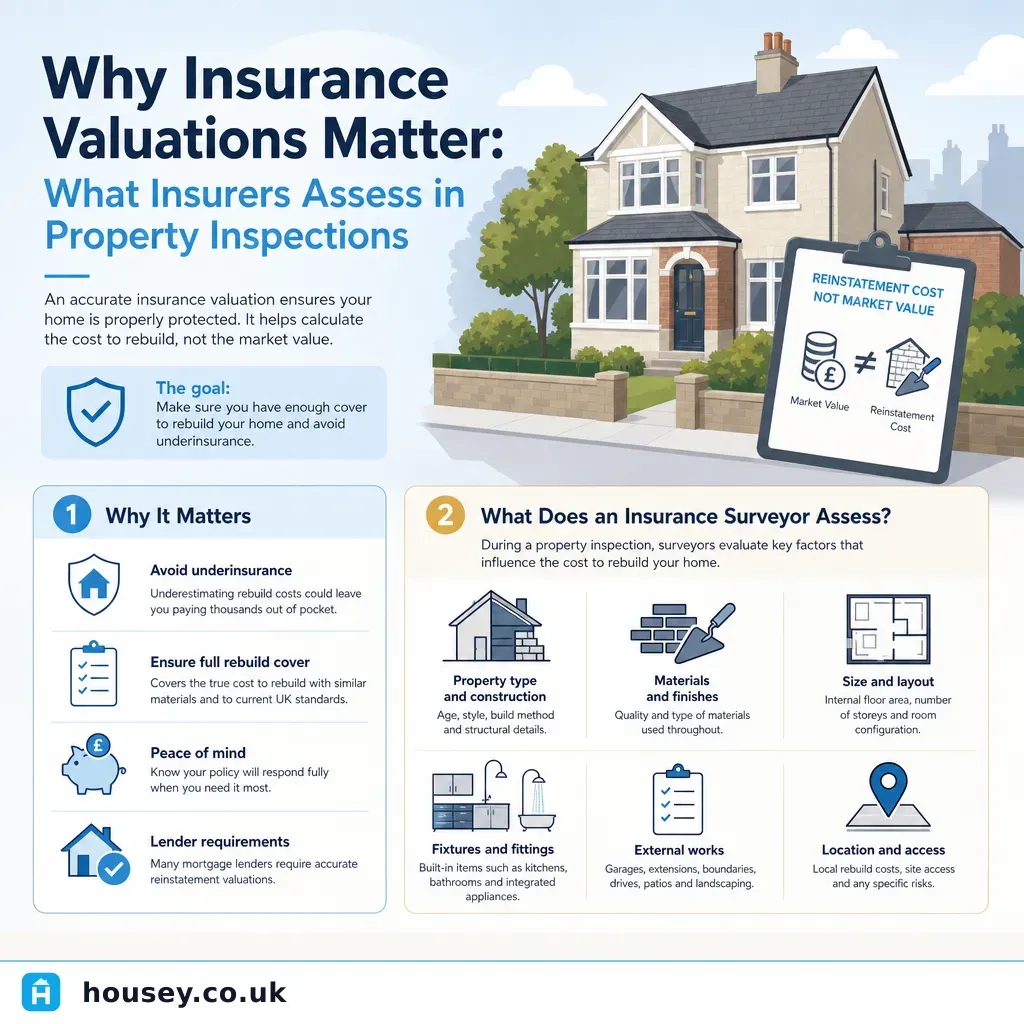
Why Insurance Valuations Matter: What Insurers Assess in Property Inspections
An insurance valuation establishes the reinstatement cost of your property — what it would cost to demolish and rebuild it — not its market value.
 Surveys & Inspections
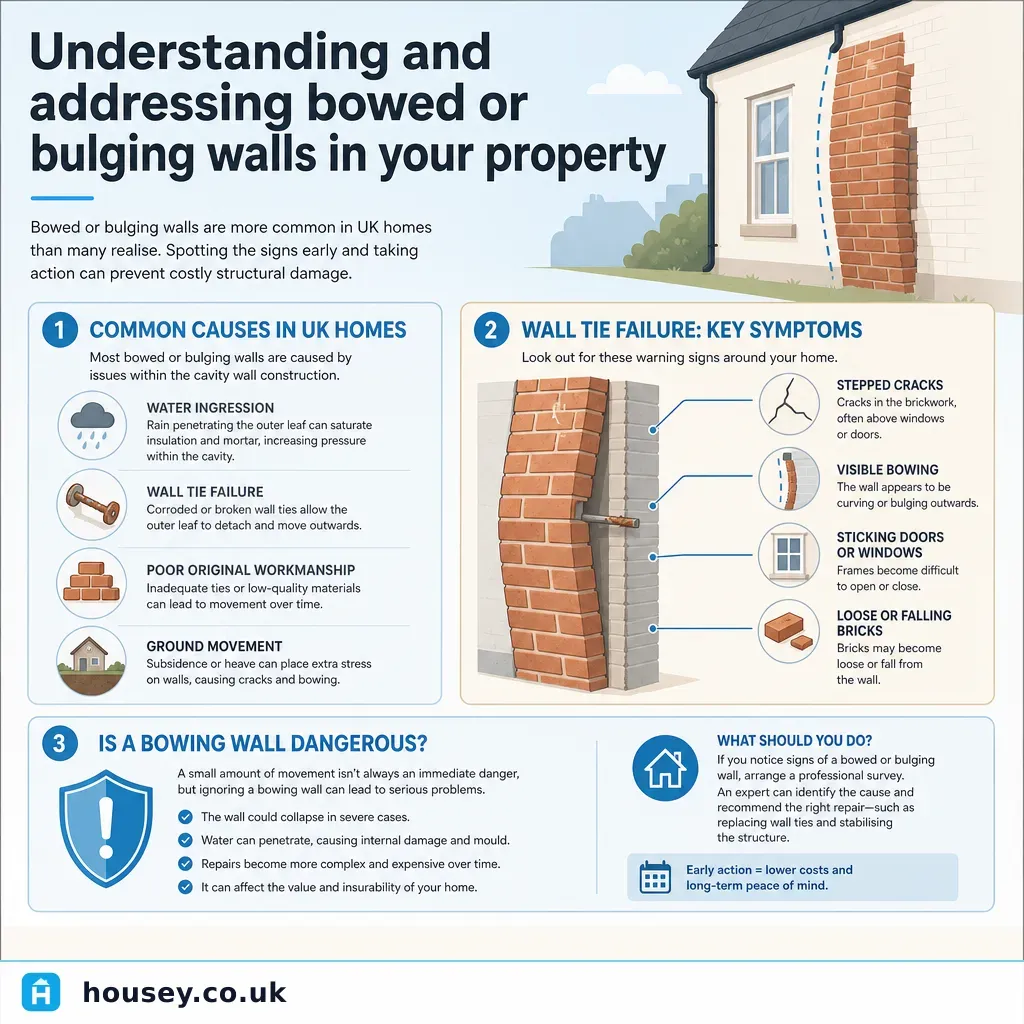
Understanding and addressing bowed or bulging walls in your property
A bowed or bulging wall may indicate wall tie failure, foundation movement, or overloading.
 Surveys & Inspections
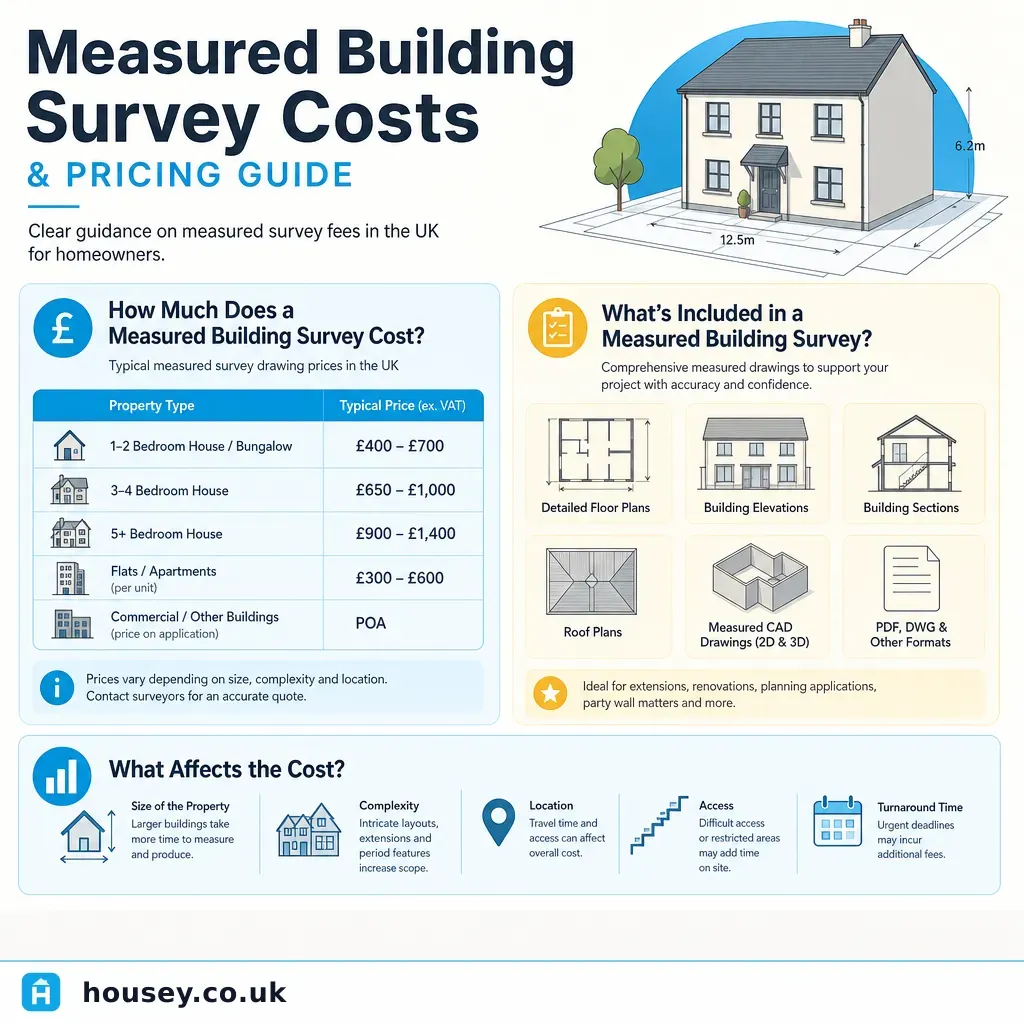
Measured Building Survey Costs and Pricing Guide
A measured building survey in the UK typically costs between £500 and £5,000 for residential properties, depending on floor area, number of levels, drawing scope, and survey method.
 Surveys & Inspections
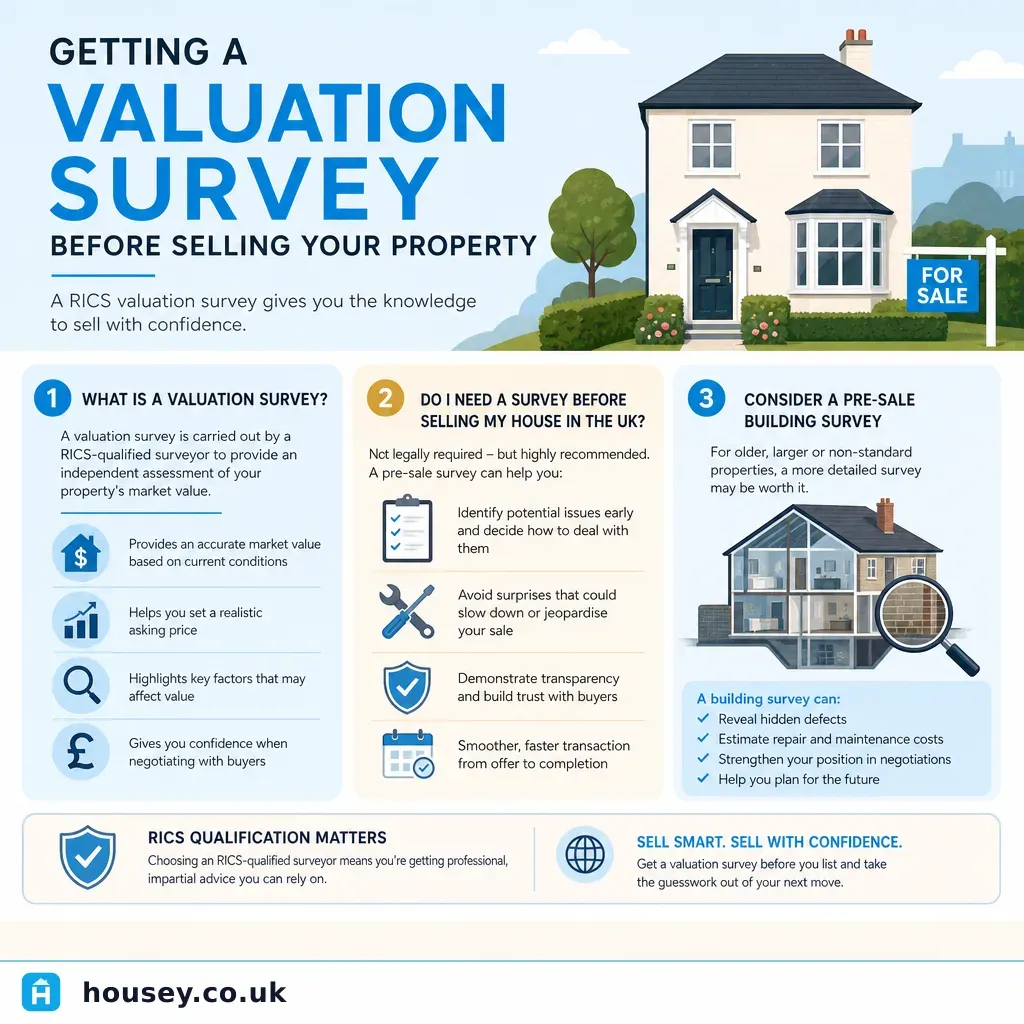
Getting a Valuation Survey Before Selling Your Property
Before selling, a free estate agent appraisal gives a market price guide, but only a RICS Red Book valuation carries formal professional standards and legal weight.
 Surveys & Inspections
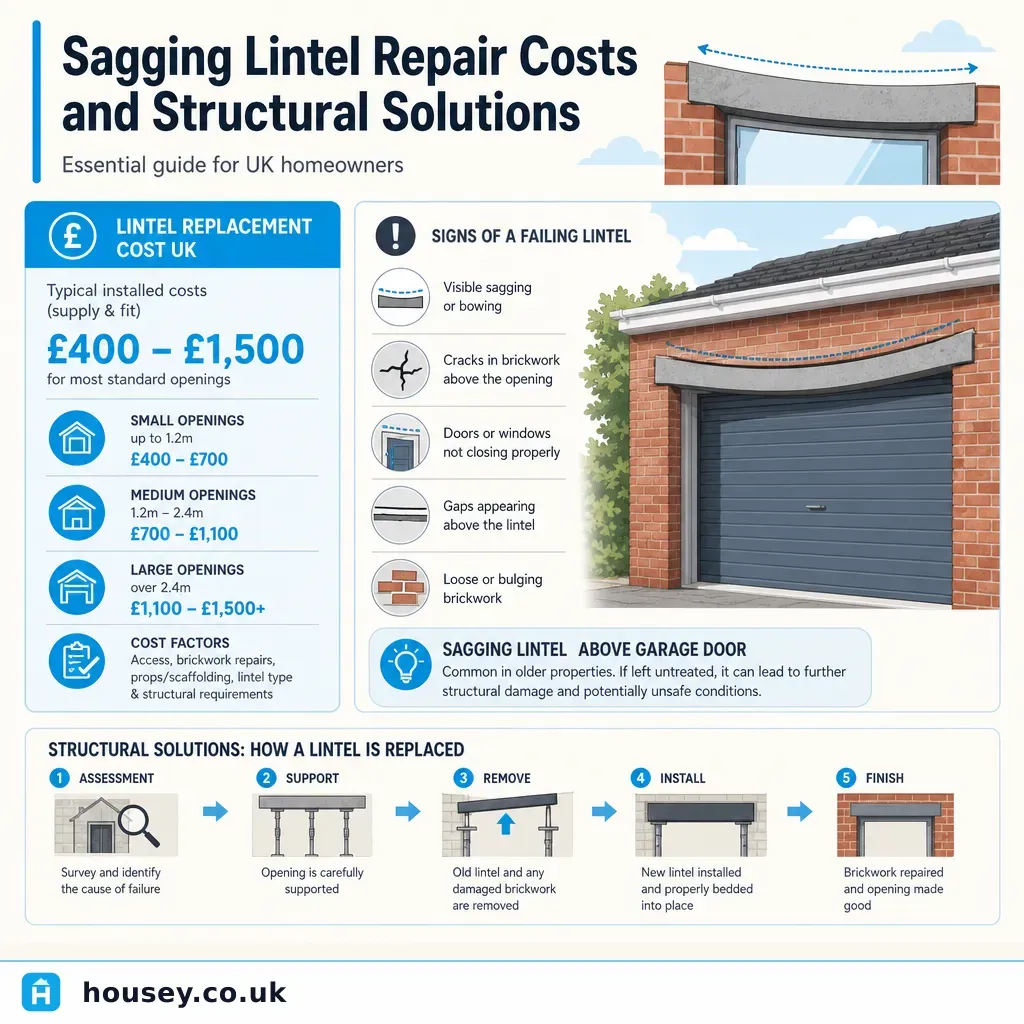
Sagging Lintel Repair Costs and Structural Solutions
A sagging lintel is a structural defect requiring prompt professional assessment.