Installation costs for modern frameless shower enclosures
By Housey · Last reviewed 6th of May 2026
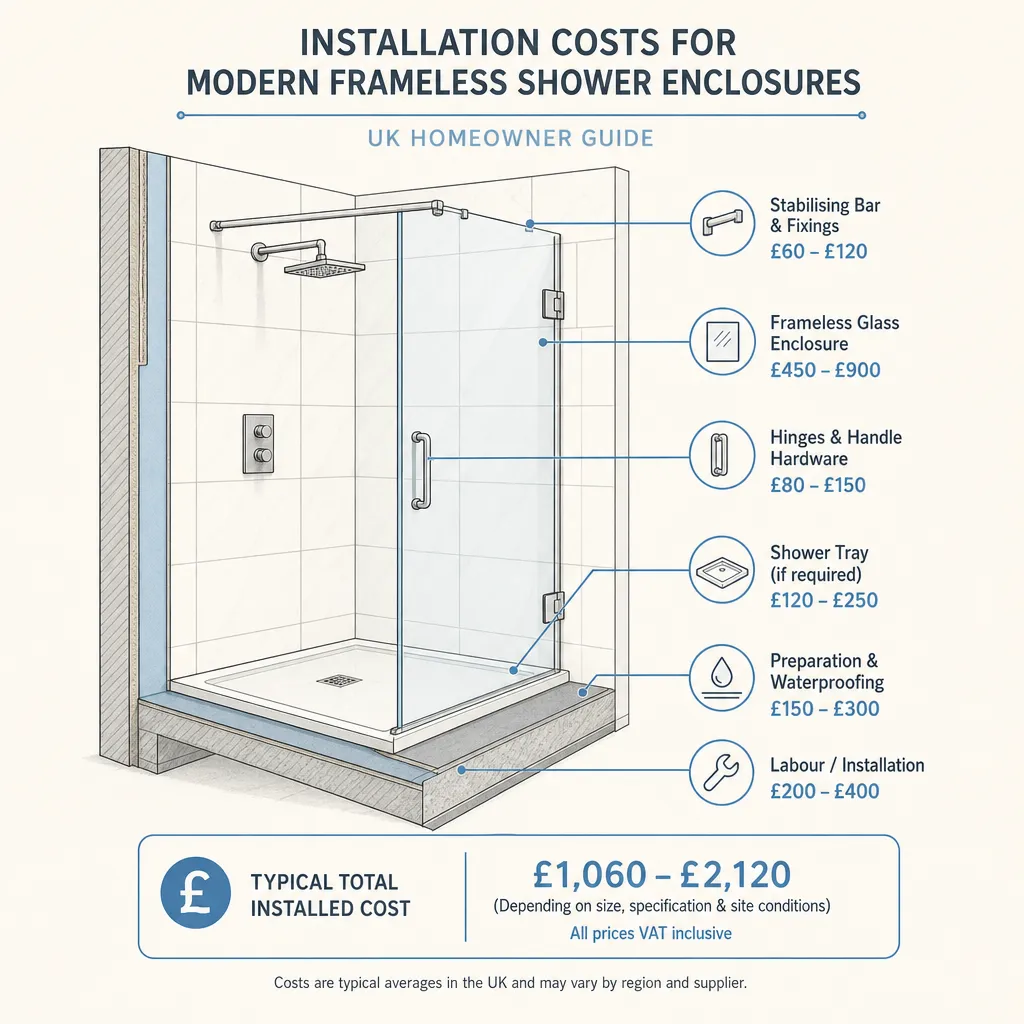
Installation costs for modern frameless shower enclosures
Frameless shower enclosures have become one of the more popular bathroom upgrades in UK homes over the past decade, sought by homeowners renovating Victorian terraces and newly built flats alike. Whether you are replacing an ageing framed cubicle or fitting out a new wet room, knowing what drives the cost — and what to ask before signing off on a quote — puts you in a much stronger position when comparing suppliers.
Key points
- Frameless shower enclosures require 8–10mm toughened safety glass compliant with BS EN 12150, the British Standard for thermally toughened soda lime silicate safety glass.
- The glass unit alone commonly ranges from £400 to £2,500+ depending on size, number of panels, and whether the configuration is a standard off-the-shelf size or bespoke.
- Installation costs typically add £200–£600 on top of the glass cost; angled walls, poor substrates, or removal of an existing enclosure can push this higher.
- VAT at 20% applies to both supply and installation for standard residential renovation work — most quotes should clearly state whether VAT is included.
- Unlike replacement windows or external doors, shower enclosures are not subject to FENSA registration requirements, but working with an installer experienced in BS EN 12150-compliant glazing remains important for safety.
What affects the cost of a frameless shower enclosure?
Several factors determine what you will pay for the complete installation.
Glass thickness and area
Frameless enclosures use heavier glass than framed alternatives — typically 8mm or 10mm toughened safety glass. A single walk-in panel at 900mm wide covers roughly 0.9 m² of glass; a three-sided enclosure with a pivot door can use 3 m² or more. Suppliers price glass by area and thickness, so larger bathrooms cost proportionally more.
Configuration
Single walk-in panels are the simplest and usually the least expensive option. Wet room deflector screens add flexibility without requiring a full enclosure. Three-sided configurations with a bi-fold or pivot door are more complex and more costly. Bespoke or non-standard dimensions — common in loft conversions and rooms with sloping ceilings or alcoves — typically add 30–60% over equivalent standard sizes.
Glass finish and coating
Clear glass is the standard baseline. Tinted glass, satin-etched finishes, and anti-limescale coatings (often marketed as EasyClean) increase the unit price. Anti-limescale coatings are particularly worth considering in hard-water areas of England, including London, the East Midlands, and parts of the South East.
Ironmongery and hardware
Hinges, handles, and wall fixings on frameless enclosures are load-bearing components, not merely decorative. Higher-specification stainless steel or brushed nickel hardware costs more upfront but tends to outlast chrome-plated zinc fittings in a damp bathroom environment.
Fitting complexity
A straightforward installation on a flat, tiled alcove wall is the quickest job. Costs rise with: out-of-square walls requiring glass cut to angled tolerances; poor or hollow tile substrates needing remediation before fixing; removal of an old framed or quadrant enclosure; and any adjustments to the shower tray or waste.
Typical cost ranges for UK homeowners
Indicative UK costs, last reviewed 2026-05-06. Prices vary significantly by region, specification, and installer. Always request itemised quotes.
Configuration | Glass unit (supply only) | Typical installation | Approximate total inc. VAT |
|---|---|---|---|
Single walk-in panel (standard size) | £400–£900 | £200–£350 | £720–£1,500 |
Walk-in with return or deflector panel | £700–£1,400 | £250–£400 | £1,140–£2,160 |
Three-sided enclosure with door | £900–£2,500 | £350–£600 | £1,500–£3,720 |
Bespoke or large-format (1,400mm+) | £1,500–£4,000+ | £500–£900+ | £2,400–£5,880+ |
These figures assume standard UK residential bathroom conditions and exclude tray replacement, new tiling, plumbing alterations, and waste repositioning.
Frameless vs semi-frameless vs framed: which suits your bathroom?
Type | Best for | Not ideal for | Approximate cost vs frameless |
|---|---|---|---|
Frameless | Contemporary look; easy cleaning; larger spaces | Very tight budgets; budget rental refits | Baseline |
Semi-frameless | Mid-budget renovations; some design flexibility | A fully hardware-free aesthetic | 20–35% less |
Framed | Budget refits; high-traffic rentals; straightforward replacement | Modern design goals; hard-water areas (limescale accumulates in frame channels) | 30–55% less |
What to check before accepting a quote
Use this checklist when comparing suppliers and installers:
When to get professional help
Fitting a frameless shower enclosure is not a standard DIY project. Toughened glass cannot be cut on-site, and even a small misalignment at a fixing point can stress the panel and cause it to shatter. Seek a qualified installer or specialist glazier if:
- The order is bespoke, with non-standard dimensions or angled tolerances.
- You are unsure whether existing walls are structurally sound or properly waterproofed.
- The shower is in a level-access wet room configuration with a linear drain.
- You are working in a listed building, where alterations may require additional consent or care.
- The existing plumbing or shower tray needs adjustment — plumbing work should be carried out by a qualified plumber.
How Housey can help
Housey connects UK homeowners with vetted local tradespeople for bathroom installation and glazing projects. If you are planning a frameless shower enclosure and want to compare quotes from experienced installers in your area, Housey can help you find and compare relevant professionals without the hard sell.
Frequently asked questions
Do I need planning permission to install a frameless shower enclosure?
No. Internal bathroom alterations do not require planning permission in England, Scotland, or Wales. Building Regulations may apply if plumbing layouts change significantly, but a standard enclosure installation in an existing bathroom does not typically trigger a formal application. If you are in a listed building, check with your local planning authority before making any structural changes.
How long does installation take?
Most frameless shower enclosures can be fitted in half a day to a full day, once walls are prepared and the glass is on-site. Bespoke glass orders often require a two-to-four-week lead time from the manufacturer, so factor this into your project schedule before booking your installer.
Is frameless toughened glass safe?
Yes, providing it meets BS EN 12150 — the British Standard for thermally toughened soda lime silicate safety glass. Compliant glass breaks into small blunt fragments rather than sharp shards. All reputable UK suppliers should provide written confirmation of the standard used. Avoid purchasing from any supplier unable to confirm compliance in writing.
Can I fit a frameless enclosure in a rental property?
Yes, but context matters. Frameless enclosures are more expensive to replace if damaged. Landlords of budget rentals often prefer framed options for lower replacement cost. Tenants should always obtain written consent from their landlord before altering any bathroom fitting, as unauthorised alterations may affect the tenancy deposit.
What maintenance does a frameless glass shower enclosure need?
Squeegee wiping after each use prevents limescale and soap buildup — particularly important in London, the East Midlands, and other hard-water areas. Anti-limescale coatings reduce daily effort. Hinges and seals should be inspected annually, and silicone seals typically need replacing every two to four years as part of routine upkeep.
Sources and further reading
- BS EN 12150-1: Glass in building — thermally toughened soda lime silicate safety glass — BSI Group
- Approved Documents — Building Regulations — GOV.UK
- Planning permission for common home improvement projects — Planning Portal
- Glass and Glazing Federation: consumer guidance — Glass and Glazing Federation (GGF)
Useful next reads
 General property advice
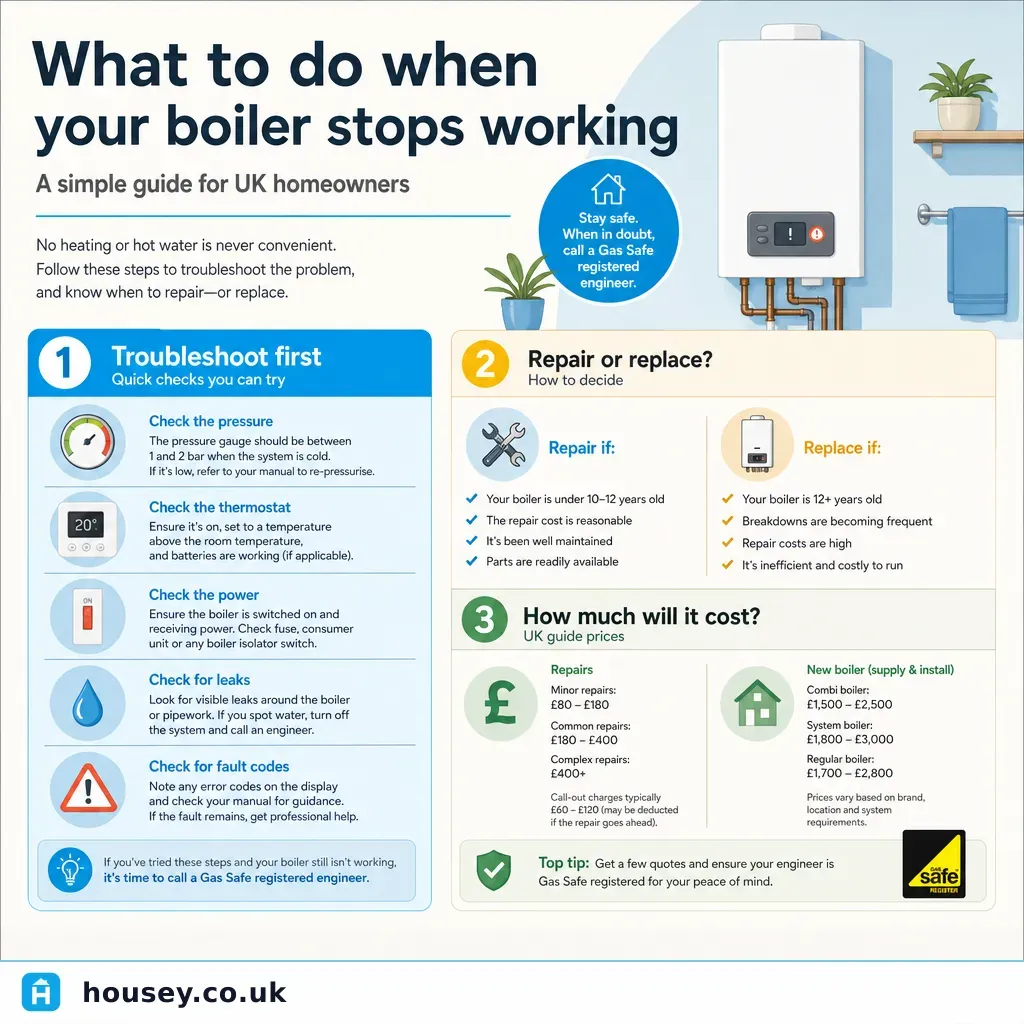
What to do when your boiler stops working
When your boiler stops working, check the pressure gauge (should read 1–1.
 General property advice
Property Market Trends: Activity Growth and Price Movements
UK property market activity is measured through completed sale registrations (HM Land Registry), lender mortgage data, and transaction volumes from HMRC.
 General property advice
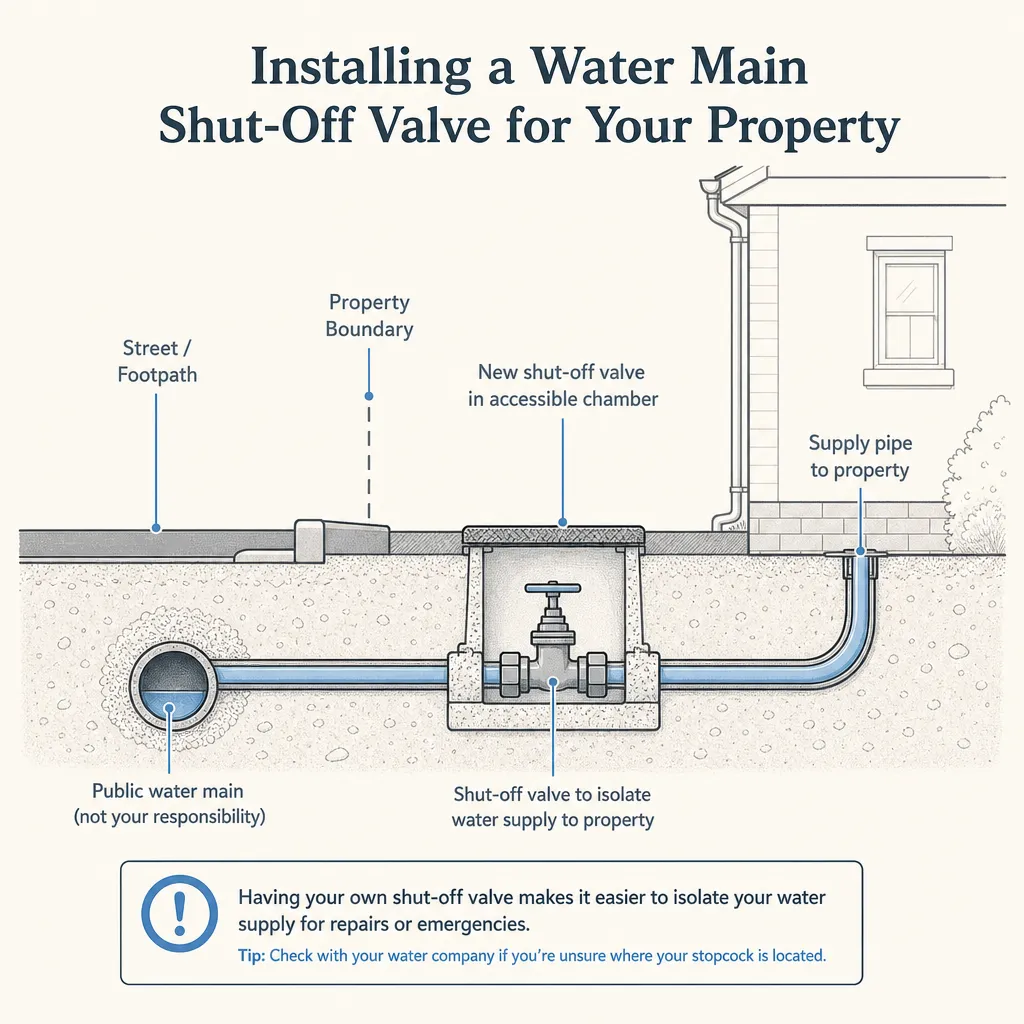
Installing a water main shut-off valve for your property
A water main shut-off valve — commonly called a stopcock — controls all water entering your home from the mains.
 General property advice
Monthly House Price Index: August Market Report and Analysis
The UK House Price Index is published monthly using completed Land Registry transaction data, meaning August figures typically reflect sales agreed months earlier.
 General property advice
Scottish Property Market: Activity and Regional Trends
Scotland's property market operates under distinct legal rules: sellers must provide a Home Report before marketing, transactions become legally binding at conclusion of missives rather than exchange of contracts, and Land and Buildings Transaction Tax replaces Stamp Duty.