Front Door Lock Types: Choosing the Right Security Solution
By Housey · Last reviewed 11th of May 2026
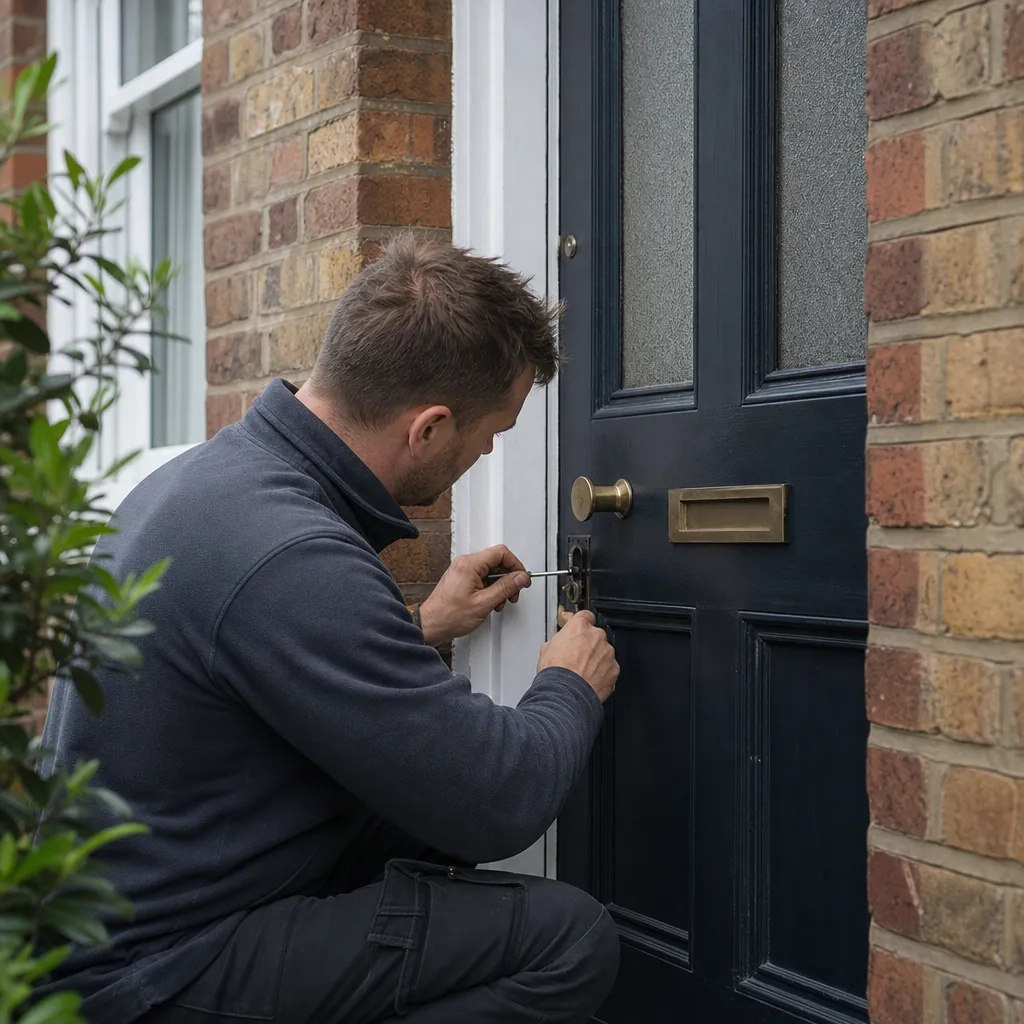
Front Door Lock Types: Choosing the Right Security Solution
The front door lock is one of the most scrutinised items on a home insurance application and one of the first points a burglar will test. Most UK homeowners replace or upgrade front door locks in response to a specific trigger — moving into a new property, an insurance renewal, a nearby break-in, or a door replacement — and the range of options has grown considerably with the wider availability of multi-point systems and smart locks. Understanding the differences between lock types, what the relevant British Standards mean in practice, and which option suits your door material will save money and avoid insurance complications.
Key points
- BS 3621:2007 is the primary British Standard for thief-resistant locks; most home insurers name it as a minimum requirement for the main entry door as a condition of cover.
- A five-lever mortice deadlock to BS 3621 resists picking, drilling, and cutting significantly better than a three-lever equivalent — the number of levers is a key security differentiator.
- Multi-point locking systems — standard factory-fit on uPVC and composite doors — engage at three or more points around the frame when the key is turned, making levering attacks substantially harder.
- Euro cylinder nightlatches are vulnerable to cylinder snapping; anti-snap cylinders rated to TS007 3-star or SS312 Diamond standard are strongly recommended on any timber front door with a Euro cylinder.
- Smart locks must still satisfy your home insurer's stated lock requirements — check your policy wording before installation, as not all insurers currently accept smart locks as meeting BS 3621 obligations.
Lock types explained
Mortice deadlocks
A mortice lock fits into a rectangular pocket (mortice) cut into the edge of the door. When locked, a bolt projects into a keep fixed to the door frame. A deadlock is operated by key only — there is no spring-loaded latch that closes automatically.
Five-lever vs. three-lever: The levers form the internal mechanism. A five-lever lock to BS 3621 is significantly harder to pick than a three-lever equivalent and is the standard insurance requirement for timber front doors. The BS 3621 certification mark should be visible on the faceplate or in the product documentation.
Mortice deadlocks require a minimum door thickness of around 44 mm and are not directly suitable for uPVC or composite doors without specialist adaptation.
Cylinder rim locks (nightlatches)
A nightlatch uses a spring-loaded latch that snaps shut automatically when the door closes — convenient for day-to-day use, but reliant on the door being fully closed each time. The cylinder (usually a Euro cylinder or oval cylinder) is the key operational component.
Security consideration: Cylinder snapping is the most common mechanical attack method against Euro cylinder nightlatches. Anti-snap cylinders (TS007 3-star or SS312 Diamond rated) are designed to break at the outer section without allowing entry. These are strongly recommended in higher-risk areas and are often required by insurers on any door fitted with a Euro cylinder.
A nightlatch should be treated as a secondary lock on timber doors, not a standalone security solution.
Multi-point locking systems (MPLS)
Multi-point locks engage at three or more points around the door frame — typically at the top, latchbolt centre, and bottom — when the handle is lifted and the key turned. This distribution of force makes levering the door away from the frame very difficult.
MPLS systems are built into the door slab at manufacture and are standard on uPVC and composite doors. Replacement hardware must match the existing gearbox profile (common profiles include ERA, Fullex, Mila, and Avocet). These systems are not usually retro-fitted; if the existing gearbox fails, the mechanism is replaced in-situ.
Note: many MPLS systems do not carry a BS 3621 marking, as the standard was written for mortice locks. Check whether your insurer accepts PAS 24:2022 (enhanced security performance for doorsets) or Secured by Design certification in lieu.
Smart locks
Smart locks use a motorised cylinder or deadbolt controlled via a smartphone app, PIN pad, key fob, or biometric reader. Most replace or sit alongside the door's existing cylinder without altering the external appearance significantly.
When evaluating smart locks, look for independent testing to TS007 3-star or Sold Secure Gold accreditation. Practical considerations include power failure (most models include a physical key override), app discontinuation risk, and connectivity reliability. Always confirm your home insurer's position before installation.
Comparison table: which lock type for your door?
Lock type | Best door material | Security standard | Secure standalone? | Insurance typically accepted? |
|---|---|---|---|---|
Five-lever mortice deadlock | Timber (44 mm+) | BS 3621 | Yes | Yes — standard requirement |
Euro cylinder nightlatch (anti-snap) | Timber | TS007 3-star / SS312 Diamond | No — combine with mortice | Only if paired with BS 3621 mortice |
Multi-point locking system | uPVC, composite, aluminium | PAS 24:2022 / Secured by Design | Yes | Usually — check insurer accepts PAS 24 |
Smart lock (motorised cylinder) | Timber (replaces cylinder) | TS007 3-star / Sold Secure Gold | Depends on mechanism | Check policy — many still require BS 3621 |
Basic slam-shut latch | Any | None | No | Generally not acceptable |
Indicative UK security standards guidance, last reviewed 2026-05-11.
Which lock should you choose?
- Choose a five-lever mortice deadlock to BS 3621 if you have a timber front door of 44 mm or more — this is the standard insurance baseline for timber doors.
- Add an anti-snap Euro cylinder nightlatch to any timber mortice-locked door for day-to-day convenience, treating it as secondary locking only.
- Choose a multi-point locking system if you have a uPVC or composite door — check the door manufacturer's documentation for the gearbox profile before ordering replacement hardware.
- Consider a smart lock if keyless entry or remote access management is a priority, but verify TS007 3-star or Sold Secure Gold accreditation and confirm your insurer's position first.
- Ask a qualified locksmith or installer if the door frame is damaged, the door material is unusual, or you are unsure whether your current specification meets your insurer's requirements.
- Check with your local planning authority if the property is listed or in a conservation area, as visible changes to ironmongery may require consent.
What to check before buying a lock
Before purchasing or fitting a new lock:
- Read your home insurance policy schedule — most specify lock type and standard by name.
- Check the door material and thickness — mortice locks require adequate timber depth.
- For uPVC doors, identify the existing gearbox profile before ordering a replacement MPLS.
- If you are renting, confirm with your landlord before replacing any lock.
- Consider the Secured by Design specification if you are in a higher-risk area or fitting locks as part of a new-build or major renovation.
When to get professional help
Call a qualified locksmith (registered with the Master Locksmiths Association) or a window and door installer if:
- The door frame is damaged, soft, or poorly fitted — a good lock in a weak frame provides minimal real-world security.
- You need to upgrade a uPVC or composite door and are unsure whether the existing hardware profile can be directly replaced.
- The lock has failed or a key has been lost after a security incident — emergency replacement should be carried out by a qualified locksmith.
- You want a whole-door security assessment before letting or selling a property.
How Housey can help
If your front door needs new hardware or a complete replacement to meet current security standards, Housey connects you with vetted window and door installers who can assess your door specification, recommend compliant lock sets, and carry out installation to Secured by Design standards where required.
Frequently asked questions
What does BS 3621 mean on a door lock?
BS 3621:2007 is the British Standard for thief-resistant key-operated locks. A lock certified to this standard has been independently tested for resistance to picking, drilling, cutting, and other attack methods. Most home insurers specify a BS 3621-rated lock as a minimum condition of cover on main entry doors.
Do multi-point locks on uPVC doors meet home insurance requirements?
Most uPVC and composite door multi-point locking systems are not individually certified to BS 3621, as the standard was written for mortice locks. Many insurers accept doors certified to PAS 24:2022 or Secured by Design in lieu of BS 3621, but you should check your individual policy wording to confirm.
What is a cylinder snap attack and how do I prevent it?
Cylinder snapping is a forced entry technique in which a burglar snaps the exposed end of a Euro cylinder using pliers or a mole wrench, then turns the remaining stub with a screwdriver. Anti-snap cylinders rated to TS007 3-star or SS312 Diamond are designed to sacrifice the outer section without allowing the lock to be operated.
Can I replace my front door lock myself?
A like-for-like cylinder replacement on a timber nightlatch is within many competent homeowners' abilities. However, cutting a new mortice, replacing a uPVC multi-point gearbox, or installing a smart lock in place of a mortice deadlock benefits from professional installation to ensure correct alignment, security, and insurance compliance.
Are smart locks accepted by UK home insurers?
This varies by insurer. Some accept smart locks carrying TS007 3-star or Sold Secure Gold accreditation; others require a BS 3621 mortice deadlock regardless of smart hardware installed. Read your policy schedule carefully and contact your insurer before making changes — modifying locks without checking could affect your cover.
Sources and further reading
- BS 3621:2007 thief-resistant locks — BSI Group
- Secured by Design: door security standards — Secured by Design
- Master Locksmiths Association: find a locksmith — Master Locksmiths Association
- Sold Secure: accredited security products — Sold Secure
- Which?: home security buying guide — Which?
Useful next reads
 Improvement & Build
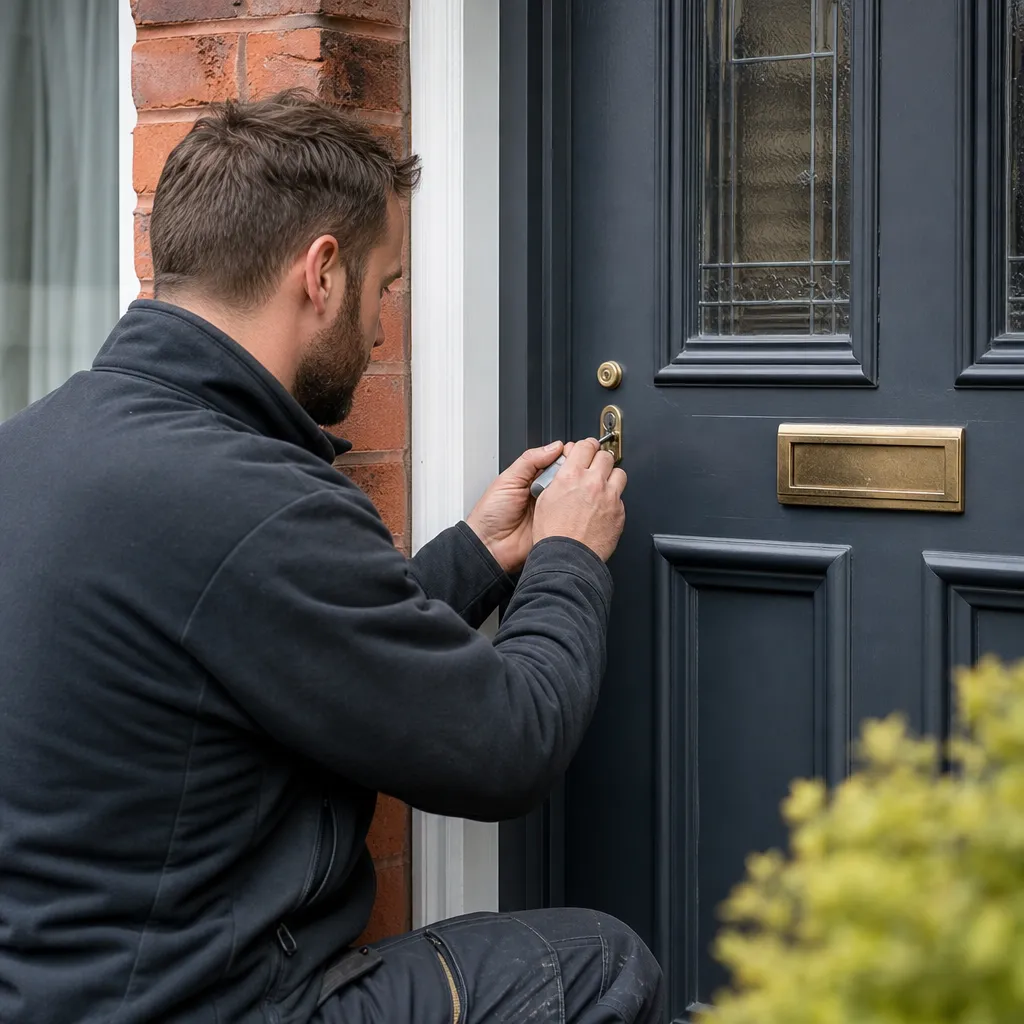
Ensuring Your Home Locks Are Secure Enough
For most UK homes, external door locks should meet British Standard BS 3621 or be part of a PAS 24-certified door set.
 Improvement & Build
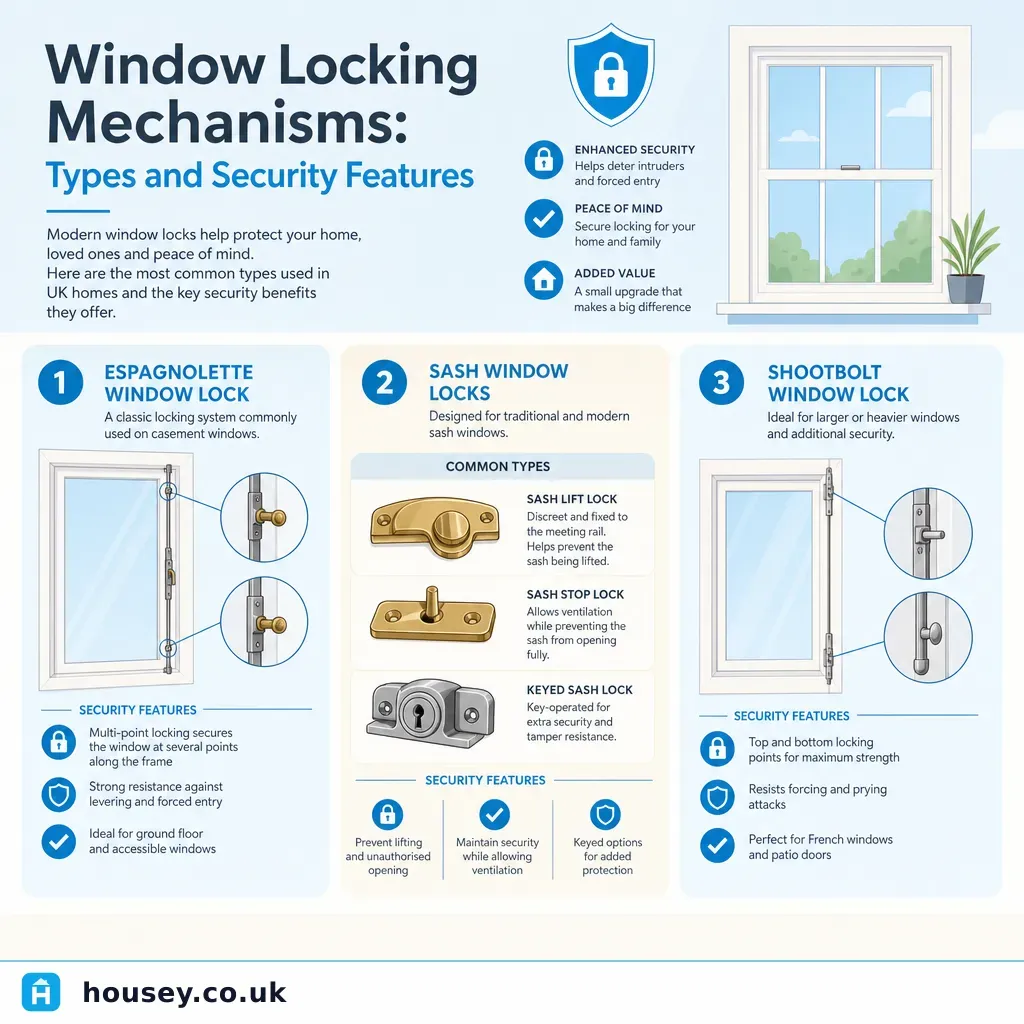
Window Locking Mechanisms: Types and Security Features
The most common window locking mechanisms in UK homes are espagnolette bolts (on casement windows), sash locks and dual screws (sash windows), and shootbolt locks.
 Improvement & Build
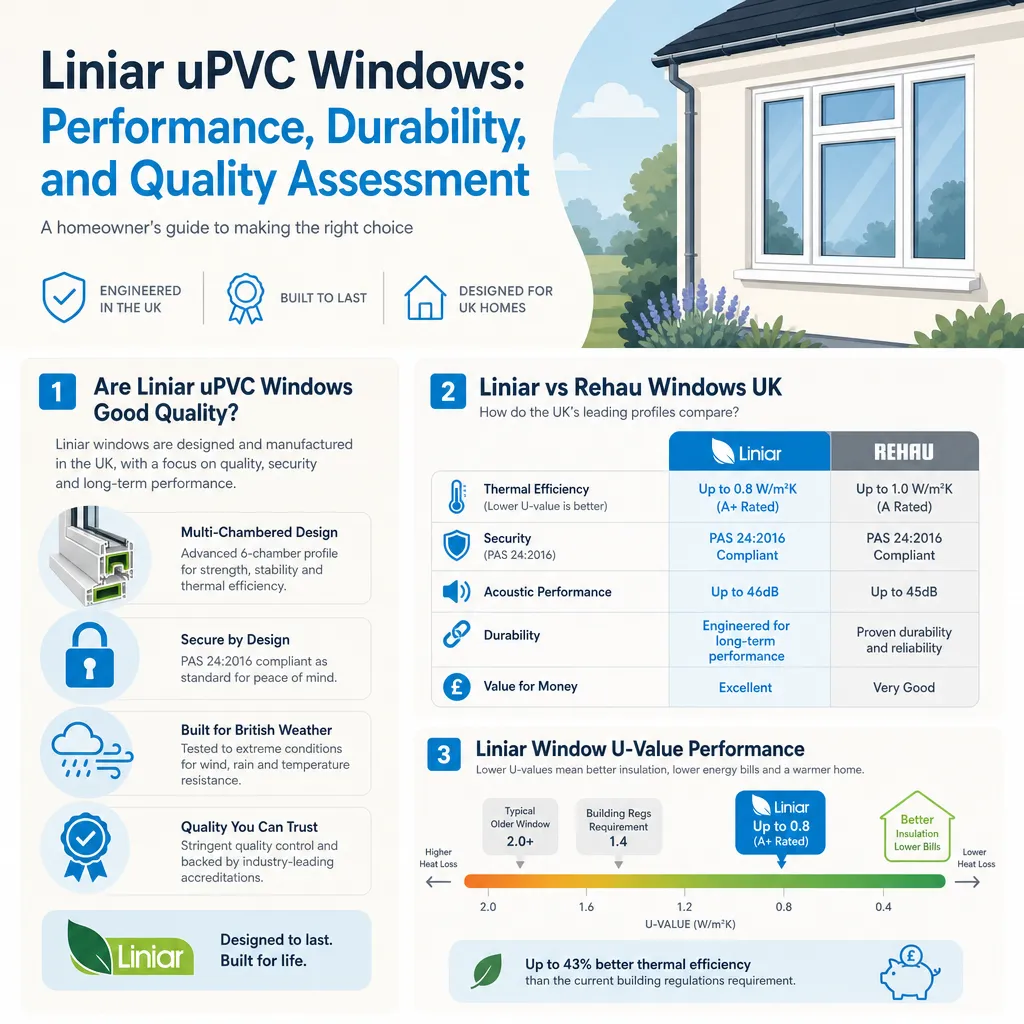
Liniar uPVC Windows: Performance, Durability, and Quality Assessment
Liniar uPVC window profiles are manufactured in the UK using multi-chambered, foamed frames.
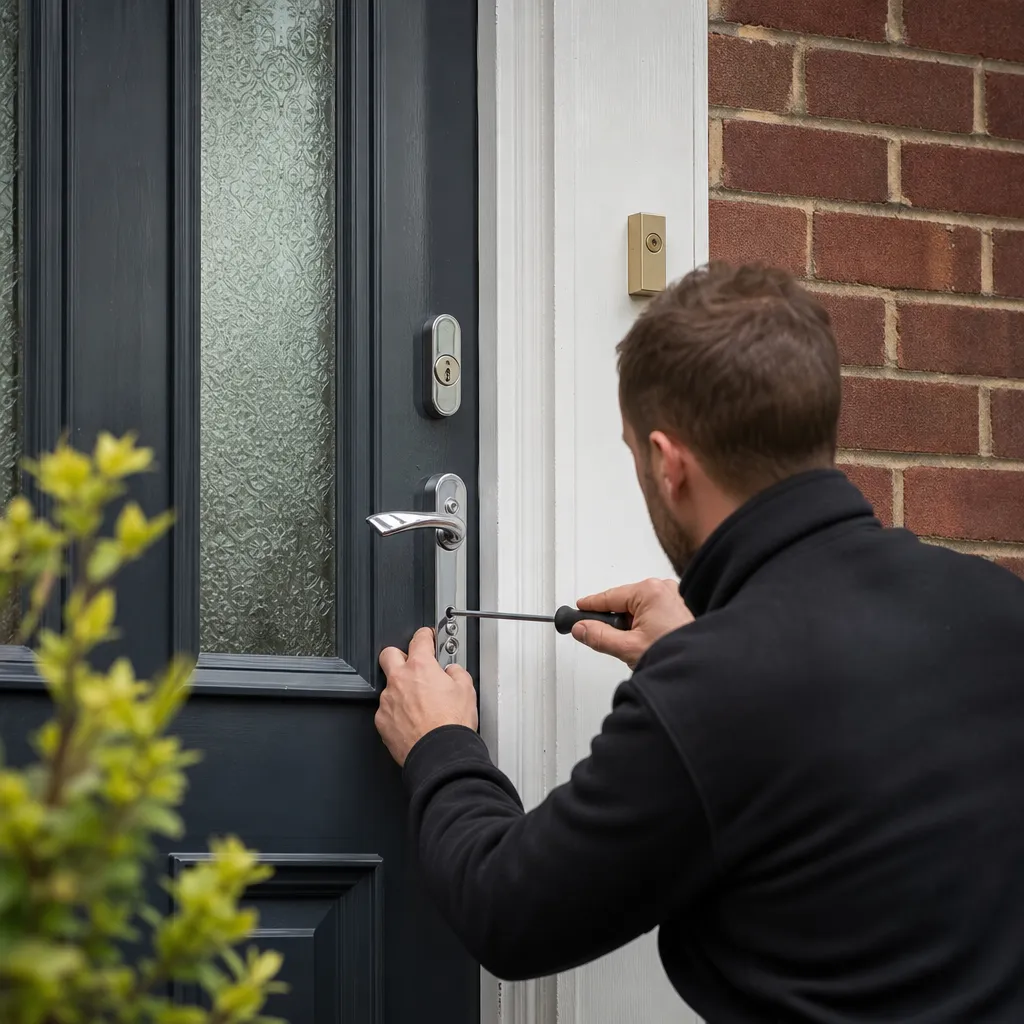 Improvement & Build
Exterior Door Lock Types and Security Options
UK exterior doors use several lock types: five-lever mortice deadlocks, euro cylinder locks, rim latches, and multipoint locking systems.
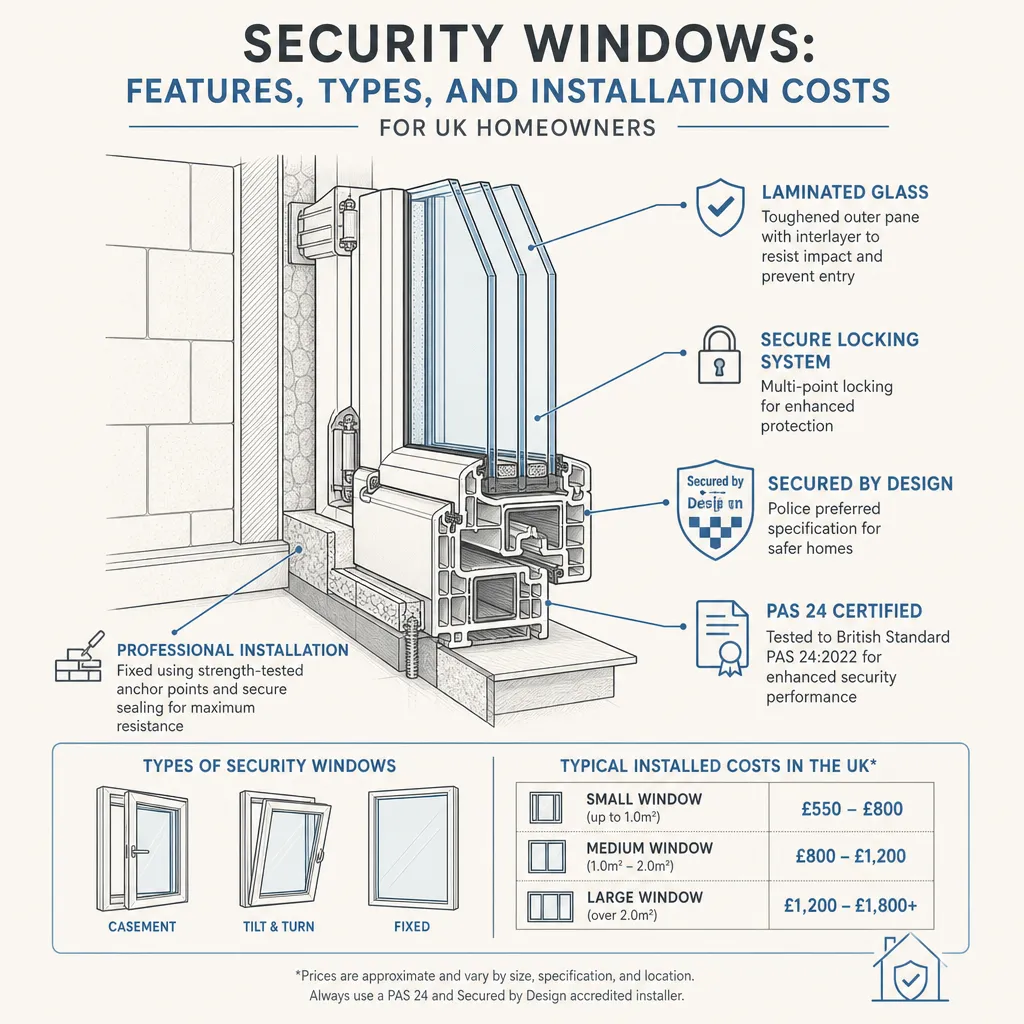 Improvement & Build
Security Windows: Features, Types, and Installation Costs
Security windows combine laminated glazing, multi-point locking hardware, and reinforced frames to resist forced entry.