Security Windows: Features, Types, and Installation Costs
By Housey · Last reviewed 30th of May 2026
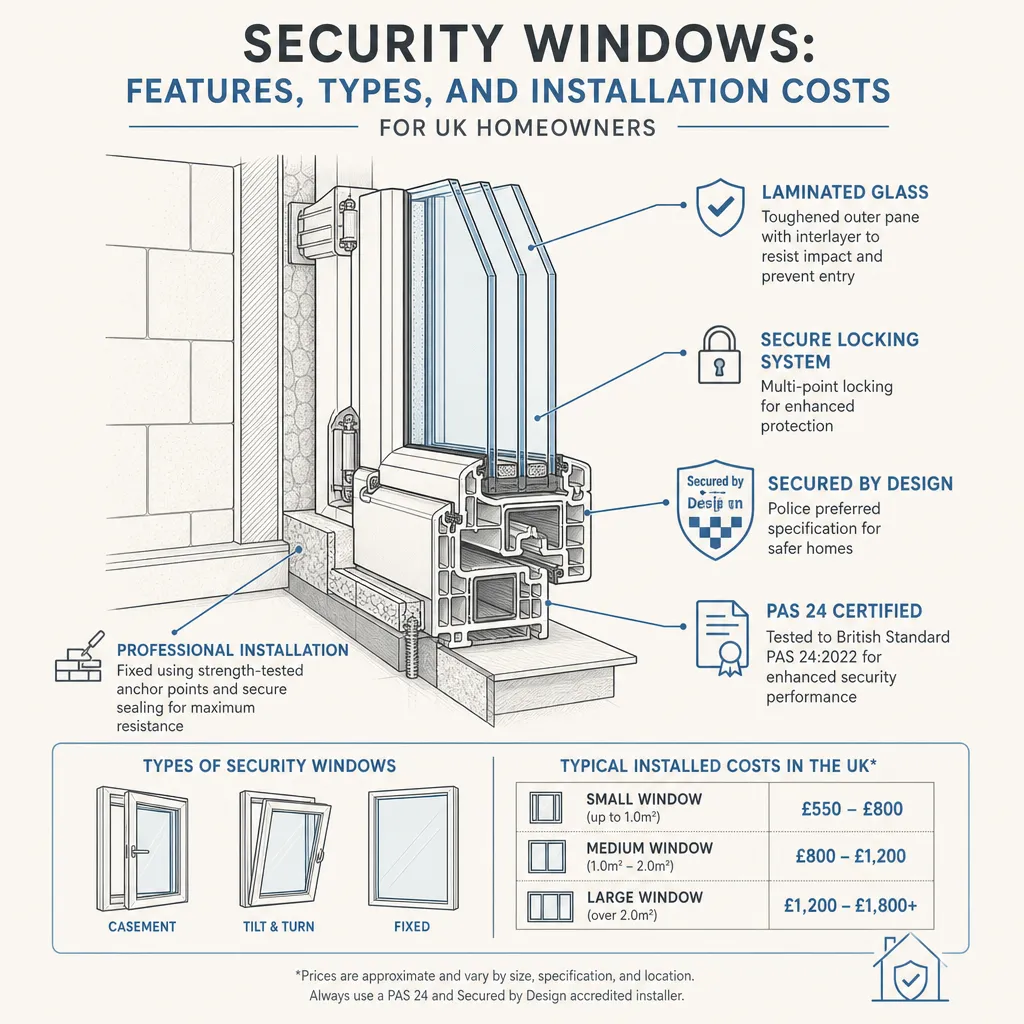
Security Windows: Features, Types, and Installation Costs
Replacing or upgrading windows is one of the most effective physical security measures a UK homeowner can take. The question often arises after a nearby break-in, when renewing a home insurance policy, or during a wider renovation project where existing frames are already being replaced. Choosing windows with the right security specification can meaningfully reduce the risk of forced entry and, in many cases, qualifies a property for reduced insurance premiums or the removal of a specific security endorsement from a policy.
Key points
- PAS 24:2022 is the UK benchmark security standard for windows and doors; a product carrying this certification has passed manual attack, crowbar-forcing, and operation-cycle tests set by BSI.
- Secured by Design (SBD) is the police-backed accreditation scheme run by the National Police Chiefs' Council — some insurers and new-build planning conditions specifically require SBD-licensed products, not just PAS 24.
- Laminated glass contains a polyvinyl butyral (PVB) interlayer that keeps the pane bonded when struck, making it significantly harder to breach than toughened glass, which shatters on impact and immediately clears the opening.
- FENSA-registered or CERTASS-registered installers self-certify that replacement windows comply with Building Regulations Part L (energy efficiency) and Part N (glazing safety), removing the need for a separate building control application.
- Most standard UK home insurance policies specify a minimum window security standard; some require PAS 24 or equivalent for ground-floor and accessible windows as a condition of cover.
What makes a window security-rated?
A security window differs from a standard replacement window in three areas: the glazing unit, the locking hardware, and the frame construction.
Glazing options
Glass type | How it resists forced entry | Best for |
|---|---|---|
Laminated (e.g. 6.4 mm PVB interlayer) | Stays bonded when struck — attacker must continue hitting the same point | Ground-floor and accessible windows |
Toughened (tempered) | Harder than float glass; shatters into granules, not shards | Safety compliance under Part N — not a forced-entry deterrent |
Laminated and toughened composite | Combines impact resistance and fragmentation safety | High-specification security glazing |
Standard float glass | No meaningful security benefit | Not suitable for security applications |
Standard double-glazed units typically use toughened glass for safety compliance, but once broken the opening is clear. Laminated glass is the key upgrade for genuine security performance.
Locking hardware
Multi-point locking systems engage at three or more points along the frame when the handle is operated. On uPVC windows this is common practice; on timber and aluminium windows it must be explicitly specified. Look for hardware referenced in the window's PAS 24 test certificate or meeting BS EN 14846.
Frame construction
Frames must resist prying and levering. uPVC frames with steel or aluminium reinforcement, adequately sectioned timber frames, and aluminium frames with thermal breaks all perform well under test when specified to PAS 24. A common weak point is the hinge: standard friction-stay hinges can be opened beyond the intended angle with improvised tools. Egress hinges or restrictors prevent this and are typically required for a compliant installation.
Window frame materials compared
Frame material | Security potential | Typical lifespan | Maintenance level |
|---|---|---|---|
uPVC | Good — steel reinforcement standard | 20–35 years | Low |
Timber | Good when maintained and hardware-upgraded | 30–60 years | Higher — painting and joinery checks |
Aluminium | Excellent — rigid and warp-resistant | 30–45 years | Low |
Composite (timber/aluminium) | Excellent — combines benefits of both | 30–50 years | Low externally |
Aluminium frames are increasingly popular for their slim sight lines and rigidity, which allows larger glazed areas without compromising frame strength or security.
PAS 24 and Secured by Design explained
PAS 24 (Publicly Available Specification 24) is published by BSI and defines how windows and doors must perform under a series of tests simulating attack with hand tools. The current version is PAS 24:2022. A window tested to this specification has been subjected to manual attack testing, crowbar tests on locking hardware, and extended operation-cycle tests simulating years of use.
Secured by Design (SBD) is a police initiative run by the National Police Chiefs' Council. Products licensed to use the SBD logo have been assessed against criteria that typically go beyond the minimum PAS 24 requirements. New housing developments built under planning conditions often require SBD accreditation; some mortgage lenders and insurers reference it specifically.
If a supplier describes a window as "high security" without citing PAS 24 or a specific test certificate, ask for the certificate reference before committing to an order.
Typical UK installation costs
Indicative UK costs, last reviewed 2026-05-30. Costs vary by region, property type, opening size, and specification. Obtain at least three itemised quotes before committing.
Window type | Indicative supply and fit cost |
|---|---|
uPVC casement, PAS 24 (approx. 600×900 mm) | £400–£650 |
uPVC sash window, PAS 24 | £600–£950 |
Aluminium casement, PAS 24 (approx. 600×900 mm) | £700–£1,200 |
Timber sash window, security hardware upgrade | £900–£1,800 |
Composite (timber/aluminium), full security specification | £1,200–£2,500+ |
Additional charges typically apply for scaffolding, disposal of old frames, and making good internal plasterwork. Listed buildings, conservation area properties, and heritage glazing requirements all increase cost and complexity.
Security window checklist for homeowners
Before accepting a quote, work through this list:
When to get professional help
Most security window installations are straightforward when carried out by a registered installer. Seek specialist advice in these circumstances:
- The property is listed or in a conservation area — replacement windows may require listed building consent or conservation area consent before any order is placed. Check with your local planning authority before committing to a product.
- The opening is large or structural — enlarging a window opening in a loadbearing wall requires a structural assessment and may need building regulations approval.
- You are installing windows in fire compartmentation walls — fire-rated glazing has specific requirements under Approved Document B that take precedence over standard security specifications.
- Your insurer has issued a specific product endorsement — confirm the quoted window matches exactly what the policy states before ordering.
How Housey can help
Housey connects UK homeowners with vetted window and door installers who can advise on PAS 24-compliant products, provide itemised quotes, and manage FENSA self-certification so you receive the Building Regulations compliance certificate required for resale.
Frequently asked questions
Does fitting security windows reduce home insurance premiums?
Potentially, yes. Many insurers apply a discount or remove a security endorsement when ground-floor and accessible windows meet PAS 24 or carry Secured by Design accreditation. Check your policy wording and confirm the required specification with your insurer before ordering — the product must match what the policy requires. A window described as secure but without a valid PAS 24 certificate may not satisfy the insurer's conditions.
What is the difference between laminated and toughened glass for security?
Toughened glass meets Building Regulations Part N safety requirements but, once broken, the opening is clear. Laminated glass has a polyvinyl butyral (PVB) interlayer that keeps the pane bonded when struck, forcing an attacker to keep hitting the same point rather than simply reaching through. Laminated glass is significantly more resistant to forced entry and is the primary security upgrade for ground-floor and accessible windows.
Can I add security film to existing windows instead of replacing them?
Window security film bonds to the interior surface of existing glazing and slows forced entry by holding shattered glass together. It is not equivalent to laminated glass, will not achieve PAS 24 accreditation, and should not be presented to an insurer as an equivalent product. It can be a useful interim measure on upper floors, but replacing ground-floor glazing with laminated units is the more reliable security upgrade.
Do replacement windows in the UK need to comply with Building Regulations?
Yes, in England and Wales. Replacement windows must comply with Part L (thermal performance) and Part N (glazing safety). A FENSA- or CERTASS-registered installer self-certifies compliance and issues an installation certificate. Using an unregistered installer means applying separately to your local building control authority, adding cost and delay. The certificate is needed during conveyancing when you sell.
What does a FENSA certificate cover?
A FENSA certificate confirms that replacement windows were installed in compliance with Building Regulations Part L and Part N by a registered installer. You will need it during conveyancing when you sell the property — solicitors routinely request it. Keep it with your property documents alongside any planning consents and guarantees issued by the installer.
Sources and further reading
- Secured by Design — product search and licensing — National Police Chiefs' Council / Secured by Design
- PAS 24:2022 — enhanced security performance requirements for doorsets and windows — BSI Group
- FENSA — competent person scheme for window and door replacements — FENSA Ltd
- Approved Document N: Glazing — GOV.UK
- Approved Document L: Conservation of fuel and power — GOV.UK
Useful next reads
 Improvement & Build
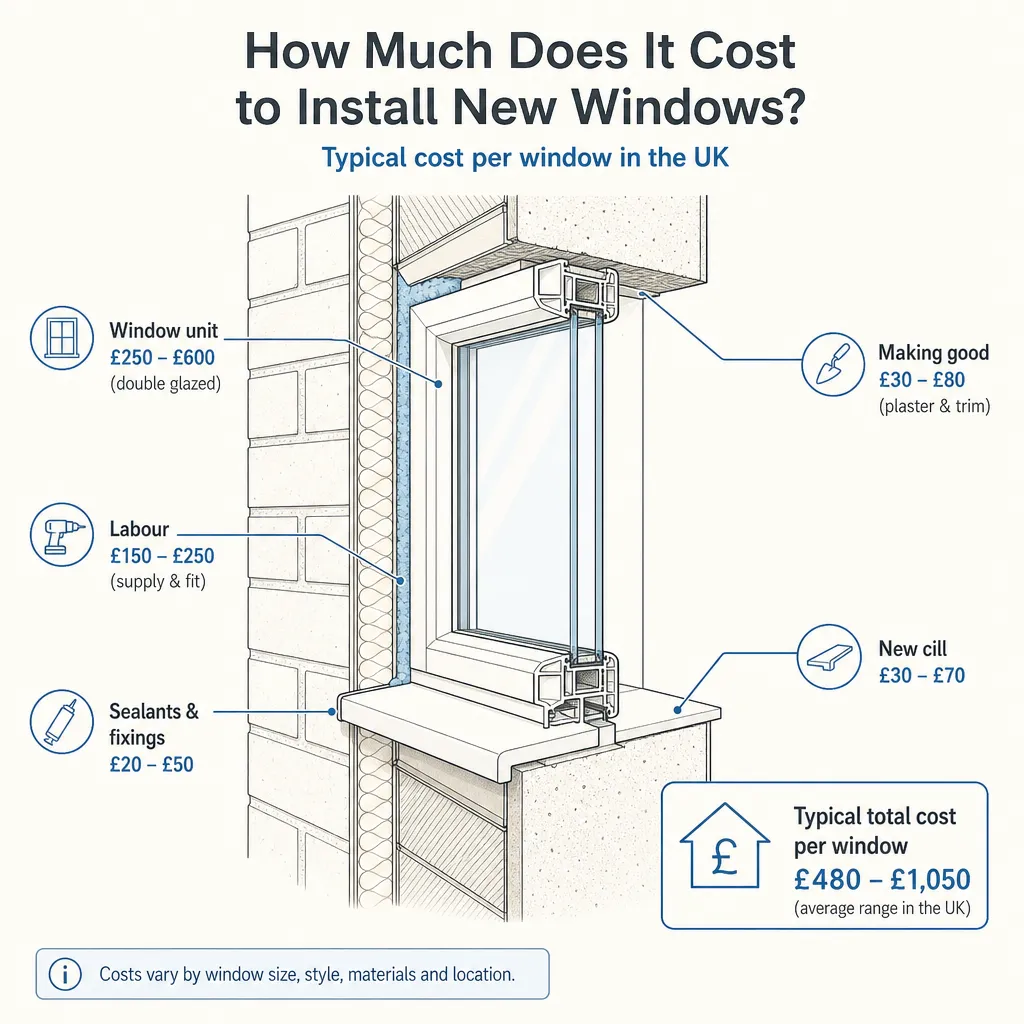
How Much Does It Cost to Install New Windows?
New window installation in the UK typically costs £300–£700 per uPVC double-glazed window (supply and fit), rising to £800–£2,500 for timber or sash windows.
 Improvement & Build
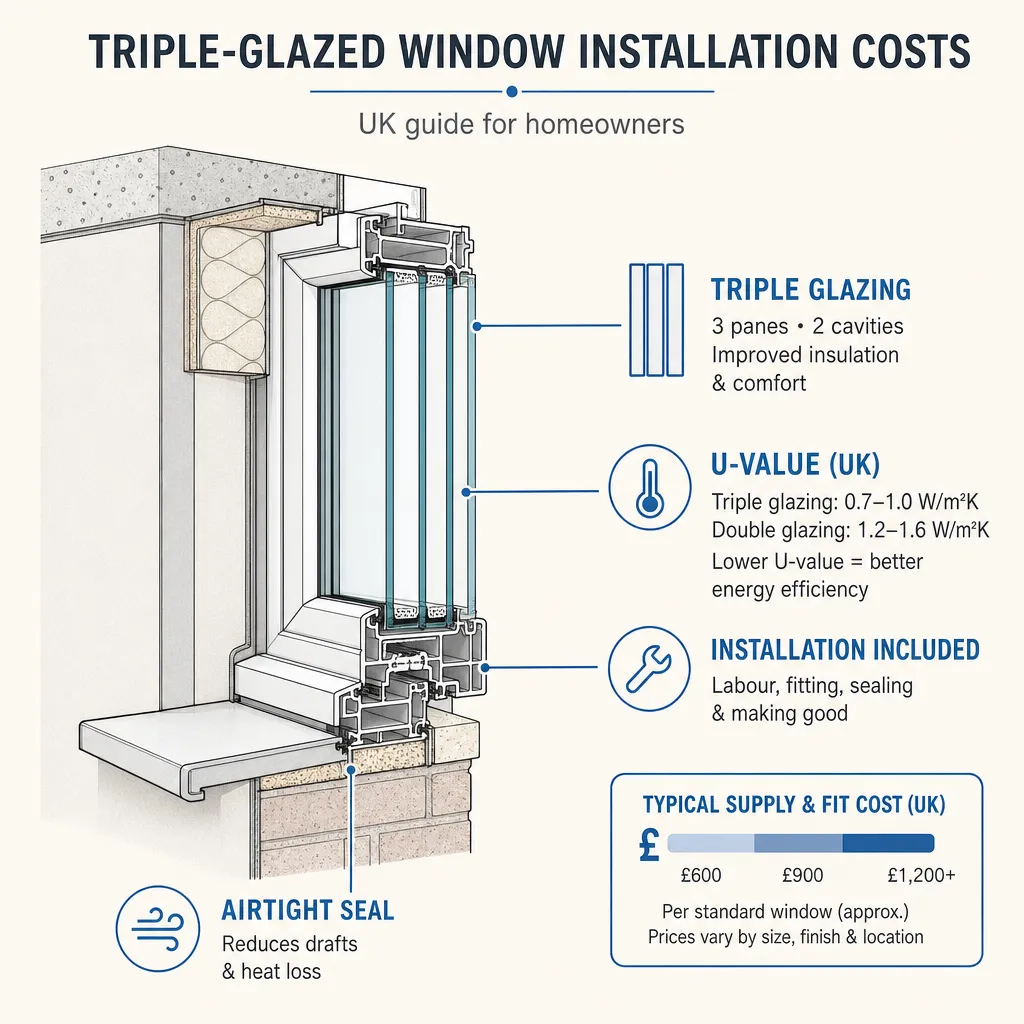
Triple-Glazed Window Installation Costs
Triple-glazed window installation in the UK typically costs £800–£1,800 per window, depending on size, frame material, and glazing specification.
 Improvement & Build
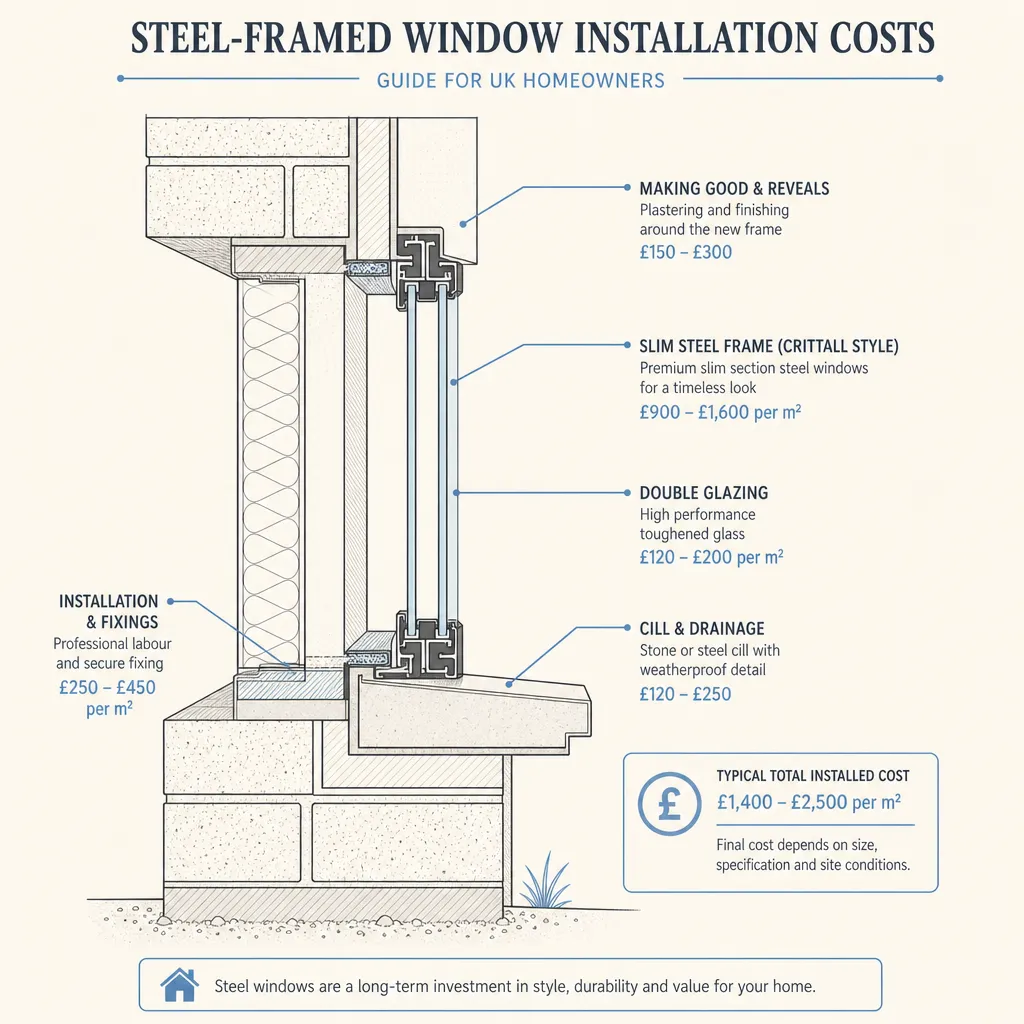
Steel-Framed Window Installation Costs
Steel-framed windows cost between £800 and £3,500 or more per window installed in the UK, depending on size, profile type, glazing specification, and whether old frames need removing.
 Improvement & Build
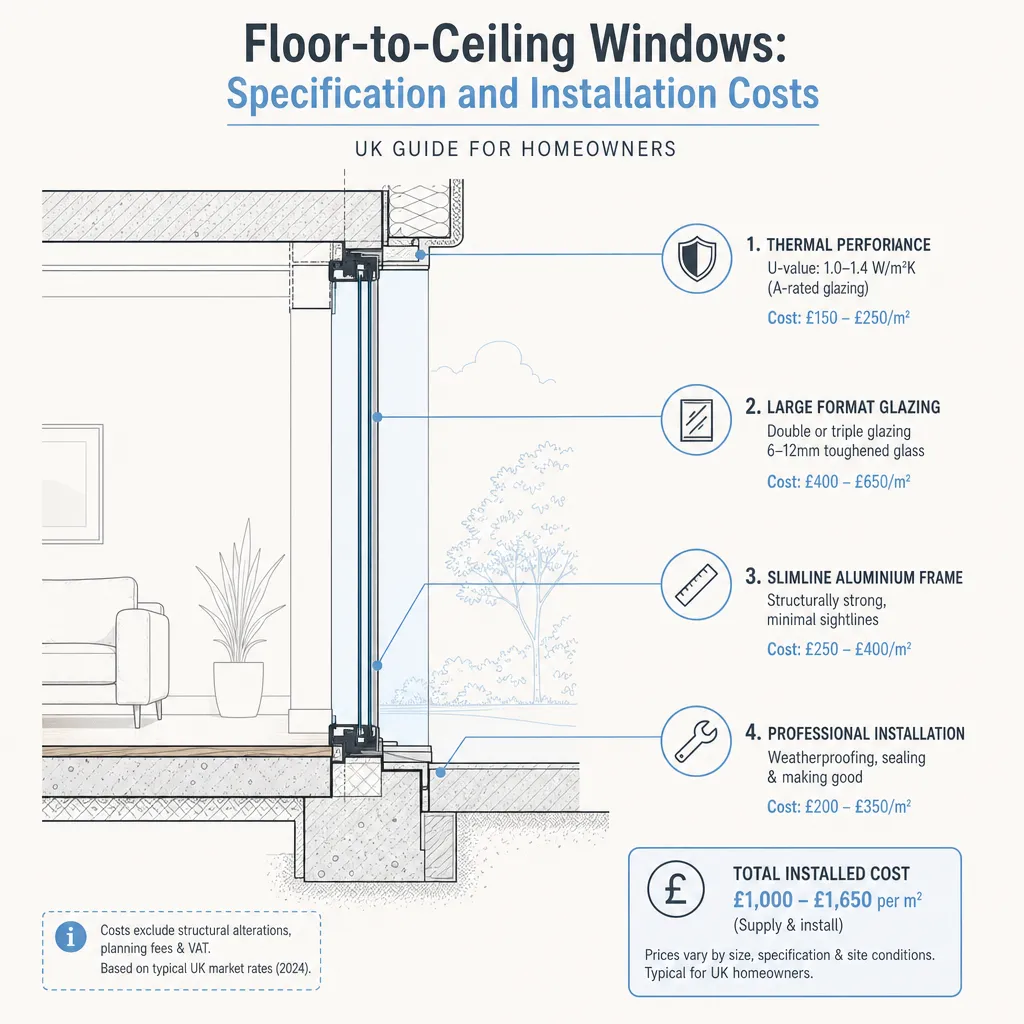
Floor-to-Ceiling Windows: Specification and Installation Costs
Floor-to-ceiling windows in the UK typically cost £1,800–£6,500 per unit installed, depending on glazing type, frame material, and whether structural alterations are needed.
 Improvement & Build
Front Door Lock Types: Choosing the Right Security Solution
The most common UK front door lock types are mortice deadlocks, cylinder rim locks (nightlatches), multi-point locking systems, and smart locks.