Front Door Options: Comparing Materials and Styles for Your Entry
By Housey · Last reviewed 17th of May 2026
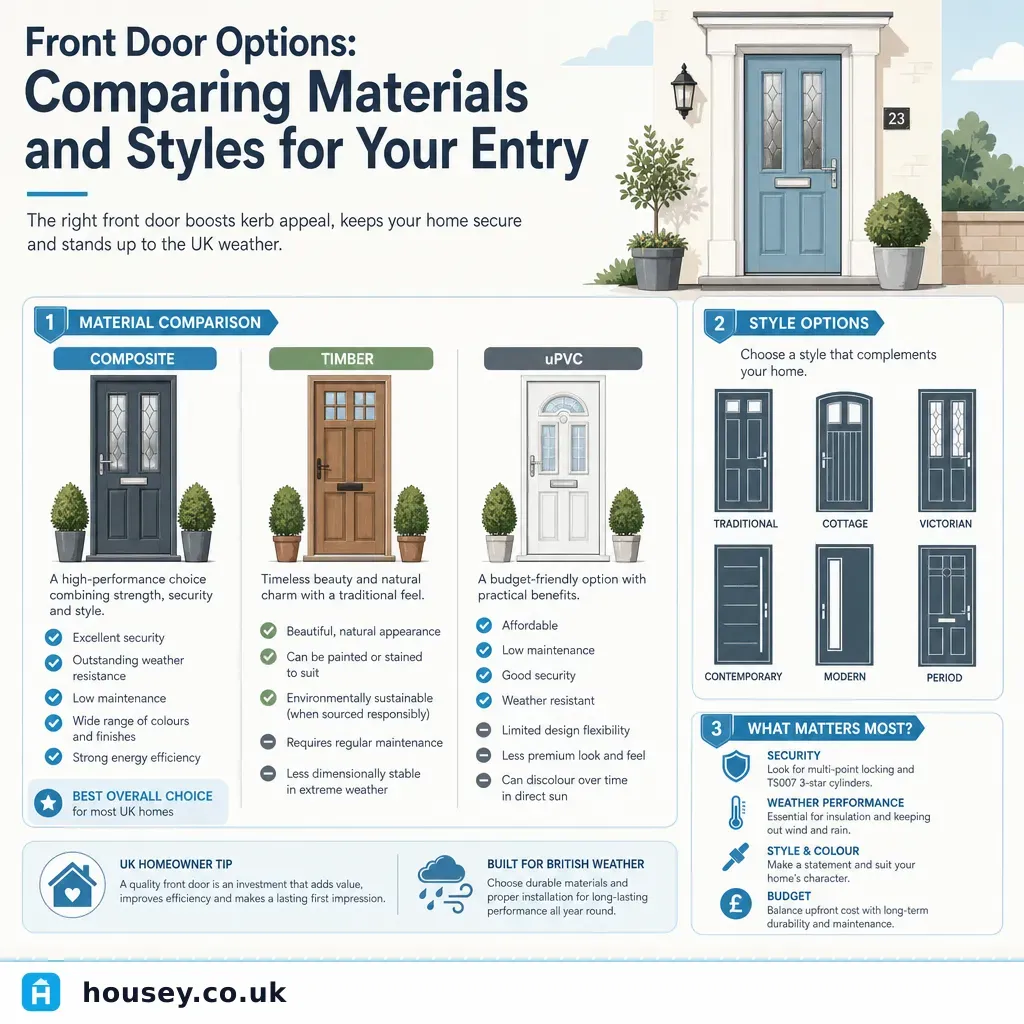
Front Door Options: Comparing Materials and Styles for Your Entry
Choosing a new front door involves more than kerb appeal — it affects energy efficiency, security ratings, planning compliance, and the ongoing maintenance you will face as a homeowner. Whether you are replacing a draughty 1970s door on a 1930s semi or selecting the right style for a Victorian terrace, the material and design you choose will shape how your home looks and performs for decades.
Key points
- Replacement front doors containing glazing in England and Wales must comply with Building Regulations Part L (thermal performance) and be installed by a FENSA-registered company or covered by a local authority building notice.
- Building Regulations require a minimum U-value of 1.4 W/m²K for replacement external doorsets under Part L (2021, England).
- PAS 24:2022 is the enhanced security standard for external doors and windows; doors bearing this certification have passed independent forced-entry resistance testing.
- Composite doors combine a glass-reinforced plastic (GRP) outer skin with a rigid foam core, offering low maintenance and reliable thermal performance in a single product.
- In conservation areas and on listed buildings, even a like-for-like door replacement may require planning permission or listed building consent — confirm with your local planning authority before ordering.
Which door material is right for you?
The main front door materials each have distinct characteristics. Understanding the trade-offs before requesting quotes avoids costly mistakes later.
Material | Best for | Maintenance | Typical U-value range | Main limitation |
|---|---|---|---|---|
Composite (GRP) | Most homes; period character with modern performance | Very low — wipe clean | 1.0–1.3 W/m²K | Higher upfront cost; limited bespoke sizing options |
Timber (hardwood or engineered) | Victorian, Edwardian, and listed properties | Moderate — repaint or re-oil every 5–10 years | 1.2–1.8 W/m²K (frame-dependent) | Seasonal swelling and shrinkage; ongoing maintenance required |
uPVC | Budget-conscious replacements; 1980s–90s homes | Very low | 1.0–1.4 W/m²K | Harder to repaint; perceived as less premium aesthetically |
Aluminium | Contemporary new-build homes; large glazed panels | Low | 1.2–1.6 W/m²K (thermally broken frame essential) | Higher cost; a thermal break is non-negotiable in the UK climate |
Steel | High-security or minimalist design settings | Low | Varies significantly | Price; usually requires specialist installation |
A note on timber: engineered timber (a stable core with hardwood veneer) generally outperforms solid timber in variable UK weather. For conservation areas and listed buildings, timber — or a high-quality timber-effect composite — is often the only materially acceptable choice.
Which style suits your property era?
Door style should respond to the period and character of your home. Fitting a contemporary flush door to a Victorian terrace, or a traditional raised-panel door to a 2000s new-build, can look visually incongruous and may affect resale appeal.
Decision tree — door style by property era:
- Choose a raised panel or four-panel timber or composite if your home is Victorian (pre-1914) or Edwardian — the proportions echo the original architectural style.
- Choose a panelled composite or hardwood door with sidelights if your home is a 1930s semi-detached — geometric leaded glazing is period-appropriate and widely available.
- Choose a flush or part-glazed composite or aluminium door if your home is a 1970s–1990s estate house or new-build — clean lines suit modern construction better.
- Choose solid timber or high-quality timber-effect composite if your property is listed or in a conservation area — and confirm with your local planning authority before ordering.
- Ask a specialist door installer if your opening is non-standard in size, if you want bespoke ironmongery, or if the frame reveal is unusually deep or shallow.
Security: what to look for
Security is one of the most practical reasons to replace an older front door. Older timber doors often have single-point locking and outdated hinges that offer limited resistance to forced entry.
Look for doors and frames that meet PAS 24:2022, which defines enhanced security performance requirements including cyclic loading and forced-entry resistance testing. The Secured by Design accreditation — a UK police initiative — indicates products that meet PAS 24 and additional criteria, and is a useful shorthand when comparing suppliers.
Multi-point locking (securing the door at three or more points along the edge) is standard on most modern doors. Cylinder locks should be anti-snap, anti-pick, and anti-drill — look for those meeting TS007:2014 3-star or Sold Secure Diamond grade.
Letterboxes can be a vulnerable point; a letterbox restrictor or cage fitted on the interior reduces this risk without affecting outward appearance.
Planning permission and building regulations
For most homes, replacing a front door like-for-like does not require planning permission under Permitted Development. However, check carefully if:
- Your property is in a conservation area — some councils require permission for visible alterations to the principal elevation.
- Your home is a listed building — any alteration, including door replacement, requires listed building consent regardless of whether the change is externally visible.
- You live in a flat — Permitted Development rights for external alterations often do not apply; check with your managing agent or freeholder.
Building Regulations (England): Under Approved Document L (Conservation of Fuel and Power), replacement external doors must achieve a whole-doorset U-value of 1.4 W/m²K or better. The installer must be FENSA-registered (self-certifying compliance) or a building notice must be submitted to your local authority before work starts.
Scotland, Wales, and Northern Ireland each operate under separate building regulations — check the relevant devolved authority for your location.
What to ask before accepting a quote
- Is the installer FENSA-registered, and will they provide a FENSA completion certificate?
- Does the doorset (door and frame combined) meet PAS 24:2022 for security?
- What is the stated U-value for the whole doorset — not just the door panel?
- What clear opening width will the installed door achieve?
- What warranty is offered on the door leaf, frame, seals, and hardware separately?
- Is VAT included in the price? (Standard-rated at 20% for most door supply-and-fit contracts.)
- What happens if the frame reveals or lintel are in worse condition than expected — who covers remediation costs?
- What are the payment terms, and what triggers the final payment?
When to get professional help
For a like-for-like replacement in a standard opening, a reputable FENSA-registered installer is sufficient. Seek additional professional input if:
- The door opening shows cracking, a dropped lintel, or any sign of structural movement — a building surveyor or structural engineer should assess before the door is changed.
- Your property is listed or within a conservation area — consult your local planning authority and consider a specialist joiner with proven heritage experience.
- The existing frame is significantly rotted or the opening has been previously altered — reveal condition and lintel bearing need independent assessment before new installation.
- You are adapting the door opening for accessibility purposes, where Building Regulations Part M may apply.
How Housey can help
Ready to compare quotes? Our network of vetted window and door installers can provide competitive quotations from local specialists who can advise on materials, security accreditations, and compliance with Building Regulations for your specific property type.
Frequently asked questions
Do I need planning permission to replace my front door in the UK?
In most cases, no — replacing a front door on a house is Permitted Development. However, if your home is in a conservation area or is a listed building, you may need planning permission or listed building consent. Always check with your local planning authority before ordering, as rules can vary by area and by the principal elevation affected.
What is the difference between a composite and a uPVC door?
A composite door has a glass-reinforced plastic (GRP) outer skin bonded to a rigid foam or timber core, giving a more solid feel and typically a more attractive appearance than uPVC. uPVC doors have a hollow multi-chamber profile throughout. Composite doors are generally more expensive but offer slightly better thermal performance and greater design versatility across property types.
How long does a front door installation take?
Most front door replacements are completed in a single day — typically two to four hours for a standard opening with a prefabricated doorset. More complex installations involving structural remediation, non-standard sizing, heritage joinery, or listed building requirements will take longer. Your installer should provide a realistic timeline and programme with your written quote.
Will a new front door improve my EPC rating?
It may contribute a marginal improvement, particularly if the existing door is uninsulated or single-glazed. A door replacement alone rarely moves an EPC band — loft insulation, cavity wall insulation, and heating system upgrades typically have a significantly larger impact on the overall energy assessment score.
Sources and further reading
- Building Regulations Approved Document L (2021) — GOV.UK
- FENSA: competent persons scheme for windows and doors — FENSA
- PAS 24:2022 enhanced security performance requirements — BSI Group
- Secured by Design: door and window accreditation — UK Police Initiative
- Planning permission for doors — Planning Portal
Useful next reads
 Improvement & Build
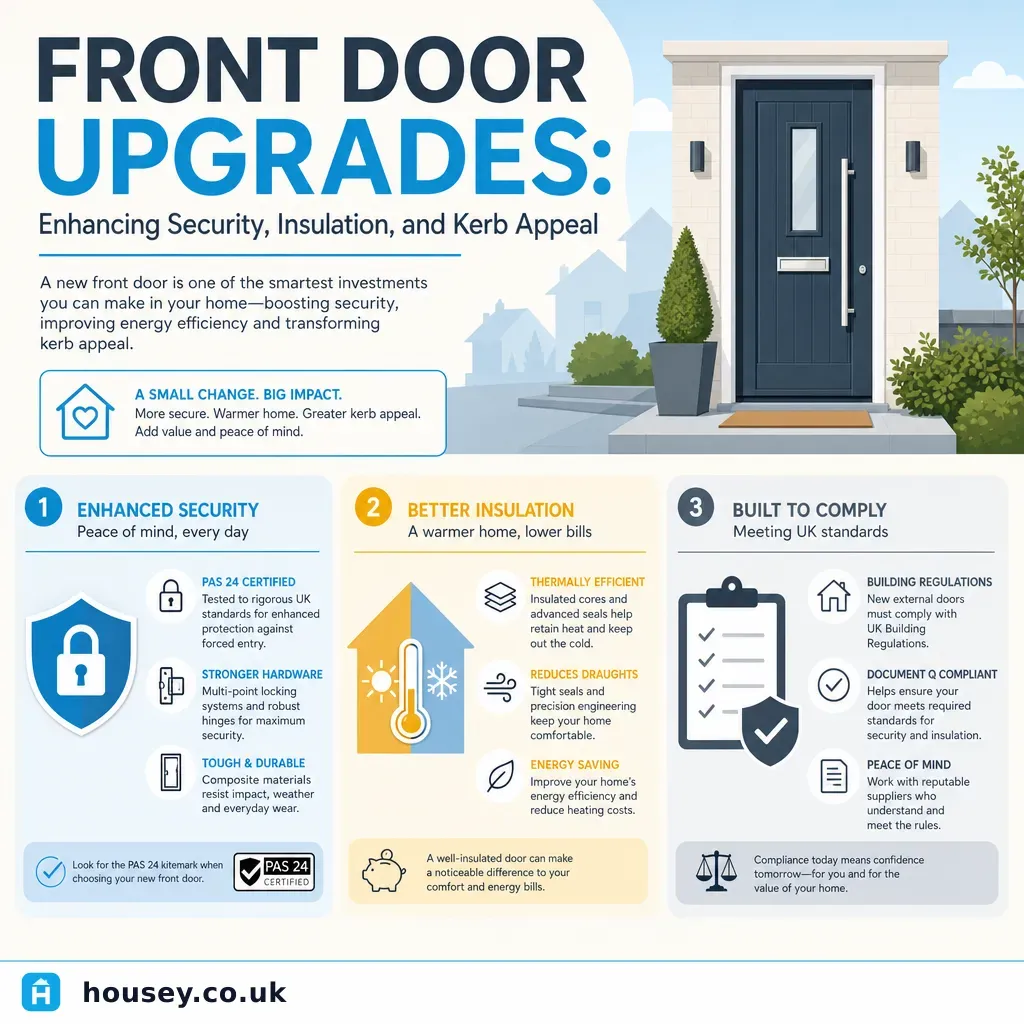
Front Door Upgrades: Enhancing Security, Insulation, and Kerb Appeal
Upgrading a UK front door means choosing a material (composite, timber, uPVC, or aluminium), specifying a PAS 24-certified doorset for security, and meeting Building Regulations Part L's U-value maximum of 1.
 Improvement & Build
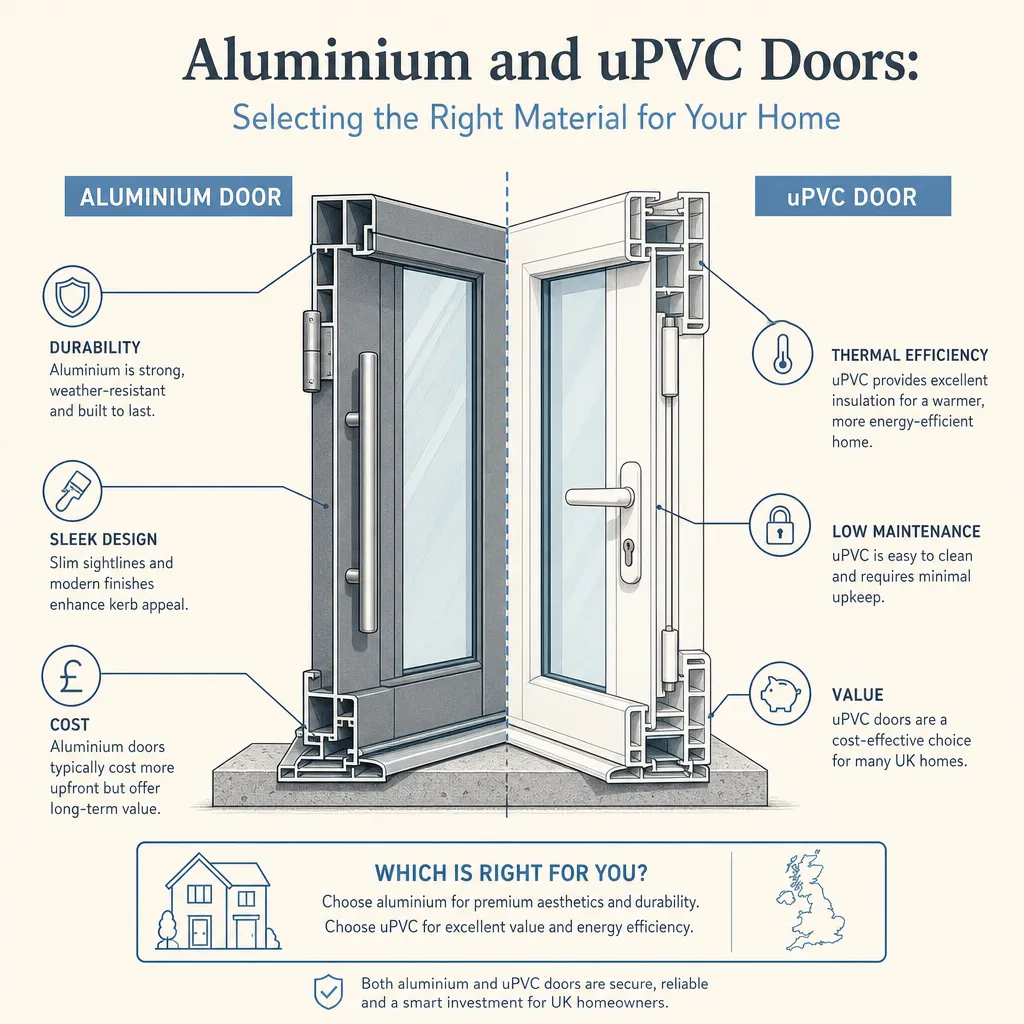
Aluminium and uPVC Doors: Selecting the Right Material for Your Home
uPVC doors are lower-cost and low-maintenance, making them a practical choice for most UK homes.
 Improvement & Build
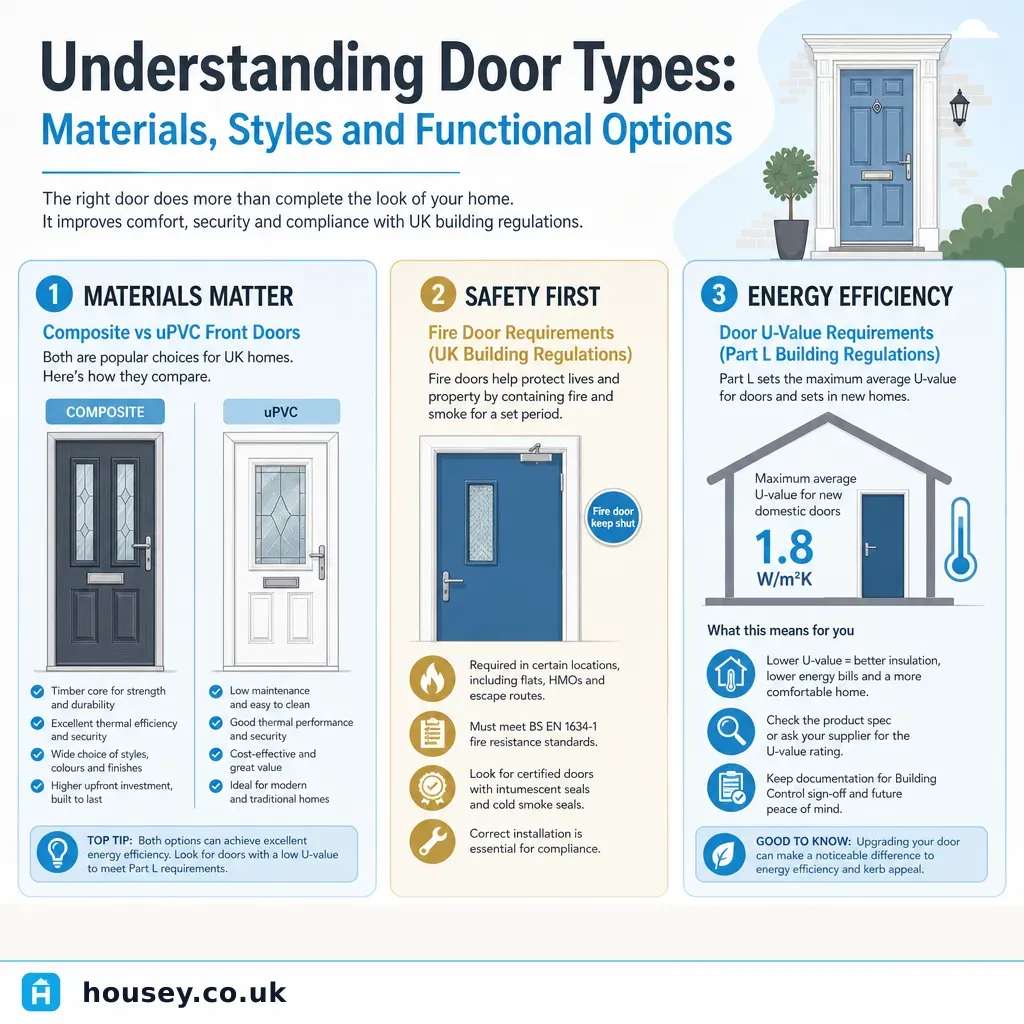
Understanding Door Types: Materials, Styles and Functional Options
Doors are available in timber, uPVC, aluminium, steel, and composite materials, each suited to different budgets, locations, and performance requirements.
 Improvement & Build
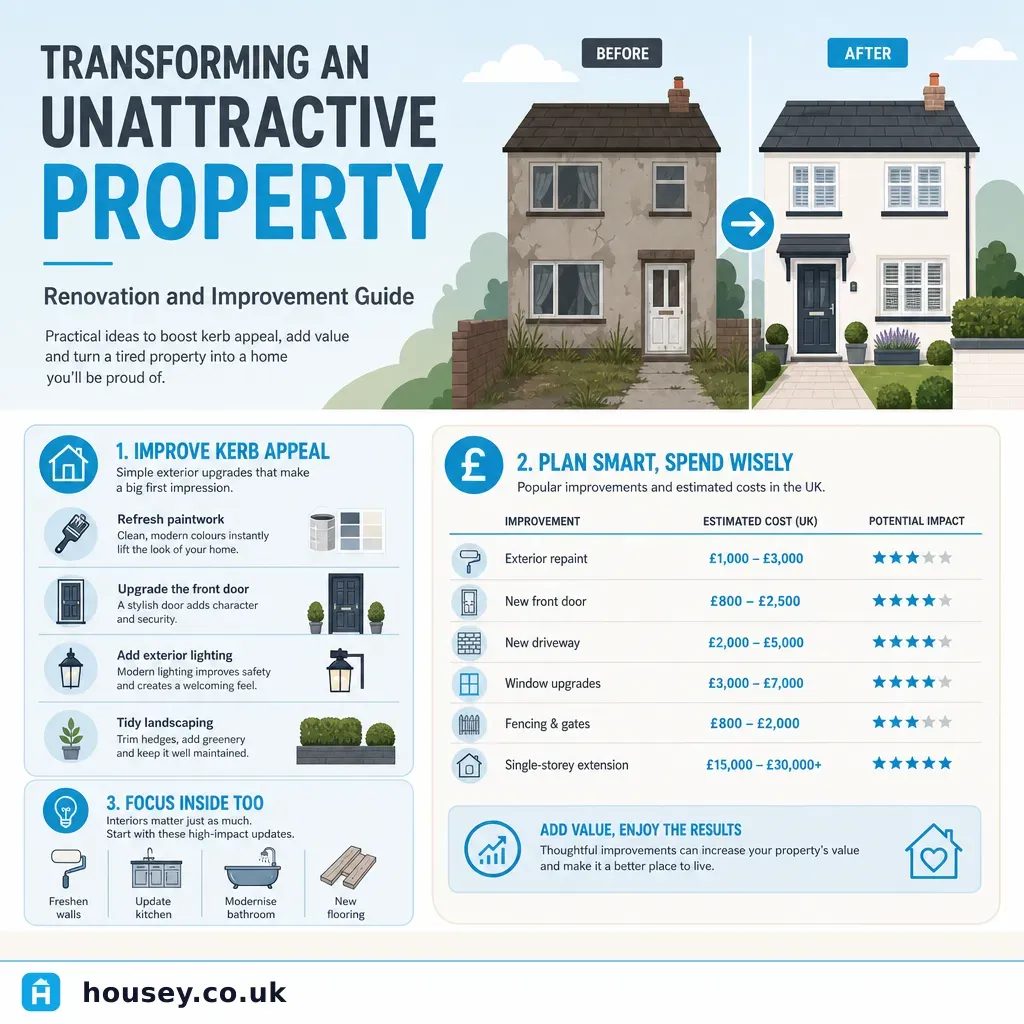
Transforming an Unattractive Property: Renovation and Improvement Guide
Transforming an unattractive UK property usually starts with surface-level improvements — render, windows, doors, and front landscaping — before tackling structural changes like extensions.
 Improvement & Build
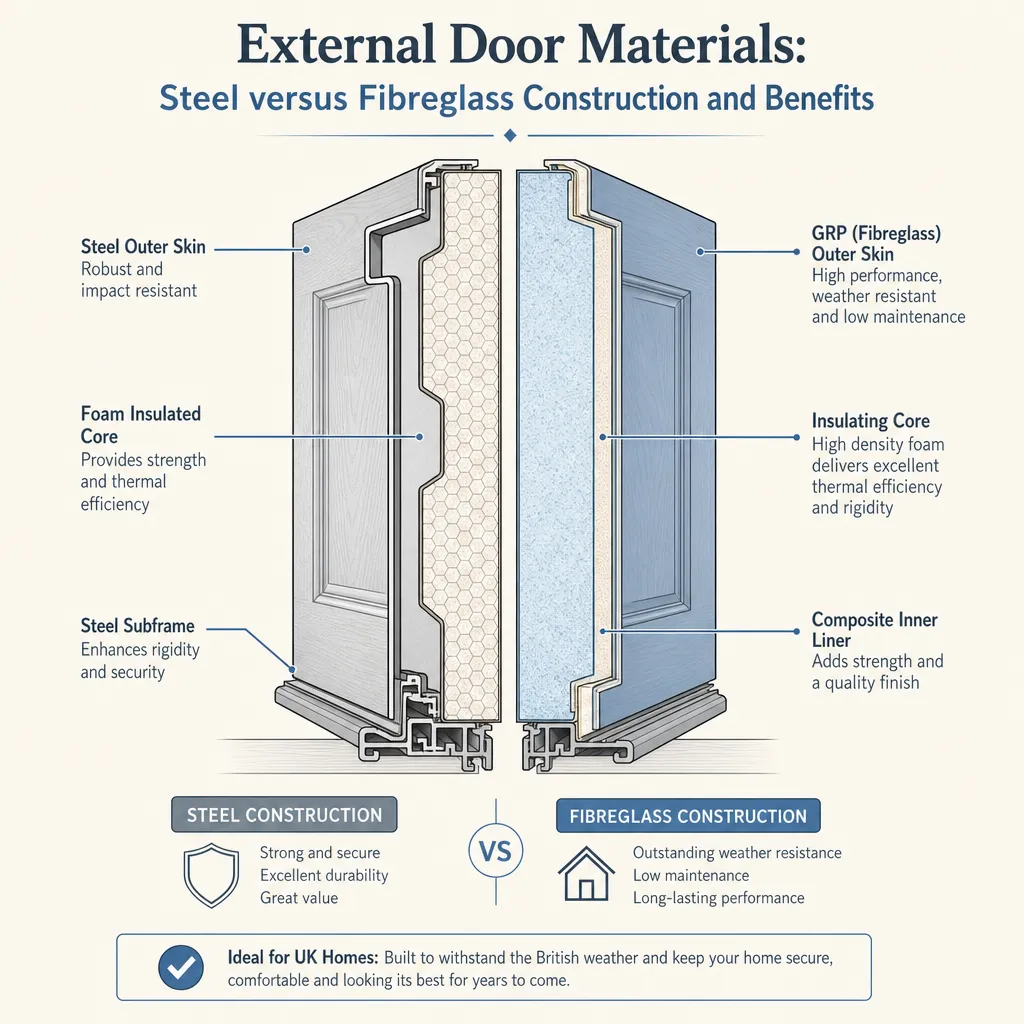
External Door Materials: Steel versus Fibreglass Construction and Benefits
Steel external doors use a cold-rolled steel skin over a foam-filled frame and offer high rigidity and security.