Front Door Upgrades: Enhancing Security, Insulation, and Kerb Appeal
By Housey · Last reviewed 19th of May 2026
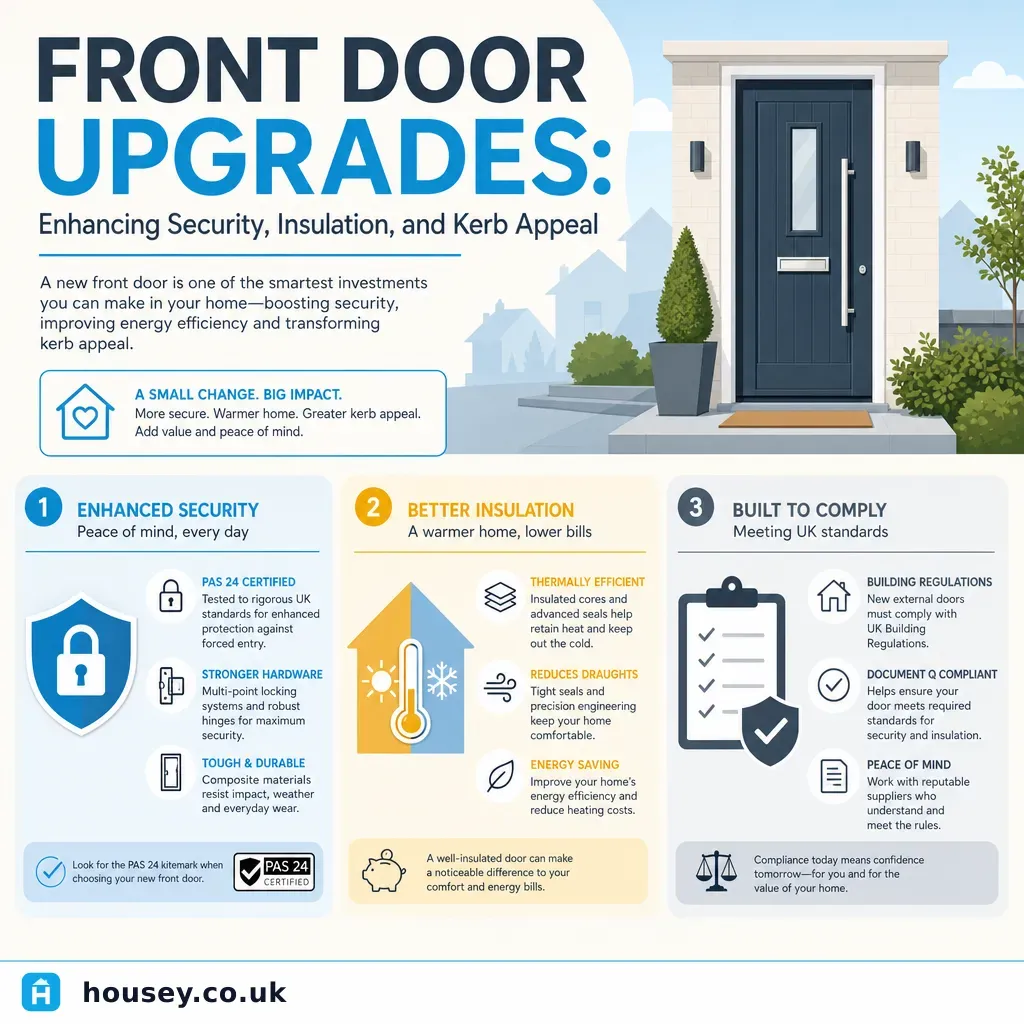
Front Door Upgrades: Enhancing Security, Insulation, and Kerb Appeal
Replacing a front door is often treated as a cosmetic decision, but for most UK homes it simultaneously addresses security gaps, thermal performance, and compliance with current Building Regulations. Homeowners typically reach this decision when an existing door is draughty or deteriorating, when the property is being renovated, or when a buyer's survey or insurer flags outdated locking hardware — and the range of materials, certifications, and planning rules involved is wider than many people expect.
Key points
- Part Q of the Building Regulations (Security – Dwellings) requires all replacement ground-floor entrance doors in England to resist manual attack, with PAS 24:2022 as the primary referenced test standard.
- Part L of the Building Regulations sets a maximum U-value of 1.4 W/m²K for replacement front doors in England under the 2021 edition of Approved Document L.
- FENSA or CERTASS-registered installers can self-certify compliance with Building Regulations Parts L and Q, providing a completion certificate you will need when selling the property.
- Front door replacements in conservation areas may require planning permission, and alterations to doors on listed buildings require Listed Building Consent — check before purchasing a replacement.
- The Secured by Design scheme (administered by UK police) certifies doors meeting enhanced security standards; some insurers offer premium discounts for products carrying this accreditation.
Why a front door upgrade is more than cosmetic
Most UK front doors fitted before 2010 combine significant thermal weakness with outdated locking hardware. A single poorly sealed door can account for a noticeable share of a home's heat loss and draughts. A modern replacement doorset addresses three performance areas simultaneously — security certification, thermal insulation, and visual appearance. Understanding which regulatory requirements apply to your property prevents both enforcement problems and wasted expenditure on non-compliant products.
Security: Part Q and PAS 24:2022
Part Q of the Building Regulations applies to new dwellings and to replacement entrance doors in existing homes in England. It requires doorsets to resist manual attack, with PAS 24:2022 (Enhanced Security Performance Requirements for Doorsets and Windows) as the referenced test standard.
A PAS 24-certified doorset passes tests covering jemmy attack, lock manipulation, cylinder attack, and hinge attack. Critically, PAS 24 certification covers the door as a complete system — leaf, frame, hinges, lock hardware, and any glazing beads. Upgrading only the cylinder on a non-certified door does not achieve PAS 24 compliance.
The Secured by Design scheme offers an additional tier of police-endorsed security certification above the regulatory minimum. Doors carrying the Secured by Design mark have been independently tested to PAS 24 or higher.
What to look for in a secure doorset:
- PAS 24:2022 certification covering the complete doorset.
- Anti-snap, anti-drill, anti-pick cylinder — look for TS007 3-star or Sold Secure Diamond accreditation.
- Multi-point locking with at least three locking points for composite and uPVC doors.
- Anti-jemmy hinge protection or concealed hinges.
- A door chain or viewer if not already fitted.
Thermal performance and Part L compliance
Heat loss through a front door is often greater than homeowners expect, particularly on older timber doors without compression seals or draughtproofing on the threshold. Part L requires replacement doors to achieve a maximum U-value of 1.4 W/m²K in England (2021 edition of Approved Document L for existing dwellings).
Achieving Part L compliance typically requires adequate insulation in a solid door core (polyurethane foam or similar for composite doors), double or triple glazing in any glazed panels, compression weatherstripping all-round, a draughtproofing threshold bar, and a thermally broken frame for aluminium doorsets. Single-glazed panels will substantially worsen the whole-door U-value regardless of how well insulated the solid sections are.
Material options comparison
Material | Typical U-value (W/m²K) | PAS 24 available | Maintenance | Typical lifespan | Best for |
|---|---|---|---|---|---|
Composite (GRP outer, foam core) | 1.0–1.4 | Widely available | Very low | 30–35+ years | Most homes; low-maintenance priority |
Solid hardwood or engineered timber | 1.2–2.0 | Available | Medium–high (annual treatment) | 50+ years if maintained | Period homes; conservation areas |
uPVC | 1.2–1.8 | Widely available | Low | 20–25 years | Budget-conscious buyers |
Aluminium (thermal break) | 1.0–1.6 | Available | Low | 40+ years | Contemporary and minimalist styles |
Steel (security-rated) | 0.8–1.4 | LPS 1175 / PAS 24 | Low–medium | 30+ years | High-security requirement |
Indicative values, last reviewed 2026-05-19. Actual U-values depend on glazing percentage, core specification, and frame thermal performance.
Conservation areas and listed buildings
In a conservation area, a like-for-like front door replacement may be acceptable as permitted development, but any change of material, style, or character may require planning permission. Many conservation area appraisals specify acceptable door materials, finishes, and colour palettes. In some areas uPVC is explicitly excluded; in others, only painted timber is permitted.
For listed buildings (Grade I, II*, or II), a front door is part of the listed structure. Any replacement, alteration, or repainting requires Listed Building Consent (LBC) from the local planning authority. Proceeding without LBC is a criminal offence and may require the work to be reversed at the owner's expense.
If the property is a leasehold flat, written consent from the landlord or freeholder for external alterations is usually required under the lease — check before ordering.
Decision guide: do you need to check before installing?
- Install freely (subject to Part Q and Part L compliance) if: you own a freehold house with no planning restrictions in a standard residential area.
- Check with your local planning authority first if: your home is in a conservation area, an Article 4 Direction area, or permitted development rights have been removed by a planning condition.
- Apply for Listed Building Consent if: your home is on the statutory list (searchable via the Historic England National Heritage List for England).
- Get freeholder or landlord written consent if: you own a leasehold property — external alterations almost always require this under the lease.
What to ask before accepting a quote
- What is the U-value of the complete doorset including any glazed panels, and does it achieve 1.4 W/m²K or better?
- Is the doorset PAS 24:2022 certified — can you provide the certificate?
- Is your company FENSA or CERTASS registered, and will you self-certify and provide a Building Regulations certificate on completion?
- What cylinder is supplied, and does it meet TS007 3-star or Sold Secure Diamond rating?
- Is VAT included in the quoted price?
- What product guarantee and workmanship guarantee do you offer, and for how long?
- Does the quote include removal and disposal of the existing door and frame?
When to get professional help
Professional installation by a FENSA or CERTASS-registered company is recommended for most homeowners. A poorly fitted door — regardless of product quality — will undermine both security and thermal performance if the frame is not correctly plumbed, seals are not continuous, or the threshold is not properly weatherproofed.
Seek professional advice before proceeding if:
- The existing door frame shows rot, structural movement, or damp in the surrounding brickwork or lintel.
- You want to change the door opening size or position, which may require structural approval and potentially planning permission.
- The property is in a conservation area or is listed.
- The lease or title documents contain restrictions on external alterations.
How Housey can help
Housey connects UK homeowners with vetted local window and door installers who are FENSA or CERTASS registered and experienced across the full range of front door materials and specifications. Whether you are replacing a straightforward front door or navigating a conservation area restriction, Housey can match you with qualified installers in your area.
Frequently asked questions
Does a replacement front door need Building Regulations approval in England?
Yes. A replacement front door must meet Part L (maximum U-value of 1.4 W/m²K) and Part Q (PAS 24 security standard). FENSA or CERTASS-registered installers can self-certify compliance and provide a completion certificate. Keep this certificate as you will need it when selling the property.
What is the difference between PAS 24 and Secured by Design?
PAS 24:2022 is the test standard referenced in Building Regulations Part Q for enhanced security performance. Secured by Design is a UK police-backed certification scheme requiring products to meet or exceed PAS 24. All Secured by Design-certified doors comply with PAS 24, but not all PAS 24-certified products carry Secured by Design accreditation.
How long does a composite front door last?
A quality composite door, correctly installed and with basic maintenance — cleaning seals, lubricating hinges — typically lasts 30–35 years or more. The primary wear items are the door seals and the cylinder. Reputable products carry 10-year structural guarantees; check this is included before purchasing.
Can I paint my front door any colour in a conservation area?
Not necessarily. Many conservation area appraisals specify approved colour palettes or require prior approval for paint colour changes on primary elevations. Some areas have Article 4 Directions that remove permitted development rights for external alterations. Check your local planning authority's conservation area guidance or contact the authority directly before repainting or replacing.
Will a new front door significantly reduce my energy bills?
A replacement door reduces draughts and heat loss through the door itself, but doors typically account for a smaller share of total home heat loss than walls, roof, and windows. The most significant benefit is usually draught elimination. For greater energy savings, also consider wall insulation, loft insulation, and upgrading glazing.
Sources and further reading
- Approved Document Q: Security – Dwellings — GOV.UK / MHCLG
- Approved Document L: Conservation of Fuel and Power (2021 edition) — GOV.UK / MHCLG
- FENSA: Fenestration Self-Assessment Scheme — FENSA
- Secured by Design: Doors and Windows — UK Police Crime Prevention Initiatives
- Historic England: Owning a Listed Building — Historic England
- PAS 24:2022 Enhanced Security Performance Requirements for Doorsets and Windows — BSI British Standards
Useful next reads
 Improvement & Build
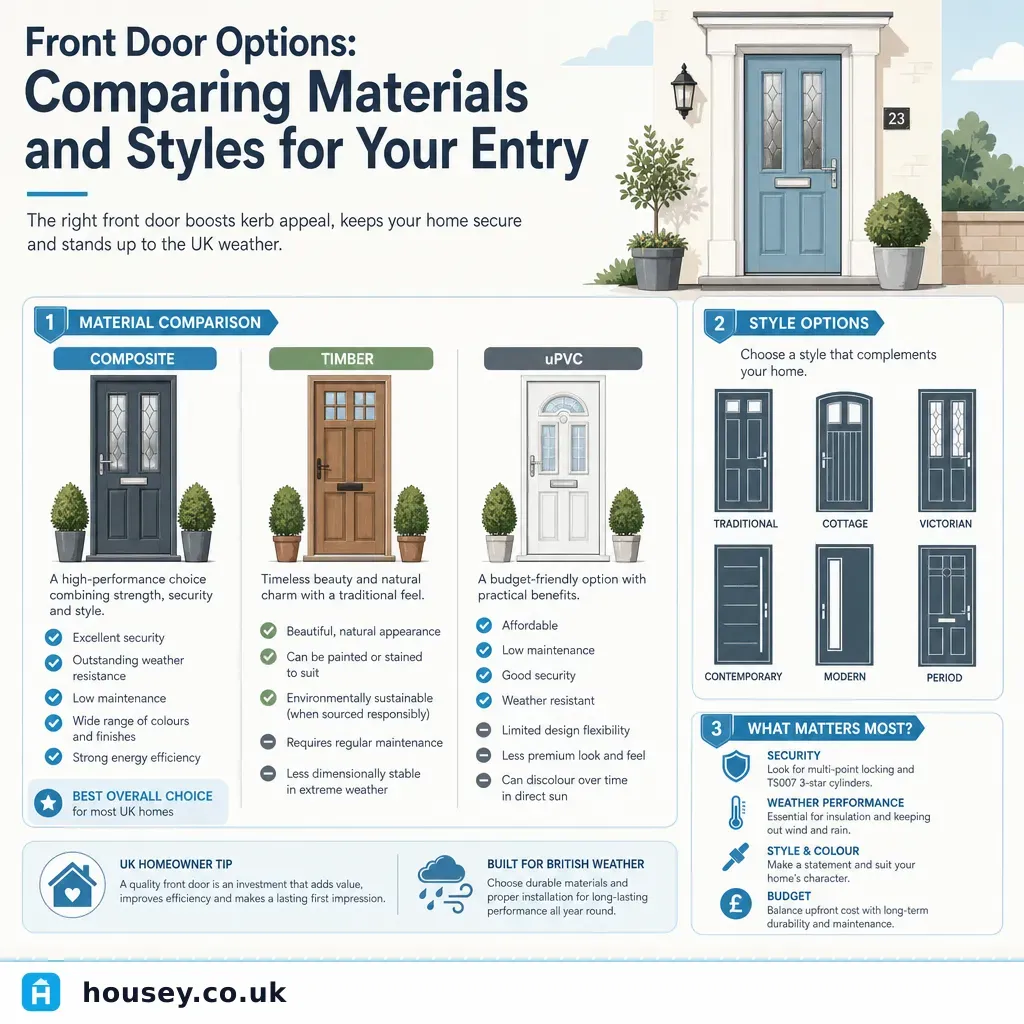
Front Door Options: Comparing Materials and Styles for Your Entry
Replacing a front door in the UK means choosing between composite, timber, uPVC, or aluminium — each with different maintenance demands, thermal performance, and costs.
 Improvement & Build
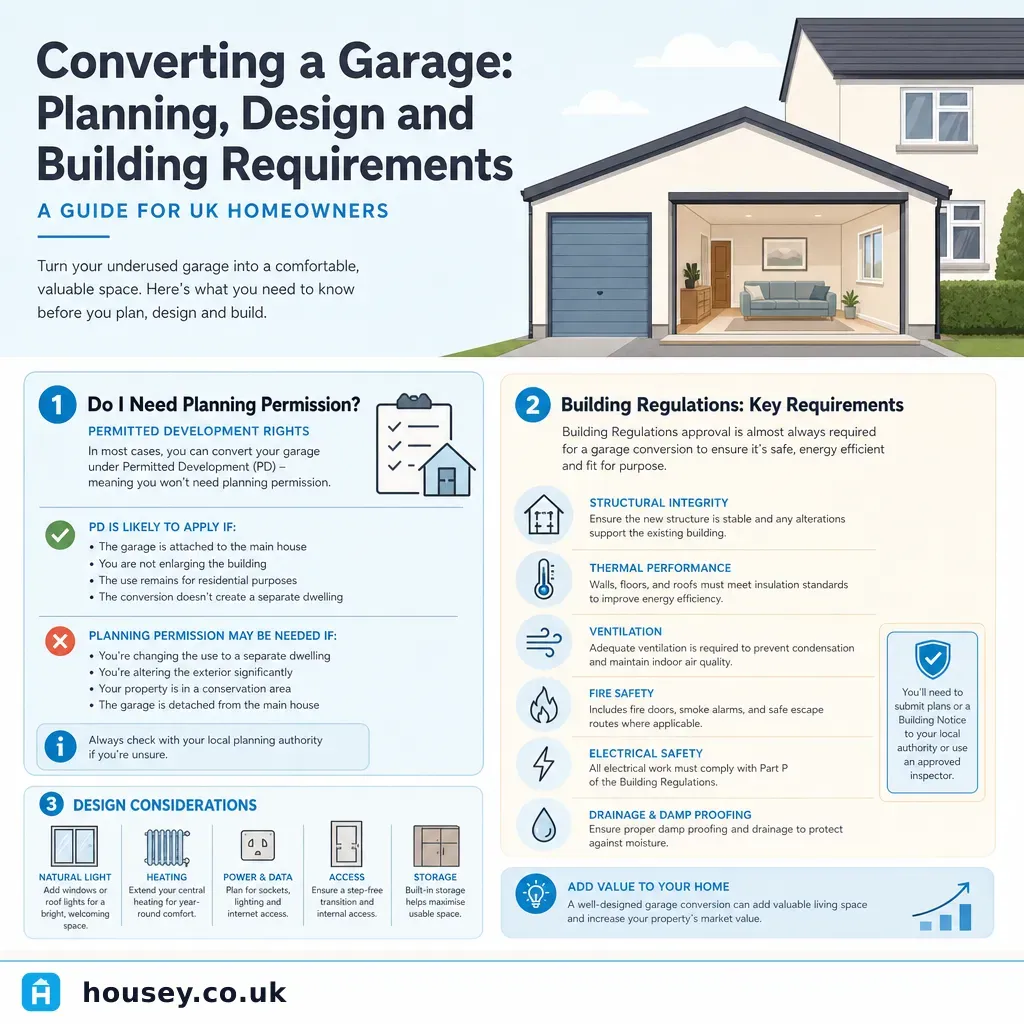
Converting a Garage: Planning, Design and Building Requirements
Most garage conversions in England do not need planning permission under permitted development rights, but all conversions require Building Regulations approval covering structure, thermal insulation, fire safety, and ventilation.
 Improvement & Build
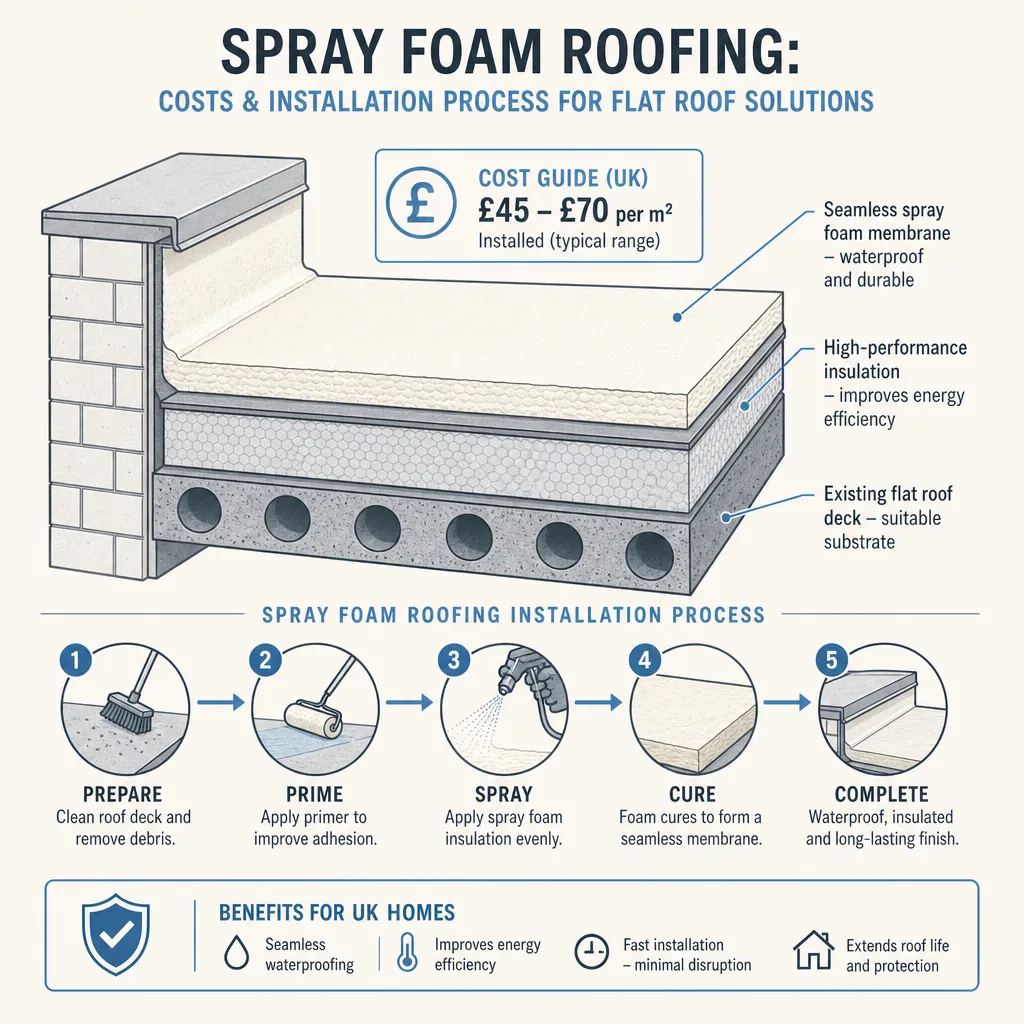
Spray foam roofing: costs and installation process for flat roof solutions
Spray foam roofing for a domestic flat roof in the UK typically costs between £70 and £120 per square metre including preparation, foam application, and UV-protective topcoat, though prices vary with roof size, access, existing substrate condition, and region.
 Improvement & Build
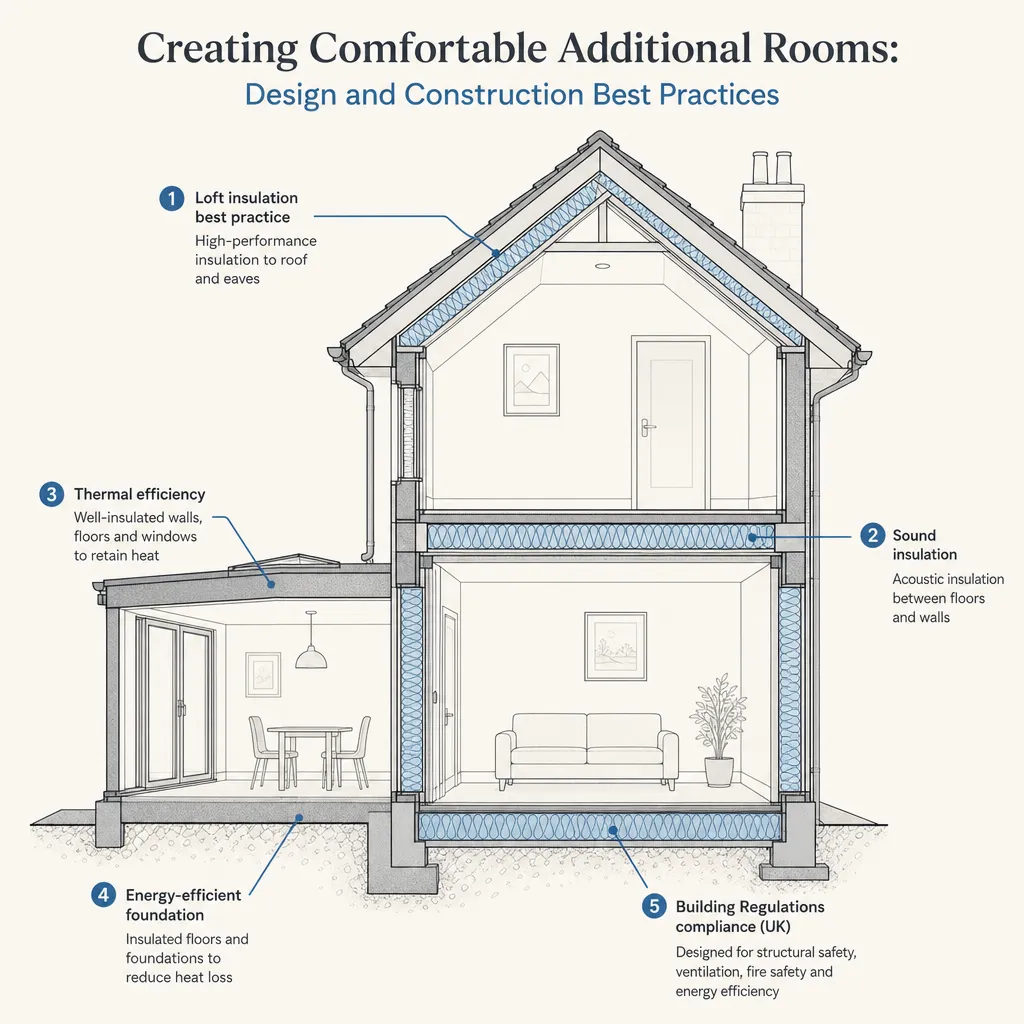
Creating Comfortable Additional Rooms: Design and Construction Best Practices
Comfortable additional rooms require coordinated attention to thermal insulation, airtightness, acoustic separation, daylighting, and ventilation from the design stage.
 Improvement & Build
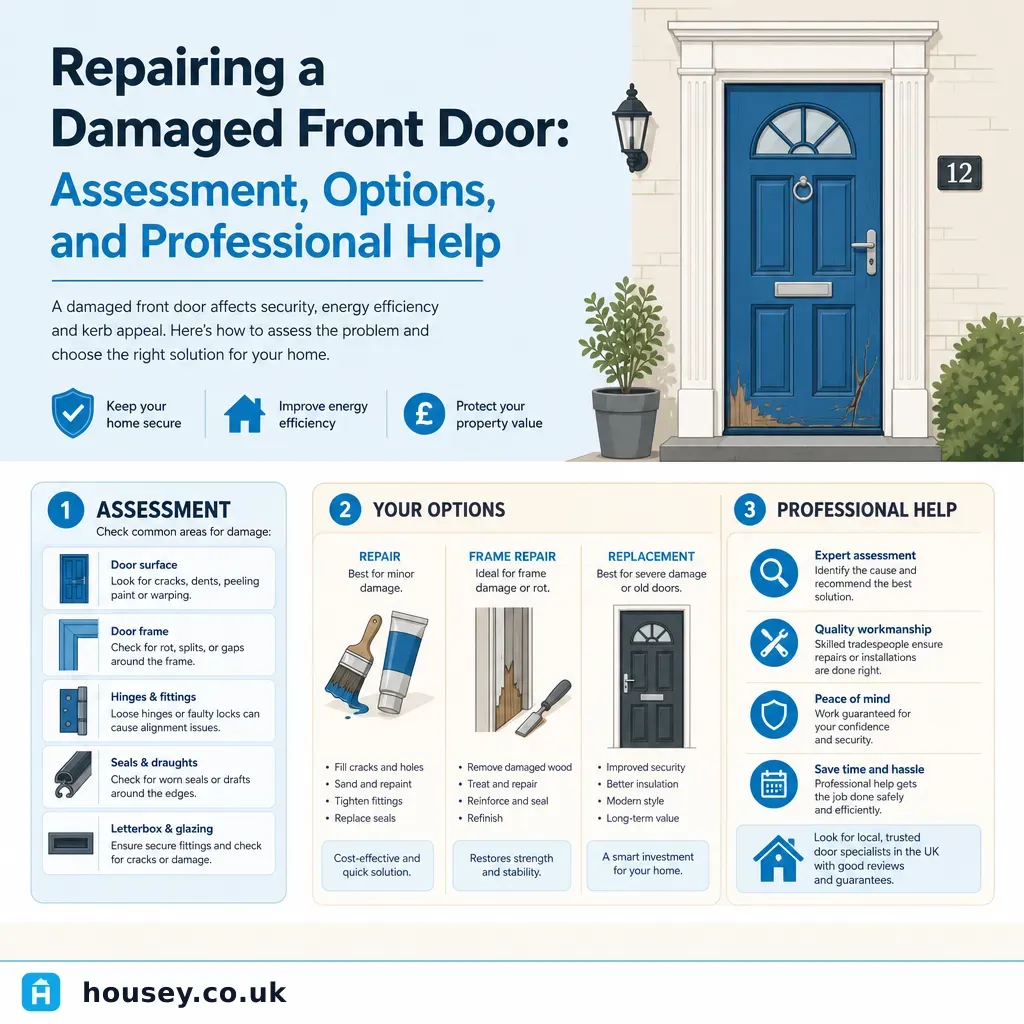
Repairing a Damaged Front Door: Assessment, Options, and Professional Help
A damaged front door may need repair, partial replacement, or full replacement depending on what has failed — the door panel, the frame, the locks, or the threshold.