Repairing a Damaged Front Door: Assessment, Options, and Professional Help
By Housey · Last reviewed 18th of May 2026
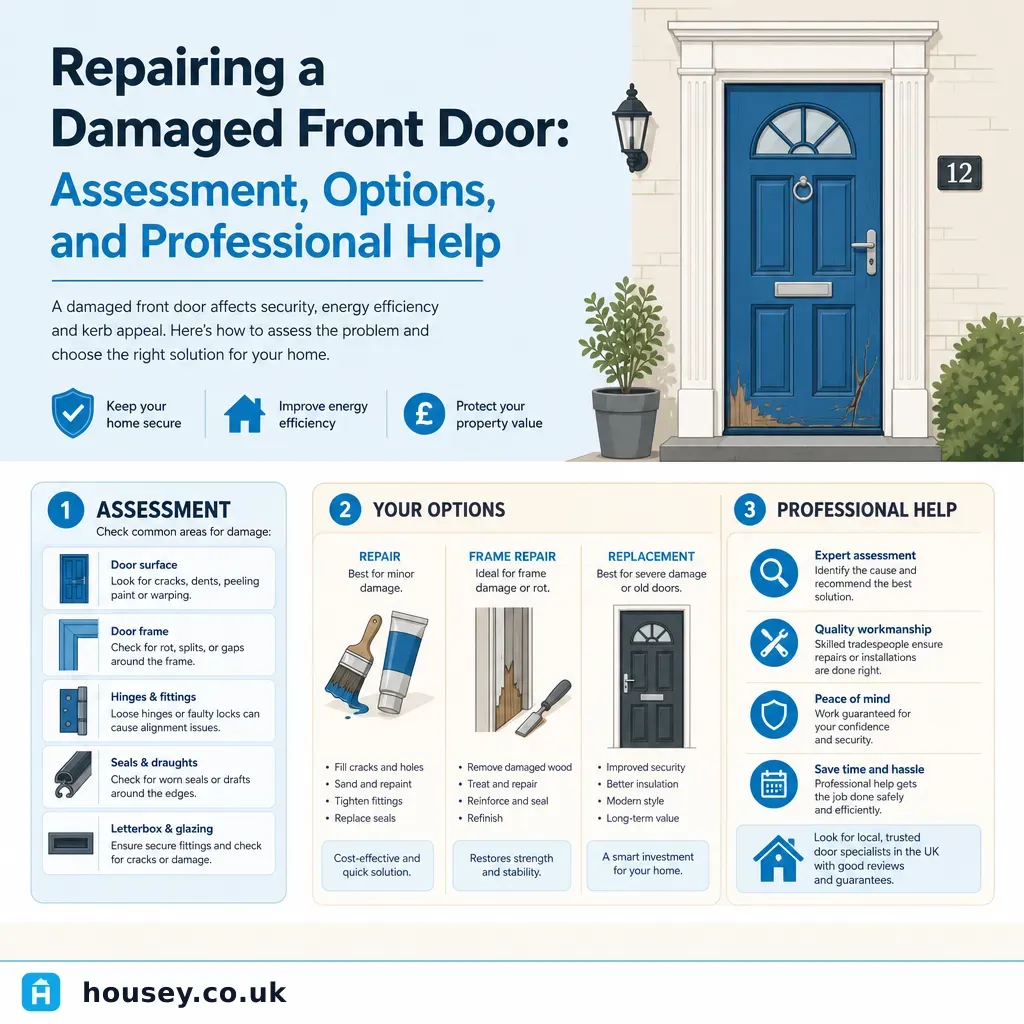
Repairing a Damaged Front Door: Assessment, Options, and Professional Help
A damaged front door is more than an aesthetic problem. It is often the first line of defence for your home's security, a significant factor in heat retention, and — in many properties — a visible indicator of the building's overall condition. Whether the damage is cosmetic, structural, or the result of a break-in attempt, understanding what can be repaired and what warrants a full replacement helps you act quickly and spend appropriately.
Key points
- Doors tested to PAS 24:2022 meet the security standard recommended by the Secured by Design initiative — check whether a replacement door carries this accreditation if security is a concern following damage.
- Front door replacement is notifiable building work in England and Wales; use a FENSA or CERTASS-registered installer to self-certify compliance with Building Regulations, or obtain local authority building control sign-off.
- Replacing a front door in a conservation area, or any external door in a listed building, requires consent from your local planning authority before work starts.
- A compromised front door may affect the validity of your home insurance policy — check your policy wording and notify your insurer if the damage is significant while repairs are pending.
- The minimum U-value for a replacement external door under Approved Document L (England) is currently 1.4 W/m²K for solid doors and 1.8 W/m²K for fully glazed doors.
Assessing the damage
Before deciding on repair or replacement, check each part of the door assembly methodically. Damage to the frame is often more significant than it initially appears — particularly after a forced entry attempt.
Parts of the assembly to check:
- Door leaf — the panel itself. Look for splits, cracks, rot (timber), delamination (composite), or significant dents (steel or GRP).
- Door frame and lining — the structural surround fixed to the wall. Frame damage is a key factor; a badly damaged frame often makes full replacement the more practical choice.
- Threshold and weatherbar — the seal at the bottom. Worn or broken thresholds are among the most common sources of draughts and rain ingress.
- Locks and hardware — multipoint locking mechanisms on uPVC and composite doors can often be replaced independently. Lock cylinders can be changed without replacing the door itself.
- Glazing — if the door contains glass panels, check for cracking, seal failure (misting), or breakage.
- Hinges — worn or damaged hinges affect how the door hangs and can be a security weak point. Most hinges can be replaced without a new door.
Decision tree: repair or replace?
- Cosmetic damage only (surface scratches, paint peeling, minor dents)? — Repair and refinish. For timber, sanding, filling, and repainting is straightforward.
- Timber door with localised rot at bottom rail or corner? — Localised repair with epoxy wood filler is possible if structural integrity is maintained. Extensive rot warrants replacement.
- Damaged frame, cracked or split timber surround, or frame pulled away from the wall? — Frame repair or full door-and-frame set replacement. If badly damaged, a full replacement is usually the cleaner solution.
- Door forced or damaged in a burglary? — Have a locksmith or door specialist assess security immediately. The frame is often the weakest point — check it carefully even if the door panel looks intact.
- Composite or uPVC door with cracked or delaminated panel? — Panels are sometimes replaceable within the existing frame; check with the manufacturer or a specialist installer.
- Door over 20 years old with multiple issues? — Full replacement is likely more cost-effective and will bring the door up to current energy and security standards.
- Conservation area or listed building? — Consult your local planning authority before any like-for-unlike replacement.
Repair options by door type
Different door materials have different repair profiles and limitations.
Door type | Common repair options | Limitations |
|---|---|---|
Timber (solid or engineered) | Sanding, filling, repainting; epoxy rot repair; hinge, lock, or letterbox replacement | Extensive rot or structural splits usually require full replacement |
uPVC | Lock and cylinder replacement; hinge adjustment; new gasket and seal; panel replacement within frame | Yellowing and discolouration is difficult to reverse; panel availability depends on the manufacturer |
Composite | Surface refinishing; glazing bead and seal replacement; hardware replacement | Delamination or structural damage to the door slab usually means replacement |
Steel or GRP | Surface rust or gel-coat damage can often be repaired; hardware replacement possible | Severe rust through the skin or major structural dents are rarely economical to repair |
Security considerations after damage
If the door has been physically damaged — particularly after an attempted forced entry — security should be addressed before aesthetics.
- Inspect the door frame and its fixings to the structural wall; this is the most common failure point in burglaries.
- Check the multipoint locking mechanism — on uPVC and composite doors this is often replaceable independently without a full door replacement.
- Consider upgrading the lock cylinder to TS007 3-star (or a 1-star lock with a 2-star handle) if not already in place; this rating is recommended for anti-snap protection by Secured by Design and various crime-prevention bodies.
- Check for hinge bolts — often absent on older timber doors and straightforward to add as an additional security measure.
What to ask a door repair or replacement specialist
Before accepting a quote:
- Is the existing frame sound enough to retain, or do you recommend a full door-and-frame set replacement?
- If replacing: is the replacement door tested to PAS 24:2022?
- Will you handle the Building Regulations notification (FENSA or CERTASS), or do I need to apply separately?
- What are the warranty terms on the door, the hardware, and the installation labour?
- If there is glazing: what U-value and energy rating does the new glazed unit carry?
- Can you provide references from comparable projects in this area?
Red flags: when to act urgently
- The door no longer closes or locks securely — this is an immediate security risk and should be made safe before anything else.
- There is visible daylight or a cold draught through the frame-to-wall junction — indicating frame movement or perimeter seal failure.
- Water is pooling inside the threshold or tracking up the internal flooring — this can damage flooring, skirting, and structural timber if left unaddressed.
- You have notified your insurer about the damage but have not yet made the property secure — most policies require you to take reasonable steps to prevent further loss.
When to get professional help
Superficial cosmetic repairs to a sound timber door — sanding, filling small areas, repainting — are accessible DIY tasks. For anything involving the frame, multipoint locking mechanisms, or security hardware, or for any repair following a break-in, a professional door specialist or locksmith should assess the door before work begins.
How Housey can help
Housey connects you with window and door installers who can assess your front door, advise on repair versus replacement, and supply and fit a security-compliant, energy-efficient replacement where needed — issuing FENSA or CERTASS certification so your building regulations compliance is properly documented.
Frequently asked questions
Is replacing a front door covered by permitted development?
In most cases, replacing a front door at a standard residential property does not require planning permission, as it is generally considered a like-for-like improvement. In conservation areas and for listed buildings, restrictions apply. Always check with your local planning authority before ordering a replacement door.
How much does it cost to repair versus replace a front door in the UK?
Costs vary considerably by door type, extent of damage, and location. Indicative UK costs, last reviewed 2026-05-18: lock cylinder replacement typically ranges from £50 to £150; hinge replacement from approximately £80 to £200 including labour; a new composite door and frame supply and fit varies widely from around £800 to £2,500 or more depending on size, specification, and glazing. Always obtain at least three quotes for your specific property and door type.
Will my home insurance pay for a damaged front door?
This depends on the cause of damage and your policy terms. Damage caused by a burglary is usually covered under buildings insurance, subject to your excess. Gradual deterioration such as rot or wear is typically excluded. Contact your insurer promptly and avoid carrying out permanent repairs before they have assessed the claim if possible.
Do I need a certificate when a new front door is fitted?
Yes. If a new external door is fitted as a regulated replacement — changing the frame or the full assembly — the installation should be notified under Building Regulations. A FENSA or CERTASS-registered installer can self-certify this and issue a certificate. Keep it with your property documents for conveyancing.
Sources and further reading
- Approved Document L: Conservation of Fuel and Power — GOV.UK
- Secured by Design: SBD Homes 2023 — Secured by Design
- FENSA: the Fenestration Self-Assessment Scheme — FENSA
- Planning permission: windows and doors — Planning Portal
Useful next reads
 Improvement & Build
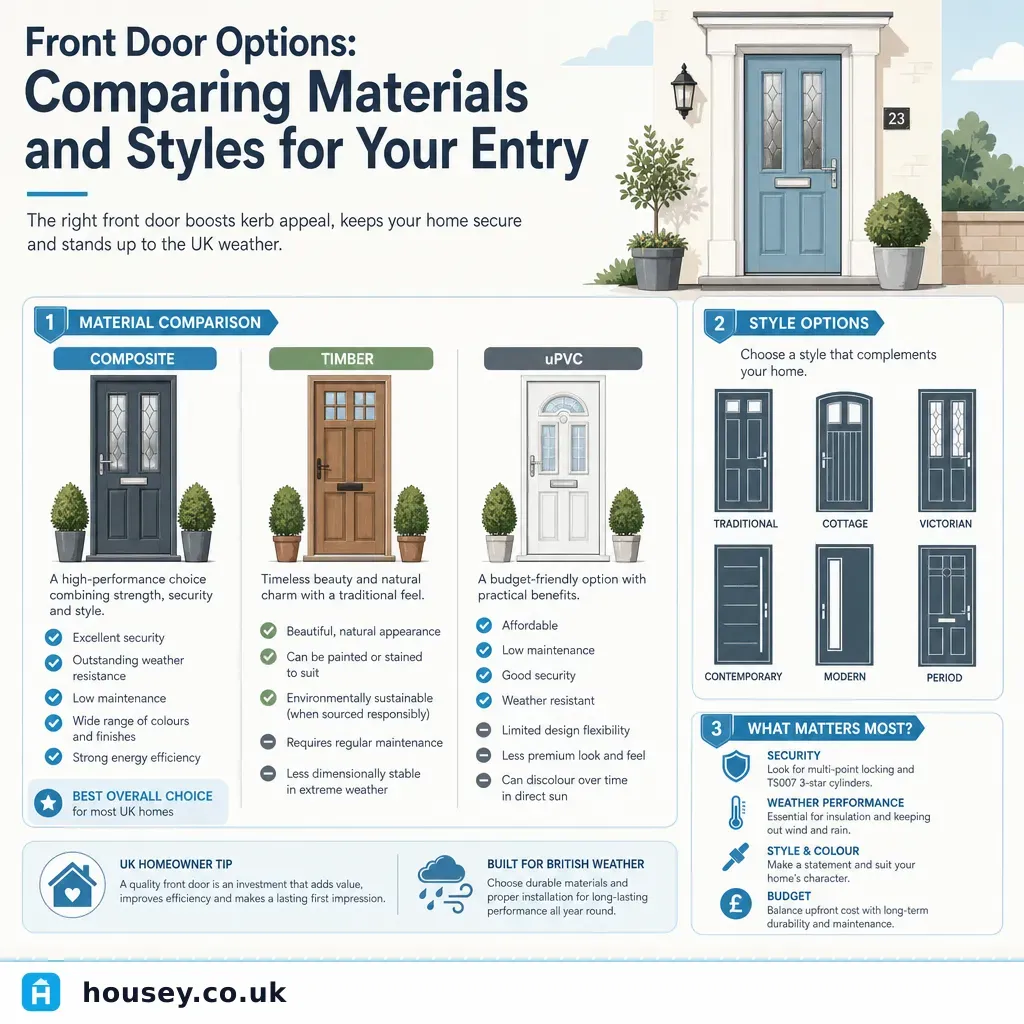
Front Door Options: Comparing Materials and Styles for Your Entry
Replacing a front door in the UK means choosing between composite, timber, uPVC, or aluminium — each with different maintenance demands, thermal performance, and costs.
 Improvement & Build
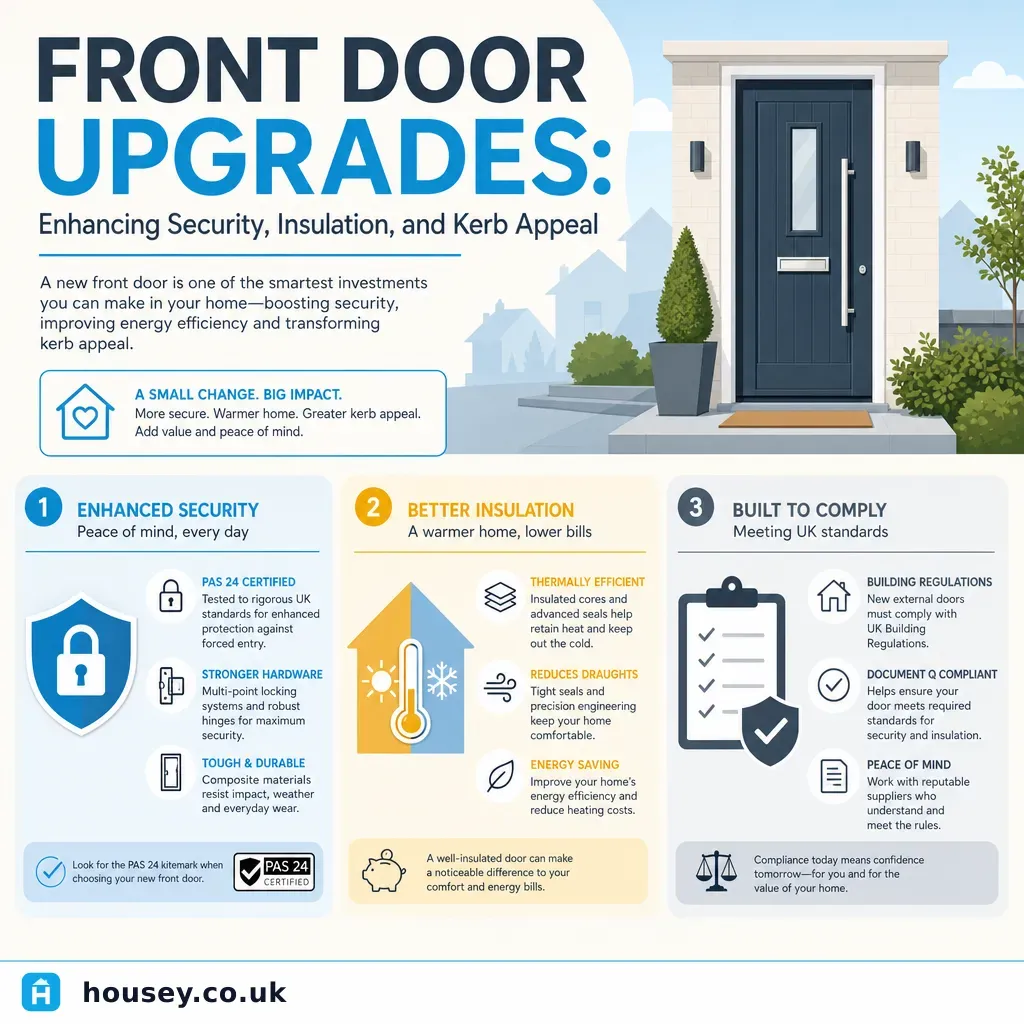
Front Door Upgrades: Enhancing Security, Insulation, and Kerb Appeal
Upgrading a UK front door means choosing a material (composite, timber, uPVC, or aluminium), specifying a PAS 24-certified doorset for security, and meeting Building Regulations Part L's U-value maximum of 1.
 Improvement & Build
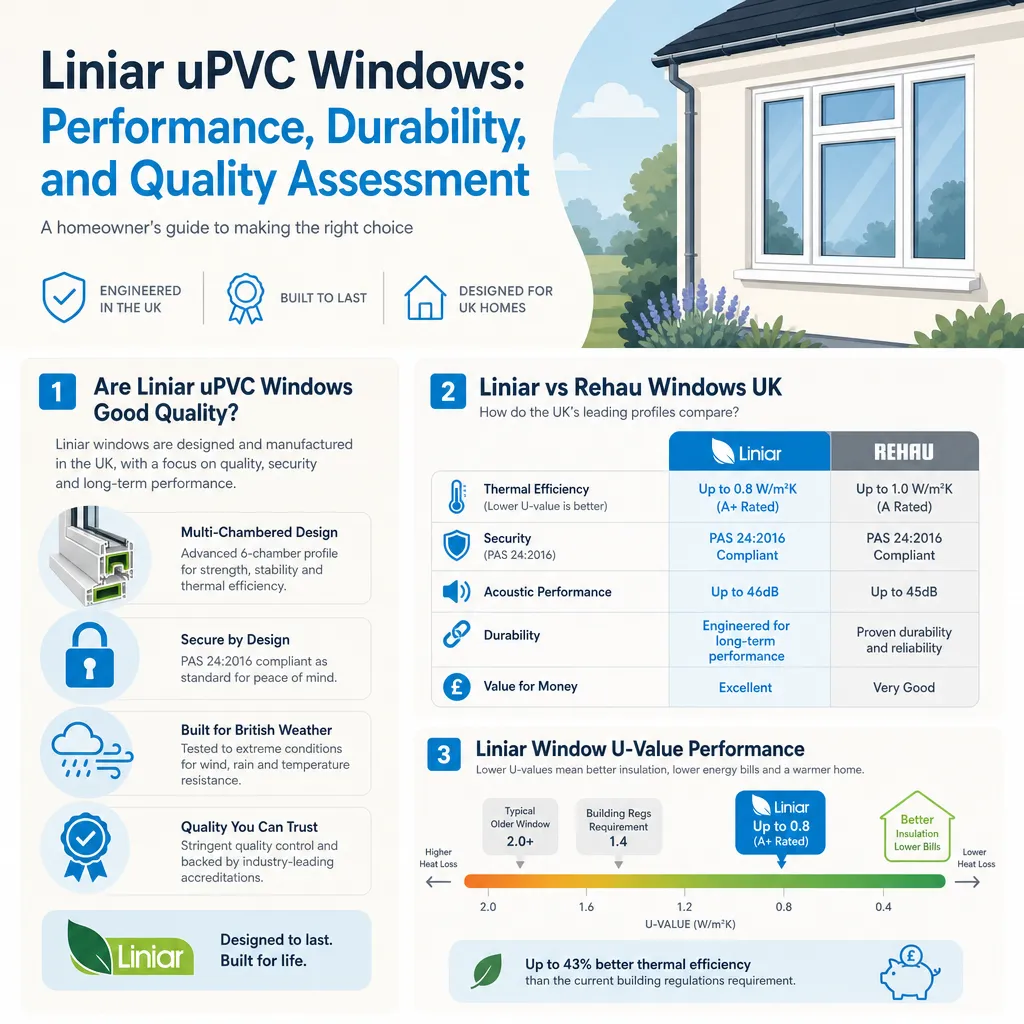
Liniar uPVC Windows: Performance, Durability, and Quality Assessment
Liniar uPVC window profiles are manufactured in the UK using multi-chambered, foamed frames.
 Improvement & Build
Garden Tap Installation with Hot and Cold Water: Plumbing Options
Adding a cold garden tap is a common DIY project, but routing hot water outdoors requires a plumber to connect to your domestic hot water system and comply with the Water Supply (Water Fittings) Regulations 1999.
 Improvement & Build
Sealing and Maintaining Historic Leaded Glass Windows: Preservation and Performance
Leaded glass windows are maintained using traditional linseed oil cement — not silicone or modern sealants, which prevent natural movement in the lead came.