Funding Your Home Energy Improvements: Available Grants and Support
By Housey · Last reviewed 7th of May 2026
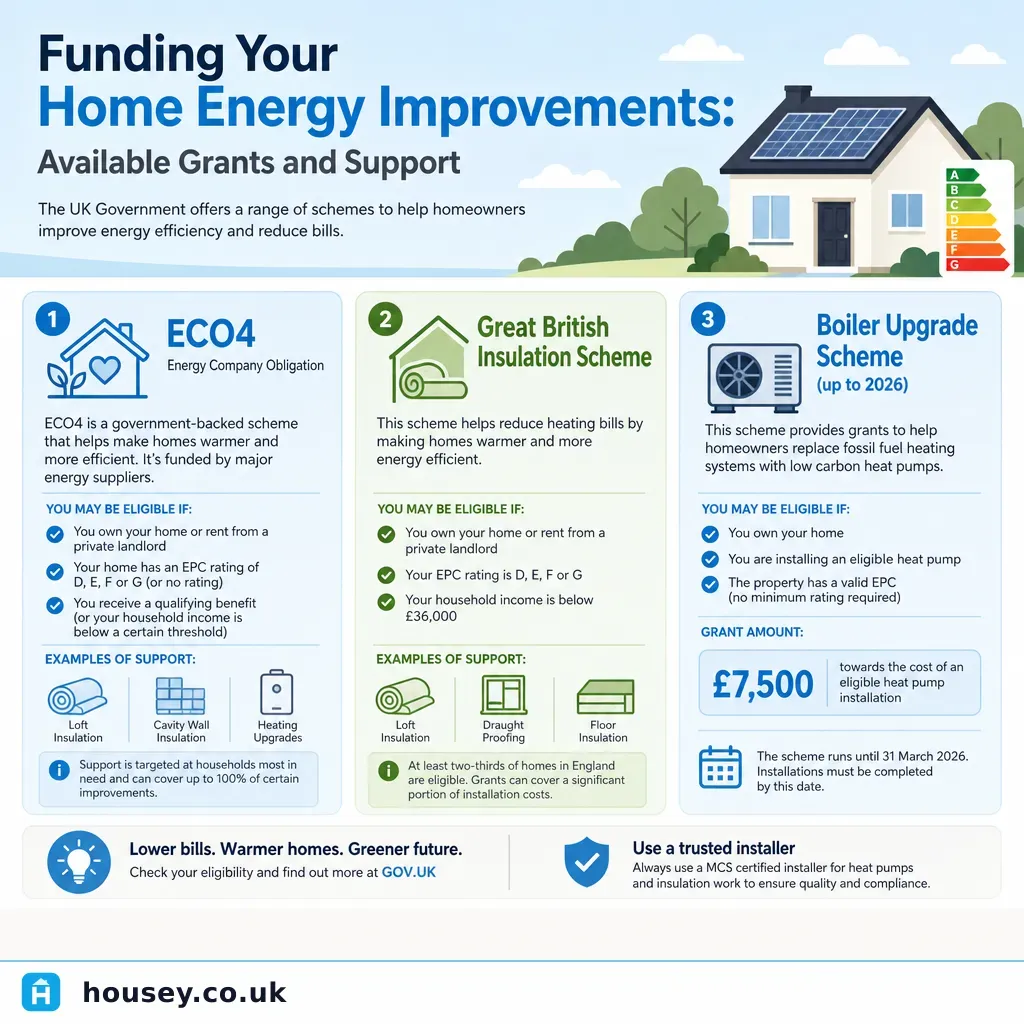
Funding Your Home Energy Improvements: Available Grants and Support
Energy improvement costs in the UK can run to tens of thousands of pounds for a comprehensive retrofit, making grant funding a critical part of the financial picture for many households. Understanding which schemes are available, who qualifies, and what professional assessment is required upfront can save months of wasted applications and help you access support before scheme budgets are committed.
Key points
- The Boiler Upgrade Scheme (BUS) provides a £7,500 grant towards an air source or ground source heat pump, applied at point of installation by an MCS-certified installer — homeowners do not apply directly.
- ECO4 (Energy Company Obligation 4) funds free or heavily subsidised insulation and heating upgrades for households receiving qualifying means-tested benefits or living in properties with EPC ratings of E, F, or G.
- The Great British Insulation Scheme (GBIS) targets homes in EPC bands D–G, offering subsidised insulation regardless of benefit status, though lower-income households receive priority funding.
- PAS 2035 — the UK retrofit standard — requires a qualified Retrofit Assessor and Retrofit Coordinator for all measures funded under ECO4 and GBIS; installers without this accreditation cannot access these schemes.
- The Warm Homes Plan, announced by the UK Government in 2024, commits £13.2 billion to domestic energy efficiency improvements through to 2029, with successor arrangements to ECO4 and GBIS being confirmed progressively.
The main grant schemes available in 2026
Boiler Upgrade Scheme (BUS)
The BUS provides a point-of-sale grant to homeowners replacing an old boiler or electric heating system with a heat pump. As of 2026, the grant stands at £7,500 for air source and ground source heat pumps, and £7,500 for biomass boilers in eligible rural properties. The grant is claimed by the MCS-certified installer and deducted directly from your invoice.
To qualify, your home must have a valid Energy Performance Certificate (EPC) with no outstanding recommendations for loft or cavity wall insulation — or those measures must be completed first. Applications are managed through Ofgem.
ECO4
The Energy Company Obligation (ECO4) requires energy suppliers above a certain size to fund improvements in the least efficient and most vulnerable homes. Free measures can include:
- Loft insulation and cavity wall insulation
- Solid wall insulation (internal or external)
- Heat pumps and first-time central heating
- Solar panels in some circumstances
Eligibility is primarily based on receiving qualifying benefits (Universal Credit, Pension Credit, or certain legacy benefits) or living in a property with an EPC rating of E, F, or G. Some councils operate a local authority flex mechanism to extend eligibility; contact your local authority to check.
ECO4 runs until March 2026 under its current form, with successor arrangements under the Warm Homes Plan being confirmed progressively.
Great British Insulation Scheme (GBIS)
GBIS focuses on single insulation measures for homes in EPC bands D to G and operates on two tracks:
- Group A (lower income or benefit recipients): may qualify for free insulation.
- Group B (all other eligible homes): may receive subsidised insulation with a homeowner contribution required.
The primary eligible measures are loft insulation, cavity wall insulation, and solid wall insulation, rather than whole-house packages.
Warm Homes Plan
The Warm Homes Plan is the UK Government's overarching energy efficiency investment framework to 2029. It encompasses:
- Warm Homes: Local Grant (formerly Home Upgrade Grant / HUG2) — targeting off-gas-grid homes in England with EPC ratings of D or below, administered through local authorities.
- Warm Homes: Social Housing Fund — for social housing landlords.
- Broader successor funding to ECO4 and GBIS beyond March 2026.
Details of successor schemes are being confirmed progressively; check GOV.UK and your local authority for current eligibility criteria.
Which scheme applies to your situation?
Your situation | Most relevant scheme | Who to contact first |
|---|---|---|
Replacing a boiler with a heat pump | Boiler Upgrade Scheme (BUS) | MCS-certified heat pump installer |
Low income or on benefits, poor EPC rating | ECO4 | Your energy supplier or TrustMark-registered installer |
EPC D–G, want insulation, any income level | Great British Insulation Scheme | TrustMark-registered installer or Simple Energy Advice |
Off-gas-grid, low income, EPC D or below | Warm Homes: Local Grant | Your local authority |
Social housing tenant | Warm Homes: Social Housing Fund | Your housing association or council |
Higher income, good EPC, whole-house retrofit | No direct grant; consider Green Finance options | Retrofit assessor or energy-efficiency consultant |
What is required before grant-funded work begins?
Most grant schemes require a PAS 2035-compliant retrofit assessment before measures are installed. PAS 2035 is the British Standard for domestic retrofit, setting minimum requirements for assessing a property, designing an improvement strategy, and overseeing installation.
Under PAS 2035, a funded project typically requires:
- A Retrofit Assessor to inspect the property and produce a whole-house assessment covering energy use, ventilation, moisture risk, and structural condition.
- A Retrofit Coordinator to design the improvement plan and coordinate installers — required for medium and major retrofit projects.
- TrustMark-registered installers for all measures funded under ECO4, GBIS, and Warm Homes schemes; MCS certification is also required for heat pumps and solar installations.
A retrofit assessment is usually the formal starting point for any funded programme of work. An energy-efficiency consultant can advise on the most cost-effective sequencing of measures and confirm which schemes you are likely to qualify for before you commit.
What not to assume about home energy grants
- Do not assume your home qualifies based on a low EPC rating alone — eligibility criteria include both property and household conditions, and scheme rules can change between years.
- Do not instruct an installer before verifying their MCS or TrustMark registration — grant-funded work must be carried out by appropriately registered contractors or the funding will not be released.
- Do not assume all measures can be installed at once — some grants fund only a single measure per household; a whole-house retrofit may require phasing across multiple scheme years.
- Do not overlook ventilation — adding insulation without addressing ventilation can increase moisture and condensation risk; PAS 2035 requires this to be assessed and managed as part of any funded work.
- Do not rely on informal quotes as confirmation of grant eligibility — eligibility must be confirmed through the scheme's official process before work begins.
When to get professional help
Seek advice from a qualified professional before applying if:
- Your home is unusual in construction — timber frame, Victorian solid-wall terrace, listed building, or prefabricated — as retrofit in non-standard properties requires specialist assessment.
- You have experienced damp, condensation, or mould, since adding insulation without addressing the root cause can worsen moisture problems significantly.
- You are considering a heat pump but are unsure whether your home is suitable — heat pump performance depends on insulation levels, radiator sizing, and system design; a poorly specified system may not qualify for the BUS grant or may underperform.
- You are a landlord subject to Minimum Energy Efficiency Standards (MEES) — the regulatory enforcement regime is evolving; take professional advice before committing to a compliance strategy.
How Housey can help
Understanding which grants apply to your home is easier with qualified guidance before you approach a scheme directly. Housey can help you request quotes from energy-efficiency consultants who can review your property's situation and identify the most relevant funding routes, and from providers offering retrofit assessments — the formal starting point for most grant-funded improvement programmes under PAS 2035.
Frequently asked questions
Can I apply for the Boiler Upgrade Scheme myself?
No. The BUS grant is claimed by your MCS-certified installer through the Ofgem portal and deducted from your invoice before you pay. You choose a qualifying installer and agree the system design; the installer handles the application. Always verify your installer's MCS registration before instructing them.
What EPC rating do I need for ECO4?
ECO4 primarily targets properties with EPC ratings of E, F, or G, though homes in bands A–D may qualify if the household meets certain benefit or income thresholds. A local authority flex route may extend eligibility in some areas; contact your local council to check current arrangements.
Is the Warm Homes Plan open for applications now?
The Warm Homes Plan is rolling out progressively through 2025 and 2026. The Local Grant strand (formerly HUG2) is administered through local authorities and may already be accepting applications in your area. Check GOV.UK and your local council website for current eligibility and availability.
Do I need to own my home to access these grants?
Most schemes require owner-occupier status. Some ECO4 funding is available to private renters, but the landlord's consent is required. The Warm Homes: Social Housing Fund is specifically for social housing tenants. Check the eligibility rules for the specific scheme before proceeding.
How long does a PAS 2035 retrofit assessment take?
A retrofit assessment typically involves a property visit of one to three hours followed by a written report. Including the Retrofit Coordinator's improvement plan, the full process can take two to six weeks depending on the assessor's workload. Allow time for this before expecting grant-funded installation to begin.
Sources and further reading
- Boiler Upgrade Scheme: guidance for homeowners — GOV.UK
- Energy Company Obligation: ECO4 — GOV.UK
- Great British Insulation Scheme — GOV.UK
- Warm Homes Plan — GOV.UK
- TrustMark: find registered firms — TrustMark
- MCS certified installers — MCS
- Simple Energy Advice — GOV.UK / Energy Saving Trust
Useful next reads
 Energy & Retrofit
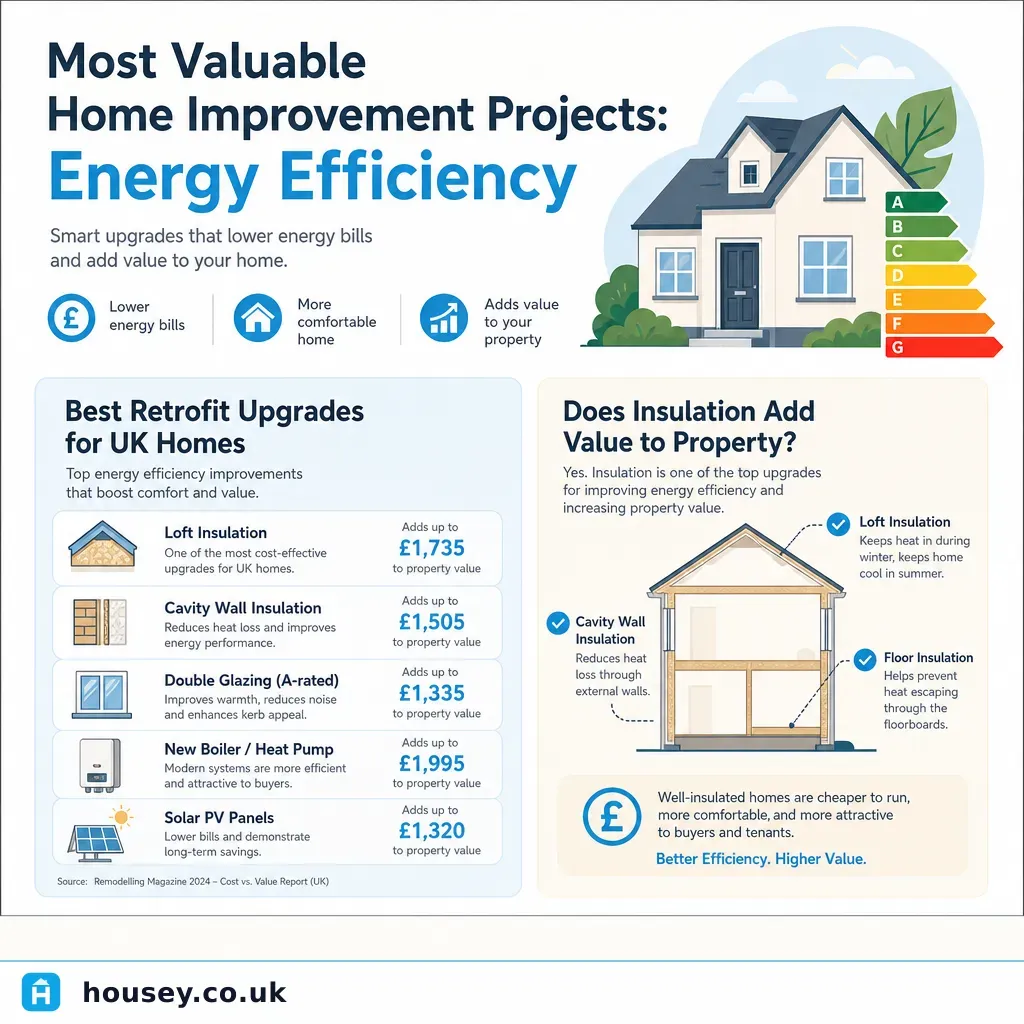
Most Valuable Home Improvement Projects: Energy Efficiency
Energy efficiency improvements with the strongest value case for UK homes include loft insulation, cavity wall insulation, double glazing, and air source heat pumps in well-insulated properties.
 Energy & Retrofit
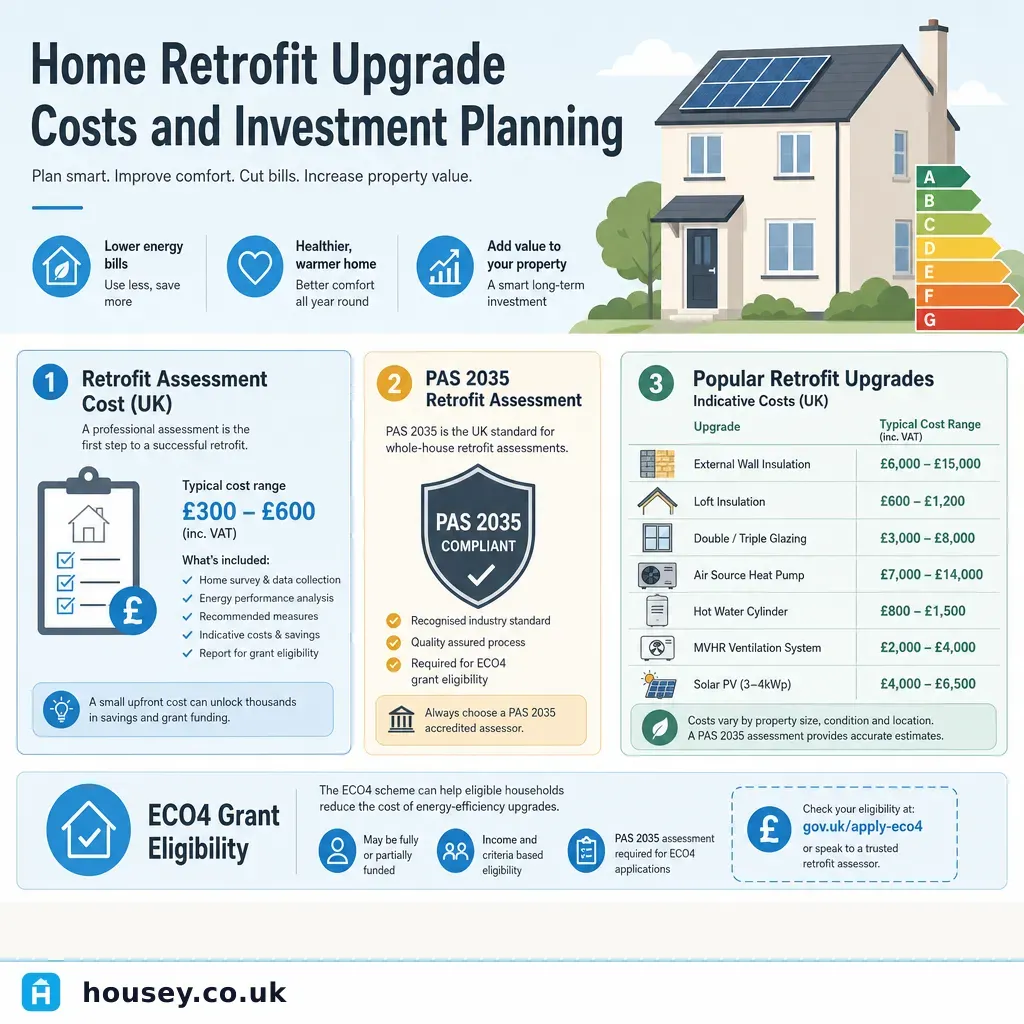
Home Retrofit Upgrade Costs and Investment Planning
Home retrofit costs in the UK vary widely by property size, construction type, and measures chosen.
 Energy & Retrofit
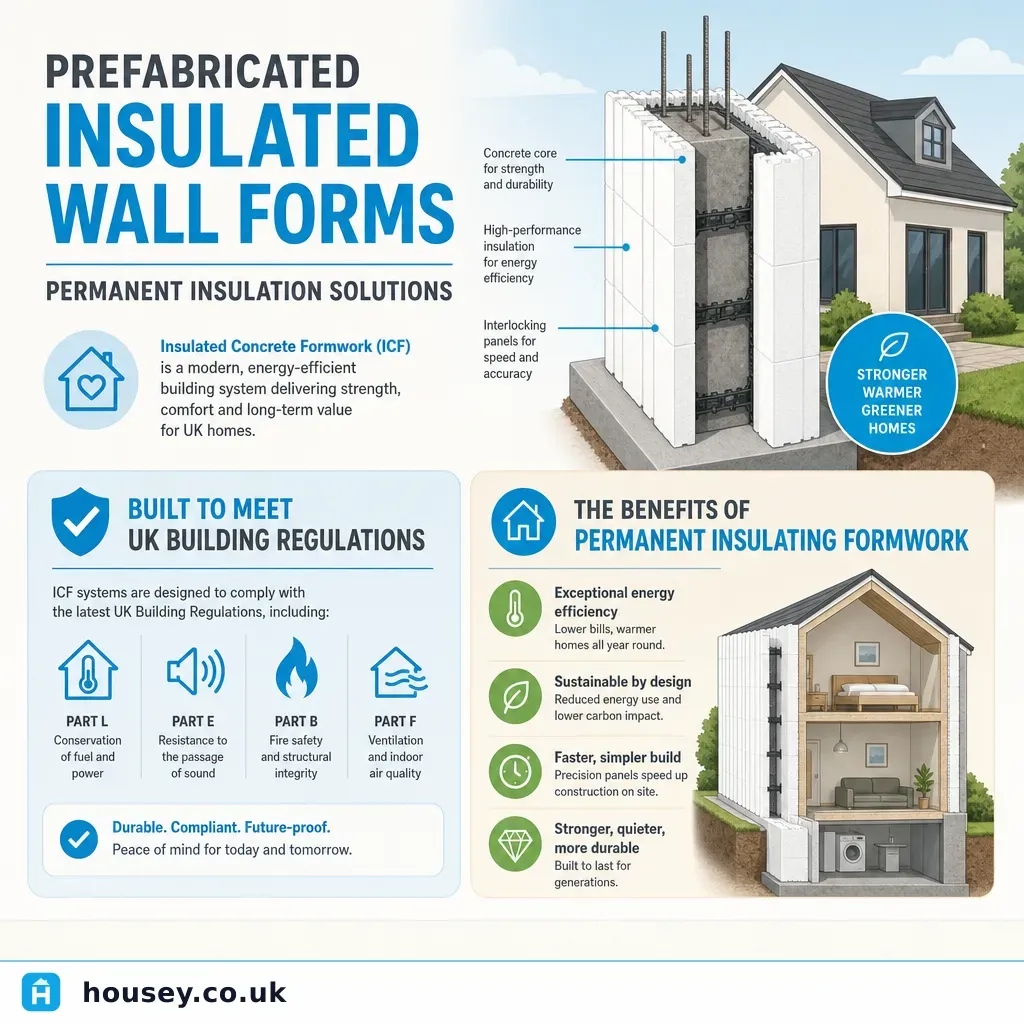
Prefabricated Insulated Wall Forms: Permanent Insulation Solutions
Prefabricated insulated wall forms — including ICF and SIPs systems — deliver high thermal performance by combining permanent insulation with structural concrete or timber in a single wall assembly.
 Energy & Retrofit
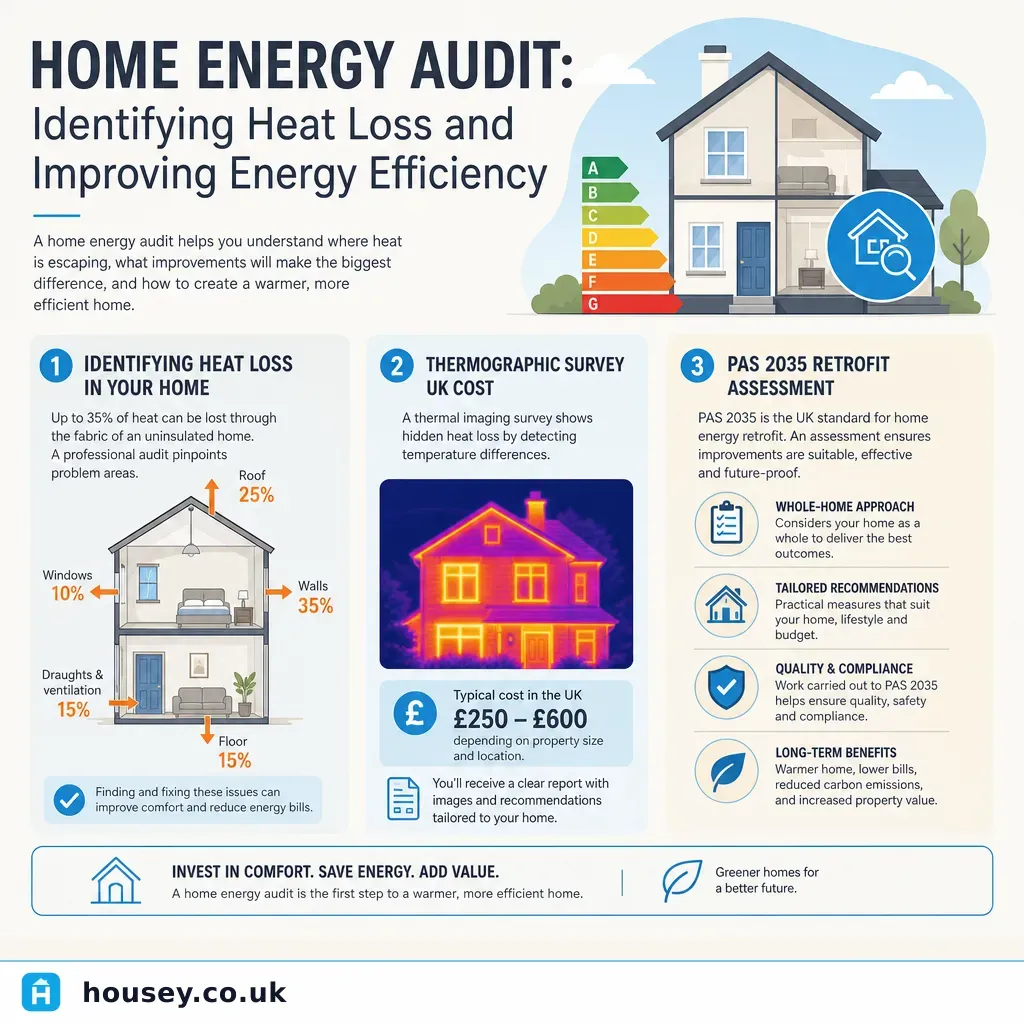
Home Energy Audit: Identifying Heat Loss and Improving Energy Efficiency
A home energy audit is a structured assessment of where your property loses heat and how efficiently it uses energy.
 Energy & Retrofit
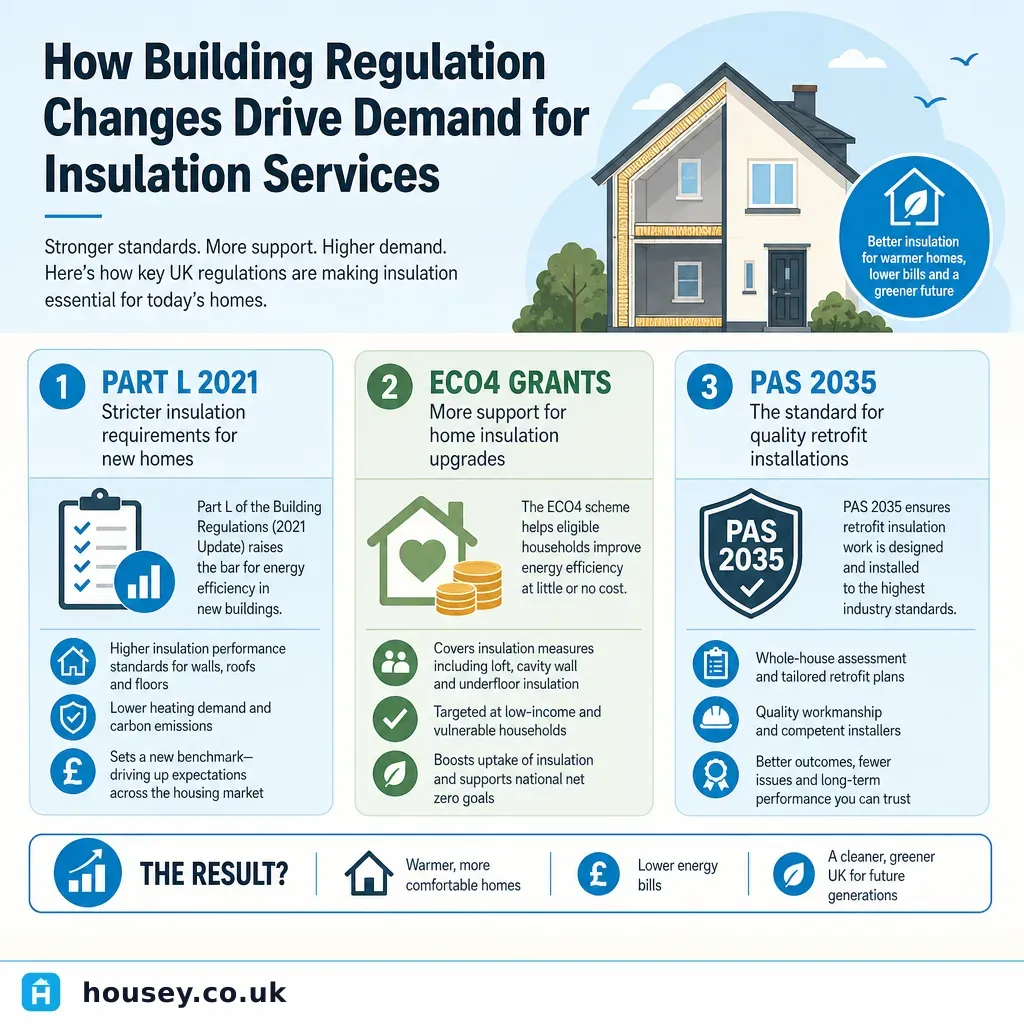
How Building Regulation Changes Drive Demand for Insulation Services
Building regulation changes — including 2021 updates to Approved Document L, ECO4 funding obligations, and proposed MEES tightening — are creating sustained demand for insulation services across the UK.