Most Valuable Home Improvement Projects: Energy Efficiency
By Housey · Last reviewed 30th of May 2026
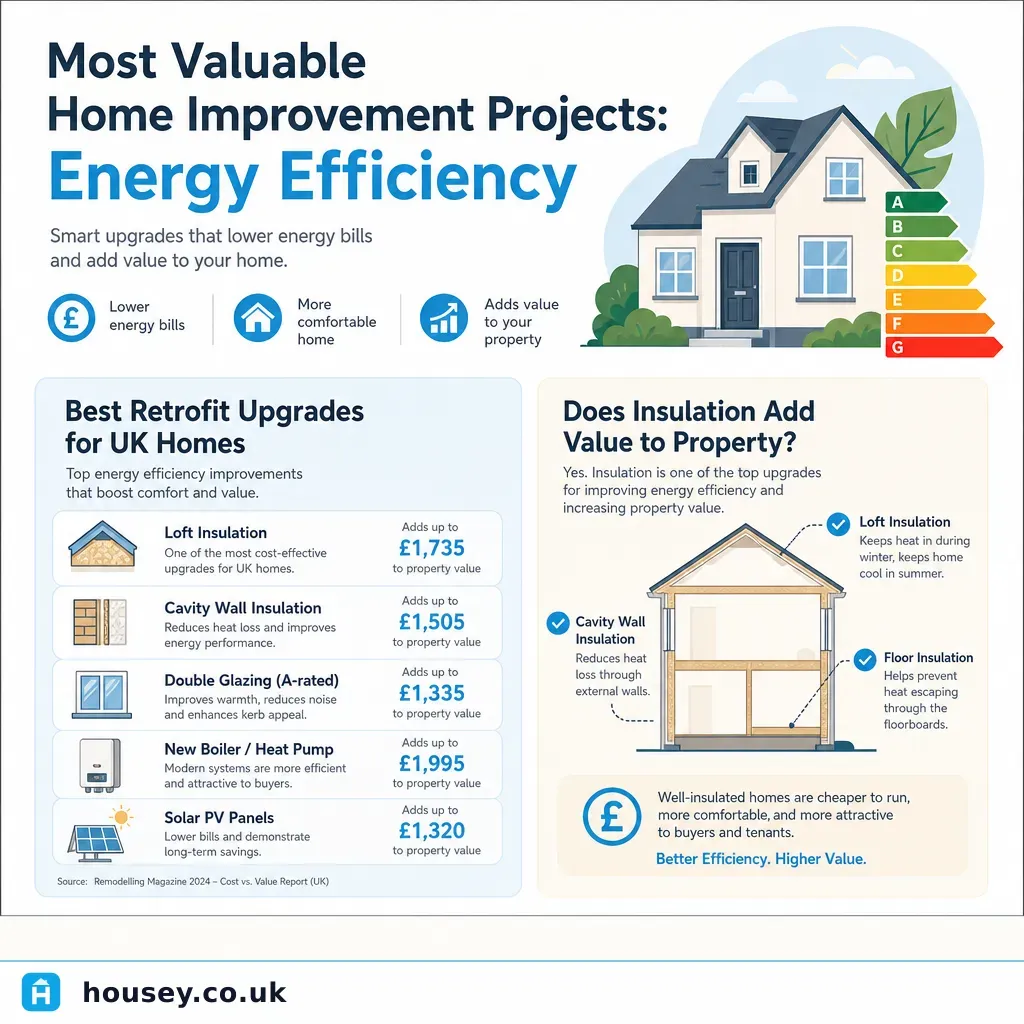
Most Valuable Home Improvement Projects: Energy Efficiency
When homeowners come to sell, remortgage, or simply face a large energy bill, the question of which energy upgrades are worth the investment becomes pressing. In the UK, rising energy costs and the prospect of Minimum Energy Efficiency Standards (MEES) extending further have made EPC ratings a mainstream concern among buyers and owners alike. Choosing the wrong measure — or installing it without proper assessment — can mean spending thousands without meaningful payback.
Key points
- Upgrading from EPC band E to C can add approximately 4–5% to a property's sale price, according to research by Nationwide Building Society (2022).
- The Boiler Upgrade Scheme (BUS) offers grants of up to £7,500 for air source heat pumps as of 2026 (GOV.UK).
- PAS 2035:2023 is the UK quality standard for whole-house retrofit projects; ECO4 and Great British Insulation Scheme work must comply with it.
- Loft insulation is frequently the most cost-effective single measure, with the Energy Saving Trust estimating payback in as little as 2–3 years for an uninsulated loft.
- Solid wall insulation can cost £8,000–£25,000 depending on property size and approach; cavity wall insulation typically costs £500–£1,500 (indicative UK costs, last reviewed 2026-05-30).
Which energy efficiency improvements add the most value?
Not all energy improvements deliver the same return. Value depends on the property's starting EPC rating, age, construction type, and current fuel costs. The table below summarises the most commonly installed measures and their typical value drivers.
Measure | Typical cost (indicative, 2026) | EPC impact | Best for | Main risk |
|---|---|---|---|---|
Loft insulation (top-up to 270mm) | £300–£600 | High | Homes with little or no existing insulation | Poor ventilation if roof space is unventilated |
Cavity wall insulation | £500–£1,500 | Moderate–high | 1930s–1990s cavity-wall homes | Not suitable for all wall types; check suitability first |
Solid wall insulation (external) | £8,000–£25,000 | High | Pre-1930s solid brick or stone homes | High cost; planning consent may be needed in conservation areas |
Double or triple glazing | £3,000–£12,000 | Moderate | Single-glazed older homes | Listed buildings require consent for replacement |
Air source heat pump | £10,000–£15,000 before BUS grant | Moderate–high | Well-insulated homes and off-gas areas | Must be correctly sized; PAS 2035 pathway strongly recommended |
Solar PV (3–4kWp system) | £6,000–£8,000 | Moderate | South-facing roofs | Payback period depends on export tariff rates |
Indicative UK costs, last reviewed 2026-05-30. Costs vary by region, property size, and specification. Always obtain at least three quotes.
How EPC ratings affect property value
The link between energy performance and property value is becoming measurable. Research by Nationwide Building Society (2022) found that homes rated EPC band C or above commanded around a 4–5% premium over comparable band D or E properties. For landlords, MEES regulations already require rental properties to achieve at least band E, with a proposed extension to band C subject to ongoing government consultation.
For owner-occupiers, the value case is threefold: lower running costs, higher resale or remortgage value, and access to green mortgage products offered by several high-street lenders — some of which offer reduced interest rates for homes meeting EPC thresholds.
Worked example: Victorian terrace in the East Midlands
A three-bedroom Victorian solid-brick terrace currently rated EPC band F, heated by an ageing gas boiler, with an owner planning to sell in three to five years.
A retrofit coordinator commissioned under PAS 2035 recommends a sequenced plan:
- Internal wall insulation (£9,000–£12,000, with possible ECO4 funding subject to household income)
- Loft insulation top-up to 270mm (approximately £500)
- Replacement double glazing (£4,000–£6,000)
- Air source heat pump after insulation is complete (£10,000 before BUS grant, approximately £2,500 net)
Total investment: approximately £16,000–£21,000 after grant. Projected EPC improvement: F to B or C. Estimated annual energy saving: £900–£1,400 based on Energy Saving Trust modelling for a property of this type. At a 5% value uplift on a £220,000 home, the improvement adds approximately £11,000 to sale value. Combined with running-cost savings over three to five years, the financial case strengthens considerably.
This is a simplified illustration. Actual outcomes depend on occupancy, fuel prices, specification, and installer quality.
Grants and funding available in 2026
Several schemes can reduce upfront costs significantly:
- Boiler Upgrade Scheme (BUS): £7,500 grant for air source heat pumps. Applied for by the MCS-certified installer, not the homeowner directly.
- ECO4: Funded through energy suppliers; targets low-income households and properties with poor energy ratings. Check eligibility via GOV.UK or Citizens Advice.
- Great British Insulation Scheme (GBIS): Provides insulation measures to homes with EPC D–G ratings. Delivered through energy suppliers.
- Home Upgrade Grant (HUG2): Available in some local authority areas for off-gas-grid, lower-income households.
- Green mortgages: Several high-street lenders offer reduced rates for homes meeting defined energy performance thresholds.
Eligibility rules change frequently. Check GOV.UK and the Energy Saving Trust grant finder before planning works or signing contracts.
Homeowner checklist: before commissioning energy improvements
Important limitations
This article provides general information about energy efficiency improvements in UK homes and does not constitute professional advice. The right measures, sequence, and specification for any property depend on its construction, condition, occupancy, and local planning context. Costs, grant availability, and EPC methodology may change; always verify current information with GOV.UK, the Energy Saving Trust, or a TrustMark-registered professional. Heat pump performance and sizing in particular depend on detailed heat loss calculations specific to your home — do not rely on generic guidance alone when specifying a heat pump.
What to ask a qualified professional
When consulting an energy assessor, retrofit coordinator, or installer:
- Is my home suitable for cavity wall insulation, or could filling the cavity cause damp?
- What ventilation strategy will accompany any insulation improvements?
- How will you calculate heat loss before sizing a heat pump for this property?
- Are you MCS-certified (heat pumps and solar PV), TrustMark-registered (insulation), or PAS 2035-compliant (whole-house retrofit)?
- What grant applications will you handle on my behalf, and what are the eligibility conditions?
- What guarantee or warranty comes with the work, and who provides it?
- Who is responsible if moisture or condensation problems emerge after installation?
When to get professional help
Seek professional advice before starting if:
- Your home has solid walls and you are considering insulation — moisture management in solid-wall buildings requires expert assessment to avoid condensation risk.
- You are specifying a heat pump — an undersized system will underperform and may cost more to run than the boiler it replaced.
- Your home is listed or in a conservation area — planning and listed building consent requirements apply to external changes.
- You want to sequence multiple measures — a PAS 2035 retrofit coordinator should determine the correct installation order.
- You have found existing damp, mould, or condensation — these must be investigated and resolved before any insulation is installed.
How Housey can help
Housey connects UK homeowners with accredited professionals for every stage of an energy retrofit. Whether you need a retrofit assessment to establish your whole-house plan, advice from energy-efficiency consultants, or quotes from insulation installers and specialists offering heat pump surveys, Housey helps you compare local professionals and make an informed choice.
Frequently asked questions
Does improving my EPC rating increase my home's value?
Research by Nationwide Building Society (2022) found that homes rated EPC C or above typically sold for around 4–5% more than comparable band D or E properties. The effect is more pronounced in higher-value markets and is likely to grow as MEES regulations and lender green-mortgage products evolve. A single measure such as loft insulation may improve a rating enough to cross a band threshold.
Which energy improvement has the fastest payback?
Loft insulation in an uninsulated loft typically offers the fastest payback — the Energy Saving Trust estimates 2–3 years for a typical semi-detached home. Cavity wall insulation also provides relatively rapid payback where the property type is suitable. More expensive measures such as solid wall insulation or heat pumps have longer payback periods, but grants can substantially reduce net cost.
Do I need planning permission for energy efficiency improvements?
Most measures — loft insulation, cavity wall insulation, internal wall insulation, double glazing, and standard air source heat pumps — fall within permitted development and do not require planning permission. Exceptions apply for listed buildings and conservation areas, where external changes require consent. Always check with your local planning authority if you are unsure.
What is PAS 2035 and do I need it?
PAS 2035:2023 is the UK standard for the energy retrofit of domestic buildings, setting out how projects should be assessed, designed, and installed. It is mandatory for ECO4 and Great British Insulation Scheme work and best practice for any whole-house retrofit. It requires a retrofit coordinator to oversee the project, reducing the risk of moisture, ventilation, and sequencing problems.
Sources and further reading
- Boiler Upgrade Scheme (GOV.UK) — Scheme rules, eligibility, and grant amounts
- Energy Saving Trust — Home Insulation — Cost and savings guidance for UK insulation measures
- PAS 2035:2023 overview (BSI) — The UK standard for domestic retrofit
- TrustMark — Find a Tradesperson — Government-endorsed quality scheme for retrofit installers
- Find an energy certificate (GOV.UK) — Check the current EPC rating for any UK property
- MCS Microgeneration Certification Scheme — Installer accreditation for heat pumps and solar PV
Useful next reads
 Energy & Retrofit
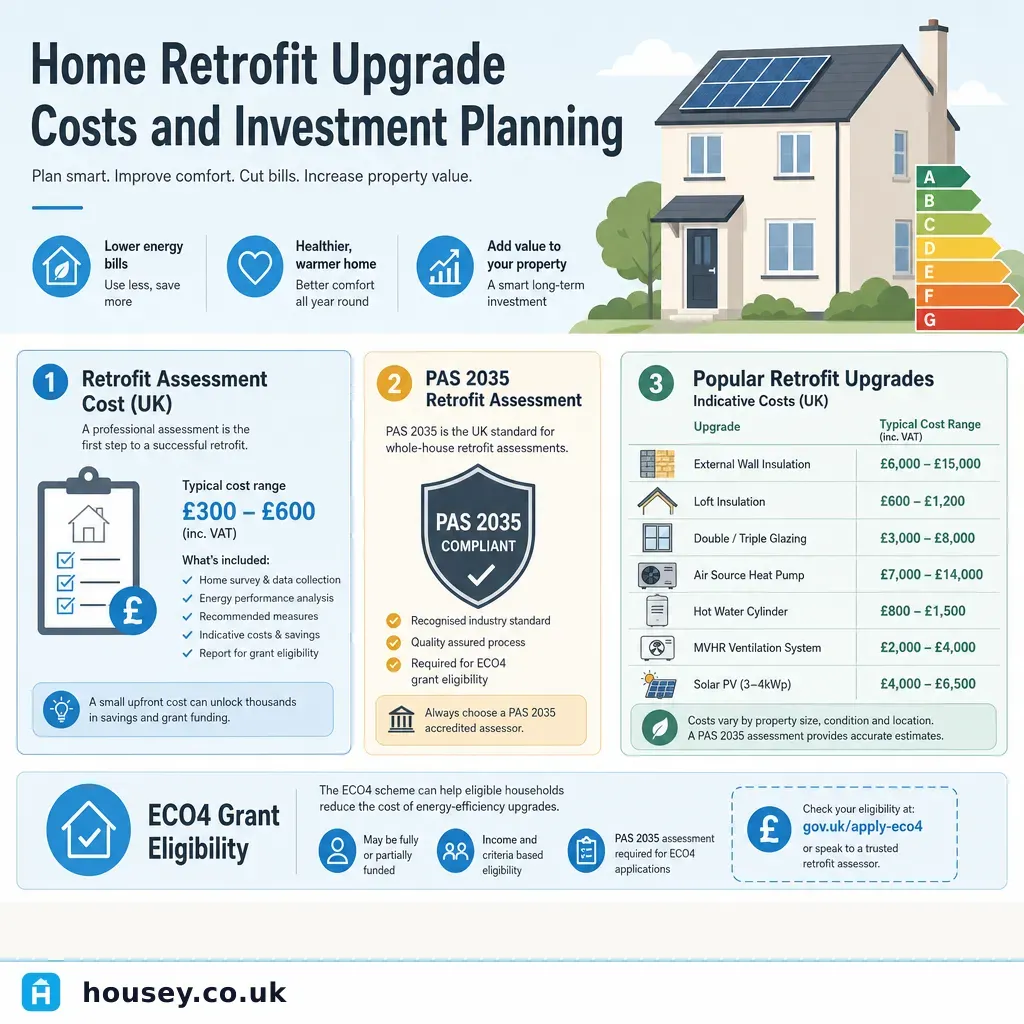
Home Retrofit Upgrade Costs and Investment Planning
Home retrofit costs in the UK vary widely by property size, construction type, and measures chosen.
 Energy & Retrofit
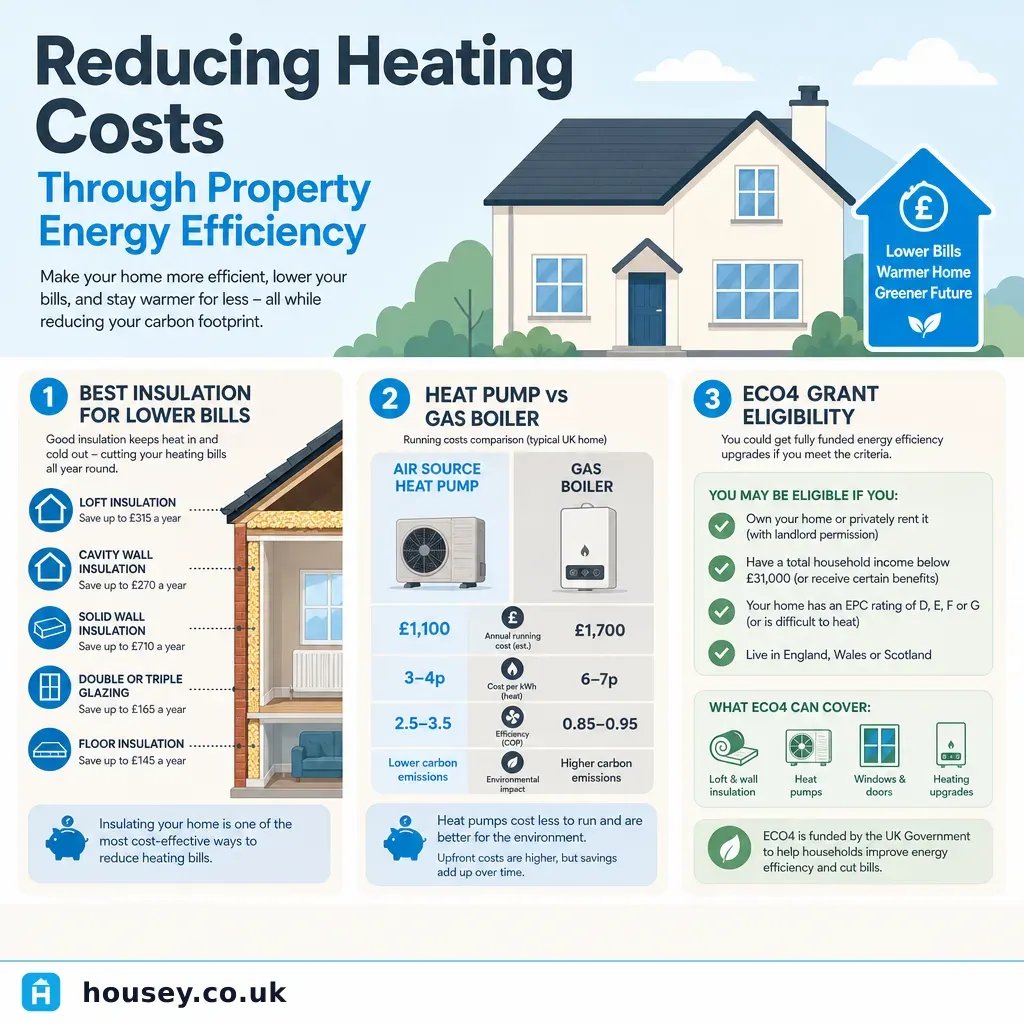
Reducing Heating Costs Through Property Energy Efficiency
Reducing heating costs starts with identifying where heat is lost — typically walls (30–35%), roof (20–25%), and windows.
 Energy & Retrofit
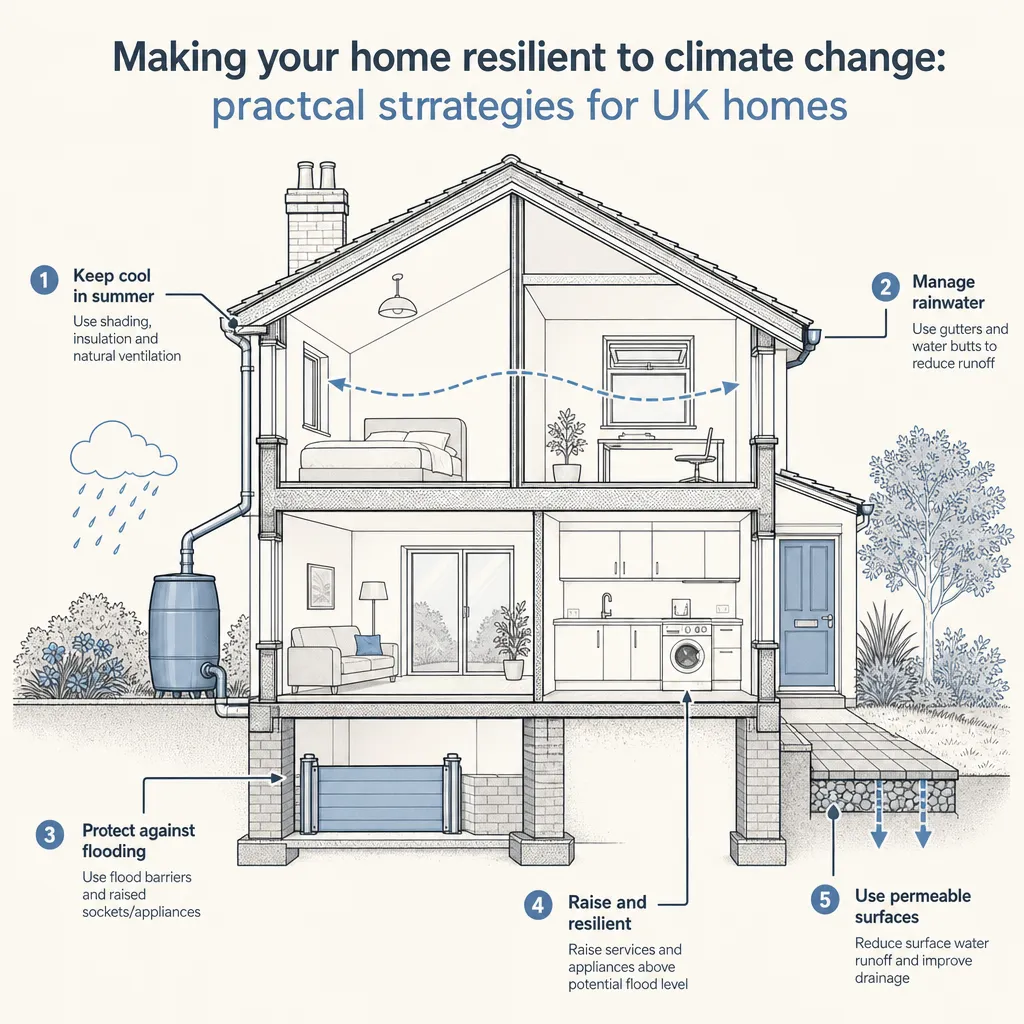
Making your home resilient to climate change: practical strategies
UK homeowners can improve climate resilience by addressing flood risk, overheating, and energy efficiency together.
 Energy & Retrofit
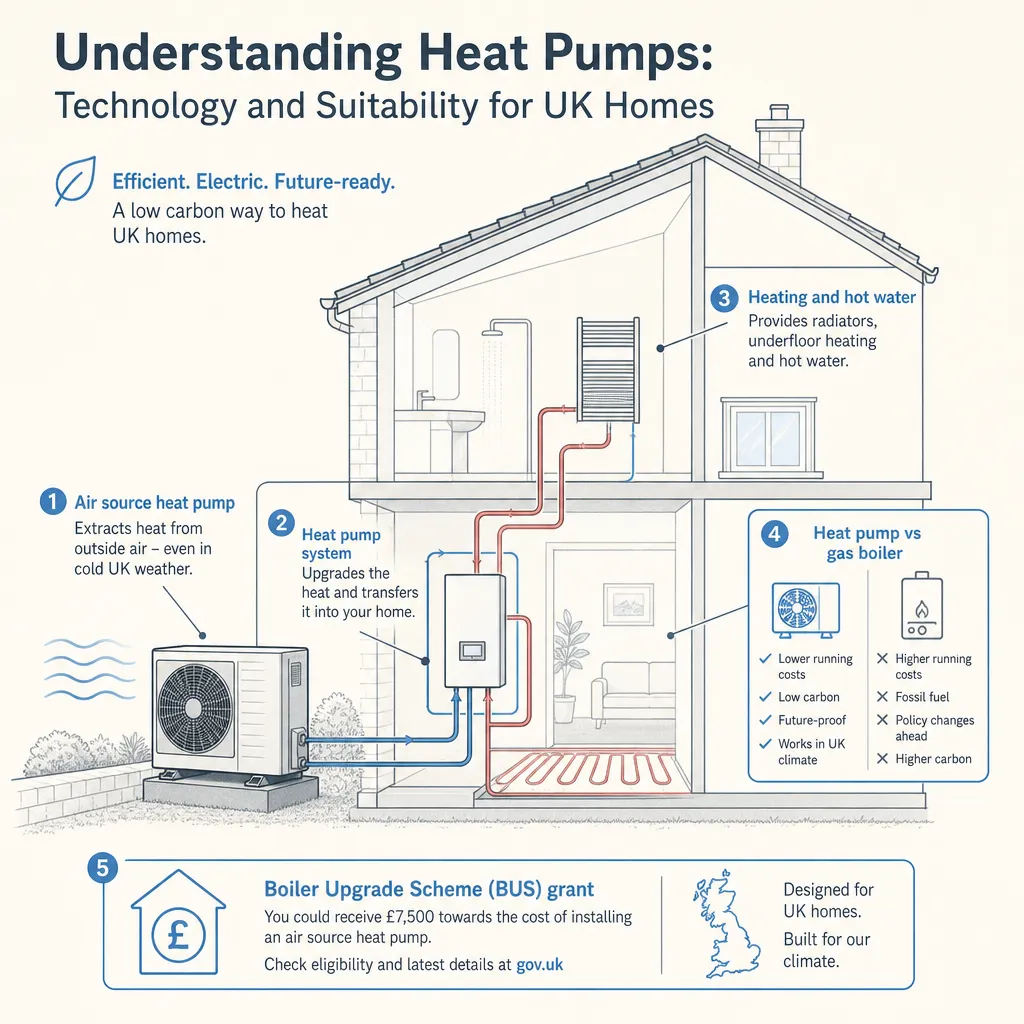
Understanding Heat Pumps: Technology and Suitability for UK Homes
Heat pumps extract heat from the air or ground and transfer it indoors, typically achieving efficiencies of 250–400% compared to a conventional boiler's near 100%.
 Energy & Retrofit
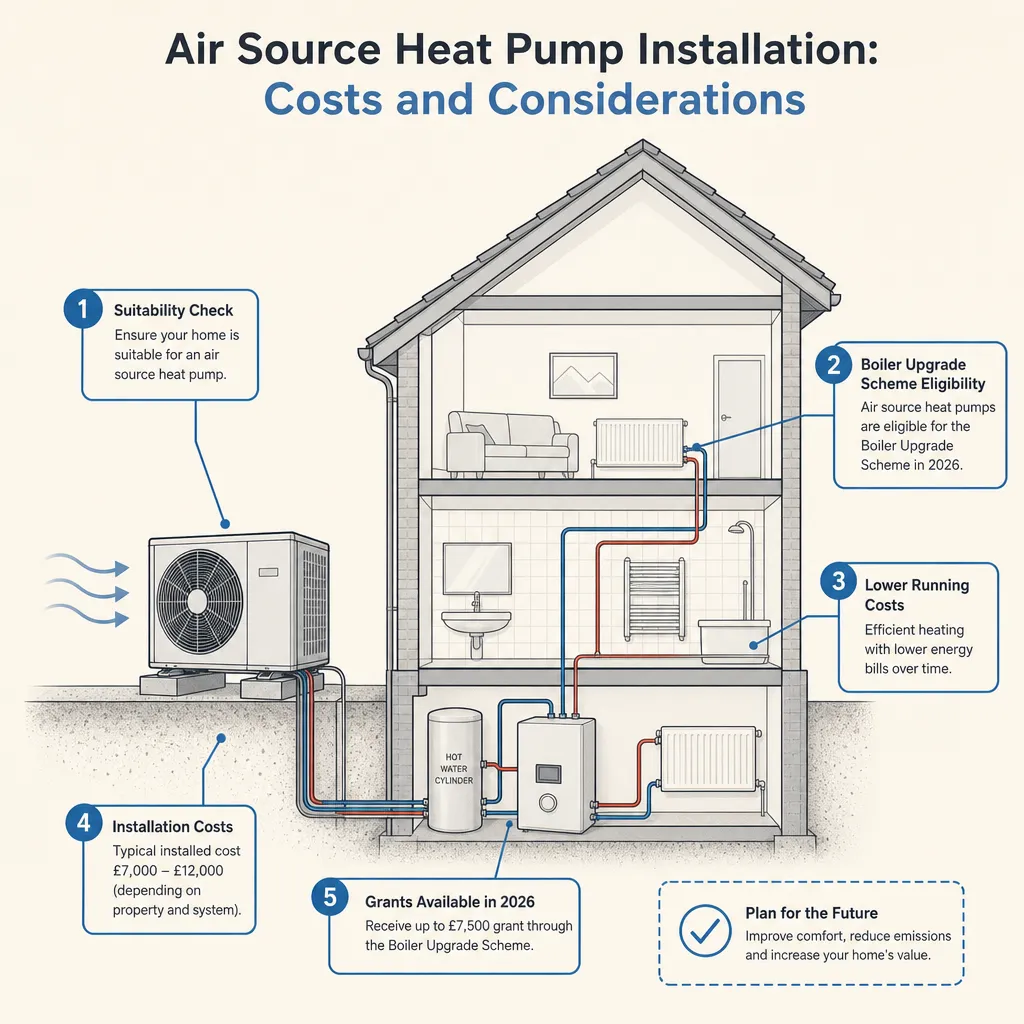
Air Source Heat Pump Installation: Costs and Considerations
Air source heat pump installation in the UK typically costs £8,000–£15,000 before the £7,500 Boiler Upgrade Scheme grant, available through MCS-certified installers in England and Wales.