Gabion Walls for Gardens and Landscapes: Design and Installation
By Housey · Last reviewed 1st of June 2026
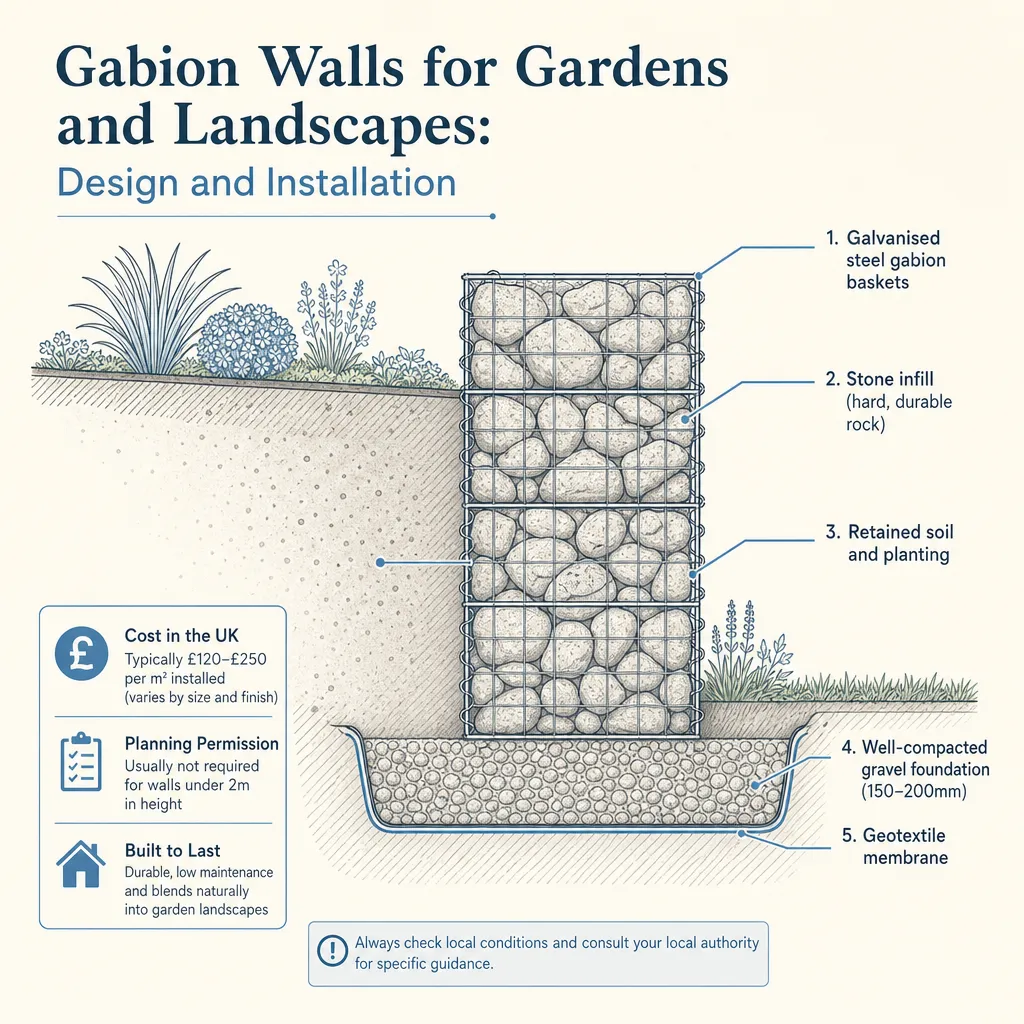
Gabion Walls for Gardens and Landscapes: Design and Installation
Gabion walls — wire mesh baskets filled with stone, gravel, or recycled materials — have moved from civil engineering and motorway embankments into mainstream UK garden design over the past decade. They appeal to homeowners who want a robust, low-maintenance boundary or retaining structure that drains naturally and sits comfortably in both contemporary and rural settings. The key decisions arise early in any project: what height is achievable without planning permission, when a structural professional is necessary, and which materials will perform best in your soil type and climate.
Key points
- Freestanding gabion walls under 1 m adjacent to a highway, or under 2 m elsewhere on a residential property, do not normally require planning permission under the General Permitted Development Order; listed properties and conservation areas are exceptions.
- Wire mesh baskets should use at least 3 mm diameter galvanised steel; PVC-coated mesh is advisable in coastal or acidic soil environments to resist corrosion.
- Retaining gabion walls over 1 m high, or carrying significant lateral earth pressure, should be assessed and designed by a structural or civil engineer.
- Angular stone fill (100–200 mm limestone, granite, or recycled concrete) interlocks better than smooth river gravel, providing greater structural stability and longevity.
- A geotextile membrane behind a retaining gabion wall prevents fine soil particles migrating through the basket mesh over time — a common cause of long-term wall failure.
What is a gabion wall and how does it work?
A gabion (from the Italian gabbione, meaning "big cage") is a steel wire mesh basket — typically rectangular — filled with stone or aggregate and stacked to form a wall, terrace, or landscape feature. The weight of the fill provides stability; the mesh contains the stone while allowing water to drain freely through the structure.
The open, permeable construction makes gabions well-suited to:
- Retaining walls on sloped gardens, where drainage behind the wall is critical to avoid hydrostatic pressure build-up
- Freestanding boundary features replacing close-board fencing or brick walls
- Raised planting beds and decorative landscape features
- Privacy screens, particularly when planted with trailing or climbing vegetation
Filled with local stone, gabion walls can also have a lower embodied carbon footprint than concrete block or brick construction, making them a reasonable choice for sustainability-conscious garden projects.
Design options: freestanding, retaining, and decorative
Type | Typical height | Foundation | When to consult a professional |
|---|---|---|---|
Decorative feature (freestanding, low) | Up to 600 mm | Compacted gravel or base | Rarely required |
Freestanding boundary wall | 600 mm–1.5 m | 100–200 mm compacted hardcore | Civil engineer advisable for walls over 1 m |
Retaining wall (garden slope) | Up to 1 m | Engineered base + geotextile | Structural or civil engineer recommended |
Retaining wall (significant height or load) | Over 1 m | Engineered foundation | Civil engineer required |
Tiered terracing | Multiple tiers | Varies by tier height | Engineer if load-bearing or over 1 m per tier |
Standard gabion baskets are typically 1 m × 1 m × 0.5 m or 1 m × 1 m × 1 m. A base-to-height ratio of at least 2:1 improves stability for freestanding walls above 600 mm.
Planning permission and building regulations
For most residential gardens, planning permission is not required for gabion walls under the General Permitted Development Order (GPDO). Key thresholds to check:
- Walls adjacent to a highway (including a footpath forming a boundary with a road): maximum 1 m in height without permission.
- Walls elsewhere on a residential property: maximum 2 m in height without permission.
- Walls within the curtilage of a listed building: listed building consent is required regardless of height.
- Walls in a conservation area: additional consent may be required — check with your local planning authority (LPA) before starting.
Building Regulations do not generally apply to garden walls in domestic settings, but a retaining wall supporting a structure or carrying significant lateral load may require building control involvement. Most councils offer free pre-application planning advice — use it before committing to materials or labour if you have any doubt about your specific situation.
Choosing materials
Wire mesh specification
Environment | Recommended mesh | Notes |
|---|---|---|
Standard UK garden | 3 mm heavily galvanised steel (Class A coating) | Most common choice; good lifespan in typical soil |
Coastal or near-marine | 3–4 mm PVC-coated galvanised | Chloride-rich air accelerates zinc corrosion |
Acidic soil (pH below 5.5) | PVC-coated or stainless steel | Acidic groundwater attacks the zinc coating |
High-visibility or decorative | Galfan-coated or stainless steel | Higher cost; extended service life |
Stone fill
Angular stone interlocks and distributes load more effectively than rounded gravel. Common choices for UK projects:
- Limestone — warm tones, widely available, cost-effective
- Granite — very durable, neutral grey tones; higher cost per tonne
- Sandstone — warm colour but lower durability in wet outdoor conditions
- Recycled concrete or demolition aggregate — lower cost and sustainable; check the visual result before ordering
- Slate — distinctive blue-grey appearance; lighter than granite per volume
Avoid smooth river gravel for structural or retaining gabions — it migrates under vibration and load, reducing structural integrity over time.
Installation overview
A low freestanding gabion feature (under 600 mm high) is within the capability of a competent DIYer with appropriate tools. Retaining structures and walls over 1 m are better handled by a local landscaper for gabion wall design and installation or a groundworker for foundation preparation and earthworks with the right plant and experience.
Typical installation steps for a freestanding garden gabion wall (under 600 mm):
- Mark the footprint; excavate topsoil and remove any vegetation roots.
- Compact the sub-base and lay 100–150 mm of MOT Type 1 (compacted hardcore) or a lean-mix concrete slab as a level foundation.
- Assemble gabion baskets on site by folding mesh panels and securing corners with C-rings or binding wire as specified by the basket manufacturer.
- Fill baskets in 300–400 mm lifts, handpacking the outer visible face tightly for a neat finish.
- Insert bracing wires across the basket width every 300–400 mm of fill height to prevent outward bulging.
- Close and secure basket lids; for multi-course walls, tie basket layers together with connecting wire as specified by the manufacturer.
For retaining walls, install a geotextile membrane behind the wall face and use free-draining angular gravel as backfill rather than compacted soil.
Which professional do you need?
Situation | Who to contact |
|---|---|
Design and installation of garden features or low freestanding walls | |
Excavation, foundation preparation, and earthworks | |
Retaining walls over 1 m, or where sloped ground carries lateral loads | Civil engineer for design; groundworker for installation |
Complex retaining or load-bearing structures | Civil engineer for structural calculations |
Listed building or conservation area | Contact LPA for consent advice before instructing any professional |
How much does a gabion wall cost?
Indicative UK costs, last reviewed 2026-06-01. Costs vary by wall size, stone type, groundwork required, and regional labour rates.
Item | Indicative cost range |
|---|---|
Gabion baskets (1 m × 1 m × 0.5 m, materials only) | £25–£60 per basket |
Angular stone fill (per tonne, delivered to site) | £40–£120 depending on stone and region |
Professional supply and installation (per linear metre, 1 m high) | £150–£400 per linear metre |
Civil engineer design fee (retaining wall) | £500–£2,000+ depending on complexity |
Always obtain at least three quotes. Ask whether each includes foundation preparation, geotextile, stone delivery, and all groundwork.
Red flags during and after installation
- Baskets bulging outward significantly after filling — indicates insufficient bracing wires or overloading of the basket width
- Stone settling well below the basket lid after a few weeks — fill has compacted or migrated; top up before closing the lid
- Wall tilting or leaning noticeably after the first winter — may indicate inadequate foundation depth or poor drainage behind the wall
- Rust staining on the mesh within the first two to three years — check wire specification; PVC-coated mesh may be needed for conditions on your site
When to get professional help
A small decorative gabion feature is within most homeowners' capabilities with good preparation. Always involve a professional when:
- The wall retains a significant depth of soil or supports a change in ground level
- The wall is over 1 m in any direction
- The ground is soft, waterlogged, or of uncertain bearing capacity
- The structure is near underground drainage, services, or a shared boundary
- The site has a significant slope with surface water running towards the proposed wall
- Planning permission, listed building consent, or conservation area considerations apply
How Housey can help
Housey connects you with vetted professionals suited to your project scale. For garden features and low freestanding walls, a local landscaper for gabion wall design and installation can design and build gabion work as part of a broader landscaping scheme. For excavation, foundation preparation, and larger earthworks, a groundworker for foundation preparation and earthworks is usually the right first call. Where your garden has a significant slope and you need a structural retaining solution, a civil engineer for retaining wall structural design should produce the structural design before any groundwork begins.
Frequently asked questions
Do gabion walls need planning permission?
In most residential settings, gabion walls under 1 m adjacent to a highway or under 2 m elsewhere fall within permitted development under the GPDO and do not need planning permission. However, if your property is listed, in a conservation area, or the wall is near a boundary or right of way, check with your local planning authority before starting work.
How long does a gabion wall last?
A well-built gabion wall using heavily galvanised or PVC-coated mesh typically lasts 30–60 years in a standard UK garden environment. Coastal or highly acidic conditions shorten mesh life considerably; upgrade to PVC-coated or Galfan-coated wire in those settings and inspect the wire annually for early signs of corrosion.
Can I fill a gabion with materials other than stone?
For decorative low-level features, yes — logs, slate pieces, recycled glass in a basket with fine inner mesh, and crushed brick are all used. For structural or retaining walls, use only dense angular stone or recycled concrete. Avoid materials that rot, compact significantly, or degrade over time, as these reduce structural integrity.
Does a gabion wall need drainage?
A freestanding gabion wall drains naturally through its open mesh and stone fill. A retaining gabion wall should have free-draining angular gravel as backfill and a geotextile membrane between the backfill and the retained soil to prevent fine particles migrating through the wall and blocking drainage over time.
Sources and further reading
- Planning Portal: permitted development rights for householders — Planning Portal
- Town and Country Planning (General Permitted Development) (England) Order 2015 — legislation.gov.uk
- Historic England: advice on works to listed buildings — Historic England
- Royal Horticultural Society: garden features and hard landscaping — Royal Horticultural Society
Useful next reads
 Improvement & Build
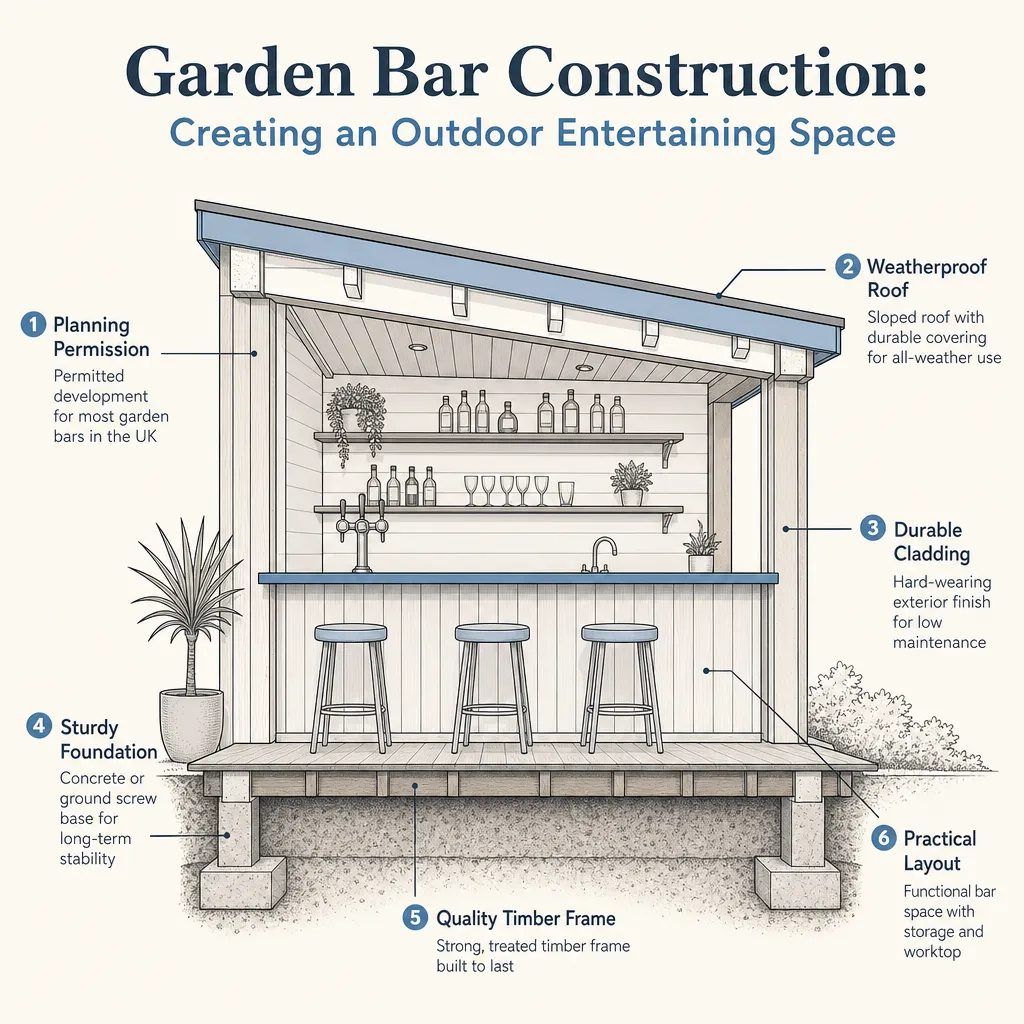
Garden Bar Construction: Creating an Outdoor Entertaining Space
A garden bar built as an outbuilding in England is usually permitted development — no planning permission needed — provided the structure stays within height and footprint limits and is not in a restricted area such as a conservation area or listed building curtilage.
 Improvement & Build
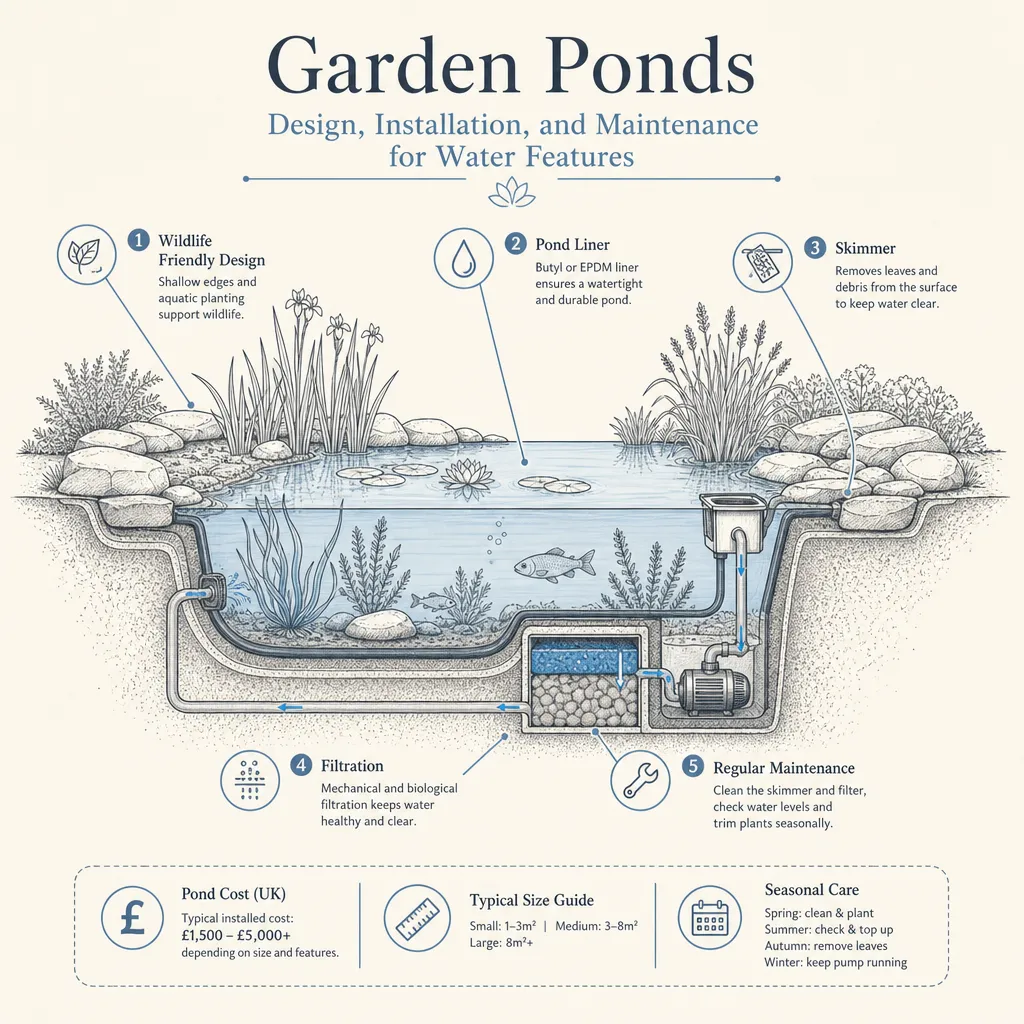
Garden Ponds: Design, Installation, and Maintenance for Water Features
Garden ponds can be installed by a specialist landscaper or pond contractor.
 Improvement & Build
Installing a Fire Pit: Garden Features and Outdoor Space Design
Installing a garden fire pit in the UK is generally permitted, but Smoke Control Area rules prohibit open wood-burning in most towns and cities.
 Improvement & Build
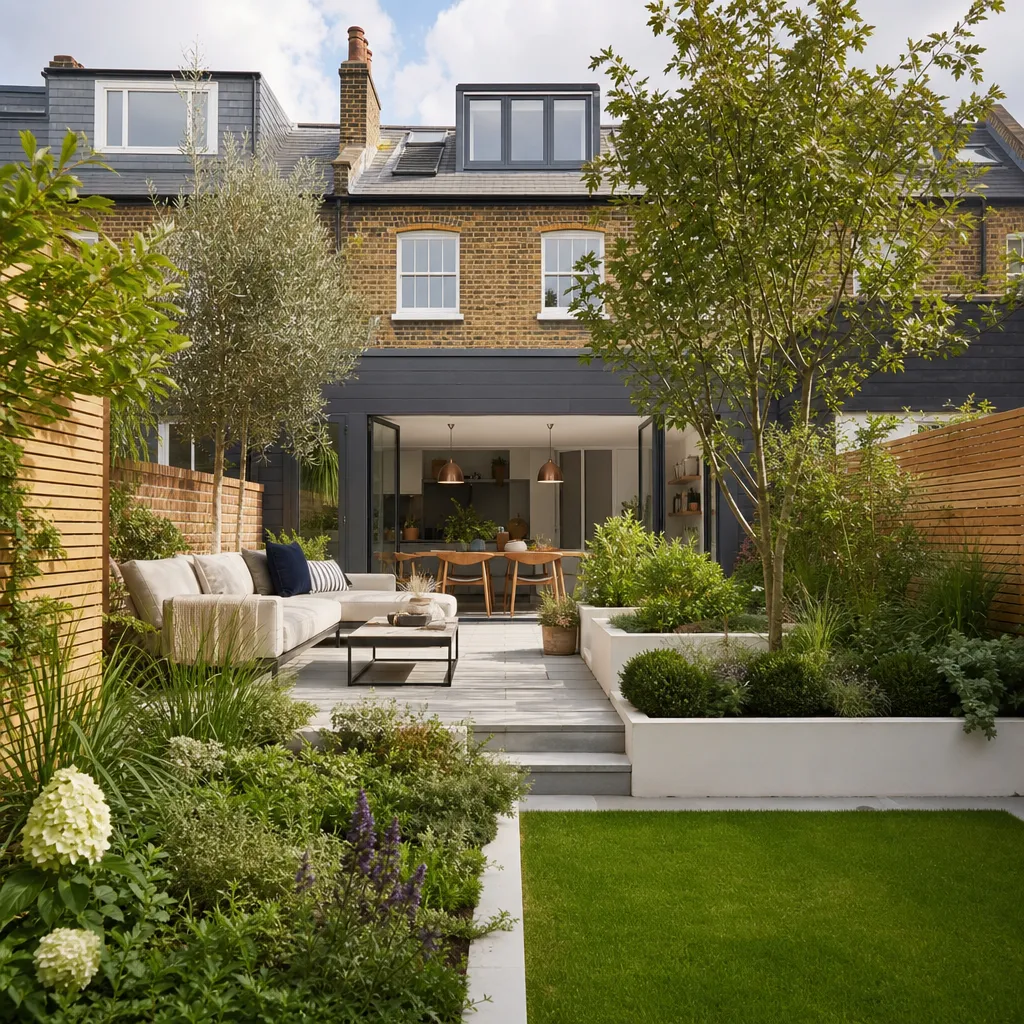
Seasonal Garden Transformations and Outdoor Design Ideas
A successful garden transformation in the UK works with the seasons rather than against them — establishing structure and hard landscaping in autumn or winter, planting in spring, and enjoying the results through summer.
 Improvement & Build
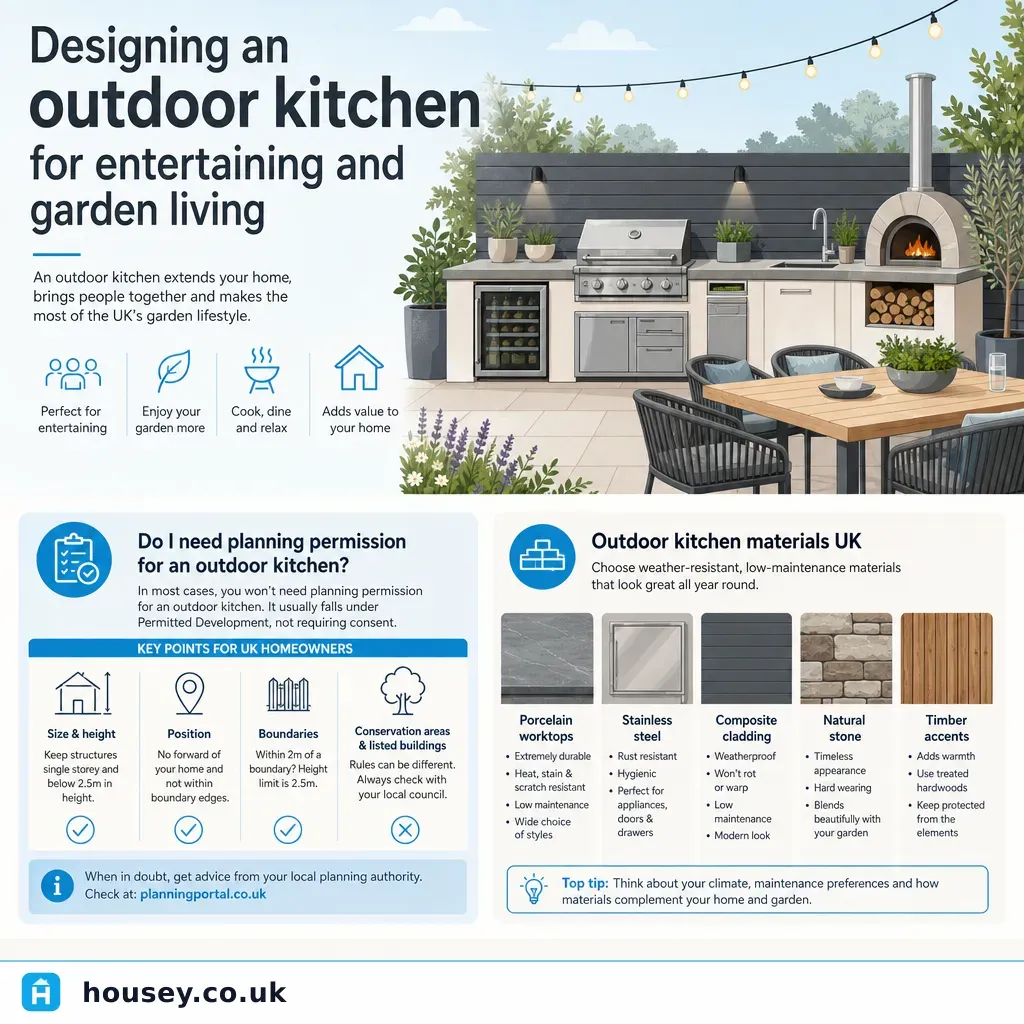
Designing an outdoor kitchen for entertaining and garden living
An outdoor kitchen in a UK garden needs a stable, level base — typically a concrete slab or quality paving — with weather-rated materials such as stainless steel grade 316 or frost-rated porcelain.