Garden Ponds: Design, Installation, and Maintenance for Water Features
By Housey · Last reviewed 19th of May 2026
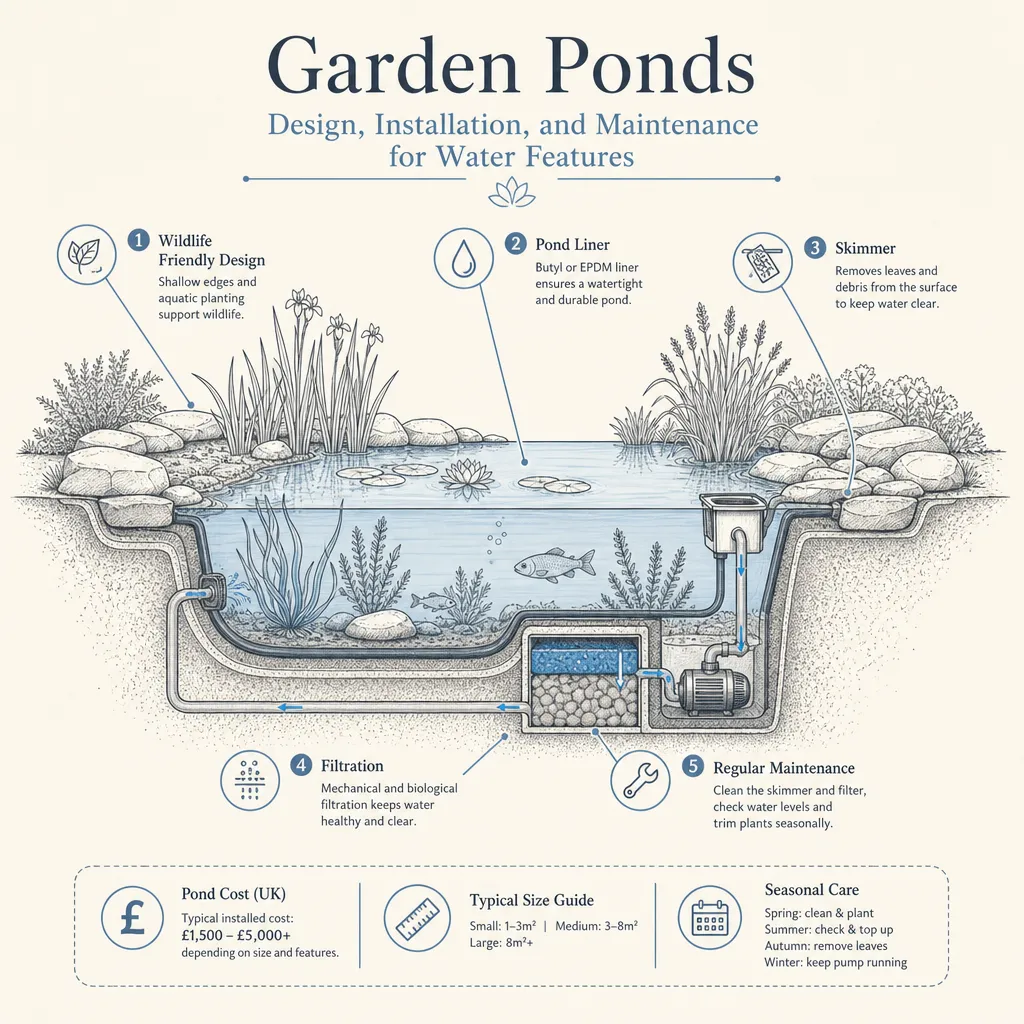
Garden Ponds: Design, Installation, and Maintenance for Water Features
A garden pond can support wildlife, add sensory interest to an outdoor space, and become a long-term focal feature in both small and large UK gardens. The decision to install one often arises during a broader redesign, when a homeowner wants to attract frogs, newts, and pollinators, or when an ornamental water feature is central to a planting concept. Installation involves considerably more than digging a hole: liner selection, depth, filtration, safety measures, and ongoing seasonal maintenance all determine whether a pond becomes a lasting asset or a recurring problem.
Key points
- Wildlife ponds — no fish, no pump, no filter — are the simplest to install and among the most ecologically valuable for native species; once established they require minimal ongoing intervention.
- Butyl rubber liners (0.75 mm–1 mm) are standard for irregular-shaped or larger ponds, with typical lifespans of 20–40 years; pre-formed fibreglass shells suit smaller, regular shapes and are easier to install.
- Planning permission is not usually required for a garden pond, but ponds in conservation areas, within the curtilage of a listed building, or affecting a watercourse may need consent or Environment Agency notification.
- The Royal Society for the Prevention of Accidents (RoSPA) advises that even shallow water poses a drowning risk for young children — pond safety grilles, raised edges, or fencing should be considered wherever children have garden access.
- Indicative UK installation costs range from £1,500–£3,000 for a small pre-formed pond with basic planting to £8,000–£15,000+ for a large liner pond with filtration, edging, and landscaping integration. Indicative UK costs, last reviewed 2026-05-19.
Which type of pond is right for your garden?
Pond type | Best for | Liner / structure | Filtration needed? | Maintenance level |
|---|---|---|---|---|
Wildlife pond | Native plants, frogs, newts, insects, biodiversity | Butyl liner or puddled clay | No | Low — remove blanket weed seasonally |
Ornamental pond | Planting display, formal gardens, water lilies | Butyl liner or pre-formed fibreglass | Optional | Medium — algae and plant management |
Koi pond | Keeping koi carp | Butyl liner (min. 1 mm), concrete, or GRP | Yes — biological and mechanical | High — daily feeding, water testing, UV filtration |
Raised pond | Small gardens, terraces, patios | Pre-formed, timber sleeper, or brick-built | Optional | Medium |
Natural swimming pond | Bathing and wildlife combined | Clay or specialist liner | Biological planting zone | Medium-high — specialist knowledge required |
Which pond should you choose?
- Choose a wildlife pond if you want to support biodiversity, prefer minimal equipment, and don't intend to keep fish — this is also the most straightforward to maintain long-term.
- Choose an ornamental pond if you want a planting display or formal water feature without the ongoing demands of fish-keeping.
- Choose a koi pond if keeping fish is the primary goal — but budget properly for filtration, UV clarifiers, and regular water testing; inadequate filtration quickly leads to fish health problems.
- Choose a raised pond if your garden is paved or you want a safer option where younger children are present, combined with a grille or lockable cover.
- Ask a specialist pond contractor if you are considering a natural swimming pond, a pond exceeding 50 m², or a pond that may affect existing drainage patterns on your plot.
- Check with the Environment Agency before proceeding if the pond will connect to or divert a watercourse — consent under the Environmental Permitting (England and Wales) Regulations 2016 may be required.
Installation: what the process involves
A professional landscaper or pond specialist will typically follow these stages:
- Site survey and design — assessing aspect (full shade encourages algae; full sun drives evaporation), depth requirements, liner choice, and edge treatment.
- Excavation — usually by mini-digger for volumes over 1 m³; spoil disposal adds to project cost and should be included in any quote.
- Liner installation — underlay is laid first to protect the liner from sharp stones; butyl liner is then fitted and overlapped generously at the edges before being anchored.
- Edging and surround — stone, timber sleepers, beach pebbles, or turf anchor the liner and provide a finished appearance; edge treatment also affects safety around the pond.
- Filling and conditioning — mains water with high chlorine levels should be left 24–48 hours before introducing plants or fish to allow the chlorine to dissipate.
- Planting — aquatic plants in mesh baskets using specialist aquatic compost; a balance of oxygenators, marginals, and surface-covering plants such as water lily supports water clarity and wildlife.
- Filtration setup (if applicable) — pump sizing is based on pond volume; biological filters require a 6–8 week running-in period before fish are introduced.
Maintaining a garden pond through the seasons
- Spring: Remove winter pond covers or nets; divide overgrown marginals; check pump and filter function; introduce new plants once water temperature rises above 10°C.
- Summer: Manage blanket weed by twisting it out on a cane; top up water lost to evaporation; monitor oxygen levels during hot spells, especially in ponds with fish.
- Autumn: Net the pond before leaf fall — decomposing leaves deplete oxygen and release toxins into the water; cut back dying marginals to just above the waterline.
- Winter: Avoid breaking ice by striking it — the shockwave can harm fish. Use a floating ball or a pond heater to maintain a small unfrozen area for gas exchange.
Red flags: when to call a professional
- The pond is losing water faster than evaporation can explain — a liner puncture or failing seal around a pipe fitting requires professional inspection to locate and repair properly.
- Fish are gasping at the surface — this signals poor oxygenation or an ammonia spike; test the water immediately and consult a pond specialist before fish losses occur.
- The water remains persistently pea-green despite manual algae removal — a chronic bloom may need UV clarification, additional oxygenating planting, or an assessment of nutrient loading.
- The pond is close to a watercourse and you are uncertain whether Environment Agency consent was needed — clarify this before any further work on or around the pond.
- You are planning a natural swimming pond or any pond over 50 m² — professional design and, potentially, planning advice are strongly recommended.
When to get professional help
Most homeowners benefit from professional installation for any pond beyond a small pre-formed unit. A specialist landscaper or pond contractor is particularly valuable when excavation depth exceeds 60 cm (a standard mini-digger is usually required), when the pond integrates with a broader landscaping scheme, when fish-keeping is planned and filtration sizing is critical, or when the site has uncertain drainage near foundations or boundary structures.
How Housey can help
Housey connects you with professional landscapers and experienced garden designers with pond design and installation expertise across the UK. Submit your project details and compare quotes from vetted local professionals.
Frequently asked questions
Do I need planning permission for a garden pond?
Planning permission is not usually required for a standard garden pond in England. However, if your property is in a conservation area, within the curtilage of a listed building, or if the pond will affect a watercourse — including a stream, ditch, or culvert — additional consent may be needed from your local planning authority or the Environment Agency. Always check if you are uncertain.
How do I keep my pond water clear?
Water clarity depends on the balance between nutrients, plants, and sunlight. Oxygenating plants and floating plants such as water lily, which should shade 50–70% of the surface, help prevent algal growth. For ornamental or koi ponds, a correctly sized biological filter combined with UV clarification is the most reliable solution. Avoid overstocking fish or overfeeding, as excess nutrients fuel algae blooms.
How much does a garden pond cost to install in the UK?
Indicative UK costs range from around £1,500 for a small pre-formed pond with basic planting to £8,000–£15,000+ for a large liner pond with edging, filtration, and landscaping. Koi ponds with high-specification filtration, UV clarifiers, and heating can cost significantly more. Indicative UK costs, last reviewed 2026-05-19. Always obtain at least three quotes and check what is included in the price.
Is a garden pond safe for households with young children?
RoSPA and the Child Accident Prevention Trust advise that even very shallow water poses a drowning risk for young children. Options include pond safety grilles positioned just below the water surface, raised ponds with secure surrounds, or delaying installation until children are older. Any grille fitted should be rated to bear the weight of a child and inspected regularly for corrosion or damage.
Sources and further reading
- How to make a wildlife pond — The Wildlife Trusts
- Home safety: water features and garden ponds — RoSPA
- Flood risk activities: environmental permits — Environment Agency / GOV.UK
- Ponds and water features — Royal Horticultural Society
Useful next reads
 Improvement & Build
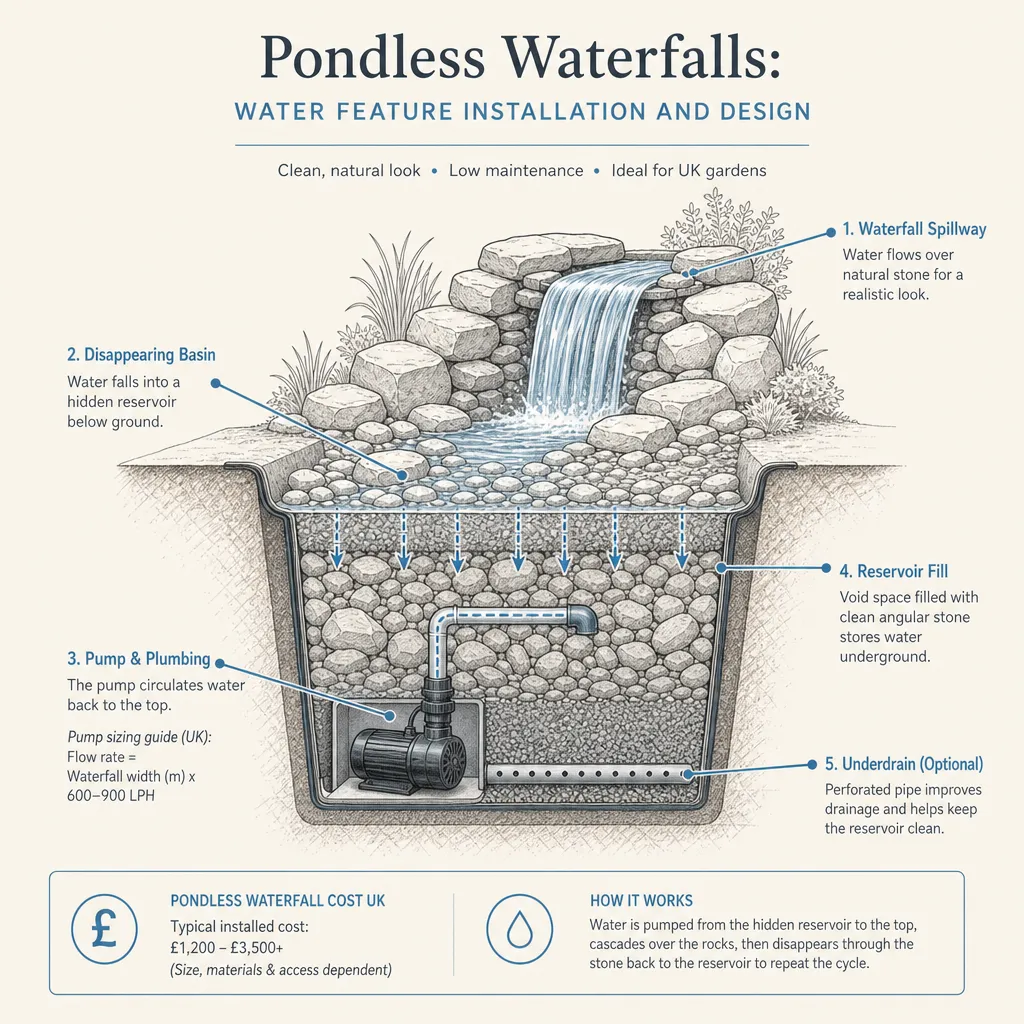
Pondless Waterfalls: Water Feature Installation and Design
A pondless waterfall recirculates water through a buried underground reservoir using a submersible pump — there is no open body of water when the feature is off.
 Improvement & Build
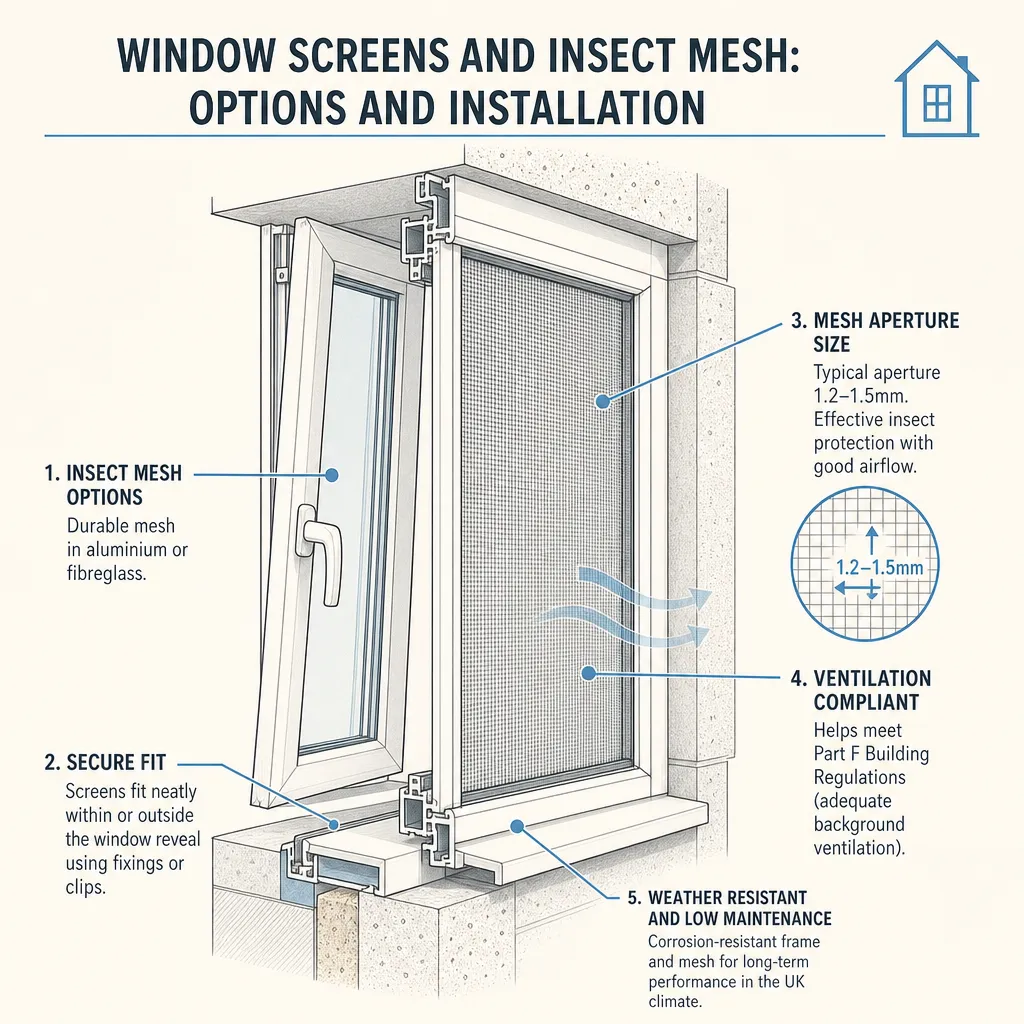
Window Screens and Insect Mesh: Options and Installation
UK window screens fall into four main types: fixed frame, roller retractable, pleated folding, and magnetic snap-fit.
 Improvement & Build
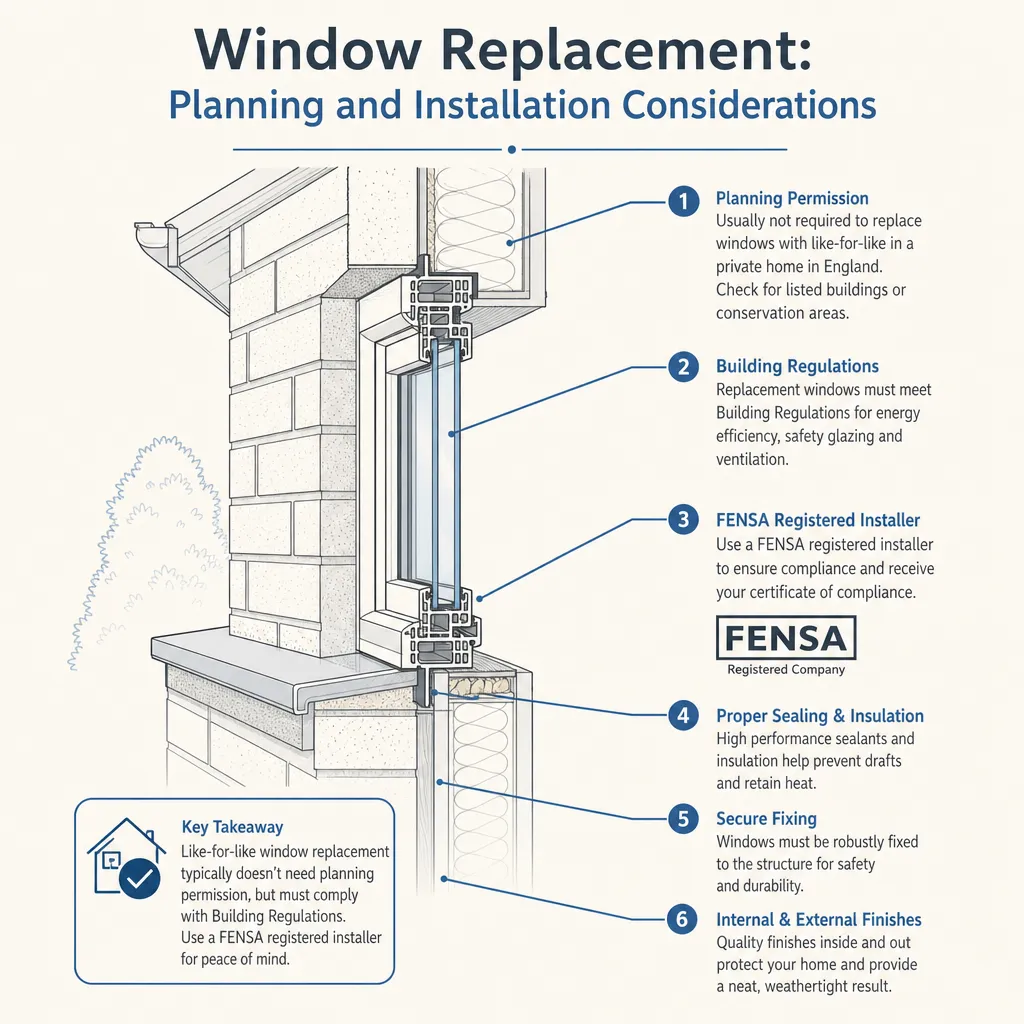
Window Replacement: Planning and Installation Considerations
Most window replacements in England fall under permitted development and do not need planning permission, though listed buildings, flats, and conservation areas are exceptions.
 Improvement & Build
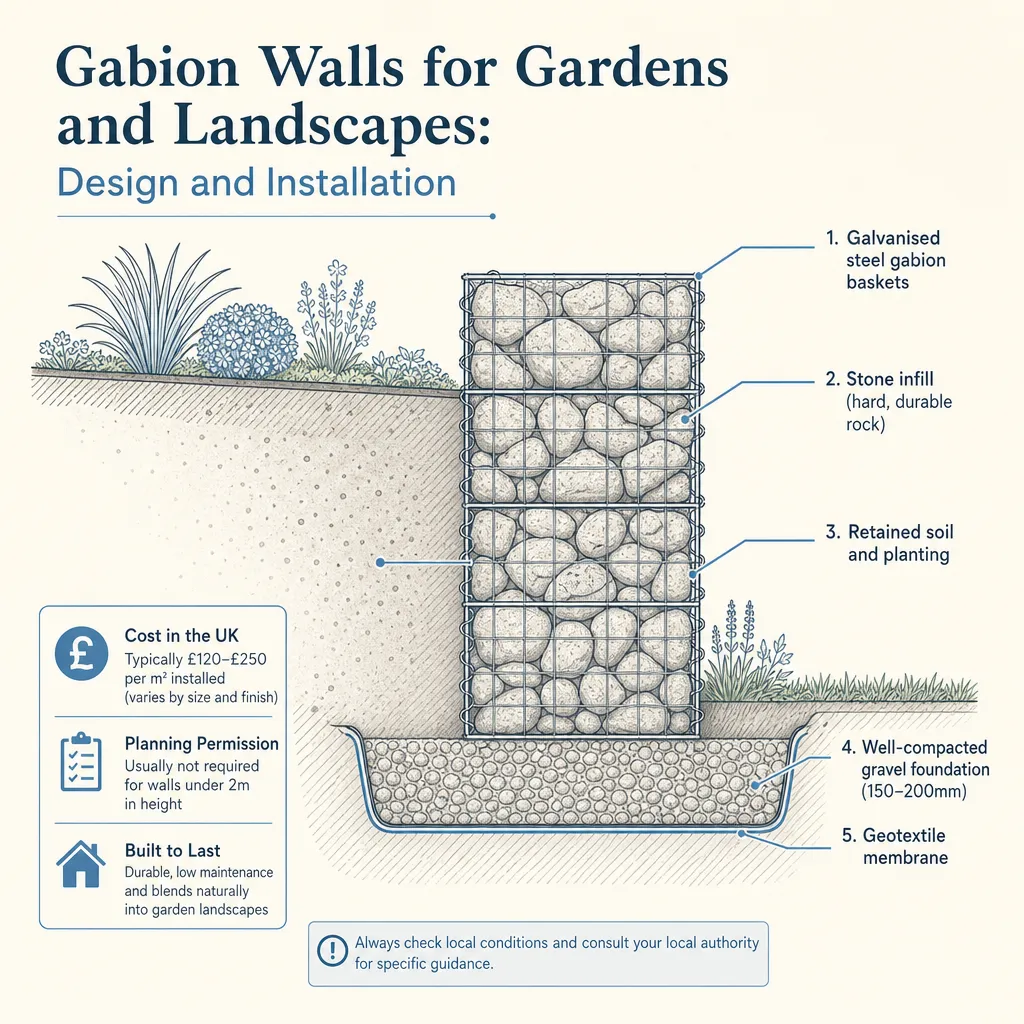
Gabion Walls for Gardens and Landscapes: Design and Installation
Gabion walls are wire mesh baskets filled with stone, stacked to form freestanding or retaining landscape structures.
 Improvement & Build
Window Tinting and Solar Control Films for Residential Properties
Solar control window films reject 40–80% of total solar energy and block 99% of UV radiation, reducing overheating and fading without replacing glazing.