Gable Roof Styles and Structural Considerations in UK Architecture
By Housey · Last reviewed 26th of May 2026
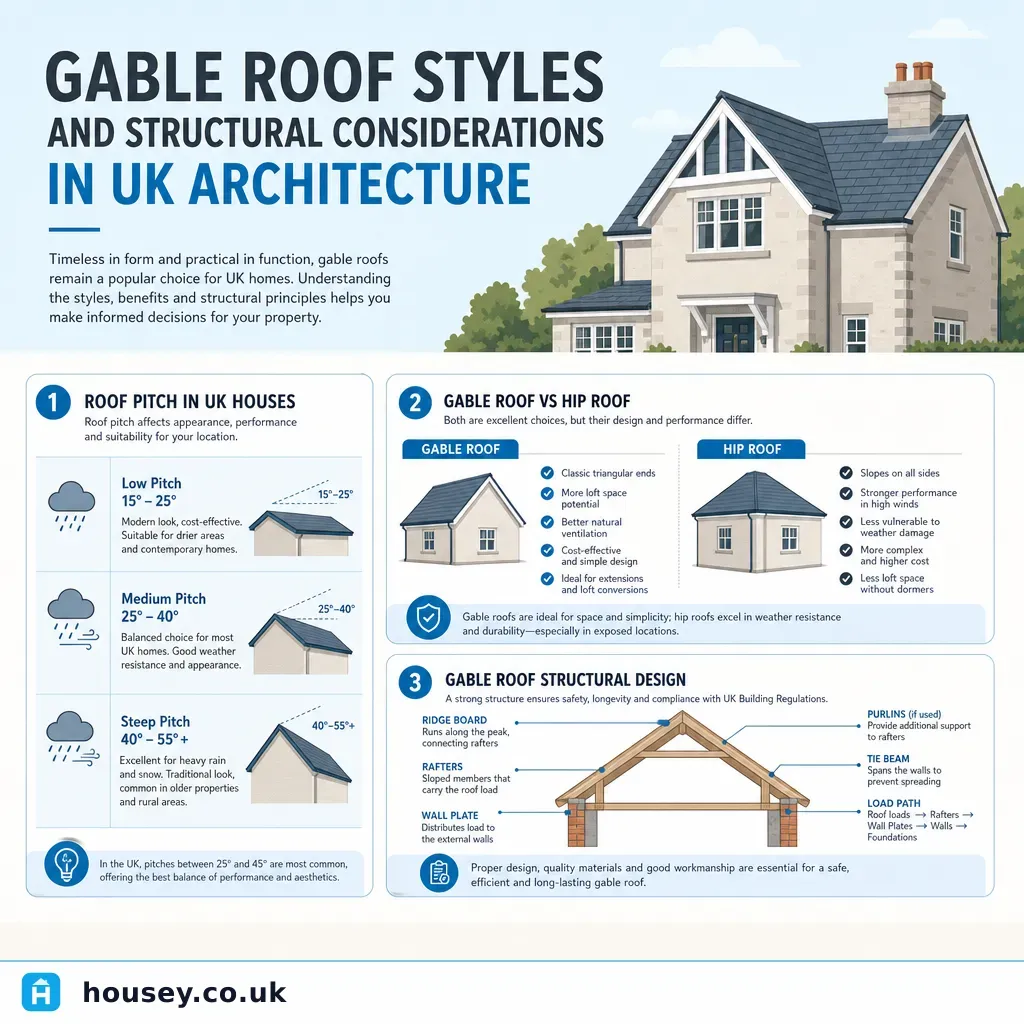
Gable Roof Styles and Structural Considerations in UK Architecture
Gable roofs are the defining silhouette of British residential streets, from Victorian terraces to 1930s semis and modern new-builds. The choice of roof form influences not just how a property looks but how it performs structurally, how much usable loft space results, and what a future conversion or repair project will cost. Understanding gable roof types and their structural requirements matters whenever you are planning a new build, extending a property upwards, or assessing a home prior to purchase.
Key points
- A standard gable roof consists of two sloping planes meeting at a central ridge with triangular gable end walls at each termination — pitch on UK residential properties typically sits between 35° and 45°.
- Building Regulations Approved Document A governs structural requirements for roofs, including rafter sizing calculated to span tables or BS EN 1995-1-1 (Eurocode 5 for timber), ridge board specifications, and wall-plate connections.
- Gable end walls act as vertical sails in high winds; Building Regulations — supported by BS EN 1991-1-4 (wind actions on structures) — require that gable ends above 3 m are adequately tied back to the roof structure.
- Properties built before 1976 are unlikely to have the metal restraint straps now required between gable walls and ceiling or roof joists; absence of straps is a standard defect noted in RICS Level 2 and Level 3 surveys.
- Undersized rafters are one of the most common structural defects flagged on pre-1950 properties; rafter size must be verified against Approved Document A span tables before any additional load — such as heavier tile or slate — is specified.
Gable roof varieties common in UK architecture
The gable roof category covers several distinct forms, each with different structural implications and planning contexts.
Standard (plain) gable Two sloping faces, a horizontal ridge at the apex, and a triangular gable end at each termination. The most economical form to build and the most common on UK housing estates from the Edwardian era through to modern developments.
Cross-gable Two or more gable sections intersecting at right angles, forming an L- or T-shaped plan. Common on larger Victorian and Edwardian properties. The valley junction where the two roof planes meet is a maintenance hotspot requiring careful lead or GRP detailing to prevent water ingress.
Dutch gable (gable cap) A hipped roof at the lower section rising to a small gable at the ridge. Popular on Georgian and neo-Georgian properties. Offers more headroom at the ridge end than a pure hip while retaining some wind resistance. The transition zone between hip and gable is structurally more complex and must be detailed carefully by a designer.
Jerkinhead (clipped gable) A standard gable whose apex is clipped back to create a small hip at the top. Reduces wind loading on the gable end and is sometimes preferred in exposed locations across Scotland, Wales, and the north of England.
Crow-stepped gable A decorative form in which the gable end wall rises in stepped stages above the roofline. Common in Scottish baronial architecture and some East Anglian vernacular buildings. The stepped masonry must be properly tied to the roof structure to prevent differential movement over time.
Structural principles of gable roofs
How loads are carried
A gable roof transfers load through rafters to wall plates bearing on the external walls. The ridge board — or ridge beam in modern engineered designs — connects the rafter pairs at the apex. Collar ties, horizontal timbers connecting opposing rafter pairs at roughly two-thirds of the height, resist the outward thrust that would otherwise push the wall tops apart.
Outward thrust is the most significant structural concern in an older gable roof. If collar ties are removed during a loft conversion without appropriate engineering input, wall tops can spread over time, cracking masonry and distorting window and door frames. Evidence of removed or cut collar ties is a key inspection item on any building survey.
Rafter sizing
Rafter dimensions depend on the clear span between ridge and wall plate, the roof pitch, the dead load (tiles, slates, battens, and sarking felt) and the imposed load (snow and maintenance access). Timber grade is also relevant; C16 and C24 are the most common structural grades in UK residential construction.
Approved Document A (2013 edition) provides span tables for standard configurations. A chartered structural engineer or timber frame designer should verify sizes for unusual spans, heavy coverings such as natural Welsh slate on a large Victorian terrace, or where the original timbers are suspected to be undersized.
Gable end wall stability
Masonry gable end walls must be tied to the roof structure. The 1976 amendments to building regulations introduced requirements for metal restraint straps at prescribed intervals. Most Victorian, Edwardian, and interwar housing predates this requirement, and straps are often absent — particularly where roof repairs have been carried out piecemeal without reinstating the original ties. Retrofitting restraint straps is a standard, cost-effective repair when identified early by a surveyor.
Comparison: gable roof vs hip roof
Feature | Gable roof | Hip roof |
|---|---|---|
Construction complexity | Simpler — fewer roof components | More complex — four sloped planes and hip intersections |
Typical build cost | Lower (fewer timbers, simpler detailing) | Higher (more labour and material) |
Usable loft volume | Greater — especially at the gable ends | Less headroom at the eaves |
Wind resistance | More vulnerable at the exposed gable end | Better all-round wind resistance |
Loft conversion suitability | Generally more straightforward | May require a hip-to-gable alteration |
Valley maintenance | Valleys only at cross-gable junctions | Hip intersections also require careful detailing |
Typical UK setting | Most residential styles and eras | Exposed coastal or upland locations, 1930s semis, cottage vernacular |
Which roof style should you choose?
Use this guide when specifying a roof for a new build, extension, or replacement structure:
- Choose a standard gable if the project has a rectangular plan, budget is a primary consideration, and the site is not significantly exposed to prevailing westerly winds.
- Choose a hip roof if the property is in an exposed location, a conservation area where the local vernacular is hipped, or where neighbouring extension rooflines suggest planners expect a hipped form.
- Consider a Dutch gable if the design needs additional ridge headroom but a plain gable would be out of character with the streetscene — provided a structural engineer confirms the transition zone can be cleanly detailed.
- Ask a structural engineer if the span exceeds 4 m between supports, the covering material is heavy, you are converting an existing roof, or any collar ties are proposed to be removed.
- Check with your local planning authority if the property is listed, in a conservation area, or if any roof alteration would increase the ridge height or alter the roofline visible from the highway.
Roof pitch and its practical implications
Pitch — the angle of the slope from horizontal — affects several outcomes:
- Minimum pitch for the covering material: interlocking concrete tiles typically require 17.5°–22.5°; natural slates 25°–35°; plain clay tiles 35°–45°. Using a covering below its manufacturer-specified minimum pitch risks water ingress under wind-driven rain. BS 5534 sets requirements for slating and tiling fixings at varying pitches.
- Loft headroom: a 35° pitch over a 5 m-wide dwelling gives roughly 2.0 m of headroom at the ridge — workable for storage; a 45° pitch over the same span gives close to 2.5 m, which may be viable for habitable use subject to other constraints.
- Snow load accumulation: steeper pitches shed snow more readily; flatter pitches must be designed to carry accumulated snow loads calculated to BS EN 1991-1-3.
- Permitted development: increasing the ridge height of an existing roof requires planning permission unless the specific conditions of the Town and Country Planning (General Permitted Development) (England) Order 2015 are fully met.
Red flags to watch for in an existing gable roof
The following signs warrant professional assessment before purchasing a property or commencing any alteration works:
- Visible outward lean or bowing at gable end walls.
- A sagging or deflected ridge line visible from street level or from within the loft.
- Cracked or open mortar at gable coping stones or at the verge detail.
- Evidence inside the loft that collar ties have been cut or removed, particularly following a previous loft conversion.
- No metal restraint straps between the gable wall and ceiling or roof joists in a pre-1976 property.
- Mismatched tile or slate coverings indicating piecemeal repairs that may have introduced incompatible loading.
- Active water staining at valley junctions in a cross-gable arrangement.
When to get professional help
Consult structural engineers before removing any internal roof timbers, increasing span by removing a load-bearing wall beneath the roof, adding a dormer window, or installing heavy roofing materials that differ from the original specification.
Engage qualified roofers for replacing or re-pitching sections of covering, re-bedding or repointing ridge tiles and coping stones, installing or replacing lead or GRP valley liners, and any repair or replacement of the gable verge detail or barge boards.
How Housey can help
Housey connects you with vetted structural engineers who can assess gable roof loading, advise on conversion feasibility, and provide the calculations building control requires — alongside experienced roofers for covering work, ridge repairs, and valley detailing across all gable roof types.
Frequently asked questions
What pitch is typical for a gable roof on a UK house?
Most UK residential gable roofs sit between 35° and 45°. Victorian and Edwardian terraces often used 40°–45° to suit plain clay tiles and natural slate; 1930s and post-war semis commonly used 35°–40°; newer builds sometimes specify lower pitches of 22.5°–30° with interlocking concrete tiles. The covering material determines the minimum acceptable pitch, as set out in BS 5534.
Do I need planning permission to alter a gable roof?
Alterations that increase the ridge height or change the roofline visible from the highway generally require planning permission. The Town and Country Planning (General Permitted Development) (England) Order 2015 allows certain loft conversions and dormer windows without a planning application, provided the ridge is not raised and other specific conditions are met. Listed buildings and conservation area properties usually need consent for any external roof alteration.
Are gable end walls a structural concern in older UK houses?
Yes. Properties built before 1976 may lack the metal restraint straps now required to tie gable walls to the roof structure. This can allow the wall to bow outward over time, particularly in exposed locations. A RICS Level 2 or Level 3 survey checks for this specifically, and retrofitting restraint straps is a relatively straightforward repair when caught early.
What is a hip-to-gable loft conversion?
A hip-to-gable conversion extends the existing hipped slope outward to create a new vertical gable end, gaining additional loft floor area. It usually requires planning permission as it increases roof volume beyond standard permitted development limits. A structural engineer must design the new gable wall and its connection to the existing roof structure before any work begins.
Sources and further reading
- Approved Document A: Structure — GOV.UK
- Town and Country Planning (General Permitted Development) (England) Order 2015 — legislation.gov.uk
- BS 5534: Slating and Tiling for Roofs and Cladding — BSI
- RICS Home Survey Standard — RICS
- Planning Portal: Loft Conversions — Planning Portal
Useful next reads
 Planning & Pre-Build
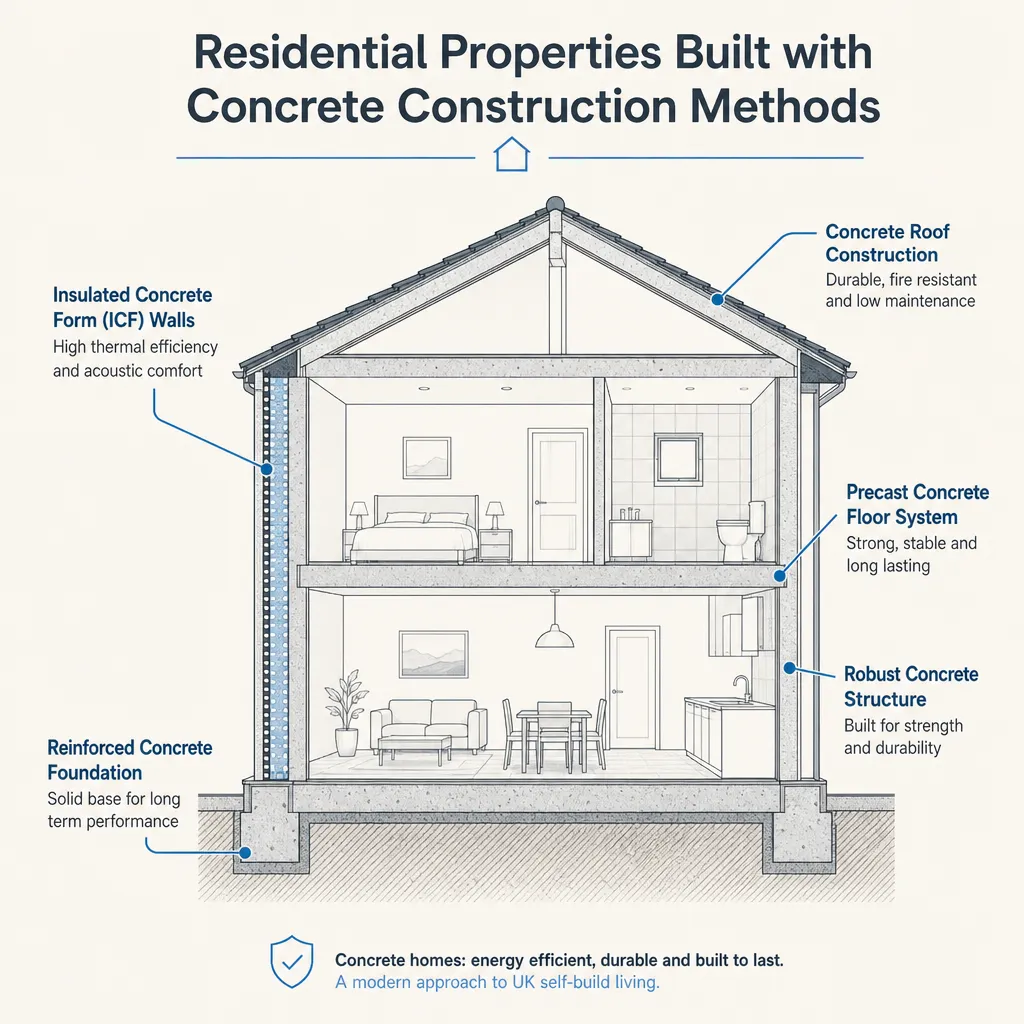
Residential Properties Built with Concrete Construction Methods
UK homes are built using several concrete methods: in-situ cast concrete, precast panel systems, insulating concrete formwork (ICF), and older non-traditional types such as Wimpey No-Fines and Laing Easiform.
 Planning & Pre-Build
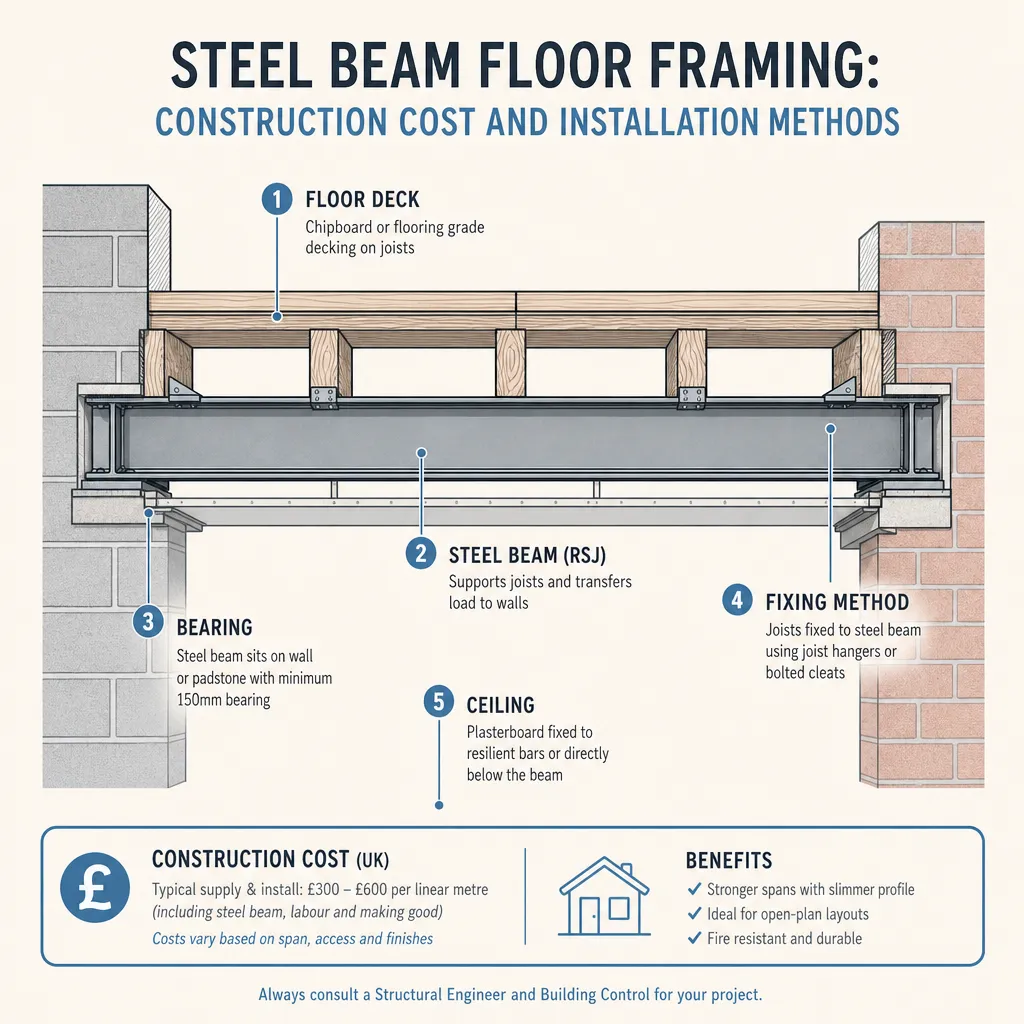
Steel Beam Floor Framing: Construction Cost and Installation Methods
Steel beam floor framing is used in UK homes when spans are too wide for timber joists, or when a load-bearing wall is removed.
 Planning & Pre-Build
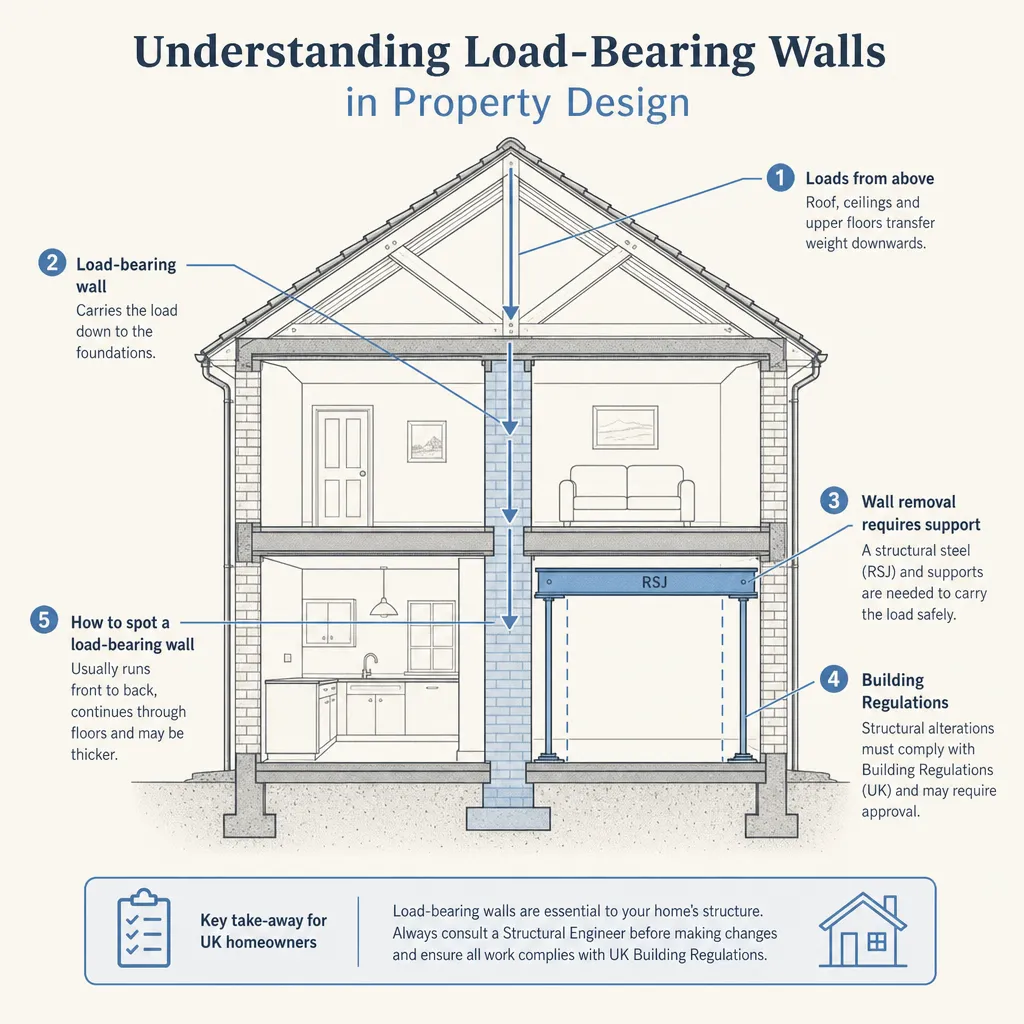
Understanding Load-Bearing Walls in Property Design
A load-bearing wall carries the weight of floors, roofs, or other walls above it down to the foundations.
 Planning & Pre-Build
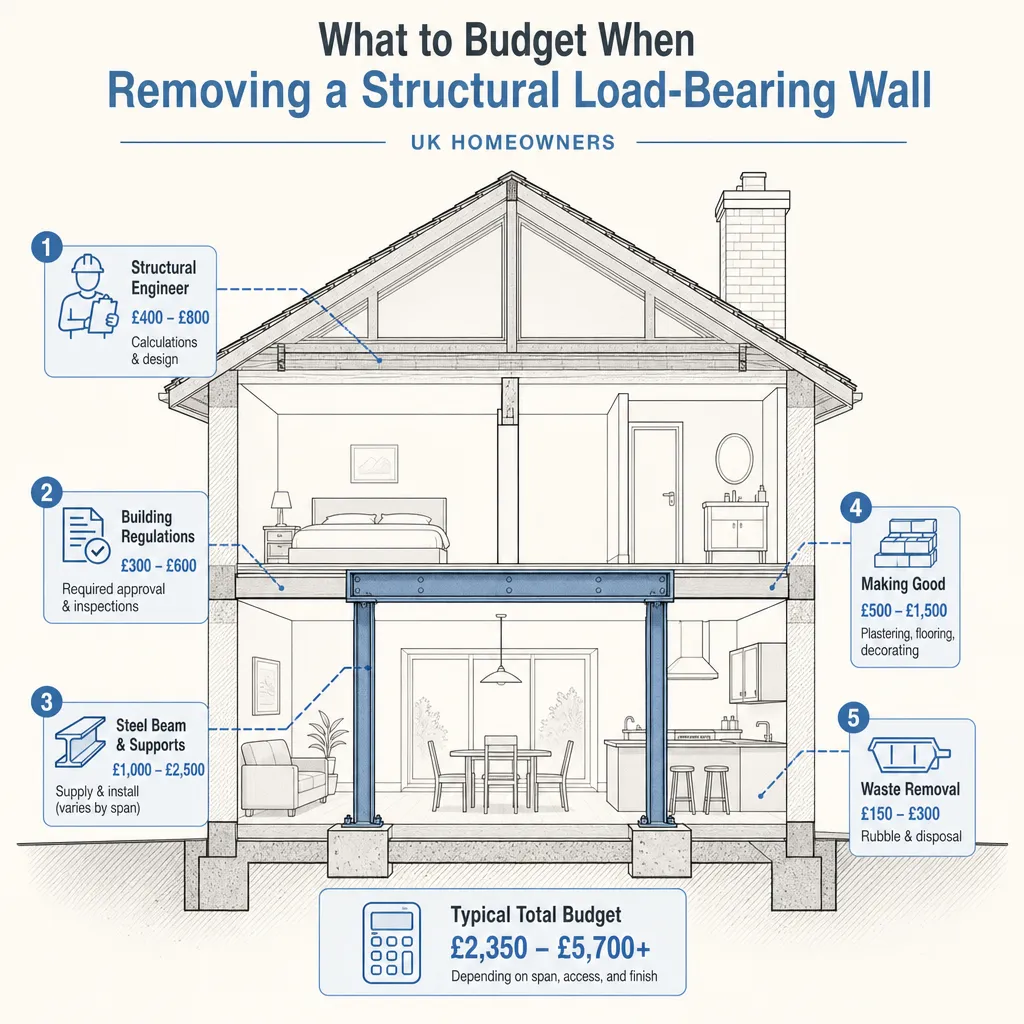
What to Budget When Removing a Structural Load-Bearing Wall
Removing a load-bearing wall in a typical UK home costs £2,500–£8,000 or more in total, covering a structural engineer's calculations, Building Regulations approval, the steel beam, builder's labour, and replastering.
 Planning & Pre-Build
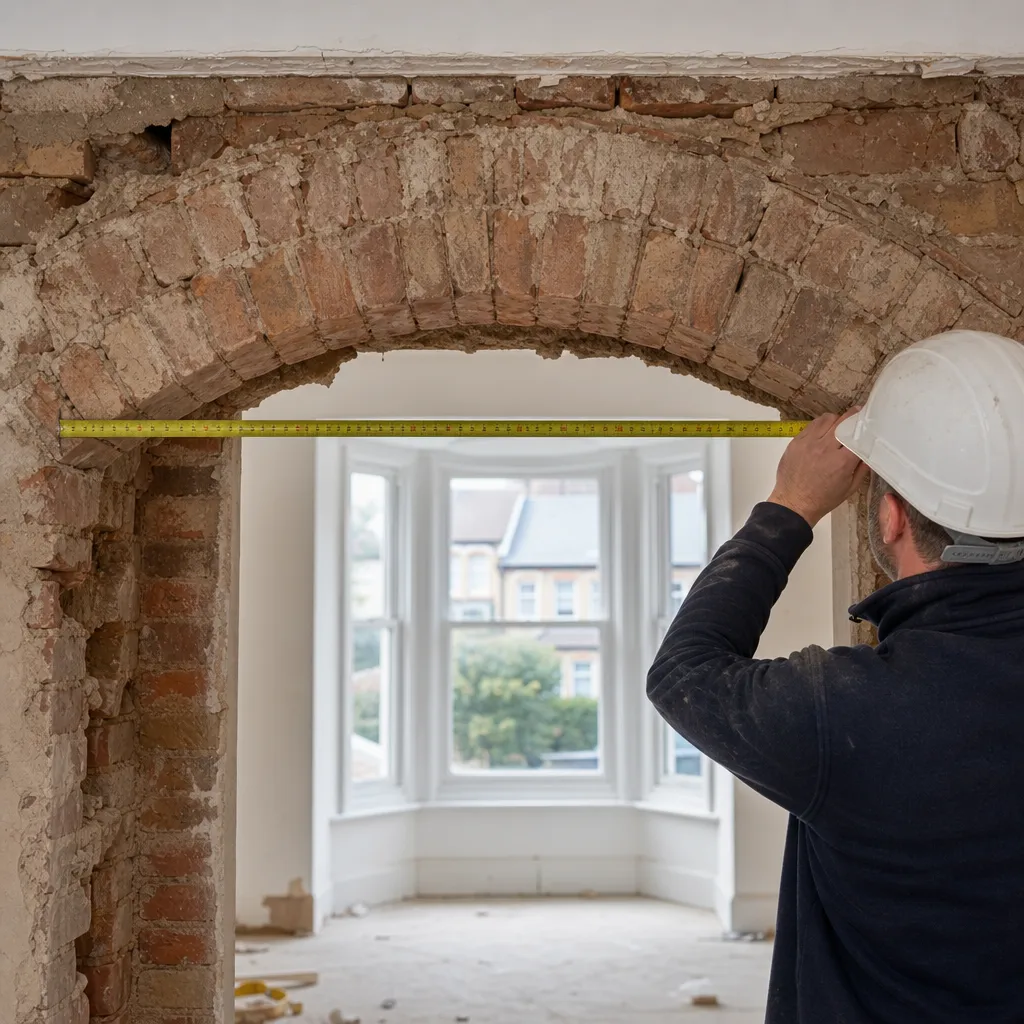
Structural Arching in Walls: Load Distribution and Design
Structural arching occurs when masonry redistributes compressive loads in a triangular or parabolic path around an opening, reducing the load on the lintel below.