Understanding Load-Bearing Walls in Property Design
By Housey · Last reviewed 12th of May 2026
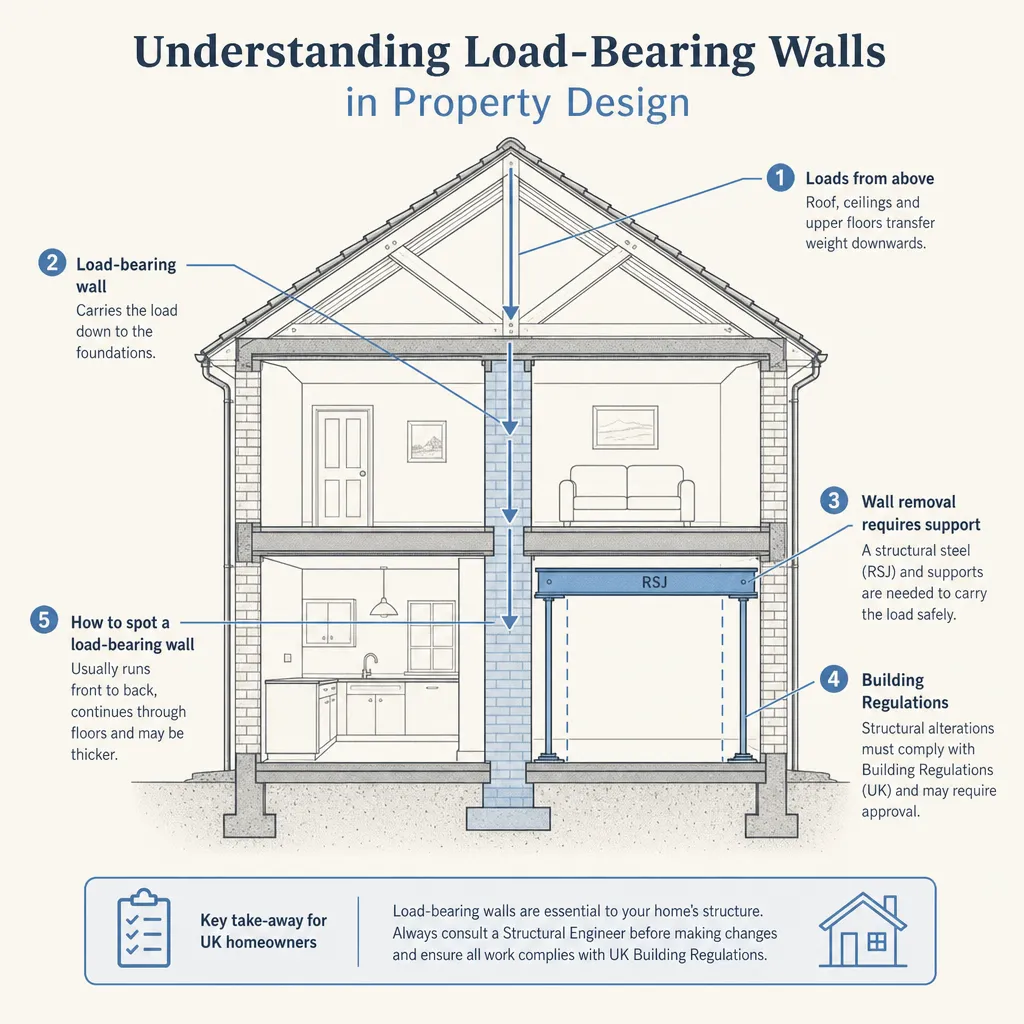
Understanding Load-Bearing Walls in Property Design
Knowing which walls in your home carry structural loads — and which are simply dividers — is fundamental to any renovation that involves opening up spaces, adding doorways, or reconfiguring layouts. Misidentifying a load-bearing wall before starting work is one of the most common causes of serious structural problems in UK homes, and can lead to costly remediation, building control enforcement, and in extreme cases, structural instability. Whether you are planning a kitchen-diner knock-through in a 1930s semi or forming a new doorway in a Victorian terrace, understanding how load is transferred through a building is essential before a single brick is touched.
Key points
- A load-bearing wall carries loads from floors, roofs, or other walls above it down to the foundations; removing or altering one without proper structural design is a breach of Building Regulations Part A (Structure).
- Building Regulations Part A applies to any work that affects a structural element — building control approval is required, and work must be inspected before it is closed in.
- A structural engineer must assess any wall you suspect is load-bearing before alteration; visual checks alone are not reliable enough.
- Steel beams — commonly called RSJs or universal beams — are typically required to span openings left by removed load-bearing walls; sizing must be calculated by a qualified engineer.
- Unauthorised structural alterations must be regularised before a property sale; mortgage lenders and buyers' solicitors routinely request building regulations completion certificates.
Load-bearing vs partition walls: what is the difference?
A load-bearing wall is a structural element that transfers the weight of the building above — floors, roofs, other walls — down through the structure to the foundations. Remove or significantly weaken it without providing an alternative load path, such as a steel beam or concrete lintel, and the structure above can deflect, crack, or in serious cases partially fail.
A non-load-bearing wall, commonly called a partition wall, divides space only. It carries its own weight alone and can usually be removed with fewer structural implications, though building control notification may still apply depending on the scope of the work.
Feature | Load-bearing wall | Partition wall |
|---|---|---|
Carries loads from above | Yes | No |
Runs perpendicular to floor joists | Usually | Often parallel |
Sits on a foundation or wall below | Yes | May sit on a suspended floor |
Structural engineer required for removal | Always | Rarely, but confirm first |
Building Regulations Part A applies | Yes | Depends on scope |
Typical construction | Solid brick, block, or structural timber | Lightweight timber stud or block |
Found in | All UK property eras | More common post-1920 |
How to identify a load-bearing wall
No visual check is definitive. Only a structural engineer or suitably qualified building surveyor can confirm whether a wall is structural. That said, the following are indicators that a wall may be load-bearing:
- The wall runs at 90° to the floor joists above or below.
- It sits directly above another wall or beam on the floor below, suggesting a continuous load path.
- Floor joists rest on, or are notched into, the wall.
- The wall is solid masonry (brick or dense block) rather than lightweight stud.
- The wall runs through the centre of the building rather than along the perimeter only.
- In properties built before 1919, treat all internal masonry walls as load-bearing until confirmed otherwise by a professional.
What not to assume: Do not assume a timber-stud wall is non-load-bearing because of its construction. Many pre-1960s homes use timber-stud walls that do carry floor or roof loads, particularly at upper storey and loft levels.
Which professional do you need?
Situation | Professional to instruct |
|---|---|
Suspected load-bearing wall removal or alteration | Structural engineer |
General renovation layout or space planning | Architect or architectural technologist |
Structural calculations for building control | Structural engineer |
Building regulations drawings and submission | Architect or architectural technologist |
Party wall implications with adjoining owner | Party wall surveyor |
Pre-purchase concern about structural alterations | RICS Level 3 Building Survey |
Building regulations and the approval process
Removing or significantly altering a load-bearing wall in England and Wales triggers Building Regulations Part A (Structure). You must notify building control — either your local authority's building control department or a registered building control approver — before work starts.
Two common routes exist:
- Full Plans application: Drawings and structural calculations are submitted and approved before work begins. Preferred for structural alterations because any issues are resolved before the contractor starts.
- Building Notice: Work can begin sooner, but the onus is on you to ensure compliance. Less suited to structural alterations where calculations and pre-approval add important certainty.
A structural engineer produces the beam-sizing calculations; an architect or architectural technologist usually prepares the drawings. Building control will inspect the beam installation before the opening is closed in, and will issue a completion certificate.
Work carried out without building regulations approval is classed as unauthorised. Before a property can be sold, such work must usually be regularised — either through a regularisation application to building control or through indemnity insurance, both of which buyers' solicitors and mortgage lenders may scrutinise.
Decision tree: do you need a structural engineer?
- Removing any internal wall? Instruct a structural engineer to confirm whether it is load-bearing before work begins.
- Wall is solid masonry? Treat as load-bearing and instruct a structural engineer regardless of its apparent position.
- Wall is lightweight timber stud? It may still be structural. Confirm with a structural engineer before removal.
- Forming a new opening in an external wall? A structural engineer is needed to specify the lintel or beam.
- Property is listed? Listed building consent is also required; contact your local planning authority.
- Wall is shared with a neighbour? Consider Party Wall etc. Act 1996 implications and consult a party wall surveyor.
Important limitations
This article provides general information about load-bearing walls in UK residential properties. Structural behaviour varies significantly depending on property age, construction method, condition, previous alterations, and ground conditions. Nothing here constitutes structural or legal advice and it cannot substitute for a professional assessment of your specific property. Always instruct a chartered structural engineer before altering any wall you suspect may be structural.
What to ask a qualified professional
Before instructing a structural engineer or submitting to building control:
- What is the likely structural form of this property, and how does that affect the assessment?
- Will you confirm in writing which walls are and are not load-bearing?
- What beam specification do you recommend, and what is the basis of that calculation?
- Will your calculations be suitable for submission to building control as drawn?
- What trades will I need to coordinate, and in what sequence?
- Will you carry out a site inspection during installation, or are these desktop calculations only?
- Are there any party wall implications I should be aware of?
When to get professional help
Seek professional advice immediately if:
- You or your contractor are uncertain whether a wall is structural — do not proceed without written confirmation.
- Cracks or deflection have appeared following a previous wall removal.
- Floors above a recently altered wall are bouncing or sagging.
- Doors or windows in rooms adjacent to previous works are sticking or showing new gaps.
- You are approaching exchange of contracts on a property where structural alterations appear to have been carried out without building regulations sign-off.
How Housey can help
Housey connects you with vetted structural engineers who can assess walls, produce beam calculations, and liaise with building control on your behalf. Where your project also requires formal drawings for a building regulations application, our network includes professionals offering building regulations drawings to accompany structural calculations.
Frequently asked questions
How do I know if a wall is load-bearing?
Only a structural engineer or suitably qualified building surveyor can confirm this reliably. Indicators include the wall running perpendicular to floor joists, sitting above a wall on the floor below, or being of solid masonry construction. In pre-1919 properties, treat all internal masonry walls as load-bearing until a professional confirms otherwise. Visual checks alone are not sufficient.
Do I need building regulations approval to remove a load-bearing wall?
Yes. Removing or altering a load-bearing wall in England and Wales requires a Building Regulations application under Part A (Structure). You will need a structural engineer's calculations and building control inspection before the work is closed in. Carrying out this work without approval can affect your ability to sell the property and may require costly regularisation.
How much does it cost to remove a load-bearing wall in the UK?
Costs vary considerably by span, beam specification, location, and finish. Structural engineer fees, beam supply, installation by a builder, making good, and building control fees may together run to several thousand pounds. Indicative UK costs, last reviewed 2026-05-12 — always obtain at least three itemised quotes covering all elements of the work.
What is an RSJ and when is one needed?
RSJ stands for Rolled Steel Joist — the colloquial term for a steel universal beam used to span openings created when a load-bearing wall is removed. The correct beam section must be calculated by a structural engineer based on the span, applied loads, and bearing conditions at each end. Never select or install a beam without an engineer's calculation.
Sources and further reading
- Approved Document A — Structure — GOV.UK / MHCLG
- Building regulations approval — GOV.UK
- Party Wall etc. Act 1996 — legislation.gov.uk
- RICS building surveying standards — RICS
- Structural safety in construction — HSE
Useful next reads
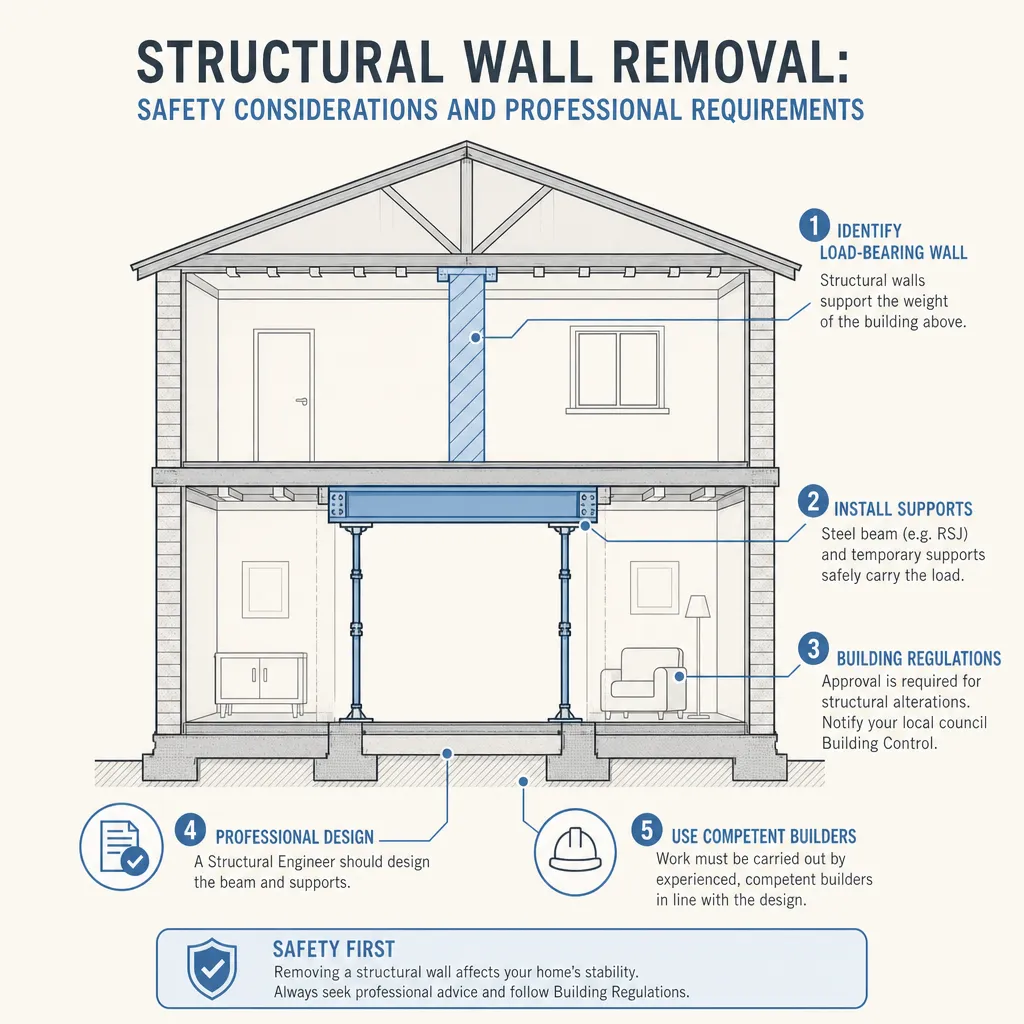 Planning & Pre-Build
Structural Wall Removal: Safety Considerations and Professional Requirements
Removing a load-bearing wall in the UK always requires Building Regulations approval under Approved Document A, plus a structural engineer's beam calculation before any demolition begins.
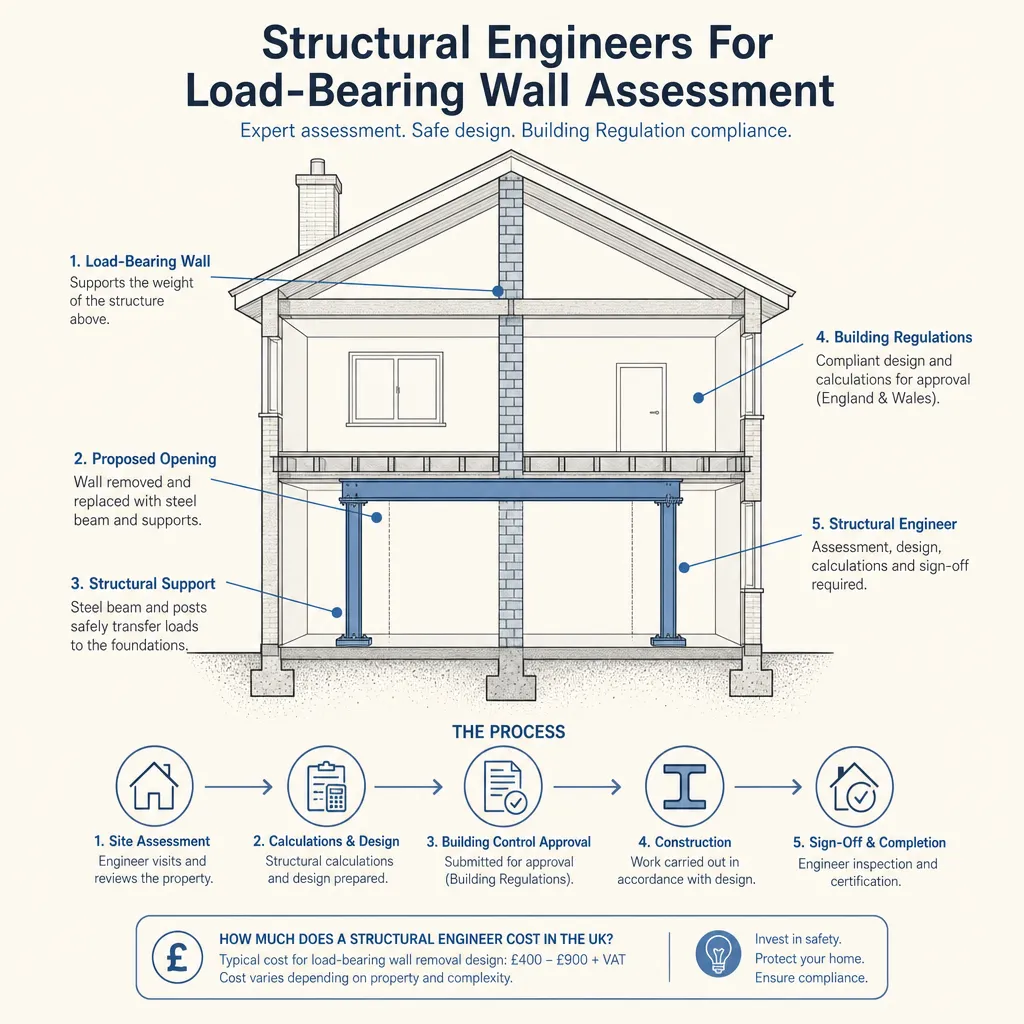 Planning & Pre-Build
Structural Engineers For Load-Bearing Wall Assessment
A structural engineer assesses whether a wall is load-bearing, designs the replacement beam or support required, and produces drawings for Building Regulations approval.
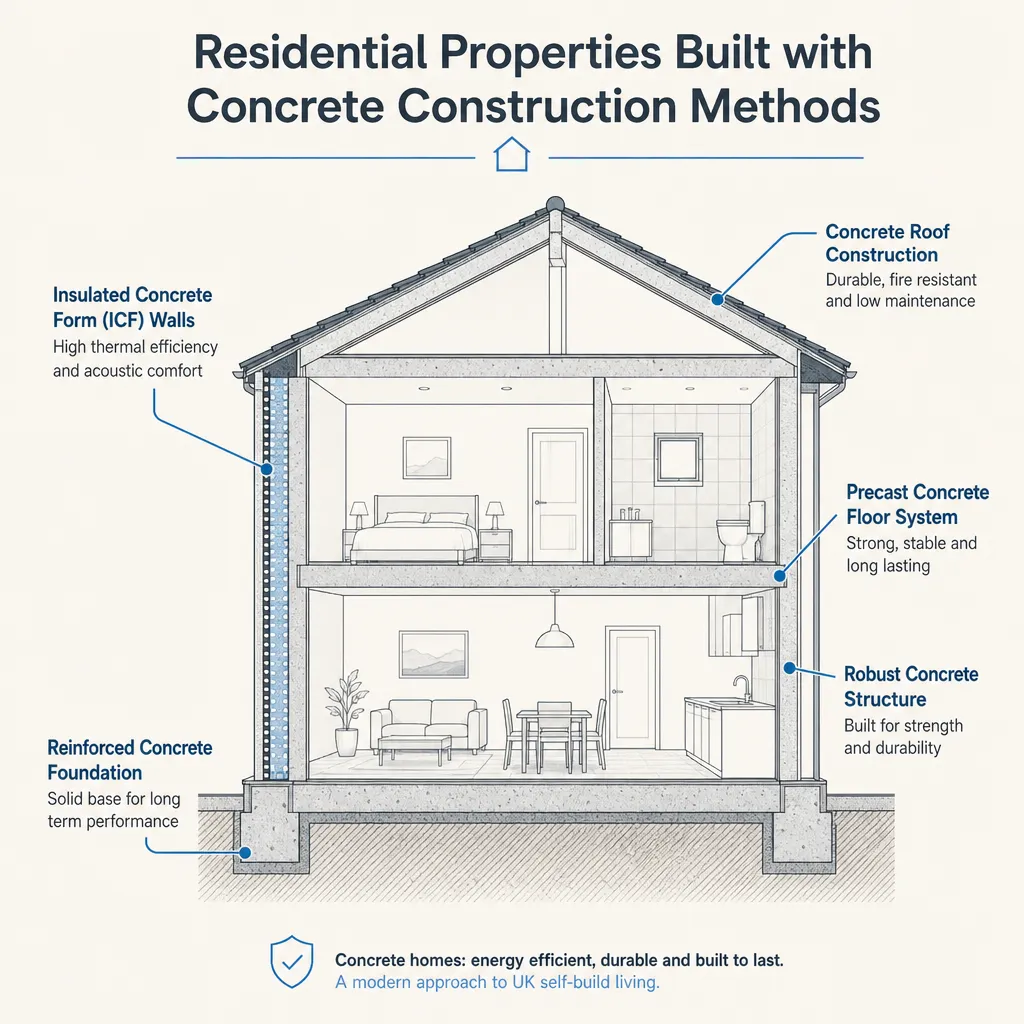 Planning & Pre-Build
Residential Properties Built with Concrete Construction Methods
UK homes are built using several concrete methods: in-situ cast concrete, precast panel systems, insulating concrete formwork (ICF), and older non-traditional types such as Wimpey No-Fines and Laing Easiform.
 Planning & Pre-Build
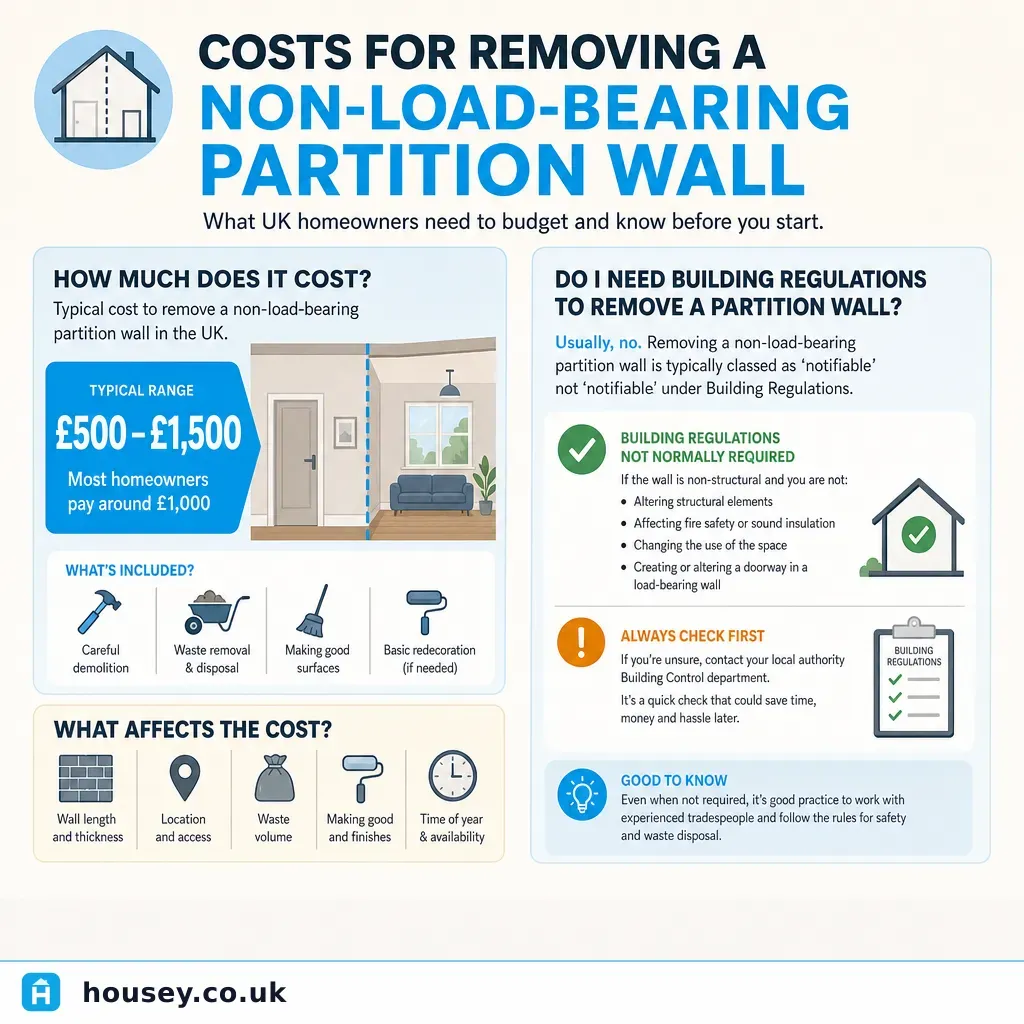
Costs for removing a non-load-bearing partition wall
Removing a non-load-bearing partition wall in a UK home typically costs £300–£1,500 in labour, plus £200–£600 or more for replastering and making good.
 Planning & Pre-Build
Patio Installation and Building Regulation Certification: What Builders Need to Know
Most ground-level patios in England do not require building regulations approval.