Gable Roofing: Design Advantages and Considerations
By Housey · Last reviewed 17th of May 2026
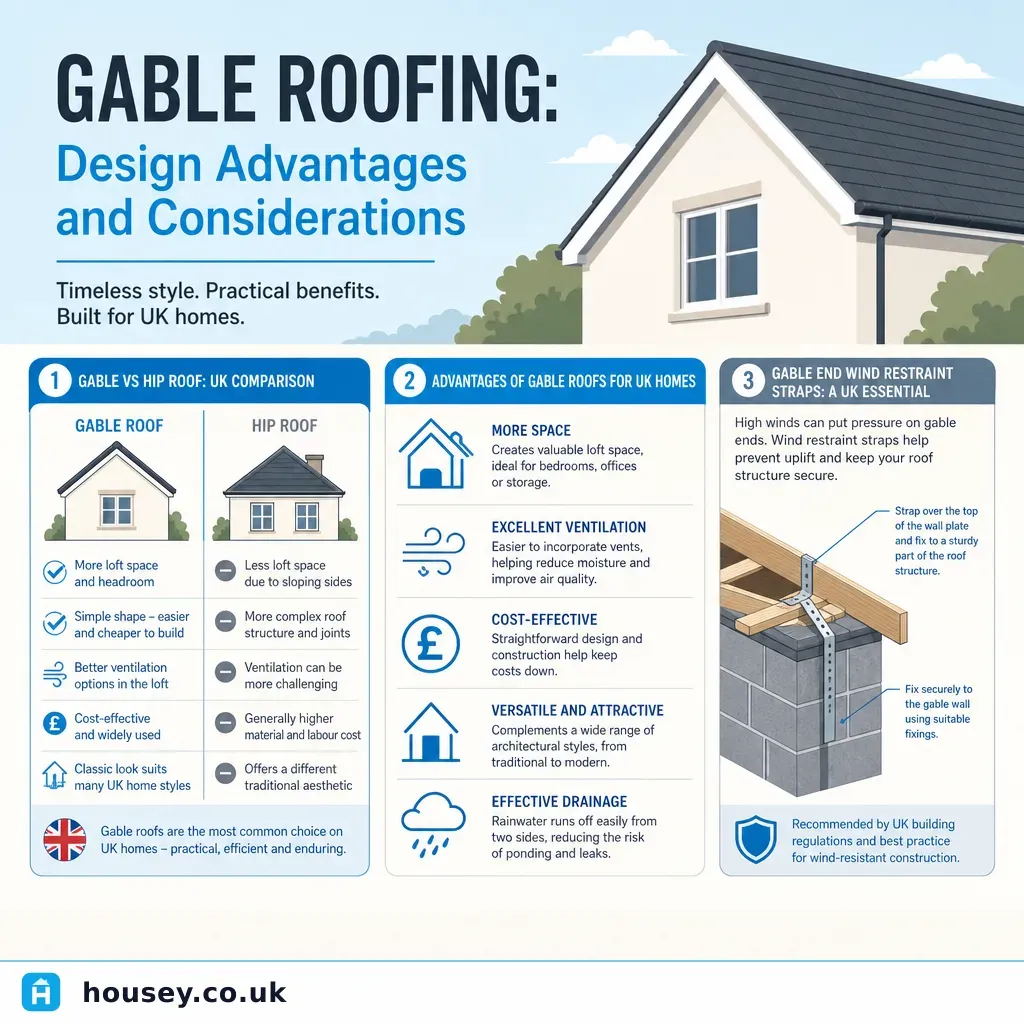
Gable Roofing: Design Advantages and Considerations
A gable roof is the defining shape of UK residential housing — the triangular end profile appears on Victorian terraces, 1930s semis, post-war estates, and contemporary new-builds alike. Whether you are planning a new structure, assessing a property before purchase, or trying to understand what a verge repair actually involves, knowing how gable roofs perform in the UK climate — and where they can be vulnerable — helps you ask better questions and spend your budget wisely.
Key points
- A gable roof has two sloping planes meeting at a central ridge, with vertical triangular wall sections — the gable ends — at each end of the building, making it distinct from a hip roof, which slopes on all four sides.
- Building Regulations Approved Document A (Structure) applies to any new or significantly altered roof structure in England; changing a roof's form requires structural design by a competent engineer or architect.
- The verge — where the roof covering meets the gable wall — is a common source of water ingress when mortar bedding degrades; dry-verge systems are the modern, lower-maintenance alternative confirmed by BS 5534.
- Gable walls are susceptible to lateral wind loading; Approved Document A specifies that galvanised restraint straps must connect gable walls to the roof or floor structure at maximum 2-metre centres.
- Like-for-like roof repairs are Permitted Development for most houses, but changing the shape, height, or pitch of a roof requires a planning application.
Gable roof compared with other UK roof forms
Understanding how a gable roof compares with the main alternatives helps when specifying a new building, planning an extension, or evaluating a property before purchase.
Roof type | Description | Main advantage | Main limitation | Typically suits |
|---|---|---|---|---|
Gable | Two slopes; vertical triangular end walls | Simpler structure; good loft volume; straightforward drainage | Gable ends need wind bracing; verge detailing required | Most UK housing; rear extensions; loft conversions |
Hip | Four slopes; no vertical gable walls | More aerodynamic; fewer exposed masonry joints | More complex carpentry; less usable loft space | Exposed coastal or upland locations; period revival styles |
Hipped-gable (jerkinhead) | Partial hip at the gable end | Some wind resistance with retained loft volume | Complex joinery at hip junction; higher build cost | Period properties; aesthetic preference |
Mansard | Near-vertical lower slope; shallower upper slope | Maximum usable floor area within the roof volume | Complex structure; usually needs planning permission | Urban loft conversions; dense London settings |
Mono-pitch (lean-to) | Single sloping plane | Very simple; cost-effective for single-storey work | Drainage to one wall only; limited height variation | Extensions; outbuildings; garage roofs |
Why gable roofs dominate UK residential construction
Simpler structure and lower build cost. A gable roof uses standard cut timber rafters or factory-made engineered trusses — both are well understood by UK builders and straightforward to specify and price. Hip roofs require additional rafters at each corner and more complex carpentry, typically adding to both cost and programme length.
Usable loft volume. Because gable ends are vertical masonry walls, the full triangular volume at each end of the building is accessible from the loft space. This is a key reason why the majority of loft conversions in the UK occur in gable-ended terraces and semis — there is simply more usable volume available than in a comparable hipped roof.
Straightforward drainage. With two slopes draining rainwater to the same two sides, gutter runs are uncomplicated to design and install. Hip roofs drain from four planes, requiring more complex valley flashings and gutter intersections that create additional maintenance obligations over time.
Natural ventilation pathways. Gable walls can incorporate louvred vents or grilles to provide cross-ventilation through the roof space — a practical benefit for managing condensation in cold-roof configurations without requiring ridge or eaves vents.
Gable roof vulnerabilities and how to address them
Verge detailing. The verge is the edge of the roof where the tile or slate covering meets — or overhangs — the gable wall. Traditionally, this junction was sealed with mortar bedding, which degrades over time; cracked or missing mortar is one of the most common pathways for water to enter a gable end. Modern practice, confirmed in BS 5534, favours dry-verge systems: mechanically fixed plastic or GRP trims that do not rely on mortar and require no periodic re-pointing. If your verge is mortar-bedded and over 20–25 years old, include it in any roof inspection scope.
Wind restraint. Gable walls present a large, flat surface to prevailing wind. Building Regulations Approved Document A specifies that galvanised steel restraint straps must connect the inner leaf of a gable wall to the roof structure or floor joists at no more than 2-metre centres. Missing or corroded straps are occasionally found during surveys of pre-1990 properties. If you are buying an older property, a surveyor should confirm their presence and condition.
Thermal performance of exposed gable walls. An uninsulated solid-masonry gable wall — particularly on end-of-terrace and semi-detached properties — can be a significant source of heat loss. If you are planning a retrofit, the gable may warrant external or internal wall insulation, coordinated within a whole-house approach consistent with PAS 2035 principles to avoid introducing moisture risk.
Decision tree: does your gable roof need attention?
- Verge tiles loose, mortar cracked, or sections missing? → Commission a roof survey to assess the full extent before obtaining repair quotes.
- Water stains on the gable-end internal wall or ceiling? → Could indicate verge failure, flashing failure, or penetrating damp through the masonry — a roofer and/or surveyor should inspect to diagnose the source before any repair is specified.
- Planning a loft conversion with gable ends? → A structural engineer should confirm gable wall thickness, restraint strap provision, and floor-loading capacity; building control approval is required throughout.
- Building a new extension with a gable roof? → An architect or structural engineer should design the roof structure; planning permission may be required depending on size, location, and Permitted Development thresholds.
- Like-for-like re-roofing on an existing gable? → Qualified roofers can carry out re-roofing without a planning application in most cases; confirm whether building control notification is required by your local authority.
- Property in a high-wind exposure zone (upland, coastal Scotland or Wales, exposed western England)? → A structural engineer should review gable restraint and wind-uplift detailing before roof work proceeds.
Gable roofs and planning permission
Routine repairs to a gable roof do not normally require planning permission under Permitted Development rights for most houses. A planning application is generally required if you are:
- Altering the roof's shape, pitch, or ridge height — for example, converting from a gable to a hip, or raising the ridge to gain headroom.
- Adding a dormer window that changes the roof profile — some dormers are Permitted Development within defined volume limits, but rules vary and should always be confirmed before work starts.
- In a conservation area or subject to an Article 4 Direction — where Permitted Development rights are reduced or removed.
- Working on a listed building — listed building consent is required for any material alteration, including re-roofing in a different material or altering the verge detail.
Always confirm with your local planning authority (LPA) before starting any work that changes the roof's external appearance or form.
When to get professional help
Gable roofs are generally more straightforward than other roof forms, but specific conditions require specialist input:
- Cracking or visible bowing in a gable wall — a structural engineer should assess before any repair work proceeds.
- Missing or suspect wind restraint straps — a structural engineer or chartered building surveyor to confirm adequacy.
- Pre-1919 properties where original roof timbers may be undersized by current loading standards.
- Any loft conversion, roof extension, or change of roof form — architect, structural engineer, and building control all involved.
- High-exposure sites where standard wind-loading assumptions may not be sufficient — seek structural engineering input early in the design process.
How Housey can help
Our network of vetted qualified roofers can assess, quote, and carry out gable roof repairs and full re-roofing projects. If you want an independent condition report before committing to any work, a roof survey gives you an unbiased picture of what needs attention and in what order of priority.
Frequently asked questions
Do I need planning permission to repair my gable roof?
Like-for-like roof repairs — replacing slates or tiles, re-pointing a verge, or replacing gutters — are Permitted Development and do not require planning permission for most houses. Altering the shape, pitch, or height of the roof does require a planning application. Check with your local planning authority if uncertain, especially in conservation areas or for listed buildings.
How do I know if my gable wall has wind restraint straps?
Wind restraint straps are located inside the roof space, connecting the gable wall to the floor or roof timbers. They are not visible from outside. A building surveyor or structural engineer can confirm their presence and condition during a roof inspection. They were not a standard requirement in older buildings, so pre-1990 properties sometimes lack them entirely.
Can I convert a gable loft without changing the roof?
A gable-to-gable loft conversion may be possible using the existing triangular volume without altering the roof slope, depending on ridge height and pitch. Whether the space provides adequate headroom and usable floor area varies considerably between properties. A structural engineer or architect should assess your roof space before you commit to any design or planning application.
What is a dry verge and do I need one?
A dry verge is a mechanically fixed plastic or GRP trim system covering the junction between roof tiles and the gable wall, without relying on mortar. It is more durable than traditional mortar bedding, which can crack over time and allow water ingress at the gable end. Most roofers now install dry verge as standard practice on new and replacement roofs.
Sources and further reading
- Building Regulations Approved Document A (Structure) — GOV.UK
- Planning permission for roof alterations — Planning Portal
- BS 5534: Code of practice for slating and tiling — BSI Group
- Traditional roofing: repair and maintenance — Historic England
Useful next reads
 Improvement & Build
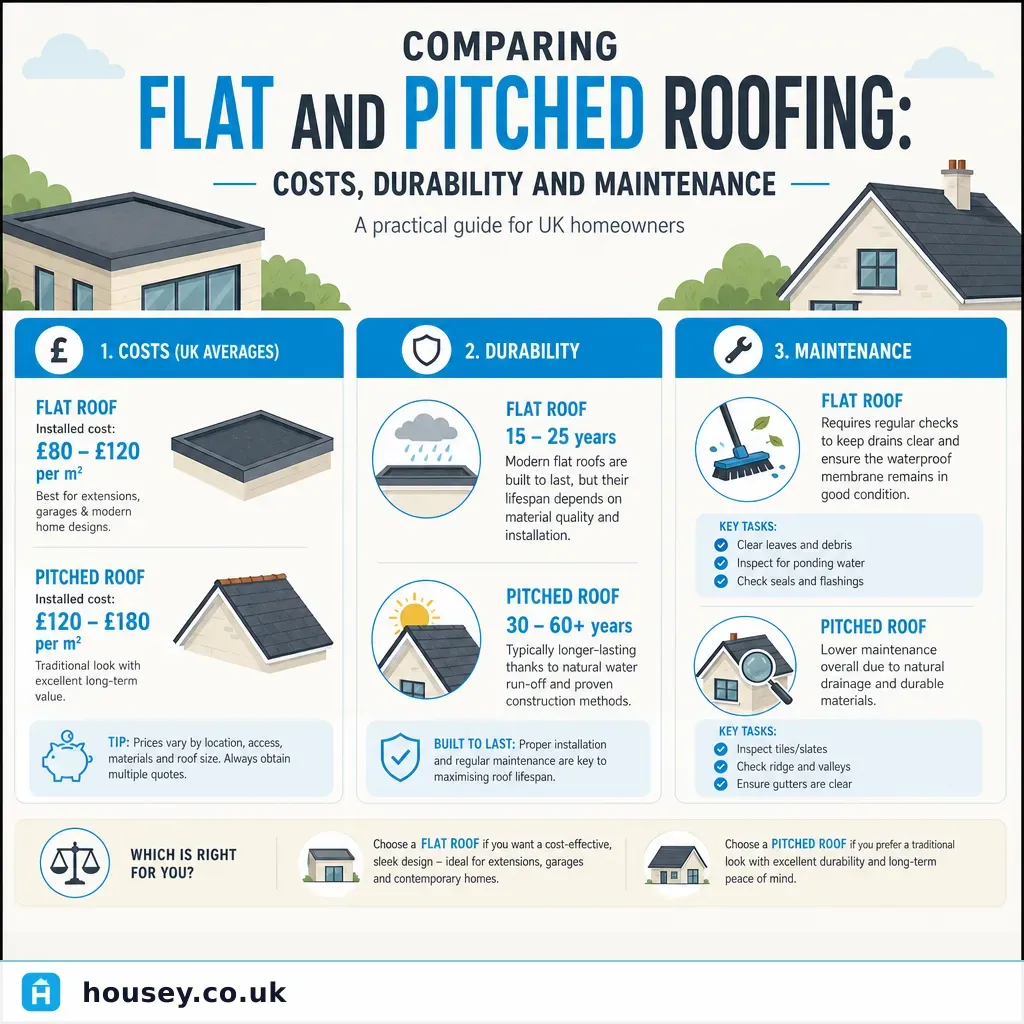
Comparing Flat and Pitched Roofing: Costs, Durability and Maintenance
Flat roofs typically cost less to install per square metre but require more maintenance and have a shorter lifespan than pitched roofs.
 Improvement & Build
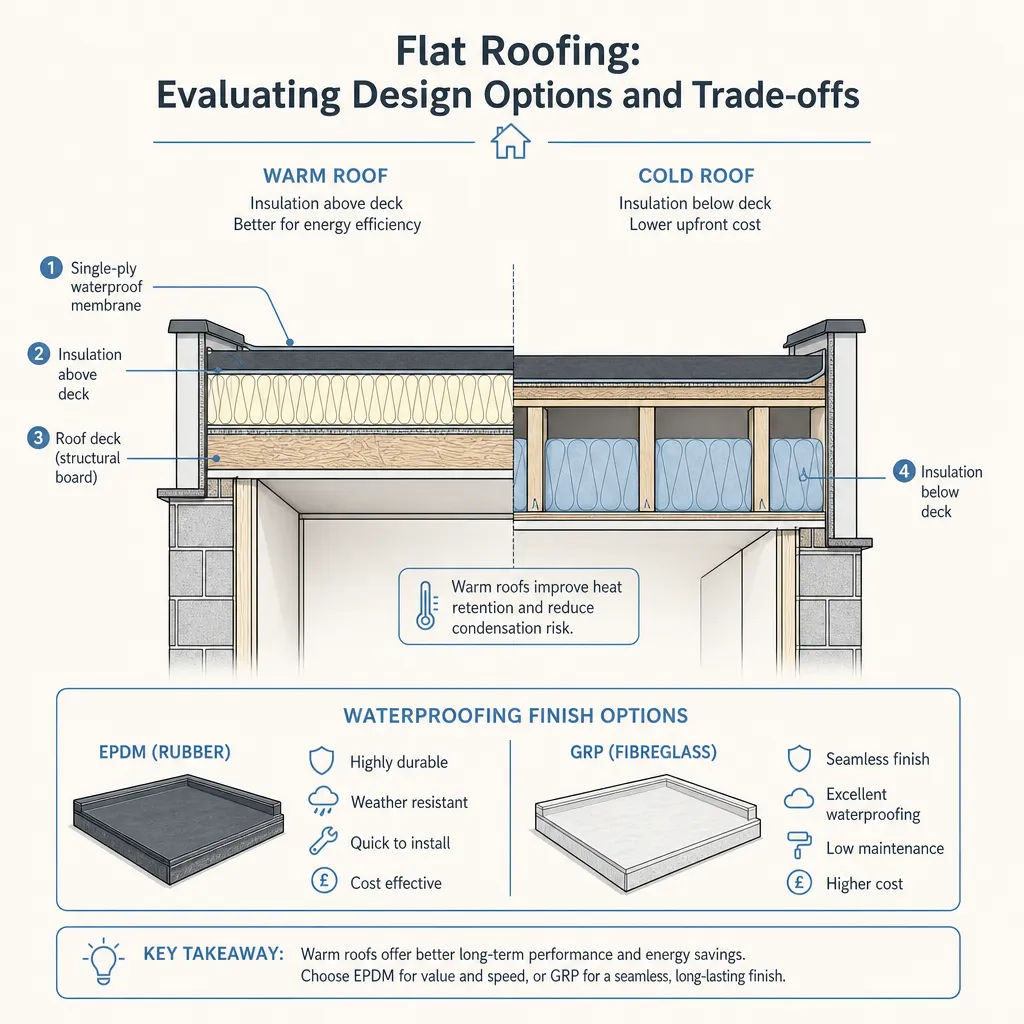
Flat Roofing: Evaluating Design Options and Trade-offs
Flat roofs are typically built as warm deck, cold deck, or inverted systems, each with different insulation placement and moisture risk.
 Improvement & Build
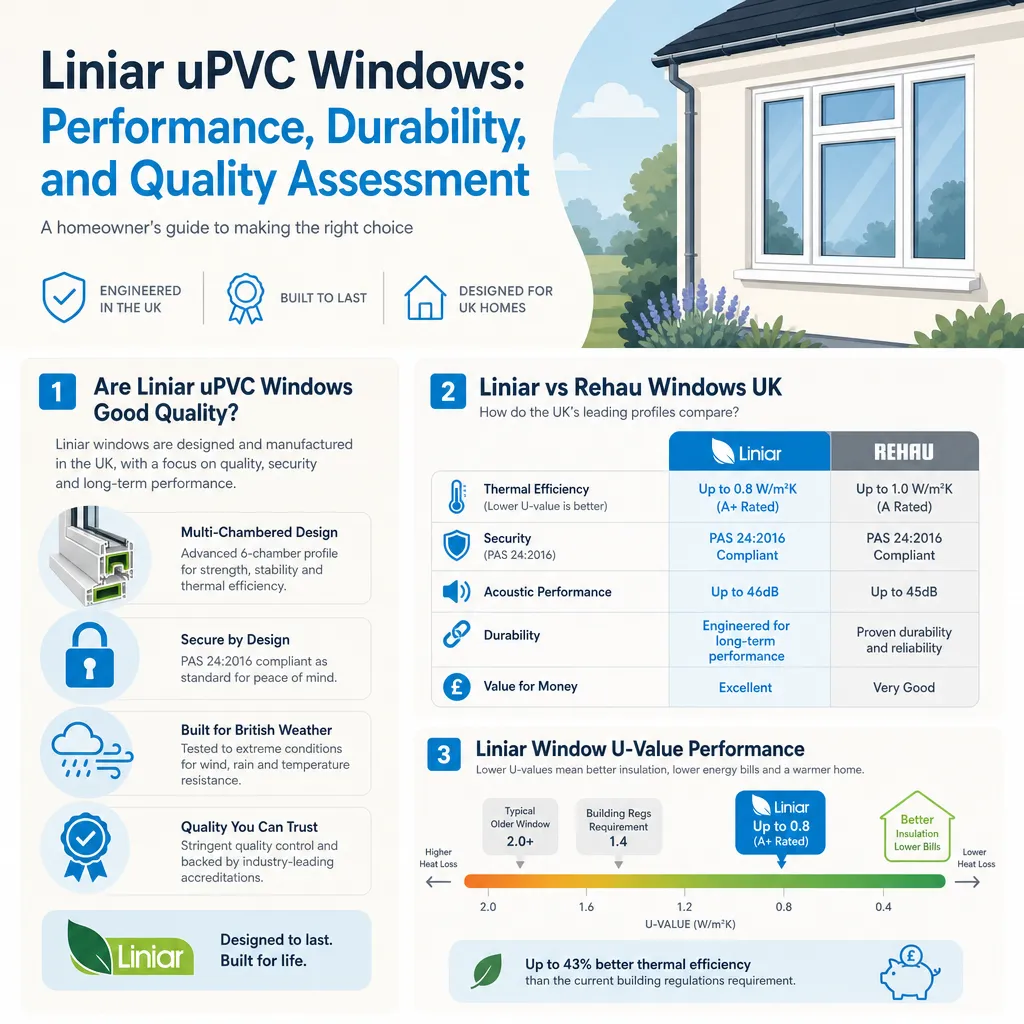
Liniar uPVC Windows: Performance, Durability, and Quality Assessment
Liniar uPVC window profiles are manufactured in the UK using multi-chambered, foamed frames.
 Improvement & Build
Garden Tap Installation with Hot and Cold Water: Plumbing Options
Adding a cold garden tap is a common DIY project, but routing hot water outdoors requires a plumber to connect to your domestic hot water system and comply with the Water Supply (Water Fittings) Regulations 1999.
 Improvement & Build
Sealing and Maintaining Historic Leaded Glass Windows: Preservation and Performance
Leaded glass windows are maintained using traditional linseed oil cement — not silicone or modern sealants, which prevent natural movement in the lead came.