Garage Air Quality: Ventilation and Indoor Air Assessment
By Housey · Last reviewed 30th of May 2026
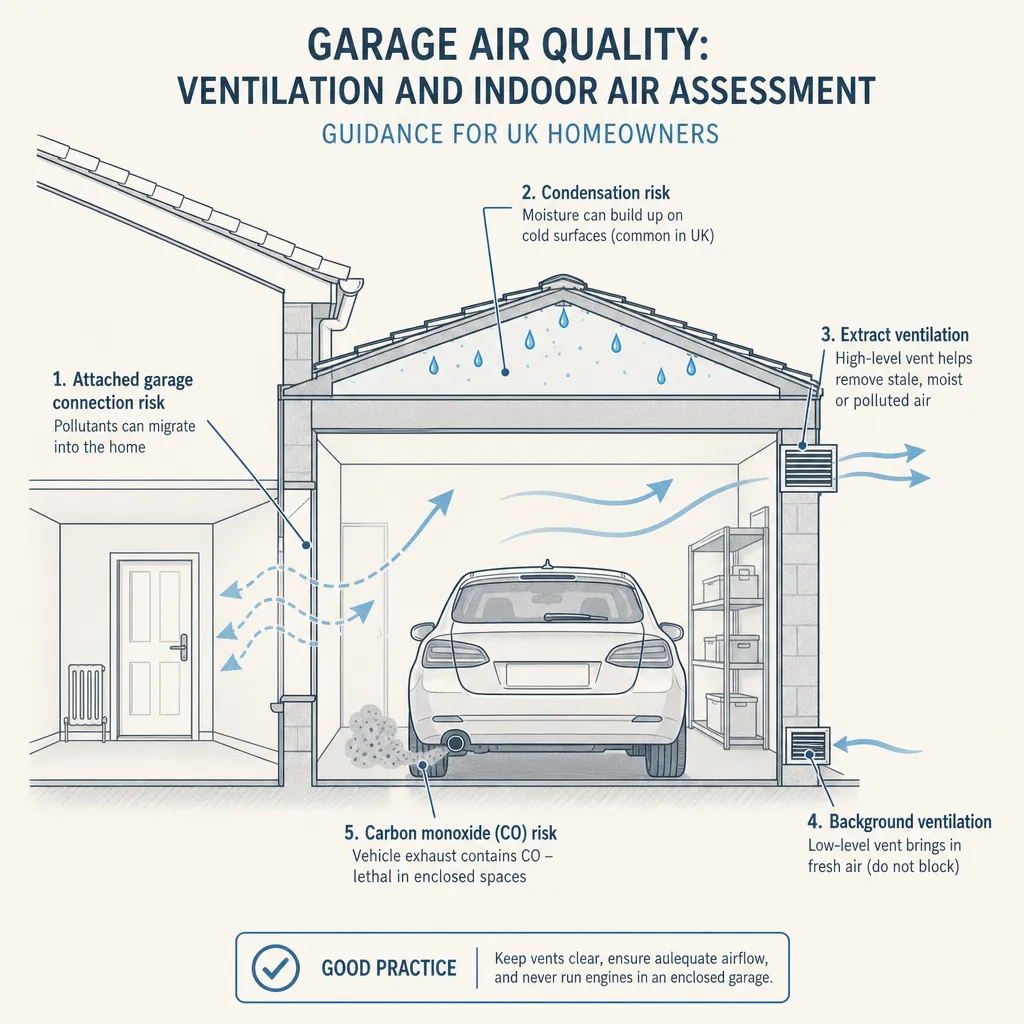
Garage Air Quality: Ventilation and Indoor Air Assessment
Garages — whether integral to the house, semi-detached, or standalone — often accumulate a mix of vehicle emissions, stored chemical vapours, and moisture that most homeowners never consciously assess. The problem tends to surface only when condensation stains appear on walls shared with the living space, a persistent musty smell drifts into the hallway, or a carbon monoxide alarm sounds unexpectedly. Understanding how air moves between your garage and the rest of your home is the first step to managing the risk.
Key points
- Building Regulations Approved Document F (2022 edition) sets minimum ventilation standards for dwellings and ancillary spaces, including integral garages.
- Carbon monoxide (CO) from idling or recently driven vehicles can migrate through unsealed door frames, cable runs, and service penetrations into adjoining rooms.
- Volatile organic compounds (VOCs) from stored solvents, paints, adhesives, and fuels are a common indoor air quality concern in UK garages, particularly in warmer months.
- Condensation in a poorly ventilated integral garage can cause mould growth and reduce the thermal performance of shared walls and ceilings.
- A qualified ventilation assessor can carry out an air quality survey using gas monitors, tracer-gas dilution, or CO2 logging to quantify pollutant levels and airflow rates.
Why garage air quality matters for the whole house
An attached or integral garage shares at least one wall — and often a ceiling — with the main dwelling. That shared construction creates pathways for air, moisture, and combustion gases to cross between spaces. Unlike purpose-built plant rooms, garages are not designed for controlled ventilation: they typically have an external vehicle door, perhaps an airbrick or two, and a connecting door to the house that may not be fire-rated or draught-sealed to the standard required under Approved Document B.
In a typical 1960s–1990s integral garage, gaps around pipe runs, electrical conduit, and the internal connecting door can allow CO concentrations to build in adjacent rooms after a cold-start drive. The Health and Safety Executive (HSE) publishes exposure limit guidance that domestic households can use as a reference. VOC exposure is a less visible but equally relevant concern: stored containers of white spirit, garden chemicals, and petrol cans off-gas continuously, and several common VOCs are classified by the World Health Organisation as probable or possible carcinogens at sustained elevated concentrations.
Common garage air quality problems in UK homes
Problem | Typical source | Likely consequence | Most affected property types |
|---|---|---|---|
Carbon monoxide ingress | Vehicle cold starts; attached boiler flue issues | CO build-up in living rooms and bedrooms | Integral garages, post-1960s semis |
VOC off-gassing | Stored solvents, paints, fuels | Persistent odours, respiratory irritation | All garage types |
Condensation and mould | Poor air exchange, thermal bridging at shared wall | Mould on shared wall; stored items damaged | Integral and semi-integral garages |
Radon ingress | Bedrock geology in SW England, parts of Midlands | Elevated radon in ground-floor spaces | Garages over bare concrete in affected areas |
Particulate spread | Sanding, grinding, power tools | Fine dust entering living space | DIY-active garages |
Ventilation requirements for UK garages
Building Regulations Approved Document F (2022 edition) applies to dwellings and, by extension, to integral garages treated as ancillary spaces. Key requirements relevant to UK homeowners:
- Background ventilation of at least 2,500 mm² equivalent area is typically expected in integral garages that adjoin habitable rooms.
- The connecting door between garage and dwelling must be fire-rated (FD30S minimum) under Approved Document B, which restricts air exchange — but does not eliminate it.
- Where a boiler or water heater is sited in the garage, it must be room-sealed (balanced flue) or the garage must have adequate combustion air supply per Approved Document J.
- Any conversion of a garage into habitable space triggers a full Approved Document F compliance assessment and a building control notification.
If your garage predates 2006 — when substantial revisions to Part F were introduced — it is unlikely to meet current ventilation standards as originally built.
How a ventilation and air quality assessment works
A qualified assessor will typically carry out the following steps:
- Inspect the garage construction — identifying service penetrations, door seals, and airbrick positions.
- Measure background ventilation rates — using an anemometer or tracer-gas dilution to quantify actual airflow.
- Log CO and CO2 levels — using calibrated monitors over a timed period, often including a vehicle cold-start test.
- Assess VOC concentrations — using a photoionisation detector (PID) or multi-gas monitor.
- Check for condensation risk zones — identifying thermal bridging at the shared wall and ceiling junction.
- Produce a written report — with measured values, comparison to UK or WHO reference levels, and recommendations for remediation.
Reports typically specify options such as sealing service penetrations, upgrading the connecting door, installing passive wall vents or a mechanical extract unit, and improving fire compartmentation at the shared wall.
Homeowner ventilation checklist
Work through these checks before or after commissioning a professional assessment:
Red flags that need immediate attention
- A CO alarm activating in a room adjacent to or above the garage.
- Persistent petrol or solvent smell inside the house with no obvious internal source.
- Mould growth on the internal face of the shared wall in a bedroom or hallway.
- A boiler or gas appliance in the garage with an open-flue (non-room-sealed) configuration.
- A connecting door that is not fire-rated, or that has visible gaps around the frame.
Any of these should prompt contact with a competent ventilation assessor or, in the case of CO alarms or boiler concerns, a Gas Safe registered engineer.
When to get professional help
If you are experiencing any red flags listed above, contact a professional before attempting to seal, modify, or block any vents yourself — improper intervention can worsen air quality or create a fire hazard. A formal ventilation and air quality assessment is also advisable:
- Before converting a garage into habitable space, as building control will require Approved Document F compliance evidence.
- When buying or selling a property with an integral garage and no record of building regulation sign-off for earlier works.
- When a vulnerable occupant with asthma, COPD, or another respiratory condition lives in rooms adjacent to the garage.
- After a vehicle is regularly started inside a closed garage during cold weather.
How Housey can help
Housey connects you with qualified assessors for ventilation and condensation assessments across the UK. Describe your garage setup, receive quotes from local professionals, and compare their approach before committing to any works.
Frequently asked questions
Does my garage need planning permission for additional ventilation?
In most cases, no. Adding airbricks, wall vents, or an extract fan to a garage is usually permitted development. If the garage is attached to a listed building or is in a conservation area, check with your local planning authority before making any external alterations. Changes to a garage that forms part of the main dwelling may also require building regulations notification regardless of planning status.
What level of carbon monoxide is dangerous near a garage?
The HSE references a Workplace Exposure Limit of 20 ppm (8-hour TWA) and 100 ppm (15-minute STEL) for CO. In domestic settings, BS EN 50291-compliant CO alarms sound before exposure reaches harmful levels. Any alarm activation should be treated seriously: ventilate the space, leave the building, and contact the National Gas Emergency Service on 0800 111 999 or a Gas Safe registered engineer.
Can I seal the gap under the connecting door myself?
You can fit a door sweep to the bottom of the connecting door, but this is only part of the solution. The door must already meet the FD30S fire-resistance standard. If it does not, sealing the threshold gap alone is insufficient and the whole door unit may need replacing. A competent builder or accredited fire door supplier can assess the existing door and specify the correct replacement if needed.
Does a detached garage have the same air quality risks as an integral one?
A detached garage does not share walls or a ceiling with the dwelling, so the risk of CO or VOC migration into the house is much lower. However, CO and VOC exposure remains a hazard for anyone working in a closed garage, particularly in cold months. A CO alarm compliant with BS EN 50291 is still advisable in any regularly used detached garage.
Sources and further reading
- Building Regulations Approved Document F (2022) — GOV.UK
- Building Regulations Approved Document B (Fire Safety) — GOV.UK
- Carbon monoxide: health effects and guidance (INDG261) — Health and Safety Executive
- WHO Indoor Air Quality Guidelines: Selected Pollutants — World Health Organisation
- Building Regulations Approved Document J — GOV.UK
Useful next reads
 Surveys & Inspections
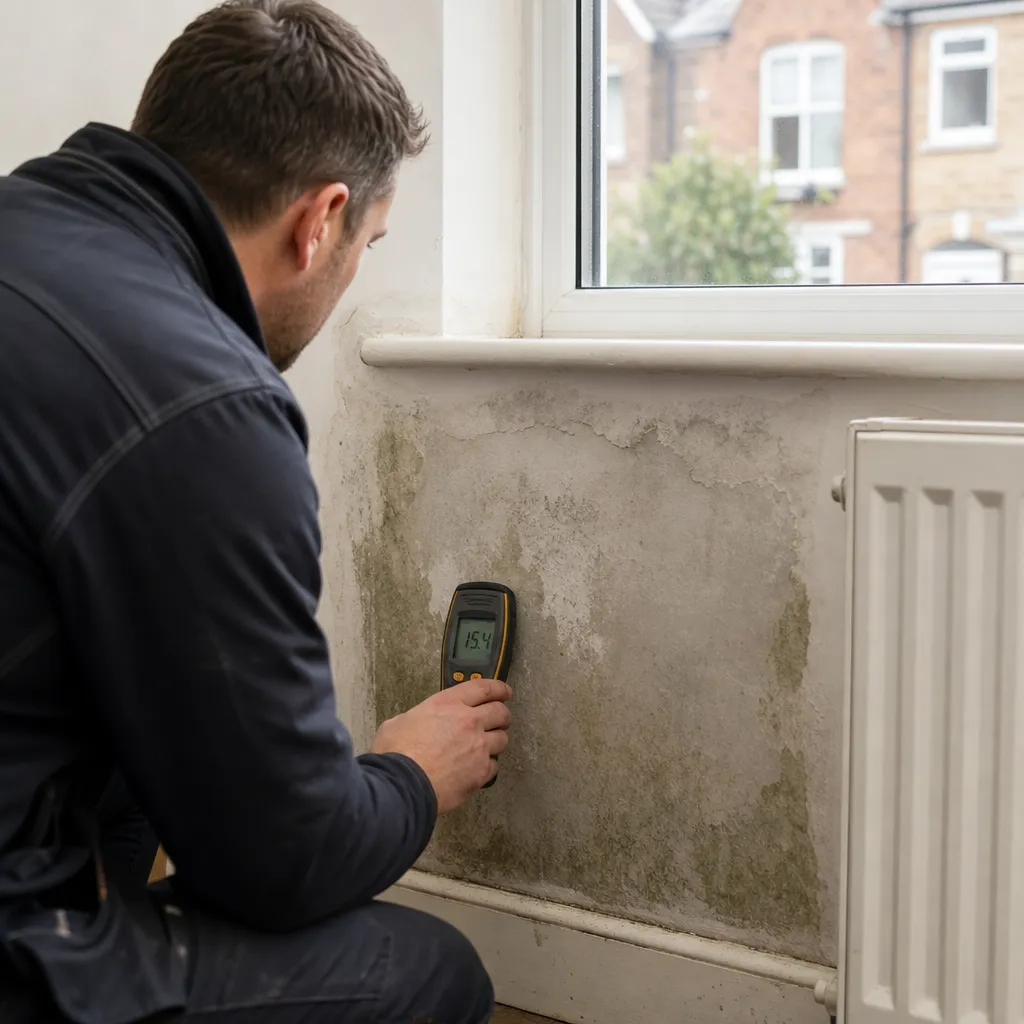
Cold and Damp Walls: Diagnosing Condensation and Moisture Issues
Cold, damp walls in UK homes most commonly result from surface condensation, penetrating damp, or rising damp.
 Surveys & Inspections
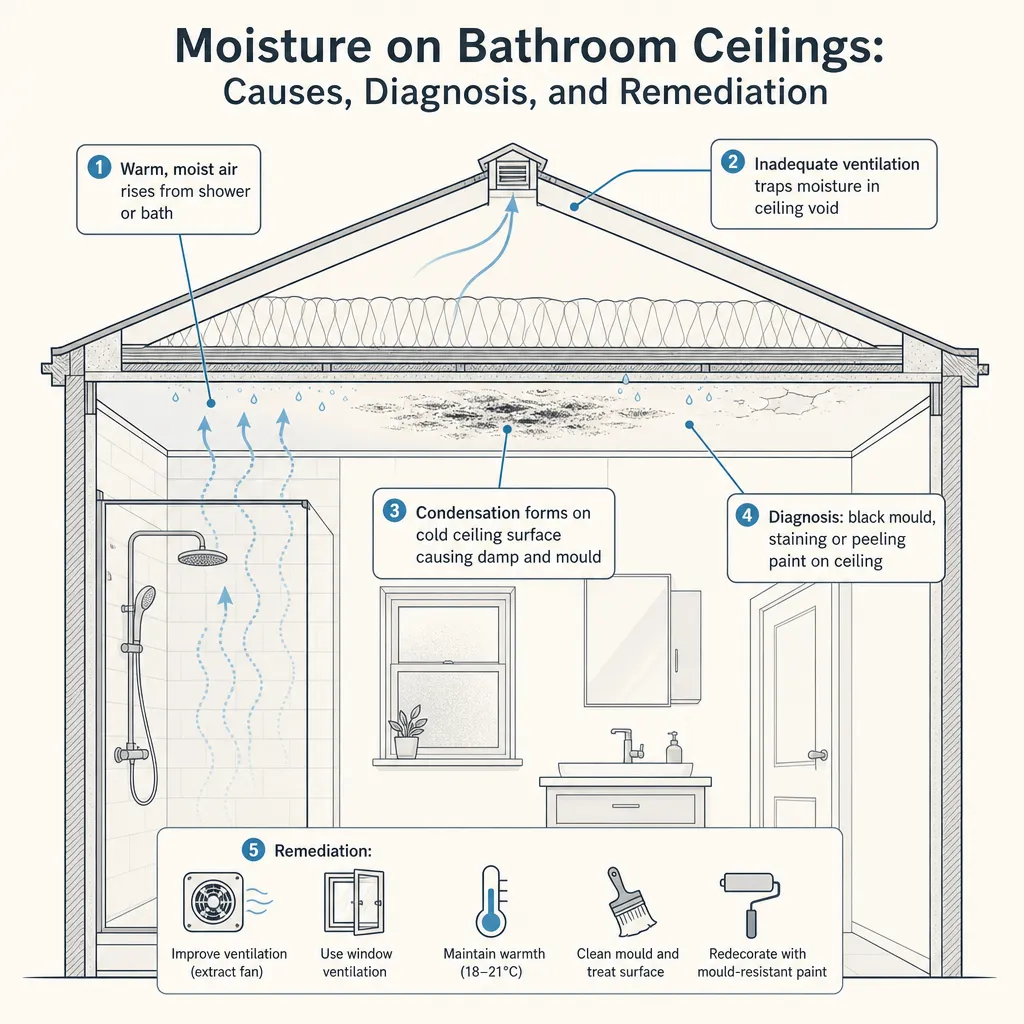
Moisture on Bathroom Ceilings: Causes, Diagnosis, and Remediation
Moisture on a bathroom ceiling is most often caused by condensation from poor ventilation, but can also indicate a leak from above or penetrating damp.
 Surveys & Inspections
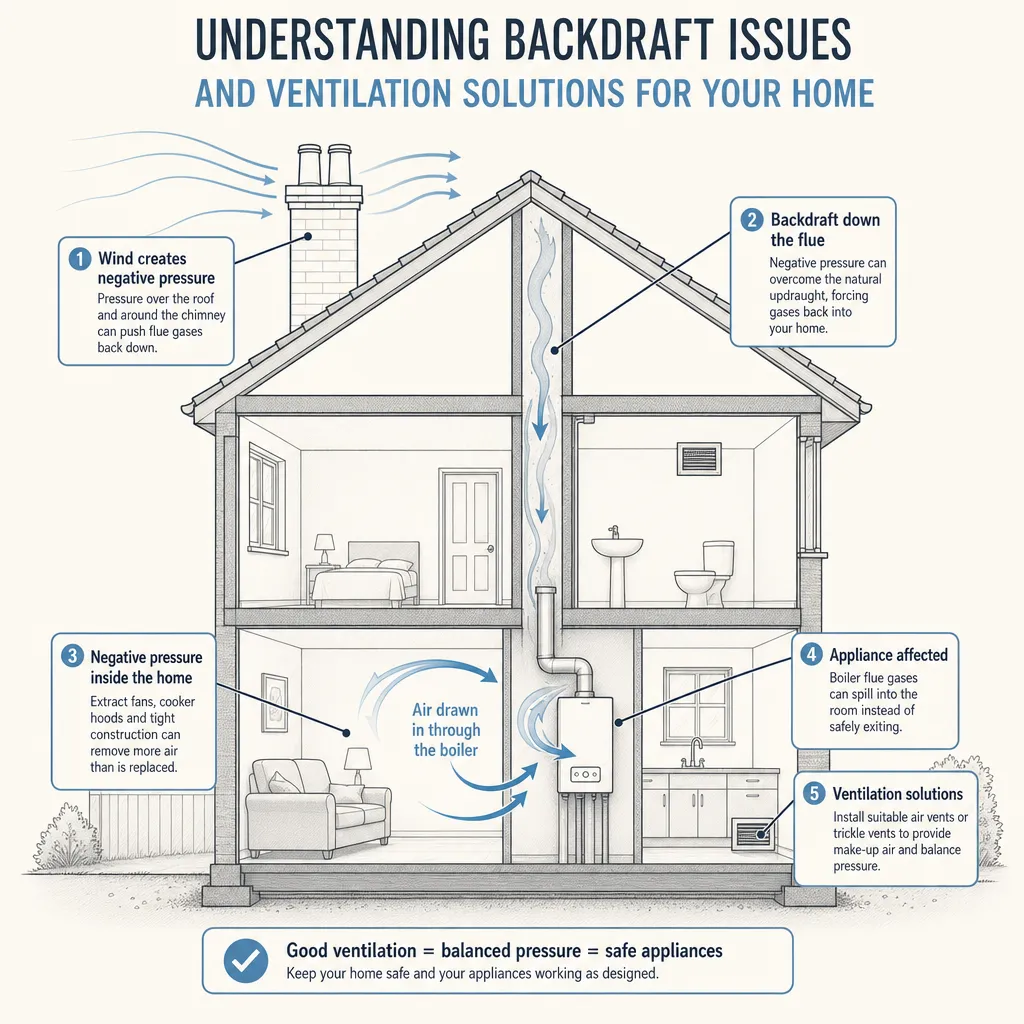
Understanding backdraft issues and ventilation solutions for your home
Backdraft occurs when negative pressure inside a building draws combustion gases back through a flue or chimney instead of expelling them outside.
 Surveys & Inspections
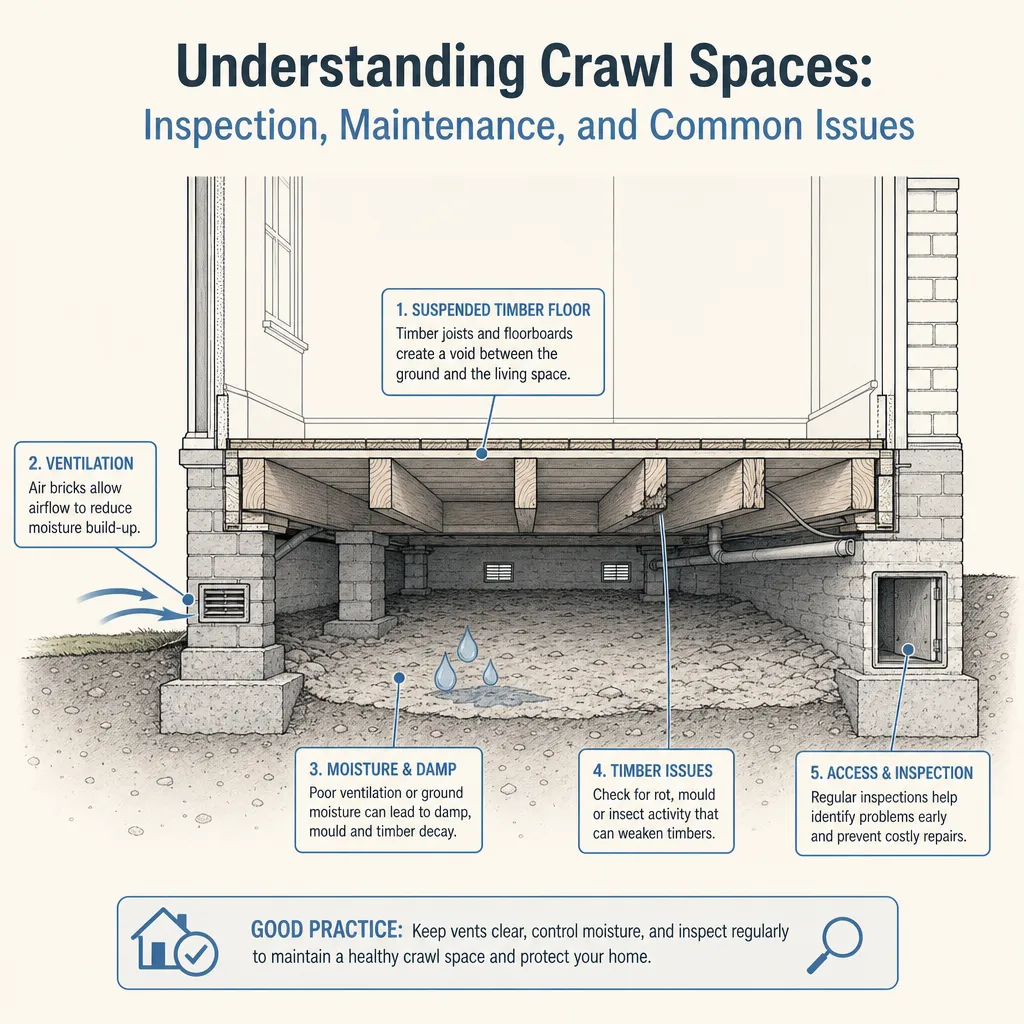
Understanding Crawl Spaces: Inspection, Maintenance, and Common Issues
Sub-floor voids beneath suspended timber ground floors in pre-1960 UK homes need cross-ventilation through airbricks to prevent dry rot and wet rot in floor timbers.
 Surveys & Inspections
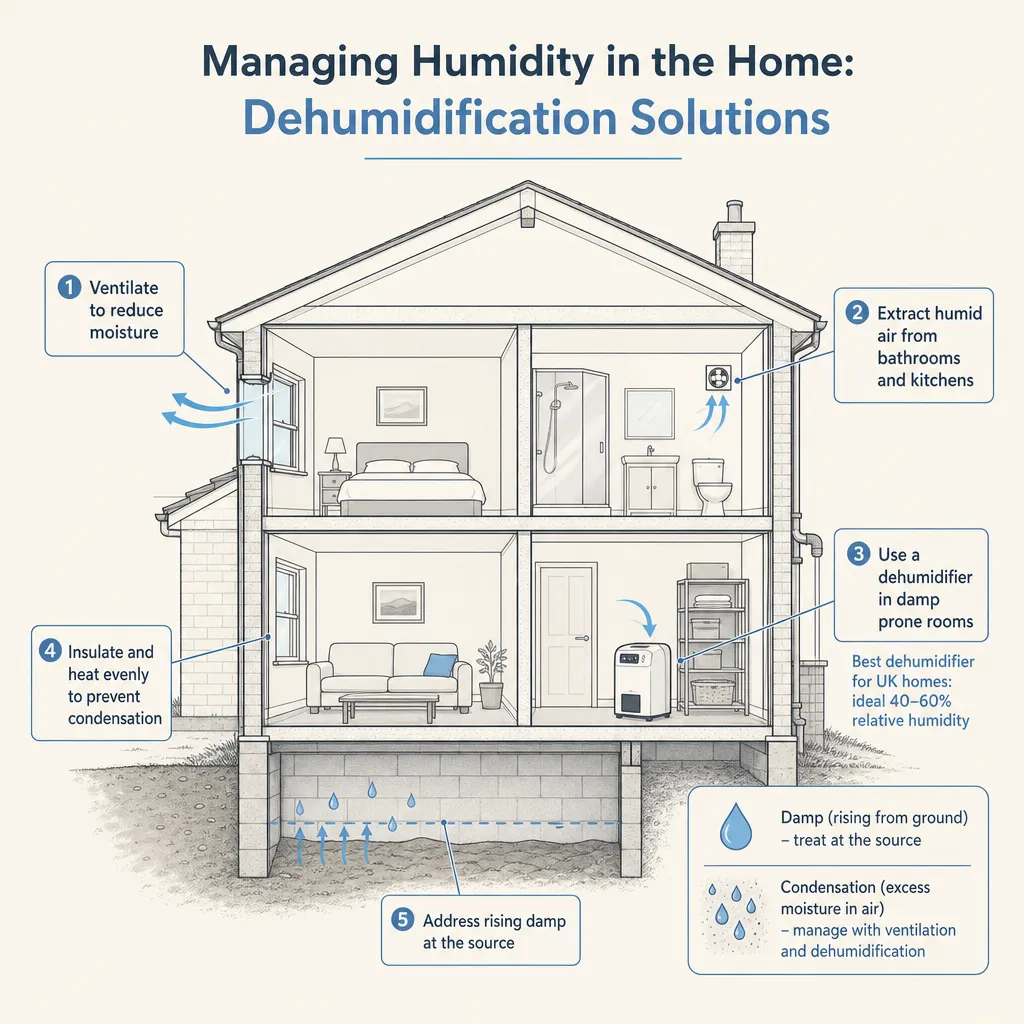
Managing Humidity in the Home: Dehumidification Solutions
Managing indoor humidity usually means combining adequate ventilation with a correctly sized dehumidifier.