Moisture on Bathroom Ceilings: Causes, Diagnosis, and Remediation
By Housey · Last reviewed 3rd of May 2026
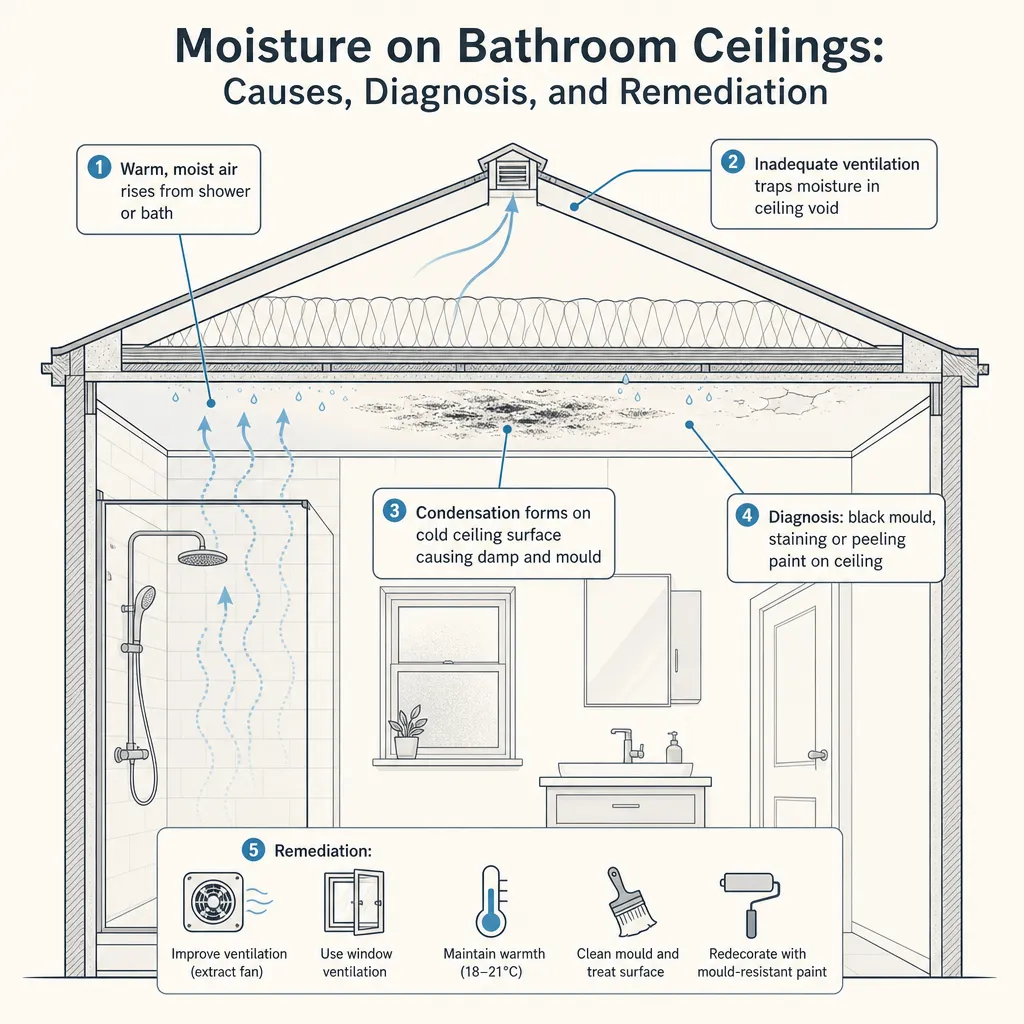
Moisture on Bathroom Ceilings: Causes, Diagnosis, and Remediation
Bathroom ceiling moisture is one of the more common complaints UK homeowners raise with surveyors and damp specialists — and one of the more frequently misdiagnosed. It tends to surface after a house purchase, during a rental inspection, or when decorating reveals damage that has quietly worsened over months or years. Getting the diagnosis right matters because condensation, pipe leaks, and penetrating damp each require a different approach, and treating the wrong cause wastes money while the real problem continues.
Key points
- Condensation is the most common cause of bathroom ceiling moisture in UK homes, particularly in properties built before 1980 without mechanical ventilation.
- Building Regulations Approved Document F requires intermittent extract ventilation of at least 15 litres per second in bathrooms.
- A failed or underperforming extract fan is a frequent culprit; fans have a typical service life of 8–10 years and should ideally be tested with a tissue held to the grille or measured with an anemometer.
- Mould growth on bathroom ceilings may trigger concerns under the Housing Health and Safety Rating System (HHSRS), which landlords and local authorities use to assess hazard severity.
- A professional damp and timber survey or ventilation and condensation assessment can distinguish condensation from structural moisture ingress — two problems with very different remedies.
What causes moisture on a bathroom ceiling?
Three broad mechanisms produce bathroom ceiling dampness in UK properties, and they often present similarly to the untrained eye.
Condensation forms when warm, humid air from showers and baths meets cooler ceiling surfaces. Bathrooms generate significant water vapour — a typical shower can produce 200–500ml of moisture — and if extract ventilation cannot remove it quickly enough, that vapour condenses on the coldest surfaces in the room. Ceilings, external wall junctions, and areas above cold-bridged lintels are typical first contact points.
Leaks from above — from an en-suite or bathroom on an upper floor, a cold water tank in the loft, or a flat roof — can also present as ceiling moisture. The giveaway is often a defined tide mark or yellowish staining rather than the grey-green diffuse bloom of mould associated with condensation.
Penetrating damp is less common in bathrooms specifically but may occur where the roof covering or parapet flashings above are failing, allowing rainwater to track through the structure over time.
How to tell the difference: a diagnosis decision tree
Use this sequence to narrow down the likely cause before calling a professional.
- Is the moisture widespread and appears mainly after showers or baths? → Condensation is the most probable cause. Check the extract fan and ducting first.
- Is there a defined wet patch with a clear outline or yellowish staining? → Suspect a leak from above. Check the floor or fitting above, loft tank, or flat roof covering.
- Does the ceiling remain damp even after several days without the bathroom being used? → May indicate penetrating damp or a slow ongoing leak rather than condensation.
- Is mould growth diffuse and spreading from corners or the ceiling centre? → Likely condensation-driven. If mould has penetrated the plaster or appears across multiple ceiling areas, ask a professional to assess severity.
- Is the property a flat or mid-terrace with no floor directly above this bathroom? → A flat or pitched roof fault is more plausible than a leak from another storey.
- Has the property had a loft conversion, rerouted pipework, or bathroom alterations in the past five years? → Ask a surveyor or plumber to check whether new pipe runs or insulation changes have altered moisture pathways.
If you cannot identify the cause confidently, or the moisture has persisted for more than a few weeks, seek a professional assessment.
Ventilation failure: the most common culprit
Most UK bathrooms built before around 1995 rely on either a window for natural ventilation or a basic intermittent extract fan. Approved Document F of the Building Regulations (2021 edition) sets minimum extract rates for bathrooms at 15 litres per second intermittent or 8 l/s continuous. Many older fans operate below these rates due to age, blocked grilles, or poorly designed duct runs.
Common ventilation failures include:
- Fan motor degraded or seized — hold a tissue to the grille when the fan is running; it should remain held against the grille by suction.
- Flexible duct kinked or disconnected in the loft void, significantly reducing airflow.
- Duct terminating into the loft rather than through the roof or external wall — a common fault in poorly installed retrofits.
- No overrun timer — fan stops when the light is switched off, before moisture has cleared.
- Insufficient duct cross-section for the length of run — the longer the duct, the greater the resistance and the lower the effective airflow.
A ventilation and condensation assessment can confirm airflow rates and duct integrity using calibrated instruments, which is especially useful if you have already replaced the fan but condensation persists.
Remediation options
Cause | Typical fix | Indicative UK cost (2026) | Who to instruct |
|---|---|---|---|
Condensation — inadequate fan | Replace with correctly specified intermittent or continuous MEV fan | £150–£400 installed | Electrician or ventilation installer |
Condensation — duct fault | Re-run or replace ducting to outside termination | £100–£300 | Ventilation contractor |
Condensation — thermal bridging at ceiling junction | Insulate ceiling or wall junction; address cold bridge | Variable — may need a retrofit assessment | Retrofit installer or insulation contractor |
Leak from above (pipe) | Trace and repair pipe; dry out and redecorate | £200–£800+ depending on access | Plumber |
Flat roof leak | Roof inspection and localised repair or full reroofing | £300–£2,000+ | Roofing contractor |
Penetrating damp from above | Repair roof covering, flashings, or parapet | £500–£3,000+ | Roofing contractor or surveyor |
Indicative UK costs, last reviewed 2026-05-03. Quotes vary significantly by region, property type, and extent of damage. Always obtain at least three quotes.
Mould: when to take it seriously
Surface mould is common in bathrooms and is often managed by improving ventilation and cleaning with a mould-inhibiting solution. However, certain presentations warrant more attention:
- Extensive black mould is associated with respiratory irritation; where coverage is significant, professional remediation rather than DIY cleaning is advisable.
- Mould that recurs within weeks of repainting or treatment indicates the underlying moisture source has not been addressed.
- Mould on structural timbers — such as ceiling joists visible through a loft hatch — indicates a more serious moisture problem that a damp and timber survey should assess.
- Rental properties: under the HHSRS, significant mould growth can be a Category 1 hazard if it poses a serious risk to occupants. Local authorities can issue improvement notices to landlords.
Red flags: when moisture becomes a bigger problem
These signs suggest the issue has moved beyond routine maintenance and requires professional assessment:
- Plaster or paint bubbling, flaking, or detaching from the ceiling surface.
- Ceiling timbers showing dark staining, softness, or apparent decay when probed.
- Moisture appearing in adjacent rooms or the room directly below.
- Persistent damp smell even after ventilation improvements have been made.
- Rising damp on bathroom walls alongside ceiling moisture — these may be connected through structural saturation.
- Evidence of previous cosmetic repairs (fresh paint patches, filler over stains) that have already failed again.
Important limitations
This article provides general information about common causes of bathroom ceiling moisture in UK homes. Individual properties vary considerably — age, construction type, ventilation history, roof condition, and previous alterations all affect diagnosis. Nothing in this article should be treated as a substitute for a professional inspection of your specific property.
In particular:
- If significant mould growth is present, advice from a qualified damp specialist or environmental health professional may be appropriate before any remediation begins.
- If a flat roof or structural defect is suspected, a surveyor or structural engineer should inspect before work proceeds.
- For rental properties, landlords should seek professional guidance on compliance with the HHSRS and the Homes (Fitness for Human Habitation) Act 2018 before responding to tenant complaints.
What to ask a qualified professional
Before instructing a damp specialist or ventilation assessor, ask:
- What methodology will you use to distinguish condensation from structural damp — for example, moisture meter readings, thermal imaging, or hygrometric testing?
- Will you inspect the full duct run to the outside termination point, including any loft sections?
- What report or written findings will I receive, and will it include a recommended remediation specification?
- Are you a member of a recognised body such as the Property Care Association (PCA) or the Chartered Institute of Environmental Health (CIEH)?
- If you identify secondary issues — rot, structural moisture, roof defects — will your report flag these for further specialist inspection?
- What are your assumptions about access to the loft or floor void, and what happens if access is restricted?
When to get professional help
Most minor condensation issues respond to improved ventilation and can be addressed without specialist involvement. Seek professional help if:
- The cause is unclear after the basic checks described above.
- Moisture has been present for more than a month without improvement.
- You can see or smell mould on ceiling timbers or structural elements.
- You are a landlord preparing for an inspection or responding to a tenant complaint.
- The ceiling has been replastered or repainted more than once and the problem has returned.
- A surveyor has already flagged damp or ventilation concerns during a property inspection.
How Housey can help
Housey connects UK homeowners with qualified damp surveyors and ventilation specialists. If you are unsure whether your bathroom ceiling issue is condensation, a leak, or something more structural, request quotes through our damp and timber surveys or ventilation and condensation assessments services to get expert opinions and written findings.
Frequently asked questions
Is bathroom ceiling mould always caused by condensation?
Not always. Condensation is the most common cause in UK bathrooms, particularly in older properties with inadequate ventilation, but a slow pipe leak, a flat roof defect, or penetrating damp can produce similar staining. If mould appears as a defined patch with a clear outline rather than spreading diffusely from corners or the ceiling centre, a leak source above is worth investigating before assuming condensation.
Can I just repaint over bathroom ceiling mould?
Repainting with a mould-inhibiting paint may slow regrowth but will not cure the underlying moisture problem. If the source is not addressed — whether that is a faulty fan, a kinked duct, or a leak — the mould will return, often within weeks. Treat the cause first, then redecorate once the surface has fully dried out.
How often should a bathroom extract fan be replaced?
Bathroom extract fans typically have a service life of 8–10 years, though performance can degrade earlier due to motor wear, dust build-up, or duct blockage. If your fan is more than 10 years old and condensation problems persist, replacement with a correctly specified fan is usually the most cost-effective first step before seeking further professional advice.
Does my bathroom legally need an extract fan?
Approved Document F of the Building Regulations requires mechanical extract ventilation in bathrooms that are refurbished or newly built. For existing bathrooms, the requirement applies when significant work is carried out. Bathrooms with adequately sized opening windows may meet the natural ventilation standard in some configurations, but mechanical extract is generally more reliable in UK conditions.
What is the HHSRS and why does it matter for bathroom damp?
The Housing Health and Safety Rating System (HHSRS) is the framework local authorities use to assess health and safety hazards in residential properties in England and Wales. Significant mould growth caused by excessive moisture can constitute a Category 1 or Category 2 hazard. Landlords found to have Category 1 hazards face improvement notices and potential civil penalty notices. Homeowners are not subject to enforcement, but persistent mould affects property condition and value.
Sources and further reading
- Approved Document F: Ventilation (2021) — GOV.UK
- Housing Health and Safety Rating System: guidance — GOV.UK
- Homes (Fitness for Human Habitation) Act 2018 — legislation.gov.uk
- Condensation and mould guidance — Energy Saving Trust
- Property Care Association: surveying standards — Property Care Association
Useful next reads
 Surveys & Inspections
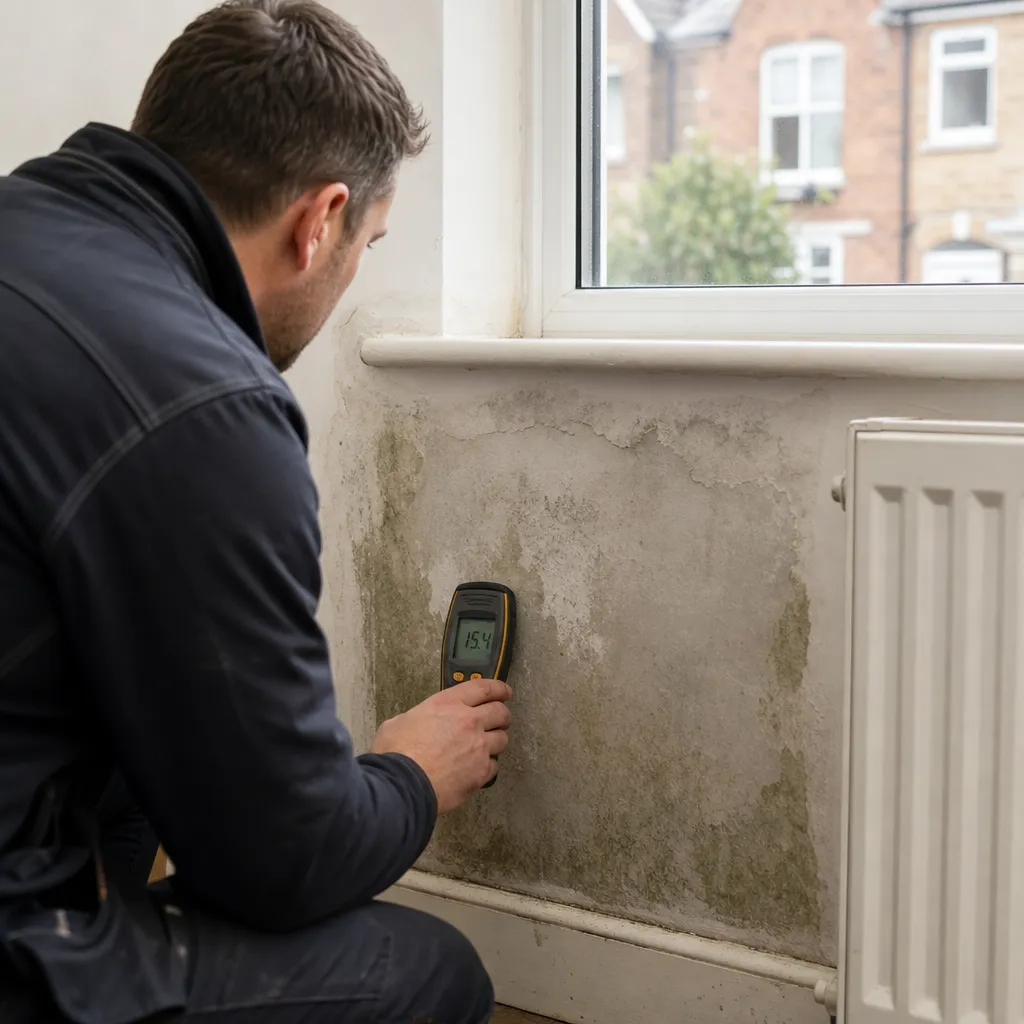
Cold and Damp Walls: Diagnosing Condensation and Moisture Issues
Cold, damp walls in UK homes most commonly result from surface condensation, penetrating damp, or rising damp.
 Surveys & Inspections
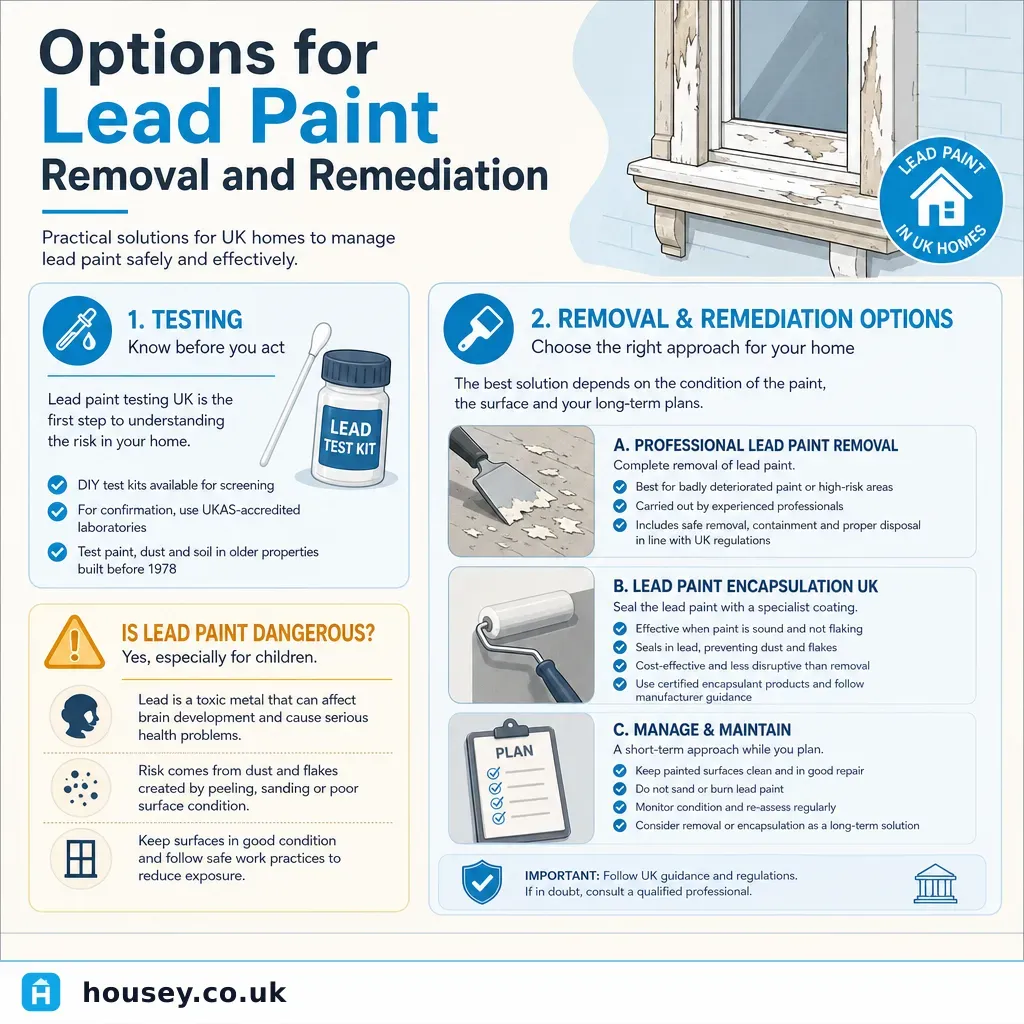
Options for Lead Paint Removal and Remediation
Lead paint in UK homes built before 1960 is common and not automatically hazardous if in good condition.
 Surveys & Inspections
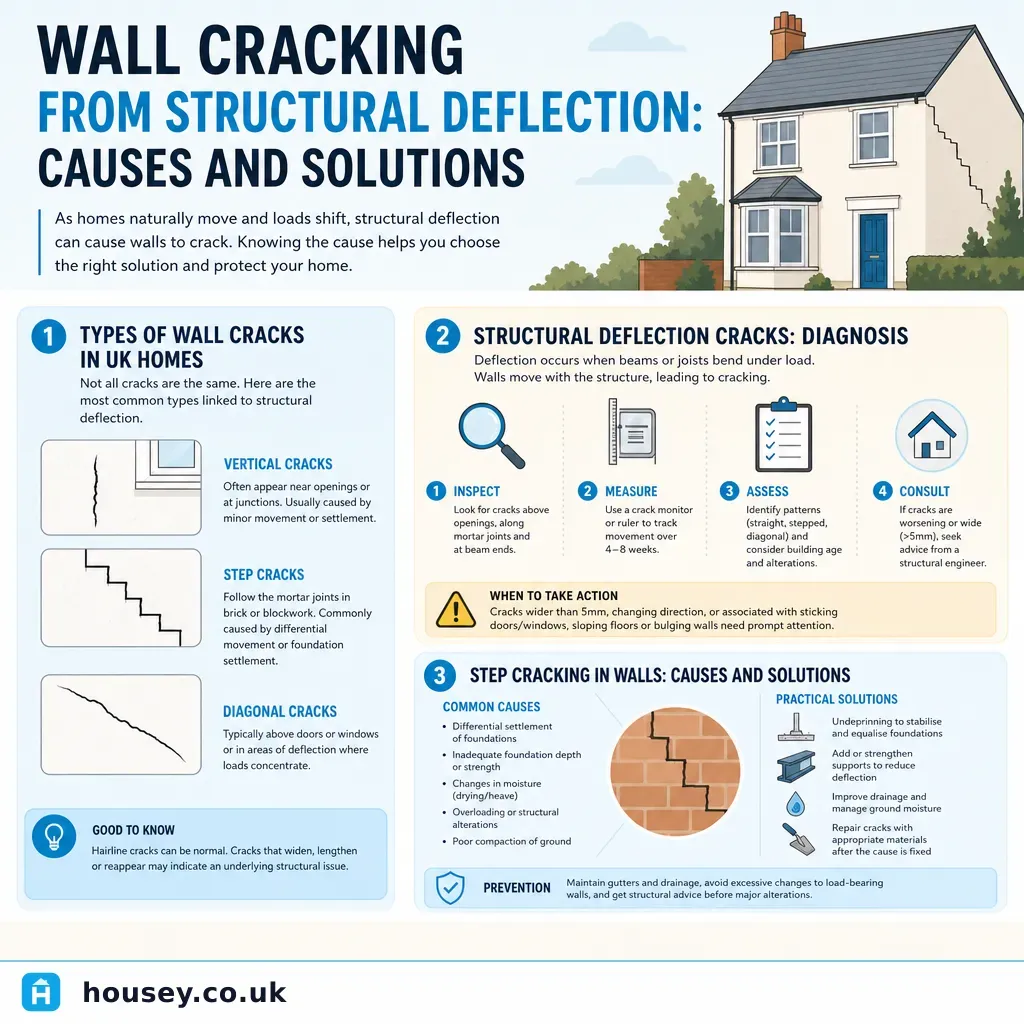
Wall Cracking from Structural Deflection: Causes and Solutions
Structural deflection occurs when a beam, floor, or lintel sags under load, transferring stress into surrounding masonry and causing characteristic cracks.
 Surveys & Inspections
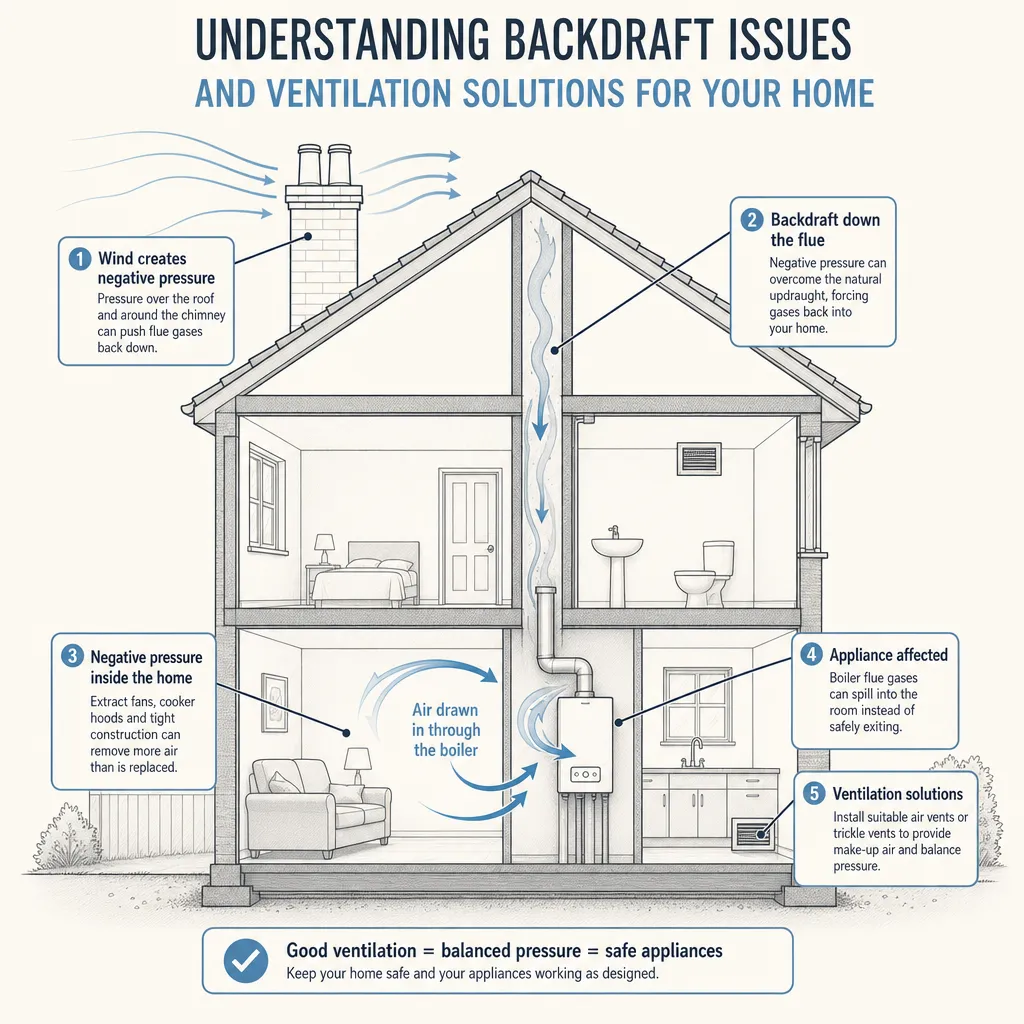
Understanding backdraft issues and ventilation solutions for your home
Backdraft occurs when negative pressure inside a building draws combustion gases back through a flue or chimney instead of expelling them outside.
 Surveys & Inspections
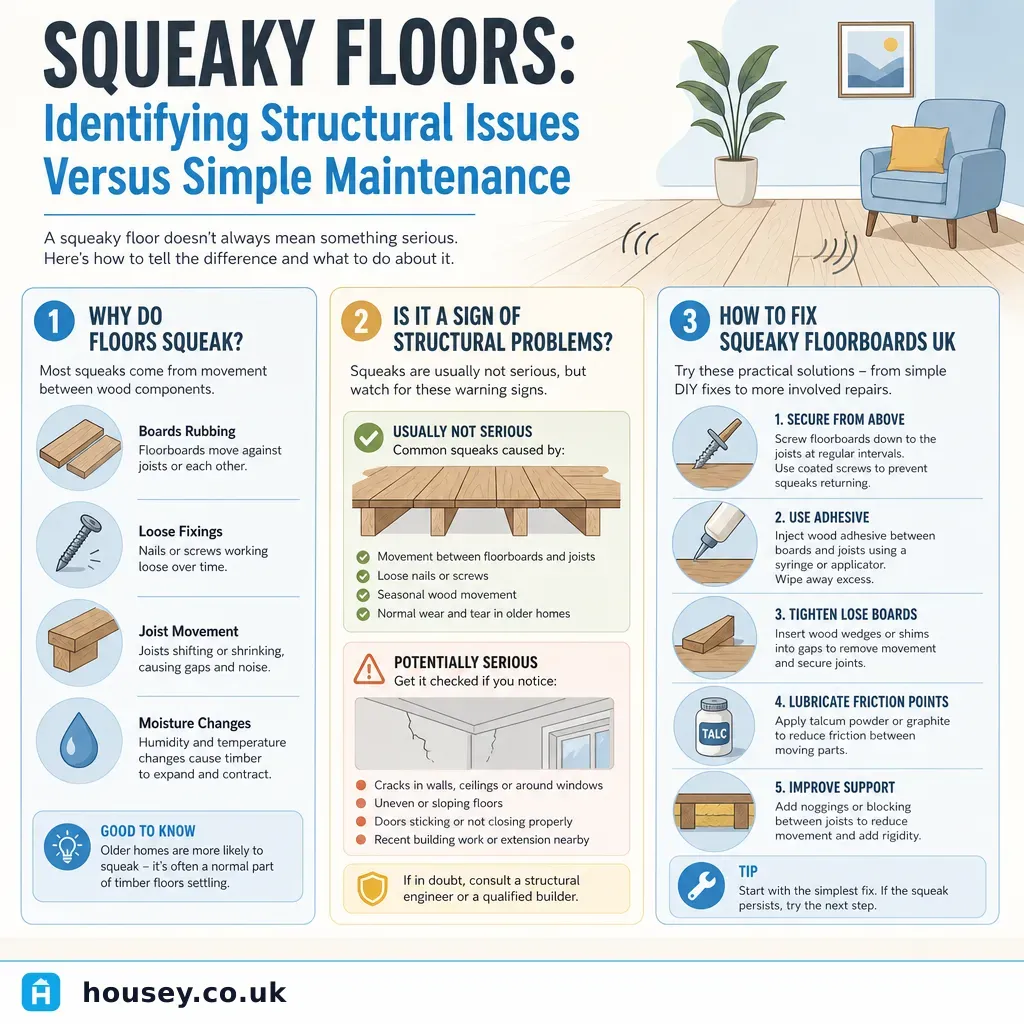
Squeaky Floors: Identifying Structural Issues Versus Simple Maintenance
Most squeaky floors in UK homes are caused by floorboards rubbing against each other or against fixings as they expand and contract — a maintenance issue rather than a structural one.