Garage Construction and Lintels: Structural Requirements and Building Codes
By Housey · Last reviewed 4th of May 2026
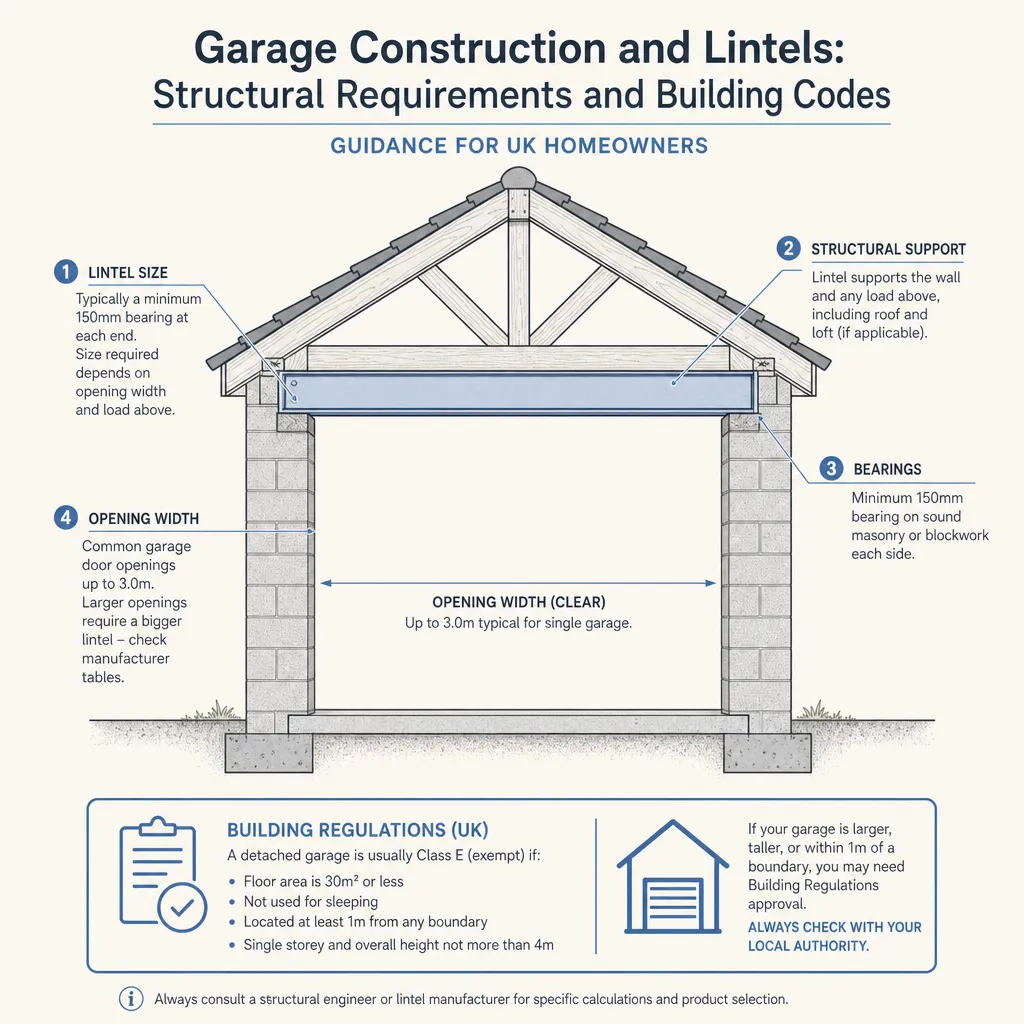
Garage Construction and Lintels: Structural Requirements and Building Codes
Garage construction in the UK sits at the intersection of structural engineering, building regulations compliance, and contractor decisions. Whether you are building an attached garage as part of a house extension or a standalone structure, the specification of lintels over openings is one of the most consequential structural choices you will make. Getting it wrong can result in cracking, structural movement, or a building control rejection that halts the project.
Key points
- Building Regulations Part A (Structure) applies to most new garages, and to all garages with habitable space, sleeping accommodation, or a structural connection to the main dwelling.
- Lintels must be specified to carry the full load above each opening — including masonry courses, roof structure, and any floor or room above.
- Steel lintels such as those in the Catnic CN series or IG Lintels range are the most common choice for modern UK cavity wall garages, but product and size must match the span and imposed load.
- Detached garages under 30 m² with no sleeping accommodation may be exempt from full Building Regulations under Schedule 2 of the Building Regulations 2010, but structural adequacy remains a legal requirement even for exempt structures.
- A structural engineer or building control officer should confirm lintel specifications before work begins, especially for wide garage door openings that span 2.4 m or more for a single door.
What lintels do in a garage structure
A lintel is a horizontal structural member placed over an opening — a garage door, a side access door, or a window — to carry the weight of wall and structure above it. In a garage, the loads transferred through a lintel can include:
- Masonry courses directly above the opening
- Roof joists or rafters bearing onto the wall above
- Any room or floor directly above, in a garage-with-room-over arrangement
- Wind loads and lateral forces acting on the wall face
The lintel transfers these loads to the piers or blockwork on either side of the opening. If the lintel is undersized, it deflects under load and cracks the masonry above. If the bearing length at each end is insufficient, the lintel can shift or crush the masonry beneath it.
Bearing length is a key design parameter. Most steel lintels require a minimum bearing of 150 mm on each side for standard domestic spans. Longer spans or heavier loads may require greater bearing. The lintel manufacturer's technical load tables and your structural engineer's calculations will specify this — do not reduce bearing length to accommodate pipework or other constraints without engineering sign-off.
Which lintel types are used in UK garage construction?
Lintel type | Common use | Typical spans | Key consideration |
|---|---|---|---|
Steel boot lintel (e.g. Catnic CN series) | Cavity wall garage construction, standard garage door openings | Up to ~4.8 m depending on load | Must match cavity width and masonry leaf thickness |
Solid steel angle lintel | Solid blockwork or single brick skin only | Short spans, typically under 1.2 m | Not suitable as the sole structural lintel across a wide opening |
Precast concrete lintel | Traditional or budget builds, single-skin blockwork | Usually under 1.8 m | Heavy to handle; verify bearing capacity of surrounding masonry |
Timber lintel (treated) | Timber-framed garage construction | As designed by engineer | Must be specified by a structural engineer; not suitable for masonry |
Rolled steel joist (RSJ) or universal beam | Wide openings, heavy loads, spans over 3 m | 3–7 m+ with engineering design | Requires structural engineer specification and usually padstones |
Indicative information only — actual lintel specification must be confirmed by a qualified structural engineer or building control officer. Indicative UK guidance, last reviewed 2026-05-04.
When does a garage need Building Regulations approval?
The need for Building Regulations approval depends on the garage type and its relationship to the dwelling. Use the decision guide below to identify your likely position.
Decision guide — does your garage need Building Regulations approval?
- Attached garage (shares a wall with the dwelling): Building Regulations apply — including Part A (Structure), Part B (Fire safety), and Part L (Energy efficiency).
- Integral garage (inside the main building footprint): Full Building Regulations apply.
- Detached garage under 30 m², no sleeping accommodation, not within 1 m of a boundary: Likely exempt under Schedule 2 of the Building Regulations 2010 — but structural adequacy is still a legal duty even for exempt buildings.
- Detached garage over 30 m², or under 30 m² but within 1 m of a boundary: Building Regulations apply — consult building control before starting.
- Detached garage with a room above or any sleeping accommodation: Building Regulations apply regardless of floor area.
- Converting an existing garage to habitable space: Building Regulations almost always apply.
- Unsure of your position? Consult your local building control authority or a building control consultant before work starts.
Structural design and the lintel specification process
For garages requiring Building Regulations approval, the typical process for lintel specification runs as follows:
- An architect or architectural technologist prepares building regulations drawings showing proposed wall construction, opening positions, and roof design.
- A structural engineer calculates loads and specifies lintel sizes, bearing lengths, padstone requirements, and any columns for each opening.
- The building control officer reviews the drawings and structural calculations before work starts (full plans application) or inspects during construction (building notice route).
- The contractor installs lintels as specified, with building control site inspections at key stages.
- Building control issues a completion certificate when the work is finished and compliant.
For a detached garage that is exempt from Building Regulations, it is still good practice for your contractor to follow manufacturer guidance and, for spans over 2 m, to obtain an engineer's confirmation of the lintel specification.
Garage door openings: special considerations
Garage door openings are typically the widest single opening in a garage structure — often 2.4 m for a single door or 4.8 m or more for a double. Wide openings require heavier lintel specifications and additional bearing design.
- Steel lintels for spans over 3 m are typically specified as a universal beam (UB) or a purpose-designed heavy-duty lintel product.
- Padstones — made from engineering brick, in-situ concrete, or steel plate — are usually required at each bearing point to distribute concentrated loads into the masonry below.
- The masonry piers either side of the opening must be wide and strong enough to carry the lintel reactions. Your structural engineer will check pier widths and assess the masonry beneath.
- If you are installing an up-and-over, roller, or sectional garage door, the door frame fixing method must not compromise the lintel bearing or the masonry piers either side.
Important limitations
This article provides general information about garage construction and lintel requirements in England. Building Regulations requirements, structural design standards, and planning obligations can vary depending on property location, ground conditions, wall construction type, roof design, and local authority interpretation. Scotland, Wales, and Northern Ireland have separate building regulations regimes with different procedural routes and technical standards.
Nothing in this article constitutes structural or engineering advice. Always appoint a qualified structural engineer to provide load calculations, and consult your local building control authority or a building control consultant before starting construction.
What to ask a qualified professional
Before appointing a structural engineer or building control consultant for garage construction, consider asking:
- What information do you need to specify the lintels correctly — floor area, wall construction type, roof type, opening sizes?
- Will you provide calculations in a format that building control will accept?
- What is the minimum bearing length for the lintels you are specifying, and do padstones apply?
- Will you check the structural adequacy of the foundations and piers as well as the lintels?
- Are there any aspects of my proposed wall construction or roof design that could affect the lintel design?
- Can you advise on the most appropriate building control route — full plans or building notice?
When to get professional help
You should involve a structural engineer before work begins if:
- The garage door opening is wider than 2.4 m
- The garage has any habitable space, a room above, or sleeping accommodation
- The garage is attached to or integrated into the main dwelling
- Ground conditions are uncertain, the site is on a slope, or there is evidence of made ground
- You are converting an existing structure and are uncertain about its structural condition
- Building control has raised queries about the structural design on your drawings
How Housey can help
If you need structural calculations for a garage build or a professional to prepare approval documents, Housey can connect you with qualified providers. Request quotes from structural engineers, get your building regulations drawings prepared by an experienced architectural technologist, or find a building control consultant to guide you through the approval process.
Frequently asked questions
Do I need a structural engineer for a small detached garage?
For a detached garage under 30 m² that is exempt from Building Regulations, a structural engineer is not legally required. However, for openings wider than 2 m, it is good practice to obtain manufacturer-recommended lintel sizing or an engineer's confirmation. For garages requiring Building Regulations approval, structural calculations are normally expected by building control.
What is the standard bearing length for a garage door lintel?
Most steel lintels for standard domestic openings require a minimum bearing of 150 mm on each side. For longer spans or heavier loads, the required bearing length increases. Always check the lintel manufacturer's load tables or your structural engineer's specification — never reduce bearing length to fit around pipework or other constraints without engineering confirmation.
Can I use a concrete lintel for a wide garage door opening?
Precast concrete lintels are generally not suitable for wide garage door openings due to weight and span limitations. Most concrete lintels are suited to spans under approximately 1.8 m. For wider openings, a steel lintel, rolled steel joist, or engineered beam is more appropriate. Your structural engineer will confirm the right product for your specific span and load.
Does a new garage need planning permission?
A new detached garage often falls within permitted development rights in England, subject to size and location limits. However, permitted development rights may be restricted in conservation areas, on listed buildings, or if prior extensions have used up your PD allowance. Check with your local planning authority or a planning consultant before starting work.
Sources and further reading
- Approved Document A: Structure — GOV.UK
- Building Regulations 2010 — Schedule 2 (Exempt buildings) — legislation.gov.uk
- Approved Document B: Fire Safety — GOV.UK
- IG Lintels technical support — IG Lintels
- RICS: Building surveys and inspections — RICS
Useful next reads
 Planning & Pre-Build
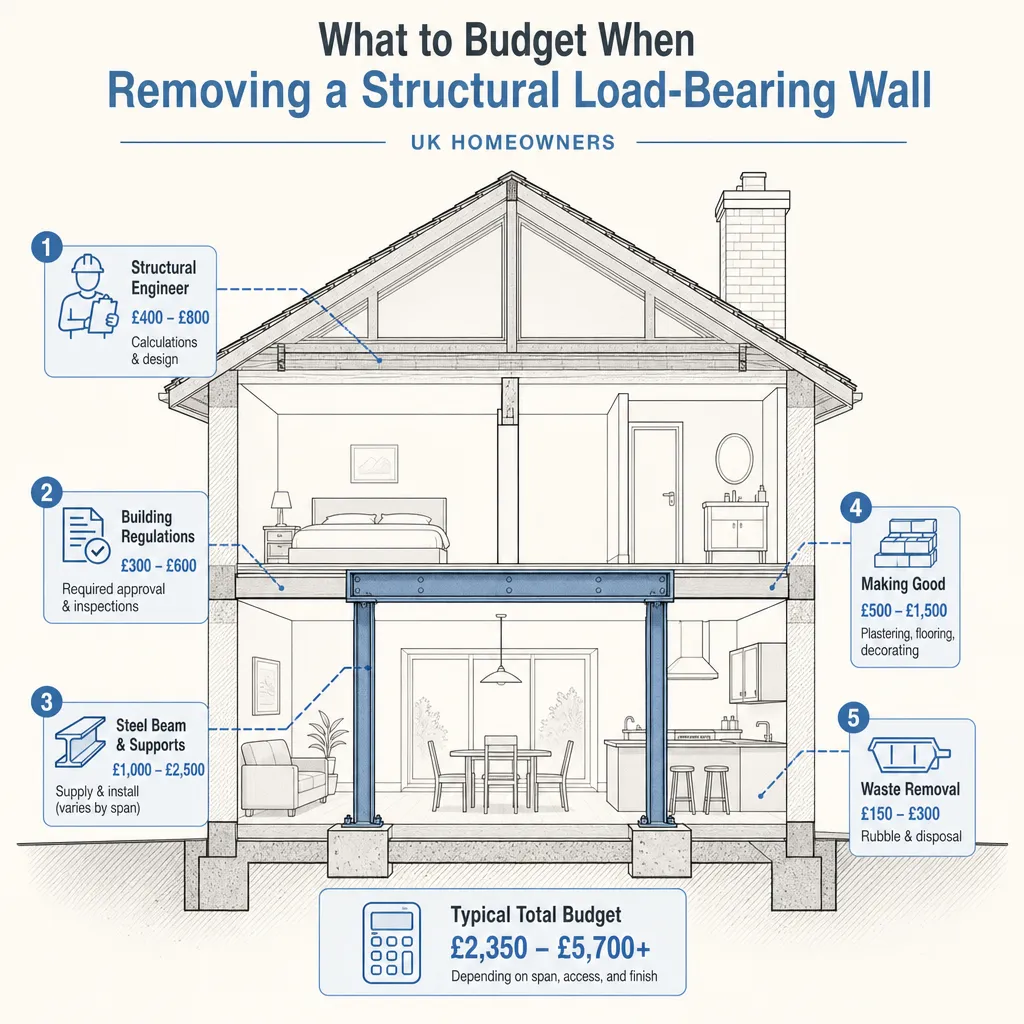
What to Budget When Removing a Structural Load-Bearing Wall
Removing a load-bearing wall in a typical UK home costs £2,500–£8,000 or more in total, covering a structural engineer's calculations, Building Regulations approval, the steel beam, builder's labour, and replastering.
 Planning & Pre-Build
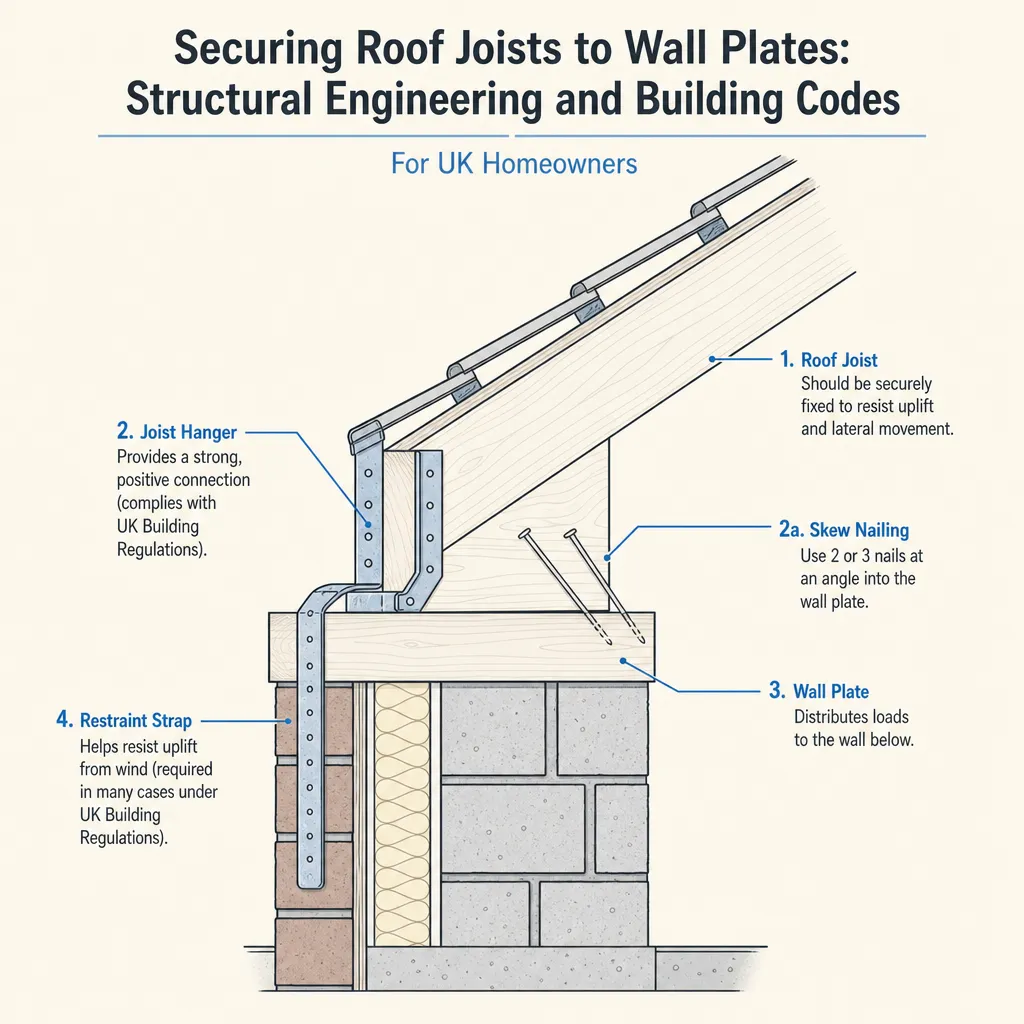
Securing Roof Joists to Wall Plates: Structural Engineering and Building Codes
Roof joists must be positively fixed to wall plates under Building Regulations Approved Document A — either by skew nailing with 100 mm nails at 45° or by joist hangers to BS EN 845-1.
 Planning & Pre-Build
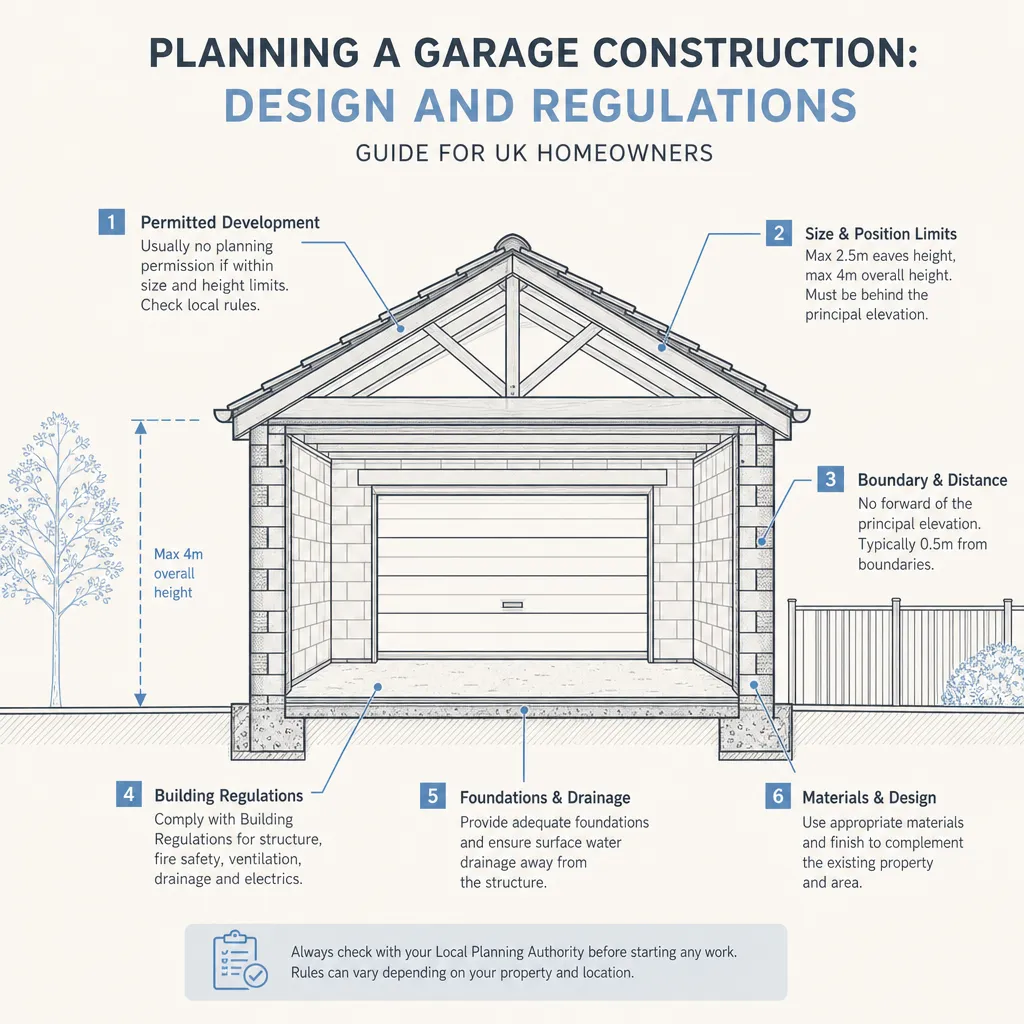
Planning A Garage Construction: Design And Regulations
Most detached single-storey garages in England qualify for permitted development, meaning no planning permission is required, provided they meet height, size, and siting rules.
 Planning & Pre-Build
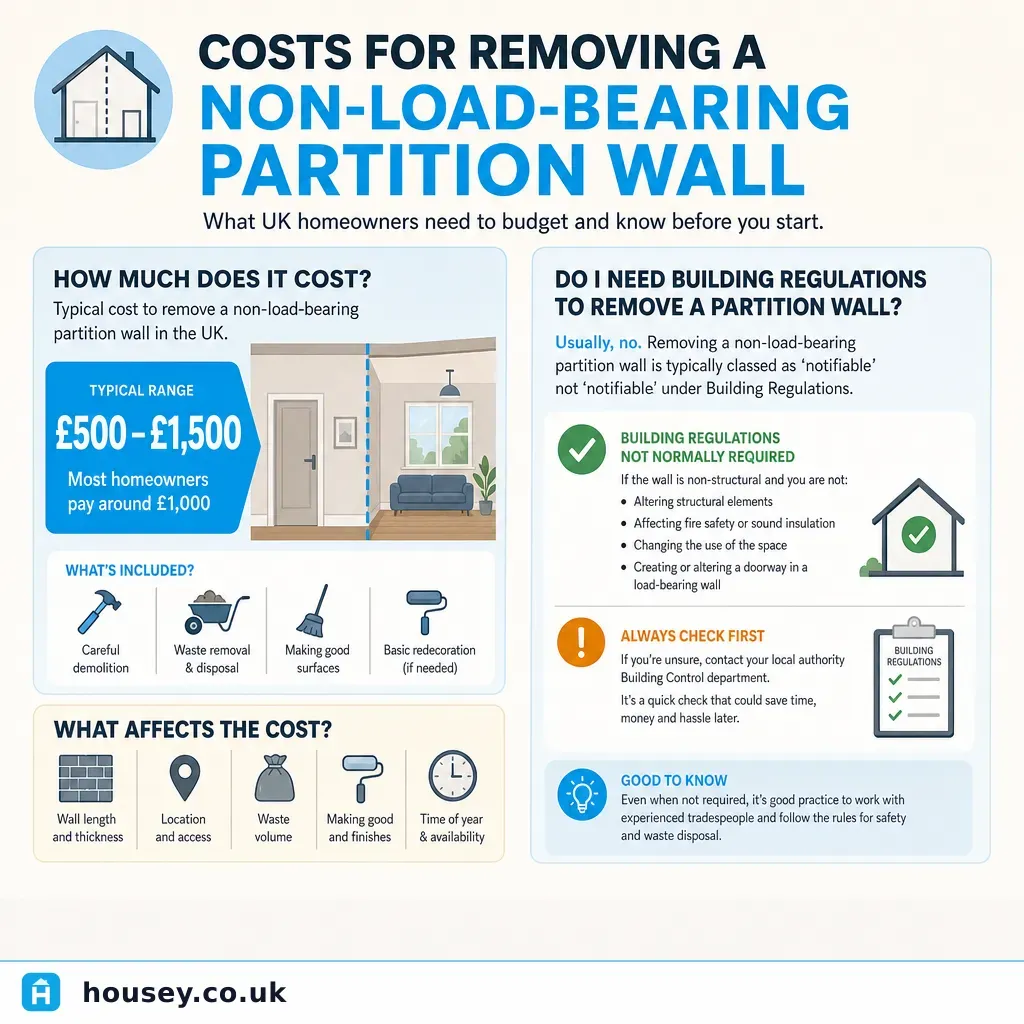
Costs for removing a non-load-bearing partition wall
Removing a non-load-bearing partition wall in a UK home typically costs £300–£1,500 in labour, plus £200–£600 or more for replastering and making good.
 Planning & Pre-Build
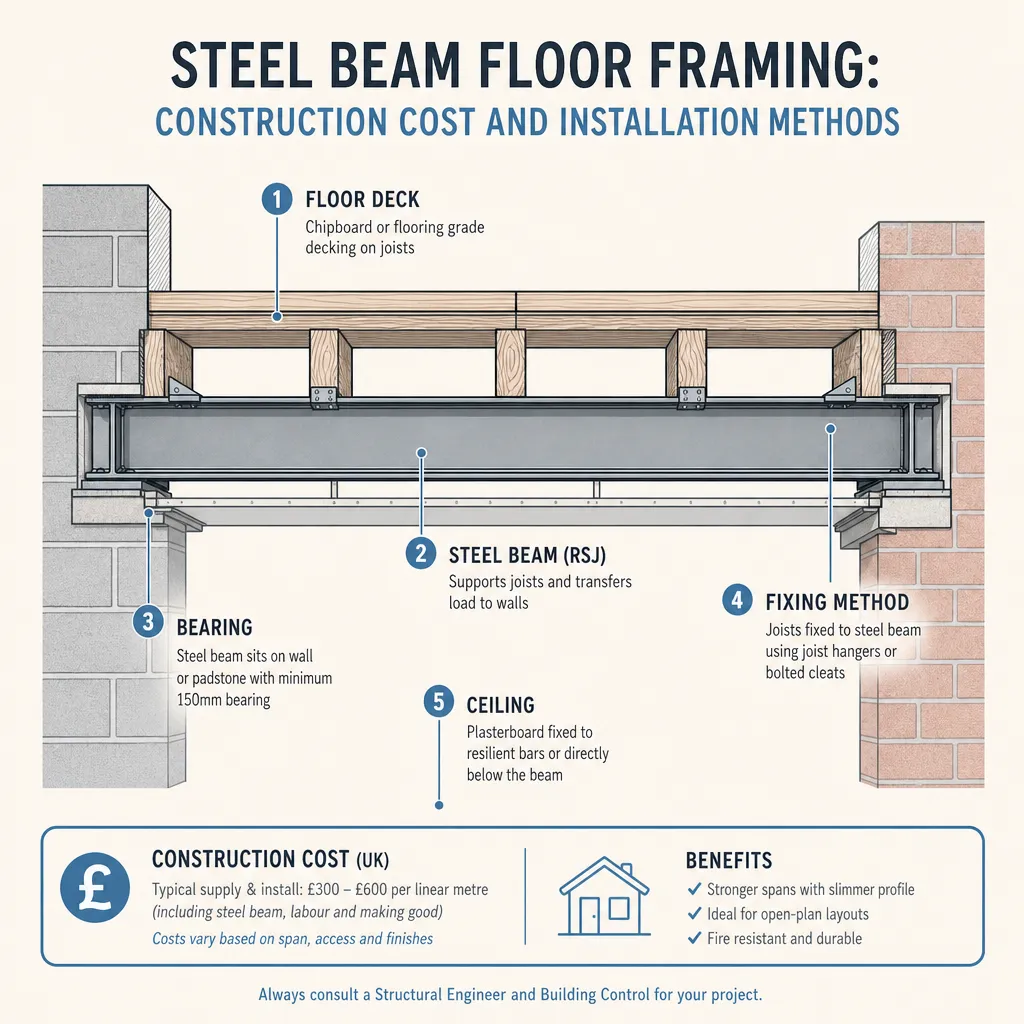
Steel Beam Floor Framing: Construction Cost and Installation Methods
Steel beam floor framing is used in UK homes when spans are too wide for timber joists, or when a load-bearing wall is removed.