Securing Roof Joists to Wall Plates: Structural Engineering and Building Codes
By Housey · Last reviewed 4th of May 2026
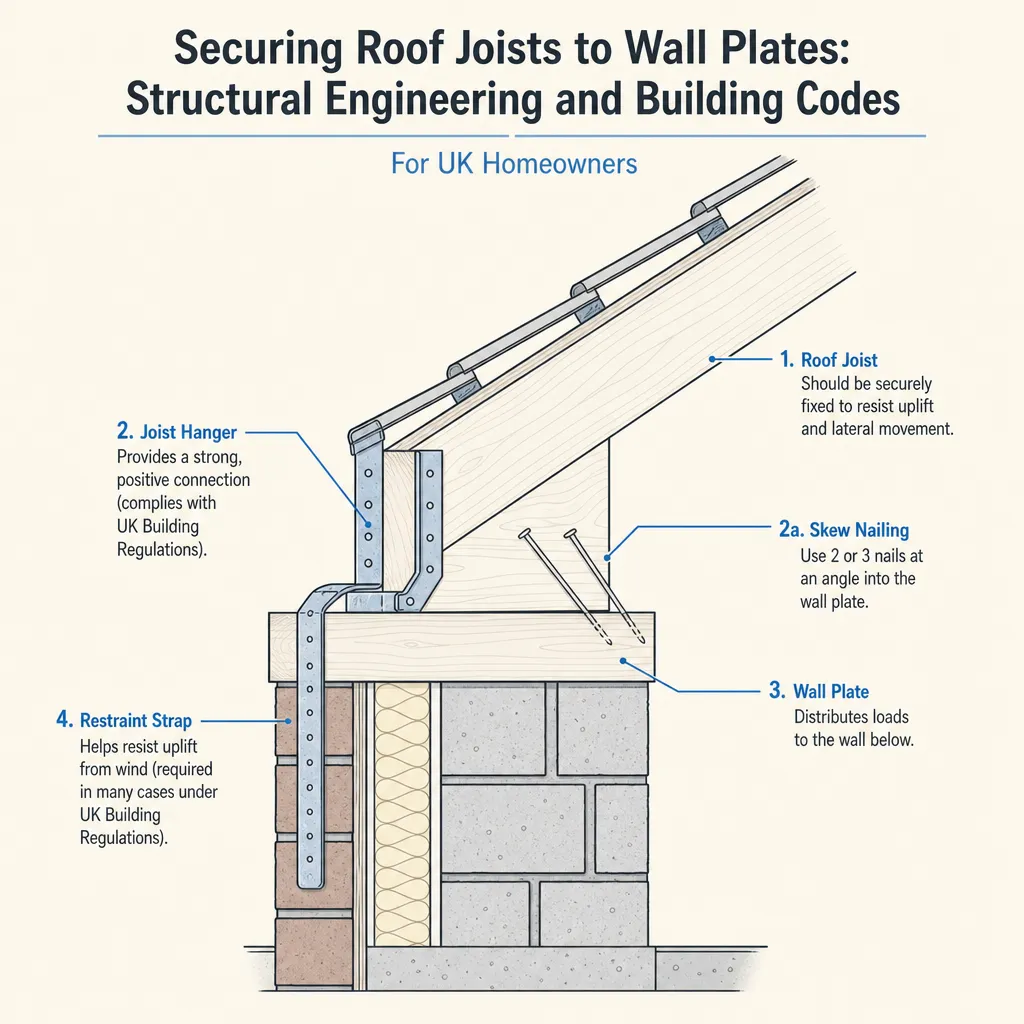
Securing Roof Joists to Wall Plates: Structural Engineering and Building Codes
The connection between roof joists and wall plates is one of the most load-critical structural details in any timber roof. Whether you are planning a loft conversion, extending a property, or replacing a damaged roof structure after storm damage, the fixings at this junction must comply with Building Regulations Approved Document A and any project-specific structural engineering specifications. Incorrect connections here can compromise lateral stability across the entire roof and will not pass building control inspection.
Key points
- Building Regulations Approved Document A (Structure), updated 2013, requires positive mechanical fixing of roof joists to wall plates in all domestic construction in England.
- BS 8103-3:2009 provides structural recommendations for timber floors and roofs in low-rise domestic dwellings.
- Joist hangers manufactured to BS EN 845-1 are a code-compliant, inspectable alternative to skew (toe) nailing.
- Galvanised mild-steel restraint straps at maximum 2-metre centres are required under Approved Document A — separate from the joist-to-plate connection — to prevent the roof plane spreading laterally.
- All structural roof connections are notifiable building work and must be inspected by a building control body before the ceiling is boarded.
Permitted fixing methods
Approved Document A permits two main methods for securing roof joists to wall plates.
Skew nailing (toe nailing): Two 100 mm round wire nails at approximately 45° through the joist side into the wall plate, one from each side. Common in pitched roof construction; relies on workmanship for consistency.
Joist hangers to BS EN 845-1: Metal brackets nailed to the wall plate that receive the joist end. Offer consistent geometry and easier building control inspection, and are preferred where joist depth makes skew nailing awkward or where the connection must resist significant wind uplift.
Restraint straps (30 × 5 mm galvanised mild steel at maximum 2 m centres) are a separate requirement that tie the roof structure back to the inner masonry leaf. They work alongside the joist-to-plate fixing, not instead of it.
Connection methods: comparison
Method | Typical use | Advantages | Limitations |
|---|---|---|---|
Skew nailing | Simple pitched roofs, rafters | Low cost; established practice | Workmanship-dependent; harder to inspect post-boarding |
Joist hanger (BS EN 845-1) | Ceiling joists, flat roofs, deeper members | Consistent; inspectable; suits large depths | Must match joist depth exactly; slightly higher material cost |
Restraint strap | All domestic cavity-wall roofs | Provides lateral racking resistance | Separate requirement — not a substitute for joist-to-plate fixing |
Framing anchor / hurricane tie | Engineered timber; high wind exposure | Strong uplift resistance | Usually requires structural engineer specification |
When a structural engineer is needed
For standard domestic construction within Approved Document A span tables, building control can often verify compliance without a structural engineer's input. A chartered structural engineer is needed when:
- Loft conversion: ceiling joists being upgraded to floor joists require engineering calculation of bearing lengths and connection details.
- Non-standard spans or loading: anything outside the Approved Document span tables requires individual calculation.
- Alterations to an existing roof: cutting or notching joists near bearing points may compromise existing connections.
- Engineered timber: LVL, I-joists, and glulam beams require manufacturer-specified or engineer-designed connection details.
- Visible movement: sagging ridgeline, spreading eaves, or stepped masonry cracking near wall plate level indicate possible connection failure rather than a new-build question.
Which approach do you need?
- New build or extension within standard spans? → Building control can verify compliance with Approved Document A directly. Check with building control consultants whether a structural calculation is required for your specific project.
- Loft conversion or additional floor load on existing joists? → Appoint a chartered structural engineer before work starts.
- Existing roof with visible movement or distortion? → Get a structural engineer to inspect before doing anything else.
- Engineered timber products (LVL, I-joist, glulam)? → Follow manufacturer technical literature and/or a structural engineer's specification — generic Approved Document guidance does not apply.
- Unsure? → Ask your building control body; they can confirm whether a structural calculation is required before you commit to appointing an engineer.
Important limitations
This article is general information only, not structural engineering advice. Structural adequacy depends on roof geometry, span, loading, timber grade, masonry type, wind exposure, and other site-specific factors assessable only by a qualified professional inspecting the actual structure. Building Regulations requirements described here apply in England; Scotland (Domestic Technical Handbook), Wales, and Northern Ireland operate under separate technical regimes. Do not attempt structural roof alterations without professional input and a building control application where required.
What to ask a qualified professional
Before instructing a structural engineer or building control body on a project involving joist-to-wall plate connections, ask:
- Which fixing method do you recommend for this span and loading — skew nailing, joist hangers, or framing anchors — and why?
- Do the existing wall plates need inspection or replacement before new joists are fixed?
- Are restraint straps currently present, and are additional straps required under current regulations for this construction?
- At which construction stage will building control inspect the connections before boarding?
- For a loft conversion: how does the change from ceiling to floor joist affect the required bearing length and connection detail at the wall plate?
- What building regulations drawings will you provide for the building control submission?
When to get professional help
Instruct a chartered structural engineer immediately if you observe any of these red flags:
- Sagging or spreading at eaves or ridge level
- Stepped cracking in masonry near the wall plate
- Sticking doors or windows on the floor directly below the roof structure
- Any loft conversion or proposed change of use of a roof void
- Mortgage lender or insurer requirement for structural sign-off before or after works
Your building control body will require access to inspect structural connections before the ceiling is closed — book the inspection stage early and ensure scaffolding or access remains in place.
How Housey can help
Housey connects homeowners with qualified UK professionals. If you need a chartered structural engineer for roof connection calculations, specialists who prepare building regulations drawings, or building control consultants to manage your approval from application to sign-off, Housey can help you request and compare quotes from vetted professionals.
Frequently asked questions
Do I need building regulations approval to replace roof joists like-for-like?
Like-for-like repair in the same position and specification is often classed as maintenance and may not require a formal application. However, if any structural alteration is involved, check with your local authority building control team first. Replacement following storm damage may also trigger an insurance requirement for professional sign-off before the ceiling is reinstated.
Can I use screws instead of nails to fix joists to wall plates?
Approved Document A specifies nail fixings for skew-nailed connections. Structural screws may be acceptable for joist hangers if the hanger manufacturer specifies them and the fixings carry a European Technical Assessment. Do not substitute screws for nails in traditional skew-nailed connections without structural engineering advice — the shear resistance of the two fixing types differs significantly.
What is the minimum bearing length for a roof joist on a wall plate?
A minimum of 75 mm is generally recommended, though more may be required for heavier loads or longer spans. Insufficient bearing reduces connection effectiveness and risks joist-end splitting under load. Your structural engineer or building control body can confirm the required bearing length for your specific roof geometry and loading.
Are restraint straps required for all domestic roof structures?
Under Approved Document A, galvanised mild-steel restraint straps at maximum 2-metre centres are required for most domestic cavity-wall construction to provide lateral stability to the roof plane. They are separate from the joist-to-plate connection itself. Building control will inspect for strap presence and correct fixing before the ceiling is boarded.
Sources and further reading
Useful next reads
 Planning & Pre-Build
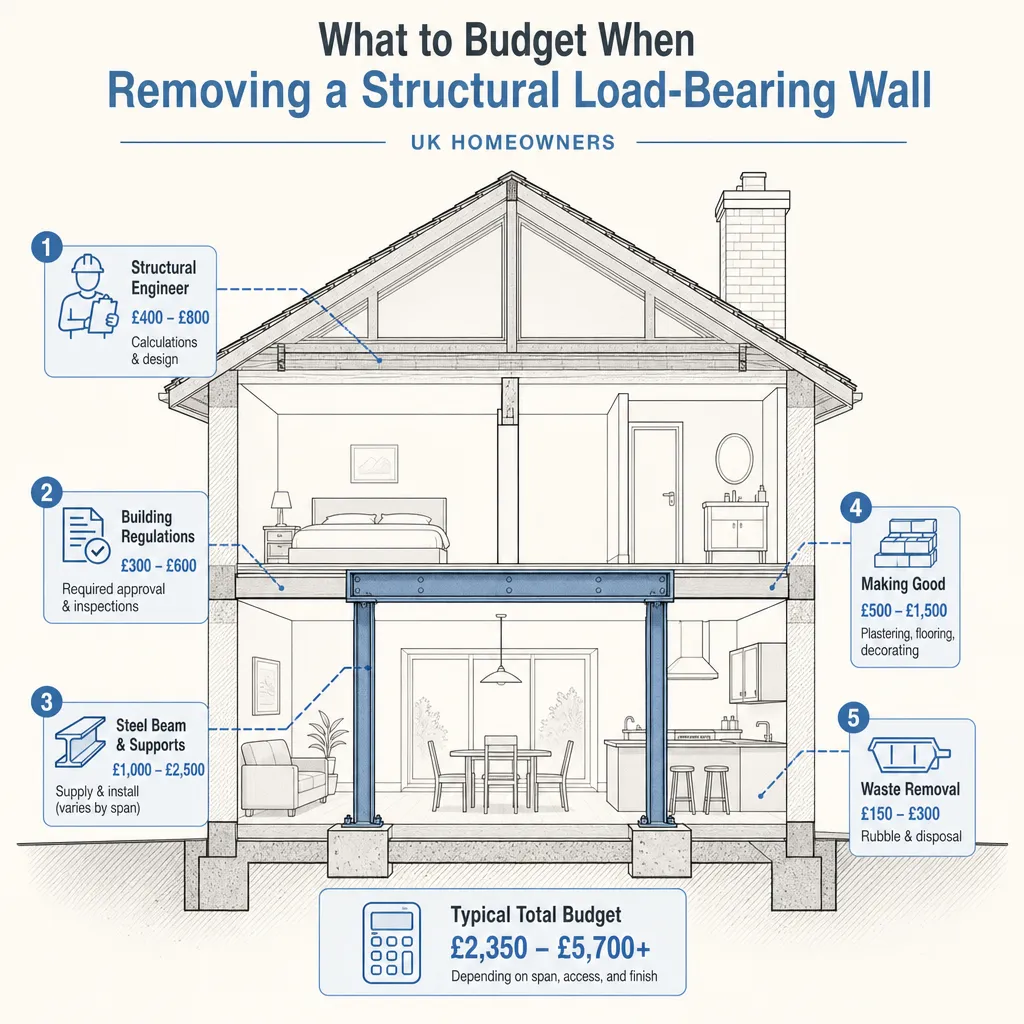
What to Budget When Removing a Structural Load-Bearing Wall
Removing a load-bearing wall in a typical UK home costs £2,500–£8,000 or more in total, covering a structural engineer's calculations, Building Regulations approval, the steel beam, builder's labour, and replastering.
 Planning & Pre-Build
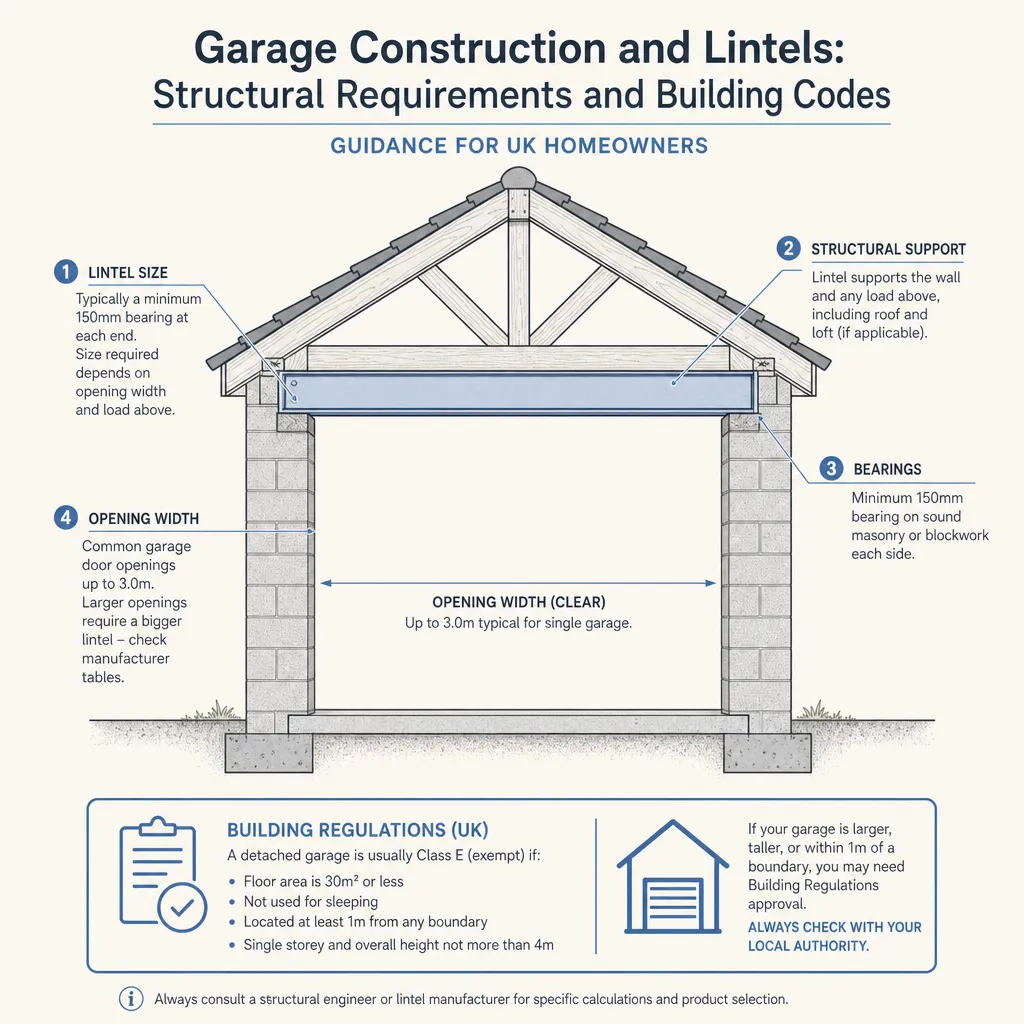
Garage Construction and Lintels: Structural Requirements and Building Codes
Garage lintels must be sized to carry the loads above each opening — masonry, roof structure, and any floor above.
 Planning & Pre-Build
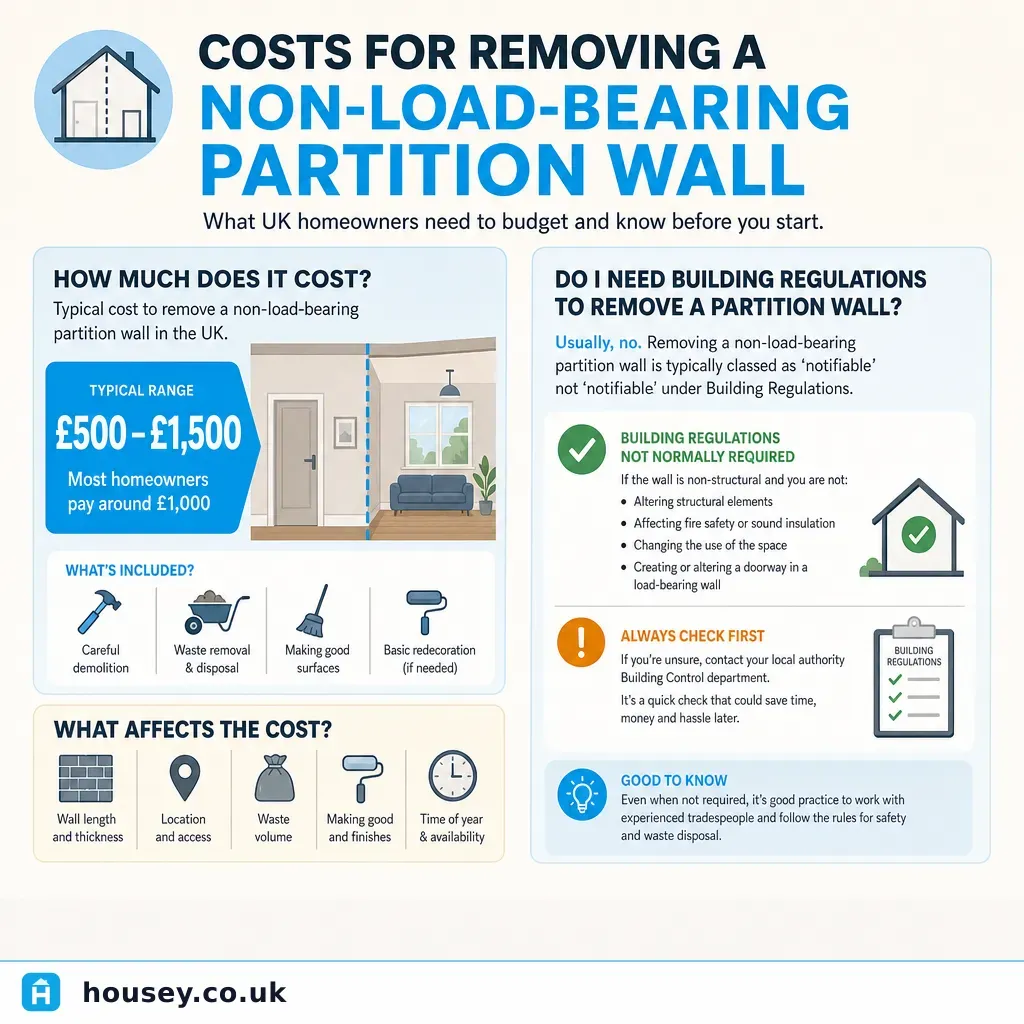
Costs for removing a non-load-bearing partition wall
Removing a non-load-bearing partition wall in a UK home typically costs £300–£1,500 in labour, plus £200–£600 or more for replastering and making good.
 Planning & Pre-Build
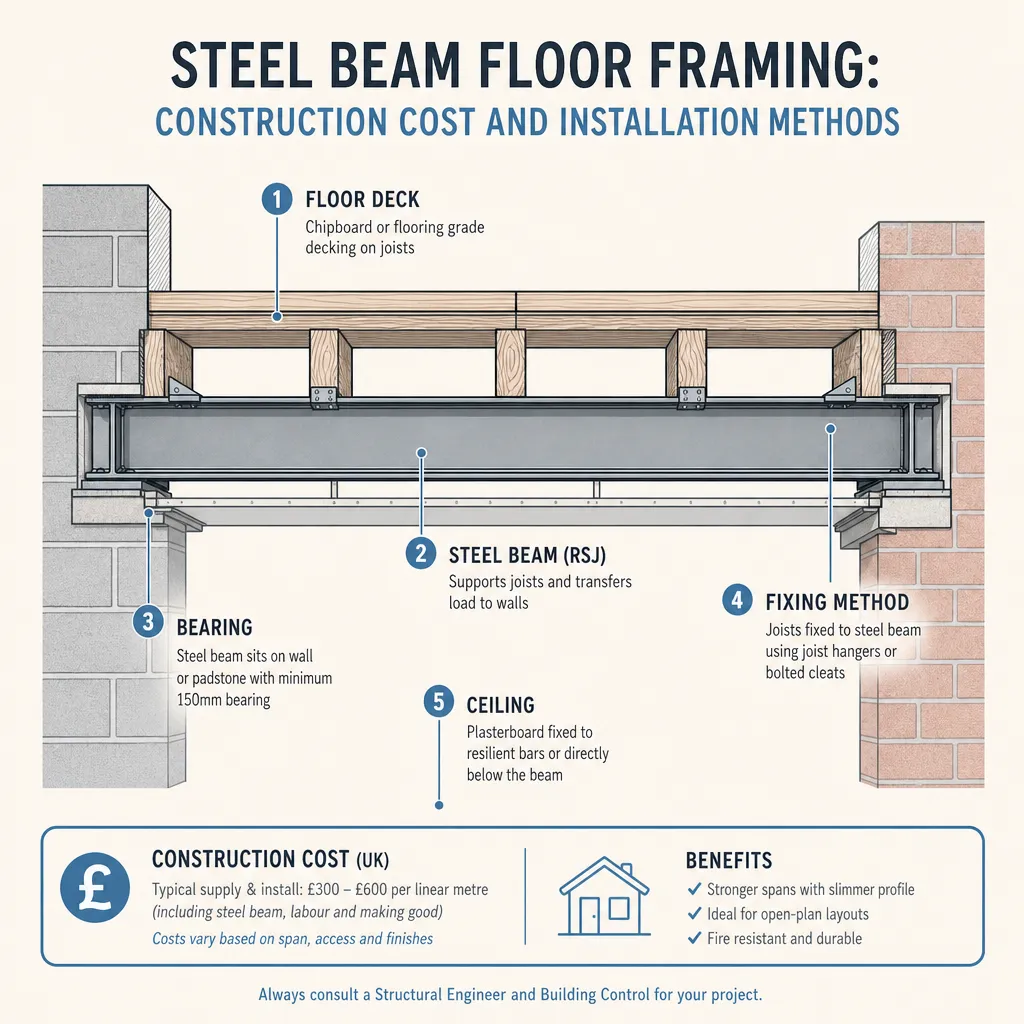
Steel Beam Floor Framing: Construction Cost and Installation Methods
Steel beam floor framing is used in UK homes when spans are too wide for timber joists, or when a load-bearing wall is removed.
 Planning & Pre-Build
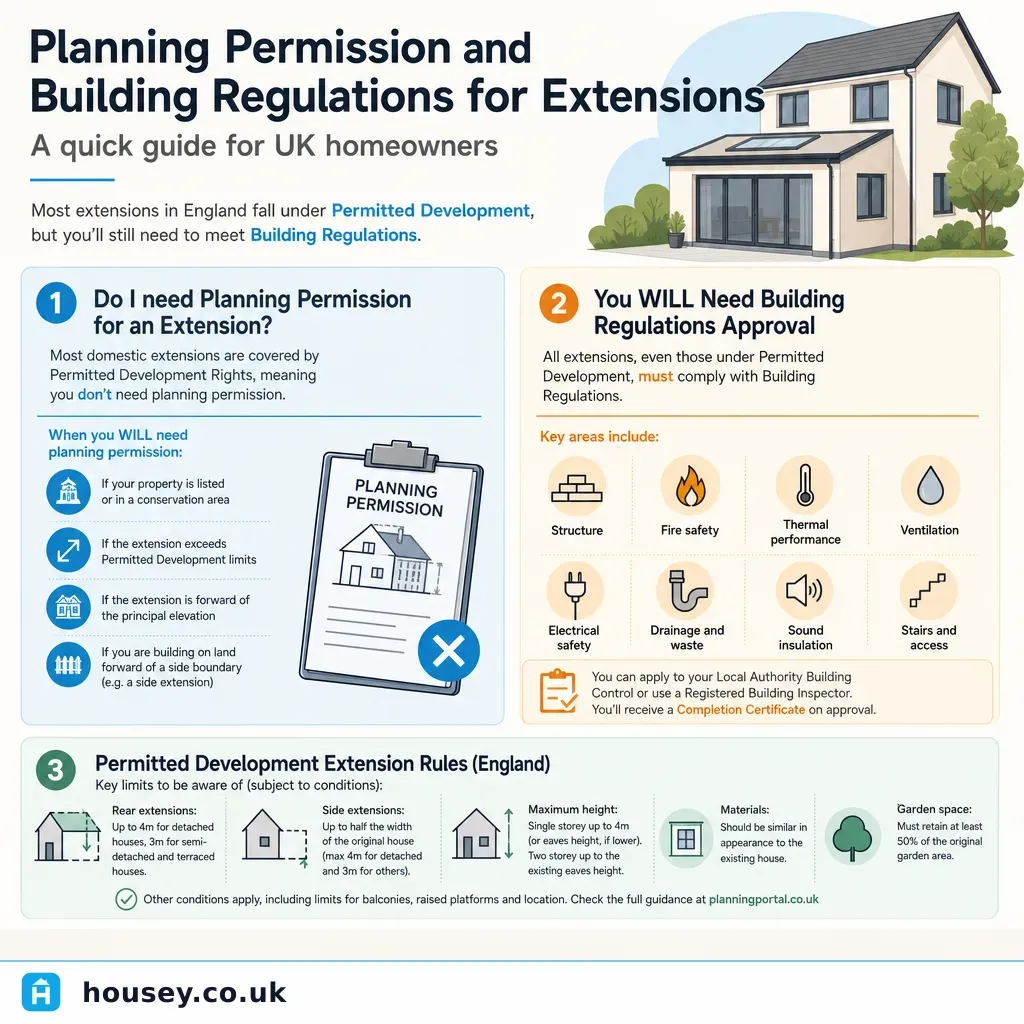
Planning Permission and Building Regulations for Extensions
UK home extensions usually require both planning permission and Building Regulations approval, though most smaller rear extensions qualify as Permitted Development under the GPDO 2015 and need no planning application.