Practical Garage Renovation and Conversion Ideas for Homeowners
By Housey · Last reviewed 30th of May 2026
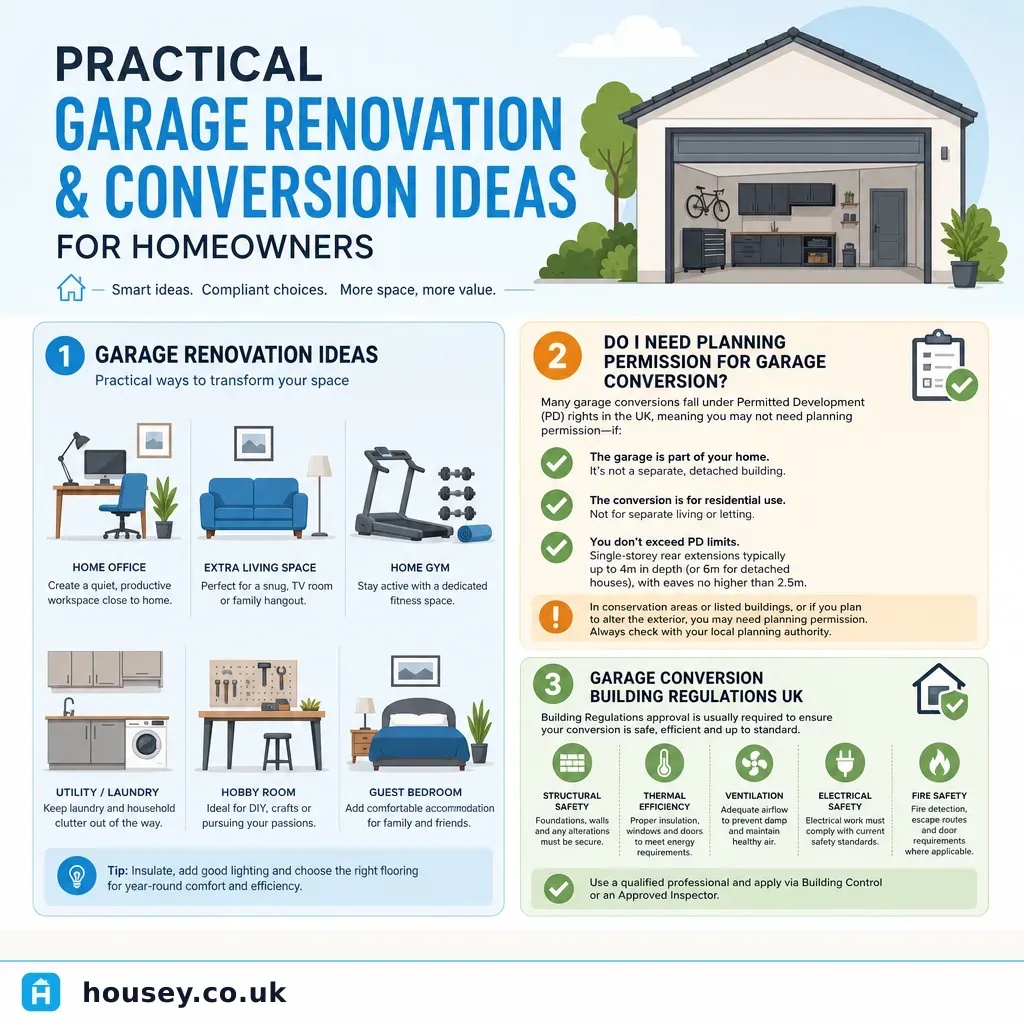
Practical Garage Renovation and Conversion Ideas for Homeowners
A garage represents one of the most flexible underused spaces in a UK home — capable of becoming a home office, extra bedroom, gym, utility room, or creative studio. The scope and cost of any project vary enormously, as do the planning and building regulations requirements, so understanding the difference between a cosmetic renovation and a full change-of-use conversion is the essential starting point before any work begins.
Key points
- A full garage conversion to habitable use almost always requires Building Regulations approval in England, even where planning permission is not needed.
- Permitted Development rights (Class A of the Town and Country Planning (General Permitted Development) (England) Order 2015) generally allow attached garage conversions without a planning application, but this does not apply to flats, listed buildings, or properties in designated areas.
- Building regulations for a conversion cover structure (Part A), fire safety (Part B), ventilation (Part F), insulation (Part L), and electrics (Part P).
- Converting a garage to habitable space may affect your property's Council Tax band — the Valuation Office Agency (VOA) can reassess banding, typically at the point of sale.
- VAT on labour for converting a non-habitable space to habitable use may attract a reduced rate of 5% rather than 20% — confirm with your builder and check HMRC Notice 708.
Planning permission and building regulations: understanding the difference
Planning permission controls what you build and how it affects the character of the area. Many garage-to-habitable-space conversions fall within Permitted Development rights, meaning no planning application is needed. However, permitted development rights may not apply if:
- The property is a flat or maisonette.
- The property is listed or in a conservation area.
- An Article 4 Direction or Local Development Order has removed permitted development rights in your area.
- You are significantly altering the external appearance of the garage or creating a new frontage opening.
Always check with your local planning authority (LPA) before starting work. A Certificate of Lawful Development provides formal written confirmation that the work is lawful and is a useful document when you sell the property.
Building Regulations approval is almost always required when converting a garage to habitable use. The key approved documents that apply are:
- Part A (Structure): floor loadings, walls, and roof must be suitable for habitable use.
- Part B (Fire Safety): fire doors, smoke alarms, and escape windows may be required depending on the conversion type.
- Part F (Ventilation): controlled ventilation rates for the new habitable room.
- Part L (Conservation of fuel and power): insulation standards for walls, floor, roof, and any new glazing.
- Part P (Electrical): new electrical installations must be notified to building control or carried out by a registered competent person scheme member such as an NICEIC or NAPIT-registered electrician.
Garage conversion and renovation ideas
Intended use | Typical scope | Planning usually needed? | Building regs needed? | Indicative cost range |
|---|---|---|---|---|
Home office (habitable) | Insulation, new floor, electrics, heating | No (permitted development) | Yes | £8,000–£20,000 |
Extra bedroom | Full conversion, fire safety, electrics, windows | No (permitted development) | Yes | £10,000–£25,000 |
Gym or hobby room (non-habitable) | Insulated floor, lighting, electrics | No | Often yes (electrics at minimum) | £3,000–£10,000 |
Utility room | Plumbing, drainage, electrics, insulated floor | No | Yes (plumbing and electrics) | £4,000–£12,000 |
Playroom or snug | Insulation, flooring, electrics, decoration | No | Often yes | £5,000–£15,000 |
Cosmetic renovation (storage, new floor, lighting) | Flooring, storage systems, lighting | No | Usually no | £500–£3,000 |
Indicative UK costs, last reviewed 2026-05-30. Actual costs depend on garage size, condition, location, and specification. Always obtain at least three quotes.
Which approach is right for you?
Use this decision tree to narrow down your options before contacting any professionals.
- Full conversion to habitable room: choose this if you need a permanent extra bedroom, home office, or living space. Expect to notify building control and confirm permitted development status with your LPA before starting. Engage a builder or design-and-build firm experienced in residential conversions.
- Functional renovation (gym, hobby room): choose this if you want usable, comfortable space without the full regulatory burden of habitable-use conversion. Any new electrical circuits still require Part P compliance.
- Cosmetic upgrade: choose this if the garage is structurally sound and you want better organisation and usability at lower cost. New flooring, wall-mounted storage, and improved lighting can transform a space for under £2,000.
- Seek professional advice if the garage shares a wall with a neighbour's property (Party Wall etc. Act 1996 may apply), if the property is listed or in a conservation area, or if you plan to add a WC or kitchen area (Part H drainage compliance required).
Garage renovation without a full conversion
Not every garage project needs to be a full conversion. A well-planned renovation can add significant usability while avoiding the cost and complexity of full building regulations sign-off. Popular upgrades include:
- Insulated floors: rigid insulation board beneath a screed or interlocking tiles dramatically improves comfort underfoot and year-round usability.
- Wall and roof insulation: stud walls lined with mineral wool and plasterboard are a relatively straightforward improvement in a standard masonry garage.
- LED lighting: replacing a single fluorescent tube with LED strips or downlights makes a substantial practical difference.
- Storage systems: wall-mounted bike hooks, overhead racking, and modular wall storage panels are widely available from builders' merchants.
- EV charging point: a Level 2 charge point on the garage wall requires a certified electrician but is increasingly popular and may add value at resale.
Homeowner checklist: before you start
Important limitations
Garage conversions involve planning, building regulations, structural, fire safety, and electrical considerations that vary by property, tenure, and local authority. This article provides general guidance only. Rules for listed buildings, flats, conservation areas, and properties with modified permitted development rights differ materially from the standard position described here. A qualified professional — architect, building surveyor, or design-and-build firm experienced in residential conversions — should assess your specific property before any work begins.
What to ask a qualified professional
Before instructing a builder or conversion specialist:
- Do I need planning permission, and will you check with the LPA on my behalf?
- Will you manage the Building Regulations application and liaise with building control throughout the project?
- What structural work — if any — is needed to bring the floor, walls, and roof to habitable standard?
- What does the quote include and exclude? (drawings, building control fees, VAT, skip hire, decoration)
- What qualifications do you hold, and is your electrical subcontractor registered with NICEIC or NAPIT?
- What building control completion certificate will I receive at the end of the project?
- What assumptions is the quote based on, and what could change the price or programme?
When to get professional help
Consult a qualified professional if:
- The garage shares a wall with a neighbour's property — the Party Wall etc. Act 1996 may apply and a surveyor should be involved.
- The garage roof shows signs of movement, rot, or inadequate load-bearing capacity.
- The project involves altering drainage runs or installing a WC or kitchen.
- The property is listed, in a conservation area, or permitted development rights have been removed.
- You plan to let the converted space — additional fire safety and licensing requirements may apply depending on the tenure and use.
How Housey can help
Housey can connect you with vetted garage conversion specialists and design-and-build firms who can manage the process from initial planning advice and building regulations applications through to final sign-off and completion.
Frequently asked questions
Do I need planning permission to convert my garage?
In most cases, no. Converting an attached garage to living accommodation typically falls within Permitted Development rights in England. However, permitted development rights may not apply to flats, listed buildings, conservation areas, or properties subject to an Article 4 Direction. Always check with your local planning authority first, and consider applying for a Certificate of Lawful Development for certainty when you come to sell.
Does a garage conversion always need building regulations approval?
Almost always, yes — if the space will be used as a habitable room. Building regulations cover insulation, fire safety, structural adequacy, ventilation, and electrics. A gym or storage room that remains non-habitable may require less oversight, but any new electrical circuits still need to comply with Part P of the Building Regulations.
How much does a garage conversion typically cost in the UK?
Indicative costs range from around £10,000–£25,000 for a full conversion to a habitable room, depending on garage size, location, and specification. A cosmetic renovation without change of use can cost as little as £500–£3,000. Indicative UK costs, last reviewed 2026-05-30 — always get at least three quotes, as regional and specification differences are significant.
Will a garage conversion affect my Council Tax band?
Possibly. Converting a garage to living space increases the property's usable floor area. The Valuation Office Agency (VOA) can reband properties, though reassessment typically occurs at the point of sale rather than immediately. It is worth factoring into your long-term planning before committing to a full conversion.
Sources and further reading
- Planning permission — extensions and alterations — GOV.UK
- Garage conversions guidance — Planning Portal
- Building Regulations Approved Documents — GOV.UK
- Council Tax bands and valuations — Valuation Office Agency
- VAT on construction and building work (Notice 708) — HMRC
Useful next reads
 Improvement & Build
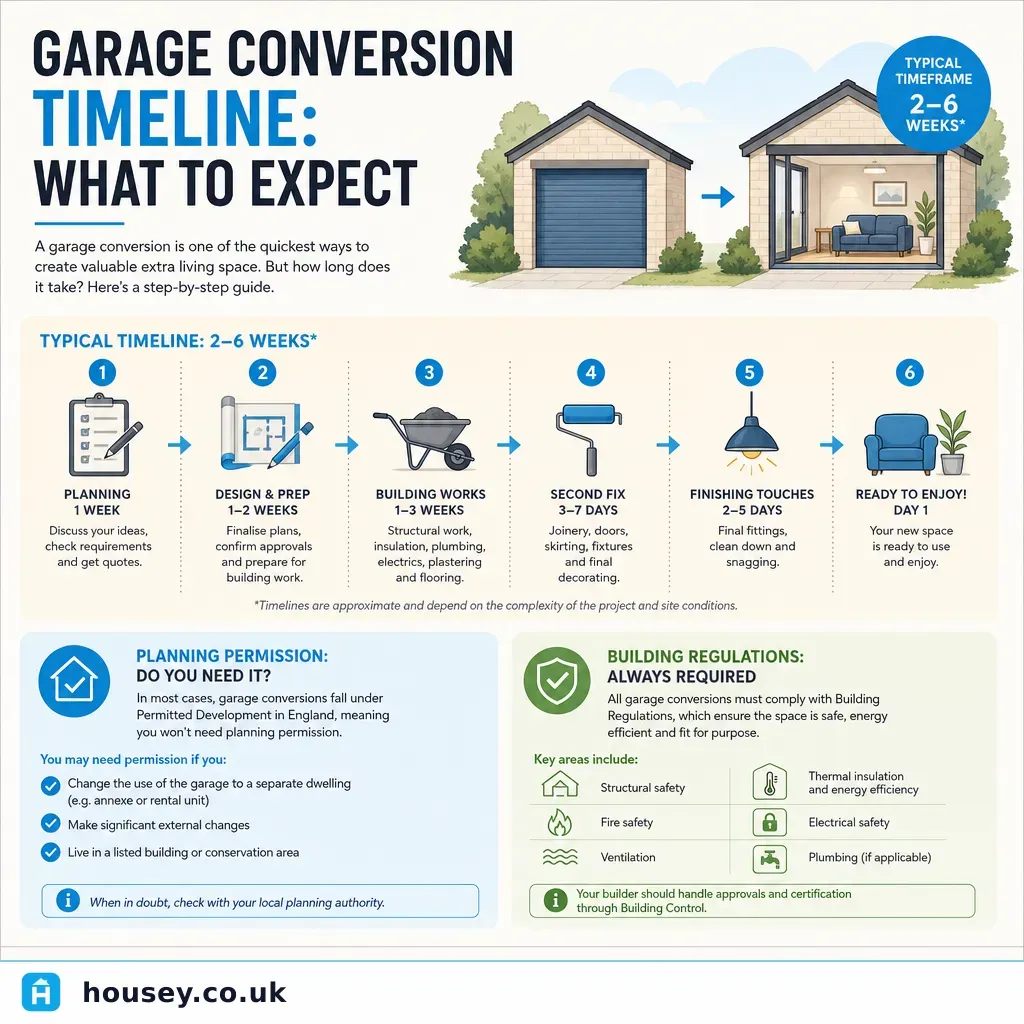
Garage Conversion Timeline: What to Expect
A straightforward attached garage conversion in England usually takes 4–8 weeks of construction, plus pre-start time for building control approval (5 working days for Full Plans).
 Improvement & Build
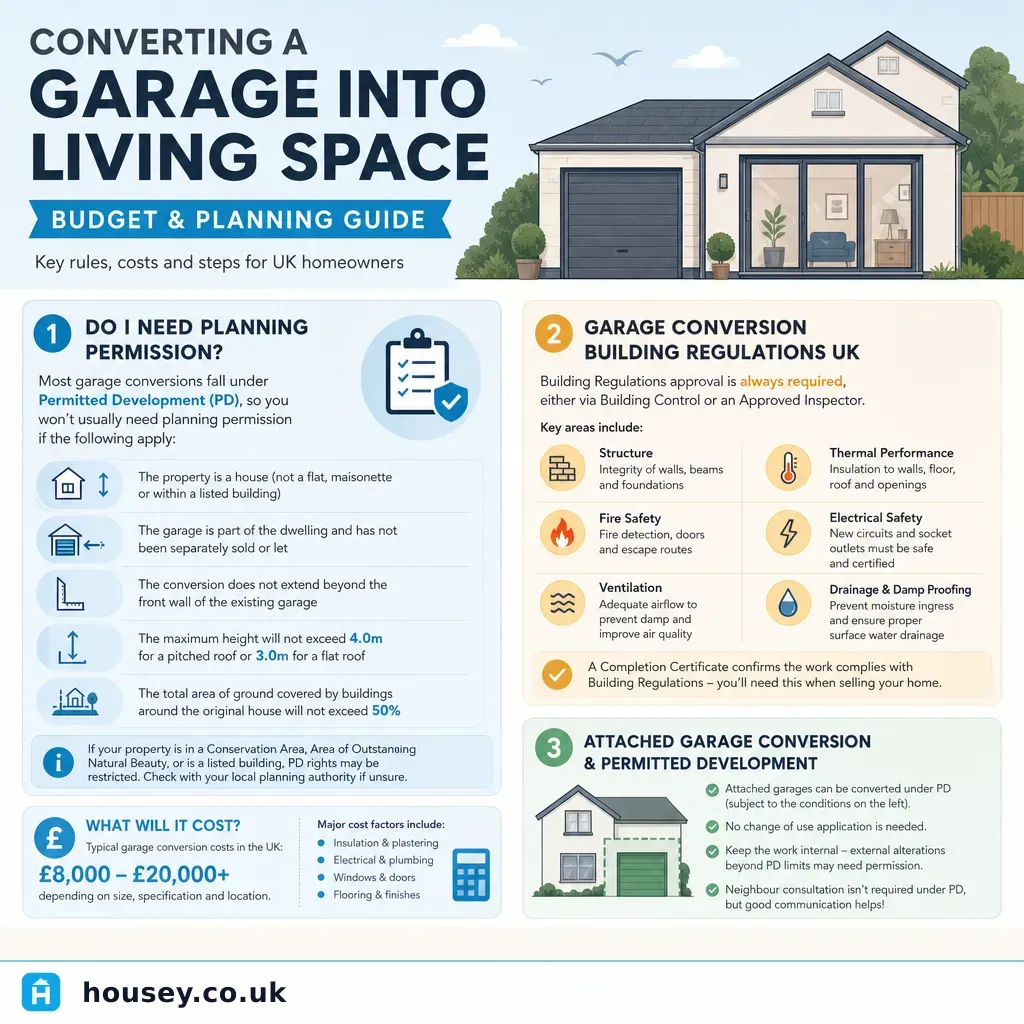
Converting a Garage into Living Space: Budget and Planning Guide
A single-garage conversion typically costs £8,000–£20,000 in the UK.
 Improvement & Build
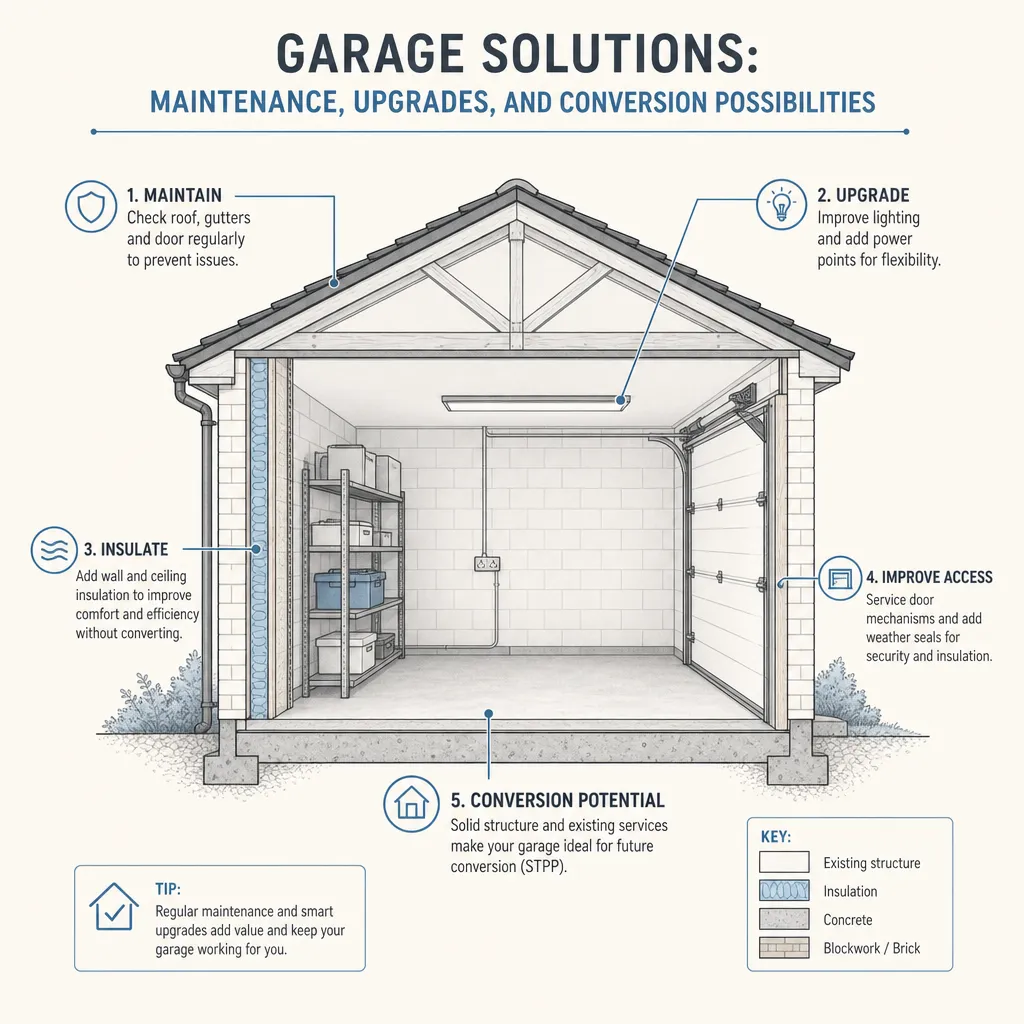
Garage Solutions: Maintenance, Upgrades, and Conversion Possibilities
Your garage can serve many functions — storage, workshop, hobby space, or a full habitable room conversion.
 Improvement & Build
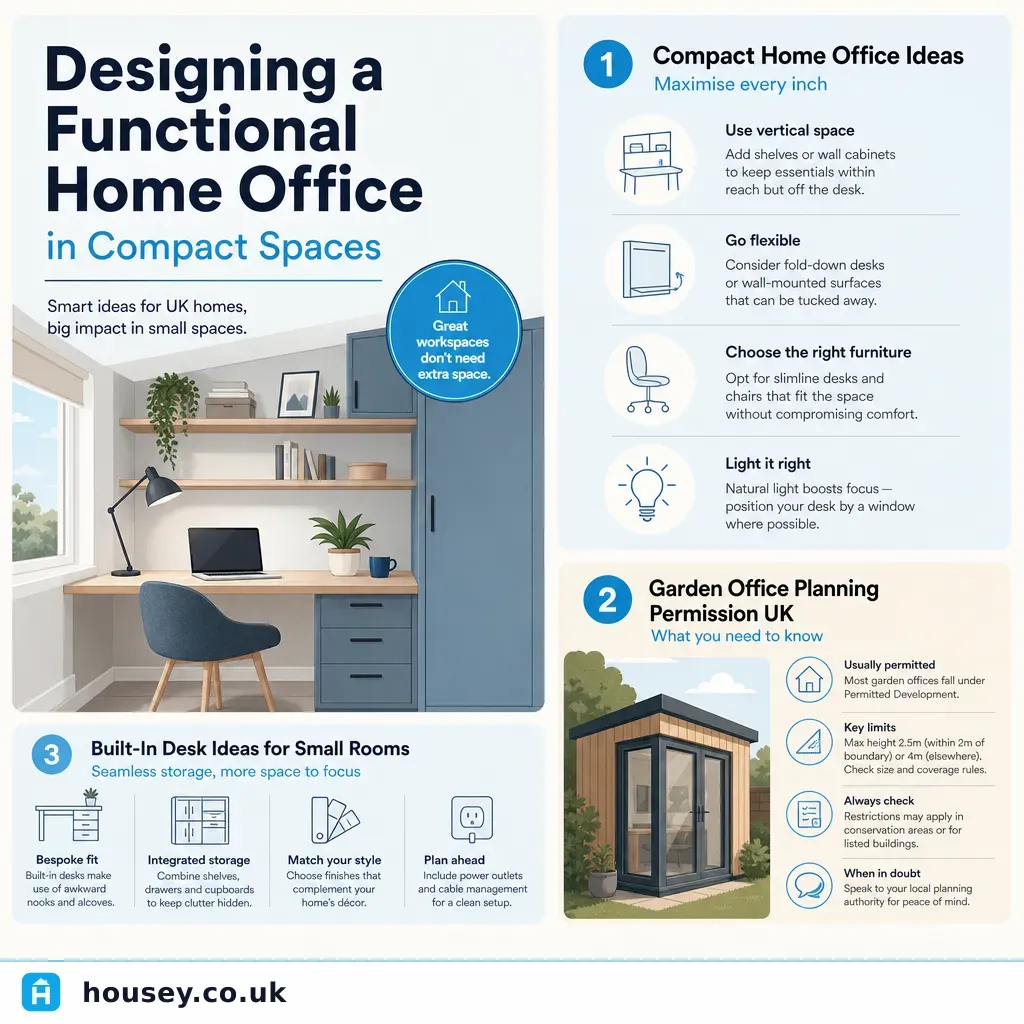
Designing a Functional Home Office in Compact Spaces
A functional compact home office needs a clearly defined workspace, ergonomic seating, and good lighting — even in a small footprint.
 Improvement & Build
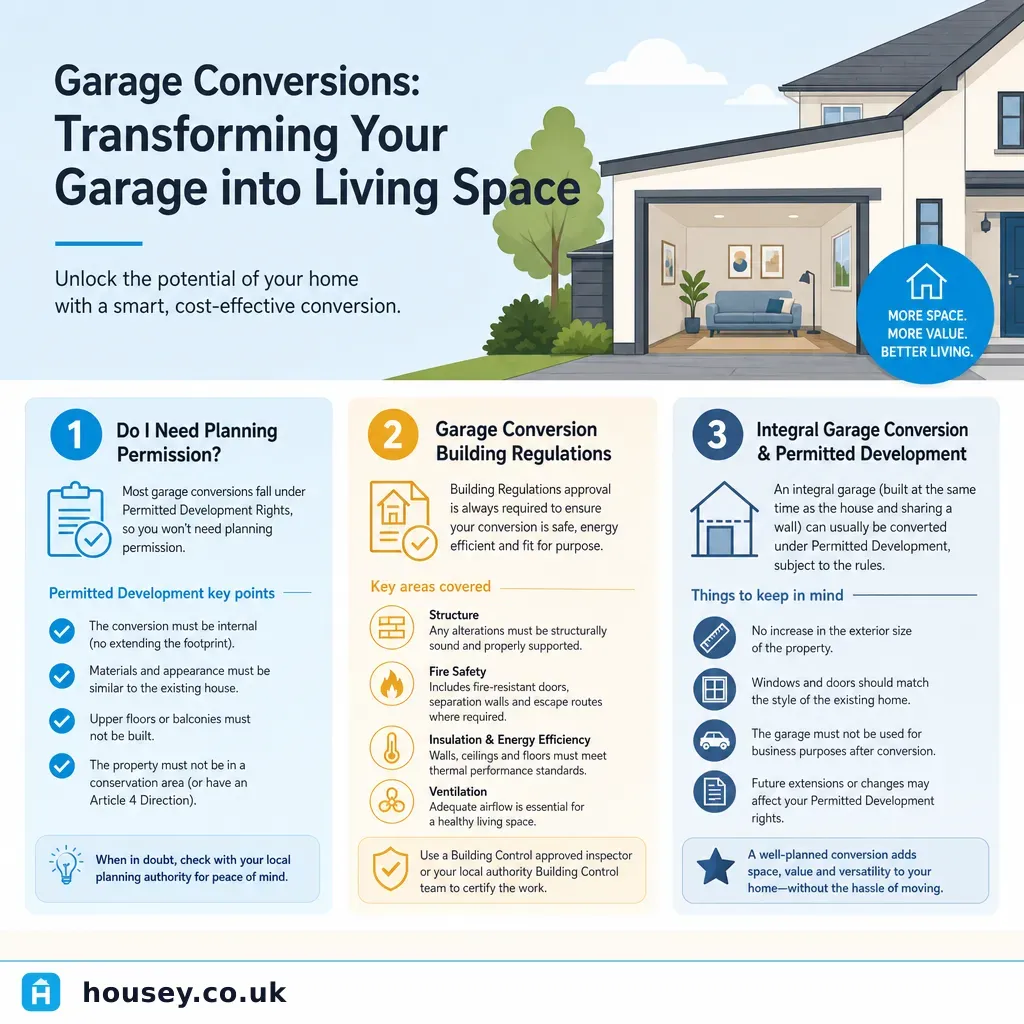
Garage Conversions: Transforming Your Garage into Living Space
Most integral garage conversions in England fall within permitted development and do not require a planning application, but Building Regulations approval is required in virtually all cases.